Home Archive by category Technology and Products

Technology and Products

ASSA ABLOY: Short-let operator expands in Europe with smart access

Travellers and residential renters increasingly prefer the convenience of digital access. These solutions also offer commercial benefits to businesses operating in these fast-growing sectors: it becomes faster and more cost-efficient for them to roll-out new sites and to manage access to them remotely without the need for expensive 24/7 front-desk operations.

City Pop is one short-let furnished apartment rental provider operating in both these sectors. Their growing portfolio of design-led properties covers European cities such as Zurich, Berlin, Prague and Milan. They previously relied on an RFID access-card solution. However, manual handling of credentials created a major challenge to achieving their ambitions. They needed a scalable alternative which would simplify access management and enable their business to grow cost-effectively across international boundaries.

For this reason, they adopted card-less, mobile access across their portfolio of serviced apartments – installing Aperio® wireless locks integrated natively with an Incedoä Pro access management system. Doors to City Pop apartments and some common areas are equipped with these contemporary-styled wire-free, battery-powered Aperio escutcheons. “We were looking for a future-proof, reception-less access solution that could scale with our growth across Europe,” explains Pawel Gawor, City Pop’s CEO.

Integrating access with the booking system automatically distributes entry permissions to customers without manual staff handling. Guests can arrive at convenient times without any need for a reception check-in and have a choice of secure mobile access via the City Pop app or a PIN code to enter directly on the Aperio escutcheon’s keypad.

Choosing to standardize locks with the Aperio E100 Wireless Keypad Escutcheon gave City Pop the ability to retrofit buildings without wiring or door damage.

In addition, because reservations software is also integrated with their Incedo Pro system, City Pop automates centralized, real-time, and remote control over time-limited access at multiple sites dispersed around Germany, Czechia, Switzerland, and Italy. Digitalizing access in this way gives them the flexibility to offers apartment stays by the month or, at an expanding number of locations, from one night and up. Their ongoing ASSA ABLOY installation project now totals over 2,500 doors… and is still growing.

Energy-efficient access solution for modern apartment rentals

Choosing this ASSA ABLOY solution also contributed towards City Pop’s sustainability goals. With no key or smartcard management infrastructure, they use less plastic. Eliminating the need for a 24/7 reception reduces unnecessary staff travel: they manage access remotely.

City Pop have also limited their energy use: wireless Aperio locks are powered by standard batteries and draw much less power than equivalent wired access devices. In addition, ASSA ABLOY Signo Readers, installed at external doors, sliding doors, elevators, and some high-traffic interior doors, have an Intelligent Power Mode (IPM) which saves 41% in energy compared to equivalent readers without IPM.

“With Aperio wireless locks and Incedo Pro, we now have a fully digital, mobile-first access experience for our guests with no need for staff on-site,” adds Pawel.

Vivotek: Think Alert: Stop Threats Before They Escalate

Most environments are already covered by cameras. The real challenge in modern AI video surveillance is response time. Many incidents are not missed because they are invisible, but because they are noticed too late. Policy violations, unsafe behavior, or suspicious actions often unfold within seconds, and once they are discovered through review or manual checks, the opportunity to intervene has already passed.

Traditional AI alerts help reduce this gap, but only when scenarios fit predefined detection types. In real operations, risks are often more contextual. Policies vary by space, rules change over time, and many behaviors that matter cannot be easily expressed through fixed alert categories. This is where Think Alert becomes valuable.

What Think Alert is and how it fits into existing workflows

Think Alert is a generative AI–powered alert capability within VORTEX that allows users to describe what action or situation they want to detect using natural language. Built on visual language model (VLM) technology, it enables more flexible real-time video alerts while still defining where detection applies through familiar line or zone drawing—bringing this capability into the broader VORTEX AI video analytics platform.

To see why this matters in day-to-day operations, it helps to look at what Think Alert changes for teams in three practical ways.

  • Act immediately to mitigate losses: Theft, accidents, and unauthorized access cost money and endanger people. Think Alert detects these situations in real time, so teams can respond immediately—before damage occurs and before incidents escalate.
  • Set up in seconds, not hours: No manuals or training needed. After defining the detection area, simply use natural language to describe what you want to monitor and activate the alert in moments. No technical skills, no complex rule building, and no IT help required.
  • Your alerts, your rules: Every person and team has different needs. Think Alert lets each user customize monitoring based on what matters most to them, instead of being limited to fixed, predefined alert rules.

Think Search: Find What Happened, Faster

Before Think Alert, VORTEX introduced another VLM capability: Think Search. It uses visual language model technology to make investigation feel as simple as searching the web. Instead of scrubbing timelines or guessing which filters might work, users can type what they want to find in plain language, and the system surfaces relevant moments from recorded footage.

This matters because investigation is often where teams first discover patterns—recurring behaviors, repeat problem areas, or situations that consistently create risk. Think Search helps teams find those signals faster and with less effort.

Elevating VORTEX from “what happened” to “stop it next time”

Once teams identify what keeps happening, the next question is always the same: how do we stop it earlier? That’s where Think Alert takes what teams learned during investigation and turns it into real-time monitoring. Instead of repeatedly searching for the same incidents after they occur, teams can go directly to the location that matters, define the detection area, describe the behavior, and receive alerts the moment it happens again.

This is what elevates VORTEX into a more complete video intelligence workflow. It supports both sides of the job: understanding the past with faster investigation, and protecting the future with proactive, real-time alerts. By turning intent into immediate action, Think Alert helps organizations reduce risk, respond earlier, and stay ahead of incidents as they happen.

Hytera: The 450MHz Pivot: High-Impact Connectivity for the Adria Region’s Toughest Terrains

At the recent MWC26 in Barcelona, an announcement from Hytera regarding the “whitelist” certification of the PNC660 450MHz by 450Connect signaled a major shift in the future of public safety and utility communications across the Adriatic and Balkan regions.

As the region migrates from legacy narrowband technologies to LTE/5G, demand for devices that combine ruggedness with high-speed intelligence has reached a critical turning point.

The Strategic Shift in the Adria Region

The 450MHz frequency is increasingly recognized as the strategic backbone for national resilience. Across the Adria region, a clear trend is emerging:

  • Smart Grid Evolution: critical infrastructures are increasingly leveraging 450MHz for smart grid management, ensuring resilient energy distribution that remains independent of commercial networks.
  • Regulatory Alignment: Regulatory bodies across the region are phasing in updates to reallocate spectrum, prioritizing civil public safety and mission-critical broadband for state and utility applications.
  • Infrastructure Hardening: Governments are shifting from legacy CDMA to LTE to support the massive data requirements of modern smart metering and IoT deployments.

Addressing Regional Challenges, from Mountains to the Coast

The Adria region’s geography – spanning high mountain ranges to dense coastal archipelagos—demands a signal with maximum geographic reach. The PNC660 450MHz capitalizes on the 450MHz band’s superior propagation capabilities to maintain connectivity in challenging terrains where standard commercial LTE signals often falter.

Furthermore, for field teams working in deep basements or reinforced concrete substations, the 450MHz band’s penetrative power ensures stable communication links—making it an indispensable tool for modernizing aging infrastructure.

A Strategic Milestone

During MWC26, Sophia Yin, General Manager of Hytera Europe, highlighted the significance of this development:

“It is really exciting to receive these two pieces of good news at MWC26. Obtaining 450Connect whitelist certification and signing the distribution agreement with B.Schmitt simultaneously perfectly illustrates the proverb ‘good things come in pairs’, giving us a great start to 2026. We will expedite the promotion of the PNC660 450MHz in Europe and continue investing in R&D for 450MHz-related products, reinforcing our commitment to supporting critical infrastructure operators with reliable, secure, and robust communication solutions.”

More than Just a Device

For public safety and utilities sectors, the PNC660 450MHz’s value extends far beyond basic communication, it is a masterclass in Economic Efficiency and Operational Resilience. By leveraging the 450MHz band’s ability to cover vast territories with significantly fewer base stations, it offers a drastically lower Total Cost of Ownership for national safety networks compared to traditional high-frequency deployments.

This efficiency is most visible during the Adriatic’s peak tourist seasons. While public commercial networks become overwhelmed by extreme congestion, the PNC660 450MHz operates on dedicated private channels, ensuring first priority for emergency responders and utilities crews. It effectively bypasses the public network providing a clear dedicated line of command.

Ultimately, with its CC EAL5+ security chip and full MCPTT/MCVideo capabilities, the Hytera PNC660 450MHz is more than just a radio. It is the rugged, secure gateway to the next generation of Adriatic infrastructure, a critical tool for those who cannot afford to wait for a signal when every second counts.

Mercury AI: Digital Shield of the Future

The Mercury AI next-generation digital shield demonstrates how AI technology is redefining the security of our environment.

In a world changing faster than most ever imagined, the issue of security has ceased to be a question without an answer or something beyond our influence; it has become a part of our daily lives in an environment full of challenges. To properly address one of the most vital concerns for every individual—their safety and the safety of their loved ones—it is necessary to utilize the latest modern achievements. This includes not only traditional “hard security,” such as armed police and physical barriers, but also the “soft,” almost invisible hand of security that utilizes cameras, smart software, and Artificial Intelligence. At the center of this new technology, which helps us feel safer than ever before, is the company The Mercury AI, specialized in the latest digital advancements in the field of security with its “digital shield.”

Most people do not think about security until they have to. However, the environment in which we live and work is changing so rapidly that one must react quickly to new challenges, while the reality unfortunately remains that most security systems still operate under the old rule—react only after something has already happened. But if we already possess technology that can recognize a problem early, why should we wait for it to become an incident? That is why we created the digital shield—a weapon detection platform that uses artificial intelligence to identify potential threats before they turn into problems. Security should come through prevention, not reaction.

A Watchful Eye That Never Blinks

What exactly is the digital shield? The core of this system is not just in “recording the environment,” but in understanding what is happening in real-time. While the human factor is naturally subject to fatigue, loss of concentration, or a limited field of vision, The Mercury AI platform offers constant surveillance that knows no breaks and functions 24 hours a day, seven days a week.

The main advantage of this technology over existing ones is the specialized AI algorithm. Unlike ordinary security cameras that merely transmit an image, this system performs a constant analysis of every video frame. It establishes instantaneous visual contact with any form of weaponry—whether it be firearms or bladed weapons like knives.

But that is not all. What sets this system apart in the market is its incredible accuracy. Namely, the biggest problem with automated systems is “false alarms” that can cause panic and unnecessary costs. Our platform, however, makes a precise distinction in a fraction of a second between a dangerous object and harmless everyday items like phones, keys, or tools. This achieves a dual goal: maximum vigilance while eliminating unnecessary stress.

Silent Guard: Discretion as a Priority

As we have started to grow accustomed to relaxed and safe work environments, one of the greatest challenges in introducing high-security measures into public spaces is maintaining a pleasant atmosphere. No one wants to feel like they are in a high-security “prison” with an “all-seeing eye” at every turn in a shopping mall or school. Although citizens know that surveillance cameras are all around, it is natural that they do not want them to be intrusive. This is where silent and discreet monitoring comes into play.

The system functions almost invisibly, operating in the background of existing video infrastructure. It does not require bulky installations that would disturb the public or ruin the aesthetics of the space. While life goes on normally, the AI silently scans the surroundings 24/7. This continuous security support provides a level of protection that the human eye, no matter how well-trained, simply cannot maintain at every moment and on every square meter of a facility.

Automation That Saves Lives

The greatest advantage of such a system is, of course, in crisis situations, where every second is literally a matter of life and death. Statistics show that the highest number of casualties in incidents occurs during those crucial minutes spent waiting for emergency services to be called and for them to arrive on the scene. The digital shield solves this problem through automated rapid response.

The moment the algorithm detects a threat, the system does not wait for someone to press a button. It automatically triggers a series of predefined protocols:

Instant Notifications: Security teams and police receive an alarm with the exact location and visual evidence of the threat in real-time. Smart Locking: The system can automatically lock strategic doors to isolate the attacker, preventing movement through the facility. Lockdown Protocols: Procedures for evacuation or moving people to safety are automatically initiated.

This proactivity drastically shortens reaction time, leaving an attacker with minimal room to act while simultaneously providing life-saving seconds to those inside the building. The reaction time compared to traditional methods is dramatically reduced.

Versatility and Application

Due to the versatility and adaptability of this platform, its application is possible in almost any place where large numbers of people gather or where there is a need for property protection:

Educational Institutions and Public Places: Schools must be the safest places in the world. By implementing The Mercury AI detection in schools, malls, and stadiums, we raise the level of security to a standard generations before us could not have imagined. Transport Hubs: Airports, bus terminals, and railway stations are the “lifeblood” of every city, but also potential targets. The Mercury AI system enhances the security of key points without slowing down passenger flow. Critical Infrastructure: Administrative centers and energy facilities require a special level of protection. The Mercury AI detection ensures that vital state systems remain intact and safe from external threats. Business Sector: Workspaces are where we spend half our day. Protecting employees from potential threats is not just a legal obligation, but an ethical imperative for every modern employer.

The Future is Proactive

The time when we relied solely on luck or post-incident reaction is behind us. The future has arrived. The digital shield offered by The Mercury AI is not just a technological novelty—it is a necessary evolution in preserving human lives and property. Investing in such a system is an investment in the peace of mind of parents, the safety of workers, and the stability of the entire community.

We at The Mercury AI team leave nothing to chance. We do not gamble with security; we raise safety to the maximum level enabled by technology and provide an environment truly dedicated to preserving vital interests and values. That is why we work daily on implementing new solutions and keeping pace with the latest technologies—all so our clients can fully relax and not worry so much about security, knowing the digital shield is around them, protecting them.

Building Resilient Access Control Systems That Withstand Real-World Challenges

As access control systems become more deeply integrated with identity management platforms, HR systems, video surveillance, and cloud-based applications, the question of reliability during outages or data mismatches has become central for physical security professionals.

By: Prasanth Aby Thomas, Consultant Editor, asmag.com

For systems integrators and consultants, resilience is no longer an optional feature. It is a design principle. Recent expert insights from Hanchul Kim, CEO of Suprema, Steve Bell, Strategic Technology Advisor at Gallagher Security, and Gaoping Xiao, Director of Sales-APAC at AMAG Technology, highlight a consistent message: access control systems must be architected to operate predictably and securely, even when parts of the ecosystem fail.

Designing With Disruption in Mind

Modern access control systems rarely operate in isolation. They are connected to identity providers such as Microsoft Entra ID or Okta, HR systems that act as authoritative identity sources, and often to video management systems for event verification.

This interconnectedness increases operational efficiency, but it also introduces dependencies. If a network connection fails or an upstream database is temporarily unavailable, doors still need to function safely and consistently.

Steve Bell frames the issue clearly. “Reliable access control systems should be designed with disruption in mind, not as an exception,” he said.

According to Bell, integrators and end users should adopt a risk-based approach. “Integrators and customers need to take a risk-based approach to determine which functions must remain operational during outages or disaster scenarios. In many environments, maintaining safe and controlled access to people and critical areas is more important than secondary capabilities such as video monitoring.”

For integrators, this means identifying critical doors, sensitive areas, and life safety considerations at the design stage. The goal is to ensure that authentication and authorization decisions can continue even if central servers, cloud platforms, or network links are unavailable.

Distributed Intelligence at the Edge

One of the key architectural approaches discussed by all three experts is distributed intelligence.

Hanchul Kim describes Suprema’s approach as intentionally practical. “Suprema has taken a deliberately pragmatic approach when it comes to reliability. In distributed architectures, each smart reader can operate as an independent node, storing authorization data locally and continuing to make access decisions even if connectivity is interrupted. This allows doors to keep operating safely and predictably during outages.”

In this model, the reader or controller at the door holds sufficient credential and authorization data to validate users without real-time communication with a central server. For integrators, this reduces reliance on constant network connectivity and minimizes the risk of widespread disruption caused by a single point of failure.

Bell echoes this distributed approach. “This resilience is achieved by distributing intelligence across the system so that authentication and access privileges can continue to be enforced for extended periods, even when central systems or connectivity are unavailable.”

For integrators working in critical infrastructure, healthcare, data centers, or manufacturing environments, this capability is essential. Extended outages are not theoretical scenarios. They can occur due to power failures, cyber incidents, or maintenance events. A system that relies entirely on centralized decision-making can become a liability under such conditions.

The Role of Centralized Architectures

While distributed systems are increasingly favored, centralized architectures still have a role to play.

Kim points out that architecture selection should be driven by site requirements. “Centralized architectures still have a place. Panel-based systems with two-door or four-door controllers remain appropriate in certain environments, and we support those models as well. The key is choosing an architecture that matches a site’s operational and regulatory requirements.”

For consultants, this highlights the importance of tailoring system design to the client’s regulatory obligations, operational complexity, and risk profile. In some environments, panel-based controllers with centralized oversight may align better with compliance or legacy infrastructure.

Gaoping Xiao reinforces the need for distributed capabilities at the panel level. “First, integrators should design systems with a distributed architecture, ensuring that access control panels can continue to operate independently even if servers or databases are temporarily unavailable. This ensures that existing cardholders and credentials remain functional during outages.”

The practical takeaway for integrators is that resilience can be built at multiple layers. Whether intelligence resides primarily in smart readers, door controllers, or panels, the critical factor is the ability to continue enforcing access decisions locally.

Establishing a Single Source of Truth

Beyond hardware architecture, identity management practices are equally critical. As access control systems integrate with enterprise IT platforms, inconsistencies between systems can arise. Data mismatches between HR systems, identity providers, and physical access databases can lead to delayed revocations, incorrect permissions, or audit gaps.

Kim stresses the importance of clarity in identity ownership. “Whether organizations use an identity management platform such as Microsoft Entra ID or Okta, or rely on an HR system as the authoritative source, what matters most is that there is a clearly defined single source of truth. When identity ownership is unambiguous, access control systems can remain consistent and predictable even when upstream systems are temporarily out of sync.”

For integrators, this means engaging early with IT stakeholders. During system design, it is critical to define which platform owns identity data and how synchronization processes function. Without a clearly designated authoritative source, temporary outages can create confusion about which credentials are valid.

Designing for resilience therefore includes both physical hardware redundancy and logical data governance.

Managing Data Mismatches and Recovery

Outages are not the only challenge. Data mismatches between systems can also undermine reliability.

Xiao emphasizes the importance of recoverable integrations. “Second, integrations between identity sources and connected systems should be designed to be recoverable, with clear backup and resynchronization procedures in place. In the event of data mismatches or outages, identities should be able to be restored or resynced in a controlled and auditable manner.”

For consultants advising enterprise customers, this raises several practical considerations. Are synchronization logs retained? Is there a defined procedure for reconciling discrepancies? How are changes tracked and audited?

An access control system that resumes operation after an outage but leaves inconsistent permissions in place can create compliance and security risks. Controlled resynchronization and auditability are therefore essential components of a resilient design.

Kim underscores that resilience is about operational continuity under imperfect conditions. “In practice, designing for reliability is less about preventing every outage or mismatch and more about ensuring that access decisions remain auditable and secure when those situations occur.”

For integrators, this reframes reliability as a management issue rather than purely a technical one. Systems must be designed to behave predictably, generate reliable logs, and support post-event review.

Building Multi-Layered Redundancy

In addition to distributed intelligence and data governance, redundancy at multiple system levels is a recurring theme.

Bell highlights the importance of layered resilience. “Well-designed access environments build redundancy at multiple levels – including controllers, readers, and supporting infrastructure – so core access control can continue operating during events such as power loss, network outages, or cyber incidents.”

For integrators, this can include redundant power supplies, battery backups, network failover mechanisms, and segmented architectures that prevent a single cyber incident from disabling the entire system.

Bell also links physical access design to broader organizational planning. “Aligning
physical access design with broader operational resilience planning is what separates systems that work in theory from those that perform reliably in the real world.”

This alignment is increasingly relevant as organizations adopt enterprise resilience frameworks. Physical security professionals must coordinate with IT, facilities, and risk management teams to ensure that access control systems support overall business continuity objectives.

Selecting Proven Solutions and Support Structures

Technology design alone does not guarantee reliability. Implementation quality and ongoing support are also decisive.

Xiao advises integrators to prioritize proven ecosystems. “Finally, integrators should deploy proven solutions supported by certified system integrators and manufacturer-backed support programs, ensuring long-term reliability, and operational confidence.”

For consultants, this means evaluating not only product specifications but also vendor support capabilities, firmware update processes, and long-term roadmap alignment.
Access control systems are long lifecycle investments. Choosing platforms with robust support structures can reduce the risk of operational instability over time.

Practical implications for integrators

Taken together, the expert perspectives converge on several practical design principles for integrators and consultants:

  1. Adopt a risk-based approach to identify critical functions that must remain operational.
  2. Distribute intelligence so that authentication and authorization can continue locally.
  3. Match architectural models to regulatory and operational requirements.
  4. Establish a clearly defined single source of truth for identity data.
  5. Design integrations with backup, resynchronization, and audit capabilities.
  6. Implement redundancy across controllers, readers, power, and network infrastructure.
  7. Align access control strategy with broader resilience planning.

As access control systems become more integrated and data-driven, resilience must extend beyond door hardware. It encompasses identity governance, system interoperability, and coordinated incident response.

For physical security professionals, the objective is not to eliminate every possible failure. It is to ensure that when disruptions occur, doors behave predictably, access decisions remain secure, and the organization maintains control.

In an increasingly connected security environment, reliability is no longer defined solely by uptime. It is defined by how well systems continue to function under stress, how transparently they recover, and how confidently integrators can stand behind their designs.

Axis: The Corner for System Designers: Audit Logs as a Key Component of Modern Security Systems

Security systems have fundamentally changed in recent years: what were once closed, hardware-centric isolated solutions have evolved into highly networked, software-based IT systems. Video surveillance, access control, and perimeter protection are now integral parts of IT infrastructure – and therefore exposed to the same threats as traditional IT systems.

With this development, the importance of audit logs has increased significantly. Audit logs are immutable, chronological records of actions in IT systems that document who did what, when, where, and with what effect. They serve traceability, security, compliance, and forensic analysis. Audit logs chronologically and tamper-proof document security-relevant activities, system events, and user actions. They are therefore a central tool for ensuring transparency, traceability, and control in increasingly complex security architectures.

New Attack Vectors – New Requirements for Evidence and Control

In addition to classic external threats such as malware, ransomware, APTs, or DDoS attacks, internal risks are moving further into focus. Authorized users in particular pose an increased risk. Administrators, maintenance personnel, or external service providers often have deep technical knowledge and extensive access rights. Manipulations may occur intentionally or unintentionally – and without appropriate mechanisms for evidence, they often remain undetected.

This is precisely where audit logs come into play – they close this gap. They document, for example, changes to configurations and parameters, access to live or archived video data, as well as user and role changes, system events, and software interventions. This turns a potentially invisible manipulation into a traceable action that, depending on the severity of the change, can also trigger a proactive alert.

Especially in cases involving insider threats or indirect attacks – for example through compromised credentials – audit logs are often the only reliable and robust source of evidence. Audit logs therefore form the basis for detecting threats from typical manipulation scenarios along the entire video chain – from the camera to data transmission to storage and display.

Audit Logs in the Context of Security by Design Axis consistently follows a Security-by-Design approach. Audit-log functions are an integral part of the Axis ecosystem – both at the device level and within the video management software. Combined with: user and role management, certificate-based authentication (e.g., IEEE 802.1X), encryption (TLS), and software and configuration monitoring, a security concept emerges that not only makes attacks more difficult but, above all, makes manipulations visible.

Audit logs can be accessed through various interfaces – for example via event streams to VMS systems, via HTTP/HTTPS using the VAPIX Audit Log API, or via remote syslog to central IT and SIEM platforms.

Audit Logs and Software Monitoring – Two Sides of the Same Coin

Modern security architectures increasingly rely on software monitoring (software sealing) to detect manipulations by authorized users. Audit logs form the operational foundation for this: detecting configuration changes, triggering seal breaks, and integrating changes into clearly defined approval and workflow processes. Without audit logs, any software monitoring remains incomplete, as changes cannot be clearly attributed.

Regulatory Requirements: KRITIS, NIS2, ISO 27001

Audit logs are no longer a technical detail but a strategic element of modern security architectures. They play a crucial role in open, networked architectures where monitoring and tracking activities are essential to detect and prevent security incidents at an early stage. They are also indispensable for meeting increasing regulatory requirements – keyword: compliance – such as those defined by KRITIS, NIS2, and ISO 27001.

These regulations require comprehensive documentation and monitoring of system activities to ensure compliance and close potential security gaps. Furthermore, audit logs are of great importance when dealing with internal and privileged users. They help identify and prevent misuse and unauthorized access, thereby sustainably strengthening the internal security and integrity of systems.

Aikom: Why WISPs Must Refocus on Network Fundamentals in 2026

Over the past 10–15 years, the fixed wireless connectivity market has undergone radical transformation. The noise floor has increased, spectrum has been consumed, competition has emerged from fiber, fixed 5G, and LEO, while ARPUs have stubbornly remained flat in most regions.

For WISPs, this means the margin for error is shrinking. Approaches that once worked, such as reactively adding capacity, chasing peak speeds, or replacing platforms every few years, are no longer sustainable. In 2026, success will depend more than ever on a network’s ability to scale economically, grounded in the fundamentals that have remained constant.

This is why many WISPs are returning to the basics — and why solutions such as ePMP continue to play a central role in long-term WISP networks, with a clear and practical path toward Evo’s converged architecture, Cambium’s new integrated platform. Evo introduces multiple innovations, including dual- or tri-band radios, multi-user MIMO, Massive MIMO, interference mitigation, frequency reuse factor one, OFDMA, and Multi-Link Operation (MLO).

Back to the Basics — With a Clear Path Forward

While the WISP landscape continues to evolve, the physics and economics governing network performance have not changed, and networks still succeed or fail based on a few core principles: how predictable performance is under load, how well interference is tolerated as noise increases, how economically the network scales as subscriber density grows, and how easily the infrastructure evolves without forcing disruptive upgrades.
ePMP was designed from the beginning around these core principles. The ePMP 4000 series is fully Evo-ready, enabling WISPs to deploy high-performance connectivity today while maintaining a deliberate and structured path toward Evo.

Predictability Matters More Than Peak Speed

Peak throughput may look impressive in marketing materials, but WISPs know that real networks are judged during peak hours—under load and in imperfect RF conditions—and ePMP’s predictable airtime behavior enables operators to plan capacity with confidence, deliver competitive high-speed service tiers, and prevent a small number of subscribers from degrading performance for everyone else.

These same predictable performance characteristics form the foundation for future Evo convergence, allowing performance improvements over time without discarding what already works.

Interference Is No Longer an Edge Case

Noise levels are now the default operating condition. Co-location, spectrum reuse, and competitive deployments mean WISPs must assume interference will be present from day one — and that it will not disappear.

ePMP addresses this reality through deterministic scheduling, synchronization, uplink control, and interference-tolerant design. These capabilities ensure reliable operation today while enabling seamless migration to Evo when operators choose to take that step — without costly or disruptive rebuilds.

Economics Must Align with Network Design

ARPUs are unlikely to increase in the near term. Subscriber acquisition costs, truck rolls, recurring fees, and upgrade cycles accumulate quickly. Platforms requiring frequent hardware replacement or monthly licensing fees rapidly erode margins. One-size-fits-all solutions that impose a macrocell mindset regardless of subscriber density will never deliver sustainable ROI.

By aligning subscriber costs with real-world ARPU, eliminating recurring licensing fees, and supporting incremental upgrades, solutions like ePMP allow WISPs to enhance performance today while avoiding large-scale equipment replacement tomorrow.

Seamless Evolution Is Now a Requirement

Few WISPs can afford radical upgrades or forced transitions, so networks must evolve gradually, driven by business needs—not vendor timelines—and with backward compatibility and Evo-ready hardware, ePMP enables operators to upgrade performance immediately, migrate when and where it makes commercial sense, protect existing capital investments, and avoid the cost and disruption of mass replacements.

ePMP is the proven production platform for today’s WISPs and the first step toward Evo, ensuring a smooth transition to what comes next. The result is a network strategy built for longevity, predictability, and operational control.

Aikom International, as an official distributor of Cambium Networks, plays a key role in bringing these innovations to the market. The company supports its partners at every stage of the project lifecycle – from pre-sales consultancy to technical training, from solution design to after-sales assistance – ensuring that resellers and system integrators can always count on tailored expertise and dedicated support to maximize the value of Cambium’s technologies.

KentixONE: An all-in-one physical security and real-time monitoring platform designed just for data centers

Demand for data centers is growing at a remarkable rate. Data’s strategic importance, for both commercial and non-commercial organizations, makes physical security fundamental at these sites. In addition, national and regional regulations place ever more stringent requirements on in-house and co-location operators to take a secure approach to data management and protection.

By: Thomas Schulz Director & Head of Marketing DAS EMEIA ASSA ABLOY Opening Solutions 

E-mail: thomas.schulz@assaabloy.com

Data’s sensitive nature also brings data centers within the scope of the EU’s NIS2 and Cyber Resilience Act. Penalties may be severe for organizations which get data security wrong: the projected cost of an average data breach is 3.8m EUR, according to IBM’s 2025 annual report. The penalty in terms of reputation and/or regulator fines could be even more.

Because staff, contractors and visitors all require varying levels of access at different times, physical security depends on flexible, scalable access management. Systems must enforce strict, least-privilege access policies and prevent the misuse of credentials. Multiple layers must work together seamlessly, with every event logged and traceable. Integration between security, HR, and visitor management systems can ensure access rights stay current as people join or leave projects. Remote and real-time oversight are essential.

The goal is not only to prevent unauthorized access. Data centers aim to maintain a clear audit trail which satisfies ISO 27001, NIS2 and other standards. Intelligent security management underpins the data center’s resilience and operational efficiency – deterring hybrid physical & cyber-attacks in the process, for example.

“As a powerful new addition to our stable of digital solutions, the KentixONE platform was designed specifically from the ground up for the white space of data centers,” explains Jochaim Mahlstedt, Managing Director at Kentix GmbH, part of ASSA ABLOY. “It performs eight critical security tasks within its one intuitive, integrated platform. With KentixONE, we can equip data center white space with the security and monitoring capacity it needs – now and well into the future.”

KentixONE: control and convenience from a unified interface

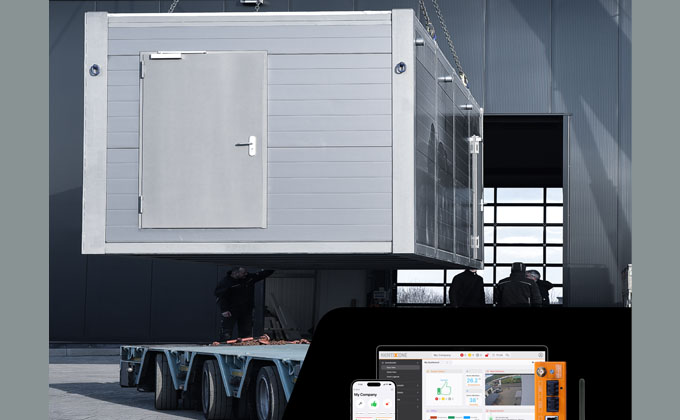
A recent addition to ASSA ABLOY’s portfolio of digital solutions, KentixONE is an integrated platform for physical security and critical monitoring. This unique solution combines 8 different data center functions within one system, all accessible from a single, unified interface:

  • access control
  • intrusion detection
  • video surveillance
  • external fault report
  • early fire detection
  • environment monitoring
  • power monitoring
  • network monitoring

KentixONE strengthens data security by creating a direct link between physical infrastructure and IT operations: it supports seamless integration with data center infrastructure management (DCIM), ticketing systems, and EAC solutions. It can keep sensitive operational data under local control while enabling granular access management, full audit trails, and real-time alerts. At rack level, integrated cabinet access control, intelligent PDUs, and environment sensors allow operators to set temporary permissions, track interventions, and monitor energy usage by rack. Its integrated functionality and approach to risk management across multiple potential factors also helps a data center to achieve important security certifications EN 50600 and ISO 22237. The platform is designed to scale from small technical rooms to multi-site data-center estates, helping an organization’s infrastructure to grow, evolve, or become more geographically spread without adding complexity.

KentixONE’s early fire detection monitoring capability – before a fire breaks out – goes beyond conventional smoke-based systems by correlating thermal imaging, gas detection, temperature trends, and air-quality data to identify risks much earlier. This is especially important in high-density computer environments and battery-powered infrastructure where traditional alarms often activate too late to be effective. Indeed, KentixONE offers real-time overview for more than 40 potential physical risk factors, from unauthorized entry and perimeter breaches to overheating, humidity changes, water leaks, and power anomalies. Everything the security manager needs is accessible on dashboards or via the convenient mobile app.

“According to many of our customers, KentixONE makes significant operational cost savings when measured against traditional siloed solutions,” adds Joachim Mahlstedt. “This also helps to explain why its wide adoption in a range of settings, including a co-location facility in Heidelberg, an on-premise solution for a major utility, and for a provider of modular, container-based solutions. Its flexibility and cost-efficiency are a major plus for data center managers.” “Data centers deserve a digital security management solution built entirely with their needs in mind,” he adds. “Now they can have it.”

Unlocking business intelligence and operational efficiency with a security and surveillance solution

Surveillance solutions have come a long way from their traditional security role, and today, they can empower businesses to streamline operations, gain valuable insights, and drive growth. After all, ultimate goal of any business is to deliver results to the bottom line.

Remote real-time visibility helps you stay informed

For business owners, having cameras act as an extra pair of eyes can be a game-changer when it comes to boosting efficiency. By providing real-time visibility into daily operations, cameras enable owners to remotely monitor multiple locations, saving both time and travel costs. This enables prompt responses to any incidents that may arise, minimizing potential losses and downtime.

Most modern solutions offer various ways to access your system, using a mobile app or your web browser, so you and your staff can stay informed and in control at any time, from anywhere. Such solutions often include powerful tools for advanced search and analysis capabilities, making it quick and easy to search for specific events or incidents in recorded video footage. It allows you to streamline investigations and boost efficiency in your business operations.

Smart devices and analytics enhance efficiency

As you expand your solution to include a wider variety of IP devices, each device brings unique opportunities to streamline and enhance the daily operations, regardless of your business. These devices include audio speakers for playing promotional content, card readers and intercoms for streamlined visitor management, body-worn cameras, and various other devices.

For instance, in store settings, deploying smart solutions at your entrances allows you to grant automatic access. In parking lots, you can monitor availability and guide drivers to available spaces, reducing congestion and wait times while also enhancing the visitor experience. Similarly, analytics can track customer flow, help to guide people and limit wait times in retail stores.

AI-powered devices with smart analytics can be valuable assets in any organization, helping transform operations and automate specific tasks, such as counting people, tracking activity, and detecting inconsistencies, objects, and irregular sounds. This frees up staff so they can focus on high-value activities that drive revenue and business growth. These powerful devices can also be used to trigger automated actions for immediate responses.

In manufacturing environments, you can identify inefficiencies, bottlenecks, and anomalies on production lines, enabling real-time adjustments that optimize output. The result is reduced waste and minimal interruptions with improved quality control and productivity.

Enable predictive maintenance and avoid downtime

Cameras can be installed in virtually any location, enabling 24/7 remote monitoring to get the full picture of your operations.

Inefficient processes can be very costly for organizations. But the safety and well-being of your staff and customers is crucial. With a thermal camera, you could easily detect overheating machinery, fire hazards, and energy leaks, and automatically trigger alarms, sirens, and audio alerts to swiftly notify personnel. Plus, audio analytics can detect critical sounds, including breaking glass, screams, and shouts.

It’s also possible to expand and enhance your system by integrating environmental sensors to monitor indoor air quality. By monitoring this data, you can help ensure the well-being of your employees with healthy indoor environments. Additionally, this data enables you to demonstrate compliance with health regulations.

Using various devices, sensors, and software, you can set up automated actions that support your day-to-day business, enabling more proactive decisions to optimize operations, generate higher quality output, reduce waste, and prolong the lifetime of your equipment.

Use your system for informed decisions

In today’s data-driven world, making informed decisions is key for business success. By integrating multiple devices and data sources into your video management system, you gain easy access to the data you need to make informed decisions.

With real-time data pulled into dashboards, you can quickly grasp performance metrics, spot trends, and make informed choices. By analyzing the data, you uncover trends and patterns to support long-term planning. These insights also enhance your sales and customer engagement. For instance, you can analyze foot traffic patterns and visitor numbers to make smarter decisions about store placement, advertising, and promotions. You can also study passenger or visitor volumes to optimize staff allocation and ensure adequate support during peak periods, while also minimizing idle time during slower periods.

Harnessing data helps businesses make informed decisions and drive growth. It improves efficiency, productivity, and customer experience, enabling better short-term planning and long-term strategic decision-making. This all helps ensure your operations are more efficient and profitable, helping you stay ahead of the competition.

A solution to elevate your operations and stay ahead of the curve

An end-to-end solution from Axis can unlock operational efficiency and business intelligence for your organization. With all components from one trusted vendor, featuring AXIS Camera Station Edge or AXIS Camera Station Pro at its core, you get a proactive solution that lets you unlock a smarter, safer, and more powerful way to run your business, helping you stay ahead of the curve.

Suprema: AI Automation and Integrated Platforms Essential for Modern Security

The speed of digital transformation now determines whether an enterprise can grow and survive. In the past, organizations managed cyber and physical threats with standalone firewalls and siloed systems. Today, however, the convergence of AI, real-time data, and global business operations has made the threat landscape far more complex. Emerging trends like hybrid work models, heightened privacy regulations, and the erosion of traditional network perimeters demand a new approach. Passive defense and single-point solutions are no longer adequate.

In this context, next-generation platforms—delivering AI-driven automation, unified management, and operational agility—have become the standard for enterprise competitiveness. Leading global market analyses confirm a clear shift in IT and security investments as we approach 2026. The future belongs to security platforms that integrate AI-powered automation, end-to-end visibility within a unified management console, and scalable infrastructure—transforming security and efficiency into lasting competitive advantages.

Innovate security and operational efficiency with AI-powered unified platform

Modern companies no longer tolerate fragmented, siloed tools. Instead, there is a decisive transition towards unified platforms that consolidate all critical security operations into a single interface, empowering security teams to make faster, data-driven decisions.

BioStar X sets a new benchmark for total control and AI-powered security, bringing together best-in-class biometrics access control, interactive maps, AI-enhanced video grids, and live alarms within a unified monitoring console. This design eliminates the inefficiencies of switching between multiple systems, allowing operators to respond swiftly and accurately to incidents. Advanced access control enables highly granular management, including detailed role-based permissions, flexible zone segmentation, and automated emergency protocols such as lockdowns or fire responses. Administrators can tailor access rules for users, zones, and devices, maintaining consistent security policies across single to multi-site environments.

Moreover, BioStar X leverages AI-driven video intelligence to deliver real-time detection of critical events—including falls, intrusions, loitering, and tailgating—empowering security teams to identify risks proactively and implement preventive measures. This holistic, integrated architecture streamlines operations and enhances situational awareness in real time.

Integration at scale—The power of open APIs

A core driver of transformation in security technology is the integration power unlocked by open APIs and modular design. These foundational elements enable seamless, future-proof integration across a wide range of third-party systems—from established platforms like VMS, ERP, HR, time & attendance, and visitor management, to emerging technologies like robotic patrols, drones, parking management, and smart building IoT sensors. This versatility has become a hallmark of high-performance security platforms, allowing organizations of all sizes to orchestrate security, operations, and advanced analytics through a singular, unified workflow.

BioStar X’s scalable infrastructure enhances this capability, providing support for multi-server deployments, database sharding, failover clustering, and reliable system resiliency. These enterprise-grade features ensure robust performance, high uptime, and centralized control across distributed, multi-site deployments.

Suprema’s commitment to trusted AI and data protection

Suprema is deeply committed to data protection, user privacy, and the ethical use of AI. BioStar X and all of Suprema’s solutions are developed according to globally recognized standards including GDPR, NIS2, AI Act, ISO/IEC 27001 for information security management, and ISO/IEC 27701 for privacy information management. Also, Suprema ensures robust encryption of biometric templates and personal information using protocols like AES 256, TLS 1.2, HTTPS and RS-485. This “secure by design” philosophy permeates every technology layer guaranteeing protection of user rights, reliable threat detection, and privacy-centric digital experiences for organizations worldwide.

Ultimately, leadership in the new era of modern security comes down to how effectively unified platforms like BioStar X can harmonize data, workflow, and intelligence across an organization. As demands for speed, adaptability, and resilience outpace the limitations of legacy tools, an integrated and open approach isn’t simply a competitive advantage, it is the new industry benchmark for security excellence and modernization.