Home Technology and Products Archive by category Building Automation

Building Automation

Apricum: KNX Technology from the Adriatic Region to the International Stage

For many years, TAPKO Technologies has been developing professional KNX systems for demanding applications. Manufacturing and parts of the technological implementation are carried out by Apricum d.o.o. in Split, a company that is firmly established as an independent KNX brand, particularly within the Adriatic region.

By: Olivera Tomić, CEO, Apricum; E-mail: Olivera.Tomic@apricum.com

When the international industry gathers at Light + Building in Frankfurt am Main in March 2026, TAPKO Technologies and its associated brand Apricum will jointly present their latest solutions for intelligent building automation in Hall 11.1, Stand D36.

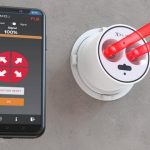
At Light + Building 2026, several product lines will be in focus. With the TAPKO Touch 55, the company showcases a modern KNX touch panel in the classic 55 mm standard format. The compact device replaces conventional KNX push buttons, integrates seamlessly into existing switch programs, and offers intuitive touch control with a high-resolution display – without requiring an additional power supply.

Also on display is an ultra-flat KNX presence detector for ceiling installation, featuring a minimalist design, a 360-degree detection range, four PIR sensors, and KNX Secure. The portfolio is further complemented by an aluminium KNX wall switch, whose clean lines and premium material quality make it particularly suitable for modern interiors, hotels, and maritime applications.

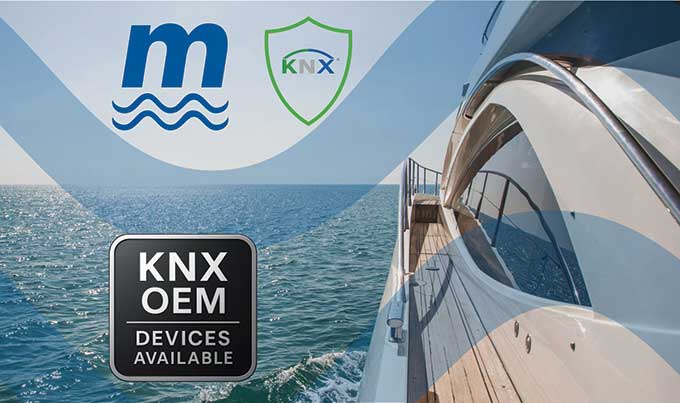
Speaking of maritime applications and KNX devices for yachts: the m~ product line has been specifically developed for operation under extreme conditions. It offers high resistance to vibration, effective protection against moisture, and an above-average service life – backed by a warranty of more than five years.

In the field of system technology, TAPKO presents KAIstack Secure, a KNX-certified communication stack for TP, IP, and RF, optimized for energy-efficient and battery-powered KNX devices. In addition, KAIstack Evaluation Boards enable rapid product development with high hardware flexibility and support for multiple KNX communication media.

For manufacturers and OEM partners, TAPKO also offers preconfigured KNX system devices that can be individually customized and labelled, and supplied complete with ETS database entries, KNX registration, and technical support. The service portfolio is rounded off by the KNX-accredited TAPKO TestLab for interoperability and protocol testing.

At its Split location, Apricum also operates the Apricum Academy by TAPKO, providing certified KNX training courses – from Basic and Advanced courses to KNX Secure and IT integration. With their joint presence at the trade fair, TAPKO Technologies and Apricum underline their role within the European technology network for future-proof KNX solutions.

Innovatrics HQ Shows What Identity-First Building Security Looks Like

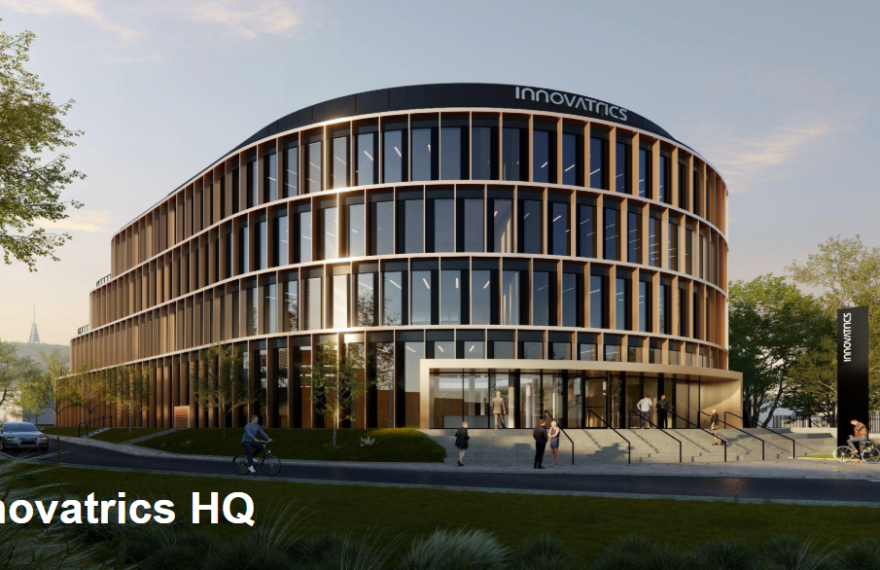
Biometrics House, Innovatrics’ new headquarters in Bratislava, is designed as a working model of identity-first building security, demonstrating how hands-free access and visitor management can scale without compromising privacy.

Innovatrics is now operating from a new global headquarters in Bratislava, Slovakia, and the building is not just where the company works. Known as Biometrics House and billed as the world’s most biometric building, it is designed to run on a simple principle: trust starts with identity. In practice, routine movement through the site can happen without badges, PINs, or a reception queue, while security teams keep clear oversight of who is where, and why.

For security professionals, the message is practical. Biometrics is no longer limited to controlled checkpoints at airports or high-security sites. When it is deployed with the right safeguards, it can become part of everyday building operations, from visitor management to access control and incident response.

Identity as the Access Layer, From Parking to the Elevator

Biometrics House has been built as a working example of how multimodal identification can replace traditional credentials across an office environment. Set next to Bratislava’s Vinohrady train station, about 15 minutes from the city center, Biometrics House is organized across four floors, with team zones, meeting rooms, and workshop areas designed to support both focused work and collaboration. Shared spaces such as the bistro, social-stair lobby, terraces, and Zen zones are designed to keep the day moving without requiring people to leave the building. From above, its footprint echoes a fingerprint, a deliberate reference to the company’s roots in fingerprint recognition.

The security concept is centered on recognition rather than possession. Employees and approved visitors can be identified via facial or palm recognition, reducing weak links associated with borrowed cards, shared codes, or forgotten credentials. In practice, this extends beyond the front door. Parking access can be handled the same way, and lifts can be tied to identity so that users are routed to permitted floors without extra taps or swipes.

Visitor handling is also built around traceability. Instead of issuing temporary badges and hoping they are returned, enrollment can occur before arrival or at a self-service kiosk. Once inside, pre-registered entry and a structured visitor journey help guests reach meeting rooms efficiently, while access permissions remain defined and traceable.

“We imagine a workplace where even your desk is dynamic, assigned not by habit but by what you’re working on that day. The building itself adapts to your projects, your team, and your agenda,”

Innovatrics Founder and CEO Jan Lunter.

Built for Security, Designed for Privacy

Any identity-first building stands or falls on trust, and Biometrics House puts data protection in the foreground. Innovatrics says the building goes beyond GDPR requirements through biometric data decoupling, minimal data storage, and secure on-device camera processing. Users are also given clear choices during registration. With consent, biometrics can be used for hands-free access across authorized zones. Without consent, data can be anonymized and limited to essential security checks to prevent personal identification.

From an operational perspective, the site is also a live environment for modern building security practices: real-time zone surveillance, intrusion detection, and automated alerts that can escalate events without stopping normal operations. For higher-risk scenarios, anti-spoofing and liveness controls help prevent attempts using photos, videos, or masks. A robotic “guard dog” provides a visible deterrent and can be used for patrol or guided-escort tasks.

A Living Lab for Integration, Not a Showroom

What makes Biometrics House notable is not the novelty of face recognition alone, but the way the building is used. The HQ functions as a permanent test site where identity, video, and access workflows can be evaluated under real office conditions, not just in a demo room. That matters for integrators and end users who need answers to practical questions: how onboarding is managed, how exceptions are handled, how audit trails are kept, and how systems behave during peak hours.

It is also a place to see how building automation and security can work together without turning the workplace into a checkpoint. Meeting spaces and shared facilities can be prepared based on verified presence, while environmental monitoring keeps comfort parameters such as air quality, humidity, and lighting under continuous control.

Design choices are tested the same way the technology is: in motion. Teams observe how layouts shape behavior, adjust based on what actually happens day to day, and treat the office as something that can learn. “We imagine a workplace where even your desk is dynamic, assigned not by habit but by what you’re working on that day. The building itself adapts to your projects, your team, and your agenda,” says Innovatrics Founder and CEO Jan Lunter. It is an approach that turns the HQ into a flexible, connected environment that evolves with the people inside it.

Sustainability as Resilience

Although the headline feature is biometric operation, the building’s energy approach supports day-to-day resilience. Biometrics House operates without a gas connection, uses geothermal energy and solar power, and captures rainwater for reuse. A recycled aluminium facade and other material choices underscore that a high-security building can also have a lower operational footprint.

As identity moves closer to the center of physical security, Biometrics House offers a practical reference point: a fully operational workplace where biometric access, privacy safeguards, and building management have been combined into one repeatable model.

About Innovatrics

Innovatrics is an independent EU-based provider of trusted identity and biometric solutions used by governments, businesses, and law enforcement agencies to keep people safe, onboard new customers, and build institutional trust. Since 2004, the company has delivered flexible biometric identification solutions that have benefited more than a billion people worldwide, with algorithms that consistently rank among the fastest and most accurate in fingerprint, face, and iris recognition.

Honeywell Becomes Official Building Automation Partner of the Charlotte Hornets

Hornets Sports & Entertainment (HSE) and Honeywell have entered into a multi-year strategic partnership, appointing Honeywell as the Official Building Automation Partner of the Charlotte Hornets. As part of the collaboration, Honeywell will deploy advanced, AI-driven solutions to enhance safety, energy efficiency, and the overall user experience across two of HSE’s key facilities—the Spectrum Center and the Novant Health Performance Center.

At the Spectrum Center, home of the Charlotte Hornets’ NBA games, Honeywell will implement integrated security and building management systems as part of a recently completed extensive renovation. The level of the facility housing player locker rooms and VIP areas will be officially named the Honeywell Event Level.

At the new Novant Health Performance Center, which is currently under construction, Honeywell will install state-of-the-art security, energy management, and life safety systems, creating a smart and connected environment for players, staff, and visitors. Honeywell will also be named a Foundational Partner of the facility, alongside local companies such as Novant Health and Truist.

The partnership includes unified access control and security through the LenelS2 OnGuard platform, AI-powered building management via Honeywell Connected Solutions, advanced fire detection systems, and centralized integration of all technical systems. According to Mike Behan of HSE, the collaboration with Honeywell represents a major step toward creating an elite training environment and enhancing the game-day experience.

Honeywell emphasized that the partnership goes beyond technology, aiming to develop smart sports venues that deliver operational advantages, higher levels of safety, and an improved experience for fans and the local community, in line with the global trend toward modernizing sports and entertainment infrastructure.

Partners become family: MDT acquires Tapko and Apricum

The MDT Group acquires a majority stake in the German KNX pioneer Tapko Technologies GmbH and the Croatian KNX forge Apricum d.o.o. The close and trusting partnership between the German KNX manufacturer MDT and the German KNX pioneer Tapko as well as the Croatian KNX producer Apricum has existed for several decades. Now both companies will become part of the MDT Group and the cooperation between the locations will be even closer. With the majority takeover, all employees of the companies will be included in the KNXperts team.

“Our companies and teams have been working together since MDT developed the first KNX product. The long-standing, successful technology and production partnership will now be further deepened and expanded. I am particularly pleased that we can now welcome Petar Tomic and Klaus Adler, proven KNX experts from the very beginning, to the MDT family,” says Roger Karner, CEO of the MDT Group.

Founded in 1999, Tapko has relied on the EIB/KNX standard from the very beginning. As one of the most innovative KNX specialists, the company has an excellent network in Europe and handles international development requests. The portfolio supports customers with consulting and services, from the product idea to production. The two Tapko managing directors Petar Tomic and Klaus Adler are widely regarded as pioneers in the KNX world and will both remain with the MDT Group as managing directors of Tapko GmbH.

Klaus Adler looks at the new connection: “The partnership with MDT has always been a special connection, we have a cooperation among experts at eye level. We have already moved a lot in the KNX market and will become even stronger together.”  And Petar Tomic adds: “MDT and we have long shared the conviction that the KNX system is the best solution in building automation. From now on, we will walk the path to the smart building together as one company.”

The Croatian company Apricum has also been active in the KNX market for decades. Founded in 2001 by Olivera Tomic in Split, Croatia, the construction of the first electronics production began in 2002. One of the company’s first products was a fancoil controller for the KNX market, a successful product that was followed by several others. Olivera Tomic will also become a family member of the MDT Group as Managing Director of the Croatian production and sales company Apricum.

“In the years of trusting cooperation, MDT has always been a special partner, where not only the business but also the people have a firm place in the focus of the management. Therefore, I am happy to become part of a larger, KNX-loving community with my company. We will achieve a lot together!” says Olivera Tomic.

The MDT Group is one of the leading manufacturers of KNX products for the automation of commercial and private buildings. The company and its employees stand for the highest quality and user-oriented thinking. The group includes the MDT brands with a complete KNX portfolio in actuators, sensors and system components, and the Tense brand with a large selection of high-end KNX buttons. A large number of intelligent functions in the products offer users tangible added value. The MDT Group offers one of the most extensive KNX product ranges on the market for smart buildings.

Automation and Monitoring: OPC-UA Integration for Industrial Performance Visualization in AppVision

UltraVision Consult recently completed an advanced OPC-UA integration project for a food manufacturing facility, enabling seamless machine-level automation monitoring directly within the AppVision PSIM platform. The solution consolidates operational data from packaging machines into a single, centralized dashboard and delivers real-time visualizations, performance graphs, interactive timelines, and state-based diagnostics. By combining automation data with security oversight, this project demonstrates how PSIM platforms can bridge industrial and security systems to drive smarter, faster, and safer decision-making in demanding operational environments.

UltraVision Consult successfully implemented a smart automation monitoring solution for a packaging facility by leveraging OPC-UA protocol integration within the AppVision PSIM platform. The project aimed to centralize machine performance data in real time, creating a clear and actionable operational overview that supports both technical response and strategic decision-making.

Through this integration, the live status of every packaging machine is now pulled directly into AppVision. Each machine’s operating state, connection health, and number of processed units in the last three minutes are displayed and continuously updated every 30 seconds. This eliminates the need for scattered PLC interfaces and provides a unified view of the packaging floor, accessible to both facility managers and control room operators.

A custom dashboard was built to present:

  • The current status of each machine
  • A live graph showing production volume over the last three minutes
  • A timeline bar marking operational states (run/stop/error)
  • A pie chart of time spent in each state
  • A live data table with machine-specific metrics

In addition to visualization, the system also includes automated email alerts in case of faults, historical error logging and analysis, and data export tools for traceability and reporting.

The added value of this solution lies in its cross-functional synergy. AppVision is traditionally used for managing alarms, video surveillance, and access control. By integrating with industrial automation systems via OPC-UA, it now empowers decision-makers with real-time operational intelligence within the same security interface.

This level of integration is especially critical in environments where downtime directly impacts output, and where collaboration between IT, OT, and security teams is essential. For the client, the solution not only improves responsiveness during incidents but also provides historical insights that support performance reviews, audits, and preventive maintenance.

UltraVision Consult continues to push the boundaries of what PSIM platforms can achieve by transforming them into central hubs for both physical security and operational excellence.

Z-Wave Alliance Introduces Upgraded Certified Product Guide

The Z-Wave Alliance has unveiled a redesigned Certified Product Guide, offering the smart home industry a powerful tool to navigate its vast ecosystem of devices. This updated online platform centralizes information about thousands of Z-Wave Certified products, making it easier for manufacturers, integrators, and consumers to find exactly what they need.

Unlike a simple catalogue, the guide provides a searchable database where users can filter devices by brand, category, protocol version, frequency, and other technical specifications. More than 4,500 certified products are already featured, covering solutions such as lighting, locks, sensors, gateways, and controllers. Each entry in the guide is backed by independent certification, ensuring interoperability, strong security, and reliable performance across the Z-Wave ecosystem.

The launch also highlights the growing presence of Z-Wave Long Range technology, with more than 100 certified ZWLR devices included so far in 2025. By combining advanced filtering options with transparent certification details, the guide supports better decision-making for both professionals and end-users.

Because it is continuously updated, the resource reflects the latest innovations as soon as they achieve certification. This makes it a living reference point for anyone involved in the design, integration, or use of smart home products.

“As we roll out the enhanced Certified Product Guide, our goal is to give the industry more than just a database—we’re delivering a roadmap to seamless Z-Wave interoperability,” said Bettina Roll, Certification Program Manager for the Z-Wave Alliance.

The all-new Z-Wave Certified Product Guide is now live and can be found by visiting: https://products.z-wavealliance.org/.

How UltraVision Consult Delivered Comfort During a Heatwave for a Leading iGaming Company

Facing record-breaking summer heat, a leading iGaming company in Central and Eastern Europe partnered with UltraVision Consult to implement a smart HVAC monitoring and control solution using the AppVision PSIM platform. The system aggregates/correlates real-time data from temperature sensors installed in each room—ranging from live dealer spaces to large department offices—and adjusts heating or cooling automatically based on ambient conditions and predefined comfort settings.

The result: increased employee satisfaction, optimized energy use, and the elimination of manual HVAC adjustments by staff.

In the world of iGaming, real-time performance and operator focus are critical. But as generally each summer’s record-breaking heatwave sweeps across the globe, one of the CEE’s leading iGaming companies faced a growing operational challenge: achieving faster and automated consistent thermal comfort.

The company’s HQ includes nonstop live dealer rooms with heat-intensive lighting and streaming setups, plus larger departments with varying occupancy. Manually adjusting each AC unit became inefficient, time-consuming, and left many employees uncomfortable.

UltraVision Consult stepped in with a solution rooted in precision, automation, and real-time control.

Using the AppVision platform, we designed a centralized monitoring and control system tailored to the unique dynamics of the building. First, we installed smart temperature sensors in every room, creating a live heat map of the entire building.

The result? A noticeable increase in employee satisfaction, significantly improved climate consistency, and reduced complaints—especially in high-pressure environments where discomfort can affect performance.

Additionally, by eliminating manual HVAC management, the company now benefits from faster response times, better energy efficiency, and actionable data for long-term facility optimization.

This project is a clear example of how UltraVision Consult acts as a true ecosystem solutions provider—not just integrating security, time management, and smart building systems, but aligning technology with the actual rhythm of operations. From consulting to system design, sensor deployment, implementation, and audit, we ensured the iGaming giant’s needs were met from end to end.

TP-Link Adds Matter Energy Monitoring to Smart Devices via Firmware Update

TP-Link has released a major firmware update enabling Matter 1.3 energy monitoring for its compatible smart devices, reinforcing its commitment to open standards and user-focused smart home innovation. The update provides standardized real-time and historical energy consumption data, giving users greater transparency and control over home energy usage while ensuring seamless interoperability with major smart home ecosystems.

The rollout begins with the Tapo P110M, which now supports Matter energy monitoring when both the device and hub are updated to the latest version. Currently, the feature works with Samsung SmartThings and Home Assistant apps, with broader platform support expected as the technology matures.

TP-Link’s decision to enable the feature now follows significant industry developments. While Matter 1.3 introduced energy monitoring in May 2024, many major platforms lacked full implementation, risking inconsistent performance. Only recently has Samsung SmartThings offered functional, though evolving, support for the feature.

To guarantee reliable cross-platform performance, TP-Link requires verified platform compatibility through extensive testing before enabling such capabilities.

The company continues to work closely with leading smart home platforms to expand Matter energy monitoring support across the industry.

With devices fully compliant with Matter’s latest specifications, TP-Link aims to ensure that its energy monitoring-enabled products deliver consistent, complete functionality in all major ecosystems.

Suprema: BioStar X – AI-Powered Next-Generation Integrated Security Platform

Maximizing Security and Operational Efficiency with the Convergence of AI-Based Access Control and Intelligent Video Analytics

The global security market is expanding at an unprecedented rate. According to Allied Market Research, the integrated security services sector is projected to grow at a compound annual growth rate of 13.7% from 2022 to 2031, reaching USD 55.5 billion by the end of the period. This growth is fueled by increasingly complex security challenges and a rising demand for unified solutions over standalone systems. Today, major corporations, government facilities, and international airports are moving swiftly toward integrated security platforms.

Integrated security is no longer just about safeguarding buildings—it’s becoming a cornerstone of operational excellence. While traditional systems focused primarily on access control and video surveillance, modern integrated platforms now unify a broad range of building functions—from HR management and fire detection to license plate recognition, HVAC, and lighting control—all within a single interface. This evolution reflects a clear industry need: security solutions that also optimize operational workflows.

Introducing BioStar X: AI-Powered Next-Generation Integrated Security Platform

To meet this need, Suprema has developed BioStar X, a cutting-edge integrated security platform that merges AI-powered access control with intelligent video analytics. Building on over 20 years of industry expertise, Suprema has created a solution that goes far beyond conventional access control—offering intelligent, scalable, and highly stable security operations for enterprise environments. BioStar X is advanced in both AI-driven access control and video analytics and provides exceptional scalability and reliability, even in large-scale deployments.

Convergence of AI-Based Access Control and Intelligent Video Analytics

BioStar X integrates AI-based access control and video analytics into a single platform. Real-time access management, video monitoring, and intelligent analytics can all be performed simultaneously on one screen, enabling efficient monitoring with minimal personnel. In the event of an incident, users can instantly identify the situation and its location, ensuring a rapid response.

The platform also features highly advanced AI-driven data analysis capabilities. It proactively detects and responds to threats through abnormal behavior analysis, including AI-based intrusion detection, loitering detection, and fall detection.

Moreover, it enables precise data analysis and enhanced security monitoring in large-scale facilities through features such as people counting, tailgating detection, blacklist detection, and missing person tracking. As such, BioStar X plays a vital role not only in multi-use facilities like schools, malls, airports, and hospitals but also in smart buildings.

For example, when deployed in schools, BioStar X can help prevent security incidents by detecting threats such as intrusions or weapon possession using AI video analytics. It can also identify abnormal behaviors like school violence or loitering and enable immediate intervention. Facial recognition technology can restrict outsider access and integrate with academic schedules to manage classroom entry and attendance. Additionally, it automates classroom locking and motion detection to secure unoccupied rooms. The system can also be integrated with pre-registration visitor management systems, enhancing campus-wide security through facial recognition or QR-based identity verification.

Maximizing Operational Efficiency and Security through a Unified Platform

By integrating multiple security systems—such as access control and video surveillance—into one platform, BioStar X allows security personnel to monitor and manage all security operations in real time through a single interface, eliminating the need to juggle separate systems. This streamlines security processes, enables rapid incident response, and improves both operational efficiency and overall security performance.

Improved efficiency also allows for optimized personnel allocation, while the reduced number of standalone systems lowers maintenance requirements and operational costs—ultimately driving down long-term expenses. Furthermore, BioStar X’s flexible scalability means additional security systems don’t need to be added separately. It can grow alongside organizational needs, enabling safer and more efficient environments.

Scalable and Stable for Enterprise Environments

For large-scale facilities, such as corporate buildings and government institutions, scalability and stability are essential. BioStar X supports the registration of tens of thousands of users and can reliably operate a vast number of devices—making it a true enterprise-grade solution. Suprema is already supporting major deployments like the Sejong Government Complex in Korea and the Mohammed VI University Hospital in Morocco.

The platform also offers the flexibility to meet complex enterprise requirements. With seamless integration capabilities for third-party systems and customizable UI/UX options, BioStar X can be tailored to meet even the most demanding environments. Security teams can personalize dashboards to display specific video feeds, data sets, or applications—delivering a user experience that is both powerful and intuitive.

BioStar X as an Essential Security Solution for the Future of Security

As security threats evolve, so too must the technologies that protect us. BioStar X represents the next generation of intelligent, integrated security—engineered for organizations that require more than just protection. Whether you manage a corporate office, a smart building, or a public institution, BioStar X delivers the perfect blend of advanced security and operational efficiency. It’s not just a platform—it’s a strategic investment in the safety, intelligence, and future-readiness of your organization.

Rondo 1, an Architectural Icon of Warsaw, Protected by ICT

The unique shape of the building, comfortable working conditions and location in the very center of the city make Rondo 1 one of the most prestigious skyscrapers in Central and Eastern Europe.

Rondo 1 is the first AAA class high-rise building built in Warsaw (192 meters height, 41 above-ground storeys, 103 000m2 of total area). It was designed by world-renowned architects from the American studio Skidmore, Owings & Merrill.

The office building consists of two buildings: a 40-storey glazed tower (Building B) located parallel to Jana Pawla II Avenue and a 10-storey Building A, located at Swietokrzyska Street, with a façade made of opaque frosted glass. Rondo 1 offers office and service space that meets the highest standards. Premises for rent can be arranged in any way to fully meet the needs of even the most demanding tenants.

Rondo 1 was the first European skyscraper to receive the LEED® Gold ecological certificate in the “Existing Buildings” category. In 2016, the recertification process was completed, as part of which Rondo 1 received the highest ecological certificate – LEED® Platinum.

The LEED® certificate in the “existing buildings” category is characterized by continuous verification of the building’s operating parameters and requires continuous improvement of the efficiency of its operation in order to meet the newer and more stringent requirements of the certification system. The process evaluated, m.in other things, sustainable location, efficient use of water and energy resources, and materials used.

Rondo 1 is one of the most characteristic office buildings in the very center of Warsaw. It is chosen by companies that care about reputation, high quality office space and that everything is close by; to the railway station, to fashionable restaurants, shopping mall or cinema.

Integrated Control Technology (ICT) enterprise access control solution, Protege GX helps to control people flow and security for this iconic building. Every morning, thousands of people pass through gates secured by Protege GX. Each gate is equipped not only with entry/exit readers but also with OTIS panels. Thanks to seamless integration between Protege GX and OTIS – each user passing a gate is automatically assigned to one of many elevator cabins – which will allow to reach default destination floor in fastest way. This functionality is crucial to relieve the traffic of thousands of people in the morning hours. ICT readers equipped with secure MIFARE and DESFire technology have also BLE (Bluetooth Low Energy) option to allow flexibility for users to use any type of  access credentials.

ICT certified partner xPro Security Technology, a long-standing partner in Poland  was instrumental to implement the  Protege GX system which includes over:

  • several dozen system controllers
  • hundreds of door expanders
  • dozens of intelligent and monitored power supply’s 4A
  • several hundred of proximity RFID readers

Server-based access control system, Protege GX, uses its native HLI lift integration to talk to a dozen  of OTIS elevators. Another dozen elevators are managed by input-output expanders.

“We are very proud that our solution not only secures this iconic building but also makes it more efficient at managing the flow of employees through the integration with the lift system” says Milos Kohout, Sales Director for Central and Eastern Europe .”This type of projects show the flexibility of our Protege GX  platform and, when combined with the knowledge of our partner xPro Security, it delivers a successful solution, saving time for all users of the building.”