Home Technology and Products Archive by category Fire Systems (Page 3)

Fire Systems

Don’t Rely on a Wake-up Call: Hotels Have No Room to Compromise on Fire Protection

Hotels can be complicated sites to protect. Busy kitchens, extensive electrical installations plus regular repair and maintenance work all increase the likelihood of fire incidents. Add to these the presence of an ever-changing population of residents who may smoke, be careless around call points and detectors, or have varying mobility, and the picture becomes increasingly complex.

No two hotels are the same. Some are high-rise and purpose-built with hundreds of guest rooms and a host of leisure, retail and dining spaces. Others may be sprawling resorts with isolated beachfront villas or remote log cabins. Smaller, boutique hotels pose different challenges, and further complications arise when the hotel is within a historic building.

It’s clear that there is rarely scope for a ‘one size fits all’ solution. Nevertheless, there are some requirements applicable to all hotel fire protection. We will explore some of these next.

False Alarm Management

The causes of false and unwanted fire alarms in hotels can include cigarette smoke, shower steam, the accidental triggering of manual call points, and even contractor activity. Against a backdrop of these and many other possible triggers, how do hotels minimise fire risk, ensure staff and guest safety, avoid undue panic and disruption, whilst also limiting damage to profits and reputation?

A high-performance fire system will offer comprehensive false alarm management generally using cause and effect programming, as well as detection and verification methods to help prevent false alarms.

AlarmCalm false alarm management is available as standard on Advanced’s Axis EN and MxPro 5 solutions and delivers unprecedented control of verification and investigation delays. By dividing sites up into virtual false alarm ‘building areas’ independent of fire zones, users gain more precise control of false alarm management and reduction strategies that exactly fit the needs of each part of a building.

To highlight some of the solutions to the challenges faced within hotels, Advanced has published AlarmCalm Complete False Alarm Management for Hotels.

Phased Evacuation

Selecting a fire panel brand with the ability to process complicated cause and effect is crucial to effectively manage the evacuation process.

When configured correctly, cause and effect programming, can help ensure that the people most in danger from a fire are evacuated first. Meanwhile, the flow of others in the building can be kept at a manageable level and safe escape routes maintained. This is especially the case for systems featuring the latest sounders that support recorded messages or varied tones.

 Easy Identification of Fire Events

Large, multi-storey hotel complexes can make it difficult for fire and rescue services arriving on site to find and monitor the spread of fire. This can hamper decision-making, increase reaction time and affect assessments of how to tackle the blaze.

TouchControl

In smaller boutique hotels, where space can be at a premium and aesthetics are important, fire panel location can be contentious. It is a challenge to integrate fire protection discreetly whilst maintaining up-to-the-minute status and control.

For these scenarios, Advanced offers the TouchControl repeater panel. Ideal for use in public areas, thanks to its discreet, low-profile design, the panel complements a wide range of interiors and is capable of displaying hotel notices, messages or advertisements when in standby mode. However, upon detector activation, the display instantly reverts to show fire system status via clear maps and plans of the site and the zone/area in fire. The screen itself has the added benefit that it can be operated by firefighters even when wearing gloves.

The ability to locate powerful fire system technology within high-traffic areas without detracting from high-quality interior decor gives fire system specifiers and installers new scope to combine design appeal with fire safety for full protection of people and property.

BMS Integration to Support PC Graphics

Fire systems within larger hotel premises are often required to integrate with BMS (building management systems) to communicate with third-party solutions. By consolidating data from multiple applications onto one system, end users have full oversight of an entire complex, improving reporting, information management and decision-making.

Advanced’s EN 54-approved Axis EN, MxPro 5 and UL 864-approved Axis AX panels all easily integrate with a site’s BMS via a simple fire protection interface. Once connected, end users with access to Advanced’s PC graphics package can view the status of their entire site via maps and plans.

In summary, well-considered, well-implemented fire protection solutions can transform the experience of hotel residents and staff alike. In making fire protection a priority and specifying the best equipment for each hotel’s particular needs from the outset, it is possible to maximise safety, minimise disturbance, protect reputations and enhance hospitality.


Stacking up fire safety issues in a modern warehouse

The changing nature of the warehousing sector is creating new and complex safety issues, especially around fire protection, but the right expert help can go a long way to tackling the challenges.

The role of warehouses is changing, a transformation that has been accelerated by the pandemic. They are no longer simply storage facilities; they are a vital part of logistics and retail supply networks, complete with high levels of automation. The modern warehouse is a sophisticated, computerised and highly efficient fulfilment centre – it is also an environment that can be difficult to manage from a fire safety perspective.

In large open spaces with high airflow, smoke is quickly diluted, often making it difficult for traditional passive detectors, in which sensors are placed near or at the ceiling because smoke rises, to provide early alarms. In addition to high ceilings, warehouses also pose other challenges related to smoke detection. Mechanical heating, ventilation and air conditioning (HVAC) systems or natural ventilation can divert smoke away from detection points, while layers of warm air, often created by poor insulation, can stop smoke from reaching detectors. Racking and warehousing equipment can also trap smoke away from detection, effectively hiding a fire until it has caught hold.

The scale of the issue is substantial. According to the latest statistics from the United States National Fire Protection Association (NFPA), in 2018, 27,000 fires were recorded in storage facilities across the country. Just as worrying are false alarms – UK government statistics reveal that false alarms accounted for more than 4 in 10 incidents attended by English fire and rescue services in 2019. Around two thirds (67%) of these fire false alarms were linked to fire detection apparatus, either because of human error or malfunctioning.

These types of issues are universal – that’s why advanced detectors and voice alarm systems can be essential for maintaining a safe warehouse environment.

Dedicated safety technology

At Honeywell, we’ve been developing tailor-made fire safety and security systems for decades. We know how important early warnings are in a warehouse – both for the safety of those inside as well as protecting property. Our solutions, which are designed to serve the needs of facilities of all sizes, can improve safety through the deployment of progressive fire and voice alarms along with dedicated safety technologies.

Bringing this all together to create a reliable implementation requires equipment that meets the specific needs of an individual site. It also needs a deep understanding of the issues involved. For example, a key consideration when specifying smoke detectors is their activation time, which is principally dependent on sensitivity; the higher the sensitivity the lower the concentration of smoke that is needed to activate the detector. The sensitivity of smoke detectors can vary quite substantially from one technology to another so specifying a detection system that is appropriate to the fire risk is paramount.

That’s why Honeywell recommends an engineering-led Performance Based Design (PBD), tailored to the specific requirements of an individual warehouse environment, to be used when designing fire detection and suppression systems. For example, the location of the detectors or the distance between sampling points may need to be adapted to suit specific conditions. For a facility to be properly protected it may also need door entry systems and CCTV.

Gaining access to the experts

Warehouse managers already have enough to consider without having to add upgrading fire protection systems to their list of responsibilities. That’s why Honeywell has created an online event specifically created to focus on the warehousing sector, which aims to explain what to consider when implementing a fully featured fire safety solution.

The seminar, part of the Honeywell Beyond programme, will deliver sector-specific guidance, analysis and insights about the problems of assembling the best possible solutions and how best to overcome them. Keep an eye out for more details soon.


PRINT MAGAZINE: Scan the QR code to find out more about our Fire & PA/VA Solutions for warehouses.


ONLINE ARTICLE: Click here to find out more about our Fire & PA/VA Solutions for warehouses.

Networked Fire Systems – What to Consider?

The demands on today’s fire systems have never been greater, but not all panels are created equal, which can make choosing the right solution a challenge.

Many fire panels are relied upon to alert people to real and potential emergencies, to control evacuation procedures and to reduce the number of false alarms. They are also required to control the release of suppressants, operate smoke control systems, manage the closure and release of fire doors, link to graphical control systems and interact with building management systems.
The demand for fire panels to do all this – and more – over larger and more complicated sites, as part of a fire network, is increasing. And with this requirement come important questions, such as:
– Are the panels quick and easy to set up as a network?
– Will the network speed/performance, over a large area, be compromised?
– Will the network be easy to use and maintain?
– Will it be easy to expand the system?

Flexible system architecture
A networked fire alarm system communicates data between all panels/network nodes on a site, allowing for greater control over the fire safety of the entire building. Good network design will distribute the fire panels throughout the site, instead of having to take all the detection circuits back to a single point. Using a true peer-to-peer system, information from any input or output device can be passed over the network and displayed on any control panel.

The inter-connection of fire alarm control panels over a proprietary network is well established, allowing many panels, often sited in physically different locations, to communicate between each other using a two-core cable (or fire resistant, two-core, screened twisted pair cable depending on your local legislation). Information from any one panel can be accessed from all other panels in a network, allowing the user to access all the information on the system from any panel.

Speed of the system
In large, complex sites, as the number of panels and input and output options on a network increase, some systems can slow down dramatically, seriously compromising safety and reliability. Both EN54-13 and UL864 specify maximum times for relaying signals around the network. For example, the standard EN 54-13:2005 (E) 4.3.2.1 states that “a fire alarm condition on Control and Indicating Equipment (CIE) shall be indicated on the main CIE within 20 seconds.”
Advanced’s networks allow the inter-connection of up to 200 panels (nodes) in a fault-tolerant configuration. The maximum cable length between nodes is 1.5km, with a total loop length of 20km. The network is capable of withstanding a single fault between nodes without loss of communications to any single panel. This is all achieved using standard two-core, fire-resistant cable.
There’s little point in setting a 60-second acknowledgement time if your network takes 15 seconds to process inputs, as that’s 25 per cent of the time available. The typical delay on an Advanced Ad-NeT+ 50 panel network, for each panel to indicate a fire from any zone, is less than one second, and it’s just 3.5 seconds for a full 200 panel system.

Network, design and composition
Networks can be built using standard fire cable or fibre optics and often need to cover huge distances. The network design therefore needs to be resilient and function reliably in a dynamic fire situation, where increased network traffic, higher voltages and currents, as well as changing environmental conditions, can be challenging. EN54-13 approved systems are designed and tested to continuously monitor network activity and ensure they perform in a fire situation, so are worth seeking for added peace of mind, especially on larger sites.

Operation of the system
Large fire alarm systems can feature control panels on different floors or in different areas of a building, with each panel controlling and monitoring devices in the area to which it is designated. It’s therefore critical to choose a flexible solution that can be configured to report the status of other panels in the system, if required.
A networked fire alarm system enables the user to access information from any panel on a network or from a central location. This overall system view saves those charged with maintaining these systems from having to visit multiple physical locations.

Scalability and cause and effect
A truly scalable fire network will allow different cabling typologies suitable for sites of various sizes, with a vast choice of cause and effect options. Networks designed within buildings generally use standard fire-resistant copper cable. However, as buildings are increasingly networked, fibre optic cable has become the preferred medium.
The nature or purpose of a building area also requires consideration. For example, detectors will be grouped to allow appropriate alarm annunciation, so systems need to provide enough zones. Depending on the size of the site, a fire alarm network may have multiple panels, hundreds of zones and thousands of devices. Therefore, the need for sophisticated cause and effect and intuitive, easy programming of rules becomes crucial.

Conclusion
In complex buildings, the fire system needs to work quickly and reliably, and process large numbers of changing signals in the event of a fire. On larger sites, seconds count and fast systems are highly valuable in maximising the time for verification, escape and firefighting.
When selecting the most appropriate networked fire system, it’s important to ask:
– Can information be displayed clearly and logically across the whole site?
– Is the system truly scalable?
– Is it easy to program and maintain, and can it easily be expanded in future?
– Will the system perform correctly and are its cause and effect capabilities adequate?
– Does the network offer appropriate levels of reliability in the event of a fire or fault?


Overcoming the challenges of fire safety in the paper industry

For added risks like combustible materials and high ceilings, fire and smoke detection cameras from Bosch provide faster, more reliable detection than traditional alarm systems.

Fire safety is more than a precautionary or preventative measure. A fire detection system is a core investment in any company’s most valued asset – its people. Without adequate fire safety for the employees working at a facility, there is no business continuity. Even if, thankfully, no harm comes to personnel during a fire, repairing the damage to the premises and machinery costs time and money. And production often stops entirely.
In particular, the paper and pulp industry poses unique risks for fire safety. The raw materials used for creating paper are highly flammable, as are the chemicals for many of the production processes. Humid production environments and incredibly high ceilings make traditional fire detectors unreliable at best. This is why Bosch offers video-based fire detection to quickly recognize smoke and fire at its source and alert safety teams before the fire has the chance to spread.

“The fear to go to the factory one morning and see that it is reduced to ashes.”
Safety Manager Paper Industry

Paper mills contain large amounts of wood chips and discarded cardboard which, along with several types of combustible chemicals for the cellulose production process, carry a high fire load. Paper machines also have up to 200 electrical motors with kilometers of high-voltage wires. Such conditions are a hotbed for fires, and once one starts, the fire can spread incredibly quickly.
Unfortunately, paper facilities and warehouses require high, vaulted ceilings where traditional fire detectors are often located. In the event of a fire, it can literally take minutes for smoke to reach the detectors. Add in the huge quantities of water vapor and dust created by the paper machines, and traditional fire detectors might not even register an alarm. By then, the fire has already spread out of control.
In addition, outdoor storage areas are almost entirely unprotected, because implementing traditional fire alarms in an open area is nearly impossible. Smoke can easily escape a partially covered structure without setting off an alarm, and traditional systems aren’t even constructed for the outdoors. For instance, storing bales and reels directly outside a paper mill pose a particular risk. These materials are highly flammable, yet they are often stored outside the coverage area of a traditional fire system. Their close proximity to the building means that a fire starting outdoors can quickly spread throughout the facility while the alarm system lags in response time.

AVIOTEC fire and smoke detection cameras with AI algorithms
AVIOTEC camera systems use video-based fire detection to quickly identify smoldering and small fires directly at the source. This means the fire alarm doesn’t have to wait for smoke to physically reach its sensors, thus wasting valuable time before alerting safety teams. Instead, AVIOTEC analyzes live video in real-time. A high vantage point is actually helpful for this form of verification, even in humid, dusty, or outdoor environments.
Cameras can then be adjusted to focus on at-risk pieces of machinery or materials to detect fires as quickly as possible. This reliable option pays off over the long-term, because the systems are easy to maintain and better protected from dust. With the latest in Artificial Intelligence, AVIOTEC cameras also sync well with existing hardware and video management systems, both inside and outside the facilities.
AVIOTEC uses a unique approach to cutting-edge AI alarm detection in combination with hand-crafted algorithms. Monitoring smoke density and analyzing turbulence, color, and motion helps prevent frustrating and costly false alarms, while alerting safety teams to real fire threats more quickly than traditional detectors. Aviotec systems can also combine with infrared lighting to detect smoke and flames without the presence of visible light. This is particularly helpful inside large warehouses with high ceilings, high-rise shelves, and small aisles, or in partially covered structures outside the main buildings.

Real-world experience with Aviotec in paper and pulp
In 2018, one of the world’s largest publishing companies wanted to see for itself just what Aviotec could do. “Bertelsmann has been partnering with Bosch for over 35 years, and for good reason,” says Jörg Naumann, Head of Fire Brigade at Mohn Media Mohndruck GmbH, a member of the Bertelsmann Printing Group. The combined safety and security system at their facility in Gütersloh, Germany, has gone through multiple iterations over the years.
Most recently, the system was updated with Aviotec video-based fire detection to safeguard the eight-meter-high wastepaper warehouses which store some 300 tons of paper at any given time. “Again and again,” Mr. Naumann says, “we’ve been impressed by the innovative solutions that Bosch comes up for us.”
For one of the latest integrations in Central America, Industria Cartonera Palmar wanted to upgrade fire and safety standards at their corrugated cardboard factory in Machala, Ecuador. IncarPalm provides packaging for many types of food and perishables such as fruit, seafood, and flowers. The cardboard packaging is a vital link in the supply chain of these goods, so any disruption due to fire would pose a huge risk to the company’s ongoing business.
With a three-phased integration, Bosch is helping IncarPalm set up and refine an AVIOTEC camera system to protect raw materials, machinery, and the finished products from fire, eventually in outdoor storage areas as well. “By using cutting-edge technologies that reduce the need for human intervention and facilitate the control of a system,” says Patricio Román, Security Chief at IncarPalm, “there are returns on investment with business continuity and long-term cost savings.

Giving fire systems the designer touch

When it comes to fire systems, choosing technology that offers the highest levels of protection is paramount. However, in many settings, aesthetics are critical too. TouchControl, the touchscreen remote control terminal and repeater from Advanced ensures you don’t have to compromise on safety or style. Regional Sales Manager at Advanced, Vladimir Zrnic, explains…

Why choose a touchscreen remote control terminal?
Sleek and versatile, TouchControl has a low-profile, high-resolution 10-inch touchscreen that lets you check the status of your fire system using interactive site maps and zone plans.

Providing full zone-level information and control across your fire network, TouchControl has been created so that firefighters can even navigate the menus whilst wearing gloves.

Ideal for use in public areas, thanks to its discreet, low-profile design, the panel complements a wide range of interiors and has the added benefit of being able to display adverts, presentations or notices when in standby mode. The screen instantly reverts to fire operation as soon as you touch it, or a fire condition occurs.

The ability to locate powerful fire system technology within high-traffic areas without detracting from high-quality interior decor gives fire system specifiers and installers new scope to combine design appeal with fire safety for full protection of people and property.

TouchControl’s maps, offering a clear view of the fire system are particularly beneficial in large-scale sites, where the ability to drill down quickly, from full site view to individual building and to the affected zone, allows faster response times, whatever the issue.

Clearly touchscreen technology can deliver powerful benefits to its users, can you tell us more about the specific features of your solution?

TouchControl has many practical benefits designed in. It is quick and easy to install, thanks to its two-part enclosure and it is also simple and easy to configure – you just give the panel a valid network address and it’s fully operational. Settings are intuitive to program and adjust and passcodes allow you to assign three different levels of user control for system security.

TouchControl’s interactive maps and zone plans make navigation and status control clear and straightforward. Depending on a user’s permissions, they can evacuate, mute, silence, resound and reset the system using the touchscreen. They can also view, enable and disable zones, devices and outputs as well as check event logs and run tests. Having access to all these functions in such a visual way provides reassurance that issues are instantly flagged and maximises response time.

Can you tell us where TouchControl has been installed?
TouchControl is used in high-profile sites across the world. However, one of the most sophisticated applications can be found at the Historical Archives of Belgrade. Here, a custom-engineered solution has been installed to deliver advanced monitoring and control for the highest degree of fire safety required in a building housing irreplaceable cultural assets. By interfacing TouchControl with Advanced’s ExGo extinguishing system, our installation partners, TVI d.o.o, have made full use of the panel’s interactive mapping to simplify monitoring and managements of the building’s gas suppression system.

TouchControl is compatible with all Advanced’s addressable fire systems. Visit http://touchcontrol.advancedco.com for more information.

Cerberus Cloud Apps from Siemens take fire safety to the next level

Providing remote fire safety services has never been easier with Cerberus Cloud Apps. Secured Cloud Connectivity Enables Remote Access and Maintenance of Fire Protection Systems. The Cerberus Cloud Apps are part of Siemens’ holistic approach to fire protection where every element of fire protection matters – from detection and evacuation, to danger management and cloud services.

Less than 10% of buildings today have the cloud connectivity needed to make remote access possible. This despite inroads that digitalization and the Internet of Things (IoT) have made in the fire industry in recent years. Then comes COVID-19, which might have an unexpected acceleration of remote access use to manage fire safety and other building technologies. Perhaps the pandemic’s requirement for everyone to keep their distance will speed the acceptance of remote monitoring, maintenance and control of fire safety systems.

Capturing the remote connectivity market
The market for remote connectivity for fire safety systems is vast, since about 90% of buildings are not connected to the cloud. Additionally, most sites do not have an on-premise danger management station. This means that service partners and customers can’t obtain an overview of happenings at their sites without running to a fire alarm control panel. Fire safety solution partners are left asking themselves:
– How do I gain a quick overview of my customers’ fire protection systems?
– How can I reduce high traveling costs and increase customer service quality?
– How can I provide periodic maintenance more efficiently and deliver evidence of executed tests to customers?

Cerberus Cloud Apps from Siemens solve these problems by connecting fire safety solutions to the cloud, which helps digitalize the fire industry and create remote accessibility. Cerberus Cloud Apps use a gateway to connect each site to the cloud so that panel events can be sent to the cloud. Solution partners and customers are then able to directly monitor and operate the fire control panels without having to stand in front of them.

Cerberus Cloud Apps portfolio
To help solutions partners and their customers get the most from cloud platforms and services, Siemens developed the Cerberus Cloud Apps portfolio that includes Cerberus Portal, Cerberus Test and Cerberus Tunnel. They are part of Siemens holistic approach to fire protection in which every element of fire protection matters – from detection and evacuation to danger management and cloud services.

Cerberus Portal
The Cerberus Portal application delivers an overview of all connected sites as well as easy access to them. It also eliminates unnecessary service visits and prepares service engineers for those that still need to take place. The system is simple to install and commission without the need for extended training. Furthermore, communications are encrypted and privacy is maintained in order to ensure the safety of the customer’s data.
Cerberus Portal makes services more efficient for both solution partners and customers by providing secured 24/7 connectivity, multi-site dashboards, real-time monitoring and simple operation.

Cerberus Test
The Cerberus Test application enables service partners to deliver efficient testing during periodic maintenance. Cerberus Test is a native smart-phone application that makes the process faster and more efficient than regular detector testing since only one person is needed. Hands-free text-to-speech functionality increases the speed and efficiency of the maintenance activities. The detector test activities are recorded in the cloud.

Cerberus Tunnel
The Cerberus Tunnel application solves the problem of sending service engineers to a site without knowing the precise problem or if it could have been fixed remotely. Fire service engineers can use Cerberus Tunnel to remotely access the fire safety sites and fix issues without needing to be on site.

Additional benefits of Cerberus Cloud Apps
Cerberus Cloud Apps introduce a number of additional benefits for three important groups: system integrators or service companies, owners or investors, and consultants, planners or designers.

Systems integrators or service companies are looking for new opportunities to increase their competitiveness. For example, remote configuration and commissioning of the systems will reduce travel costs and improve utilization of fire safety engineers, who are becoming an increasingly rare commodity. In addition, these companies will benefit from the step-by-step installation and setup of the cloud solution. By using Cerberus Cloud Apps to digitalize the service business, systems integrators and service companies can take the next step in further improving their resource utilization.

Owners and investors find that Cerberus Cloud Apps put peace of mind at their fingertips. For example, live overviews let them know what is happening with their fire protection systems at any time and anywhere. The system is set up to initiate quick response to fire events. The owners and investors can determine the category of events that trigger notifications and who will receive them. If a fire event occurs, a live status update of the fire control panel in question is sent via SMS or email to the appropriate people. Detailed information about the event makes troubleshooting more time efficient.

The consultants, planners and designers are looking for innovative solutions with future-ready fire protection systems that ensure adherence to standards and regulations.

Fire safety all set to modernize as smart buildings become popular

According to multiple research agencies, the fire safety market could see steady growth in the coming years, as authorities worldwide seek to tighten rules and improve safety. But unlike many other industries, fire safety has always had demand due to its life-saving nature. What’s now changing is that the buildings that they need to protect are also evolving. The  smart buildings market will grow at a CAGR of 12.6 percent from 2019 to 2026, according to Fortune Business Insights. Efforts to reduce carbon footprint and make more energy-efficient buildings could be the main driver behind this growth. As smart buildings grow, so do the need to protect them from fire-related incidents. For this, the fire safety industry should embrace smart technology. In this article, we explore the new technologies entering fire safety and how building operators can future-proof themselves.

These new technologies are making fire safety systems smarter

For a prolonged time, developments in the fire safety sector have not been as fast as those seen in video surveillance or other security sectors. Several reasons contribute to this, from customers being satisfied with what they have to low interest in investing in this segment. However, significant changes are now seen in fire safety, with digitalization making inroads into the segment.

The faster adoption of IP

Over the last decade, fire protection has been transformed by the rise of addressable, IP-based devices embedded in networked fire alarm system infrastructure, according to Andreas Kahl, Head of Software Engineering and Fire Alarm Systems at Bosch Building Technologies. “The scalability and modular architecture of digital fire alarm systems have unlocked a new level of fire safety, for instance, by pinpointing the exact location of a triggered smoke detector in an alarm, or by interfacing with public address systems for phased building evacuations,” Kahl explained. “For system integrators, installation and maintenance of alarm systems have reached new levels of efficiency – including automated service alerts and far fewer false alarms – with unprecedented cost savings.”

Moving to IoT

With that said, all elements are in place for the second, even more fundamental transformation in fire protection. Kahl added that soon, a growing amount of networked fire alarm systems would be connected to the Internet of Things (IoT). This is part of a larger trend across industries, including smart homes and smart buildings automated by a mixture of sensor data and artificial intelligence (AI). The number of IoT-connected devices worldwide is expected to exceed 14 billion by 2022, more than half of the world’s 28.5 billion connected devices.

Addressable notification

One of the most significant advances in life safety systems is addressable notification. According to Rodger Reiswig, Fellow and VP of Industry Relations at Johnson Controls, although the industry has had addressable initiating devices for several decades now, the move to change notification appliances to follow suit had not occurred until a few years ago. “Since appliances, including, horns, strobes and speakers are now addressable the ability for them to be selectively activated by software and not by how they are physically wired offers greater flexibility to the building owner/ manager,” Reiswig said. “Also, with selective control is the ability for these appliances to perform an automated test. Essentially, if a device can functionally test itself, mimic a functional test, and report if the device passed or failed and perform this at the same interval as the table in NFPA 72, then it is deemed equivalent to sending a person around to test each device. This ability offers an owner/ manager the ability to test their system much faster than ever and with much less disruption to the occupants.”

New communication systems

Communication is critical to fire safety. A significant change that the industry is seeing at the moment is that the use of telephone lines for central station monitoring is going away as the traditional POTS (Plain Old Telephone Service) is being phased out. Cellular and IP communicators are the technology being used most at present. “Another system that is not specifically a fire alarm system but often falls under the responsibility of the fire alarm contractors are ERRCS, Emergency Responder Radio Coverage Systems,” said Ray Dotts, Project Manager at Telgian Engineering and Consulting. “These systems requirements are being enforced more and more each day. First responders depend on radio communications, and if the communications in a building do not work, lives are at stake.”

Cloud-based solutions

Cloud-based solutions are making inroads into every segment now, and the fire industry is no exception. According to Thomas Dols, Global Software Product Manager at Siemens Smart Infrastructure, when protecting a building against fire incidents, the ultimate level of protection is to make the communication, between the fire protection system and the interfaces that collect data, quick, reliable, and smart. “It starts with ensuring that all data is continuously available remotely so that system performance can be monitored and managed using any computer, laptop, or mobile device – anytime and anywhere,” Dols said.

The rising role of IoT in fire detection and safety

There is no doubt that IoT is slowly revolutionizing most of the traditional industries. According to Thomas Dols, Global Software Product Manager at Siemens Smart Infrastructure, the way we work, protect against fire, and conduct fire safety services have changed over the past years.

Digitalization has been driving this change, transforming traditional fire safety services into a modern and more productive business,” Dols said. “With this new offering, we are in the heart of IoT, with the clear goal to safely connect as many of our fire safety hardware products as possible. For customers, this will mean better use of fire engineering experts, better maintenance services, and even new business model opportunities.”

The advantage IoT brings

IoT (Internet of Things) has offered the ability of life safety systems to connect to the world. An owner/manager can now connect to their life safety systems from anywhere in the world with a phone, tablet, or any connected device. “Although systems can be connected to the world, safety concerns do come into play,” said Rodger Reiswig, Fellow and VP of Industrial Relations at Johnson Controls. “Can the system be compromised by hostile activity from hackers? There now needs to be safeguards implemented to prevent such takeovers or malicious activity to life safety systems. This has become such an issue of concern that both UL and NFPA are taking action to implement listing Standards for products as well as installation practices for cybersecurity.”

For owners/managers, there is now the ability to integrate their life safety systems without having to be on site. This saves valuable time and resources. A customer can also have their installer and maintainer, with the owner’s permission, integrate the system, and help diagnose any issues before ever arriving on the scene.

The possibilities of IoT

Most major companies are exploring what more they can do to leverage the power of IoT. Bosch, for instance, has set a strategic target for all of our electronic product categories is to be IoT-enabled by 2020. This vision is supported by the “3S” in Bosch’s connectivity business: sensors, software, and services. In developing and implementing services and solutions for the connected world, Bosch customers benefit from its expertise in software and sensor technology as well as in its broad business portfolio. “When it comes to bringing the IoT into the fire safety segment, Bosch envisions a future in which connected devices –and their data – open up new kinds of services that offer significant benefits to end customers and system integrators,” said Andreas Kahl, Head of Software Engineering and Fire Alarm Systems at Bosch Building Technologies. “This digital transformation journey is already well underway, as IoT-based applications are already enhancing the fire safety service offering on several levels. As a prerequisite, networked system architecture such as fire panels and sensors need to connect to the internet via nodes, hubs, and gateways in a secure manner. With this connection in place, the system can communicate with a cloud application server via IP protocol to send real-time data such as device health, battery status, and event history.” While IoT-based Remote Services already provides major efficiency gains for system integrators, we’re only just scratching the surface of what is possible, Kahl added.

The foundation for next-generation IoT-connected services is already created today, as the integration between sensors, software, and services increases. It will not only be crucial for devices to work together within the same network. In the process of building end-to-end fire safety systems that are ready to connect with the IoT, seamless interfaces with third-party apps and platforms via APIs (Application Programming Interfaces) will be a competitive advantage for the system technology providers. It will be even more important that systems can communicate with apps or building management software. On the same note, the ability to provide integrated, IoT-connected services on a secure backbone – safe from hackers and malicious attacks – will be indispensable, because system data is the most valuable resource moving forward. This data holds the key to what comes next.

Slow adoption

IoT is still in the early stages in the fire safety industry, despite their benefits. Cristina Aragon Vandenbent, Fire Protection Consultant at Telgian Engineering and Consulting, said that most of their customers have not yet taken advantage of any IoT-related developments for fire alarm systems but are researching, testing and evaluating them. “IP networking of control panels and mass notification systems are among some of our newly awarded contracts,” Vandenbent said. “The advantage of networking the Fire Alarm Control Panels is enhanced supervision, flexibility in code-compliant wiring schemes, and ground isolation.” Some of the enhanced features can include notification to personal phones, computers, and other notification type devices. These features can act as a supplemental reporting network. These features are just some of the things that make this new technology exciting.

How important is video surveillance camera-based verification for fire safety?

When video verification is implemented, a central monitoring station can “see” the fire. When they notify the first responders, they will relay relevant information such as the fact that it is a real fire, how big the fire is at the time, and the exact location of the fire, so the responders know where to enter and can prepare to fight the fire.

From a life-safety standpoint, video verification can be implemented to monitor a fire event,” said Cristina Aragon Vandenbent, Fire Protection Consultant at Telgian Engineering and Consulting. “The personnel at the monitoring station can “see” the fire and be able to relay information to the first responders so they can respond accordingly.”

How does video verification help?

The most obvious benefit of using surveillance cameras to verify fire is reducing false alarms. However, the use of this solution offers more to the customer. For instance, traditional fire detection systems work only when smoke or heat reaches the sensors, which are often on the ceiling. Cameras, on the other hand, can detect a fire almost as soon as it breaks out and provide first responders with at least a few seconds of additional time to deal with it. “Video-based fire detection delivers a huge time benefit compared to standard fire detection solutions because the fire can be detected directly at the source, allowing alarms to be triggered much earlier,” Theresa Grunewald, Global Business Development AVIOTEC at Bosch Building Technologies. “In addition, video-based fire detection can be installed in locations in which conventional systems cannot be used effectively, like in dusty and humid environments or in building with high ceilings or in open areas. Video images provide an easy way of verifying the alarm. It also allows combining fire detection with video surveillance in one system.” Rodger Reiswig, Fellow and VP of Industrial Relations at Johnson Controls, pointed out that video verification has traditionally been used more in the security world but has started to be utilized in fire safety systems.

What about regulatory approval for this?

Fire safety regulations differ from country to country, and when using any new technology, there is some confusion on its legal validity for compliance purposes. Reiswig explained that as such, NFPA 72 has first started to address this with supervising station verification as an allowance. If the Authority Having Jurisdiction (AHJ) approves, there is now an option for a fire-alarm system monitoring company to contact the property first. If the property representative states there is a need, then the supervising station can call the first responders for them to take action. Of course, fire safety is mostly a traditional industry in which solutions like cameras are still in nascent stages. To Reiswig, this is a good start, but the journey has just begun, “There is much more that needs to take place, but this is the basic idea of verified alarms,” Reiswig said. “Video verification is the next step towards this for life safety. It is important to remember that fire alarm systems have become more of a life safety system as they are monitoring gas detection, elevator integration, mass notification, etc.”

What are the major fire safety solution requirements in smart buildings?

The term “smart buildings” means different things to different people. Rodger Reiswig, Fellow and VP of Industrial Relations at Johnson Controls, explained that for some, it’s all about the Green Initiative. Is the building able to sustain itself or reduce its carbon footprint? Can they reuse some of their water or generate electricity from onsite solar cells or wind turbines?

Another definition of “smart buildings” is based on sensors,” Reiswig continued. “Is the building smart enough to know that, if I’m the first person there in the morning and I swipe my card, it should switch the HVAC system into occupied mode? Can it start to turn the lights on? Can it adjust the window shades to allow the sun to come in? Can it call the elevator down for me because it knows that I’m in the lobby, and I’m going to the tenth floor? It’s all about how the systems integrate with one another, not simply providing information to each other, but also interacting with one another, causing things to happen from one system to another.

Where does the smartness factor into fire safety?

IP-based fire alarm systems are emerging as the way forward. Networked on digital infrastructure, addressable systems of panels and detectors provide fire detection at an early stage, plus exact localization of the fire source. They integrate with other vital systems such as sprinklers, video surveillance, and access control. They can be combined with voice evacuation to direct people out of dangerous areas as quickly and precisely as possible. “Most of all, IP-based fire alarm systems are easily scalable and adjustable to changing customer demands, for instance, in mixed-use buildings,” said Andreas Kahl, Head of Software Engineering and Fire Alarm Systems at Bosch Building Technologies. “For maximum reliability, IP-based systems support fully redundant networking via an IP and/or CAN connection between the panels, thus keeping the system operational in the event of an error. As a common operational backbone, IP-based fire alarm systems integrate within building management systems architecture such as the Bosch-developed Building Integration System (BIS) or a third-party solution to provide operators with a single view and real-time intelligence.” For centralized building management, the fire system in a smart building needs to interface with other systems such as video surveillance, access control, and voice address for evacuation, Kahl added. The combination of fire alarm and voice evacuation systems has emerged as the status quo over the past few years across a wide range of sites, from hotels to shopping centers and airports. Legislation, such as 2013’s full enactment of the Construction Products Regulation, has been a significant driver of this trend, placing high demands on both systems with the EN54 product standard. Studies have demonstrated that voice alarm with clear instructions significantly improves fire evacuation time compared to mere noise alarms and presents a significant time gain of up to 30 percent for emergency response teams.

How popular is smart building fire safety now?

Reiswig said that his company has already been doing integration with things like HVAC and lighting for a few years now. Now they see tighter integration where, for example, they can use the position of the sun to get the best impact of sunlight to start to heat the building in the winter. “One of the biggest challenges that we see in the smart building environment is protocols or topologies for how one system talks to another,” Reiswig added. “The fire alarm system uses a certain protocol or language. The HVAC system uses another protocol or language. Creating an environment where systems can talk to one another and not just send, but also receive information – that is the difficult part. Everybody can send information out. It’s easy for me to tell you what is happening in a system. But for you to tell me what is happening in your system and then expect me to do something with that information, that’s when it gets a little bit harder.”

How should building operators prepare for the future?

Before investing in new fire safety systems, building operators are well-advised to consider the futureproofing of their systems. Again, IT-based architectures emerge as the only way forward. “Current legislature such as the 2015 edition of the International Fire Code already mandates addressable systems in which connected devices can signal their device type, location, and alert status; which is a built-in feature for IP-based networks,” Kahl said. “And on the subject of future-proofing, IT-based fire security systems can also seamlessly integrate the next generation of video-based fire detection devices that rely on machine learning algorithms to detect fire and smoke in less than 30 seconds. ”At the same time, operators may want to integrate and customize their solutions into their Building Management Systems, which can be facilitated via software development kits (SDKs) such as the Bosch Fire System Interface (FSI) or open IT standards like OPC. Next to this level of future-proof integration, IP-based solutions scale up easily to accommodate for expansions within the same building or multi-building installations to allow customers to grow their fire safety applications alongside their business.

The bottom line

Smart Building is all about connectivity, to let the building “talk,” according to Thomas Dols, Global Software Product Manager at Siemens Smart Infrastructure. We live in a digital age full of continuous information where performance is constantly improved with the help of data and interactions with smart interfaces enable us to make intelligent decisions. Our Cloud offering allows this interaction to take place and performance to improve. This drive for constant optimization lies at the heart of smart buildings whose very purpose is to enhance the user experience. The requirements when selecting a fire safety equipment is, therefore, to have a connected software product offering within the portfolio.

Advanced ExGo Panels Protect Bulgarian Government Building

Critical assets at the Ministry of Education and Science building in the Bulgarian capital Sofia, are being protected by industry-leading ExGo gas suppression control panels from fire systems manufacturer, Advanced.

The Ministry, charged with regulating education and promoting scientific work in Bulgaria, was founded in 1879 as the Ministry of Popular Enlightenment and existed under that name until 1947. The name of the Ministry changed numerous times until 2009, when it was renamed the Ministry of Education, Youth and Science, before reverting back to its current name in 2013.

The upgrade to the fire system in the Ministry’s Sofia HQ was undertaken by Advanced partner, FireTech Engineering Ltd. The project saw Advanced’s ExGo gas suppression system installed in the main archive room, supported by optical smoke and air sampling detection, LCD+LED indicators and remote indicators.

Stoyan Grozdanov, spokesperson for FireTech Engineering Ltd, said: We selected an Advanced system for the Ministry of Education and Science as we know from working with Advanced in the past that the ExGo system is highly reliable. We needed a cutting edge system to protect a very important room in the building, with the option to expand and enhance it in the future.”

ExGo has been developed specifically for sensitive and strategic assets such as server rooms and data centres, control rooms, as well as historic and cultural attractions. It is suitable for almost all single-flooding area applications and includes a range of control options and devices. It is approved to EN54 parts 2, 4 and 13 as well as EN12094-1 and is among the first systems to combine these with EN12094 in a single solution. (EN12094-3 relates to the integrated manual release on the front of the panel). ExGo can be integrated into Advanced’s Axis EN fire system or any third-party alarm system.

Vladimir Zrnic, Sales Manager for Southern Europe, commented: “It’s a pleasure to have been able to support Firetech with the equipment required to protect such a prestigious site as the Ministry of Education and Science in Sofia. The ExGo range offers sector-leading performance, installation and configuration. It can be used as a standalone or can interface with any fire system via a number of programmable inputs and outputs.”

Advanced, owned by FTSE 100 company Halma PLC, has a long history of protecting some of Europe’s most notable and prestigious buildings, including Athens’ Stavros Niarchos Foundation Cultural Centre, Istanbul’s Hagia Sophia and Sofia’s Sofia University.

Halma is a global group of life-saving technology companies with a clear purpose to grow a safer, cleaner, healthier future for everyone, every day.

Advanced is a world leader in the development and manufacture of intelligent fire systems. Advanced’s performance, quality and ease of use of its products see it specified in locations all over the world, from single-panel installations to large, multi-site networks. Advanced’s products include complete fire detection systems, multi-protocol fire panels, extinguishing control, fire paging and false alarm management systems.

Birosafe: Fire proof doors

DPTU “BIROSAFE” DOOEL Strumica is an engineering company founded in 2001. The company is present in the business of manufacturing, sales and mounting of security, fireproof and bank equipment (security and fireproof safes, cabinets, doors, and vaults, etc.).

The company has offices and dealers in all the Balkan countries and is present on the markets of former Yugoslav republics territories (Serbia, Monte Negro, Bosnia and Herzegovina, Croatia), Albania, Bulgaria…

BIROSAFE produces and offers different types of security equipment: safes, cabinets, deposit safes, weapon safes, cash transfer safes, vault and vault doors, security doors etc.; as well as fireproof equipment: safes, cabinets, doors etc. Usually the products are made by standard dimensions, but there is also a possibility for tailoring the products according to client demand.

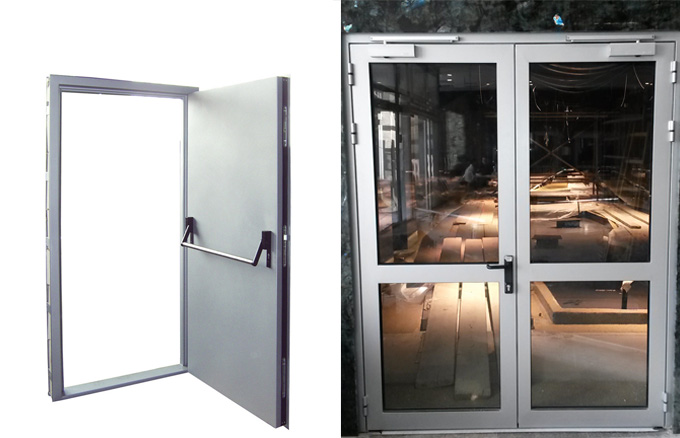
This time we will present our fireproof doors, which can be made like fireproof metal doors in variants under EN 1634-1 EI 30, EI60, EI90, EI120 or EI180 minutes fire protection.

These fireproof doors represent a good compromise of functionality and good design, and can be built into industrial objects (halls, offices…), public objects (schools, gyms…), as well as representative objects (hotels, banks…).
They are made from steel, protected from corrosion, and aesthetically painted.
On the inside, they are filled with special fireproof layers, depending on the class.
They own seals which are active in normal exploitation as well as expanding fireproof seals which are activated in the case of a fire.

Except the fireproof metal doors, Birosafe produces fireproof glass doors in variants T30 minutes, 60, 90, and 120 minutes fire protection.

Fireproof doors in which most surface of the wing consists out of fire-resistant glass.
Made from special fire profiles, they have minimal deformation in case of fire. They have a great rigidity to withstand the weight of the massive fire glass and specially fire charge.
They close perfectly in normal operation and have additional expansive fire seals.
The doors have aesthetic quality and can fit into any setting. Usually they are intended for installation in representative objects.

Birosafe fireproof metal doors can be made also in variant Security fireproof doors according EN 1627, which are fireproof and burglar resistant at same time.
These doors offer much higher burglar resistance.
They feature an adequate door leaf thickness and little rebate space, which makes jimmying more difficult.
Previous experience shows that for the thieves it is much harder to break in object equipped with doors like these. Burglars want to be quick – if a door shows resistance, many will abandon the attempt.
These doors are manufactured according to requirements and norms and compared with the uncertified security doors, it requires great skills and longer time in order to break and open the door.
Birosafe is the only manufacturer in North Macedonia who possesses EUROPEAN CERTIFICATE FOR SECURITY of doors, according to the standard EN 1627, issued by ECB-S Germany.
The Security doors manufactured according to EN 1627 are available in the resistance classes (RC) 1 to 6. The resistance classes 1 to 3 relate to the usual occasional criminals, while the classes 4 to 6 consider the techniques used by experienced, high skilled burglars.

Fire and Gas Suppression System from Advanced Protects Leading Bulgarian Bank

Intelligent fire and gas suppression systems from global leader Advanced, have been chosen to protect the flagship branch of DSK, one of Bulgaria’s leading banks.

DSK was founded in 1951, privatised in 2003 and has since grown to be one of the largest banking groups in Bulgaria, winning several awards for its services and reliability.

Following a refurbishment and upgrade of the flagship branch in Bulgaria’s capital Sofia, long-time Advanced partner, FireTech Engineering Ltd, specified a new system that included Advanced’s Axis EN (EN54) fire system, three ExGo suppression control panels and an IP Gateway, for remote internet control and monitoring.

Stoyan Grozdanov, spokesperson for FireTech Engineering Ltd, said: “We selected an Advanced system as Axis EN and ExGo set the industry benchmarks for fire alarm and extinguishant release. The panels are very reliable and, due to the importance of this particular branch, we needed a high level of protection and reliability, with assurance against false alarms and an intuitive interface for programming and monitoring.”

Axis EN is EN54 parts 2, 4 and 13 approved and can be used in single-loop, single-panel format or easily configured into high-speed, multi-loop, 200-node networks covering huge areas. Its ease of installation and configuration, wide range of peripherals and wired and wireless devices make it customisable to almost any application.

ExGo extinguishing control panels have been developed to protect sensitive and strategic assets such as server rooms, data centres, control rooms and historic and cultural collections. It is suitable for almost all single-flooding area applications and includes a range of control options and devices. It is approved to EN54 parts 2, 4 and 13 as well as EN12094-1 and is among the first systems to combine these with EN12094 in a single solution. (EN12094-3 relates to the integrated manual release on the front of the panel). ExGo can be integrated into Advanced’s Axis EN fire system or any third-party alarm system.

Vladimir Zrnic, Regional Sales Manager for Southern Europe at Advanced, said: “DSK Bank in Sofia is a fantastic example of a high-profile financial institution protected by Advanced and is the result of our product leadership and the expertise of our partners.”