Apricum Academy | KNX Training Center is one of the region’s leading hubs for professional education in smart building technology, offering hands-on training, certified KNX courses, and advanced modules focused on real-world application. With a strong emphasis on KNX RF — the wireless technology that brings full KNX performance without cables — the Academy provides a unique learning experience for anyone looking to master modern building automation.
KNX RF enables secure and reliable wireless integration of lighting, HVAC systems, sensors, switches, and other components without the need for additional wiring. At Apricum Academy, participants don’t just learn theory: through practical exercises they configure, program, and commission KNX RF devices in real-world scenarios, gaining the skills necessary for advanced integration, system expansion, and on-site troubleshooting.
Training at Apricum Academy goes far beyond the basics. The KNX courses cover everything — from planning and programming to testing and fault diagnostics. Participants learn how to independently expand existing KNX installations, run advanced analyses, and ensure long-term system reliability. In a world where even the smartest systems need experts to keep them running flawlessly, the Academy provides the knowledge that guarantees professional competence and competitiveness.
Apricum Academy is the place where professionals move from simply “using technology” to truly mastering it. For anyone aiming to build a career in building automation, upgrade their skills, or specialize in wireless KNX RF solutions, enrollment is open.
One of the key programs is the KNX Basic Course, which gives trainees the fundamental knowledge and full independence to plan and execute KNX projects — from the first sketch, through device configuration and group addresses, to final programming and testing. With experienced instructors, practical modules, and internationally recognized certifications, trainees gain skills they can immediately apply in real projects.
Engayne Primary School is in Upminster, Essex. It has more than 600 students. The school wants to give students a good learning environment. It uses digital tools to help with teaching and school work. A strong and safe network is very important for lessons and school management.
Challenge: Network Instability and Security Issues
The school relies on digital tools for teaching, administration, and overall campus connectivity. A strong network is essential to support everything from interactive lessons and virtual classrooms to office management and school-wide communication. However, with more digital tools and devices in use, the school’s network is facing new challenges:
Many devices needed to be online at the same time, but the network was not stable, causing learning disruptions and harming the students’ experience.
All devices shared a single network without segmentation or access control, which made security a major concern.
Network management and maintenance were complicated and time-consuming.
Solution: Ruijie Reyee Wi-Fi 7 for a Smarter School
To fix these problems, Engayne Primary School installed RG-RAP72Pro Wi-Fi 7 Ceiling Access Points. This is a fast and strong solution that works well when many devices connect at the same time.
Some good things about the Ruijie Reyee Wi-Fi 7 solution:
Fast and Steady Connection: Keeps online lessons smooth even in high-density environments.
Better Security with Network Splitting: Teaching devices, office equipment, and guest devices are on different networks. This makes the network safer.
Easy to Manage: With Ruijie Cloud, the school network can be checked and fixed easily. This saves time and effort.
Feedback: Positive and Highly Satisfactory Experience
Head Teacher Sarah Sankey expressed her satisfaction, saying, “Since the work has been completed, all I can say is it’s been excellent. I don’t have any complaints from teachers about the internet dropping out. So all of our lessons now are successful with having everything working, and that has made it much easier for everyone with their planning.”
She also emphasized the broader impact of the upgrade: “Our network across the whole school is now stable, which is excellent. We can log in anywhere, not just for the children and teachers, but also for governor’s meetings and visitors. This is very, very positive.”
Artworks, sculptures, and historical artifacts carry immense cultural significance, embodying our shared heritage and identity. Yet, their vulnerability to theft and vandalism poses a constant challenge for museums and galleries worldwide. The staggering statistics paint a grim picture: The FBI estimates that global art crime generates $6-8 billion in criminal income annually. In the UK alone, the theft of art and antiques amounts to around £300 million each year.
Priceless artworks face significant risks from human actions, as demonstrated by several high-profile incidents. In 2022, Vincent Van Gogh’s famous ‘Sunflowers’ was vandalised with tomato soup by protesters, and last year Diego Velazquez’s masterpiece, The Toilet of Venus, was attacked with hammers at the National Gallery in London. Even Leonardo da Vinci’s Mona Lisa has been targeted, with multiple incidents of vandalism.
Given the magnitude of the problem, it is imperative to adopt a multi-layered approach to museum security with advanced technologies that balance effective protection with maintaining the visitor experience. These solutions must be capable of tracking multiple intruders and integrating with existing security measures like surveillance systems.
Advanced technologies, like the REDSCAN series with 2D LiDAR technology, offers precise detection and integration capabilities, enhancing overall security effectiveness. Its compact design allows for wall or ceiling mounting, creating an invisible shield that detects any proximity breaches. Outdoors it can protect facades, roofs, patios and skylights, while indoors it can provide 24/7 protection of valuable art displays or restricted areas. Whether intentional or unintentional, the sensor triggers an early warning system, enabling swift intervention to prevent damage or apprehend perpetrators.
Flexibility is a key feature of the REDSCAN series, with area masking allowing for customization of the detection field to accommodate specific exhibit layouts. Doors, windows, skylights, and ventilation openings can be designated as masked areas, ensuring that protection is tailored to the unique requirements of each installation.
Moreover, area allocation enables precise detection within predetermined zones, making it ideal for safeguarding wall-hanging exhibits or clusters of artefacts.
Integration is seamless with the REDSCAN series, as it can be easily configured and linked to third-party security devices and surveillance equipment via onboard analogue and digital outputs. For instance, at the Netherlands National Military Museum, REDSCAN has been integrated with audio systems, enabling alerts if someone gets too close to the artwork. This eliminates the need for constant monitoring and enhances overall system efficiency.
In conclusion, protecting the past requires a concerted effort that combines advanced technology, strategic planning, and a commitment to preserving cultural heritage for future generations. The REDSCAN series offers a robust solution that not only enhances detection and protection but also ensures a seamless visitor experience.
For more information please visit: www.optex-europe.com
In 2022, global security witnessed economic shifts, geopolitical tensions, and a profound impact on the security industry, which is anticipated to continue its growth trajectory
By: asmag.com; E-mail: editorial@asmideast.com
Looking back, security in 2022 operated in a world that saw a slowed recovery from COVID due to various factors, including inflation and geopolitical tensions. Economically speaking, the world had an average GDP growth of 4.1 percent in 2022, dropping from 5.5 percent in 2021, according to the World Bank. Advanced economies such as the U.S. and the Euro area grew 3.8 percent last year, down from 2021’s 5 percent, while emerging markets had a growth of 4.6 percent, down from 2021’s 6.3 percent.
China, meanwhile, registered a 2022 GDP growth of 5.1 percent, down from 9 percent in 2021, due to challenges on several fronts. Domestically, China issued lockdowns in different cities throughout 2022, in response to a rise in COVID cases. Then, there is China’s ongoing real estate crisis–the Chinese government’s effort to regulate the debt limits of major Chinese developers, like the Evergrande Group, had caused the country’s real estate market to tumble. External factors also played a role. Geopolitical tensions between the U.S. and China prompted the U.S. to place severe trade barriers and restrictions against China.
The security market is expected to see growth in 2023 and 2024, with video surveillance equipment predicted to grow by 11.8 percent and 10.2 percent, respectively
Impact on security
So how did these factors play out in security last year? Upon first look, they brought little change to this year’s Security 50. The top 10 global security manufacturers in access control and video surveillance in our 2023 Security 50 ranking are Hikvision Digital Technology, Dahua Technology, ASSA ABLOY, Axis Communications, Motorola Solutions, Allegion, Tiandy, Hanwha Vision (formerly Hanwha Techwin), Uniview Technologies and Aiphone. Hikvision and Dahua remain the world’s largest security companies, with 2022 security product/equipment sales reaching US$9.8 billion and $4.5 billion, respectively (based on the IRS’s 2022 average currency exchange rates). There were two new entrants: China-based smart home solutions provider MEARI and Korean biometric solution provider Union Community.
Yet a surprising part of this year’s Security 50 was the growth list. Of the 17 companies that registered 2022-2021 revenue declines, 12 were Chinese companies. While China companies’ revenue declines were somewhat expected given the environment, the number of companies that inked sales declines, and the magnitude of these declines (by as much as 40.2 percent), still caught us off guard.
Indeed, China’s internal and external challenges mentioned earlier–lockdowns, real estate crisis, and tensions with the U.S.–all played a part. “Chinese government spending was diverted away from other areas, including spending on video surveillance, and towards battling COVID-19 and supporting its economy during these lockdowns. Restrictions lasted much longer than many observers had anticipated, with the Chinese government finally easing its ‘zero Covid’ policy in December 2022,” said Jon Cropley, Principal Analyst, and Josh Woodhouse, Founder of Novaira Insights.
At the same time, U.S.-China tensions, which led to legislation like the National Defense Authorization Act (NDAA) that bans the US government from purchasing video surveillance equipment by Hikvision and Dahua, had caused Western and non-China brands to register a proportional growth in their 2022 revenue. These include VIVOTEK, with a sales increase of 82.48 percent; Hanwha Vision, 47.52 percent; Axis, 36.01 percent; Milestone Systems, 30.43 percent; and IDIS, 22.17 percent. It should be noted that many of the U.S.’s Western allies, for example, the U.K., have also enacted NDAA-like legislation.
“The shift away from Chinese vendors continued at a pace not just in the U.S., but across Northern Europe and countries in Asia including Japan and South Korea. In part, many organizations and systems integrators want to standardize NDAA-compliant equipment to ensure existing and future business in the U.S., while end users are expressing concerns about looming regulations in the EU and Asia, cybersecurity weaknesses, and the potential for reputational damage connected to human rights abuses committed by some of the banned Chinese manufacturers,” said Jamie Barnfield, Senior Sales Director at IDIS Europe.
As for this year, Chinese companies are expected to fare better, even though they are not completely out of the woods yet. “The Chinese market is forecast to recover slightly in 2023 but remain well below its peak in 2021. Growth in demand will be much lower than in the years before the pandemic. At the same time, a weakening exchange rate between the Chinese yuan and US dollar will also dampen growth (when measured in US dollars),” Cropley and Woodhouse said.
The shift away from Chinese vendors continued at a pace not just in the U.S., but across Northern Europe and countries in Asia including Japan and South Korea
Yearly review and preview
For the security market in general, growth is expected this year and next, with Novaira Insights forecasting the market for video surveillance equipment to grow 11.8 percent and 10.2 percent, respectively, in 2023 and 2024.
Industry experts agree with that notion. “We observed some economic growth and expansion in 2023, although it has been unevenly distributed across different regions and sectors. This has had a mixed impact on the security industry,” said Choong Hoon Ha, Chief Sales and Marketing Officer at Hanwha Vision. “Despite the mixed economic impact, the security demands from society and individuals are still rising with the growing need for advanced network-based systems, such as intelligent surveillance cameras. Businesses are willing to invest in security solutions that protect their employees and assets, and even improve business efficiency and productivity by providing business insight.”
“Long-term, sustainable growth is at the heart of our business planning. We plan for 15 percent growth per year on average. And while the market itself is forecast to grow, Axis is again set to outpace it. We’ll achieve this by continuing to broaden our portfolio into new areas, such as intercoms, access control, audio solutions, and so on,” said Ray Mauritsson, CEO of Axis Communications.
Mobile credentials and digital wallets are emerging trends in 2023, providing greater value to end-users and system operators
Trends: AI, cloud, and mobile access more noticeable
As for predominant trends in security, AI and cloud still rank on top.
“Artificial intelligence will continue to provide opportunities for innovation across the industry. Application of AI to data streams from sensor fusion–combining and interpreting inputs from cameras and other sensory devices–will shift security solutions towards proactive capabilities that drive new value. AI’s influence is still in the transformational stage, for certain, but the applicability to the security industry is strong and clear,” said Vince Wenos, Senior VP and CTO of Allegion.
“This year, we have witnessed a growing demand from customers to maximize the capabilities of their cameras and sensors, with a strong emphasis on analytics. The industry continues to embrace the dominant trend of edge analytics, with an increasing number of camera manufacturers expanding their support for this technology,” said William Hinton, Product Line Manager for Video at Genetec.
According to Hanwha, customers are seeking technologies that can help them improve the accuracy of detection, make their video surveillance systems more scalable and cost-effective, and benefit from video analysis.
“In other words, they’re looking for surveillance technology powered by AI and cloud,” Choong said. “Many customers are still in the early stages of adopting AI and cloud-based video surveillance solutions. However, the adoption of these technologies is expected to accelerate in the coming years, as customers see the benefits that they can offer.”
Mobile credentials, meanwhile, have also emerged as a top trend in 2023. “Electronics continue to fuel significant growth for the industry across both hardware and solutions providers. Increasing adoption of mobile credentials and associated readers is providing a healthy lift,” Wenos said. “Mobile credentials continue to gain interest from customers, as they provide greater value to end users and system operators.”
Digital wallets, an offshoot of mobile access, are also gaining traction. “We’re seeing a lot of interest in digital wallets in large, tech-savvy office buildings. The first European rollout of an employee badge in Apple Wallet was at London’s 22 Bishopsgate, touted as the world’s smartest building. 14,000 mobile users at 22 Bishopsgate can now use just their iPhone or Apple Watch to access their offices, plus all the building’s amenities,” said Prabhu Patel, Commercial Director for Physical Access Control Solutions, ASEAN and India, at HID.
Cybersecurity continues to be a hot topic now that more and more devices are online. “For several years we’ve witnessed a growing focus on the cybersecurity of solutions. Customers are aware the risks are rising, demanding robust processes, vigilance, and transparency. When vulnerabilities do occur, vendor transparency is essential, allowing customers to respond as quickly as possible,” Mauritsson said.
Cybersecurity remains a top priority as more devices become online, with a growing focus on robust processes, vigilance, and transparency
Flexible payment
This year, we’re seeing at least two companies offering flexible payment options. These are i-PRO, who announced their FlexPay Financing, and Eagle Eye Networks, who launched their Eagle Eye Camera Direct Complete. The programs aim to help customers achieve more payment flexibility, reduce initial investment, and become more competitive in general.
“In some organizations, an increasing amount of security ops fall under the IT department’s responsibility, and they may have a preference for a greater amount of OPEX compared with the security industry’s typical preference for CAPEX purchases,” Cropley and Woodhouse said. “This type of transition is indicative of a cloud business model transition. However, only the video surveillance vendors themselves know whether the motive behind this is related specifically to products from specific competitors.”
Consolidation vs. smaller start-ups
Meanwhile, two competing forces continue to dominate in security. One is the continued consolidation of the industry. Recent examples include acquisition deals between ACRE and SISCO, Motorola Solutions and Rave Mobile Safety, and IDIS and Costar. Yet on the other hand, we’re also seeing the emergence of smaller companies focusing on cloud and AI. How these forces will play out remains to be seen.
Yet according to Cropley and Woodhouse, there are advantages to the scale of operation. “Each surveillance scenario is unique. Variables include the size of the installation, whether it is indoors or outdoors, and lighting and weather conditions. At the same time, the channel varies considerably by geographic location with a different set of distributors, systems integrators, and installers serving its needs. Large vendors have a range of solutions to meet all scenarios and have the resources to serve different channels in a wide range of geographies,” they said.
The security industry is witnessing both consolidation, as seen in recent acquisition deals, and the emergence of smaller companies focusing on cloud and AI, presenting a dynamic landscape for the future
Prevailing physical security trends in 2023: AI, Mobile Access Control and Integration
While the era of double-digit annual growth appears to be over for video surveillance, factors including AI-related innovations, expanding provision, and demand for more sophisticated analytics, the ongoing shift to IP cameras and improving camera resolution will continue to drive market growth
By: asmag.com; E-mail: editorial@asmideast.com
Memoori’s latest report into The Global Video Surveillance Business explores market prospects for cameras, storage, software & analytics from 2023 to 2028. Our latest estimates, based on a comprehensive analysis of the performance of a total of 322 companies operating in the global market, indicate that it generated revenues totaling $30.4Bn in 2022. We forecast that this market will experience a Compound Annual Growth Rate (CAGR) of 5.7% between 2023 and 2028, with revenues totaling $44.8Bn by 2028.
The AI imperative
The integration of advanced Artificial Intelligence (AI) and Machine Learning into video surveillance is reaching unprecedented levels of maturity. Key drivers of this trend include various factors. First among them are practical Implementations, as earlier discussions on AI in surveillance have moved from theoretical to practical, with more real-world applications coming to the fore. Next, sophisticated analytics offer capabilities that have grown increasingly refined and reliable, reducing false alarms and allowing for more nuanced and actionable insights.
Also, the falling costs of implementing AI and Machine Learning are making these technologies accessible to a broader range of applications. Finally, there’s a widespread rollout of edge-based analytics, based on dedicated AI chip system-on-chip architectures that offers the ability to process data closer to its source, alleviating network bandwidth constraints and helping end-users to minimize the risk of transferring or processing privacy-related data.
We forecast that by 2028, the percentage of network security cameras with onboard AI capabilities is projected to rise from today’s 18% to over 50%. These advancements are fueling new features like object recognition, behavior analysis, and other forms of intelligent monitoring.
As data volumes and the demand for analytics rise, we expect the market for Video Management Software (VMS) & analytics to significantly outpace growth in the wider market, here, we are forecasting growth at an 8.4% CAGR from 2022-2028. Here, the progressive transition to cloud-based analytics driven by requirements to amplify the power of video analytics by leveraging centralized computing resources is set to continue.
By 2028, the percentage of network security cameras with onboard AI capabilities is projected to rise from today’s 18% to over 50%
Access control: Mobile gains traction
Turning to access control, our market forecasts for this year’s analysis are still being finalized, but initial indicators are that Electronic Access Control market growth is set to outpace Video Surveillance market growth for the coming 5 years, reversing the dynamics that have been in play across Physical Security for over a decade. Here, the underlying supply chain and security dynamics are similar, geopolitical uncertainties are having a much more muted impact. Biometrics adoption has been somewhat stalled due to behavioral and attitude changes resulting from COVID, but we see the primary driver for growth is the progressive shift to mobile-based access control.
From a user standpoint, the allure of mobile access control lies in its convenience, enhanced security features, and the flexibility it offers for system administration. Customers, too, are taking note. According to a recent survey on access control trends, 42% of respondents worldwide now have plans in place to upgrade to mobile-ready systems. Our preliminary data aligns with this sentiment, projecting that by the end of 2023, mobile-based systems could constitute around 20% of all newly issued access control credentials for non-residential buildings.
While the transition to mobile-based systems is underway, it isn’t without its own challenges. Privacy and cybersecurity remain key concerns amongst many end users, particularly in cases where personal devices are proposed as the primary means of access control. For this reason, some organizations remain reticent to back the shift, still preferring the use of physical cards to mitigate the risks associated with personal data exposure on mobile devices.
By the end of 2023, mobile-based systems could constitute around 20% of all newly issued access control credentials for non-residential buildings
Tying it all together
As the physical security industry evolves, integration continues to move to the forefront as a business imperative. Rather than maintaining each individual security component (video surveillance, access control, or intruder detection) in individual silos, companies are now looking for new cross-functional efficiencies and value add opportunities across the BIoT. There’s a burgeoning demand from both users and vendors for unified platforms that not only streamline workflows but also enrich data insights by correlating information across domains. Deeper forms of interoperability that span data structures, analytics, identity management, and automation capabilities are emerging, fostered by expanded cross-domain partnering networks and improving API functionality.
One of the key enablers in this transformation is improving the standardization of security data and its metadata. Providing more contextually rich data is needed to inform more intelligent decision-making across these previously siloed systems, and can be invaluable when integrated into a broader security or building management system, enabling more nuanced and responsive actions like selective door locking or lighting adjustments based on occupancy, or scheduling elevator movements to match patterns of people movement within a building, saving energy and enhancing building user experiences.
Legacy systems, proprietary protocols, and the absence of standardized data formats will also continue to act as common roadblocks to integration until such systems are progressively phased out. As the industry moves toward more standardized solutions, and cross-functional expertise grows, we can expect deeper, more seamless integrations to become the norm rather than the exception.
Electronic Access Control market growth is set to outpace Video Surveillance market growth for the coming 5 years, reversing the dynamics that have been in play across Physical Security for over a decade
Looking forward
The physical security market clearly remains in a state of flux, influenced by technological advancements, geopolitical shifts, and an increasing focus on integration and ethics. Companies that can adapt to these changes, innovate, and offer intelligent, integrated solutions are likely to thrive. But this is not a market for the complacent; staying ahead will require constant innovation, ethical considerations, and perhaps most crucially, the ability to adapt to ever-changing conditions.
As the physical security industry evolves, integration continues to move to the forefront as a business imperative
Interview: Swift Wu, General Manager of the International Department at ZKTeco
Swift Wu, General Manager of the International Department at ZKTeco, discusses how the company effectively addressed industry challenges in 2023 and shares key insights on how regions like the Middle East are emerging as hubs that hold great potential for economic growth
By: asmag.com; E-mail: editorial@asmideast.com
Founded in 2007, ZKTeco has long established itself as a leading global provider of hybrid biometric identification technology. In August 2022, the company marked a momentous occasion when ZKTeco successfully became a publicly listed company on the Shenzhen Stock Exchange.
asmag.com: What was 2023 like for ZKTeco? What were the challenges and how was ZKTeco able to respond?
Wu: Looking back at 2023, it was a pivotal year for ZKTeco and the industry as a whole. The world was showing signs of economic recovery. However, global economic performance did not meet expectations. While there were improvements, some sectors like retail lagged behind others in recovery. Some regions continued to grapple with lingering economic deficits, resulting in postponed or canceled government projects. In more extreme cases, rapid currency depreciation led to economic instability. Despite these challenges, certain economies outperformed others, with significant changes seen in lifestyles and business operations. The shift towards remote work and online shopping had a considerable impact on our business, particularly in areas like time attendance systems and other B2B security solutions. While many companies have begun asking their employees to return to the office, we anticipate that some changes in working practices may be permanent. Compounding these difficulties were escalating geopolitical tensions, with some nations in conflict or facing economic sanctions. These global issues led to an influx of vendors branching out into overseas markets to compensate for domestic economic downturns. Many employed a skimming strategy, offering low prices to penetrate new markets. This approach not only disrupted local markets but also threatened the sustainability of local suppliers due to the extremely low-profit margins. ZKTeco, with its longstanding presence in international business, was well-equipped to navigate these challenges.
We anticipate a return to economic stability, particularly in regions like Southeast Asia and the Middle East. These regions are becoming hubs for manufacturing and IT jobs, and we foresee considerable economic growth there
Asmag.com: Can you share some noteworthy accomplishments from the past year?
Wu: In the past year, we at ZKTeco have made strides in expanding our business along both horizontal and vertical dimensions. We consider horizontal expansion as into new business sectors or lines, and vertical expansion as penetrating higher or lower market sectors. In 2023, we focused on establishing a solid foundation for future growth. One of our notable achievements was the investment and development of our next-generation access control systems. These systems, built on universal industrial standards, are fortified with intelligent and flexible functions. To accomplish this, we incorporated multiple advanced technologies, including artificial intelligence (AI), cloud computing, and big data. This integration solidifies our position at the forefront of the industry and offers our clients the most sophisticated solutions. Simultaneously, we’ve made significant progress in our vertical expansion. We are on the verge of launching a new product line that provides real-time managed advertisements, professional digital displays, digital signage, and digital posters. This system is fully enhanced by computer vision technology, addressing the limitations of conventional advertisement placement tools that cannot push correlated advertisements to audiences on demand. In our system, front-end cameras utilize computer vision technology to provide active video analytics. This includes text recognition, pattern recognition, and behavior analysis. Our edge devices then push correlated advertisements to the audience based on these analytics. This technology greatly enhances the accuracy of advertisement placement and provides reliable statistical information to advertisers.
Notable achievements included the investment and development of our next-generation access control systems, fortified with intelligent functions and incorporating advanced technologies like AI, cloud computing, and big data
Asmag.com: How is ZKTeco strategizing for 2024? Where do you see new business opportunities in the market?
Wu: While the world continues to face conflicts and unstable situations, we remain optimistic for 2024. We anticipate a return to economic stability, particularly in regions like Southeast Asia and the Middle East. These regions are becoming hubs for manufacturing and IT jobs, and we foresee considerable economic growth there.
Our strategy for expansion has always centered around localization. We adhere to a management philosophy of decentralization — we believe that providing our branches and departments with autonomy allows them to deliver optimal results, spurred by an effective motivational system. In response to the tense political situations among global superpowers, we’ve invested resources to ensure dual supply chains. This strategy will enable ZKTeco to maintain the production and delivery of our solutions to partners and clients, regardless of external circumstances. As of 2023, our biometric technology is among the top in the industry according to the NIST competition results. We firmly believe that biometrics is the future of human identity authentication and are committed to providing top-notch biometric technology across various solutions and applications. Alongside biometric technology, we believe that cloud-based and SaaS platforms are becoming mainstream. Soon, ZKTeco will launch several SaaS platforms for access control, visitor management, and time-attendance services. This is just the beginning of our journey to provide cloud-based services, with more to come in the next few years. Indeed, 2023 marked an exciting time for advancements in AI technology, with ChatGPT (GPT-4), in particular, garnering global attention. As a technology-based company, we at ZKTeco have embraced these advancements, incorporating AI to enhance our solutions in numerous ways. We are optimistic that the integration of GPT-4 with our existing solutions will result in improved user experiences and more efficient system operations. However, it’s crucial to remember that ChatGPT is just one facet of AI. AI technology as a whole offers a broad range of opportunities to enhance our solutions, and we’ve been keen to leverage these opportunities. For instance, we use AI in our biometric algorithms, where machine learning techniques allow our systems to improve accuracy and performance over time.
The shift towards remote work and online shopping had a considerable impact on our business, particularly in areas like time attendance systems and other B2B security solutions
From time to time, we hear about school shooting incidents in the United States. While stricter gun control laws are being considered and debated, schools themselves should also invest in security technologies to help prevent further tragedies.
Ever since Columbine, school shootings have emerged as a major societal problem in the United States. According to Sandy Hook Promise (a non-profit named after another infamous school shooting incident), the U.S. has had 2,032 school shootings since 1970. The recent event in Uvalde, Texas, where a gunman fatally shot 19 students and two teachers at an elementary school, further triggered debates on whether stricter gun control laws should be legislated – a question that, somehow for Americans, is not so simple to answer due to the country’s unique history, culture and heritage.
“A unique mix of tradition, politics and business interests makes tougher regulations unlikely, even where there is popular support for such measures,” said Jason Goodrich, Customer Success Director of CriticalArc. “The level of support varies widely depending on which state you are in, and concerns about the reliability of police response mean than even some citizens who were previously averse to gun-ownership now feel motivated to arm themselves.”
“In the aftermath of this (Uvalde) tragic school shooting, school leaders, teachers, parents, and administrators are debating, yet again, how the next incident might be prevented. At the same time, there is a national debate around policy decisions: Should gun sales be restricted? Should teachers be armed? Those questions will not be answered overnight,” said Alan Stoddard, President of Cognyte North America.
While new legislation is currently being considered in the US Senate, it’s indeed not feasible at the moment to expect the passage of any far-reaching gun control laws given the Second Amendment of the US Constitution, which says “the right of the people to keep and bear arms shall not be infringed” (even though there’s a prerequisite: A well-regulated militia being necessary to the security of a free state). A conservative supermajority in the US Supreme Court certainly won’t help much either.
For the time being, then, schools need to invest in technologies to effectively protect students, teachers and staff. “The assumption should be that any current laws around gun ownership will be circumvented by a determined assailant. This means that schools and colleges should focus on preparing for, deterring, and stopping active threats,” Goodrich said. “Given this reality, they have no choice but to invest in technologies and to look for the best available options to strengthen their defenses.”
Technologies available
Luckily, we now have technology advances to make campuses safe. “We have a new generation of tech that is now helping with this mission – deter and response – in many education settings. New technologies also include highly accurate 3D indoor positioning capabilities and heat mapping tools that can be used to improve incident rehearsals, revealing areas for improvement by individual responders and entire teams, and allowing better training and performance review,” Goodrich said.
Video surveillance and access control solutions can also play a part. “Access control guards the perimeter of the school’s property, including each route and entry. Robust access control processes will ensure that students, teachers, and visitors know where to enter the campus, what to do once they get inside, and how to exit the property. Exhaustive access control can keep potential criminals out of your establishment and often sets the tone for the rest of your safety efforts,” said Scot Sturges, Director of Business Development for North America at ACRE.
It’s also important to note that deploying better security measures in schools is a collaborative effort between all stakeholders, from government/law enforcement to manufacturers to educators.
“To say the recent tragedy in Uvalde could not have been prevented is of no service to the issue at hand. What I can say is we as an industry need to do better. As the providers of the technology that helps mitigate such issues, it is imperative we take a stand. Together, we can help protect our schools but we have to do it collaboratively and in conjunction with local authorities and government,” said John Rezzonico, CEO of Edge360.
“School leaders and their communities have a long list of considerations today when it comes to safety – ranging from mental health to ADA compliance to COVID-19 and from legislation and policies to training, procedures and assessments as well as products and technologies, among other things. Just like there’s no one-size-fits-all safety plan for individual schools, there’s no single solution for making schools safer. Ultimately, this means a holistic and collaborative approach to school safety is necessary – and experts of all kinds must work together,” said Ken Cook, Director of National School Safety at Allegion US.
“The recent shooting in Uvalde is heartbreaking and tragic. As a parent, the fact that schools have become a battleground is disheartening. Over the following months, we’ll see a debate over gun control and whether or not teachers should be armed. These questions are not simple to answer, but we can work collaboratively within our communities and the industry to find a solution,” said Tom Reilly, President of Commend. “Overall, we need to get down to basics. Schools and educational leaders must communicate about the risks, the technology infrastructure, and standard operating procedures. Even the relationships students develop with teachers, counselors, and other personnel are critical to identifying risks or irregular behavior.”
There are technologies that keep schools safe from guns
School shooting has become a severe problem in the United States. In the absence of far-reaching gun control laws, US schools are turning to technology to protect students, teachers and staff from guns. This article discusses some of the school safety technologies available.
Prevention
The best security measure is prevention. In many instances, damage could have been minimized if threats were detected and identified early. In this regard, various technologies can play a role.
First, analytics can be helpful. “Threat detection software that is tied into a validation system is very helpful in the early detection of a threat. For example, a video analytic would register a gun, then alert a human to verify the potential threat. This occurs prior to a shot being fired and is geared to aid in prevention,” said Jason Goodrich, Customer Success Director of CriticalArc. “Facial recognition has improved and could be used to alert facilities about a known threat attempting to make entry. LPR could also be useful if a known threat is attempting to enter.”
Door security also figures heavily in preventing the gunman from entering school premises in the first place. “We have long-standing physical security solutions for school buildings and other public spaces … and those include door locks (electronic and mechanical), as well as emergency exit devices, access control products, keys and credentials, door closers, security glass and the doors themselves. These solutions have really always been a part of the building design process and security ecosystem,” said Ken Cook, Director of National School Safety at Allegion US.
“While it is not the only step in preventing threatening or violent individuals from accessing a building, door security is often the first step. Schools can implement a two-way intercom system at the entrance which is an important first layer of protection. Intercom systems can enable front desk personnel to not only talk to an individual, but also clearly identify the person when the system includes an integrated IP video camera,” said Brad Kamcheff, Marketing Manager at Aiphone.
It is important to point out that, for the different school security systems to work seamlessly, integration is important.
“An open platform approach combined with the ability to integrate with other third-party systems allows schools to benefit from other best-in-class technologies to promote a more robust security posture and permit a coordinated emergency response when necessary,” said John Rezzonico, CEO of Edge360.
Finally, data sharing is critical. In the recent Uvalde incident, for example, authorities could have acted earlier had the gunman’s troubled social media messages been intercepted in time.
“Often, individuals on a troubled path will make remarks or act in a way that gives a clear indication that all is not well, and sometimes people will notice this. Making it easy for them to share their concerns with the right authorities at the right time should be a benchmark of prevention,” said Goodrich. “Our new-generation solutions can allow anonymous reports, to encourage people to share their concerns. This effort can also be supplemented by social media monitoring, and by closer engagement between police or security personnel with the communities they serve.”
Response
Once the outer perimeters have been breached, security measures must be in place inside the school premises to minimize casualty. A combination of access control, video surveillance and other technologies can help.
“Time is of the essence in an emergency, and just a few seconds can mean the distinction between security and catastrophe. Therefore, it’s crucial to support systems that initiate a lockdown and alert security to the whereabouts of students, instructors, and other staff in the facility,” said Scot Sturges, Director of Business Development for North America at ACRE. “Emergency exits are also required when the need for emergency evacuation arises. Schools can operate cameras, warnings, or corrective action to ensure entryways stay shut, except during a crisis.”
“A combination of video surveillance and two-way intercom systems can prove to be valuable. Video surveillance is key in providing the school’s security with the ability to monitor multiple places at once, especially in the event of an armed person attempting to enter the premises. In the classroom, it is equally important to ensure that teaching staff have access to security tools and can easily communicate with the front office in the event of an emergency. An intercom system installed in each classroom enables a teacher to reach the front office quickly,” Kamcheff said.
Communications with the outside world is also critical so law enforcement and rescue workers can get to the scene at the shortest time.
“I believe emergency notification and support systems used across agencies and public sector organizations can be very beneficial to streamlining communication,” said Alan Stoddard, President of Cognyte North America. “By leveraging intelligent devices, including mobile phones, modern emergency response solutions enable schools to dispatch the optimal responder during an incident based on proximity, availability, and experience. Because you can see the whereabouts of every potential responder, as well as all relevant geographical information and the location of life-saving equipment and other resources, response efforts are rapid and intelligent.”
“It goes back to communication. Ensuring law enforcement and first responders are at the scene immediately is all about streamlining how we share information. Having a clear line of connection with law enforcement and a plan laid out in advance is crucial. Unified communication can streamline this process, allowing various agencies to collaborate and share information to ensure the most effective and quick response,” said Tom Reilly, President of Commend.
Afterthoughts
Despite these technology advances, certain challenges still persist. One is the fact these solutions are not widely adopted in schools yet, due to budget constraints or limited resources.
“Many schools have legacy access control systems that need updating. If surveillance is in use, most schools are not employing the full capabilities of data analytics and many legacy CCTV systems cannot take advantage of advances in data analysis tech,” said Goodrich. “The new generation of unified emergency alert, location pinpointing, team coordination and communications solutions are being deployed to great effect in higher education settings, on university and college campuses. These solutions are not being used widely in schools yet, but there is huge potential benefit to adopting them.”
Further, training and education on these solutions are also required. “School systems often focus on what to purchase for proactive security measures and how to manage staffing to prevent unwanted intruders. They make significant investments in access control, video surveillance, artificial intelligence, and in some areas, metal detectors. But the simple fact is that all these investments are useless if no one is trained to use them and no one is trained in the correct standard operating procedures to follow when an incident happens,” Stoddard said. “We have to ensure schools are well-versed in how to use their investments and how they can leverage their functionality to adopt a more proactive stance.”
We are all humans, so we all make mistakes. However, there are such common cases that you should be aware of and avoid. Specialists of Partizan company have collected, systematized and listed them to say once and for all – it should not be like that!
1. DHCP remains enabled after adding to NVR
Most CCTV cameras have DHCP enabled by default. What does it mean? A static IP address does not work, but a dynamic IP address, on the contrary, is active. That is, the CCTV camera, after entering your local network, will find its own IP address. The plus is that you don’t need to input this address manually each time. And the minus is that these addresses can change every time the router is rebooted. The result is that after the reboot, the CCTV camera will get a completely different IP, the client will get a terrible black screen instead of an image, and you will receive urgent calls: “Hey, where did my CCTV camera go?”. Do you really need it?
2. Outdated firmware and password
There are also simple, trivial, but surprisingly widespread reasons for incorrect device operation. The thing is, even if you bought your device yesterday, it doesn’t mean that a new firmware didn’t appear while it was in stock. Always check its relevance and install the latest version. Ideally, you should check the firmware once every few months. Regarding the password — often users and even installers are too lazy to change passwords and sometimes leave it at the default: admin, 1111, etc. A good chance for a hacker!
3. Time synchronization is disabled. Incorrect playback time
A non-obvious mistake, but it can also cause pain and suffering. If we have a desynchronization in time, then even knowing when the alarming event occurred, it will be very difficult to find it in the archive. By the way, there is an easy way to synchronize the recorder (and therefore the CCTV camera) with real-time. Just add the NVR to Partizan Cloud and our service will do everything instantly and clearly.
4. Settings, connection and recording
It may seem obvious to some, but there is one simple thing. If you want the recording to be turned on only by alarms, motion detection or at certain intervals – no one will do it except you. Enter the settings yourself. Now about the connection. There are CCTV cameras that can be connected using the “native protocol”, and there are all others. With the native protocol, everything is finally clear: company’s cloud CCTV camera can be easily connected to its cloud recorder, the SH camera to the SH recorder. But if the connection takes place, for example, according to the Cloud-camera scheme to the SH-recorder (or vice versa), or in general a third-party CCTV camera is used, the Onvif protocol should be used.
5. Incorrect installation of your CCTV camera
The topic, of course, is very broad, moreover, there are many different opinions. So, at this point, we will try to derive a common “denominator” that is understandable even for a new installer. A good, professional installation of video equipment is when:
a) The correct branded accessories are used, including cable junction boxes.
b) The cables are not visible next to the CCTV camera and they do not stick out in all directions. They should be brought inside the building, or at least hidden in PVC pipes or corrugations.
Of course, budgets can be “cut”, but this does not mean that you have to compromise on quality.
6. Incorrect viewing angle or CCTV camera installation location
It is also a rather versatile field for discussion, so let’s highlight the most important points.
There is a large object close to the CCTV camera – tree, wall, lamp post, etc.). Such proximity can lead to “reflection” of IR illumination, and at the same time to CCTV camera blindness.
The CCTV camera is aimed at a glowing lantern or at a sunrise/sunset. This also results in CCTV camera blindness or image illumination.
IR diodes in the dome CCTV camera are under its body. In this case, the backlight is reflected from the housing into the lens. The result is that the CCTV camera stops “seeing” at night.
Dirty lens glass or dome CCTV camera sphere. A very simple, but surprisingly common cause of poor image quality.
The CCTV camera is installed on a metal or conductive surface without grounding. This is trivially dangerous, because it causes the risk of short circuits and even the CCTV camera catching fire.
The CCTV camera is at a low altitude. A real find for criminals and vandals!
The dome CCTV camera is installed without proper protection from above. If the model does not have a high degree of resistance to dust and moisture (at least IP66), moisture form of rain or snow can get inside the equipment.
The CCTV camera is installed in close proximity to high-voltage power lines. This causes not only a high risk of electric shock, but also provokes interference in image transmission.
7. Bad Internet
Probably everyone knows about such a problem, but not everyone is aware of its depth. By the expression “bad Internet” we primarily mean two points: low connection speed and changes in flow transmission. And if everything is clear with the first parameter, then in the second case, even at high speeds, sags and entire seconds of video may drop out. So make sure that the speed of your Internet is adequate for both input and output, and the connection is stable, without losing data packets.
8. Incorrect cable connection
It is not good if the cable of the installed CCTV camera is less than 30 cm from the power cable. It is a very bad idea to put the wires of the video surveillance system and the home electrical network in one box. This is especially true for analog CCTV cameras. Therefore, it is always worth laying the CCTV camera switching separately. So there will be no obstacles or unnecessary picture jumps in the image.
The second point is the considerable distance between the CCTV camera and the recorder. For a coaxial cable, problems with image transmission can begin as early as 500 meters. And the optimal distance is the “hundred meter” familiar to many. It is always better to work with the correct lengths of cable than to be faced with the fact that the video signal does not arrive normally, or the CCTV camera does not have enough power. If we are talking about IP CCTV cameras with a POE system, then the distance to the recorder should be 50-80 meters.
When dealing with an analog system, it is worth remembering that problems may also arise when connecting several CCTV cameras to one power supply unit. Imagine that we have two CCTV cameras. One is at a distance of 10 meters from the power supply unit, the other is at a distance of 50 meters. So, after six months, you can unexpectedly encounter, for example, the failure of the IR illumination of the remote CCTV camera. And the issue here is not the quality of the equipment. It is all about incorrect switching. Therefore, we advise using a separate power supply for each CCTV camera. Why? The CCTV camera must receive its “legal” 12 volts and the correct amperage. And a considerable distance can cause a drop in power supply.
And, of course, always and everywhere you should use the right cables. Trying to save money, some installers “throw away” aluminum or steel wires. But what may be OK for budget Internet in the entrance, will not work for the video surveillance system. Such cables simply will not transmit a normal video stream. Our minimum is copper twisted pair of category 5e. We will not emphasize the correct crimping of the twisted pair. This is an axiom!
9. Low-quality or inappropriate third-party equipment
Use quality routers! We usually recommend the following brands: MikroTik, Zyxel, Cisco, HP, Linksys. Everything will be fine with them. The same can be said about POE equipment. All the above mentioned brands make decent switches.
Hard drives! This is generally the key to success for a video surveillance system. Partizan is an authorized European dealer of Toshiba and we use HDDs of this brand for our recorders. We consider its products to be ideal in view of:
Possibility of long-term stable work in 24/7 mode
Simultaneous recording support from 32 CCTV cameras
Ability to withstand multiple write/overwrite cycles
Spindle rotation speed optimal for NVR
Resistance to vibrations, high temperature, voltage drops
Correct interface (Sata 3)
High data transfer rate
10. Incorrect calculation of power and quality of components
You should not save money on third-party components of the video system! Let’s say, the cost of a high-quality power supply unit and a low-quality one will not differ that much. This is a matter of tens of dollars, not, say, hundreds or thousands. But you should always remember that a low-quality product can damage the equipment or cause the quality of the image to deteriorate (bands and waves in the picture, etc.).
We recommend using power supplies with an additional power reserve of at least 30% compared to the expected power consumption of the video surveillance system. It will definitely not be superfluous, and it will protect you and the client from unpleasant surprises.
Of course, these are far from all the mistakes that happen in our field. However, by keeping at least these simple points in mind, you can make life much easier for yourself and your customers. As they say, go and install quality, professional CCTV and do not make more mistakes.
The Beijing 2022 Olympic and Paralympic Winter Games have come to a successful end, with China setting a new medal record in its history of the Winter Olympics. Dahua Technology took on the responsibility of securing Yanqing’s Olympic Venues and Shougang Park. Guided by the “Winter Olympics of Science and Technology”, Dahua fully integrated many digital intelligence technologies, such as video Internet of Things, universal sensing, AIoT and AR, into this grand event, making great contributions to the success of the 2022 Winter Olympics.
Challenge
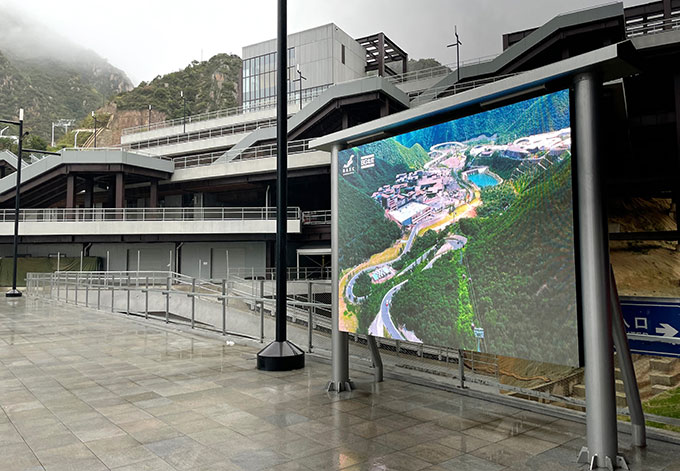
Located 75 kilometers northwest of Beijing’s city center, Yanqing has two competition venues, the National Alpine Ski Centre and the National Sliding Centre, and other supporting facilities, such as Yanqing Olympic Village and Publishing Center. The entire zone is featured with complex terrain and a changeful climate. Another competition venue Big Air Shougang was located in Shougang Park. It staged the freestyle skiing and snowboard Big Air competitions at the Games. Big Air Shougang is the world’s first permanent venue for Big Air. Following the Winter Olympics, the venue will be used for various sports competitions and athlete training. Meanwhile, many Olympic landmarks, such as offices for the Organizing Committee of the Winter Olympics and training venues, have been set up in Shougang Park. The security of the wide range of roads, public areas, all kinds of venues and supporting facilities in the park was a top priority.
Solution: Safeguard the Yanqing Venues with intelligent systems
Dahua conducted several surveys in Yanqing Zone and tailored various intelligent systems such as intelligent traffic camera, AR panoramic solution, walk-through metal detector, ecological environment monitoring system and so on for mountain scenarios. This not only provided a security guarantee for the Winter Olympics events, athletes, audience and staff, but also facilitated the security management of Yanqing’s Olympic venues by improving the overall prevention, early warning and management efficiency.
The mountain road to Yanqing’s Olympic Venues is rugged and prone to traffic accidents at night, especially under rain and snow. By upgrading the intelligent traffic camera system in the core road sections, Dahua effectively solved the pollution caused by the white light explosion and flash at night on mountain roads, improving the safety of drivers and greatly reducing the incidence of traffic accidents. Meanwhile, Dahua also realized real-time sensing and intelligent management of vehicle entry and exit, which improved the road traffic management, traffic safety and civilized travel during the event.
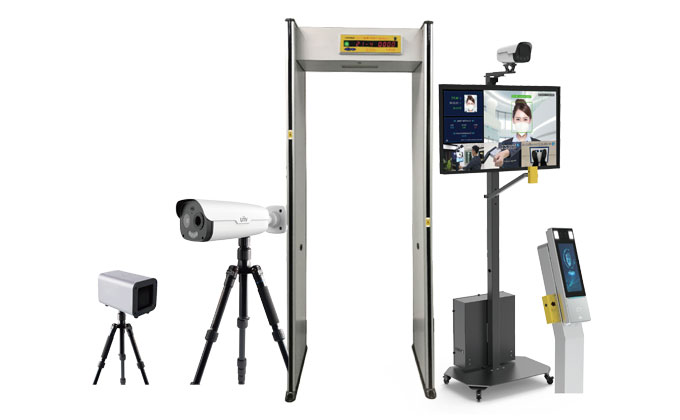
According to the geographical features of Yanqing Zone and the complexity of management, Dahua innovated and deployed AR panoramic solution. Combined with the full-realm sensing ability of IoT, Dahua created a large live map that displayed the venues and surrounding infrastructures. Through the panoramic map, the staff were able to supervise the overall dynamics and details of the competition area at any time to conduct emergency operations and improve management efficiency and safety. Dahua walk-through metal detector appeared at the entrances of various venues, to help with fast temperature monitoring, intelligent identification and early warning of not wearing a mask, and rapid detection of metal contraband. This speeded up the traffic and reduced potential security risks timely. The efficiency of security work was promoted at the same time.
Assistance in declaring the winner
The sliding events bobsled, luge, and skeleton are the fastest games in Winter Olympics. Racers moving through the complex and narrow course at super speeds present an extraordinary challenge to the judges’ scoring and of course to athletes’ safety as well. Dahua Technology developed an intelligent video tracking system based on our industry-leading intelligent video sensing capability. The system captured the fleeting video image of high-speed athletes sliding down the track, displayed the video images of athletes passing through different slopes at high-speed seamlessly and orderly, and recorded every detail of the entire competition. With zero interference to the racing tracks, the Dahua intelligent video tracking system provided data support for the athletes’ training before the competition and a strong basis for the referee’s decision and game’s fairness during the competition.
To facilitate the “ecological Winter Olympics”, Dahua intelligent environment online monitoring system was in place to collect environmental temperature, humidity, wind, wind direction, noise, atmospheric pressure, weather and other data of the competition area all the time, to help managers grasp the dynamic changes of various environmental factors in real-time, and provide environmental data support for the events.
In the management center, Dahua built up a digital intelligent management platform for Yanqing Zone by using video IoT and visualization technologies including Dahua high-definition LCD screen and distributed seat management system. In this way, real-time views and visual scheduling of the overall operation of the whole competition area were realized. Thus, real-time response and efficient command in the case of emergencies were achieved, while refined management and information decisions were supported.
Equip the Shougang Park with AI innovations
In Shougang Park, Dahua fulfilled the demand of intelligent management. By applying intelligent panorama, multidimensional sensing, access control management and other artificial intelligence innovations, based on a unified intelligent management platform, Dahua built a comprehensive modern safety management system covering all roads, public places and venues in and outside the Shougang Park.
It greatly realized the real-time warning of all kinds of risks in the park, contributed to the innovative upgrade of the security management mode of the park, comprehensively improved the comprehensive services and management of the Winter Olympics.
Result
On the field, the Winter Olympics athletes were competing fiercely for medals; outside the stadium, Dahua technical team was trying their best to provide services for both Olympic and Paralympic Winter Games in Yanqing Zone, Shougang Park, National Conference Center and other perimeter areas. They pushed their limits and accomplished the task of securing the Olympic venues successfully in more than two consecutive months.
The team delivered high-quality services including video technology development for specific events, solution formulation, installation and commissioning, and on-site technical support, helping to create a simple, secure and wonderful Winter Olympics.
Dahua provided security services with high quality and high standards. Based on technology innovations and scenario-oriented application of digital intelligence, it has contributed to the success of many wonderful urban activities and boosted digital intelligence upgrades in thousands of industries. In the future, Dahua will continue to focus on customer needs and create more products and solutions for customers through innovative technologies.
As the emergence spreading globally and the cases of Coronavirus rapid growing in Europe, the national economy in each country is hit hard. Thus resumption of work and production as well as back to school becomes serious challenge to economic recovery currently. For this epidemic situation, abnormal body temperature is one of the symptoms of pneumonia, it is essential to effectively detect and control the flow of people from areas with high incidence of the epidemic.
In order to help organizations respond to the epidemic situation, Uniview recently releases the latest thermographic fever screening products and solutions which will make a fast preliminary human skin-surface temperature screening without any contact and better to prevent infection from entrance area.
For the UNV newly thermographic fever screening solution, it consists of optical & thermal bi-spectrum camera, blackbody, AI NVR and tripods, which is an all- in- one delivery solution with easy to install and available for rapid and temporary deployment. The bi-spectrum camera adopts 4MP 1/8 inch optical sensor and 384*288 thermal detector to provide clearer image and measure temperature differences in people entering the field of view, besides the camera is built in mic and speaker and red & blue alarm flash light which is easy to warn personnel on site when cases happen. UNV solution uses blackbody device to help calibrate the temperature measurement, making it more accurate and stable especially in less controlled environments where the elements can influence the reading. At the back-end, the AI NVR will allow two bi-spectrum cameras to access in and record simultaneously, and it can provide intuitive demonstration interface to visually display temperature status, mask wearing status, abnormal (elevated) temperature counts, not wearing mask counts and total counts, etc. Moreover, in this smart solution, AI technology ensures thermographic cameras only detect human skin-surface temperature based on face detection, which will filter false alarm caused by other heat source, such as hot water or food.
With its sophisticated component in hardware and excellent performance in image and software, UNV thermographic fever screening solution can support no more than ±0.3℃(with blackbody)deviation at recommended range of 3~6 meters, and be widely applied to multiple scenes such as schools, hospitals, commercial buildings, transportation hubs, etc.
ACRE brands Vanderbilt and ComNet have recently released an Online Events and Learning page on their website, www.vanderbiltindustries.com/online-events. The launch of this new resource is in response to the current postponement of tradeshow events amidst the Covid-19 pandemic.
Speaking about the new online resource, Oleg Lesiv, ComNet Sales Manager – Eastern Europe, says: “I believe this new online resource from Vanderbilt and ComNet will greatly assist our customers during this time, and it matches our motto of supporting them on every step of their security journey. That is the primary goal of this new Online Events and Learning page.”
The resource takes a customer-first approach by highlighting and making available in one area Vanderbilt and ComNet’s customer value adds. These include free online training services, multilingual customer service support, and free product demonstrations.
Lesiv continues: “As a further way to reach our customers with news and information about our products during this time, we are also beginning to host multiple webinars. These will be delivered by our in-house experts and will be a great opportunity for our customers to engage directly with some of the top minds behind these products in our company. Our new Online Events and Learning resource page has all the details about our upcoming webinars and how customers can register to attend these online events.”
Award-winning products
The Online Events and Learning approach by Vanderbilt and ComNet is built on a foundation of customer-focused core values such as empowerment, collaboration, and high performance. The current fruits of these core values will be on display for visitors to the Online Events and Learning page to see. For instance, detailed and engaging webinars include ComNet’s Port Guardian and Vanderbilt’s cloud-based intrusion solution SPC Connect and access control system ACTpro.
ACTpro, in particular, embodies the customer-first and high-performance approach being talked about. It is a product that has continued to evolve based on customer requirements from the field, with its latest features including a “best-in-class” rules mapping engine and PoE Ultra controllers, plus Bluetooth readers and Biometric fingerprint readers that were recently added to the portfolio.
New webshop delivers
Also weighing in on the launch of the Online Events and Learning page is Vladimir Majer, Vanderbilt Sales Manager – South Eastern Europe. “This new online resource helps our customers and shows that Vanderbilt and ComNet are all-round solution companies,” Majer states. “The resource page contains numerous tools to help a buyer’s journey from start to finish. Also highlighted on our Online Events and Learning page is our webshop platform. This has been available to our customers for less than a year, but already it has proved very popular with our customer base,” Majer explains.
The webshop optimizes the goal to serve customers 24/7 and presents a simplified, intuitive interface that makes it easy to navigate and use. How-to videos assist with any questions that may arise, and an improved product hierarchy and centralized Asset Management System (AMS) ensure all support materials are relevant and up to date.
Four networked MxPro 5 fire panels from global systems leader, Advanced, are now protecting one of Serbia’s most prestigious higher education facilities.
The project at the University of Belgrade’s School of Electrical Engineering, involved installing a fire system to reliably protect lives and property while respecting the value and authenticity of its 1920s features. This meant overcoming various problems presented by outdated construction methods, inaccessible areas and high ceilings.
Thanks to their performance, quality and ease of use, a network of three of Advanced’s 4-loop and one of its 1-loop MxPro 5 fire panels, including over 1000 Argus detectors, were chose to protect the entirety of this top educational and scientific institution, including the facilities of Civil Design, Mechanical and Electrical Engineering.
Advanced’s local partner in Serbia, TVI Ltd, was responsible for the design, installation and commissioning of the project. Electrical Engineer, Radomir Kerkez, at TVI Ltd, said: “The flexibility of Advanced’s fire panels to adapt to sites both large and small is what makes us choose them time and time again. Advanced products make even the most complex installation challenges straightforward and we can always rely on them to deliver complete protection.”
MxPro 5 is the leading multiprotocol fire system solution and was recently certified to the EN 54 standard by FM (Factory Mutual). It offers customers a choice of two panel ranges, four detector protocols and a completely open installer network, backed up by free training and support. MxPro panels can be used in single-loop, single-panel format or easily configured into high-speed, multi-loop networks of up to 200 nodes covering huge areas. MxPro’s legendary ease of installation and configuration plus wide peripheral range, make it customisable to almost any application.
Vladimir Zrnic, Advanced’s Regional Sales Manager for Southern Europe, said: “Our fire systems offer many ways to meet the challenges of protecting a building’s heritage features while providing robust and reliable fire protection. It is great to see that potential put into practice in yet another successful and prestigious site.”
Advanced, owned by FTSE 100 company Halma PLC, has a long history of protecting some of Europe’s most notable and prestigious buildings, including Athens’ Stavros Niarchos Foundation Cultural Centre, Istanbul’s Hagia Sophia and Sofia’s Sofia University.