Home Vertical Solutions Archive by category Residential Security (Page 3)

Residential Security

Securing one of the busiest shopping malls in Turkey’s capital

Keeping a watchful eye over the thousands of visitors that flock to Ankara’s vast Metro Mall every day is no easy job. To achieve real peace of mind, the security team chose a video security solution from Hikvision, and received reliable, innovative and cost-effective technology to protect shoppers and staff 24/7.

The challenge: choosing reliable video security to protect thousands of visitors
The Metro Mall in Ankara, Turkey, is one of the busiest entertainment and business centers in the capital. Combining more than 200 stores with offices, a cinema, cafes, restaurants and a gym, the site covers nearly 220,000 square meters, while the nearby metro station sees a footfall of more than 300,000 commuters every day.

Given the busy nature and complexity of the location, the security of shoppers and workers is a top priority – but it’s also a challenge. “We knew well before it opened that the Metro Mall was bound to become a hotspot for shoppers and commuters, and that security would be a challenge,” says Bahri BERÇİN, the Metro Mall Manager. “We needed a solution that could cope with this complexity, and which we could rely on.”

“We had a number of proposals of CCTV solutions, but the proposal from Hikvision Turkey stood out by far,” said Bahri BERÇİN. “The full solution was very thorough and the technology appeared to be of extremely high quality.”

Solution overview
Hikvision began the project by working with Meriç Technology ltd. to carry out a site survey. “Being such a complex and busy site, we needed to ensure we had enough cameras to offer comprehensive security,” says Yunus Bölükbaş, the Pre-sales Engineer at Hikvision Turkey.

Following the survey, Hikvision and its partner designed a CCTV solution comprising more than 500 cameras to be located both inside the mall, the parking lots and around the perimeter.

For security inside the mall, Hikvision recommended its 2MP Vari-focal IR Bullet Cameras mounted to the walls, and Vandal-proof Network Dome Cameras mounted on the ceiling, assisting the security team with situational awareness at all times.

For reliable outdoor security – day, night, and in all weathers – Hikvision Network IR PTZ Dome Cameras were installed around the perimeter of the mall, for a comprehensive view of the mall’s exterior, while their 20x optical zoom enables the security team to inspect potential threats in very close detail.

Hikvision also installed Access Control panels and Mifare Card Readers, to enable security personnel and other authorized mall staff to gain secure card-based access to restricted areas. The whole solution was connected to Hikvision Network Video Recorders, to support all processing and analysis of the recordings at the mall’s security control center.

Benefits: better security for visitors and staff – with great future potential

“It’s definitely making a real difference,” says Hüseyin GENÇER, the Metro Mall technical manager of the project. “The solution is helping us protecting the mall’s customers much more effectively, and providing reliable evidence for investigation of security incidents, which exactly what we had hoped for.”

The access control panels are also helping to secure the restricted areas of the mall. “We can give each member of staff access to the parts of the mall that are relevant for their work. We are also able to see where everyone is at all times.” adds Hüseyin GENÇER. “Also, integration between the Hikvision CCTV and Mavili fire Alarm systems has helped us improve our low voltage system management operations”.

The security team is now planning to expand its system to the nearby residential area, which comprises five buildings, each 30 stories high. Hikvision also plans to install the iVMS-5200E Centralized Management System and integrate it with the mall’s third party alarm system, so that the Metro Mall team can manage video streams, access control devices and its fire alarms from a single place.

Hüseyin GENCER is very happy with the technology and how the project was run, “We want to thank the whole Hikvision for their efforts during pre-sales and delivery support. And we are planning to expand the security system to the nearby residential area.”

Advanced ExGo Panels Protect Bulgarian Government Building

Critical assets at the Ministry of Education and Science building in the Bulgarian capital Sofia, are being protected by industry-leading ExGo gas suppression control panels from fire systems manufacturer, Advanced.

The Ministry, charged with regulating education and promoting scientific work in Bulgaria, was founded in 1879 as the Ministry of Popular Enlightenment and existed under that name until 1947. The name of the Ministry changed numerous times until 2009, when it was renamed the Ministry of Education, Youth and Science, before reverting back to its current name in 2013.

The upgrade to the fire system in the Ministry’s Sofia HQ was undertaken by Advanced partner, FireTech Engineering Ltd. The project saw Advanced’s ExGo gas suppression system installed in the main archive room, supported by optical smoke and air sampling detection, LCD+LED indicators and remote indicators.

Stoyan Grozdanov, spokesperson for FireTech Engineering Ltd, said: We selected an Advanced system for the Ministry of Education and Science as we know from working with Advanced in the past that the ExGo system is highly reliable. We needed a cutting edge system to protect a very important room in the building, with the option to expand and enhance it in the future.”

ExGo has been developed specifically for sensitive and strategic assets such as server rooms and data centres, control rooms, as well as historic and cultural attractions. It is suitable for almost all single-flooding area applications and includes a range of control options and devices. It is approved to EN54 parts 2, 4 and 13 as well as EN12094-1 and is among the first systems to combine these with EN12094 in a single solution. (EN12094-3 relates to the integrated manual release on the front of the panel). ExGo can be integrated into Advanced’s Axis EN fire system or any third-party alarm system.

Vladimir Zrnic, Sales Manager for Southern Europe, commented: “It’s a pleasure to have been able to support Firetech with the equipment required to protect such a prestigious site as the Ministry of Education and Science in Sofia. The ExGo range offers sector-leading performance, installation and configuration. It can be used as a standalone or can interface with any fire system via a number of programmable inputs and outputs.”

Advanced, owned by FTSE 100 company Halma PLC, has a long history of protecting some of Europe’s most notable and prestigious buildings, including Athens’ Stavros Niarchos Foundation Cultural Centre, Istanbul’s Hagia Sophia and Sofia’s Sofia University.

Halma is a global group of life-saving technology companies with a clear purpose to grow a safer, cleaner, healthier future for everyone, every day.

Advanced is a world leader in the development and manufacture of intelligent fire systems. Advanced’s performance, quality and ease of use of its products see it specified in locations all over the world, from single-panel installations to large, multi-site networks. Advanced’s products include complete fire detection systems, multi-protocol fire panels, extinguishing control, fire paging and false alarm management systems.

Hotels Embrace New Technologies to Improve Guest Experience

To improve the guest experience, hoteliers are investing in more new, smart technologies. By using everyday items like smartphones and giving guests more power over their stay, hotel operators are able to reduce their own overhead staff costs while also freeing up staff to focus on guest needs.
Izvor: a&s International
E-mail: redakcija@asadria.com

According to a study by Oracle Hospitality and Phocuswright, nearly two-thirds of American hotel guests said it was very/extremely important for hotels to continue investing in new technology to enhance the guest experience. In fact, there has been an upsurge in demand for smart hospitality software and services, according to a report by MarketsandMarkets. Hoteliers are looking for real-time optimized guest experience management, to lure revenue generation and lower operational costs, and increase the adoption of the Internet of Things (IoT) and energy management systems.

MarketsandMarkets predicts that by 2021 the smart hospitality market will reach US$18.1 billion, up from $5.7 billion in 2016. While hotels are probably not going completely staff-less anytime soon, automating certain functions with new technologies is definitely being welcomed by both guests and hotel operators alike.

Investing in More Technology is Improving the Hotel Experience

Technology is not only making it easier and more efficient for hoteliers to manage properties, it is also improving the guest experience.

Hoteliers aim to provide guests with the best possible experience, and in today’s ultra-connected world the incorporation of more high-tech services, like mobile check-in, is one way to do that. Traditional check-in and check-out processes are built around an outdated administrative process, not the guest experience. In fact, a recent study from Cornell University revealed that guest satisfaction decreased by 50 percent with even a five-minute wait at the front desk. From the perspective of hospitality technology providers, understanding that hotels rely on their ability to meet and surpass the expectations of guests is crucial.

“Any investment or innovation in technology must come in the context of how that platform can improve the guest experience. Thus, guest-facing, self-service technology is less about ‘replacing staff with robots,’ and more about personalizing and enhancing the guest experience,” explained Nicole Dehler, VP of Product Management at StayNTouch, a Shiji Group Brand.

“To put it another way, we tend to think less in terms of ‘high-tech versus high-touch,’ but rather how high-tech platforms can enhance high-touch service.” “Modern, mobile property management systems (PMS) turn these processes on their head for the benefit of guests and staff alike,” Dehler explained. “A mobile-enabled PMS lets guests check-in from anywhere on their smartphone, or through a self-service smart kiosk in the lobby. If desired, both of these devices can automate each stage of the check-in process, from key production, to ID scanning, to payment processing.” She also added that such a system can deliver targeted, automated opportunities for room upgrades and additional amenities — complete with vibrant images and product descriptions. This allows the guest to further customize and enhance their stay. Additionally, for a modest fee, guests can also choose an early check-in or late check-out time, all from the convenience of their smartphone. Across the industry, hospitality technology providers are seeing an increase in demand for mobile solutions, such as mobile check-in, which is being driven by the desire for more mobile key functionality.

Robert Stevenson, CEO of Intelity noted, “By fully automating mobile check-in and providing guests access to mobile keys, hoteliers are able to significantly reduce front desk friction, improve guest satisfaction, reduce operational costs and streamline their guests’ experience.”

Don’t Expect Staff-Less Hotels Just Yet
Brian Shedd, VP of Global Sales and Marketing at OpenKey pointed out that modern guests like using their smartphones to control more elements of their stay experience at hotels and hotels like reducing the overhead cost of staff. However, this does not mean that hotels are getting ready to replace the human element entirely with automation. “Running a hotel is a very complex undertaking and technology can only manage a fixed number of things,” Shedd said. “I think the future will see an extended use of technology in hotels to automate repetitive tasks such as check-in, check-out, room service and requests for things like extra pillows, etc., which will free up a smaller hotel staff to handle more complex guest requests and improve the hospitality element of the stay.” The concept of “staff-less” hotels is also relatively new, so hotel operators are still testing a variety of options.

“With respect to a staff-less check-in process, the most popular seems to be the combination of mobile key and kiosk to eliminate the need for a front desk interaction,” Shedd said. In either case, using technology to eliminate, or significantly reduce, the staff headcount at the front desk allows the hotel to save on operational costs. Additionally, Shedd pointed out using a smartphone as a room key also improves guest security and eliminates plastic waste.

Hotels Go Mobile to Appeal to Modern Tech-Savvy Guests

Many guests are now looking for the mobile conveniences they are accustomed to in their daily lives, as well as more advanced mobile functions, to be at hotels.

Mobile check-in is being adopted by more and more hoteliers across the globe and hotel guests are loving it. A study by Oracle Hospitality and Phocuswright found that guests want more control over their stay, with the majority of guests interested in being able to use their smartphones to do things like request in-room items, reserve restaurants, get information about nearby activities, etc.

“Mobility should be at the top of every hotelier’s mind — whether they’re searching for a property management system (PMS), point-of-sales (POS) or payment system. Put simply, travelers want guest-facing mobile options,” said Nicole Dehler, VP of Product Management at StayNTouch, a Shiji Group Brand. Dehler explained how a mobile PMS can empower staff to better serve their guests and make their arrival feel more natural and welcoming, and less forced and transactional. “When your PMS is run on a tablet, your staff can break free from the granite front desk and meet guests wherever they are in the hotel,” she said. “Mobility lets staff view instant room status updates and communicate with staff members directly from their tablet, front desk agents can provide VIP service from anywhere in the hotel. And because mobile PMSs benefit from an intuitive and easy-to-use UI, they can foster more natural face-to-face conversations between guests and staff,” she added.

Robert Stevenson, CEO of Intelity noted that one of the main features required for staff-less hotel management is mobile functionality through mobile key and mobile check-in. “Both of these solutions streamline guests’ experience at a property and give them the ability to either expedite their check-in experience or bypass the front desk entirely, which alleviates staff workload and allows them to focus on better guest experience.” Even traditional security companies are creating mobile ways to deliver keys to guests. Steve Hu, Product Manager at Merit LILIN explained how his company is developing its cloud smart QR pass, which acts as a mobile key and is sent via email to guests from the hotel. Upon arrival, the guests can present the QR pass on their smartphone to a LILIN door station equipped with a camera that decodes the QR pass and authenticates it for entrance.

Business Travelers Want More Mobility
Whereas in the past mobile check-in options were adopted by more modern boutique hotels looking for new and innovative ways to enhance guests’ experience, now mobile check-in has been adopted by properties in all market segments, from luxury brands, to business hotels, to large-scale resorts and hotel casinos. “Luxury properties pride themselves on providing a high degree of hospitality/ human interaction, but most business travelers would rather not stand in a check-in line even if the front desk agent is pleasant and accommodating,” said Brian Shedd, VP of Global Sales and Marketing at OpenKey. He explained that airlines have trained business travelers to expect that smartphones can be used to circumvent queues, and as a result this segment now expects the same benefit at upscale and luxury hotels.

“Brands such as Hilton and Marriott have recognized this and are rolling out digital key at all properties worldwide regardless of what segment the hotel is in,” he added. Oracle’s study showed that the vast majority of business travelers believe virtual check-in and check-out, as well as keyless room entry are very/extremely important. It also found that 47 percent of business travelers believe being able to make a request/ message the concierge or room service via smartphone is very/extremely important, compared to 28 percent of leisure travelers. Additionally, 44 percent of business travelers believe smartphone apps that control room climate/lights is very/extremely important versus only 21 percent of leisure travelers.

How the Latest Technologies are Making Hotels More Efficient

The addition of smart kiosks, in-room tablets and even guest service robots are helping hotels run more efficiently by freeing up hotel staff to focus on other tasks.

A survey of more than 1,200 hoteliers conducted by Expedia found that among the top investment priorities of chain hotels is increasing the tech budget. Hoteliers hope increasing tech spending will improve productivity, repeat visits and the guest experience.

Nicole Dehler, VP of Product Management at StayNTouch, a Shiji Group Brand expects that the Internet of Things (IoT) will revolutionize hotel customer service, security and room operations. “On one level, it helps hotels automate processes and save resources,” she said. “More significantly, IoT can also usher in an era of unprecedented personal- ization, with almost every object in a hotel room adjusting to a guest’s needs, preferences and preferred devices. Once established, these preferences can form the basis of an even more robust and nuanced guest profile, which can then be used to develop hyper-targeted messaging and offers.”

She also pointed to the use of artificial intelligence (AI), saying, “The ultimate goal of emerging AI will be to allow hoteliers to act on intelligence for multifaceted guest profiles in real time. AI will be able to analyze everything from a guest’s web and purchase history, to location data and IoT device interactions, to more subtle interactions such as conver- sational patterns with chatbots. The result will be a merging of customer service and data-analytics to create guest experience which is truly seamless and hyper-personalized.”

Reducing Staff With Kiosks, Robots, Tablets
Almost all hotels are automating at least some of its operations in order to improve efficiency and reduce costs. Robert Stevenson, CEO of Intelity noted that some of the latest technologies in this space are centered around guest service robots, like those seen at the YOTEL brand of properties; AI-driven ticketing, which uses machine learning to route guest requests to the appropriate department for fulfillment; and continued guest tracking and automation for improved guest experience and service. In-room tablets are also gaining popularity to assist in automating the in-room experience for guests.

According to Dehler, this trend is especially prevalent in the boutique, casino and independent brand sectors. Hotels in competitive locations are implementing in-room tablets as a way to differentiate themselves from the competition and elevate the guest experience.

“Tablets are being used to streamline in-room dining, provide guests with an on-demand connection to staff, automate service requests, reservations and other guest requests, and give guests control over their in-room environment through IoT functionalities,” Stevenson explained. “Not only do tablets automate the in-room experience for the guest, with things like room controls or by putting entertainment and news at their fingertips, but they also relieve the staff hours that are required to process guest requests. Additionally, implementing in-room tablets reduces the maintenance and cost of printed in-room collateral (e.g., compendiums, in-room dining menus, etc.),” he added.

Hotels are also using smart kiosks to transform lobbies into a guest-centric communal space. “When you remove the front desk — and its accompanying check-in lines — you can build your lobby around coffee shops, wine bars and lounges, or around functional co-working spaces,” Dehler said.

Voice technology is also gaining traction in both guest-facing and staff-facing parts of the hotel; although, rates of adoption are not as high as other forms of automation and is very property specific. Voice technology, though, can be used to process guest requests and automati- cally route them to the correct department to be fulfilled. Voice assistants, such as Apple Siri and Amazon Alexa, as well as AI-enabled chatbots could vastly improve guest convenience by adding additional ways to order services and communicate with staff.

Challenges to Implementing New Hotel Technologies

New hotel technology doesn’t comes cheap or easy; however, the benefits for hoteliers could far outweigh the initial costs and concerns.

Implementing new hotel technology comes with its challenges. While hoteliers want to modernize and ensure guests are satisfied with their in-house experience, budget, security and interoperability with other systems are still obstacles to adoption.

Overcoming the Cost Concern
Funding for hotel technology is still often a challenge for hotel operators when wanting to implement new technology, regardless of the cost saving potential. A survey by Expedia of over 1,200 hoteliers found that chain hotels are almost twice as likely to prioritize technology investment over small independent hotels. Still, a report by Hospitality Technology found that only 54 percent of the hotels surveyed planned to increase their technology budget in 2019.

Robert Stevenson, CEO of Intelity said his company addresses the budget problem by providing a broad guest and operations platform, which helps keep costs low versus purchasing many discrete systems. Its platform also delivers on only what a particular property needs, be that improved mobility, in-room technologies or back of house improvements. “Many of these technologies drive immediate efficiency gains that pay for themselves,” he said.

Resistance to Change
Resistance to change is another hurdle that hotel management and ownership often face, according to Brian Shedd, VP of Global Sales and Marketing at OpenKey. “Many hotel general managers are slow to embrace new technology that requires re-thinking how things are done at the property. Many hotel staff are resistant to new technology that changes the way they do things, even when that includes eliminating things they really don’t like doing,” he said.

Many hotel operators face resistance from associations and unions that rely on hotel employees to pay membership dues, which happens when attempting to deploy technology that reduces staffing. “OpenKey works with hotel operators to help train staff on how mobile keyless entry can allow them to focus on aspects of their jobs that improve the guest experience while allowing technology to handle tasks that don’t require human interaction,” Shedd said.

Fighting Against Fraud and Security Concerns
Fraud is also a concern, especially when deploying self-check-in options. “Fraud can hurt a hotel’s bottom line through chargebacks, unnecessary housekeeping costs, missed bookings from actual customers, and of course the reputational damage to the hotel’s brand,” explained Nicole Dehler, VP of Product Management at StayNTouch, a Shiji Group Brand. Dehler noted that many hotel operators have a mistaken view that self-check-in increases the likelihood of fraud because an attendant isn’t physically present to verify the credit card and ID. However, modern self-check-in systems can use advanced facial recognition to scan IDs and check them against international databases for validity. “With the modern integrations of payment processors, automated check-ins are as seamless and secure as assisted ones.

Today, hoteliers can provide their guests with services that are secure and convenient, allowing guests to choose how they prefer to interact with the hotel,” she said. Guest safety and data security are also concerns for hotels adopting a more staff-less approach. According to Shedd, with the proliferation of data hacking today, hotel technology platforms should collect as little guest data as possible to deliver the required outcome. “Any guest data collected should either be deleted immediately after the stay is completed or stored in a data repository with enterprise-grade security to keep it secure.” Ensuring Systems Can Work Together Another major challenge is ensuring that the property’s tech stack is comprised of complementary systems that integrate with each other. The technology must be able to work seamlessly every time. “Glitchy hotel technology will result in guests going elsewhere out of frustration,” Shedd said. He used the Henn na Hotel in Japan as an example — the hotel famously “fired” half of its robot workforce for “sucking at their jobs.” Dehler also emphasized that hoteliers must insist on platforms with a truly open API. “Hotels require a myriad of technological systems to run success- fully, including PMS, CRS, channel manager, RMS, CRM, POS and payment integration systems (among others).

All of these platforms must interact seamlessly in order to maximize operational efficiencies, and provide a truly personalized guest experience,” she said. She added that integrated systems are better able to collect and share important guest data, leading to more robust and nuanced guest profiles, more targeted guest messaging, and ultimately a more personalized guest journey.

UNV thermographic fever screening solution

As the emergence spreading globally and the cases of Coronavirus rapid growing in Europe, the national economy in each country is hit hard. Thus resumption of work and production as well as back to school becomes serious challenge to economic recovery currently. For this epidemic situation, abnormal body temperature is one of the symptoms of pneumonia, it is essential to effectively detect and control the flow of people from areas with high incidence of the epidemic.

In order to help organizations respond to the epidemic situation, Uniview recently releases the latest thermographic fever screening products and solutions which will make a fast preliminary human skin-surface temperature screening without any contact and better to prevent infection from entrance area.

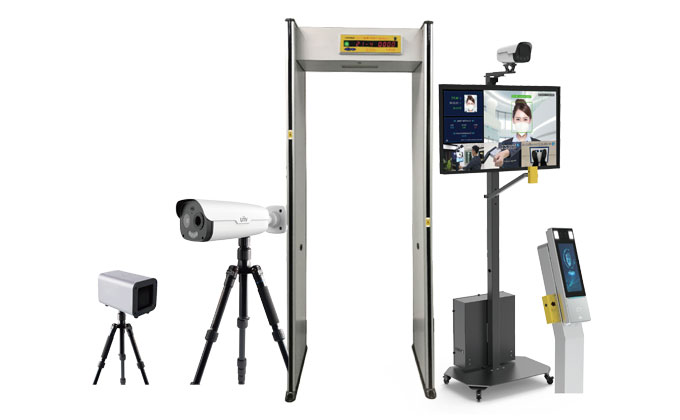
For the UNV newly thermographic fever screening solution, it consists of optical & thermal bi-spectrum camera, blackbody, AI NVR and tripods, which is an all- in- one delivery solution with easy to install and available for rapid and temporary deployment. The bi-spectrum camera adopts 4MP 1/8 inch optical sensor and 384*288 thermal detector to provide clearer image and measure temperature differences in people entering the field of view, besides the camera is built in mic and speaker and red & blue alarm flash light which is easy to warn personnel on site when cases happen. UNV solution uses blackbody device to help calibrate the temperature measurement, making it more accurate and stable especially in less controlled environments where the elements can influence the reading. At the back-end, the AI NVR will allow two bi-spectrum cameras to access in and record simultaneously, and it can provide intuitive demonstration interface to visually display temperature status, mask wearing status, abnormal (elevated) temperature counts, not wearing mask counts and total counts, etc. Moreover, in this smart solution, AI technology ensures thermographic cameras only detect human skin-surface temperature based on face detection, which will filter false alarm caused by other heat source, such as hot water or food.

With its sophisticated component in hardware and excellent performance in image and software, UNV thermographic fever screening solution can support no more than ±0.3℃(with blackbody)deviation at recommended range of 3~6 meters, and be widely applied to multiple scenes such as schools, hospitals, commercial buildings, transportation hubs, etc.

Bespoke Gas Suppression Solution from Advanced Secures Historical Archives of Belgrade

A custom-engineered gas extinguishant system from fire systems leader, Advanced, is now protecting thousands of culturally important collections at the Historical Archives of Belgrade.

The Archives play an important role in Belgrade, preserving some of the city’s most important cultural and social assets, including 34,000 books and journals, documents, photographs, works of art and other artefacts spanning the 16th to the 20th centuries.

Advanced’s local partner in Serbia, TVI Ltd, undertook the fire protection work designing and engineering a bespoke gas suppression system to meet the site’s specific needs. Advanced’s ExGo gas extinguishant control panel was installed alongside a TouchControl touchscreen fire system repeater panel to protect the archive’s vast, 2,400 sq metre storage facility.

The installation involved the extensive interfacing of TouchControl with the ExGo panel, enabling the end user to see the status of the suppression system remotely via 3D interactive maps. The ExGo panel has been programmed with substantial logic in order to achieve cause and effect that activates relays and sounder circuits. These circuits are then used as mass-notification devices and integrate with a bespoke engineered system using Touch Control.

Radomir Kerkez, Electrical Engineer at TVI Ltd, said: “As part of the public procurement process for this project, we specifically requested Advanced to be specified as we knew its solutions were capable of delivering high-performance and reliable protection. Going forward we hope to install Advanced fire protection across the rest of the 4,890 sq metre facility.

Vladimir Zrnic, Advanced’s Regional Sales Manager for Southern Europe, said: “The Historical Archives of Belgrade required a suppression system that effectively and reliably protects the Archive’s contents in the event of a fire. Our ExGo gas extinguishant solution met TVI’s requirements, combining performance, quality and ease of use, while the unique interfacing of our TouchControl repeater panel with ExGo provides the end user with complete visibility of the system’s status.”

ExGo has been developed specifically for sensitive and strategic assets such as server rooms and data centres, control rooms, as well as historic and cultural attractions. It is suitable for almost all single-flooding area applications and includes a range of control options and devices. It is approved to EN54 parts 2, 4 and 13 as well as EN12094-1 and is among the first systems to combine these with EN12094 in a single solution. (EN12094-3 relates to the integrated manual release on the front of the panel). ExGo can be integrated into Advanced’s Axis EN fire system or any third-party alarm system.

TouchControl is a fully-functional remote terminal and repeater featuring integrated graphics, called Active Maps. The 10inch HD touch device offers fire panel and network control and reporting and allows users to immediately identify zones and devices in fire, fault, disablement and test using dynamic colour-coded status buttons.

Advanced, owned by FTSE 100 company Halma PLC, protects many sensitive and strategic assets around the world with its ExGo gas extinguishant control panels, including the Hong Kong – Macau – Zhuhai Bridge, Romanian National Library and 1,600km of Sudanese oil pipeline.

FIRE SAFETY AT THE TOUCH OF A FINGER-TIP

The fire industry has experimented with touch screen technology for many years as ever sophisticated and human friendly solutions are sought to tackle fire situations which can be particularly problematic in cases involving large, complex sites and high-rise buildings.

Protecting these buildings and often hundreds, if not thousands, of people from the danger and damage of fire requires ease of control and monitoring with touch screen technology providing this at the user’s fingertips.

In expansive buildings with complex designs, irreplaceable or valuable contents and large numbers of people to protect, the ability to quickly identify and monitor a potential fire can make a significant difference to avoiding life threatening situations.

Touch screen technology provides ease of use allowing fires to be located down to both a zone within a site and individual devices facilitating speedy evacuations, if appropriate, and focused action to isolate and minimise the spread and potential damage of the fire.

These intuitive systems are easily configured and can include dynamic graphics and maps allowing for a fast response which is essential in these emergency situations. Providing information about a possible fire at a glance, touch screen technologies also provide the benefit of ease of management and monitoring from one location saving valuable time and prompt preventative action.

Not all situations are as a result of an actual fire. Avoiding large scale evacuations to minimise disruption is another benefit of installing touch screen technology with this innovation also identifying faults and disablement issues.

Where touch screen technology is particularly invaluable

The innovative technology is particularly beneficial in settings such as hospitals for example, where evacuating patients requires care and time, with touch screen technology delivering the earliest possible warning and specific details of the location of the fire enabling the affected zones to be isolated.

Large buildings can be monitored from one location with touch screen technology facilitating a fast response to the specific area in question, maximising both time and efforts to tackle the problem before it escalates.

Buildings in remote areas are also particularly vulnerable and can also benefit from installing touch screen technology where assistance with controlling and extinguishing a fire may not be as accessible as in less remote locations.

Evacuations in these incidents, involving hundreds and possibly thousands of people, require speed, careful management and calm with fire systems that include touch screen technology delivering immediate and specific warnings that are paramount to the process to help avoid life threatening situations from escalating out of control.

Factors to consider when selecting touch screen technology

There are a number of factors to consider before choosing the right touch screen technology for a site including:

– Can it be networked to cover a large site without compromising reliability and performance? Some systems’ effectiveness can be significantly reduced if large areas need to be covered
– Is it easy to install and configure to your specific requirements? The ability to easily install and configure the system to the individual specification of a site is key, improving performance and heightening protection of the building
– Does it provide an effective and easy user interface? Ease of use should be paramount as it may be some years from initial installation before a response to a potential fire is required. Does it provide sufficient detail allowing monitoring and control of each location and device?
– Is it an independent terminal, saving significant costs? Touch screen technology on fire panels add significant cost, compromise performance and add complications
– Does it provide high quality, dynamic and easy navigation maps and site plans providing at a glance information on the location of a potential problem? Detailed maps, the ability to zoom into high definition images and ease of navigation can significantly improve the response to a potential fire situation
– Does the touch screen respond to gloved hands enabling fire fighters to monitor and control the situation? This is an important factor as fire fighters need to be able to operate the touch screen technology in situations where it may not be safe nor time efficient, to take gloves off

Advanced TouchControl

Leader in fire systems technology, Advanced, manufacture one of the market’s largest touch screens, TouchControl, with a 10-inch screen providing more detailed at a glance information.

Designed as a remote terminal rather than being part of a fire panel, the stand alone innovative technology means that users save on cost, complication and the independent network node means performance isn’t compromised.

One of the unique features of TouchControl is Active Maps which enable live zone status information in high definition delivering incredible detail. Users can easily navigate a site/panel and network via Active Maps.

TouchControl is easy to install and is a fully functional Remote Control Panel, often installed in receptions, lobbies and public areas providing full fire panel and network control and reporting. When not in fire-use the touch screen repeater can be configured to display corporate, advertising or health and safety messages to the public.

Designed with intuitive ease of use, quality, detailed reporting and monitoring, TouchControl has been the preferred touch screen technology for a number of buildings of all sizes within diverse sectors, chosen for its reliability and high performance.

Examples of TouchControl installations:

– Lidl – the popular European discount supermarket
– One of Bulgaria’s largest banking groups DSK Bank chose TouchControl for its high level of protection and reliability
– The world class chemical plant Victrex in Lancashire which delivers high performance polymer solutions to a range of sectors
– The 610,000 sq ft Leadenhall Building in London which comprises 45 floors of office space
– The Atlantic Islands Centre on the 5.5 sq mile Isle of Luing.

Advanced products include complete fire detection systems, multi-protocol fire panels, extinguishing control and fire paging systems. More details on TouchControl and Advanced’s wider product range can be found on the website at www.advancedco.com.

TouchControl: Overview from Advanced on Vimeo.

D‑Link adds McAfee Protection to its Covr AC2200 Tri‑Band Whole Home Mesh Wi‑Fi System

The COVR‑2202 now combines world‑class security features with sophisticated mesh Wi‑Fi technology for a safer, more secure and seamless connectivity.

COVR-2202 D-Link adds McAfee Protection to its Covr AC2200 Tri-Band Whole Home Mesh Wi-Fi System
The COVR-2202 now combines world-class security features with sophisticated mesh Wi-Fi technology for a safer, more secure and seamless connectivity

D-Link, a global leader in network-based solutions, has announced innovative security features for its AC2200 Tri-Band Mesh Wi-Fi System (COVR-2202), to provide blackspot free, high-speed, seamless Wi-Fi with added safety and security – specifically designed to meet the demands of the modern smart home.

The integrated McAfee Protection comes with five-year Secure Home Platform subscription and two-year McAfee LiveSafe Protection, and provides end-to-end security for each and every device connected to a home network. Emerging threats and vulnerabilities are identified and blocked thanks to McAfee’s Global Threat Intelligence, and its advanced parental controls ensure parents can keep their children safe from unsuitable online content. What’s more, existing owners can add this feature to their COVR-2202 by simply upgrading their device to the latest firmware.

The new feature forms part of D-Link’s expansion of McAfee Protection across its range of routers and home Wi-Fi solutions, which also includes the recently launched EXO Smart Mesh Wi-Fi routers (DIR-1960, DIR-2660 and DIR-3060).

The McAfee Secure Home Platform gives users complete control of their devices and ensures they are the first to know and respond to potentially threatening activity. This includes any devices trying to connect to malicious addresses, unidentified devices attempting to join the network, and the option to deny any new devices from connecting to a network. It also works with Amazon Alexa, providing an all-new way to control a network using voice commands. This feature allows users to monitor their network, block devices, and get up to speed on network notifications without lifting a finger. The two-year McAfee LiveSafe™ subscription allows antivirus software to be installed on an unlimited number of computers, tablets and smartphones.

The COVR-2202 works with a user’s existing router to create an expanded network that works seamlessly across an entire home. Each point creates an exclusive high-speed Wi-Fi zone, which allows users to run demanding multimedia applications from anywhere in a home.

Seamless, buffer-free connectivity is supported by the COVR-2202’s Smart Roaming technology with MU-MIMO and Smart Steering. This allows users to enjoy media streaming and internet phone calls throughout their entire home, avoiding drop outs and lag, even when moving from room-to-room. The system comprises two high-performance AC2200 Tri-Band Covr Points that eliminate Wi-Fi dead spots and provide fast Wi-Fi to homes of up to 550m2.

COVR-2202’s key features include:

Tri-Band AC2200 – two 5GHz bands and one 2.4 GHz with Wi-Fi speeds of up to 866 Mbps and 400 Mbps respectively
Smart Backhaul – dedicated 5GHz backhaul band for communication between Covr Points to optimise bandwidth across the whole Wi-Fi network
Smart Roaming – seamlessly connects to the strongest signal as you move from room to room, eliminating the need to disconnect and reconnect
MU-MIMO technology – creates a powerful, fast, and highly efficient Wi-Fi network that can handle a greater number of connected devices
Expandable network – Covr is a scalable solution. Simply add extra Covr Points where you need more coverage

Smart HVAC Systems on Cybersecurity and Connection Protocols

Compared to a traditional HVAC system, a smart HVAC system offers benefits including lower energy consumption, condition-based maintenance, predictive performance issues, and remote and automatic adjustments of the system. With it, tenants can live more comfortably, building managers can manage more efficiently, HVAC system technicians can work more easily, and total building utility fees can be decreased. There are several considerations for a building to adopt a smart HVAC system: for example, is the building old or new? Which wireless protocols should be used for the smart system? Does the system have sufficient cybersecurity protection? Overall, the smart HVAC system market is promising. The market needs have recently been expanded from residential buildings to commercial buildings, leading the smart HVAC system to provide comfortable living experiences for people working in offices.

Smart HVAC System Assists Energy and Operation Cost Saving
A heating, ventilation and air conditioning (HVAC) system is responsible for controlling temperature and air flows in a smart building. With the ability to locate people inside the premises, the smart system helps buildings save significant energy consumption and operational costs.

A heating, ventilation and air conditioning (HVAC) system sits in the middle of a building, it’s respon- sible for providing comfortable room temperatures and air flow for the people inside, no matter if it’s a hot summer afternoon or a snowy winter day. As buildings are adding smart elements such as prediction and remote controls, HVAC systems are also getting “smart.” Smart HVAC systems benefit buildings and tenants in several ways, such as providing energy efficiency, building maintenance, performance prediction and automatic adjustment. Overall, smart HVAC systems are able to save operation costs and provide a better living experience. Here are some benefits brought by smart HVAC systems:

– Energy saving, for example, is achieved by smart HVAC systems constantly demanding performance monitoring and meeting the optimal conditions. As a result, the system is required to conduct energy diagnostics, energy prediction modeling, fault detection diagnostics and model predictive controls to save energy.
– Condition-based maintenance allows HVAC systems to automatically identify equipment performance issues, providing visibility across managing facilities. Rather than having to schedule regular maintenance visits for repairs, they can now be done on demand.
– Predicting performance issues are achieved by intelligence and machine learning embedded in smart HVAC systems. Several sensors are installed on different parts of the smart HVAC system, it is able to predict when system issues are about to happen by analyzing all data gathered from the system’s sensors, including installation dates and performance changes. Due to the system’s ability to predict issues that are about to occur through war nings, higher reliability and uptime of the system are experienced.
– Automatic and remote implemented system changes are accomplished by external decision support tools and systems connected with the smart HVAC system. If any environmental sensors detect changes in the surroundings of a building, a smart HVAC system will automatically adapt to the changes, maintaining comfortable living conditions in the building.

“A truly smart system should be able to anticipate how it needs to perform optimally and adapt to its operations to meet those goals,” said Sudhi Sinha, Vice President & General Manager, Digital Solutions, Johnson Controls. IoT-enabled HVAC solutions offer users insights into data beyond temperature, including humidity and levels of indoor air pollution. In addition, smart interfaces, dashboards and apps enable building managers and tenants to monitor equipment and make adjustments remotely. “It’s all about creating a personalized user experience. With the IoT, building occupants and owners can now feel more in control of their environments,” added Sinha.

Vital Components for Smart HVAC Systems
Compared to traditional HVAC systems, several components of smart HVAC systems are adjusted in order to realize energy saving. First of all, the Compressor, which is the electric pump compressing refrig- erant, and the air handler, that blows air over the heating and cooling coils, needs to be optimized since they are both a major consumer of energy. If these two pieces of equipment run only as needed, a great amount of energy can be saved. Secondly, the ventilation system, which controls a building’s air flow, when and where a building needs external help to save energy. For instance, strong air flow isn’t needed in an empty meeting room or the hallway after office hours.

Through sensor- driven technology to detect the density of occupants in a certain space, the ventilation system works only when it’s needed. Lastly, smart thermostats that can read temperature, humidity, occupancy and other variables are important in the whole HVAC system. The thermo- stats learn from gathered data from the surroundings and make intelligent decisions for the building, such as eliminating uncomfortable heat caused by humidity. “At a basic level, the key components for a smart HVAC system is the sensor hardware and software that provides a way to collect information and an interface for the user to see the information, receive alerts and notifica- tions, and take appropriate action,” said George Tsintzouras, CEO of Alert Labs.

Retrofitting Old Buildings for Smart HVAC Systems
Connected smart sensors play a significant role in establishing smart HVAC systems in old buildings. By having sensors in the existing system, components and back-end software providing data analytics, old buildings can also receive benefits from smart HVAC systems.

For new buildings, it isn’t difficult to embrace smart HVAC systems. Some of them have even been installed from the very beginning. For old buildings, however, adopting smart HVAC systems is a challenging job. There’s even a term “retrofitting,” designed to describe old buildings adopting smart technologies. “In older buildings, a wireless and battery-operated sensor platform could be crucial as it might be difficult and, or, prohibited to install external cabling along walls,” said Peter Lindkvist, Sales Director, Lumen Radio. That is to say, old buildings aren’t required to remove all existing components of HVAC system to adopt smart HVAC technology. They can keep current equipment and install wireless and battery-powered sensors around, to experience the benefits of a smart HVAC system. “Alert Labs sensors can be installed at any age of building and air conditioning system,” said George Tsintzouras, CEO of Alert Labs.

Smart Sensors Turn Old Buildings New
Alert Labs offers four sensors for smart buildings – a water flow sensor, a flood sensor, a sump pump sensor and an A/C monitoring sensor and system. Its A/C monitoring system and sensor, called Sentree, is designed to be installed by residential central A/C units, detecting temperature, pressure of liquid and vapor and real-time amperage numbers. The device connects with cellular networks and provides 24/7 remote monitoring of residential central air conditioning systems. As it detects issues, it will notify maintenance and building managers right away.

The water flow sensor, designed for indoor water meters, detects water leaks, floods, humidity, temperature, and power outages. For its instant alerts of all variable changes, the sensor can help reduce water bills and prevent damages. The flood sensor, on the other hand, focuses more specifically on water leakage and flooding. The sump pump sensor detects rising water levels, pending sump pump failures and floods, aiming to save on insurance and prevent any accidents. Furthermore, data gathered from all sensors can be presented on a back-end dashboard provided by Alert Labs.

The dashboard for homeowners, for instance, offers A/C performance and status; and the dashboard for contractors enables the service team to offer proactive mainte- nance and repairs. For managers who take care of several buildings, the company also has a command center, letting them monitor multiple properties in one place, assign service teams to individual properties, and receive alerts and A/C analytics.

Making Maintenance More Efficient
“A smart HVAC system enables contractors to send the right technician with the right parts to repair the problem on the first visit which reduces truck rolls and increases customer satisfaction,” said Tsintzouras. With the sensors around the HVAC system, contractors can keep equipment running more efficiently by knowing when issues are about to occur. Service or maintenance calls, therefore, can be cheduled before a breakdown happens.

Through a unified portal for both tenants and technicians, service calls can be scheduled by customers’ preference, reducing the frequency of off-hour emergency calls. “Property owners have insight into their buildings and can remotely adjust the system according to occupancy and time of day to save energy. The can also modify their behavior once they see how their property is performing or wasting energy with the incentive that they can save on their utility costs,” said Tsintzouras.

In addition to energy and cost saving, smart HVAC systems also improve management efficiency and building customers’ satisfaction. With smart sensors and the back-end analyzing and monitoring software, old buildings can also have the benefits from smart HVAC systems without replacing all the present equipment.

Mesh Frequency Bands in Smart Buildings
Wi-Fi, LoRa, Bluetooth, Zigbee… wireless connection frequency spectrums are crowded because of the rising number of connected devices around us. In addition to choosing one protocol, MiraOS, a mesh wireless network technology, could be another solution in smart buildings.

There are many connection protocols existing in the field of smart buildings, such as Wi-Fi, LoRa, Zigbee and Bluetooth. Each protocol has its best use Cases Wireless connections and power- efficiency, for the purpose of smart buildings, should be the most important features equal to selecting connection protocols. Bluetooth 5 and LoRa seem to currently be pretty promising in the field, due to their abilities to provide low power consumption and wide coverage connection for IoT devices in homes and buildings.

However, it’s pretty crowded between the wireless connectivity spectrums. IoT and M2M are thriving in the world, and many businesses are investing billions of sensors and actuators being wirelessly connected. According to a report by Gartner, it is estimated that around 20 billion devices will be connected by 2020. Another report by Ericsson predicts that 15.5 billion devices will be connected via short-range technology by 2020, accounting for 53% of all connected devices.

Furthermore, wireless protocols like Wi-Fi, Zigbee, Thread and Bluetooth all use the same frequency channel. The traffic jam might someday cause communication breakdown and service quality downgrading. “Many of the standard protocols available, such as BLE or Zigbee, do not have the capability to scale to thousands of nodes in one single network. They can neither cope with the amount of interference present in commercial buildings, nor are they energy-efficient enough to allow running the whole sensor solution on battery,” said Peter Lindkvist, Sales Director, Lumen Radio. These protocols don’t allow multi- protocol support. It means decision- making is difficult for smart building builders at the investment stage.

Guiding Networks to a Suitable Frequency
“MiraOS from LumenRadio is a best-of-breed wireless mesh for HVAC and Building Automation,” said Lindkvist. Mira operating system (MiraOS) is a future-proof wireless mesh network technology created and patented by LumenRadio. It enables mesh coexis- tence, ultra-lower power, over the air Firmware updates, easy commissioning and large-scale networks. The operating system is mainly powered by the company’s patented Cognitive Coexistence technology, an algorithm which enables real-time, adaptive frequency shopping.

“Within this algorithm, we build a predictive model of the frequency spectrum, where every single device weigh in the decision on the optimal channel to use in each individual (10ms) time slot,” said Lindkvist. Just like the weather forecast, the Cognitive Coexistence technology predicts how the frequency spectrum will be in the millisecond utilized and switch the connection to the best available and least congested frequencies.

Mesh Frequency Bands on Applications
Produal Proxima wireless solution, developed by building automation measurement and control company Produal, is created based on MiraOS from Lumen Radio and u-box NINA module. The solution, which includes several hardware devices, is able to route data from up to 100 wireless transmitters to automated buildings.

Swegon, a supplier of energy efficient and demand controlled ventilation (DCV) and indoor climate systems, is working with LumenRadio on a wireless climate control system – the WISE system. It is said to allow thousands of sensors, actuators and dampers to communicate and create an unprecedented indoor climate solution, helping buildings reduce energy consumption and operation costs, and increase the health of people in the building.

Unlicensed frequency bands, as more devices become connected, is today a scarce natural source. Frequency bands are just getting more crowded and congested day by day. Commercial buildings, are turning into an electro- magnetic mayhem, where different products and systems secure for airtime against smartphones and tenant Wi-Fi networks. “In order to remain reliable and enable industrial – and business-critical use cases, such as HVAC systems, OEMs must select agile technologies including strategies for interference mitigation,” said Lindkvist.

Smart HVAC Systems Vulnerable to Cyber Attacks
Like other connected devices, smart HVAC systems could also possibly be hacked. If attackers take over controls of HVAC systems, in the worst case, cities would break down and private data would be stolen.

All connected devices are standing under the risk of cyberattacks. Smart HVAC systems are no exception, either. Although IoT devices such as smart meters and HVAC unit sensors are not designed for web browsing, they do need to connect to the internet for data gathering, remote control and analytics. Their direct access to the internet, not in purpose, rather makes them major targets of cyber attackers, posing serious security threats for smart buildings.

Cybersecurity firm ForeScout Technologies have discovered that thousands of vulnerable IoT devices in heating, ventilation, and air conditioning (HVAC) systems are vulnerable to cyberattacks. Its research showed that nearly 8,000 connected devices, mostly located in hospitals and schools, offered unauthorized access and were highly vulnerable to cyberattacks. Hacker’s manipulation from HVAC systems could possibly let them access private financial information and potentially retain unauthorized data in large companies. For special locations such as hospitals, dysfunctional smart HVAC systems could possibly harm patients who need to rest under certain temperatures and air flow. This type of attack scenario even has a codename – HVACKer.

Malware Uses Commands to Control HVAC Systems
To carry out attacks on an HVAC systems, hackers would first identify an HVAC system connected to the internet or sitting on a connected internal network. Besides looking for HVAC systems, hackers might also look for building automation software, which incorporates an HVAC component as well. Once they identify such systems, they will try to breach and take control of it. Then, they will import their custom malware to the system in order to infect other devices and computers on the same network. Malware, meanwhile, is mostly used to send commands, instead of stealing data. Sending commands on HVAC systems, however, is still dangerous. Theoretically, hackers could break into air conditioners across a smart city and turn on all of them, to cause a power surge that could disable a city’s power grid.

A Security First Principle Needs to be Put in Place
“Cybersecurity is an incredibly important issue that everybody has to deal with today,” said Sudhi Sinha, Vice President & General Manager, Digital Solutions at Johnson Controls. The first step to achieve cyber safety in a smart HVAC system, suggested Sinha, is for the supplier to have a robust product security program, which spans from product architecture, design, development, support and data management. Next, customers need to ensure that their networks and port are safe and not exposed to any vulnerabilities. To build a cyber-safe HVAC ecosystem requires every partner to take part in. Cybersecurity should be designed from the ground-up, with the final product being the management and data analytics software. Johnson Controls, for example, has a Security First principle in its development processes and product launch. It also provides cyber solutions tailored for the unique needs of each building, ensuring daily tracking of potential threats and provide rapid incident response.

“For cybersecurity, people need to be proactive and vigilant. It is better if companies adopt standard security frameworks,” said Sinha. For instance, buildings can ensure that they have industrial grade encryption solutions such as 128-bit AES, a running network or protocol supporting IPv6 traffic, and an IP-based security solution added on top like certificate handling or DTLS.

Market Needs for Smart HVAC Systems
In addition to smart home and smart residential buildings, needs for smart HVAC systems are also rising in offices and commercial buildings. Remote diagnostics and monitoring of smart HVAC systems, on the other hand, will become more important in the industry.

Smart HVAC systems help smart buildings save energy consumption and operation costs. As many buildings are looking to become smarter, needs for smart HVAC systems are also rising. “Demand for smart HVAC systems is definitely there and increasing,” said Sudhi Sinha, Vice President & General Manager, Digital Solutions, Johnson Controls.

“There’s a strong push for creating more intelligent, on-demand solutions within the HVAC industry right now – driven by energy-efficiency require- ments, but also by the need to enable new data-driven business models and to create new service-related revenue streams for the big OEM’s (Ventilation- as-a-Service),” said Peter Lindkvist, Sales Director, Lumen Radio.

Smart HVAC Systems in Offices
“Smart living technologies are becoming popular outside of residential and hospitality spaces,” said Sinha. In general, people are spending a signif- icant portion of their lives in workplaces. Of course, they would want to feel more comfortable and engaging in this space, helping them become more focused and productive in their jobs. Smart building solutions in workplaces are more popular, suggested Sinha, “because it gives employees a sense of power to control their own spaces and use those spaces within facilities more effectively.”

“We have seen productivity increase by up to 20 percent in certain cases, employee retention by 10 percent, and innovation increase manifold. We have seen this happen across multiple industries and geographies,” said Sinha. For now, although more millennials have shown their preference on smart building technology, Sinha believed, other generations of people feel equally appreciative of it.

Remote Diagnostics Assists all HVAC Technicians
Recruiting HVAC technician talents with the right experience is time-consuming. As a contracted technician, they need to always keep up with service demands, business requests and retain happy customers. A smart HVAC system will also help on their job.

”HVAC business owners are looking for ways to do more with less. Consumers are also looking for ways to expand their smart building capabilities beyond thermostats and lighting,” said George Tsintzouras, CEO of Alert Labs. HVAC systems integrated with smart sensors are able to detect room temper- ature, humidity, water leaks and floods. In the near future, machine learning will further expand the capability of smart HVAC systems. Smart HVAC systems powered by machine learning are able to send alerts about potential issues as sensor readings are abnormal, before a customer really experiences a problem.

“Remote diagnostics are fairly new in the HVAC marketplace, but there are out-of-the-box solutions that are already providing contractors across North America with new business opportunities and growth,” said Tsintzouras. “Remote diagnostics and smart monitoring systems will be available in every technician’s truck in the near future.”

Market Challenges
“There are a few challenges that need to be addressed – cybersecurity, engagement with IT organizations, wireless and communication reliability because of the interference zones in areas where usually HVAC systems are kept, retrofitting and compatibility with older systems, data sovereignty in case of cloud systems,” said Sinha. “And most importantly operator and technician training around new digital and smart HVAC capabil- ities.”

Peter Lindkvist, Sales Director, Lumen Radio, on the other hand, mentioned other challenges for smart HVAC systems: “who should or could own the data, what services are building operators and real-estate owners ready to pay for, and design new product platforms that can scale well enough across large venues to allow fully integrated solutions.” The demand for more connected buildings and smart HVAC systems are growing. All partners should gather together, solving these challenges, and work on the next-generation smart building solutions.

New panoramic outdoor detector from OPTEX

Introducing OPTEX WX Infinity and WX Shield series, a new ranges of outdoor PIRs that offer panoramic 180° detection coverage and 12m radius to detect any intrusion around a residential or commercial building.
WX Infinity series and WX Shield series are built upon OPTEX’s extensive track record in providing outstanding sensing performance for outdoor intruder detection applications, while the wide (180°) detection area coverage brings a feature that is ideal for protecting larger residential grounds and flat roofs.

WXI series
The WX Infinity series comprises two wired and two wireless models available either as the standard or anti-masking version.
The WXI sensors can provide two, independent 90° 12m detection areas, one for the left side and one for the right. Sensitivity and alarm output can be set up independently for these left and right areas. For instance, the left output can trigger for a simple awareness alarm while the right side output prompts CCTV camera system to set an event index.
Area-masking shutter allows a sliding mechanism to quickly mask an area and makes the detection area narrower to avoid obstructions such as swaying vegetation. The set-up procedure has been made easier by including an automatic walk test mode to ensure a quicker and more accurate installation.
The WXI motion sensors benefit from OPTEX’s sensing analytics that filter out noises that are common in outdoor environments, and also distinguishes between humans and small- to medium-sized animals. The sensors also include temperature compensation and double conductive shielding to ensure best performance in sunny and hot outdoor environments. All WX Infinity models feature a tamper-proof back panel and the anti-masking models (WXI-AM/ WXI-RAM).

WXS series
The WX Shield series provides flexible range detection and settings, as well as a selectable low (0,8 – 1,2m) or high mount (2m) option. Like in WX Infinity the sensors feature two completely independent 90 degrees detection areas.

WXS comprises two PIR models and two dual-tech models. The dual technology (available in WXS-DAM and WXS-RDAM) combines PIR and microwave technology which provides the ultimate stability in detection performance and is ideal for applications where strong sunlight hits the land or car headlights shine directly into the sensor.
WXS series is equipped with self-learning IR and intelligent anti-masking. The sensors are also equipped with the Shield advanced features including double conductive shielding to avoid false alarms triggered by bright sunlight or RFI, automatic walk test and 5-year warranty.
“Outdoor warning technology can help prevent crimes by detecting and reporting intruders before they attempt to break into a building,” says Jacek Wójcik, OPTEX Managing Director, Central and Eastern Europe. “Early intrusion detection is what OPTEX has been focusing on for the last 40 years by delivering an extensive line-up of outdoor intruder detection sensors that provide reliable outdoor security.”

Thanks to SMARTair® wireless access control, weekly key management time went from 5 hours to 5 minutes

London, May 2019 – Each of Denmark’s 550 individual Free Schools shares a common ethos: parents and students participate together in activities outside school hours, including weekends. It’s excellent for building a school community. Not so easy for managing security, when issuing and tracking keys becomes a 7-day task every week. The Vejle Friskole turned to SMARTair® wireless access control for a solution.

Previously, key management ate up “a very long time, approximately 5 hours a week,” explains Henrik Kækel, Technical Service Officer at Vejle Friskole.

Secure wireless electronic locks, already proven in schools across Europe, were the answer. Vejle Friskole’s mechanical keys have been replaced by a SMARTair® access control system. Over 80 doors and cabinets around the school are secured with SMARTair® wireless devices. Even at a historic property like Vejle Friskole, battery-powered SMARTair® devices are easy and unobtrusive to retrofit.

Now approximately 250 students, teachers and parents each carry their own key fob, programmed with individual access permissions. Because the SMARTair® system portfolio has locking devices tailored to different kinds of openings, everyone at the Friskole opens the right doors and cabinets with a single fob. There’s no more need for the school to distribute separate keys for student or staff lockers, for example.

Time-saving key management
“It was really bad because we had big problems with keys that were lost,” says Henrik Kækel. “There was a lot of work in key administration.” SMARTair® is easy for the school to manage. Today, Vejle Friskole staff spend around 5 minutes a week managing their access system. “It’s incredibly easy to figure out… it takes 1 minute to code a student,” he adds. Even managing the leasing of school buildings for non-school events is simple and secure. School facilities staff issue fobs for the duration of the event, then cancel them immediately afterwards – with no concerns someone may have copied a physical key.

In addition to making everyday life easier and saving staff time and admin costs, SMARTair® has increased security. Using the intuitive SMARTair® software, they always have an overview of who has been at the school, and when. Audit trails are generated and monitored in real time using their SMARTair® system. And it’s no disaster if a credential gets lost. Henrik adds: “Then we cancel the credential and issue a new one.”

Vejle Friskole’s SMARTair® system is easy, fast and cost-effective to extend to new doors, cabinets and users — at the beginning of a new school year, or any time they choose.

To learn more about how SMARTair® can make your school safer — and save you time and expense — visit https://campaigns.assaabloyopeningsolutions.eu/smartair-schools