Home Articles posted by a&s Adria (Page 194)

Cerberus Cloud Apps from Siemens take fire safety to the next level

Providing remote fire safety services has never been easier with Cerberus Cloud Apps. Secured Cloud Connectivity Enables Remote Access and Maintenance of Fire Protection Systems. The Cerberus Cloud Apps are part of Siemens’ holistic approach to fire protection where every element of fire protection matters – from detection and evacuation, to danger management and cloud services.

Less than 10% of buildings today have the cloud connectivity needed to make remote access possible. This despite inroads that digitalization and the Internet of Things (IoT) have made in the fire industry in recent years. Then comes COVID-19, which might have an unexpected acceleration of remote access use to manage fire safety and other building technologies. Perhaps the pandemic’s requirement for everyone to keep their distance will speed the acceptance of remote monitoring, maintenance and control of fire safety systems.

Capturing the remote connectivity market
The market for remote connectivity for fire safety systems is vast, since about 90% of buildings are not connected to the cloud. Additionally, most sites do not have an on-premise danger management station. This means that service partners and customers can’t obtain an overview of happenings at their sites without running to a fire alarm control panel. Fire safety solution partners are left asking themselves:
– How do I gain a quick overview of my customers’ fire protection systems?
– How can I reduce high traveling costs and increase customer service quality?
– How can I provide periodic maintenance more efficiently and deliver evidence of executed tests to customers?

Cerberus Cloud Apps from Siemens solve these problems by connecting fire safety solutions to the cloud, which helps digitalize the fire industry and create remote accessibility. Cerberus Cloud Apps use a gateway to connect each site to the cloud so that panel events can be sent to the cloud. Solution partners and customers are then able to directly monitor and operate the fire control panels without having to stand in front of them.

Cerberus Cloud Apps portfolio
To help solutions partners and their customers get the most from cloud platforms and services, Siemens developed the Cerberus Cloud Apps portfolio that includes Cerberus Portal, Cerberus Test and Cerberus Tunnel. They are part of Siemens holistic approach to fire protection in which every element of fire protection matters – from detection and evacuation to danger management and cloud services.

Cerberus Portal
The Cerberus Portal application delivers an overview of all connected sites as well as easy access to them. It also eliminates unnecessary service visits and prepares service engineers for those that still need to take place. The system is simple to install and commission without the need for extended training. Furthermore, communications are encrypted and privacy is maintained in order to ensure the safety of the customer’s data.
Cerberus Portal makes services more efficient for both solution partners and customers by providing secured 24/7 connectivity, multi-site dashboards, real-time monitoring and simple operation.

Cerberus Test
The Cerberus Test application enables service partners to deliver efficient testing during periodic maintenance. Cerberus Test is a native smart-phone application that makes the process faster and more efficient than regular detector testing since only one person is needed. Hands-free text-to-speech functionality increases the speed and efficiency of the maintenance activities. The detector test activities are recorded in the cloud.

Cerberus Tunnel
The Cerberus Tunnel application solves the problem of sending service engineers to a site without knowing the precise problem or if it could have been fixed remotely. Fire service engineers can use Cerberus Tunnel to remotely access the fire safety sites and fix issues without needing to be on site.

Additional benefits of Cerberus Cloud Apps
Cerberus Cloud Apps introduce a number of additional benefits for three important groups: system integrators or service companies, owners or investors, and consultants, planners or designers.

Systems integrators or service companies are looking for new opportunities to increase their competitiveness. For example, remote configuration and commissioning of the systems will reduce travel costs and improve utilization of fire safety engineers, who are becoming an increasingly rare commodity. In addition, these companies will benefit from the step-by-step installation and setup of the cloud solution. By using Cerberus Cloud Apps to digitalize the service business, systems integrators and service companies can take the next step in further improving their resource utilization.

Owners and investors find that Cerberus Cloud Apps put peace of mind at their fingertips. For example, live overviews let them know what is happening with their fire protection systems at any time and anywhere. The system is set up to initiate quick response to fire events. The owners and investors can determine the category of events that trigger notifications and who will receive them. If a fire event occurs, a live status update of the fire control panel in question is sent via SMS or email to the appropriate people. Detailed information about the event makes troubleshooting more time efficient.

The consultants, planners and designers are looking for innovative solutions with future-ready fire protection systems that ensure adherence to standards and regulations.

Intervju: Predrag Aćimov, Ingram Micro

Mr. Acimov, can you present your educational and business background to our readers? How long have you been working for Ingram Micro and in what roles?

I am currently holding the post of manager for security systems with a focus on CCTV and the field of telematics, i.e. on the branch that combines telecommunications and IT solutions. I am in charge of organization and specialized management of all activities in order to provide support and cooperation and overcome project challenges that our partners face in the security system market. I have been with Ingram Micro for less than a year and I am responsible for the entire territory of the countries belonging to the SEE region, more precisely non-EU countries. I am a graduate engineer in the field of technical sciences and my career in the security industry has lasted for almost 15 years now. Prior to Ingram Micro, I worked in security and technical protection roles, first in the state and then in the private sector with one of the leading system integrators in the Balkan region. Previous experience in the market as well as direct cooperation with dozens of manufacturers in the market recommended me for receiving the call from Ingram Micro and joining their successful team.

Ingram Micro is one of the world’s largest wholesalers and providers of ICT products and services. The numbers are really impressive. What’s the state of Ingram Micro’s revenues at a global level, how many countries do you do business in, with how many manufacturers, how many resellers, buyers and logistics centers do you have, etc.?

Ingram Micro is the largest distributor in the field of IT and security solutions in the world. The company was founded in 1979 and the figures themselves are rather impressive considering that in the previous year, the globally generated revenue amounted to more than 50 billion dollars with the help of more than 36,000 employees. The company operates in over 160 countries, and cooperates with almost all major manufacturers of equipment and services in the field of IT and security solutions, i.e. with more than 2,000 of them. At the same time, the number of partners is constantly growing and has now reached over a quarter of a million. There are almost 200 global logistics centers with a total storage space of about 2,000,000 m².

What are the main benefits you would point out as the reason why so many companies use your distribution channels?

Ingram Micro actively helps partners to fully achieve their market goals and maximize the value of the technologies they produce, sell or use. With a huge global structure and focus on the cloud, our technology lifecycle and solutions and global training we provide, Ingram Micro enables business partners to operate efficiently and successfully in their markets. It is evident that no company provides such a wide and deep range of technologies and services for timely supply to its business partners around the world, which has granted us both global and local leadership position and recognition among all important market players.

On its path to success Ingram Micro has acquired more than 40 companies worldwide. What are the most important acquisitions, primarily in Europe, and when did you start doing business in the Adriatic region? Do you have offices in the regional countries?

You are right. Ingram Micro has acquired a total of 44 companies, including 9 of them in the last 5 years, mostly in the field of distribution (57%) and information technology (19%) and this trend is ongoing. Globally, the largest acquisition is Brightpoint, which is worth just shy of half a billion dollars. When we talk about Europe, the most important acquisitions certainly relate to Eurequat and Intertrade, two leading distributors in the field of DC / POS (Data Capture/Point-Of-Sale). I would also like to add the latest acquisition of the European company Ictivity which operates in the field of ICT. As Ingram Micro we have been doing business in the region from mid-2016 by taking over operations throughout Eastern Europe from the Russian company RRC which is also one of the largest IT distributors with over 20 years of business in the IT market in our region and beyond. Ingram Micro has offices and employees in all SE countries with a division covering EU and non-EU countries.

In December last year, Platinum Equity announced its intention to buy Ingram Micro for approximately $ 7.2 billion. The transaction should be completed in the first half of 2021. What benefits will it bring to your clients and customers? What do you expect from this acquisition and how will it affect your business?

As you may have noticed, our excellent performance and growing lead over competitors did not go unnoticed. I am pleased to share with you the fact that Ingram Micro will partner with the Los Angeles-based global investment fund Platinum Equity, while launching the next chapter of our hugely successful success story. We believe that Platinum Equity is the right partner to accelerate our innovation and industry leadership while providing a great place to work for employees as we continue to nurture an environment that inspires each individual to participate and succeed in an engaging, inclusive and stimulating workplace. Platinum Equity is a global investment company specializing in mergers, acquisitions and operations. The company has about $ 23 billion in assets under management and is backed by many of the world’s largest and most prominent institutional investors, including various pension, private and state funds, university endowments, charities and financial institutions. Platinum Equity knows our industry well and has extensive experience in working with technology and logistics companies to maximize potential. We fit in perfectly with Platinum Equity for the reason that they are looking for industry leaders with clear and sustainable differentiation. There will be no interruptions in our business due to this transaction – Ingram Micro will work normally. In fact, we expect our partners and customers to welcome the new ownership as they will be direct beneficiaries of the additional flexibility and resources that will continue to extend our range of services and solutions. This transaction will accelerate our growth and provide access to additional resources. Our brand, strategy, purpose of existence, values and principles are well aligned with the fund’s plans. Ingram Micro will continue to operate as a separate and independent company which performs set operations according to planned strategies. Our mission remains the same as before and it is about providing an exceptional experience that our customers and suppliers rely on a daily basis by using all the benefits which they are accustomed to. In other words, we continue to do what we have done and what has been proven to work!

There are five major areas in which your company offers products and solutions: global training, cloud, consumer electronics, technology solutions, and IoT. Can you tell us what each of these fields covers and list the most important brands you distribute?

Our commitment to a common set of principles unites us and leads to better decisions, enabling us to focus on the success of our business partners and associates. They are distinguished by results, integrity, innovation, talent and human potential, responsibility and courage. We support our partners with a range of products and services that solution providers can use to increase efficiency and gain a competitive advantage in the market by meeting their customers’ needs for quality, competitive and secure solutions. We are the right choice to look for specialized solutions in the following categories:

– Security – network security, technical security systems, security management, secure content and rights management, management and access control;
– Cloud services – IaaS – Infrastructure-as-a-Service, AZURE migration;
– Data Center infrastructure – servers, storage, power supply systems, software;
– Networking – switches, routers, wireless, modems, media converters, management software, IP telephony, VoIP, IP video monitoring, FTTH / FTTB, video surveillance;
– DC POS – mobile computers, barcode scanners, RFID, barcode printers.

What can resellers and installers expect from you in terms of pre-sales and after-sales support, education, eBusiness tools, logistics services, marketing, certification and technical support?

It is a well-known fact that Ingram Micro is a VAD (Value-Added Distributor) that not only provides the sales of products and services but rather helps partners to realize the full potential of advanced technologies. Thanks to the global infrastructure and focus on cloud technologies, logistics and advanced technological solutions, we ensure that our partners receive the appropriate tools and support for successful business. Today, there is no other company in the world that provides such a wide and comprehensive range of technical and logistics services. What also sets us apart is that we provide our clients with a wide range of end-to-end services and solutions as well as support in all phases of the business cycle with a focus on joint project development, selection of appropriate technologies, process financing assistance and constant technical support in all phases, and in the course of development, implementation and maintenance. The greatest value is the technical knowledge and many years of experience of employees working in sales and technical sector. We are one of the few companies in our market that employs engineers in the field of technical sciences that are closely related to the subject technologies in almost all business functions. Ingram Micro d.o.o. Belgrade has an authorized Training Center for training relating to the companies such as IBM, Oracle, Veeam, Kaspersky, Veritas, Check Point and others. We offer a wide range of training courses for salespeople and engineers as well as the opportunity to gain knowledge and skills relevant to the latest technologies from the best experts in the IT industry and their global partners. Also, as an authorized Pearson Vue test center Ingram Micro d.o.o. Belgrade offers the possibility of taking a large number of exams to obtain certificates from many well-known software and hardware companies such as Oracle, IBM, CISCO, VMware, Veeam, CompTIA, Linux Professional Institute, Software Certifications, etc.

When we talk about the security industry or CCTV, which brands do you work with and which of their products and services do you offer?

At the global level, Ingram Micro has achieved long-term cooperation with CCTV vendors from the premium segment when it comes to the quality of security solutions, and the region which is within my competence is certainly no exception here. These are well-known providers of products and services, such as Axis Communications and Milestone Systems, and their end-to-end solutions. Ingram Micro has established strong relationships with these vendors which have yielded outstanding results that have, in particular, fully justified their quality over the past six years in which Canon Corporation has acquired both companies. There is a noticeable rapid growth in the field of integrative solutions, both independently and in the field of mutual cooperation, which justifies the leading position and innovative role in the market. As I think that your readers are aware of the strength, quality and capabilities of both vendors, I will briefly say that Axis Communications is a leader in the global IP CCTV market and that it offers network video solutions for professional installations and creates products and solutions based on innovative and open technical platforms. Axis Communications has achieved a leading position in the market in the category of video encoders and thus strengthened the company’s position in the video surveillance market. Milestone Systems is a global leader in the open source IP video management software platform (VMS) industry. Our partners choose Milestone VMS because of the proven technology and open platform architecture that provides flexible hardware selection and independent integration. Milestone Systems assists customers to enable video integration into their business processes, helping them manage risks, protect their employees and assets, and reduce costs. Ingram Micro cooperates with these vendors on open access and mutual planning of activities, strategies and development of quality project opportunities throughout the region. Having in mind that I have had the opportunity to cooperate with them for many years, I can responsibly say that they represent the best that the users can get in terms of IP security systems in the market and their combination of project and security solutions achieves exponential benefits during long-term operation.

During the pandemic, did you have difficulty delivering security products on time and, if so, how did you overcome it?

One of the first things I noticed when I came to the company was the strength of the logistics business and the organization within Ingram Micro. I can freely say that it is the simplest complex or the most complex simply organized system that I have had the opportunity to encounter. The emergence of a pandemic and the evident crisis that has befallen us has not had a significant impact on our business in terms of delivery of products and services. A large number of central and local warehouses, warehouse management, long-term cooperation with internal and external logistics service providers, planning, ordering and inventory tracking systems, and precisely planned and implemented reallocation of existing stocks in line with the needs, in a unit of time has demonstrated the strength of the company in a very short period of time. Timely delivery, logistical and financial support, as well as the equipment stock itself allowed for uninterrupted work with partners on the undergoing projects and the development of future ones, and, more importantly, the safety and peace of mind stemming from awareness that the contracted work will be completed on time. It is also the fact that many system integrators, among other things, turned to our solutions for that reason. During the work at the time of the pandemic, it happened on several occasions that certain specific products from the CCTV segment in the whole of Europe were found in stock only at Ingram Micro, considering, also, other brands that are represented in our region. As the basis of our successful work is found in the satisfaction of partners and customers with all that Ingram Micro has to offer, I believe that we have fully justified what was expected of us, among other things. The partners were able to continue working with us without hindrance and get what they are used to just as they have been able to do in the conditions before the crisis caused by the Covid-19 virus.

Which important projects in the region have you participated in when it comes to CCTV?

Bearing in mind that without the written consent of the end users and partners and regardless of the type and form of their ownership, Ingram Micro does not disclose details and data on specific projects in which it has participated, I can list some of the most significant market verticals in the region. I am in charge of i.e. in the non-EU territory. As a rule, it has been evident that for more demanding solutions, as well as in the situations in which it has been necessary to meet sensitive security needs, partners choose our solutions with which they can properly provide education and meet customer needs. This has proven to be a welcome recommendation and practice in various projects regardless of industry, business area, ownership structures, the size of the system itself and the sensitivity of the resources being secured, which I am personally particularly proud of. In the market of Bosnia and Herzegovina and Montenegro, I can single out projects in the field of road infrastructure and financial institutions; In Albania there are projects in the energy sector; with partners in Northern Macedonia we participated in the implementation of projects in the field of shipping and transport while Serbia saw implementation in the construction sector and various commercial service industries. At the moment, there are several security and CCTV projects in the region in which we participate in the creation and implementation of innovative solutions by observing the global framework, which proves our strength and the strength of the vendors that we work with. By the end of the year, I expect results that will enable these solutions to be more widely used and applied in Europe and the rest of the world, and, at the same time, demonstrate that there is a fully professional approach to meeting the needs in the security field in our region, but what makes me especially happy is a strongly proactive action with regard to the emergence of various challenges and the creation of the solutions themselves. I am really proud of these and similar things as part of an industry that can contribute to changes on a broader scale through its development in our region.

Do you offer security solutions to combat COVID and what are those? Have you noticed an increased demand for these solutions?

Regarding solutions that include those intended for combating the Covid-19 virus, there was a significant demand at the very beginning of the pandemic when, I can freely say, partners were burdened and confused by different demands from users without them clearly stating their need to adapt the solution to business conditions and the activities they perform. Unlike most other vendors, Axis Communications and Milestone Systems had a different approach to this problem, which primarily referred to the improvement of existing products as well as to the cooperation with specialized software companies that created similar solutions long before the pandemic. The combination of know-how enabled the development and application of security solutions for this purpose, such as AI analytics, people-counting systems, and the use of thermal cameras in combination with elements of face recognition, access control and the like. All of this primarily had to do with the timely detection of Covid-19 symptoms in persons who would not be allowed access to certain protected areas, yet without violating their guaranteed human rights. To conclude, an advantage has been generated in the already existing integrative solutions developed by our CCTV vendors before the pandemic, while Ingram Micro’s partners know that by cooperating with our sales and technical teams they have the opportunity to respond to customer demands and challenges with a complete project solution in terms of the entire infrastructure (CCTV, network equipment, server and storage architecture, uninterruptible power supplies, security and virtualization software and many others).

Finally, the countries of the Adriatic region are going through the most difficult period in the past two decades. The security industry is also affected, although potentially less than others. When do you expect it to stabilize and return to its previous growth? Also, regardless of the pandemic, what is your assessment of the regional security market in terms of keeping pace with the technological trends, i.e. what should be worked on more on the path to even greater level of professionalization?

With the emergence of the pandemic in our region, I had the opportunity to observe a sort of general confusion in the market regarding how and in what way security systems should be used in the fight against the virus. I appreciate that the previous year, as well as this one, will be marked by a kind of hasty and emotionally guided procurement without a clearly defined goal of its use and adaptation to the given situation. The crisis and the unpredictability of the further developments understandably contributed to the increased concern for the personal and property security of each of us, which also reflected on many irrational procurements and implementations of the systems that did not lead to the expected results. Unlike most business associates with whom I communicate, I do not share the opinion that the crisis will provide a new chance and sales growth, at least not in the near foreseeable future. We are already witnessing regular prolongation and abandonment of planned projects due to uncertainty, rebalance of planned funds and budget cuts. When we talk about the Adriatic region, I can certainly say that there is undoubtedly room for improvement, especially in the field of network video surveillance and the opportunities it offers, especially in the area of integration with other systems. I expect to see significant investments in the development of smart cities with reservations and fear that their design will not be approached in detail and that no account will be taken of the interconnection of such cities and regions as the next step to be taken. As for the emerging trends in terms of technology, we are on the right track when it comes to the quality, expertise and professionalism of the leading system integrators in the region and I would use this occasion to tell them to think about basing their future growth on, among other things, investing in new staff, their education and professional training. We can see that the education systems of the regional countries do not take note of that, and that there are no indications that anything will change with regard to this issue. The foundation of professional solutions rests on the shoulders of professionals who do their work.

Second Virtual Security Summit Breaks New Grounds with Record-Breaking Global Attendance

Virtual events have become the new normal and the risks associated with mass physical gatherings have created space for the new generation of security industry events such as Security Summit 2021 which managed to bring together more than 3000 professionals from almost 100 countries.

Building upon its earlier stellar track record, the second virtual edition of Security Summit, held from 4th to 6th May, managed to break new grounds with its achievements. Nearly 1,200 people registered for it for the first time, making a total of 3,282 attendees on the b2match platform. Security Summit has become a genuine international event due to the fact that it welcomed guests from as many as 96 countries. Compared to its 2019 edition which took place in North Macedonia, the number of countries which the guests came from has literally tripled (from 32 to 96).

Wide Support
In line with this, one can safely say that Security Summit has outgrown the borders of the Adriatic region and become one of the most significant events in Central, Southeast and Eastern Europe, with a significant number of exhibitors and visitors from across the globe. Around half of them come from Southeast Europe, followed by Central and Eastern Europe as well as Western and Southwest Europe. It was also interesting to note the presence of attendees from South America, with the first-time sponsor from this region coming from Argentina.

This year, Security Summit had 71 sponsors and exhibitors. Cathexis Europe, Huawei, MOBOTIX and appeared as platinum sponsors, while Dahua Technology, Eagle Eye, Hikvision Digital Technology, Secura, Seagate Technology, SoftGuard Technologies, Špica, 360 Vision Techology, Vanderbilt i ComNet played the role of gold sponsors. Special sponsors were key industrial organizations such as ASIS, ONVIF, asmag and CoeSS that were joined by the numerous regional professional associations from SE Europe and a large number of media representatives from all corners of the globe.

Improved Networking
This year’s event managed to push the envelope when it comes to the technical features of its native platform. The most noticeable change is the completely redesigned scene. Visuals, lights, audio and other features have been elevated to a higher level in order to match the quality of the physical event. Much has been done to make the platforms as accessible yet as efficient as possible. Everything was hyperlinked, including virtual lobby, main hall and all side events rooms which were intuitively connected with the profiles of the exhibitors so that visitors could reach the desired companies in the easiest manner.

Other technical highlights of the event include Join Virtual Booth feature which makes a sponsor permanently available to every visitor of the company profile who decides to communicate directly via video call. Double confirmation of the meetings was made possible together with direct display of promotional videos on the company profile. Attendees could access presentations held by company representatives directly from their profile. In addition, each company could fill in their complete profiles for each of the categories in the Marketplace for product placement with video, image and text material. Also, sponsors could view the data and inquiries of all interested parties in one place, as well as check who sent their data directly via the Connect with Exhibitor option available on the exhibitor’s profile. Links to company profiles on social networks were made available as well as data on their annual turnover and number of employees. Finally, the organizers supported making one-click requests for meetings or sending messages to all visitors featured on an easily searchable list.

Highlights from the Conference Program
Security Summit’s tradition is a strong conference program with speakers from reputable security companies or professional associations. This year, 14 main lectures were held while 11 successfully realized projects were presented. The program in the main conference hall was supplemented by 21 corporate seminars taking place in the virtual side event halls.

– Leo Levit, the new president of ONVIF and the director of system integration at Axis, spoke about the interoperability of products and systems from different manufacturers. According to him, 500 companies have taken advantage of affordability, component selection flexibility and the development of secure systems, with the number of interoperable products exceeding 20,000 for the first time. However, the real novelty is the information that, in addition to Profile M for standardization of meta-analytics i.e. data transfer from one system to another, ONVIF is also developing Profile D for access control for the first time. This has been a stumbling block for decades because access control has always been proprietary and thus mutually inoperable.

– Jakub Kozak, Genetec’s sales manager for Eastern and Central Europe, gave an overview of the security industry in the past year based on research involving 1,500 experts from several verticals. With the fact that the number of cyber attacks has increased and that at least 67% of companies intend to invest in cyber security, the research has shown that the transition to cloud or hybrid cloud infrastructure is happening right before our eyes, with 37% of organizations already undergoing this digital transformation. The pandemic only accelerated that process.

– Radoslaw Kedzia, Huawei’s Vice President for Central, Eastern and Northern Europe, discussed the industrial revolution fueled by 5G technology. According to data available to his company, AI will be adopted by 97% of large companies by 2025, while full adoption of the cloud will happen 1-3 years earlier than expected, with 86% of managers expecting increased investment in digital transformation. The 5th generation mobile network will enable the flow of ever-increasing amounts of data, which will have a strong impact on many industries. As an example, he mentioned an interesting application in 5G smart mining, i.e. the option to remotely control machinery in mines, which will finally give miners a safer working environment than the one in which they are often exposed to risks.

– Former Securitas employee in Croatia Maja Krejči has launched a startup that will soon present the first marketplace for security services, which they call ZuluHood. It is a concept that follows in the footsteps of well-known services such as Airbnb or Uber, but this time for a market in which, for some reason, this type of service has not come to life. In one place, the user will be able to search for providers, get price information and pay for any desited service, from hiring security guards for a few days during the holidays to installing an alarm system for a few months. If it comes to life, a marketplace like this will greatly change the supply and demand for security services, just as it happened with Netflix, Amazon or Booking.

– An interesting innovation also comes from the Argentinian company SoftGuard. To help prevent violence in crime-ridden countries like Mexico, Colombia and Peru, the company has developed an app that any citizen can easily use to report violations of the law. Users can simply press the panic button and call an ambulance, police or firefighters. It can also be used to call security guards in case of fear for one’s own life, but also to monitor the distancing from people with COVID. It is a practical solution for which they want to find partners for the markets in the European countries.

Protecting data centres and servers with better physical security

London, May 2021 — Critical business assets demand multi-layered security. This principle applies equally to virtual and physical assets: Data may be mission-critical to a business, just as people and premises are. Data security tools will include the latest in cyber-security — perhaps even artificial intelligence* — working alongside physical security technologies such as electronic access control.

According to a recent wide-ranging article on data security in Computer Weekly**: “physical security is key to maintaining the resilience and effectiveness of data centres… businesses end up exposing themselves to a range of risks if this area of security is ignored.” A lack of investment in the physical security of servers undermines the cyber-security of data assets — and vice versa.

Appropriate physical security controls manage risk by minimizing unauthorized access to servers. They protect against outsider intrusion and so-called “insider threats”, as well as accidental breaches and damage to server hardware.

Layered physical security for improved data protection
Aperio wireless locks fill a critical part of this holistic security picture: They protect valuable data by filtering physical access to servers. Server racking solutions may have different locking set-ups, so the Aperio product range has two lock types to accommodate this.

The Aperio KS100 Electronic Server Rack Lock provides comprehensive, wireless control and monitoring for racks and cabinets, incorporating sophisticated tamper protection. Optional online integration adds real-time control and lock status change alerts. The KS100 can be deployed wirelessly, either on-site or in a co-located data centre, and integrated seamlessly with an existing access system.

The C100 Electronic Server Rack Cylinder has a straightforward design suited to many types of server cabinet. It is wire-free and easy to fit, with no drilling or cabling at the cabinet: Installers simply swap an existing mechanical cylinder for this Aperio device. It is compatible with keyless access using any standard RFID technology and plugs straight into an access control system without complex database integration.

In addition to server rack locking, Aperio electronic door devices ensure only authorized staff and contractors even enter the server room itself. Battery-powered cylinders, escutcheons, security locks and a wireless handle with inbuilt RFID reader — all available for multiple door types and formats — provide key-free access control to keep potential threats away. Certified wireless locks are available for perimeter doors, too, further extending control and protection.

These devices are designed for seamless integration with all kinds of security management systems. Aperio enables facility and data centre managers to extend the reach of electronic security without replacing an existing system or creating unnecessary workload by running separate systems in parallel. On-demand audit trail capabilities tell security managers exactly who accessed any server and when.

Aperio provides this critical layer of data security cost effectively for an increasingly multi-layered security landscape, ensuring a deficit in physical protection does not leave the door open for onsite intruders or cyber-criminals. The right access control technologies make it easy for the right people to reach an organization’s servers — and keep everyone else out.

To learn more about Aperio access control solutions for servers and data centres, download a free guide at https://campaigns.assaabloyopeningsolutions.eu/hubfs/AA_Aperio_KS100_C100_TrifoldFlyer_01_2021_ENG_EMEA.pdf

Reducing a city’s crime rate

The city of Aulnay-Sous-Bois in France was often criticized for its high crime rates. In 2014 it ranked highly in a list of crime levels in French cities. So the city needed to take action to reduce these rates, including building a city security operation center, increasing police activities in the field and focusing political attention on the problems. Part of this action involved upgrading technology, and they turned to system integrators Trafic Transport Sûreté (TTS) who built a scalable video security system. The most recent additions to this system are state-of-the-art Hikvision cameras. The city is now classified as much more peaceful, dropping from the first group of cities in the list, to the last group.

Challenge
The obvious challenge here was to find the right technology to deliver the best crime-reducing results. But further, the solution needed to work with existing systems and be scalable to be able to anticipate the future needs. The city values innovation, and strives for the development of new technologies for image capture and system operations to better cover the public space, protect citizens, and support police forces as they carry out their duties.
More specifically, they needed to be able to effectively monitor areas to see the status of incidents taking place. They also wanted to be able to extract reliable video evidence in case of investigation.
The city also had to overcome the issue that police encountered hostile behavior when carrying out tasks. They needed to find a way to both enhance trust and protect officers from unfair accusations and even violence.
Finally, all this had to be integrated with an existing system that used Milestone Corporate Video Management Software.

Solution
One of the main resources the local police uses is its 100 m2 surveillance & operation center, now operating more than 500 cameras. The center’s 11-meter video wall and 7 operating stations use the Milestone Systems VMS and TTS sentinel PSIM, enabling operators to detect offenses and thefts, transmit information to the national police and secure the police forces in the field.
To enhance the existing system, TTS installed around 200 Hikvision cameras throughout the city.
ANPR cameras allowed operators to clearly read licences plates and accurately classify vehicles. This provided the proof they needed that a vehicle was implicated in a specific criminal situation. It also allowed them to issue a fine when the driver was behaving illegally.
Panovu and 4K cameras were installed, providing high quality video coverage of wide areas, making the security efforts more effective. PTZ cameras move automatically on different presets to cover the whole area in automatic patrol scenarios. When there is a need to reconstruct an incident, there is a good chance the PTZ has recorded entirely or partially the incident in order to extract video evidences.
When an operator wants to get a clear understanding of a abnormal detected situation, he takes the control of the PTZ with the keyboard and operates the camera manually. This can also be invaluable to help officers in the ground in real time.
To provide support for officers in the field, the solution included 20 new generation body cameras, with HikCentral software to operate the 3 docking stations. These cameras help protect the police forces and the citizens during police operations. This combination of body cameras and digital evidence management software gives visibility and evidence, protecting both police and citizens. The system secures the data and easily extract comprehensive video and audio situations to better reconstruct a situation. This means police officers can close cases more quickly and effectively. This part of the solution was provided through law enforcement technologies supplier Allwan Security that has been distributing Hikvision body camera solutions since 2017.
TTS specifically chose Hikvision products to enhance Aulnay-Sous-Bois’s system because of their high quality and performance, the wide choice of products to meet the varied needs, and their ability to integrate seamlessly into the Milestone Corporate software platform.
“The cameras also offer high performances image analysis functions that are or will be used by the customer to optimize their operations”, says Bruno Fihol, TTS Project Manager.
Loïc le Roux, Deputy Managing Director of Public Life Services, says: “With Hikvision we have innovation, we have development, and we have anticipation. We are really satisfied with the cameras and body-cameras supplied by Hikvision. We also need to be mindful of the future, and this system is scalable, allowing us to react to situations and threats as they change.”
Crimes have dropped dramatically in the city. For example, robberies have dropped 30% over the last 6 years, proving the value of an integrated security system. The addition of these Hikvision cameras, will maintain this trend, which provides a new picture and reputation for the previously ‘crime-plagued’ city of Aulnay-Sous-Bois.

Click here to see a video of this story [link to video]
Click here to find out more about Hikvision city solutions.

New SMARTair® i-gate Padlock takes real-time electronic access control anywhere, inside or out

London, May 2021 — With resistance to attack and extreme weather, wire-free installation and battery-powered operation, the new SMARTair i-gate Electronic Padlock is built for use almost anywhere. This new device in the SMARTair wireless access control range enables facility managers to add real-time control to non-electrified gates, cupboards, cabinets, closets, crates and more — wherever they are and whatever the climate.

For many organizations, security and access needs do not stop at the perimeter door. Yet finding reliable locking devices which are easy to operate with an electronic access system can be difficult. Gates and outbuildings are hard to reach with cabling. Access devices may not have the resilience required for reliable operation outdoors. The i-gate is built to meet these challenges.

“The new SMARTair i-gate Electronic Padlock helps our customers extend wire-free control to new access points,” says Félix Morán, SMARTair Product Manager at ASSA ABLOY Opening Solutions EMEA. “It can be instantly moved to wherever a resistant, adaptable locking device is needed. Site managers no longer need to worry about outbuildings, gates, cupboards and more, because they can monitor and control access to them electronically, remotely and in real time, when needed.”

Upgrading an existing padlocked closure involves simply swapping the devices and integrating the i-gate Padlock into an existing or new SMARTair wireless access control system. No drilling or wiring is required. The i-gate Padlock is available in a contemporary black finish with stainless steel shackle.

Exterior and interior openings previously unsuited to electronic access control can now be controlled and monitored from a familiar software interface, including remotely from the SMARTair Web Manager. An i-gate is compatible with any SMARTair system management option: Standalone, for basic access control functionality; Update on Card; Openow™, for access management and unlocking via smartphone; and Pro Wireless Online, for real-time management of every door and system user.

Tough enough for all weathers, compatible with any credential
The new SMARTair i-gate padlock is robust enough for almost any climate conditions. It has a watertight cover (IP68 rating) and an internal cylinder with Durability EN 15684 Class 6 Certification. It is battery powered and works with all standard proximity credential technologies, including MIFARE®, DESFire and iCLASS®, as well as Bluetooth Low Energy.

When combined with Openow, the mobile solution for SMARTair, users no longer need to carry separate card or fob credentials. Instead, their phone stores secure virtual keys which can be issued, amended or cancelled at any time. No one wastes time collecting or validating an access card, because they can unlock the new SMARTair i-gate Padlock with a smartphone. With Openow, if you have your phone, you are already carrying your keys.

To learn more, download a free brochure for the new SMARTair® i-gate Padlock at https://campaigns.assaabloyopeningsolutions.eu/hubfs/smartair/assets/AA_SMARTair_igate_SalesBrochure_04_2021_FINAL_WEB.pdf


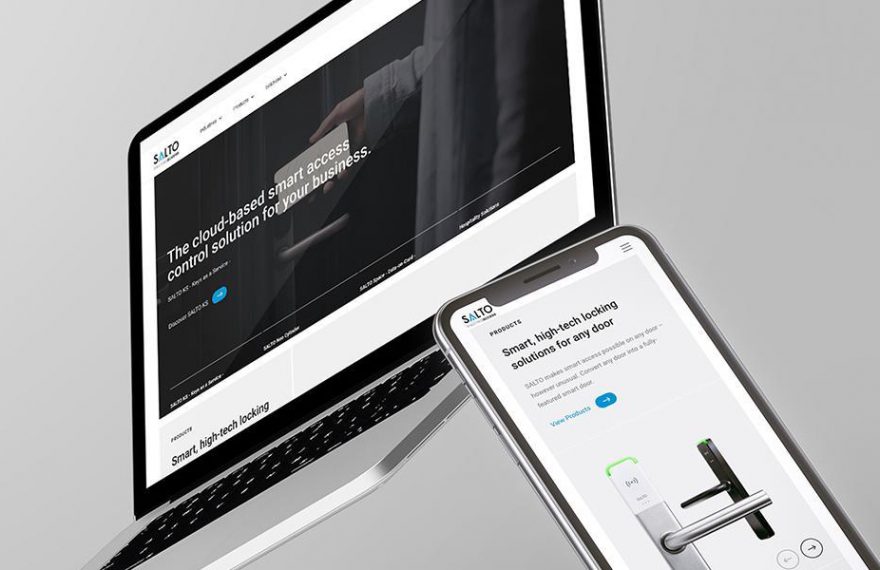
SALTO Space online access control solution achieves EN 60839 standard

SALTO access control hardware has achieved a huge milestone in having its SALTO Space Wall Readers and Controllers certified to EN 60839 standard.

This important standard provides guidelines for those responsible for establishing and planning an electronic access control system (EACS) both in terms of levels of protection and levels of performance necessary to provide the degree of physical access (entry and exit) access control and protection considered appropriate for an installation.

Driven by SALTO’s factory based Certification Department, the Design XS Wall Readers product range (SALTO XS Panel reader and Design XS Mullion reader models) and SALTO Controllers – specifically the CU4000 series, CU4000 expansion board, have achieved grade two level EN 60839-11-1 for alarm and electronic security systems (electronic access control systems) and EN 50131-3 alarm systems (intrusion and hold-up systems).

Ramesh Gurdev, Managing Director SALTO Systems UK, says “Standards play an ever increasingly important part in the specification and construction process framework. From carbon footprint status to quality management and sustainability to the Internet of Things, standards must be met to ensure businesses remain regulatory aligned and competitive.

The EN 60839 standard is becoming requested more frequently and in some cases is mandatory in tenders where the access control platform must be installed together with the alarm system, so it is excellent news for potential SALTO customers that our SALTO Space Wall Readers and Controllers are now certified to this standard.”

Transform interior door security in 26 seconds? It is possible

London, April 2021 — The proof is out there: A new Code Handle® digital PIN lock can be fitted to a standard interior door in less than half a minute. In this short space of time, security for private offices, stock rooms, staff toilets, equipment stores, consulting rooms, home offices, boardrooms and more can get a major security upgrade — with no wires, no keys and no need to run an access control system.

Code Handle is a locking handle with a built-in digital PIN keypad. It adds keyless electronic security to almost any interior door.

The battery powered handle is designed for fast, easy installation by almost anyone — no expertise required. But exactly how fast? ASSA ABLOY Opening Solutions launched a competition to find out. Locksmiths, security installers and access experts EMEA-wide were invited to enter their installation videos using the hashtag #ReadySetCode.

The winning entry — Jiri Van Hoyweghen from Belgium — completed a Code Handle installation, from start to finish, in just 26 seconds. Watch the video.

Fast installation for a keyless door security upgrade
Installing a new Code Handle is easy, with no wires, no specialist tools, and no drilling. Two screws attach a Code Handle to almost any interior door up to 80mm thick.

A Code Handle can secure any interior door facing a heavily trafficked space — subtly and with zero hassle. Slim and attractive, its brushed steel and chrome exterior looks like any stylish handle. Keyless entry via up to 9 different user PINs (4 to 6 digits) secures doors without creating unnecessary key-handling workload.

“The main advantage for us is that users can go to the office with no keys, as it provides enough security for our needs,” says Augusta 29’s CEO, Miguel Ángel Villota Mocho. Barcelona’s Augusta 29 locks their flexible office rentals and meeting rooms with 40 Code Handle devices.

Users enter a PIN code on the handle’s keypad and the door to their rented workspace unlocks. Code Handle’s optional auto-locking feature further enhances office safety. When the door closes, Code Handle locks it automatically. Code Handle also blocks automatically when an intruder enters the wrong PIN code 5 times.

Code Handle offers a major door security upgrade — in exchange for 26 seconds’ work, or just a little more.

To learn more about Code Handle, visit https://campaigns.assaabloyopeningsolutions.eu/codehandle

Wireless access solutions to some pressing challenges in healthcare security

London, April 2021 – Security stakes are high at healthcare premises. Patients expect and deserve privacy and safety. Yet most medical buildings must remain welcoming spaces, many open around the clock. The protection of drugs and confidential data is critical — and every breach demands thorough investigation. Such needs go way beyond what the mechanical security was designed to meet.

Hospitals, for example, are often large and spread out. Their locks may need to integrate with fire detection, CCTV and other building systems. Labs and pharmacies are safer when access is managed with time-limited “keys” which can be revoked. In care homes, security must be matched by user-friendliness for a client group who may have limited dexterity or learning skills. Here, real-time control and monitoring can help managers to react quickly.

We ask too much of a traditional metal key if we expect it to do all this. Yet wired security doors can be an expensive retrofit option. Fortunately, there is a solution: wireless access control.

The wireless way to controlling access better
Wireless devices provide the easiest upgrade or replacement for any access system based on mechanical or magnetic locks. Credentials including RFID smartcards, programmable keys or secure mobile keys stored on a smartphone replace cumbersome physical keys.
Wireless components make it cost-effective to add electronic control to many more areas of a building. With online locking systems, facility managers can monitor and manage premises at any time of day or night, even viewing the status of medicine cupboards or server racks from the same administration software interface.

Integrating wireless locks to maximize the reach of access control
Swapping existing locks for battery-powered cylinders or escutcheons can link a door to an access control system. In one recent survey of access control professionals, 95% of respondents judged “system integration with other building/security management functions to be ‘somewhat’ or ‘very’ important”*. To meet this challenge at the Haute Savoie region’s new hospital, managers selected Aperio locking integrated online with an ARD access management system.

Because Aperio locks are wireless, the hospital could introduce more layers of security and secure doors without incurring excessive installation or operating costs, including for sensitive offices and drug stores. Staff no longer carry big bunches or waste time hunting down keys. Individual permissions are all stored on a single, programmable RFID credential. All battery powered Aperio devices integrate natively with the central system, so wired and wireless access points at Centre Hospitalier Métropole Savoie (CHMS) are managed together, with real-time logs, remote door opening and free time slot management.

“Having just a single badge — and not having to carry around heavy keys — has been a major advantage for us,” says Béatrice Dequidt, Health Executive at CHMS. “We have implemented internal HR management procedures, creating badges that are automatically integrated into ARD’s operating software,” adds Alain Gestin, CHMS’s IT Systems Architect. Aperio and ARD also maintain compatibility of credentials with the French government’s electronic Health Professional Card (CPS), for added staff convenience.

Powerful, real-time control which works out the box
Multiple key systems; varied openings including fire doors, glass doors, offices, pharmacies, car parks and lifts; plus hundreds of workers and contractors needing different, constantly changing permissions. Faced with these challenges, managers at Hospital MAZ, in Zaragoza, knew mechanical keys could not provide the 21st-century security they needed.

MAZ upgraded locks to SMARTair Wireless Online electronic access control, which keeps facility managers updated in real time. A unified access system is controlled by intuitive software, installed at the central server and managed via client servers in different departments. Because the SMARTair Wireless Online system updates via communications hubs in real time, security managers implement all changes via the central system, without needing to waste time walking through the hospital, changing rights one door at a time.

Employee convenience is greatly enhanced. Staff and contractors carry a single MIFARE® smart card programmed with individual access permissions. Cards are personalized to double as employee IDs, so 625 staff and approximately 100 contractors only carry a single card. “We have achieved all our objectives with the installation of the system,” says Miguel Angel Hernández Jerez at Hospital MAZ.

Making keys more intelligent
Programmable electronic key systems put the advantages of access control into a familiar form: they reinvent the key for the 21st century, making it more flexible, more powerful and better equipped to handle modern security demands. Lost keys and departed employees are no longer a problem, because their access rights are cancelled with a click. The key’s familiarity is welcome to a user group who are not experts — at least, not in access control.

Managing physical keys can impact nursing care, as pharmacy managers at the UK’s Queen Elizabeth Hospital, Birmingham discovered. An older, mechanical system made it difficult to keep track of who held the right keys. Searching for that person wasted valuable time. They identified a better solution for convenient secure access to controlled medicines: CLIQ® electromechanical locking.

CLIQ offers easy-to-use access control based on high-security mechanical disc cylinders combined with encrypted electronic locking and identification. With CLIQ, power to the lock is supplied by a standard battery inside every CLIQ key, so no wires are required — making it an ideal retrofit solution for doors, cabinets and mobile drug trolleys. Each employee carries a single programmable CLIQ key to open any authorized CLIQ lock. No CLIQ device unlocks without the key first being authorized by the software.

QE Birmingham’s new CLIQ system allows for remote key management. Audit trails for locks and padlocks are available on demand, so nurse managers can instantly see who has accessed particular cabinets or drug trolleys. “Programmable key solutions really boost medicine safety in hospitals,” says Stephan Schulz, CLIQ Product Manager at ASSA ABLOY Opening Solutions EMEA. “Nurses at Queen Elizabeth, Birmingham, carry their own key with personalised access rights, so they don’t waste time finding out who has the key to every cupboard. Patients benefit.”

“The message from all nursing staff is that patients are getting medicines much easier and in a more timely fashion,” says Inderjit Singh, Chief Pharmacist at QE Birmingham. “For us, the key return on investment is the quality of service we’re providing.”

Simple, effective door control without software
In any busy medical facility, however small, it is easy to leave a door unlocked. With expensive equipment or controlled drugs on the other side, an opening invites opportunist trouble. But if you install a Code Handle® electronic PIN lock, you need never worry again.

A Code Handle fits right over an existing cylinder. You simply swap the current handle for a low-profile Code Handle, and fix it in place with two screws, to instantly add PIN security to a consultation room, medicine store or equipment cupboard. It adds electronic security without a bulky push-button door unit which disrupts interior aesthetics.

In Spain’s Basque Country, Fylab sought this easy solution for their consulting rooms. Requirements were straightforward: secure, keyless access around a facility with a lot of daily traffic from professionals and the public. They needed a device that is easy to retrofit with a design to chime with Fylab’s contemporary medical workplace.

Code Handle added this security to three consulting-room doors — without wires or cables. “I am no artist or handyman, but I managed to fit the handles within 10 minutes,” says Fylab founder, Borja Saldias Retegui. Their Code Handle devices lock both wooden and glass doors, keeping equipment and personal belongings safe.

“Code Handle provides the most simple solution for access control in a small facility,” he adds.