Home Technology and Products Archive by category Software

Software

Mercury AI: Digital Shield of the Future

The Mercury AI next-generation digital shield demonstrates how AI technology is redefining the security of our environment.

In a world changing faster than most ever imagined, the issue of security has ceased to be a question without an answer or something beyond our influence; it has become a part of our daily lives in an environment full of challenges. To properly address one of the most vital concerns for every individual—their safety and the safety of their loved ones—it is necessary to utilize the latest modern achievements. This includes not only traditional “hard security,” such as armed police and physical barriers, but also the “soft,” almost invisible hand of security that utilizes cameras, smart software, and Artificial Intelligence. At the center of this new technology, which helps us feel safer than ever before, is the company The Mercury AI, specialized in the latest digital advancements in the field of security with its “digital shield.”

Most people do not think about security until they have to. However, the environment in which we live and work is changing so rapidly that one must react quickly to new challenges, while the reality unfortunately remains that most security systems still operate under the old rule—react only after something has already happened. But if we already possess technology that can recognize a problem early, why should we wait for it to become an incident? That is why we created the digital shield—a weapon detection platform that uses artificial intelligence to identify potential threats before they turn into problems. Security should come through prevention, not reaction.

A Watchful Eye That Never Blinks

What exactly is the digital shield? The core of this system is not just in “recording the environment,” but in understanding what is happening in real-time. While the human factor is naturally subject to fatigue, loss of concentration, or a limited field of vision, The Mercury AI platform offers constant surveillance that knows no breaks and functions 24 hours a day, seven days a week.

The main advantage of this technology over existing ones is the specialized AI algorithm. Unlike ordinary security cameras that merely transmit an image, this system performs a constant analysis of every video frame. It establishes instantaneous visual contact with any form of weaponry—whether it be firearms or bladed weapons like knives.

But that is not all. What sets this system apart in the market is its incredible accuracy. Namely, the biggest problem with automated systems is “false alarms” that can cause panic and unnecessary costs. Our platform, however, makes a precise distinction in a fraction of a second between a dangerous object and harmless everyday items like phones, keys, or tools. This achieves a dual goal: maximum vigilance while eliminating unnecessary stress.

Silent Guard: Discretion as a Priority

As we have started to grow accustomed to relaxed and safe work environments, one of the greatest challenges in introducing high-security measures into public spaces is maintaining a pleasant atmosphere. No one wants to feel like they are in a high-security “prison” with an “all-seeing eye” at every turn in a shopping mall or school. Although citizens know that surveillance cameras are all around, it is natural that they do not want them to be intrusive. This is where silent and discreet monitoring comes into play.

The system functions almost invisibly, operating in the background of existing video infrastructure. It does not require bulky installations that would disturb the public or ruin the aesthetics of the space. While life goes on normally, the AI silently scans the surroundings 24/7. This continuous security support provides a level of protection that the human eye, no matter how well-trained, simply cannot maintain at every moment and on every square meter of a facility.

Automation That Saves Lives

The greatest advantage of such a system is, of course, in crisis situations, where every second is literally a matter of life and death. Statistics show that the highest number of casualties in incidents occurs during those crucial minutes spent waiting for emergency services to be called and for them to arrive on the scene. The digital shield solves this problem through automated rapid response.

The moment the algorithm detects a threat, the system does not wait for someone to press a button. It automatically triggers a series of predefined protocols:

Instant Notifications: Security teams and police receive an alarm with the exact location and visual evidence of the threat in real-time. Smart Locking: The system can automatically lock strategic doors to isolate the attacker, preventing movement through the facility. Lockdown Protocols: Procedures for evacuation or moving people to safety are automatically initiated.

This proactivity drastically shortens reaction time, leaving an attacker with minimal room to act while simultaneously providing life-saving seconds to those inside the building. The reaction time compared to traditional methods is dramatically reduced.

Versatility and Application

Due to the versatility and adaptability of this platform, its application is possible in almost any place where large numbers of people gather or where there is a need for property protection:

Educational Institutions and Public Places: Schools must be the safest places in the world. By implementing The Mercury AI detection in schools, malls, and stadiums, we raise the level of security to a standard generations before us could not have imagined. Transport Hubs: Airports, bus terminals, and railway stations are the “lifeblood” of every city, but also potential targets. The Mercury AI system enhances the security of key points without slowing down passenger flow. Critical Infrastructure: Administrative centers and energy facilities require a special level of protection. The Mercury AI detection ensures that vital state systems remain intact and safe from external threats. Business Sector: Workspaces are where we spend half our day. Protecting employees from potential threats is not just a legal obligation, but an ethical imperative for every modern employer.

The Future is Proactive

The time when we relied solely on luck or post-incident reaction is behind us. The future has arrived. The digital shield offered by The Mercury AI is not just a technological novelty—it is a necessary evolution in preserving human lives and property. Investing in such a system is an investment in the peace of mind of parents, the safety of workers, and the stability of the entire community.

We at The Mercury AI team leave nothing to chance. We do not gamble with security; we raise safety to the maximum level enabled by technology and provide an environment truly dedicated to preserving vital interests and values. That is why we work daily on implementing new solutions and keeping pace with the latest technologies—all so our clients can fully relax and not worry so much about security, knowing the digital shield is around them, protecting them.
Axis: The Corner for System Designers: Audit Logs as a Key Component of Modern Security Systems

Security systems have fundamentally changed in recent years: what were once closed, hardware-centric isolated solutions have evolved into highly networked, software-based IT systems. Video surveillance, access control, and perimeter protection are now integral parts of IT infrastructure – and therefore exposed to the same threats as traditional IT systems.

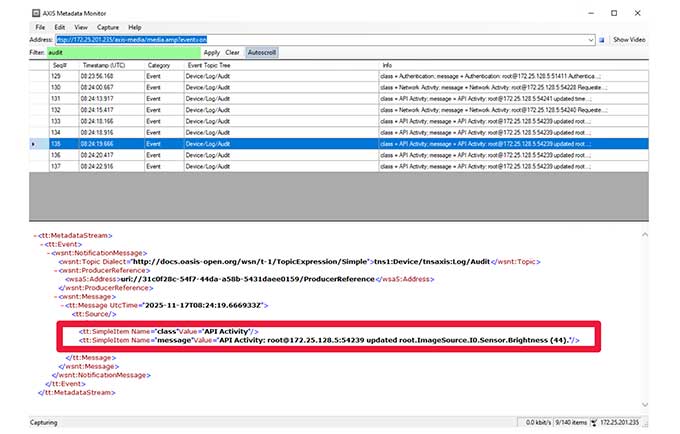
With this development, the importance of audit logs has increased significantly. Audit logs are immutable, chronological records of actions in IT systems that document who did what, when, where, and with what effect. They serve traceability, security, compliance, and forensic analysis. Audit logs chronologically and tamper-proof document security-relevant activities, system events, and user actions. They are therefore a central tool for ensuring transparency, traceability, and control in increasingly complex security architectures.

New Attack Vectors – New Requirements for Evidence and Control

In addition to classic external threats such as malware, ransomware, APTs, or DDoS attacks, internal risks are moving further into focus. Authorized users in particular pose an increased risk. Administrators, maintenance personnel, or external service providers often have deep technical knowledge and extensive access rights. Manipulations may occur intentionally or unintentionally – and without appropriate mechanisms for evidence, they often remain undetected.

This is precisely where audit logs come into play – they close this gap. They document, for example, changes to configurations and parameters, access to live or archived video data, as well as user and role changes, system events, and software interventions. This turns a potentially invisible manipulation into a traceable action that, depending on the severity of the change, can also trigger a proactive alert.

Especially in cases involving insider threats or indirect attacks – for example through compromised credentials – audit logs are often the only reliable and robust source of evidence. Audit logs therefore form the basis for detecting threats from typical manipulation scenarios along the entire video chain – from the camera to data transmission to storage and display.

Audit Logs in the Context of Security by Design Axis consistently follows a Security-by-Design approach. Audit-log functions are an integral part of the Axis ecosystem – both at the device level and within the video management software. Combined with: user and role management, certificate-based authentication (e.g., IEEE 802.1X), encryption (TLS), and software and configuration monitoring, a security concept emerges that not only makes attacks more difficult but, above all, makes manipulations visible.

Audit logs can be accessed through various interfaces – for example via event streams to VMS systems, via HTTP/HTTPS using the VAPIX Audit Log API, or via remote syslog to central IT and SIEM platforms.

Audit Logs and Software Monitoring – Two Sides of the Same Coin

Modern security architectures increasingly rely on software monitoring (software sealing) to detect manipulations by authorized users. Audit logs form the operational foundation for this: detecting configuration changes, triggering seal breaks, and integrating changes into clearly defined approval and workflow processes. Without audit logs, any software monitoring remains incomplete, as changes cannot be clearly attributed.

Regulatory Requirements: KRITIS, NIS2, ISO 27001

Audit logs are no longer a technical detail but a strategic element of modern security architectures. They play a crucial role in open, networked architectures where monitoring and tracking activities are essential to detect and prevent security incidents at an early stage. They are also indispensable for meeting increasing regulatory requirements – keyword: compliance – such as those defined by KRITIS, NIS2, and ISO 27001.

These regulations require comprehensive documentation and monitoring of system activities to ensure compliance and close potential security gaps. Furthermore, audit logs are of great importance when dealing with internal and privileged users. They help identify and prevent misuse and unauthorized access, thereby sustainably strengthening the internal security and integrity of systems.

Suprema: AI Automation and Integrated Platforms Essential for Modern Security

The speed of digital transformation now determines whether an enterprise can grow and survive. In the past, organizations managed cyber and physical threats with standalone firewalls and siloed systems. Today, however, the convergence of AI, real-time data, and global business operations has made the threat landscape far more complex. Emerging trends like hybrid work models, heightened privacy regulations, and the erosion of traditional network perimeters demand a new approach. Passive defense and single-point solutions are no longer adequate.

In this context, next-generation platforms—delivering AI-driven automation, unified management, and operational agility—have become the standard for enterprise competitiveness. Leading global market analyses confirm a clear shift in IT and security investments as we approach 2026. The future belongs to security platforms that integrate AI-powered automation, end-to-end visibility within a unified management console, and scalable infrastructure—transforming security and efficiency into lasting competitive advantages.

Innovate security and operational efficiency with AI-powered unified platform

Modern companies no longer tolerate fragmented, siloed tools. Instead, there is a decisive transition towards unified platforms that consolidate all critical security operations into a single interface, empowering security teams to make faster, data-driven decisions.

BioStar X sets a new benchmark for total control and AI-powered security, bringing together best-in-class biometrics access control, interactive maps, AI-enhanced video grids, and live alarms within a unified monitoring console. This design eliminates the inefficiencies of switching between multiple systems, allowing operators to respond swiftly and accurately to incidents. Advanced access control enables highly granular management, including detailed role-based permissions, flexible zone segmentation, and automated emergency protocols such as lockdowns or fire responses. Administrators can tailor access rules for users, zones, and devices, maintaining consistent security policies across single to multi-site environments.

Moreover, BioStar X leverages AI-driven video intelligence to deliver real-time detection of critical events—including falls, intrusions, loitering, and tailgating—empowering security teams to identify risks proactively and implement preventive measures. This holistic, integrated architecture streamlines operations and enhances situational awareness in real time.

Integration at scale—The power of open APIs

A core driver of transformation in security technology is the integration power unlocked by open APIs and modular design. These foundational elements enable seamless, future-proof integration across a wide range of third-party systems—from established platforms like VMS, ERP, HR, time & attendance, and visitor management, to emerging technologies like robotic patrols, drones, parking management, and smart building IoT sensors. This versatility has become a hallmark of high-performance security platforms, allowing organizations of all sizes to orchestrate security, operations, and advanced analytics through a singular, unified workflow.

BioStar X’s scalable infrastructure enhances this capability, providing support for multi-server deployments, database sharding, failover clustering, and reliable system resiliency. These enterprise-grade features ensure robust performance, high uptime, and centralized control across distributed, multi-site deployments.

Suprema’s commitment to trusted AI and data protection

Suprema is deeply committed to data protection, user privacy, and the ethical use of AI. BioStar X and all of Suprema’s solutions are developed according to globally recognized standards including GDPR, NIS2, AI Act, ISO/IEC 27001 for information security management, and ISO/IEC 27701 for privacy information management. Also, Suprema ensures robust encryption of biometric templates and personal information using protocols like AES 256, TLS 1.2, HTTPS and RS-485. This “secure by design” philosophy permeates every technology layer guaranteeing protection of user rights, reliable threat detection, and privacy-centric digital experiences for organizations worldwide.

Ultimately, leadership in the new era of modern security comes down to how effectively unified platforms like BioStar X can harmonize data, workflow, and intelligence across an organization. As demands for speed, adaptability, and resilience outpace the limitations of legacy tools, an integrated and open approach isn’t simply a competitive advantage, it is the new industry benchmark for security excellence and modernization.

Bosch: Detector Self-Test: Smarter Fire Detection Maintenance for Integrators and Building Operators

Fire detection is mission critical. Yet, maintaining fire systems is becoming increasingly complex. System integrators face pressure to deliver reliability, compliance, and fast response times with limited resources, while building owners and facility managers must ensure continuous system availability, regulatory compliance, and occupant safety across one or multiple sites. In this environment, efficiency, transparency, and predictability are essential.

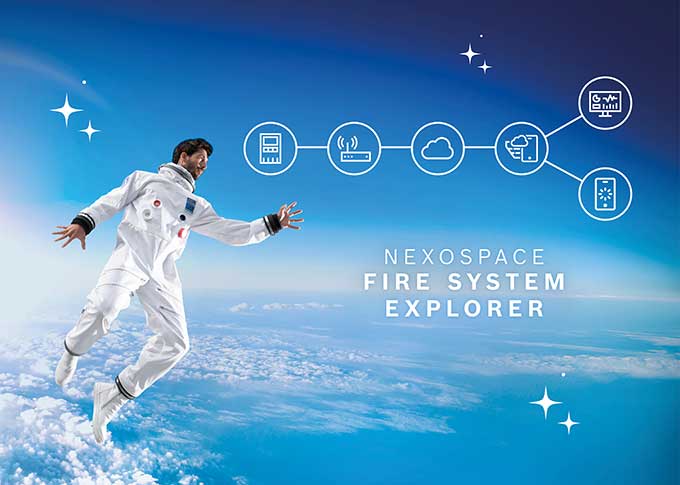
Bosch’s NEXOSPACE Fire System Explorer (FSE) addresses these challenges with a secure, cloud-based platform that connects fire detection systems to the digital world. With the introduction of the new Detector Self-Test functionality, NEXOSPACE FSE enables a more efficient, compliant, and scalable approach to fire detection maintenance, creating clear value for both service providers and system operators.

Automated Testing That Reduces Effort and Risk

The Detector Self-Test is fully integrated into the NEXOSPACE FSE Cockpit and will be available in the Remote Fire Safety App from autumn 2026. It enables automated, 24/7 testing of Bosch automatic addressable point detectors without requiring physical access to each device.

From a technical standpoint, testing is reliable and repeatable. For integrators, this reduces routine, labor-intensive site visits. For building operators, it provides continuous assurance that fire detection systems are functioning correctly and without disrupting daily operations.

The functionality is designed in accordance with VdS 3860, which defines the requirements, performance criteria, and test procedures for self-test functions in fire detection systems. Test results are automatically documented in the cloud, creating complete, traceable, audit-ready records. This simplifies compliance, reduces administrative effort, and provides transparent proof of system readiness for all stakeholders.

Higher Efficiency, Lower Operational Costs

By connecting fire alarm systems to the IoT via NEXOSPACE FSE, maintenance efficiency can increase by up to 25% per system, per year. In practical terms, this allows more systems to be maintained with the same team, or the same systems with fewer on-site interventions.

Key benefits include:

  • Fewer routine site visits, reducing disruption to occupied buildings
  • Lower travel time and costs, improving service profitability and sustainability
  • Better use of skilled technicians, who can focus on fault resolution and value-added tasks

For portfolios with multiple sites or long travel distances, the Detector Self-Test directly supports a more predictable and cost-efficient service operation.

Software-Based Enablement Without Detector Replacement

The Detector Self-Test is compatible with existing Bosch automatic addressable point detectors and is enabled via software—no detector replacement is required. Activation requires the presence of compatible Bosch addressable point detectors and the following system components:

  1. An AVENAR fire panel with firmware version 4.4 or higher
  2. A Secure Network Gateway for encrypted Ethernet connectivity
  3. A NEXOSPACE FSE Basic license

This approach minimizes investment barriers for building owners and enables integrators to extend digital services across their installed base without structural changes or operational downtime.

Predictive Insights for Reliable, Condition-Based Maintenance

Beyond automated testing, NEXOSPACE FSE provides access to operational detector data such as pollution levels, temperature trends, and operating hours. Maintenance can therefore be planned based on actual detector condition rather than fixed intervals.

In challenging environments, this helps reduce false alarms, avoid unnecessary maintenance actions, and extend detector service life. Early identification of deviations improves system availability and supports stable, uninterrupted building operations.

Shared Value Across the Fire Safety Ecosystem

NEXOSPACE Fire System Explorer provides a centralized overview of all connected fire systems, supported by automated notifications when action is required. For integrators, this enables proactive service delivery and clear differentiation in competitive markets. For building operators, it delivers transparency, accountability, and confidence in daily fire safety operations.

The Detector Self-Test transforms fire detection maintenance from a recurring obligation into a shared value proposition. Built on Bosch’s secure and future-oriented NEXOSPACE platform, it supports scalable service models, simplified compliance, and enhanced system reliability—while helping protect margins, reduce operational risk, and ensure a consistently high level of safety.

Axis: Security system cost | Understanding the total cost of ownership

Investment is not without risk. With often large amounts of money involved, ensuring the reward outweighs the risk could be costly to get wrong. The same is true of your security system cost as it is with any other large purchase. This is why making such a decision based solely on the initial cost, without truly understanding what else is required, could leave you exposed to greater risk down the line, without you even knowing it.

In this blog post, we will delve into why understanding the total cost of ownership (TCO) is critical for any new security system and provide you with insights into how to calculate TCO, to turn your purchase into a smart investment.

What is TCO? 

To first understand what those insights are, it’s important to know what exactly total cost of ownership means. TCO refers to the full cost of acquiring, installing, using, and maintaining a product or service throughout its entire lifecycle.

Rather than focusing only on the initial purchase price, TCO includes additional security system costs such as implementation, operation, maintenance, training, as well as eventual replacement and decommissioning.

When you make that initial purchase, it may not be part of your thinking to factor in potential future costs. However, this opens you up to surprises down the line with installation, implementation and operation costs all under the TCO umbrella.

Even those ‘what if?’ costs that may occur over time. From hardware and software upgrades, product maintenance, to onboarding and updating training requirements. Keeping them in mind at the point of purchase can save you money.

By understanding the total cost of ownership ahead of time, you can better position yourself to make an informed decision, instead of jumping in on the upfront cost.

How much does a security system cost? 

When you factor in that an average security system can typically last anywhere from seven to 10 years, that initial cost can be forgotten once those long-term extra costs build up.

In fact, if you were to take a guess at just how much of the initial purchase cost comprises the total cost of ownership, it may surprise you to learn it can be as little as 30%. And that is across the entire lifespan of the system.

With 70% of costs therefore potentially hidden under the surface, that reality can bite hard down the line for someone who bought a system based on camera price alone. This really highlights the importance of considering the indirect security system costs.

Those future expenses and hidden costs can be greatly impacted by the choices you make early in the purchase process. Thinking about the TCO is a surefire way to protect yourself.

So have in mind questions like “What upgrades might I need in future?”, “How many staff might I need to train to use it?”, “What’s the power consumption?”, or “How often should I replace parts?”. Because in five years’ time, you’ll be thankful you did.

Key elements of total cost of ownership 

To truly understand the comprehensive security system cost over its lifespan, it’s vital to break down the key components that contribute to its total cost of ownership.

This section will delve into three crucial aspects providing a clearer picture of the investment required:

  • Initial acquisition
  • Ongoing operational expenses like storage
  • Various indirect expenses
  1. Initial acquisition costs 

When discussing initial security system costs, we typically look at the purchase price of hardware, software licenses, delivery, and installation. Unfortunately, too many conversations around requirements focus on the cameras alone, without considering the broader requirements of the system as a whole – from energy use to storage needs. It might be tempting to focus the budget conversation on cameras, rather than where money will need to be spent to operate and maintain those cameras. Yet the security system will need to support your needs for the foreseeable future.

  1. Storage costs 

Beyond the initial security system cost, the cost to store recorded footage is one of the most significant ongoing expenses. Different regions have different legislations as to exactly how long you need to store footage, so it is worth finding out to avoid complications. Regulations, such as GDPR and HIPAA, will determine how long footage needs to be stored, thus making storage a considerable factor in overall storage costs.

To avoid being caught out with significant server and electricity expenses after cameras are installed, it’s critical to calculate how the different storage requirements associated with each camera model can impact your total cost of ownership. It can be a huge risk to purchase cheaper cameras to save money up front, as you will potentially sacrifice that in time with the costs of energy, servers, and storage.

Equally, if you plan to reduce storage costs by shrinking video file sizes, you must choose devices that don’t compromise image quality. This can be an issue in, for instance, evidence gathering, to the point that it’s no longer possible to identify a suspect or incident. Remember, compressing video can pixelate or blur the image, and that’s not a saving, that’s a sacrifice. Fortunately, modern cameras often include sophisticated technology to solve this dilemma. These technologies can reserve crucial forensic detail while lowering bandwidth and storage requirements—and therefore, long-term costs.

They might even help you reduce your TCO further by removing the need for additional external lighting.

It is always worth verifying claims of high-quality footage with low storage requirements before you install the system to ensure it meets your expectations.

  1. Indirect expenses 

The type of device you choose will influence the expenses far beyond storage. A forecast of the total cost of ownership must also include ongoing expenses for monitoring, maintenance, and electricity use.

Once you crunch the numbers, the costs can start to build up quite quickly but crucially, the devices you choose will have a direct impact on the extent of these figures.

Opting for more economical cameras and devices at the start can result in staggering indirect expenses.

By contrast, choosing higher quality cameras and devices at the outset, you can cut those indirect security system costs in the long-term. This will free up savings which you can use to reinvest in and grow your business faster.

Simulating the total cost of ownership   

As we’ve explored, the true cost of a security system extends far beyond the initial purchase.

To turn that purchase into a smart investment, it’s crucial to understand the total cost of ownership. This is precisely where a TCO-simulator, such as the one offered in AXIS Site Designer, can provide valuable insights.

It models key factors like energy costs and device lifespan based on your selected devices and storage requirements, giving you a clear overview of what will drive costs over time.

By also comparing your proposed system against competitor benchmarks, it provides a tangible estimate of your potential long-term savings.

Final words on security system costs 

Throughout this blog we have explained that the question ‘How much does a security system cost?’ goes far beyond the initial purchase. By considering how your decision on which type of camera to buy can impact the chain of future costs, you can shift the purchasing decision into an investment. Achieving this can be as simple as asking yourself just a few questions: What camera functionality do I require, how much storage will I need if I purchase those cameras, how much electricity will be required to run the system in the long run, how do the technologies these cameras offer play into the total costs? In short, taking the time to ask the right questions at the outset – and finding partners who are open to answering those questions.

By understanding how to calculate the total cost of ownership you can avoid any nasty surprises in future electricity, storage, operational or maintenance costs. Importantly, it will also ensure that you end up with the security system that is right for your specific requirements. Find out which five steps can help you make the most of your security system investment.

Axis Communications Insights: Software support is crucial for future-proofing your physical security system

When buying new devices, hardware warranty is often prioritized over software support. However, both are crucial for optimal device performance. This article highlights the importance of software support in physical security systems and showcases the industry-leading Axis software support.

Hardware and software are in a symbiotic relationship: the hardware provides the physical foundation, while the software enables a device to perform a range of functions. Without hardware, software lacks a platform, while without software, hardware is unusable.

Axis hardware warranty covers manufacturing defects for 5 years, but the actual service life of a device is often double that. That’s because Axis provides software support through AXIS OS for about 8 to 12 years.

The role of software support is to address product usability issues, often resolved through bug fixes. Given today’s cyberthreat landscape where there is a need to maintain security and stay ahead of legislation, software support also addresses newly discovered vulnerabilities through security patches. At Axis, software support also involves new feature releases with device software upgrades, further improving the capabilities of a product after purchase.

Axis software development represents 80% of its R&D organization. Even though software development and maintenance are challenging and costly, Axis is committed to providing long support periods at no additional cost to customers. This reflects how important we believe software support is to ensure the long-term usability and security of our products. Let’s look at the benefits of Axis software support below.

Benefits of Axis software support

Choice of software support that best fits your needs

Users of AXIS OS-based products – from cameras, intercoms, loudspeakers to access control products – can choose either an AXIS OS release on a long-term support (LTS) track, or an active track.

The LTS track is focused on bug fixes and security patches to address security vulnerabilities and ensure compatibility with third-party systems. The active track offers continuous feature growth in addition to bug fixes and security patches to maximize device functionality and security. For Axis products running on Microsoft Windows®, the Long-Term Servicing Channel (LTSC) is used to provide long-term support with security updates and a focus on stability. It is ideal for devices such as video management software servers, and systems that require consistency.

It’s important to note that Axis, system integrators, and end customers have a shared responsibility for keeping the software up to date to maximize cybersecurity. Axis provides software updates that include security patches, and as a next step, system integrators and end customers must install them.

Access continuous feature growth

Updating an AXIS OS-based device with an AXIS OS version on the active track allows users to truly future-proof the device over time. You get continuous feature growth, whether it be additional cybersecurity functionality, such as MACsecFIPS 140-2 Level 1 or other updates such as new analytics.

Security considerations integral to software development

Axis has in place the Axis Security Development Model (ASDM) to ensure that software addresses security considerations throughout a product lifecycle, before and after a product is introduced to the market and when it reaches its end of life. This includes vulnerability management. As a Common Vulnerabilities and Exposures Numbering Authority (CNA), Axis vulnerability management policy informs customers about the conditions under which vulnerabilities will be patched. In addition, Axis provides a security notification service that enables customers to take timely action and keep their systems up to date.

Compliance

Legislation increasingly requires customers to be informed about the security of their products, including their physical security systems. In Axis Trust Center we share information about how Axis implements security compliance, transparency, data protection, and privacy. For example, products running AXIS OS 11 or higher are certified to the ETSI EN 303 645 cybersecurity standard. Standards like ETSI EN 303 645 and EN 18031 aim to strengthen security measures for IoT devices and ensure software updates throughout the product lifecycle. In the EU, initiatives like the Cyber Resilience Act and the Radio Equipment Directive (RED) emphasize the need for regular software updates. The UK’s Product Security and Telecommunications Infrastructure (PSTI) Act also mandates transparent disclosure of software support and security updates.


“Innovation and leadership go hand in hand. Axis Communications’ commitment to transparency is unmatched, for example by being first out in our industry to disclose end-of-software support dates and SBOMs. This underscores our dedication to provide best in class software support in the physical security industry” – Andre Bastert, Global Product Manager for AXIS OS

Software bill of materials

Axis provides a software bill of materials (SBOM) for its products. SBOM can be found on the support web pages of many products.

SBOM is crucial for transparency and IT security. It provides detailed insights into software components to enable the following benefits:

  • Transparency and traceability
    • Gives detailed insights into all components in the software, including both proprietary and open-source components. This helps customers identify dependencies, search for potential vulnerabilities or outdated versions, and assess Axis cybersecurity posture.
    • Regular maintenance of SBOMs also helps Axis identify and fix security vulnerabilities and outdated components at an early stage. This proactive approach significantly reduces the likelihood of data leaks, system failures, and damage to reputation.
  • Efficient response to security incidents
    • In the event of a security incident, SBOM enables quick and precise analysis of whether and to what extent a system is affected. This allows customers to take immediate countermeasures and avoid major damage. Axis notification service for security vulnerabilities and other security-related issues enables customers to react to potential threats immediately and update systems accordingly.
  • Compliance and risk mitigation
    • A SBOM helps customers comply with legal and regulatory requirements. At the same time, it minimizes risks that can arise from undocumented software components.

Clearly stated end of software support date

Axis publishes the end date for software support on the web pages of its devices. Axis device management software applications also provide information on end-of-support dates for connected devices. This provides transparency so that customers know what to expect prior to purchasing a product. It also enables customers to prepare for product retirement and replacement in a timely manner.

Software support is the new standard for long-term usability and security

Software support is essential to network products. While the hardware warranty is crucial in the initial phase, software support is not only invaluable, but indispensable throughout a product’s life for optimizing usability and continued security.

In the IT industry, extended support is common to prolong the service life of products. This approach enables companies to protect their investments and react flexibly to changing security requirements. And due to cybersecurity regulations, software updates are increasingly a legal requirement. Axis software support is among the longest in the physical security industry, providing significant value for customers. The existence, length and extent of the software support should, therefore, be important considerations as they not only help maximize the potential of devices, but crucially support the secure, long-term operation of the network products.

Hytera: Elevating Luxury Hospitality with Hytera DMR Solutions

In partnership with Cobra Center, Hytera implemented a state-of-the-art Digital Mobile Radio (DMR) system, enhancing operational performance and the guest experience at the exclusive One&Only resorts in Greece.

By: Bella Liu, Communications Specialist, Hytera Communications Europe; Email: bella.liu@hytera-europe.com

One&Only Resorts

One&Only Resorts, a globally recognized leader in ultra-luxury hospitality, operates some of the most prestigious properties worldwide and maintains uncompromising standards across all aspects of its operations, particularly in security and guest services. Seamless, reliable, and discreet communication across large and aesthetically sensitive environments is an essential part of the brand promise. In partnership with Cobra Center, Hytera implemented a state-of-the-art Digital Mobile Radio (DMR) system, enhancing operational performance and further strengthening the exceptional guest experience at the One&Only resorts in Athens and on Kea Island.

Challenges

The project focused on two key Greek locations: One&Only Aesthesis in Vouliagmeni near Athens, and the One&Only resort on Kea Island. Implementing a reliable communication system while ensuring full coverage across a luxury resort presented unique challenges, particularly for a brand with exacting standards like One&Only. Key aspects considered by Cobra Center engineers when designing the solution included:

  • Seamless Coverage: Ensuring stable and clear signal reception across large properties, including multiple buildings, outdoor areas, and complex architectural layouts, without compromising communication quality.
  • Discreet Integration: Installing communication infrastructure without disrupting the resort’s elegant aesthetic. This required innovative antenna concealment and unobtrusive equipment placement in line with One&Only’s design philosophy.
  • Operational Efficiency and Security: Meeting the needs of various departments, from Security and Emergency Response to Food & Beverage, Housekeeping, and Event Management, while adhering to strict security protocols and providing encrypted, interference-free communication.
  • Eco-friendly Alignment: Ensuring the technical solution aligned with the group’s commitment to environmental sustainability.

Solution

In collaboration with Cobra Center, Hytera designed and deployed a robust, reliable, and discreet DMR communication network tailored to One&Only’s specific requirements, offering a range of advanced features:

  • Multi-site DMR Tier II Network: A resilient core system featuring four Hytera HR1065 UHF repeaters, interconnected for extended coverage and redundancy. Supported by an Uninterruptible Power Supply (UPS), the system ensures continuous operation even during power interruptions.
  • Encrypted Communication: The network uses encryption to provide secure and private transmissions, essential for management and security purposes.
  • Bluetooth for Security Personnel: Select radios with Bluetooth capabilities were issued to security staff, enabling discreet and hands-free operation.
  • Tailored Programming: Radios were configured to enable smooth communication among key operational departments, including Security, Emergency Response, Food & Beverage, Housekeeping, and Event Management.

Results

The implementation of the Hytera DMR system has significantly improved operational efficiency, security, and service quality at the One&Only resorts, providing superior audio quality and full coverage across all areas—including previously challenging locations. Additionally, Cobra Center engineers optimized group settings in the system backend, enabling clear and concise information on radio interfaces while preserving the resorts’ luxurious ambiance and visual integrity.

Testimonial

“Establishing reliable communication across our resorts initially appeared to be a major challenge. However, the project was executed with great success. The equipment provided laid the foundation for uninterrupted and user-friendly communication. We are fully satisfied and plan to continue our partnership with both companies,” said Nikos Ornstein, Purchasing Manager, together with Loannis Dimitropoulos, Security & Loss Prevention Manager of One&Only Resorts.

ICT: Different Ways to Upgrade to Smart Access Control

Many buildings and sites are running on access control and intrusion detection technology that is ten, maybe even fifteen years old. The hardware is still functional, doors open, alarms are set, but these legacy systems often act as roadblocks when a client wants to modernise their building management or bring new applications onboard.

The need for change is usually driven by compliance, security, or sustainability targets. However, like every infrastructure project, it had to be financed and the cost: the Capital Expenditure (CAPEX) will define the feasibility and timeline of the new access control installation. Fortunately, upgrading doesn’t always have to be an “all-or-nothing” scenario.

How does access control improve operational efficiency?

Beyond enhancing security, modern access control is an enabler for operational efficiency and energy savings.

By unifying various systems into one central platform, customers can see a direct impact on their bottom line. For instance, an open access control system can automatically switch off air conditioning if a window is left open or turn off lights and arm an area, when no one is present.

In high-traffic environments, integrating the access control platform with turnstiles and lift systems, manages the flow of people badging in and directs them to the fastest lift for their destination. Saving a few minutes for thousands of people everyday amounts to significant productivity gains.

Is a full system replacement always necessary?

For new builds or extensions, a brand-new system is standard. But for retrofits on a tight budget, a full “rip and replace” isn’t the only option.

A smarter approach is a phased migration. A thorough assessment of the existing infrastructure will determine whether legacy equipment is compatible with modern controllers. This allows to upgrade the “brains” of the system while keeping the existing cabling and peripheral hardware.

Phased migration as the one offered by ICT decreases project costs and lowers the risk of disruption, a huge benefit if the organisation operates 24/7. The customer gets immediate access to new functionalities and third-party integrations supported by platforms like Protege GX, while the initial capital investment remains manageable.

How to ensure continuity during migration?

If a legacy system is running alongside a new one, how are the users managed? Is there a risk of database mismatch?

The critical point is ensuring the legacy and new access control servers are constantly synchronising data to avoid discrepancies in the user database which could lock people out or leave areas unsecured. ICT offers DataSync software specifically for this purpose, ensuring a seamless transition.

What financial factors should be considered?

The decision about which technology to select impacts not just the initial CAPEX, but the ongoing Operational Expenditures (OPEX).

Customers should understand the licensing models. Are there any recurring fees, is the cost capped over a certain number of licenses? They should know aboout the structure of the maintenance cost and upgrade cost.

Choosing an open technology that integrates with legacy equipment and third-party solutions offers financial protection. It means the system can scale and adapt to new requirements without needing another expensive overhaul in a few years.

Access control is a central pillar between security and operations. By helping organisations navigate the balance between necessary upgrades and available capital, it helps create a successful and affordable solution.

AziTrend: How WMS + VMS Integration Is Redefining Modern Logistics

In today’s economy, where speed and accuracy separate profit from loss, warehouses have become critical nodes of the supply chain. Yet the operational complexity—tens of thousands of SKUs, thousands of storage locations, and constant order flows—puts enormous pressure on logistics teams. This is where a new technological standard emerges: the integration of Warehouse Management Systems (WMS) with Video Management Systems (VMS) through AZiGuard platform.

Why WMS + VMS Integration Matters

Traditional incident investigation in a warehouse can take hours or even days. A lost parcel, a picking error, or a delivery dispute consumes time, money, and reputation. By synchronizing WMS transaction data with the exact video moments in which those events occurred, AZiGuard turns complex processes into 2–3 minute verifications.

Key advantages include near-instant incident search, where an operator filters an event in the WMS and the VMS immediately displays the precise moment and camera angle for verification, turning what once took hours into a matter of minutes. Operational costs are reduced through fewer manual investigations, fewer disputes and fewer internal interventions, resulting in measurable savings, particularly in high-volume warehouses. At the same time, greater transparency and credibility are achieved as every transaction becomes verifiable with video proof, giving retailers, couriers, pharmacies and marketplace operators a clear, unbiased source of truth. Finally, higher customer and partner satisfaction follows from faster claim resolution, clearer responsibility and increased trust across the entire supply chain.

Case Study: When Volume Explodes, Precision Becomes Critical

A large online retailer uses WMS and VMS integration to instantly reconstruct the journey of a lost parcel—from packing and collection to courier handoff and delivery—cutting incident investigation times by more than 50% and eliminating unfounded claims. In another example, a pharmaceutical warehouse using pick-by-voice and a high-speed conveyor has integrated both databases with AZiGuard’s video streams, enabling operators to locate every conveyor feeding point instantly, regardless of speed.

Through the AZiGuard ActiveStock module, warehouses gain advanced control over accuracy, including rapid loss investigation, delivery dispute resolution, clear responsibility assignment and quality verification of picking and packing. For facilities handling more than 50,000 SKUs, this level of automation shifts from a “nice-to-have” feature to a mission-critical capability.

The Future: AI, Prediction, and Full Automation

As order volumes rise and margins compress, the fusion of operational data with video analytics becomes the backbone of modern logistics. The next step is already emerging: AI that predicts errors, optimizes workflows, and detects anomalies before they become operational costs.

Integrating WMS and VMS is no longer a technological upgrade—it’s a competitive necessity. For high-volume operations, solutions like AZiGuard do far more than improve visibility; they build warehouses that are safer, more transparent, and significantly more profitable.

Igniting Safety: Bosch’s New Zagreb Experience Hub Redefines Fire Protection in the Adria Region

The opening of the Experience Hub in Zagreb is also a clear recognition of the local Bosch team and its long-standing contribution to the market. Built on nearly two decades of commitment, expertise, and close customer engagement, the Croatian team has played a key role in positioning Bosch Building Technologies as a trusted partner across the Adria region.

Equally important is the role of Bosch partners. Installers, designers, distributors, and integrators are at the heart of Bosch’s business model, transforming technology into reliable, compliant, and effective fire safety solutions. By investing in local training, flexible education formats, and direct partner support, Bosch reinforces the region’s strategic importance and confirms that sustainable growth in fire safety is only possible through strong local teams and strong partnerships.

Since entering the Croatian market in 2008, Bosch has steadily built its presence through projects, technological innovation, and close collaboration with partners across the Adria region and Southeast Europe. Over the years, the evolution from Bosch Security Systems to today’s Bosch Building Technologies division has reflected a broader transformation of the market itself—towards integrated, intelligent, and future-ready safety solutions. Within this journey, fire protection has emerged as a strategic growth pillar, driven by increasing regulatory demands, complex building environments, and the need for higher professional standards.

A significant milestone in this development is the opening of the Bosch Experience Hub for fire detection systems in Zagreb. Launched in 2025, the center represents more than an investment in infrastructure; it is a regional platform for education, innovation, and collaboration. As Danijel Jerković, Business Development Manager for Fire Safety Systems in the SEA region, explains, the Hub is designed to strengthen Bosch’s position by ensuring partners have direct access to the latest technologies, hands-on training, and practical expertise. At the same time, it creates a space where end users can better understand how advanced fire detection solutions protect people, assets, and business continuity.

Covering the entire Adria cluster—15 countries and nearly 80 million people—the Zagreb Experience Hub reflects the diversity of the region. Training programs and presentations are tailored to local regulations, market maturity, and technical requirements, ensuring relevance and real-world applicability. Installers, designers, integrators, and distributors benefit from certified, practice-oriented training that translates directly into higher-quality system design, installation, and commissioning.

From a technical perspective, the center is focused on Bosch’s AVENAR fire detection system. As consultant Nino Belicki highlights, the modular training environment allows participants to configure, program, and troubleshoot systems in realistic scenarios. This hands-on approach, combined with design training using Bosch’s Safety Systems Designer software, ensures that both installers and planners can deliver solutions precisely aligned with project needs. Certified training, valid for two years and complemented by further qualification paths, underlines Bosch’s long-term commitment to competence development.

Ultimately, the Zagreb Experience Hub strengthens the regional fire safety ecosystem—raising standards, accelerating technological adoption, and reinforcing trust across the value chain.