Home Technology and Products Archive by category Video Surveillance

Video Surveillance

Axis Communications: Empower long-term value with smart tools across the customer journey

The importance of delivering complete solutions has grown significantly, now extending beyond product selection to encompass everything from system design to long-term maintenance and support. In general, customers expect excellent service throughout the entire process, from the sales proposal and system design to deployment and ongoing services.  

Written by: Erik Kvarmo

The easiest way to meet these expectations is by choosing a solution from a single vendor—one that also provides smart tools and platforms to simplify every step of the customer journey from initial design to ongoing maintenance. This approach supports service-based delivery models by enabling long-term customer opportunities.

Unlocking efficiency through data-driven deployment

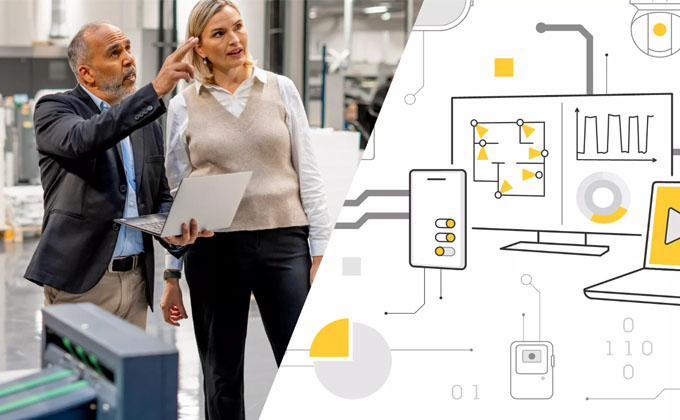
Modern system design tools increasingly support the seamless transfer of data from the planning phase to system deployment. Auto-configuration features allow integrators to generate setup files directly from the design, including device and system configuration settings, as well as detailed installation instructions, to help ensure a smooth and successful installation.

By minimizing manual on-site configuration, these applications reduce the risk of human error, accelerate deployment, and ensure consistency across the system. Devices can be preconfigured and connected with minimal effort, enabling faster integration and minimizing setup time. The result: quicker deployment, lower labor costs, and faster access to a fully operational system.

What’s more, built-in verification tests and performance reporting add real value. These features validate system functionality, build customer confidence, and simplify project handover. Early issue detection reduces return visits and downtime, while detailed system performance documentation strengthens quality assurance and serves as a baseline to help integrators deliver more reliable, high-performing solutions in the future

Smart design tools help streamline workflows

Time is money. Every delay or rework cut margins and can impact customer trust. Smart design tools are essential for streamlining workflows, helping to avoid delays, reducing on-site adjustments, and ensuring smoother, faster installations.

These tools go beyond basic planning—they streamline the entire design process, saving time and resources while also ensuring the right devices and accessories are selected based on customers’ specific floor plans and coverage needs. The result is more efficient and effective surveillance systems, tailored to meet customer expectations from day one.

With clear visualizations, floor plans, automated reports and integration with Building Information Modeling Systems (BIM), these applications improve communication with stakeholders and ensure a shared understanding of the solution. In addition, they enable faster decision-making, quick adjustments, and reduce the risk of costly revisions later on.

These design tools also calculate total cost of ownership (TCO) by factoring in bandwidth, storage, and power consumption. Therefore, customers are empowered to make informed and sustainable decisions, while considering the long-term environmental and economic impacts of owning and operating the solution.

At the handover stage, the documentation generated by these tools simplifies training and ongoing support, ensuring a smooth transition and long-term customer satisfaction.

Deliver more value with System Health Monitoring and Device Management

All customer systems can be managed centrally to deliver proactive maintenance, meet agreed service levels, and support active engagement with the customer base. With a clear overview of all customers’ systems, integrators can continuously track device status, warranty and end-of-life dates, and other key system performance metrics, allowing issues to be identified early, often before they become visible to the customer. Real-time data from all connected sites is consolidated into a single, easy-to-use, and remotely accessible dashboard. This enables efficient maintenance, software updates, and configuration adjustments, helping ensure systems remain secure, optimized, and up to date.

This proactive approach supports faster response times, reduces downtime, minimizes costly site visits, and strengthens both the service offering and customer relationships, driving growth in recurring business.

Take your business to the next level with AXIS Camera Station Integrator Suite—an all-in-one toolkit designed to streamline processes and ensure every customer installation is a success.
Axis: 3 Benefits and Key Challenges of Video Analytic Overlays

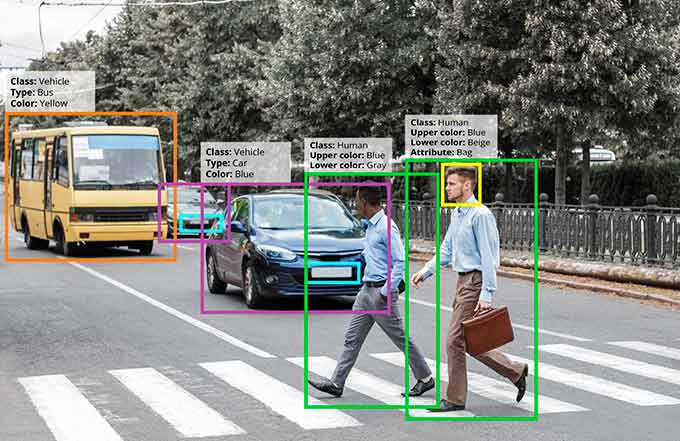
As surveillance technology evolves, video analytic overlays are emerging as a key innovation that is reshaping how security and monitoring systems operate. Overlays superimpose digital information—such as analytics results, system data, or geocoordinates—directly onto live or recorded video, transforming raw footage into actionable insight. By bringing intelligence into the video itself, overlays help operators understand situations faster and respond with greater confidence. At the same time, they introduce challenges, particularly the risk of cluttering the viewing experience. Understanding both the benefits and limitations is essential for effective use.

By: Branislav Nikolić, Sales Engineer, South East Europe, Axis Communications; E-mail: branislav.nikolic@axis.com

Three Benefits of Video Analytic Overlays

Enhanced situational awareness: Overlays present real-time data directly in the video feed, improving an operator’s understanding of what is happening. Examples include displaying vehicle speed from radar data or visually highlighting objects and behaviors of interest. Immediate access to this information enables quicker, more informed decision-making.

Improved operational efficiency: By consolidating analytics and system data into a single view, overlays reduce the need to monitor multiple screens. For instance, thermal overlays can display temperature variations within the video, simplifying anomaly detection. This reduces cognitive load and allows operators to work more efficiently.

Deeper insights: Overlays enhance how analytics outputs—such as heat maps, foot traffic patterns, or predictive indicators—are visualized. These insights support proactive security measures, helping organizations identify trends, anticipate risks, and allocate resources more effectively.

The Main Challenge: Visual Clutter

Despite their advantages, overlays can overwhelm a video feed if too much information is displayed at once. Excessive visual elements risk distracting operators and obscuring critical details, ultimately reducing system effectiveness.

3 Ways to Mitigate Overlay Clutter

Customizable interfaces: Allowing operators to choose which overlays are visible ensures they only see the information relevant to their role or situation.

Dynamic overlays: Context-aware overlays can appear only when specific conditions are met—for example, highlighting vehicle speed only when limits are exceeded—keeping the view clean while emphasizing critical events.

Togglable overlays: AV1-enabled togglable overlays let operators switch between a clear video view and an operational view with analytics such as bounding boxes and text. This applies to both live and recorded footage, preserving evidential value while maintaining usability.

Conclusion

When thoughtfully implemented, video analytic overlays transform surveillance from passive recording into intelligence-driven monitoring, delivering faster responses and greater operational clarity. Their true value lies in presenting the right information at the right time—something features like AV1-supported togglable overlays enable by preserving a clean, actionable view without sacrificing insight.

Vivotek: Think Alert: Stop Threats Before They Escalate

Most environments are already covered by cameras. The real challenge in modern AI video surveillance is response time. Many incidents are not missed because they are invisible, but because they are noticed too late. Policy violations, unsafe behavior, or suspicious actions often unfold within seconds, and once they are discovered through review or manual checks, the opportunity to intervene has already passed.

Traditional AI alerts help reduce this gap, but only when scenarios fit predefined detection types. In real operations, risks are often more contextual. Policies vary by space, rules change over time, and many behaviors that matter cannot be easily expressed through fixed alert categories. This is where Think Alert becomes valuable.

What Think Alert is and how it fits into existing workflows

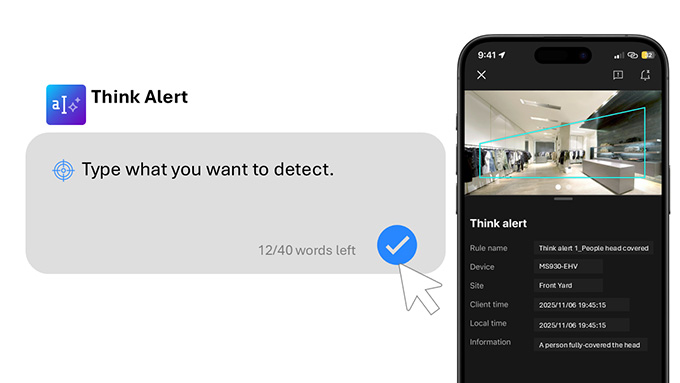
Think Alert is a generative AI–powered alert capability within VORTEX that allows users to describe what action or situation they want to detect using natural language. Built on visual language model (VLM) technology, it enables more flexible real-time video alerts while still defining where detection applies through familiar line or zone drawing—bringing this capability into the broader VORTEX AI video analytics platform.

To see why this matters in day-to-day operations, it helps to look at what Think Alert changes for teams in three practical ways.

  • Act immediately to mitigate losses: Theft, accidents, and unauthorized access cost money and endanger people. Think Alert detects these situations in real time, so teams can respond immediately—before damage occurs and before incidents escalate.
  • Set up in seconds, not hours: No manuals or training needed. After defining the detection area, simply use natural language to describe what you want to monitor and activate the alert in moments. No technical skills, no complex rule building, and no IT help required.
  • Your alerts, your rules: Every person and team has different needs. Think Alert lets each user customize monitoring based on what matters most to them, instead of being limited to fixed, predefined alert rules.

Think Search: Find What Happened, Faster

Before Think Alert, VORTEX introduced another VLM capability: Think Search. It uses visual language model technology to make investigation feel as simple as searching the web. Instead of scrubbing timelines or guessing which filters might work, users can type what they want to find in plain language, and the system surfaces relevant moments from recorded footage.

This matters because investigation is often where teams first discover patterns—recurring behaviors, repeat problem areas, or situations that consistently create risk. Think Search helps teams find those signals faster and with less effort.

Elevating VORTEX from “what happened” to “stop it next time”

Once teams identify what keeps happening, the next question is always the same: how do we stop it earlier? That’s where Think Alert takes what teams learned during investigation and turns it into real-time monitoring. Instead of repeatedly searching for the same incidents after they occur, teams can go directly to the location that matters, define the detection area, describe the behavior, and receive alerts the moment it happens again.

This is what elevates VORTEX into a more complete video intelligence workflow. It supports both sides of the job: understanding the past with faster investigation, and protecting the future with proactive, real-time alerts. By turning intent into immediate action, Think Alert helps organizations reduce risk, respond earlier, and stay ahead of incidents as they happen.

Unlocking business intelligence and operational efficiency with a security and surveillance solution

Surveillance solutions have come a long way from their traditional security role, and today, they can empower businesses to streamline operations, gain valuable insights, and drive growth. After all, ultimate goal of any business is to deliver results to the bottom line.

Remote real-time visibility helps you stay informed

For business owners, having cameras act as an extra pair of eyes can be a game-changer when it comes to boosting efficiency. By providing real-time visibility into daily operations, cameras enable owners to remotely monitor multiple locations, saving both time and travel costs. This enables prompt responses to any incidents that may arise, minimizing potential losses and downtime.

Most modern solutions offer various ways to access your system, using a mobile app or your web browser, so you and your staff can stay informed and in control at any time, from anywhere. Such solutions often include powerful tools for advanced search and analysis capabilities, making it quick and easy to search for specific events or incidents in recorded video footage. It allows you to streamline investigations and boost efficiency in your business operations.

Smart devices and analytics enhance efficiency

As you expand your solution to include a wider variety of IP devices, each device brings unique opportunities to streamline and enhance the daily operations, regardless of your business. These devices include audio speakers for playing promotional content, card readers and intercoms for streamlined visitor management, body-worn cameras, and various other devices.

For instance, in store settings, deploying smart solutions at your entrances allows you to grant automatic access. In parking lots, you can monitor availability and guide drivers to available spaces, reducing congestion and wait times while also enhancing the visitor experience. Similarly, analytics can track customer flow, help to guide people and limit wait times in retail stores.

AI-powered devices with smart analytics can be valuable assets in any organization, helping transform operations and automate specific tasks, such as counting people, tracking activity, and detecting inconsistencies, objects, and irregular sounds. This frees up staff so they can focus on high-value activities that drive revenue and business growth. These powerful devices can also be used to trigger automated actions for immediate responses.

In manufacturing environments, you can identify inefficiencies, bottlenecks, and anomalies on production lines, enabling real-time adjustments that optimize output. The result is reduced waste and minimal interruptions with improved quality control and productivity.

Enable predictive maintenance and avoid downtime

Cameras can be installed in virtually any location, enabling 24/7 remote monitoring to get the full picture of your operations.

Inefficient processes can be very costly for organizations. But the safety and well-being of your staff and customers is crucial. With a thermal camera, you could easily detect overheating machinery, fire hazards, and energy leaks, and automatically trigger alarms, sirens, and audio alerts to swiftly notify personnel. Plus, audio analytics can detect critical sounds, including breaking glass, screams, and shouts.

It’s also possible to expand and enhance your system by integrating environmental sensors to monitor indoor air quality. By monitoring this data, you can help ensure the well-being of your employees with healthy indoor environments. Additionally, this data enables you to demonstrate compliance with health regulations.

Using various devices, sensors, and software, you can set up automated actions that support your day-to-day business, enabling more proactive decisions to optimize operations, generate higher quality output, reduce waste, and prolong the lifetime of your equipment.

Use your system for informed decisions

In today’s data-driven world, making informed decisions is key for business success. By integrating multiple devices and data sources into your video management system, you gain easy access to the data you need to make informed decisions.

With real-time data pulled into dashboards, you can quickly grasp performance metrics, spot trends, and make informed choices. By analyzing the data, you uncover trends and patterns to support long-term planning. These insights also enhance your sales and customer engagement. For instance, you can analyze foot traffic patterns and visitor numbers to make smarter decisions about store placement, advertising, and promotions. You can also study passenger or visitor volumes to optimize staff allocation and ensure adequate support during peak periods, while also minimizing idle time during slower periods.

Harnessing data helps businesses make informed decisions and drive growth. It improves efficiency, productivity, and customer experience, enabling better short-term planning and long-term strategic decision-making. This all helps ensure your operations are more efficient and profitable, helping you stay ahead of the competition.

A solution to elevate your operations and stay ahead of the curve

An end-to-end solution from Axis can unlock operational efficiency and business intelligence for your organization. With all components from one trusted vendor, featuring AXIS Camera Station Edge or AXIS Camera Station Pro at its core, you get a proactive solution that lets you unlock a smarter, safer, and more powerful way to run your business, helping you stay ahead of the curve.

Axis Communications Insights: Future proofing mobility in cities

Written by: Anders Grafström

ThoughtLab’s recent From Future Vision to Urban Reality report, sponsored by Axis, explores the most effective strategies and digital solutions city leaders are using to prepare for the future. When it comes to urban mobility, the importance of real-time data is front-and-center. Surveillance technology provides much of this data as well as valuable insights used to power services. Transport authorities use it to enable systems such as traffic management, parking, public transport, and digital payments.

But knowing where and how to invest is a challenge in itself. Fortunately, the nature of surveillance technology means that any pilot scheme or local initiative immediately provides a feedback loop of learning, improvement, and verification ahead of major city-wide investments thanks to their rich, real-time data. This is also what makes surveillance technology such a vital component of digital twin initiatives. In fact, traffic management is the leading use case for digital twin modelling, with cities across the world already benefiting from their application.

Here are just a few examples of the top ways future-ready cities are leveraging surveillance technology to enhance their urban mobility, taken from our latest ebook, Surveillance technology for future-ready cities. Our report supplements the ThoughtLab study, providing further context, example use cases, and tangible next steps for city authorities through the lens of surveillance technologies.

Download the full ebook, here.

Smart signaling

Getting traffic light signaling right can be the difference between gridlock and free flowing traffic. Surveillance systems are used to collect queue length data at these hotspots. By collating data and identifying patterns over hours, days, and weeks, systems can present optimized signal timing profiles. Similarly, real-time data can also be used to control variable speed limits or open and close lanes, using pre-set rules.

Identifying the causes of accidents

Understanding how and why accidents occur requires data. Surveillance footage provides you with detailed accounts that enable forensic levels of analysis into driver behavior trends. You can identify dangerous behavior patterns such as sharp lane changes or stops, drivers heading in the wrong direction, as well as speeding hot spots and red-light violations. You can then use this analysis to inform new policies and preventive measures, and then use it to gauge their effectiveness.

Rapid incident response

In the same vein, surveillance systems can provide automatic incident detection. Cameras can detect unusual or sharp changes in direction, or when a car stops in the middle of a road. When an incident occurs they can then trigger escalation protocols, such as notifying staff or first responders. Smoke and heat detection provides further valuable information. All of which helps expedite response times and can save lives.

Intelligent parking

Surveillance data supports many functions vital to parking systems. As well as spotting spaces to inform availability signage, license plate recognition enables frictionless automated payment systems. Both of these help to reduce bottlenecks at entrances and make journeys smoother.

You can also use these cameras to spot parking violations, such as identifying double parking, overtime, illegal parking, and even measuring whether vehicles have parked far enough from corners, as well as your typical security functions.

Encouraging alternative travel

One of the most frequently cited deterrents to using alternative forms of travel is a lack of safety, especially at night. In-vehicle installations on trains and buses make real-time, multi-camera, interior and exterior footage readily available to security personnel, even while vehicles are in motion. This enables virtual patrols of vehicles, proactive monitoring during busy periods or known events, and quick reactions to security alerts.

Outside, in parks and on main pedestrian routes, smart poles, equipped with lighting, cameras, speakers, and intercom help points can provide much needed assurance to the public, helping create established safe walking and travel routes.

Learn more

Surveillance technology doesn’t only help cities tackle mobility challenges. Axis-powered solutions are supporting local authorities across the world drive new efficiencies, and save money, while improving sustainability, safety and the lived experience of citizens.

AziTrend: How WMS + VMS Integration Is Redefining Modern Logistics

In today’s economy, where speed and accuracy separate profit from loss, warehouses have become critical nodes of the supply chain. Yet the operational complexity—tens of thousands of SKUs, thousands of storage locations, and constant order flows—puts enormous pressure on logistics teams. This is where a new technological standard emerges: the integration of Warehouse Management Systems (WMS) with Video Management Systems (VMS) through AZiGuard platform.

Why WMS + VMS Integration Matters

Traditional incident investigation in a warehouse can take hours or even days. A lost parcel, a picking error, or a delivery dispute consumes time, money, and reputation. By synchronizing WMS transaction data with the exact video moments in which those events occurred, AZiGuard turns complex processes into 2–3 minute verifications.

Key advantages include near-instant incident search, where an operator filters an event in the WMS and the VMS immediately displays the precise moment and camera angle for verification, turning what once took hours into a matter of minutes. Operational costs are reduced through fewer manual investigations, fewer disputes and fewer internal interventions, resulting in measurable savings, particularly in high-volume warehouses. At the same time, greater transparency and credibility are achieved as every transaction becomes verifiable with video proof, giving retailers, couriers, pharmacies and marketplace operators a clear, unbiased source of truth. Finally, higher customer and partner satisfaction follows from faster claim resolution, clearer responsibility and increased trust across the entire supply chain.

Case Study: When Volume Explodes, Precision Becomes Critical

A large online retailer uses WMS and VMS integration to instantly reconstruct the journey of a lost parcel—from packing and collection to courier handoff and delivery—cutting incident investigation times by more than 50% and eliminating unfounded claims. In another example, a pharmaceutical warehouse using pick-by-voice and a high-speed conveyor has integrated both databases with AZiGuard’s video streams, enabling operators to locate every conveyor feeding point instantly, regardless of speed.

Through the AZiGuard ActiveStock module, warehouses gain advanced control over accuracy, including rapid loss investigation, delivery dispute resolution, clear responsibility assignment and quality verification of picking and packing. For facilities handling more than 50,000 SKUs, this level of automation shifts from a “nice-to-have” feature to a mission-critical capability.

The Future: AI, Prediction, and Full Automation

As order volumes rise and margins compress, the fusion of operational data with video analytics becomes the backbone of modern logistics. The next step is already emerging: AI that predicts errors, optimizes workflows, and detects anomalies before they become operational costs.

Integrating WMS and VMS is no longer a technological upgrade—it’s a competitive necessity. For high-volume operations, solutions like AZiGuard do far more than improve visibility; they build warehouses that are safer, more transparent, and significantly more profitable.

Hikvision Introduces Ultra-Endurance Body-Worn Camera for Field Recording

Hikvision has unveiled its new Ultra-Endurance body-worn camera, designed for professionals who require a reliable device capable of long-term operation in demanding field conditions. The camera supports up to 15 hours of continuous recording, ensuring uninterrupted documentation without the need for frequent battery recharging.

The device is equipped with a rugged 64 GB EMMC memory chip, engineered to withstand vibrations and ensure secure data storage even in dynamic working environments. This approach further highlights Hikvision’s focus on reliability and long-term durability of its hardware solutions.

Special attention has been given to ease of use, allowing one-hand operation with a large, easily accessible recording button. This functionality is particularly suited to security personnel, emergency responders, and other professionals for whom rapid reaction is critical.

The new body-worn camera is part of Hikvision’s broader strategy to develop sustainable and energy-efficient security solutions, tailored to the modern requirements of field operations and digital event documentation.

VORTEX by VIVOTEK – PPE Detection on Cloud

VORTEX, an AI-powered cloud surveillance platform by VIVOTEK, introduces its latest safety feature: PPE detection. PPE refers to Personal Protective Equipment, and the detection system is powered by Cloud AI and deep-learning algorithms running on VIVOTEK AI cameras. This feature automatically monitors whether workers are wearing the required safety gear in hazardous environments, helping organizations maintain real-time safety compliance.

How It Works

VORTEX uses cloud-based AI to accurately detect missing PPE, such as helmets and safety vests, and instantly triggers real-time alerts through the cloud. This enables quicker responses to prevent accidents before workers are exposed to danger. The AI model is trained to identify people and key PPE items, while the system checks whether the required equipment is worn in designated work zones. When a violation occurs – such as a worker entering a mandatory PPE zone without a helmet – the system immediately sends alerts via mobile push notifications, email, or integrated on-site speakers, allowing rapid intervention.

With the Case Vault in the VORTEX AI Hub, users can add selected clips and automatically generate a structured visual timeline with snapshots and video evidence. Reports can be exported as PDF files with a single click. All incidents are logged and stored with video evidence, creating audit-ready records for investigations and compliance reporting.

Key Benefits

Using the VORTEX cloud solution, safety managers can monitor multiple sites from a single platform and receive instant alerts whenever PPE violations occur, eliminating the need for manual supervision. The system provides continuous, automated oversight without labor-intensive spot checks, supports risk mitigation through immediate alerts, and improves operational efficiency by allowing safety personnel to focus on strategic tasks rather than constant monitoring. It also generates verified documentation needed for regulatory compliance, including OSHA requirements and insurance audits.

Where It’s Used

Typical deployment scenarios include construction sites, warehouses and logistics centers, mines and quarries, factories and manufacturing facilities, utilities and energy operations, as well as rail and transport projects. With VORTEX PPE Detection, safety enforcement becomes proactive, efficient, and verifiable – protecting workers while simplifying compliance in high-risk environments.

AppVision PSIM 4.9.6: Stability, Security and Smarter Operations for Integrated Environments

As operational ecosystems become more complex, the reliability of a PSIM platform defines the reliability of the entire security infrastructure. As the main distributor of AppVision PSIM in Romania and South & Central Eastern Europe, UltraVision Consult announces the release of AppVision V4.9.6 – an update focused on stability, synchronization and reinforced security across all layers of the platform.

The new version strengthens the overall security posture by protecting access to plan backgrounds, a critical improvement for organizations where architectural layouts represent sensitive operational data. AppControl strengthens confidentiality by permanently hiding PIN code, ensuring safer authentication management.

A major part of this release focuses on server reliability, redundancy and workflow continuity. Backup server synchronization has been consistently improved, overlays are consistently aligned between servers, These updates directly support high-availability environments where uninterrupted performance is essential.

On the client side, performance is noticeably improved. Image caching has been reactivated, allowing images within synoptics to be displayed repeatedly without additional load, supported by a new configuration threshold controlling cache retention.

Integrators will also appreciate the refinements in the configurator, where the drag-and-drop selection window now opens at cursor level. The UpdateOverlay method in the SDK is now active for developers building custom logic on top of AppVision.

AppVision 4.9.6 is more than a maintenance release. It is a consolidation update designed for integrators and end-users who depend on a robust, customizable and vendor-agnostic platform. UltraVision Consult’s mission remains unchanged: to deliver an open ecosystem where technologies interconnect effortlessly and where integrators can build advanced, future-proof solutions.

The company is actively expanding its regional network of system integrator partners. If you want to work with a fully open PSIM platform supported locally through consultancy, development, configuration, commissioning and long-term maintenance, you can contact them via their web site https://ultravisionconsult.com/.

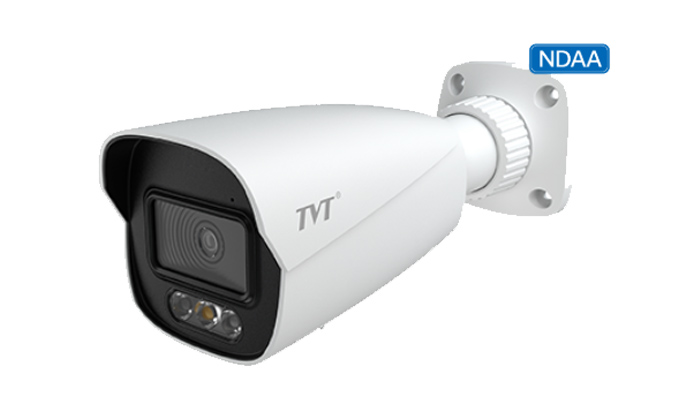
TVT Demonstrates Night-Time Performance Differences: E4B Outperforms E3B-A and Smartphone Cameras

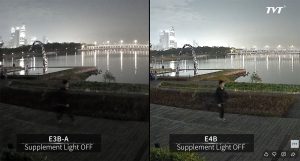
TVT Digital Technology has published the results of a real-world night vision test conducted in completely dark conditions, comparing the TD-9442E4B and E3B-A camera models with a smartphone camera and the human eye. The test was carried out in a pitch-black environment to realistically assess camera performance in extreme low-light scenarios. According to the manufacturer, the TD-9442E4B with infrared illumination enabled delivered sharp details with clean and stable footage. The E3B-A model, tested without IR support, produced a significantly darker and blurrier image with limited usability in total darkness. Under the same conditions, the smartphone camera and the human eye were unable to capture meaningful scene details.

TVT highlights that the E4B benefits from advanced low-noise image processing, resulting in clearer and more usable night-time recordings. An additional advantage is its wide dynamic range, which helps balance bright and dark areas within the same scene. The company states that the test confirms the advantages of professional video surveillance cameras over consumer devices in low-light environments.

The full comparison and real test footage are available to view on the manufacturer’s official YouTube channel: Night Vision Showdown|TD-9442E4B Real Test – YouTube