Home Technology and Products Archive by category Access Control

Access Control

Salto Introduces DBolt Touch Outdoor

Salto expands its residential smart locking technology with the launch of the DBolt Touch Outdoor model, an IP55-rated smart deadbolt designed to deliver secure, keyless access to exterior and weather-exposed residential doors

By: Agnieszka Filipowicz, Business Development Manager, Central and Eastern Europe, Salto ; E-mail: a.filipowicz@saltosystems.com

The Salto DBolt Touch Outdoor is a smart locking solution for both retrofit and new construction multifamily properties, extending smart access beyond interior unit doors. Built to withstand everyday exterior conditions, the outdoor model combines durability with a refined, modern design suited for residential environments.

Like its interior counterpart, the outdoor version features the latest Salto electronic access technologies, including Salto SVN, BLUEnet, and JustIN Mobile, supporting both cloud-based and stand-alone access. Fully compatible with Salto Space, Salto KS, and Salto Homelok, the DBolt Touch Outdoor enables flexible smart access management while enhancing security, operational efficiency, and the resident keyless experience.

With multiple finish options available, the DBolt Touch Outdoor blends seamlessly into building design while connecting wirelessly to a smart living ecosystem. Through Salto smart access platforms, the solution unifies security, access control, property operations, and the resident experience in a single smart keyless access solution for residential living.

Wire-free and designed for easy deployment, the DBolt Touch Outdoor fits standard deadbolt preparations without drilling, simplifying installation across apartment units doors.

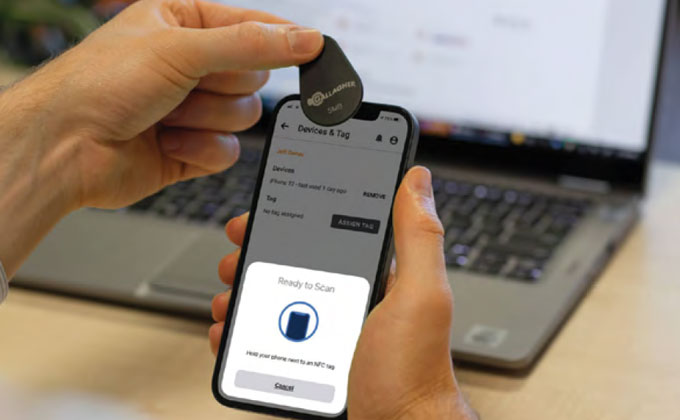
The Salto Systems DBolt Touch Outdoor is designed specifically for apartment unit doors, residential homes, and retrofit multifamily properties. It fits standard deadbolt door preparations and requires no drilling, allowing installation on existing doors in just minutes using only a screwdriver. The lock features a convenient touchscreen keypad and operates on battery power, eliminating the need for any hard wiring. With an IP55-rated design, it is suitable for exterior use and resistant to weather exposure. The device is fully compatible with the Salto Space, Salto KS, and Salto Homelok platforms, and supports flexible credentials, including RFID keycards and fobs, NFC, JustIN Mobile BLE credentials, and resident PIN codes.

Issue, revoke, and manage digital keys remotely, offering the control, security, and convenience today’s residents and operators demand. The DBolt Touch Outdoor extends the Salto residential smart access portfolio, no more searching for lost keys, with DBolt Touch smart lock series residents can use your smartphone, key fob, or key card, putting you in control of home security, supporting modern multifamily living and evolving resident expectations.

To learn more about the Salto smart home door locking solutions, visit Salto DBolt Touch.

Introducing Salto DLok — the next-generation, universal smart home lock built for every door.

DLok represents the latest evolution of Salto’s smart home locking technology, delivering a universal, motorized smart lock that integrates seamlessly with the Homelok smart living ecosystem to support the residential access experience.

 Salto launched Salto DLok, the latest residential door smart locking solution. DLok marks a new stage in Salto’s smart home innovation. This universal, motorized smart lock connects with the Homelok ecosystem to support residential access for smart homes and apartments, providing enhanced security, keyless access, and automation. DLok enables residents to use a digital, automated, and broadly compatible access solution in their homes.

Smart locking solutions and advanced access control technologies are transforming how residential spaces are protected and managed. DLok is engineered to address the growing demand for connected living by offering a reliable and secure universal retrofit solution that ensures doors are properly locked or opened without physical keys, relying on a resident Digital Key app as a core automation feature.

Next-level automation and seamless integration

Salto’s DLok smart lock is designed to support seamless residential use. Fully automated locking minimizes manual effort while helping ensure the door remains securely locked. Using the Homelok mobile app, residents can unlock their unit door from a smartphone, enabling convenient access control for themselves, guests, and visitors. As a universal motorized smart lock, DLok connects directly to the Salto Homelok smart living ecosystem, enabling keyless access and integration with other Salto solutions.

Redefining mechanics, electronics, and design

DLok introduces engineering advancements in connectivity, reliability, and aesthetics. The lock offers broad compatibility through multiple model options and retrofit accessories designed to replace existing door hardware and fit standard door types, including Euro, Scandinavian, and North American deadbolt variants. DLok supports universal retrofit installation and can be installed in under 15 minutes, without requiring replacement of the existing lock or door handle.

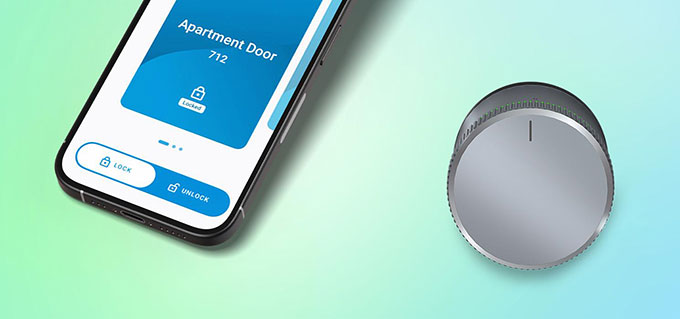
Mechanical durability is improved through a more powerful motor rated for more than 50,000 cycles, along with updated metallic shafts and support components. Calibration accuracy is enhanced through a magnetic calibration sensor that replaces mechanical components, improving lock performance and status reporting. Updated electronics support a semi-automatic calibration process combining automatic and manual steps to improve overall performance and reporting accuracy. From a design perspective, a redesigned flat thumbturn provides a cleaner appearance, with a subtle straight marker offering visual rotation feedback.

Engineered for innovation, security, and simplicity

DLok incorporates engineering enhancements focused on durability and reliability while maintaining a contemporary design. In addition to the lock itself, Salto has developed a universal cylinder along with a range of adaptor accessories.

The result is a broadly compatible solution that allows residential doors to be upgraded with smart access functionality in a limited number of steps. DLok supports a full installation process that typically takes around 15 minutes, including cylinder replacement, guided by a visual step-by-step installation process with no drilling or additional tools required. The lock is installed entirely from the inside, maintaining a minimalist and unobtrusive exterior appearance.

Compatibility is further extended through the Euro Compact Turner Adaptor, which supports retrofit installation on European profile cylinders (PZ). The adaptor allows smart lock installation while accommodating residents who wish to retain existing mechanical keys.

Keyless access for a smarter, safer home

DLok is a universally compatible solution designed to transform residential doors into smart access points while remaining invisible from the outside. Its design supports compatibility with most door types and retrofit scenarios.

DLok reflects Salto’s continued focus on residential smart access by combining keyless convenience with enhanced security in a single solution. Universal compatibility supports cost-effective retrofit installation without requiring replacement of existing locks or door handles.

DLok represents a step in Salto’s residential market strategy, bringing established smart access expertise into the home environment. The combination of smart access technology and universal design supports secure and intuitive residential access, with flexible installation options and broad geographic compatibility.

To learn more about Salto smart home door locking solutions, visit Salto DLok.

Mobile access unlocks a new way to work and a whole range of possibilities

In business and personal life today, digitalization increasingly means moving to mobile. Mobile-first is becoming the norm across regions and industries. In Western Europe alone, there are 459 million active smartphones and only a fraction of these are currently used for digital access. This is changing fast: one projection suggests mobile credentials’ CAGR of more than 22% over the next 7 years.

By: Thomas Schulz, Director & Head of Marketing ASSA ABLOY Opening Solutions EMEIA

E-mail: thomas.schulz@assaabloy.com

This rapid growth seems only natural: in terms of access management, it is more secure and more convenient, for both building users and managers, when the smartphone also becomes a key. From an organizational perspective, digitalization helps to maximize the productivity of existing assets. By adopting a mobile ethos, in access and beyond, businesses increase convenience for their users and the security of their buildings. It is easy to understand why mobile is, according to one analyst, “the dominant trend in access control”.

Making life easier and enabling mobility for users and facility managers

Using mobile keys for access helps building users to act faster, work smarter and collaborate better within teams. Similar convenience benefits have already made banks, travel agents, food delivery services and more into mobile-first sectors. With mobile access, staff and visitors no longer need to carry or keep track of keys, fobs, badges or cards. The convenience of replacing plastic key-cards with secure mobile keys is obvious.

From an access management perspective, mobile access enables the secure movement of people into and through premises – and simultaneously streamlines daily work for security managers. Mobile credentials are also more secure. Phones are almost never loaned to anyone else, and are harder for a user to lose. Mobile credentials are easier for security managers to amend or de-authorize than a mechanical key. Changes to anyone’s access permissions can be made over the air, without any need for dedicated readers or asking a user to check-in their credential.

Furthermore, when a security administrator cancels a mobile key, it vanishes immediately. No more time-wasting handover meetings are scheduled when a tenancy, employment contract or authorized visit ends. Remote access management via smartphone and a secure cloud saves facilities staff time and hassle. They work smarter and more flexibly, benefitting both their well-being and their organization’s productivity.

“At ASSA ABLOY, we were very quick to spot the benefits of mobile access for all kinds of stakeholders,” explains David Moser, SVP & Head of Digital Access Solutions at ASSA ABLOY Opening Solutions EMEIA. “So many of our access innovations provide the option to make access not only digital, but also mobile.”

Broad range of mobile access solutions from ASSA ABLOY

ASSA ABLOY offers customers a choice of mobile access solutions, both within complete digital access systems and via devices which plug seamlessly into an existing security management solution. Multi-residential housing is just one sector, among many, where the advantages of mobile access have seen its rapid growth. Fast-growing build-to-rent housing provider Becorp is just one that has benefited from its convenience. For a planned new development in Barcelona, they sought a digital alternative to mechanical keys. Becorp realised that a keyless solution would save property management time, which is often spent handling hundreds of physical keys. The burden on staff is especially great when properties are newly occupied or vacated, a regular occurrence in large build-to-rent complexes.

Residents instead use secure mobile keys in their own SMARTair Openow® app. “Physical key management for any large development puts severe pressure on operational costs,” explains Becorp’s Xavier Casals. “Choosing SMARTair wireless locks and mobile management via Openow helps us to minimize them.”

“We have several more mobile access solutions, providing customers with a choice to meet their exact needs,” adds David Moser. “CLIQ® Connect is a mobile extension to ASSA ABLOY’s CLIQ programmable key access solution. A keyholder no longer needs to update access rights physically in person. Their system administrator simply opens the CLIQ Web Manager – from anywhere – and updates it. The key-holder makes an encrypted connection between their programmable BLE key and the app on the mobile to instantly update permissions from the cloud.”

“Yet another mobile solution, CLIQ Go, is designed for small and medium-sized businesses. It offers easy access management from a mobile. CLIQ Go makes it simple even for non-specialists to manage their own access, digitally and from the palm of their hand.”

Adding mobile access to an existing EAC solution or new application

Mobile access is also built-in to ASSA ABLOY digital access devices designed for seamless integration with existing systems and hardware. Battery powered Aperio® locks are compatible with both Bluetooth and NFC mobile wireless protocols. Aperio mobile access offers Seos®-based, class-leading cryptography and authentication, plus unrivalled privacy protection.

Utilizing HID Seos® technology, Aperio also supports employee badge in Apple Wallet, enabling quick, convenient entry to doors, cabinets, lockers, server racks and more equipped with Aperio wireless devices. ABLOY CUMULUS is another keyless access solution, also part of the suite of connected Digital Access Solutions from ASSA ABLOY. With ABLOY CUMULUS, tailored access rights are issued directly on a user’s smartphone. Their personalized, encrypted mobile credential unlocks any authorized opening. In addition, the revolutionary CUMULUS Controller brings mobile unlocking via Bluetooth to any electric or electronic lock – from any brand.

“We engineered CUMULUS to help businesses increase their mobile capability to really get their access ready for what’s ahead,” explains David Moser. “It is completely customizable, with APIs and SDKs for smartphone app development. Mobile becomes part of their business”

“Like all our mobile access solutions, we hope it helps our customers to realize new possibilities in whatever they do.”

To learn more about living mobility with Mobile Access Solutions from ASSA ABLOY, visit https://www.assaabloy.com/group/emeia/campaigns/mobile-access


Innovatrics HQ Shows What Identity-First Building Security Looks Like

Biometrics House, Innovatrics’ new headquarters in Bratislava, is designed as a working model of identity-first building security, demonstrating how hands-free access and visitor management can scale without compromising privacy.

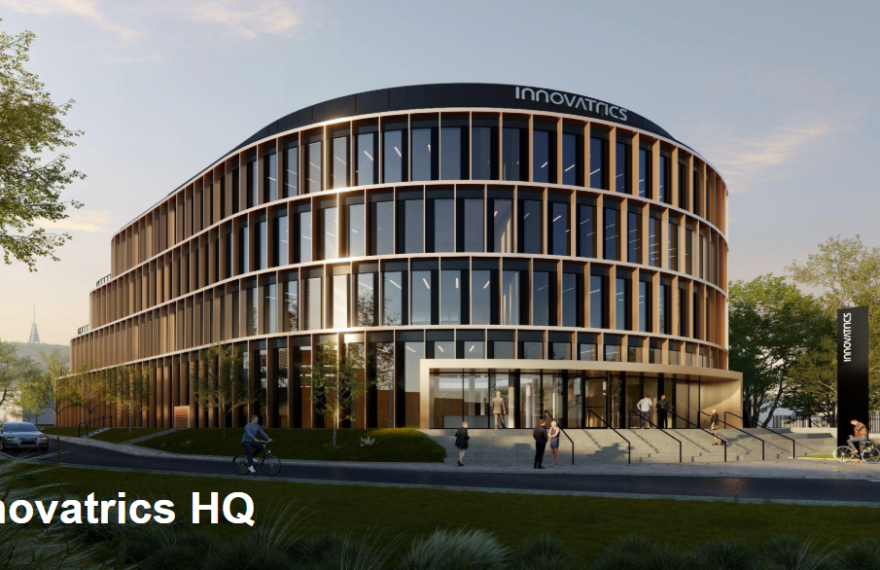
Innovatrics is now operating from a new global headquarters in Bratislava, Slovakia, and the building is not just where the company works. Known as Biometrics House and billed as the world’s most biometric building, it is designed to run on a simple principle: trust starts with identity. In practice, routine movement through the site can happen without badges, PINs, or a reception queue, while security teams keep clear oversight of who is where, and why.

For security professionals, the message is practical. Biometrics is no longer limited to controlled checkpoints at airports or high-security sites. When it is deployed with the right safeguards, it can become part of everyday building operations, from visitor management to access control and incident response.

Identity as the Access Layer, From Parking to the Elevator

Biometrics House has been built as a working example of how multimodal identification can replace traditional credentials across an office environment. Set next to Bratislava’s Vinohrady train station, about 15 minutes from the city center, Biometrics House is organized across four floors, with team zones, meeting rooms, and workshop areas designed to support both focused work and collaboration. Shared spaces such as the bistro, social-stair lobby, terraces, and Zen zones are designed to keep the day moving without requiring people to leave the building. From above, its footprint echoes a fingerprint, a deliberate reference to the company’s roots in fingerprint recognition.

The security concept is centered on recognition rather than possession. Employees and approved visitors can be identified via facial or palm recognition, reducing weak links associated with borrowed cards, shared codes, or forgotten credentials. In practice, this extends beyond the front door. Parking access can be handled the same way, and lifts can be tied to identity so that users are routed to permitted floors without extra taps or swipes.

Visitor handling is also built around traceability. Instead of issuing temporary badges and hoping they are returned, enrollment can occur before arrival or at a self-service kiosk. Once inside, pre-registered entry and a structured visitor journey help guests reach meeting rooms efficiently, while access permissions remain defined and traceable.

“We imagine a workplace where even your desk is dynamic, assigned not by habit but by what you’re working on that day. The building itself adapts to your projects, your team, and your agenda,”

Innovatrics Founder and CEO Jan Lunter.

Built for Security, Designed for Privacy

Any identity-first building stands or falls on trust, and Biometrics House puts data protection in the foreground. Innovatrics says the building goes beyond GDPR requirements through biometric data decoupling, minimal data storage, and secure on-device camera processing. Users are also given clear choices during registration. With consent, biometrics can be used for hands-free access across authorized zones. Without consent, data can be anonymized and limited to essential security checks to prevent personal identification.

From an operational perspective, the site is also a live environment for modern building security practices: real-time zone surveillance, intrusion detection, and automated alerts that can escalate events without stopping normal operations. For higher-risk scenarios, anti-spoofing and liveness controls help prevent attempts using photos, videos, or masks. A robotic “guard dog” provides a visible deterrent and can be used for patrol or guided-escort tasks.

A Living Lab for Integration, Not a Showroom

What makes Biometrics House notable is not the novelty of face recognition alone, but the way the building is used. The HQ functions as a permanent test site where identity, video, and access workflows can be evaluated under real office conditions, not just in a demo room. That matters for integrators and end users who need answers to practical questions: how onboarding is managed, how exceptions are handled, how audit trails are kept, and how systems behave during peak hours.

It is also a place to see how building automation and security can work together without turning the workplace into a checkpoint. Meeting spaces and shared facilities can be prepared based on verified presence, while environmental monitoring keeps comfort parameters such as air quality, humidity, and lighting under continuous control.

Design choices are tested the same way the technology is: in motion. Teams observe how layouts shape behavior, adjust based on what actually happens day to day, and treat the office as something that can learn. “We imagine a workplace where even your desk is dynamic, assigned not by habit but by what you’re working on that day. The building itself adapts to your projects, your team, and your agenda,” says Innovatrics Founder and CEO Jan Lunter. It is an approach that turns the HQ into a flexible, connected environment that evolves with the people inside it.

Sustainability as Resilience

Although the headline feature is biometric operation, the building’s energy approach supports day-to-day resilience. Biometrics House operates without a gas connection, uses geothermal energy and solar power, and captures rainwater for reuse. A recycled aluminium facade and other material choices underscore that a high-security building can also have a lower operational footprint.

As identity moves closer to the center of physical security, Biometrics House offers a practical reference point: a fully operational workplace where biometric access, privacy safeguards, and building management have been combined into one repeatable model.

About Innovatrics

Innovatrics is an independent EU-based provider of trusted identity and biometric solutions used by governments, businesses, and law enforcement agencies to keep people safe, onboard new customers, and build institutional trust. Since 2004, the company has delivered flexible biometric identification solutions that have benefited more than a billion people worldwide, with algorithms that consistently rank among the fastest and most accurate in fingerprint, face, and iris recognition.

Unifying wireless digital locks and smart key access gives security managers much more control

Sometimes a digital system cannot cover all the openings an organization needs. Readers, escutcheons and security locks can equip many doors. But what if they also want to deploy intelligent key-operated locking for alarm boxes, medicine stores, server rooms or power units? Until now, the only secure option was to run two systems in parallel. A new integration between two digital ecosystems puts facilities managers in control like never before.

Author: Thomas Schulz Director & Head of Marketing ASSA ABLOY Opening Solutions EMEIA

E-mail: thomas.schulz@assaabloy.com

The SMARTair® wireless access system, part of a suite of connected Digital Access Solutions from ASSA ABLOY, now enables management of CLIQÒ programmable smart keys from the same software interface. When businesses extend their SMARTair digital access solution with CLIQ battery-free cylinders, they implement complete oversight for their premises, including any outdoor spaces. There is no cabling and no more need for mechanical keys – just smart, flexible management.

When CLIQ electronic and electromechanical cylinders are deployed within a SMARTair-controlled installation, security teams can manage even more doors. They can implement digital access almost anywhere, without drilling or causing damage to the building structure. The broad range of openings already covered by SMARTair are supplemented with a range of more than 60 CLIQ and eCLIQ cylinder types, making every access point secure. SMARTair’s intelligent TS1000 software manages and monitors every opening and credential, including smart keys and mobile keys if required.

“For healthcare, education, multi-residential properties, and many more types of building, this new integration puts so much more power in your hands,” says Mikel Gaztañaga, Sales Manager at ASSA ABLOY Opening Solutions EMEIA. “Building managers gain transparent oversight over every type of opening, from one familiar software interface. It helps them to meet the growing demands of compliance and to control access much farther into and through their buildings.”

“With this new integration of SMARTair and CLIQ, you make life more convenient for everyone who manages or uses your premises. Facilities teams work smarter and more efficiently. Users enjoy a streamlined, unified experience right from the front door.”

One solution, maximum reach

By bringing CLIQ devices into a SMARTair solution, organizations gain fully integrated control and total traceability of access. They can extend access control even to remote locations with durable CLIQ cylinders and programmable keys, all from the familiar SMARTair TS1000 software interface. In addition, SMARTair’s Wireless online management option gives security teams real-time system control via wireless HUBs. For added convenience, every CLIQ key has an RFID chip inside which can be programmed to unlock authorized doors secured with SMARTair battery-powered devices. Aligning CLIQ with SMARTair gives facilities managers the choice of mobile credentials or RFID credentials (smart cards, fobs or badges) for SMARTair devices, smart keys for CLIQ cylinders or smart keys with RFID tags for both SMARTair and CLIQ devices.

SMARTair and CLIQ in action at a Spanish football stadium

This powerful new integration is already up-and-running at Spanish football club, UD Almería. For their stadium, they chose SMARTair digital access with additional centralized management of CLIQ smart keys and cable-free cylinders. All users and access points are managed online from their SMARTair TS1000 Web software. SMARTair Wireless Online management gives staff real-time control and oversight of offices, locker rooms and physio suites. Stadium staff use customized RFID cards which double as their ID badges. Visitors and external contractors receive time-limited access via mobile keys sent to their own SMARTair OpenowÒ app. It’s convenient for them and simplifies visitor management. CLIQ cylinders protect technical rooms and interior service zones. Maintenance staff and security personnel, including matchday police, carry a programmable CLIQ key with their individual access permissions.

“The complementary benefits of SMARTair and CLIQ ensures Almería’s needs are met without compromising on security or flexibility,” adds Gaztañaga. “This innovative hybrid installation ensures their diverse access needs were met. Only ASSA ABLOY could provide such a connected, unified solution.”

To learn more about SMARTair/CLIQ integration, download a free Solution Guide at: https://assaabloy.com/emeia-blueprint/en/documents/solutions/topics/access-control/smartair/AA_SMARTair-CLIQ-Integration_Brochure_2026-01_EMEIA.pdf

Managing access in education: how and where digitalization makes a positive impact

Across Europe, the Middle East and beyond, schools, colleges and universities look to modernize security while preserving openness. Their duty of care extends to protecting people, property and data, yet education sites must also enable the free movement of staff, students and visitors. At the same time, budgets are tight and expectations for user experience are high. The right access management strategy must reconcile safety, efficiency and cost-effectiveness – and when implemented effectively, can benefit daily operations.

Education sites always host multiple user-groups with different access needs, as well as schedules which shift constantly. Staff, students, contractors and other external users share the same spaces at different times of day. At sites which still rely on mechanical keys, often across large estates, management may be complex and time-consuming.

Lost or duplicated physical keys can expose entire premises to risk and require expensive rekeying. Manually updating permissions for thousands of users is inefficient. Outdated systems and protocols may make it difficult to monitor who is on site or to coordinate a rapid lockdown in an emergency. Facilities teams increasingly seek intelligent access solutions that provide real-time visibility, centralized control and reduced maintenance. An increasingly digital-native user-group, especially students, expects the convenience of digital solutions, including mobile keys stored on their personal smartphone.

Recent data underlines the urgency of a more connected approach to access. UK universities, for example, are at high risk of cyber breach, with perhaps millions of stolen credentials circulating on the dark web*. Such weaknesses illustrate a growing hybrid threat. If a single credential can open both doors and provide access to in-house networks, its compromise endangers the institution’s operations and reputation. To mitigate these risks, mobile digital credentials – instantly revocable, amendable and traceable – can help education facilities teams to close this gap. Reliable, digital physical security and access is now a fundamental building-block of the modern education institution.

The solution is access digitalization

Digitalization offers a coherent way forward. ASSA ABLOY has extensive experience in digitalizing access management for educational buildings, helping these institutions to create a secure, safe and convenient environment for students, teachers and visitors. A vast range of ASSA ABLOY digital solutions can protect people and valuable assets from the perimeter right into the heart of a building, all the way to intelligent locking for server racks which integrates seamlessly with almost any access management software. Schools and universities can choose to manage access rights on-premise, via a secure cloud, or with a choice of Software as a Service packages.

For security and facilities managers, programmable locks and credentials boost the responsiveness and efficiency of access management. Lost or stolen cards can be deactivated with a click, preventing unauthorized entry without the expense and hassle of replacing hardware. Rights are issued, amended or withdrawn remotely, backed by a full audit trail. Digital access also enhances flexibility. Smartphone or smart-card credentials can be configured for specific areas and time windows, supporting after-hours study or revenue-generating rentals, while maintaining control, for example. Facilities managers gain oversight across multiple buildings and can administer access off-site through intuitive software. The outcome is safer, more adaptable premises and a significant reduction in administrative effort – and therefore, costs.

For staff and students, the convenience and security of a digital credential gives them the peace of mind to move about the premises in safety and comfort.

European standards and regulation also support this digital shift. EN/IEC 60839 sets functional and interoperability requirements for digital access systems, while EN 179 and EN 1125 specify safe egress for emergency exits. GDPR ensures personal and credential data are handled transparently, and biometric use is governed by national consent laws such as France’s CNIL or the UK Protection of Freedoms Act. In addition, the EU’s NIS2 Directive is bringing many academic research locations under its scope, obliging them to strengthen both digital and physical protections in line with the directive’s “all-hazards” approach to connected security. Institutions that fail to comply risk financial penalties, another clear incentive to modernize access infrastructure.

In this regulatory environment, investment to meet these evolving challenges is building. The European school and campus security market was valued at around EUR 0.92 billion in 2025, and continues to expand as educational facilities modernize and further digitalize access.

The impact of digitalization can be quick and significant, as these three real-world cases illustrate.

1. Staff and student security as the priority

For The Camp, a business-education provider based near Aix-en-Provence, France, security had to match its culture of innovation. Their site has offices, event areas, kitchens and on-site accommodation operating around the clock. Safety for a constantly changing population of residents and visitors required an access system able to adapt in real time.

Aperio® wireless devices are integrated with TIL Technologies’ platform to simplify management of access to the entire campus from a single interface. Permissions are updated instantly as staff, students and guests arrive or depart. Lost credentials are cancelled and reissued on demand. Defined profiles segment access to areas such as meeting or server rooms, keeping valuable assets secure even during busy events. Wireless devices also align with The Camp’s sustainability goals. Battery-powered operation reduces energy consumption compared with hard-wired systems and preserves the site’s architectural aesthetic. Security, flexibility and environmental responsibility work together.

2. Digitalizing key management for efficiency

At Vejle Friskole in Denmark, maintaining mechanical keys had consumed several hours each week. Lost keys caused disruption, and tracking who had access to which rooms was an onerous task.

The school installed SMARTair® wireless digital access system, an out-of-the-box solution managed with straightforward software. Each teacher and student carries a programmed fob with individual permissions. When a credential goes missing, administrators simply update digital rights, instead of changing cylinders – saving money and time. This simple change has transformed daily administration. Security management now takes minutes rather than hours, freeing security staff time for other responsibilities. The system also supports flexible building use outside school hours, allowing safe access for events without adding workload or risk. For smaller schools without dedicated security staff, SMARTair provides an accessible, easily scalable route to digitalization.

3. Cutting costs and risk from lost keys

In Villiers-le-Bel, near Paris, the financial impact of lost keys could run to thousands of euros per incident. Staff at the Municipal Technical Centre carried multiple keys for different sites; when one went missing, entire suites of locks required replacement. Administrators digitalized with CLIQ® electromechanical locking cylinders and programmable keys. Using the CLIQ Web Manager software, lost keys are now cancelled immediately and new permissions issued remotely. Each programmable key stores the user’s specific access rights, replacing dozens of physical keys with one secure, flexible credential.

The new system has reduced both cost and complexity. Staff no longer collect keys from a central office, and administrators monitor access across schools and other municipal buildings via a standard web browser. It enhances protection for sensitive sites while keeping the solution scalable and within budget.

Towards smarter, safer campuses

The education sector’s digital transition is accelerating, in both learning delivery and facilities management. Rapid change in access is being driven by a need for operational efficiency; national and regional regulations and compliance; and the fast-evolving risk landscape. NIS2 adds further urgency specifically at universities where sensitive research is conducted. Whether in a small primary school or a multi-site university, wireless and intelligent-key technologies enable cost-effective control across every opening.

Hybrid cyber–physical threats highlight the importance of secure credential management, for example: Microsoft estimate that more than 40% of UK universities face attack on a weekly basis. Mobile digital credentials, quickly and remotely cancelled if lost or compromised, are one powerful defence. Integrated, standards-based digital access at schools and universities across the EMEIA region can underpin not only compliance, but also the trust and flexibility essential to delivering education’s mission.

To learn more about Digital Access Solutions from ASSA ABLOY, visit www.assaabloy.com/group/emeia/solutions/topics/access-control


ICT: Different Ways to Upgrade to Smart Access Control

Many buildings and sites are running on access control and intrusion detection technology that is ten, maybe even fifteen years old. The hardware is still functional, doors open, alarms are set, but these legacy systems often act as roadblocks when a client wants to modernise their building management or bring new applications onboard.

The need for change is usually driven by compliance, security, or sustainability targets. However, like every infrastructure project, it had to be financed and the cost: the Capital Expenditure (CAPEX) will define the feasibility and timeline of the new access control installation. Fortunately, upgrading doesn’t always have to be an “all-or-nothing” scenario.

How does access control improve operational efficiency?

Beyond enhancing security, modern access control is an enabler for operational efficiency and energy savings.

By unifying various systems into one central platform, customers can see a direct impact on their bottom line. For instance, an open access control system can automatically switch off air conditioning if a window is left open or turn off lights and arm an area, when no one is present.

In high-traffic environments, integrating the access control platform with turnstiles and lift systems, manages the flow of people badging in and directs them to the fastest lift for their destination. Saving a few minutes for thousands of people everyday amounts to significant productivity gains.

Is a full system replacement always necessary?

For new builds or extensions, a brand-new system is standard. But for retrofits on a tight budget, a full “rip and replace” isn’t the only option.

A smarter approach is a phased migration. A thorough assessment of the existing infrastructure will determine whether legacy equipment is compatible with modern controllers. This allows to upgrade the “brains” of the system while keeping the existing cabling and peripheral hardware.

Phased migration as the one offered by ICT decreases project costs and lowers the risk of disruption, a huge benefit if the organisation operates 24/7. The customer gets immediate access to new functionalities and third-party integrations supported by platforms like Protege GX, while the initial capital investment remains manageable.

How to ensure continuity during migration?

If a legacy system is running alongside a new one, how are the users managed? Is there a risk of database mismatch?

The critical point is ensuring the legacy and new access control servers are constantly synchronising data to avoid discrepancies in the user database which could lock people out or leave areas unsecured. ICT offers DataSync software specifically for this purpose, ensuring a seamless transition.

What financial factors should be considered?

The decision about which technology to select impacts not just the initial CAPEX, but the ongoing Operational Expenditures (OPEX).

Customers should understand the licensing models. Are there any recurring fees, is the cost capped over a certain number of licenses? They should know aboout the structure of the maintenance cost and upgrade cost.

Choosing an open technology that integrates with legacy equipment and third-party solutions offers financial protection. It means the system can scale and adapt to new requirements without needing another expensive overhaul in a few years.

Access control is a central pillar between security and operations. By helping organisations navigate the balance between necessary upgrades and available capital, it helps create a successful and affordable solution.

A Complete Security and Centralization Solution for a Leading Financial Institution

One of the most strategically important digital transformation projects in the financial sector was recently completed with the successful implementation of XPR – an access control and time attendance system that has established a new standard for efficiency and security. Through this project, one of the Macedonia most prominent financial institutions now operates on a fully centralized platform that connects all regional offices nationwide, ensuring secure and real-time monitoring of access and employee attendance.

A Fully Online System – Centralized. Real-time. Accessible from Anywhere.

XPR’s ONLine solution offers a web-based access control and attendance management system that enables administrators to manage and monitor every office and site across the country from a central dashboard, in real time.

Whether at headquarters or in a remote branch, the system provides instant visibility and control over employee presence, working hours, and access events.

This fully online architecture allows for:

  • Automatic tracking of check-ins and check-outs
  • Real-time access monitoring across multiple locations
  • Detailed reporting and integration with HR policies
  • Role-based access control and shift planning
  • 24/7 system availability via a web interface
  • Scalable infrastructure ready for future expansion

With this deployment, the institution achieved full digital oversight of its human resources, simplified internal processes, and significantly improved its operational and security efficiency.

XPRO Series Readers – Built for Security and Durability

The solution relies on advanced XPRO Series readers by XPR, known for their robustness, reliability, and secure design. These readers are built to function in even the most demanding conditions, and are paired with contactless cards that cannot be cloned or copied, eliminating the risk of unauthorized duplication or access.

Key features include:

  • High durability with IP65 and IK11/IK10 certifications – resistant to water, fire, dust, and vandalism
  • AES-encrypted communication between readers and the central system
  • Offline and online operating modes for maximum uptime
  • Modern, sleek design suitable for high-security environments

The use of Xsecure, non-cloneable cards in combination with robust readers ensures a very high level of physical and digital security, critical in financial institutions that handle sensitive data and assets.

Unseen Power, Visible Results

While the system itself is discreet in appearance, behind the scenes it works with high precision and intelligence:

  • Every access event is automatically logged
  • Every office is visible through the central dashboard
  • Every employee’s attendance is tracked and reported
  • Every potential risk is reduced through strict access permissions

This invisible but powerful digital network is what makes the system truly effective in protecting the organization – without interfering with everyday workflows.

A Partnership for the Future

“With the implementation of XPR, we gained a system that provides complete control, security, and transparency – all through a user-friendly interface,”
– said a representative of the financial institution.

This project confirms that XPR is more than just a technology provider – it is a trusted partner, capable of delivering smart, integrated solutions that support long-term goals. With its focus on cybersecurity, real-time monitoring, and long-term sustainability, XPR ONLine represents the future of access and attendance control in high-demand environments.

Suprema BioStar X: One Platform, Total Confidence

Suprema, a global leader in AI-powered access control and security solutions, announced the launch of BioStar X, its most advanced unified security platform. BioStar X unifies world-leading biometric access control and video surveillance, into a single, scalable platform, delivering total control, integrated monitoring, and enterprise-grade resilience.

The new BioStar X offers total control through a unified monitoring console. Administrators can view interactive maps, AI-powered video grids, live alarms, and access logs on a single screen at real-time, eliminating the need to switch between multiple systems and helping them respond to incidents faster and more intelligently.

Its advanced access control features provide a high level of granularity, allowing administrators to define detailed role-based access levels, zone-based rules, and automated emergency actions such as lockdowns and fire protocols. This unified view, combined with a granular approach, streamlines security operations across large facilities and multi-site environments while ensuring consistent policy enforcement. BioStar X also enhances AI-driven video intelligence by detecting events such as falls, intrusions, loitering, and tailgating, which enables administrators to identify potential threats and take proactive security measures.

Seamless Integration With Third-Party Systems

Built on a scalable and flexible architecture, BioStar X delivers the reliability and performance that organizations of all sizes require for mission-critical security operations. Open API-based architecture supports seamless integration with third-party systems from parking management and perimeter detection to drones and robots. This openness provides organizations with the freedom to design fully interoperable security ecosystems tailored to their operational needs. Also, core capabilities for enterprise operation such as AES-256 encryption, database sharding, and multi-communication servers guarantee business continuity and reliability in any environment from single sites to multi-sites. Designed to support thousands of devices and users, this scalable architecture allows security infrastructure to expand as they grow, without compromising system performance.

The Future of Enterprise Security

“With BioStar X, we’re delivering total confidence in security operations,” said Hanchul Kim, CEO of Suprema Inc. “One unified platform combining AI intelligence, multi-credential access, and seamless scalability—enabling organizations to grow their security infrastructure without compromise. That’s the future of intelligent operations. It represents our vision for the future of enterprise security—intelligent, integrated, and adaptive to continuous change.”

Advancis: Why Integration Matters: How Advancis Austria Strengthens PSIM Stability in Southeast Europe

In 2025, security environments have become more complex than ever. Organisations deploy video systems, access control, intrusion detection, fire safety solutions, building automation and a growing number of IT-driven applications. Yet despite this technological abundance, many operators still face a familiar challenge: the systems do not truly work together. Critical information remains trapped in silos, and during incidents, staff must navigate multiple interfaces and conflicting alerts. When every second counts, fragmentation becomes a real risk.

This is where Physical Security Information Management (PSIM) platforms make the difference. By consolidating diverse technologies into one coherent operating picture, PSIM solutions promise clarity and control. But whether this promise holds in real-world conditions depends heavily on the provider. A PSIM is only as strong as its ability to integrate a wide range of systems reliably over many years – and to do so without tying customers to a proprietary ecosystem. Across Southeast Europe, organizations increasingly recognize that the choice of provider determines whether integration becomes a long-term asset or a hidden liability.

For more than a decade, Advancis Austria has focused precisely on this principle. From its base in Vienna, the company supports partners and end-users throughout Southeast Europe, delivering a PSIM approach built on neutrality and stability. Its platform WinGuard is one of the most established vendor-independent solutions on the market, supporting hundreds of interfaces to leading manufacturers. These interfaces are continuously updated and maintained, ensuring compatibility even as technologies evolve. This flexibility is particularly important in Southeast Europe, where infrastructures often blend legacy equipment with new-generation devices from different vendors.

The benefits of effective integration are clear. A unified interface enhances situational awareness, reduces operator workload and minimizes the risk of misinterpretation. Automated workflows provide structure during high-pressure situations, ensuring that incidents are handled consistently and in line with established procedures. Vendor independence gives organisations the freedom to choose the hardware and software that best meet their needs, while protecting previous investments and enabling step-by-step modernisation.

Against this backdrop, selecting the right PSIM provider becomes a strategic decision rather than a purely technical one. Organizations need a partner with long-term commitment, regional presence and proven reliability. Successful integration depends on a neutral, stable and interface-rich PSIM platform and on a provider who understands the operational realities of Southeast Europe. With its established technology, sustained interface development and expanding regional footprint, Advancis Austria with WinGuard has positioned itself as exactly that partner.