Innovatrics HQ Shows What Identity-First Building Security Looks Like
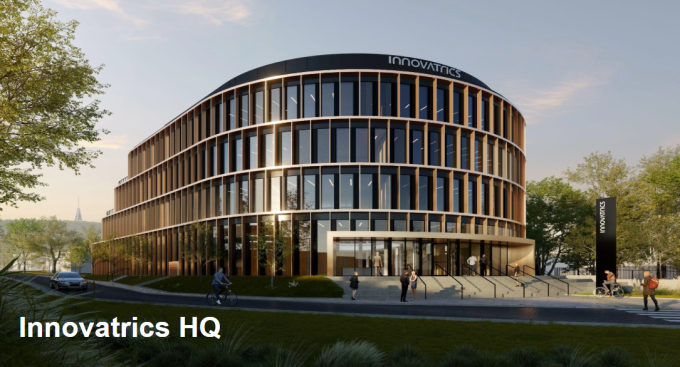
Biometrics House, Innovatrics’ new headquarters in Bratislava, is designed as a working model of identity-first building security, demonstrating how hands-free access and visitor management can scale without compromising privacy.
Innovatrics is now operating from a new global headquarters in Bratislava, Slovakia, and the building is not just where the company works. Known as Biometrics House and billed as the world’s most biometric building, it is designed to run on a simple principle: trust starts with identity. In practice, routine movement through the site can happen without badges, PINs, or a reception queue, while security teams keep clear oversight of who is where, and why.
For security professionals, the message is practical. Biometrics is no longer limited to controlled checkpoints at airports or high-security sites. When it is deployed with the right safeguards, it can become part of everyday building operations, from visitor management to access control and incident response.
Identity as the Access Layer, From Parking to the Elevator
Biometrics House has been built as a working example of how multimodal identification can replace traditional credentials across an office environment. Set next to Bratislava’s Vinohrady train station, about 15 minutes from the city center, Biometrics House is organized across four floors, with team zones, meeting rooms, and workshop areas designed to support both focused work and collaboration. Shared spaces such as the bistro, social-stair lobby, terraces, and Zen zones are designed to keep the day moving without requiring people to leave the building. From above, its footprint echoes a fingerprint, a deliberate reference to the company’s roots in fingerprint recognition.
The security concept is centered on recognition rather than possession. Employees and approved visitors can be identified via facial or palm recognition, reducing weak links associated with borrowed cards, shared codes, or forgotten credentials. In practice, this extends beyond the front door. Parking access can be handled the same way, and lifts can be tied to identity so that users are routed to permitted floors without extra taps or swipes.
Visitor handling is also built around traceability. Instead of issuing temporary badges and hoping they are returned, enrollment can occur before arrival or at a self-service kiosk. Once inside, pre-registered entry and a structured visitor journey help guests reach meeting rooms efficiently, while access permissions remain defined and traceable.
“We imagine a workplace where even your desk is dynamic, assigned not by habit but by what you’re working on that day. The building itself adapts to your projects, your team, and your agenda,”
Innovatrics Founder and CEO Jan Lunter.
Built for Security, Designed for Privacy
Any identity-first building stands or falls on trust, and Biometrics House puts data protection in the foreground. Innovatrics says the building goes beyond GDPR requirements through biometric data decoupling, minimal data storage, and secure on-device camera processing. Users are also given clear choices during registration. With consent, biometrics can be used for hands-free access across authorized zones. Without consent, data can be anonymized and limited to essential security checks to prevent personal identification.
From an operational perspective, the site is also a live environment for modern building security practices: real-time zone surveillance, intrusion detection, and automated alerts that can escalate events without stopping normal operations. For higher-risk scenarios, anti-spoofing and liveness controls help prevent attempts using photos, videos, or masks. A robotic “guard dog” provides a visible deterrent and can be used for patrol or guided-escort tasks.
A Living Lab for Integration, Not a Showroom
What makes Biometrics House notable is not the novelty of face recognition alone, but the way the building is used. The HQ functions as a permanent test site where identity, video, and access workflows can be evaluated under real office conditions, not just in a demo room. That matters for integrators and end users who need answers to practical questions: how onboarding is managed, how exceptions are handled, how audit trails are kept, and how systems behave during peak hours.
It is also a place to see how building automation and security can work together without turning the workplace into a checkpoint. Meeting spaces and shared facilities can be prepared based on verified presence, while environmental monitoring keeps comfort parameters such as air quality, humidity, and lighting under continuous control.
Design choices are tested the same way the technology is: in motion. Teams observe how layouts shape behavior, adjust based on what actually happens day to day, and treat the office as something that can learn. “We imagine a workplace where even your desk is dynamic, assigned not by habit but by what you’re working on that day. The building itself adapts to your projects, your team, and your agenda,” says Innovatrics Founder and CEO Jan Lunter. It is an approach that turns the HQ into a flexible, connected environment that evolves with the people inside it.
Sustainability as Resilience
Although the headline feature is biometric operation, the building’s energy approach supports day-to-day resilience. Biometrics House operates without a gas connection, uses geothermal energy and solar power, and captures rainwater for reuse. A recycled aluminium facade and other material choices underscore that a high-security building can also have a lower operational footprint.
As identity moves closer to the center of physical security, Biometrics House offers a practical reference point: a fully operational workplace where biometric access, privacy safeguards, and building management have been combined into one repeatable model.
About Innovatrics
Innovatrics is an independent EU-based provider of trusted identity and biometric solutions used by governments, businesses, and law enforcement agencies to keep people safe, onboard new customers, and build institutional trust. Since 2004, the company has delivered flexible biometric identification solutions that have benefited more than a billion people worldwide, with algorithms that consistently rank among the fastest and most accurate in fingerprint, face, and iris recognition.