Home Posts tagged Hikvision

Hikvision WonderHub Becomes the World’s First Large-Format Display to Achieve TCO Certified Generation 10

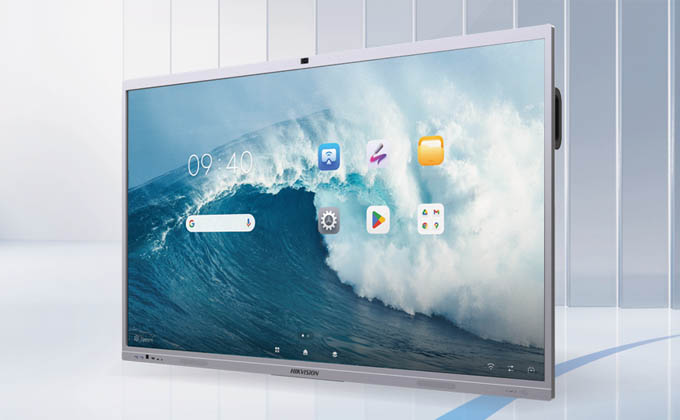
Hangzhou Hikvision Digital Technology Co., Ltd. announced that its WonderHub interactive display has achieved TCO Certified, generation 10. This makes WonderHub the first large-format product in the global display industry to receive this prestigious certification from TCO Development, the leading international sustainability certification organization.

Comprehensive Lifecycle Assessment

This achievement demonstrates that WonderHub meets world-class standards for quality, environmental protection, and user health. The TCO Certified certification represents one of the most rigorous sustainability assessments in the technology industry, requiring comprehensive evaluation of a product’s complete lifecycle environmental impact.

The certification process covers every stage from raw material sourcing and manufacturing to energy efficiency during operation and end-of-life recycling. Beyond environmental metrics, the assessment includes strict auditing of corporate social responsibility practices, ensuring companies demonstrate genuine commitment to sustainable business operations.

Hikvision’s WonderHub exceeds EU environmental standards throughout its development and production. The company has implemented stringent controls on hazardous substances including heavy metals, flame retardants, and plasticizers, ensuring the product meets the highest international safety and environmental requirements from materials sourcing through manufacturing processes.

Sustainable Innovation and Long-Term Commitment

Beyond environmental compliance, the Hikvision WonderHub integrates sustainable design principles through the company’s end-to-end R&D capabilities and hardware-software integration. The product features low blue light and flicker-free dimming technology, complemented by ergonomic design, to enhance user health and comfort. An intelligent power management system automatically optimizes energy consumption during operation, while the modular structure enables quick disassembly and recycling of key components, effectively extending product lifespan and supporting circular economy principles.

This newly achieved certification reflects Hikvision’s long-term dedication to sustainable development. Moving forward, the company will continue integrating sustainability principles across all business processes including R&D, manufacturing, and operations, advancing product performance in environmental friendliness, energy efficiency, user health, and social responsibility to contribute to building a greener global future.


Hikvision Enhances Video Search with AcuSeek AI on Hik-Connect 6 and HikCentral Professional

Hikvision has integrated its AcuSeek AI-powered video analytics into HikCentral Professional and Hik-Connect 6, transforming how organizations and individuals search and retrieve video footage. The new technology supports natural language queries, voice commands (available in Hik-Connect 6), image-based searches, and seamless integration across diverse security ecosystems.
Built on Hikvision’s Guanlan AI models, AcuSeek leverages machine learning trained on millions of real-world scenarios to deliver higher accuracy and fewer false results. With deployment across both platforms, intelligent search is now available for enterprises as well as individuals and small teams. HikCentral Professional targets medium to large deployments with broad device integration, while Hik-Connect 6 offers accessible functionality through both portal and mobile app interfaces.

Fred Wu, Product Director at Hikvision, commented: “AcuSeek represents the convergence of advanced AI with practical usability, enabling results in seconds, not hours.” The Hik-Connect 6 platform introduces the “Voice or Text, Seek Fast” feature, offering multi-modal search in more than 30 languages. Users can search by typing everyday language queries such as “red vehicles exiting East Gate in the last five days,” or by speaking commands directly. Image-based searches allow objects to be pinpointed with timeline precision, ranked by similarity, and enhanced with contextual details.

HikCentral Professional adds semantic search, feature-based description, and picture search, integrating person and vehicle data for unified global searches.

The platform also supports applications in access control, vehicle management, and incident workflows across complex deployments.Real-world use cases range from retail (lost item searches) to community security (threat detection), and from vehicle identification to construction safety monitoring. Together, Hik-Connect 6 and HikCentral Professional provide a versatile, AI-powered video search experience designed to improve efficiency across industries.

Hikvision Enhances Hikcentral Lite v1.1.1 with AI-Powered Acuseek Platform

Hikvision has announced the release of Hikcentral Lite (HCL) version 1.1.1, now enhanced with Acuseek, an AI-driven video search and management solution designed to streamline security operations across facilities of any size.

The updated platform combines real-time natural-language search, on-device artificial intelligence, and centralized control for multi-site environments, eliminating the need for metadata tagging, filters, or cloud-based delays. Alongside Acuseek, the release introduces PC NVR, a new storage feature that simplifies local recording and increases flexibility for system deployment.

Company officials describe the launch as a milestone in Hikvision’s evolution toward software-led, cyber-physical security solutions. The platform is positioned to help both integrators and end users build intelligent, scalable systems that reduce complexity while improving return on investment.

“Hikcentral Lite with Acuseek reflects our vision for the future of security technology—software-first, AI-powered, and scalable from small deployments to complex enterprise systems,” said John Xiao, Vice President of Marketing, Hikvision USA. “This is a new model for system design with no tagging, no filters, no cloud delays or fees. It’s simply smarter software delivering faster results.”

The solution offers a unified interface for video, access, and alert management, with the ability to automate credentialing and compliance workflows.

It also supports remote edge devices and multi-site networks, ensuring consistent performance across Hikvision’s Smart Pro, Acusense, and Colorvu product lines. With the optional PC NVR, customers gain additional storage options that integrate seamlessly with both Hikvision and third-party cameras.

By blending AI search capabilities with unified management tools, Hikvision aims to deliver software that adapts to real-world security needs and scales effectively across diverse environments.

Hikvision Introduces New AI-Powered Traffic Cameras and Servers

Hikvision has announced the launch of a new range of traffic cameras and servers powered by advanced large-scale Traffic AI models, designed to enhance traffic safety and reduce false alarms. The new lineup includes incident detection cameras such as the iDS-TCS802-HS, iDS-TCS907-HIR, iDS-TCS917-HI, and iDS-TCS900-HI, alongside servers like the iDS-TSS500-H/16 and iDS-TSS300-H/04.

Using Transformer-based AI architecture with a self-attention mechanism, these devices analyze entire traffic scenes to better understand context, significantly lowering false detections caused by background noise. For example, the seatbelt detection feature reduces false alarms by 75% by evaluating the driver’s posture and visible parts of the seatbelt, even in complex situations like when the belt blends with clothing or has an unusual shape.

Phone use detection is also improved, with the cameras analyzing hand position, driver’s line of sight, and the area near the ear to reduce false positives by 75%. The incident detection cameras achieve a 60% reduction in false alarms for events such as fallen objects, pedestrian detection, and stopped vehicles, while the servers allow users to upgrade existing cameras without the need to install new equipment.

Hollis Li, Intelligent Traffic Product Director at Hikvision, described the new products as “a big step forward in traffic management efficiency,” emphasizing their ability to handle real-world challenges and contribute to safer roads and more efficient traffic control.

Canada Orders Hikvision to Cease Operations, Citing National Security Concerns

“The Canadian government has determined that Hikvision Canada Inc’s continued operations pose a risk to Canada’s national security,” stated Industry Minister Mélanie Joly on Friday. This directive comes in response to growing concerns over the company’s alleged involvement in surveillance activities in China’s Xinjiang region targeting the local population and minority communities. Minister Joly’s statement followed a detailed review process conducted by Canada’s security and intelligence agencies. The decision effectively mandates that Hikvision cease its operations in Canada. While no specific threat to Canada’s national interests was disclosed, the government cited the broader implications of the company’s ties to surveillance activities in Xinjiang as a direct threat to Canada’s security interests.

A Growing Global Scrutiny of Hikvision

The action against Hikvision is part of an increasing international scrutiny of the company. It has already faced multiple sanctions in the United States over allegations related to its role in surveillance within China. The U.S. government, alongside human rights organizations, has raised concerns about the company’s involvement in aiding China’s extensive surveillance network, particularly in regions where human rights abuses have been documented.

In response to the Canadian government’s order, Hikvision Canada issued a statement strongly disagreeing with the decision.

Hikvision: Rejecting the Claims and Criticizing the Decision

“We believe this action lacks a factual basis, procedural fairness, and transparency,” the company said, claiming that the decision was driven not by concerns over the merits of their technology but by broader geopolitical tensions and bias against Chinese companies.

Hikvision further noted that throughout the review process, they had fully cooperated with Canadian authorities, providing detailed documentation and engaging proactively. However, the company expressed frustration that the government made its decision without addressing the evidence they had submitted. “We urge the Canadian government to base its actions on facts, not prejudice, and to ensure fairness for all businesses,” the statement concluded.

Hikvision introduces unique all-in-one video intercom access control terminal

Hikvision, the world’s leading supplier of innovative video surveillance products and solutions, has launched the DS-K1T501, a unique all-in-one video intercom terminal for access control. This provides a cost-effective solution packed into one small form.
The terminal brings together access control, video surveillance and video intercom systems functionality, offering fast and cost-effective integration and deployment. The solution was developed specifically to suit the needs of different security systems for banks and businesses with rented offices.
Video Surveillance – Unlike other access control terminals on the market, the terminal has a front-facing 1080p IP camera packed with features: 140º viewing angle, IR light supplement, mechanical IR cut filter for true day/night performance and an SD card slot for image capture. The stream can be monitored and recorded on NVR just like any Hikvision IP camera.
Access Control – Featuring an inbuilt Mifare reader and Hikvision’s fingerprint sensor, the device offers different ways to authenticate. Most importantly, since it has a built-in camera, it can be used for reading modern virtual credentials like QR codes. It can also go one stage further, completing a face detection verification in addition to the card and/or fingerprint options. This way, every time fingerprint is used, the device will require the visitor to show his or her face in front of the camera, capture a picture on the SD card and then grant access. The terminal has a maximum capacity of 3,000 fingerprints and 50,000 cards and, for ease of use, supports voice prompts
Access control security – Aside from the fingerprint reader and face detection verification, the device supports a connection to the DS-K2M060 secure door control unit via RS-485, which, when mounted inside the building, guarantees that the protected door cannot be opened by bypassing the device.
Video Intercom – If a visitor with no access steps in front of the door or an existing user forgets his or her credentials they can press the intercom button which will call the remote management center (iVMS-4200 or iVMS-5200E). The operator can answer the call with two-way audio and video communication and then decide or unlock the door for the visitor.
Connectivity – The device includes the most common communications technologies, like the classic serial RS-485 interface, 1GB Ethernet and Wi-Fi. This comes in handy for installers, as it gives various options for any communications setup. Even if the connection is unstable or lost, a buffer of 200,000 events will guarantee that valued information will be retained and transferred to the management software on re-connection.
Management – The device is a part of the Hikvision ecosystem, which means full integration with different type of security systems that the company offers. The terminal can be fully managed and monitored by iVMS-4200 or connected to the enterprise solution platform iVMS-5200E when more centralised and flexible operation is needed. Both platforms offer modern, easy to use graphical interfaces packed with advanced access control options and ‘time and attendance report’ calculations. As for those on the go, handy monitoring and management is available from the Hik-Connect app, which will send notifications whenever an alarm is triggered.
Suitable for outdoor usage, the terminal is IP 65 rated and can withstand a wide temperature range of -40°C to 60°C.
“When you look at this device and the advanced technologies it packs inside, you can get an idea of Hikvision’s true commitment to revolutionise and bring innovation to the relatively conservative market of access control”, says Cenek Maly – Channel sales product manager for access control and video intercom systems at Hikvision Europe.

Hikvision: Reducing false alarms with Deep Learning

The Deep Learning phenomenon continues to excite the IT world, with computing power now at the level where it can be properly used in practical applications. Hikvision has been at the forefront of applying the technology in the surveillance industry and beyond, and has already released its first set of products that harness the power of Artificial Intelligence (AI).

The concept of Deep Learning takes inspiration from the way the human brain works. Our brains can be seen as a very complex deep learning model. Brain neural networks are comprised of billions of interconnected neurons; deep learning simulates this structure. These multi-layer networks can collect information and perform corresponding actions according to analysis of that information.

In the past two years, the technology has excelled in speech recognition, computer vision, voice translation, and much more. It has even surpassed human capabilities in the areas of facial verification and image classification; hence, it has been highly regarded in the field of video surveillance for the security industry.

Its ability to enhance the recognition of human beings – distinguishing them from animals, for example – makes the technology a great addition to the security arsenal. This is especially relevant in a world where false alarms account for 94%-99% of all alarms, according to police and fire service statistics!

How deep learning works

Deep learning is intrinsically different from other algorithms. The way it solves the insufficiencies of traditional algorithms is encompassed in the following aspects.

The algorithmic model for deep learning has a much deeper structure than the traditional algorithms. Sometimes, the number of layers can reach over a hundred, enabling it to process large amounts of data in complex classifications. Deep learning is very similar to the human learning process, and has a layer-by-layer feature-abstraction process. Each layer will have different “weighting,” and this weighting reflects on what was learnt about the images’ “components.” The higher the layer level, the more specific the components. Just like the human brain, an original signal in deep learning passes through layers of processing; next, it takes a partial understanding (shallow) to an overall abstraction (deep) where it can perceive the object.

Deep learning does not require manual intervention but relies on a computer to extract features by itself. This way, it is able to extract as many features from the target as possible, including abstract features that are difficult or impossible to describe. The more features there are, the more accurate the recognition and classification will be. Some of the most direct benefits that deep learning algorithms can bring include achieving comparable or even better-than-human pattern recognition accuracy, strong anti-interference capabilities, and the ability to classify and recognise thousands of features.

Challenges of existing systems

Conventional surveillance systems mostly detect moving targets, without further analysis. Even smart IP cameras can only map individual points on a shape one by one, making it difficult to calibrate some features (eg forehead or cheek), thus decreasing accuracy.

For perimeter security, for example, other technologies can be (and are) used to provide more comprehensive security. But they all have their downsides. Infrared emission detectors can be ‘jumped over’ but are also prone to false alarms caused by animals. Electronic fences can be a safety hazard, and are limited in certain areas. Some of these solutions can also be expensive and complicated to install.

Object such as animals, leaves, or even light can cause false alarms, so being able to identify the presence of a human shape really improves the accuracy of perimeter VCA functions. Frequent false alarms are always an issue for end-users, who need to spend time to investigate each one, potentially delaying any necessary response and generally affecting efficiency.

Imagine, for example, a scenario where it’s relatively quiet – a location at night where there are few cars and people around. Even here, there could be 50 false alarms in a night. Assuming it takes 2-3 minutes to check out a false alarm, and that just 3 out of the 50 warrant more attention – say 15 minutes each. A guard either needs to check the system and look back at the alert, or someone needs to be dispatched to the location and look around, checking if anyone has indeed ‘entered without permission’. In most organisations, these would need to be reported/recorded too, adding to the overall time spent on this ‘false alarm’. So, those 50 false alarms could cost more than two hours each night of wasted time in that scenario.

Deep Learning, however, makes a big difference. With a large amount of good quality data from the cameras and other sources, like the Hikvision Research Institute, and over a hundred data cleaning team members to label the video images, sample data with millions of categories within the industry have been accumulated. With this large amount of quality training data, human, vehicle, and object pattern recognition models become more and more accurate for video surveillance use.

Based on a series of experiments, the recognition accuracy of solutions using the Deep Learning algorithm increased accuracy by 38% – applying this to the previous example, that’s a saving of nearly one hour each night. This makes Deep Learning technology a great advantage in a perimeter security solution, with much more accurate line crossing, intrusion, entrance and exit detection.

Other uses

The value of Deep Learning technology stretches further than traditional security. For example, tracking movement patterns of individuals can see if they are ‘loitering’ and a potential threat in the future. A threshold could be set to five metres radius of movement, or ten seconds of staying in the same place. If the person passes either threshold, an alarm could be triggered. The solution tracks the individual and compares this behaviour to a database to see if it recognises a pattern.

Another application would be in a scenario where ‘falling down’ could be a threat, like an elderly care home. If a height threshold was set at 0.5m and duration time 10 seconds, for example, the solution would be able to see a person falling down (as they go below 0.5m) and might be in trouble (if they ‘stay down’ for longer than 10 seconds). The solution uses the parameters set to compare with its database and raise an alarm.

With features and benefits like these, it’s easy to see how many smart applications could be catered for by Deep Learning technology.

To sum up 10,000-strong R&D Centre is pushing the boundaries of surveillance solutions and bringing even more benefits to them. Artificial Intelligence has massive potential, and Hikvision is always exploring new ways to apply this exciting technology throughout the security industry and beyond.

Product Innovation and Quality Control Create Hikvision Accomplishment

Based on the latest 2013 survey on worldwide major professional security buyers by a&s, Chinese products are ready to prove their worth with improved quality and service. Hikvision, a total solutions provider in video surveillance, headquartered in China, is starting to gain global recognition amongst worldwide buyers to shape the new image of Chinese manufacturing.

Product Innovation and quality control has laid the foundation for Hikvision’s accomplishment. In the recent world market report for CCTV and video surveillance equipment from IMS research (an IHS company), Hikvision was ranked as the number one supplier under the category of “CCTV and Video Surveillance Equipment”, with 8-percent market share in 2012. In the category of “Security Cameras”, Hikvision was also ranked third with a 9.7-percent world market share, while maintaining first place in “DVR suppliers” for four consecutive years in 2012.

Hikvision’s first auto-focus camera module was launched in early 2000 and marked a major milestone for the company. Thereafter, Hikvision has gradually transformed into a total solutions provider in video surveillance, said Yangzhong Hu, President of Hikvision Digital Technology. “Hikvision’s sales revenue in surveillance cameras has also started to double and even triple since then.”

Positioning itself in the middle- to high-end market sectors, Keen Yao, International Marketing Director said “As a worldwide provider of video surveillance products and solutions, Hikvision’s main competitiveness are product innovation and quality control, which support Hikvision in providing quality products plus reasonable prices. Both factors also allow the company to achieve good gross margin continuously since its establishment.”

@3: Product Innovation

To optimize new product development, as well as maintain product innovation and technological leadership, Hikvision employs a matrix management structure for its R&D department, which allows it to succeed in cross-department project cooperation between its resource teams and product teams. Hikvision resource team is divided by several key technologies – hardware, image processing, video/audio codec, compression, networking, streaming media, FPGA applications, video data storage, embedded applications, software structure, and others. At Hikvision, a specialized project team, composed from groups of resource teams for technical input and the corresponding product teams, is usually formed to develop a new product.

Hikvision process control has also achieved international standards. Since 2009, the company has introduced Capability Maturity Model Integration (CMMI), a process improvement training and certification program and service administered and marketed by the Software Engineering Institute (SEI) at Carnegie Mellon University, to greatly improve its process management of product research and development.

Besides, Hikvision also follows the innovated “integrated supply chain” concept for market-oriented product development. Hikvision invites suppliers (manufacturing partners) and clients for joint product evaluation and collaboration, and asks their suggestions on how to make the products meet international standards and how to optimize the structure/system, ensuring Hikvision’s products meet the real market demand.

@3: Quality Control

At Hikvision, the quality control is a complete system from R&D design, manufacturing to service, to provide further assurance for customers — Design Quality Assurance (DQA) and Manufacturing Quality Assurance (MQA). DQA is under the R&D product testing department mainly for product reliability verification. Hikvision has around 350 engineers on the R&D team, which accounts for over 15 percent of the team, who are responsible for product testing. The product testing group is in charge of software tests, hardware tests, and reliability tests, which all play an important role in product development and guaranteeing product quality.

MQA is divided into four categories: raw materials quality control, productive process, tests, and outgoing quality control. It is achieved by Hikvision’s state-of-the-art production facilities, manufacturing equipment, and resources. As an example of this point, Hikvision introduced Siemens’ fully-automatic SMT equipment for production lines, ensuring world-class technical capability and purchased a SAP system from Germany to avoid any problems in materials preparation cycles which may lead to downtime of the production line.

Apart from delivering products with the highest reliability through various tests, Hikvision also has strict compliance to international safety and emission standards. All Hikvision products are certified by UL/CUL, CE, FCC, Australian C-tick, RoHS, WEEE, etc.

@3: Shaping the Future

Hikvision has successfully transformed to become a trustworthy and quality-guaranteed solutions provider. With 12 regional branch offices in other parts of the world to offer customers in-depth local services, Hikvision has shaped the new image of Chinese manufacturers and the company’s future development in the global market can be highly anticipated.

Hikvision Joins FIRST

Hikvision, the world’s leading security equipment manufacturer, announced that its Hikvision Security Response Center (HSRC) is now a member of the Forum of Incident Response and Security Teams (FIRST), a recognized global leader in incident response.
FIRST is an international confederation of trusted computer incident response teams who cooperatively handle computer security incidents and promote incident prevention programs. Full membership in FIRST will augment Hikvision’s ongoing efforts to enhance its incident response and communicate best practice, and enable HSRC to collaborate with more than 400 FIRST member teams from 90 countries. FIRST members include companies such as CISCO, Intel, IBM and Microsoft.

“Hikvision is proud to join the concerted cybersecurity global effort and contribute our knowledge, skills and experience to promote a safer and more secure electronic environment worldwide,” said Dr. Wang Bin, Chief Officer of Hikvision’s Network Information Security Laboratory and Network Security Department. “Hikvision is committed to constantly improving its efficiency and performance in incident response, and to providing global customers with the safest products and services.”

Hikvision takes cybersecurity seriously and abides by all applicable laws and regulations in the countries in which it operates. With a record of strict regulatory compliance, Hikvision products meet industry leading standards for safety and security that include ISO 270001, ISO 9001:2008, CMMI Level 5, and AICPA SOC. Additionally, Hikvision encryption module of IPCs and NVRs has been granted certification for Federal Information Processing Standard (FIPS) 140-2, a U.S. government standard established by the National Institute of Standards and Technology (NIST).

Hikvision upgrades video surveillance at London’s Kew Gardens

When the iconic and hugely popular Royal Botanic Gardens at Kew in London needed to expand and upgrade their outdated analogue CCTV surveillance system, they turned to security experts The ITS Group, who provided a powerful HD video system from industry leader Hikvision.
Nestled on the banks of the river Thames, Kew Gardens in southwest London is home to the most diverse collection of living plants anywhere in the world. At 330 acres in size, it’s London’s largest UNESCO world heritage site, and has a history stretching back more than 250 years.

The Royal Botanical Gardens, Kew, attracts more than 1.6 million visitors every year, coming to see the 30,000 different kinds of plants, and to visit the Herbarium, which has over seven million preserved plant specimens. Because of the sheer volume of visitors and the multitude of public and trade entrances to Kew Gardens, the site requires around the clock video surveillance coverage, seven days a week. Kew’s CCTV control room operations team works to monitor the safety and security of the park, but a need was identified to upgrade the existing legacy analogue CCTV system to one capable of transmitting and recording in true High Definition. Security specialist firm The ITS Group was called in to help.

ITS Group Director Tim Dyer said the Kew project required upgrading equipment in the Gardens’ security control room, and providing site-wide cameras which view all entrances for both public and trade, as well as various strategic locations throughout the Gardens. “Because the control room needed to be in operation 24/7, close co-ordination was required between ITS and the security team on-site,” he says. “We needed to maintain the CCTV in line with the changing site requirements on a daily basis. This, coupled with access issues and working in a public environment, was very challenging, and the fact that we were able to achieve such good results is testament to the close co-ordination between the site team and Kew security.”

Those results were achieved in the process of implementing a Hikvision IP High Definition video surveillance system, which included new 43-inch and 22-inch HD monitors for the control room, along with new touchscreen network keyboards and joysticks.

Control room operators monitor images from a number of different Hikvision cameras. These include an initial 48 DarkfighterX network speed domes, which provide colour HD images in light levels as low as 0.001 Lux. And when it gets darker still, they provide black and white images in light levels down to 0.0001 Lux. When there’s no light at all, the Darkfighter cameras switch to IR mode and record black and white images at 0 Lux. In addition, they offer 25x zoom capabilities and deep learning-powered target classification for automatic tracking and perimeter protection. They’re complemented by 29 Darkfighter 2 megapixel motorised varifocal lens cameras, 21 ultra-low light smart bullet cameras, and six low light smart cameras.

Images are recorded to Hikvision 16-channel Turbo HD digital video recorders which support analogue, HD-TVI, and IP cameras, H.264, H.264+ and dual-stream compression, and can output at up to 4K resolution.

The resulting system is not only powerful and effective in the short-term, it’s purposefully planned to incorporate forthcoming changes. “The Gardens now have a full HD system which can be expanded with additional cameras in the future,” Tim Dyer says. “It allows them to take advantage of technology advances and newly developed functionality on any cameras or devices they add to the system in future.”

The HD surveillance system has been received exceptionally well by those whose opinion matters most: the security team at Kew Gardens. John Deer, Head of Security, said: “I am delighted with the installation of Hikvision cameras at the Royal Botanic Gardens, Kew. They are of the highest quality, which has enhanced the overall security across the 330 acre site.”