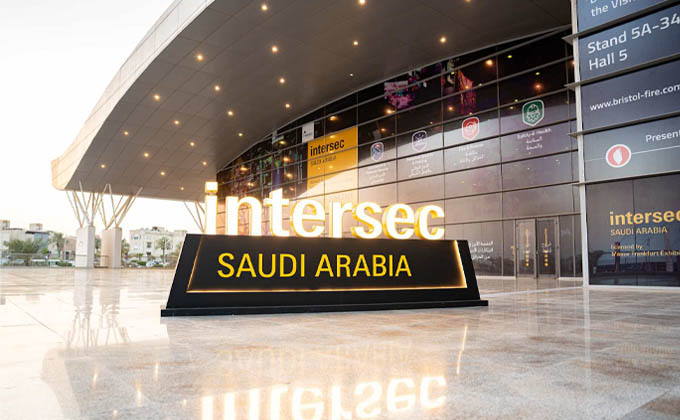
Messe Frankfurt Saudi Arabia, organizer of Intersec Saudi Arabia, the Kingdom’s leading event dedicated to security, safety, and fire protection, has announced that this year’s edition has been postponed until October 2027. The decision follows careful monitoring of recent developments in the country and was made in coordination with the venue, local authorities, and the event’s domestic and international partners. Organizers emphasized that the safety of exhibitors, visitors, partners, suppliers, and staff remains the top priority, alongside preserving the exhibition’s international significance, high-quality participation, and business value.
“This decision is the result of a careful assessment of the current situation, with the safety and wellbeing of our customers, partners, attendees, and teams coming first,” said Riham Sedik, Show Director of Intersec Saudi Arabia at Messe Frankfurt Middle East. She added that since 2019, the event has grown into an important platform connecting the global security, safety, and fire protection industry with the Saudi market, and that the postponement will allow organizers to deliver an even stronger event next year. Intersec Saudi Arabia plays a significant role in bringing together the public and private sectors, service providers, and buyers from some of the world’s fastest-growing markets.
Nathan Waugh, Portfolio Director for Security, Technology, and Production at Messe Frankfurt Middle East, emphasized that the company remains committed to its partners in Saudi Arabia and the international community, with the goal of delivering a strong and impactful event in 2027. Messe Frankfurt Saudi Arabia will continue investing in the exhibition’s long-term development and supporting the growth of the Kingdom’s security industry in line with Saudi Arabia’s Vision 2030, while preparations are already focused on the event’s return to Riyadh next October.
As security and automation systems become increasingly complex, organizations need more than standalone technologies. They need integrated solutions that bring different systems together, improve operational efficiency and support better decision-making. UltraVision Consult (UVC) has built its regional presence around this approach, delivering expertise in security, safety, building and industrial automation across Central and South-Eastern Europe.
Consistent Growth, Stronger Partnerships
In 2025, UVC recorded a turnover of EUR 1.87 million, compared to EUR 1.67 million in 2024, representing approximately 14% growth. Net profit represented approximately 11% of turnover and has shown a slight and steady growth over recent years. Behind these results is a stable, experienced team of nine professionals, including specialists dedicated to implementation, technical support, software development and product management. Over recent years, UVC has expanded its network through projects in Romania, Bulgaria, Serbia and Georgia, as well as the UAE, Brazil and Colombia.
Its growth strategy is built on consistency, technical expertise and long-term partnerships, supported by partner certification, training, pre- and post-sales assistance and continuous engagement through industry events and workshops.
AppVision: One Platform, Multiple Technologies
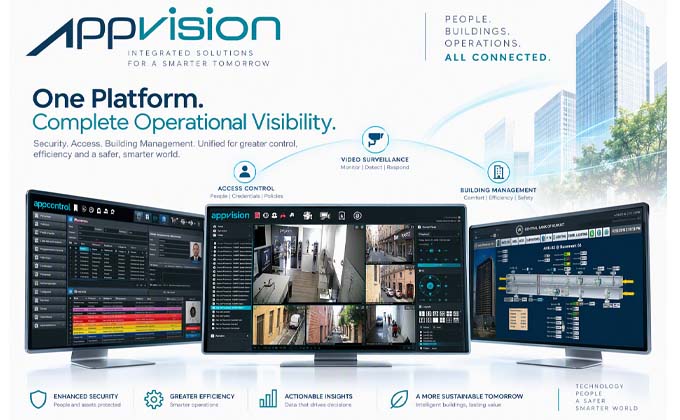
UVC offers AppVision, a Physical Security Information Management (PSIM) platform designed to bring security, safety, IoT and building systems into one integrated environment. From video surveillance and access control to automation and operational management,
AppVision enables organizations to connect technologies from different manufacturers through a unified platform. Its flexibility makes it relevant across multiple industries, including logistics, government, entertainment, manufacturing and utilities.
As a Value-Added Distributor for AppVision in Central and South-Eastern Europe, UVC supports partners with technical expertise, training and implementation assistance. To date, UVC has delivered and implemented more than 50 AppVision projects/server deployments together with its integrator partners. Of these, 95% remain under maintenance and support, with ongoing scaling and upgrades.
Bulgaria: A Market with Proven Potential
Bulgaria has been part of UVC’s regional journey since 2014, when one of its first local PSIM projects was implemented at Sofia Tech Park.
The project demonstrated the UVC team’s ability to integrate multiple technologies and brands within a complex campus environment.
Since then, UVC’s presence in Bulgaria has developed further, including a large-scale deployment supporting operations for over 2,500 employees, integrating access control, video surveillance, time and attendance, smart lockers, mustering, mobile ID verification
and parking management. These implementations highlight both the platform’s versatility and the importance of local technical expertise in building customer confidence.
Looking Ahead
For UltraVision Consult, Bulgaria remains an important market with significant potential for further development. At the Bulgarian Security Summit, the UVC team looks forward to presenting AppVision, exchanging ideas with industry professionals and connecting with companies interested in developing new projects and long-term partnerships.
Let’s connect and explore what’s possible when technologies work together.
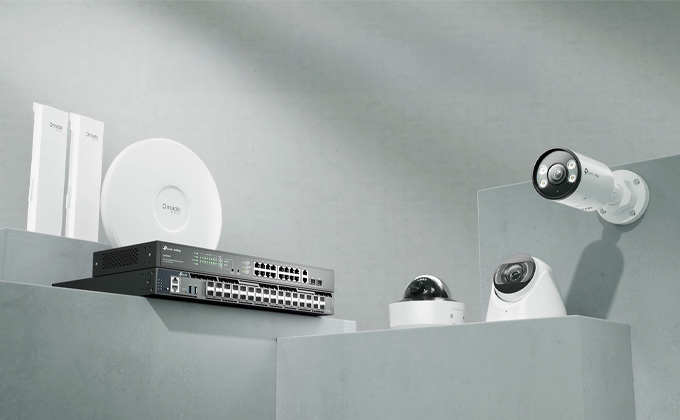
Businesses can’t afford networks and security systems that live in separate worlds. At this year’s Bulgarian Security Summit, TP-Link brings Omada and VIGI together on one stand to show a truly unified infrastructure: enterprise-grade networking and intelligent video surveillance, deployed, monitored and managed from a single cloud platform. Our focus is on the places where connectivity and security matter most: hotels, retail chains, warehouses, logistics hubs, campuses and multi-site offices.
Built on 30 years of networking expertise. A camera is only as reliable as the connection behind it, and that is where TP-Link’s experience makes the difference. Since 1996, TP-Link has grown into one of the world’s leading networking brands, and Omada brings that know-how to business networks. Its software-defined platform centralises gateways, switches, access points and VIGI cameras in a single dashboard. Zero-touch provisioning and multi-site management are built in, and licence-free management options keep running costs predictable. The result is an infrastructure that scales from one shop to many locations without changing systems. For integrators, that means faster deployment and a single trusted vendor. For business owners, it means one app to check every site, every device and every alert.
Surveillance that understands what it sees. The VIGI Insight series uses AI-powered detection to tell people and vehicles apart from shadows, rain or swaying trees. Security teams spend less time on false alarms and more time on real events. Visitors can see how the Insight LPR345ZI recognises licence plates to help manage vehicle access at entrances and car parks. The Insight PTZ5425 follows activity across wide areas. Hotels, logistics centres and parking operators face both of these scenarios every day.
Coverage beyond the cable. Perimeters, parking lots, construction sites and remote warehouses rarely have convenient cabling. Our outdoor wireless bridges link distant cameras back to the main network without digging trenches. Cellular routers such as the ER701-5G-Outdoor connect sites that have no fixed line at all. This is a practical way to extend security to places where it was previously too costly or complicated.
Faster deployment, fewer site visits. The new Fusion G+ combines gateway and controller in a single device. Installers can adopt all Omada devices on site at once from the Omada app. Once the system is running, networks and cameras can be monitored and troubleshot remotely. Integrators save time, and their clients have less downtime.
Come and see it working. Our team will be at the booth to walk you through real-world scenarios. Bring your project challenges, whether it’s a single shop or a multi-site network, and we’ll show you how Omada and VIGI can connect and protect it.
About us
Omada is a global business solutions brand, providing integrated networking and surveillance solutions built for simplicity, scalability, and centralized management. Backed by more than 30 years of networking expertise, Omada delivers unified infrastructure solutions powered by advanced networking and security technologies.
VIGI is TP-Link’s NDAA-compliant business-grade video surveillance brand, delivering professional, reliable, and intelligent solutions to SMBs worldwide. Backed by nearly 30 years of TP-Link’s R&D and supply chain excellence, VIGI serves customers in over 170 countries with a complete portfolio of cameras, NVRs, solar systems, Cloud VMS, and mobile apps. VIGI helps retailers, schools, hotels, restaurants, and offices safeguard their businesses while enabling sustainable growth.
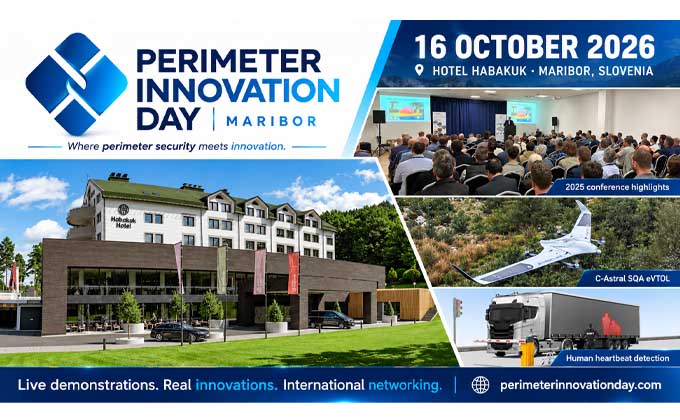
Zmax and Techno Security invite security professionals from across the region to Perimeter Innovation Day 2026 for a day of presentations, live demonstrations and professional networking. Discover technologies addressing practical challenges in perimeter protection and site security: detecting people concealed inside cargo vehicles, deploying autonomous drone patrols, transmitting high-quality video over long distances and protecting connected security systems against AI-assisted attacks.
The programme includes a live demonstration of Mira Technologies’ compact heartbeat detection system, drone technology from Drone Security and C-Astral, and the launch of a new passive acoustic sensor network designed to detect drone perimeter crossings.
Explore electric fencing from Nemtek Europe, Ajax wireless perimeter protection presented by Alarm Automatika, intelligent imaging from Hanwha Vision Europe and innovations from Hikvision. ASSA ABLOY and Miotis will address physical security and integrated access solutions, while Siwena, Lobeco and 2fifty5, BConsulting, and Safe Home Europe will present approaches to security integration, rapid deployment and automation.
A guest from Ukraine will also share first-hand experience of protecting critical infrastructure in the shadow of war. Meet the companies behind the solutions, discuss their applications and connect with industry colleagues during coffee breaks, a buffet lunch and networking in the exhibition area.
Join us in Maribor on 16 October, Hotel Habakuk, Slovenia
Google’s latest Gemini model introduces advanced capabilities for handling complex, long-running tasks, with a particular focus on software development and cybersecurity. Gemini 4 Argon will initially be available to selected cyber defense experts through the Fairwind Program, before access is gradually expanded to developers, enterprises, and other users. The model can autonomously identify, validate, and patch critical software vulnerabilities, while Wiz is already using it as part of its Scan for Good initiative, where, according to Google, Argon discovered a critical vulnerability in healthcare software used by hospitals worldwide.
Argon has also been designed for demanding tasks in software engineering, finance, and legal workflows, and Google says thousands of its employees are already using the model internally. A team of AI agents powered by Argon analyzed telemetry data from Google’s data centers and identified optimizations that freed up more than 300 TiB of memory after deployment. To support more complex and longer-running tasks, the model’s maximum output has been increased from 64,000 to one million tokens, while Argon achieved a score of 77.9 percent on the DeepSWE v1.1 benchmark.
Introductory pricing will be $2 per million input tokens and $10 per million output tokens, with cached input tokens priced 95 percent lower. Before making the model more widely available, Google plans to further strengthen safeguards against misuse, prompt injection attacks, and other security risks, after which Argon is expected to gradually become available to paid API users, enterprises, and Google AI Ultra subscribers.
Only seven days remain until Adria Security Summit 2026, which will bring together leading companies, experts, and security industry professionals at the Zagreb Fair on October 7–8. Visitors can look forward to two days of new technologies and solutions, expert conference sessions, business meetings, and networking with representatives of regional and international markets.
The Summit will cover key segments of the industry, from video surveillance, access control, and intrusion detection to fire protection, PAVA systems, software, and smart city solutions. Zagreb will once again become a regional hub for the security industry and a meeting point for companies, partners, and professionals shaping its future development.
Chubbsafes, part of Gunnebo Safe Storage, has launched a new technical discussion guide examining when certified storage should be reviewed based on the value of jewellery and precious metals. Developed for jewellery retailers, manufacturers, bullion dealers and security professionals, When Asset Values Rise, Should Storage Be Reviewed? explores the relationship between certified storage, declared asset values and physical security. It considers the technical factors influencing safe storage, from recognised testing standards and installation through to operational procedures and insurer expectations.
The publication highlights how businesses routinely review financial performance, insurance and operational risk while physical storage can remain unchanged for many years. As inventory values increase, reviewing whether certified protection continues to align with the value of the assets being stored forms an essential part of wider security planning.
Says Mark Brookes, Global Product & Standards Director at Gunnebo Safe Storage: “Certified storage is specified against a defined level of risk and asset value. When businesses expand, inventory profiles change or insurance requirements are updated, reviewing the original specification helps ensure the level of protection remains appropriate for the assets being secured. Independent certification provides an objective benchmark for these discussions. It allows business owners, insurers and security professionals to assess physical protection against recognised performance standards, giving everyone a common point of reference when reviewing storage arrangements.”
The guide examines how independently certified storage supports the protection of jewellery, precious metals and other high value assets. It explains the role of EN 1143-1 certification, the introduction of T2 testing against latest power tools and the importance of matching certified protection to declared asset values.
It explores the wider factors influencing physical security, including installation, access control, inventory management, alarm integration and operational procedures. Together, these elements determine how certified storage performs within the day-to-day operation of a jewellery business.
Mark concludes: “The discussion guide has been developed to support informed conversations between business owners, insurers, security consultants and physical security specialists responsible for protecting high value assets. By bringing together recognised standards and current industry considerations, it provides a technical reference for reviewing certified storage as part of ongoing business risk management.”
When Asset Values Rise, Should Storage Be Reviewed? is available to download from Gunnebo Safe Storage.
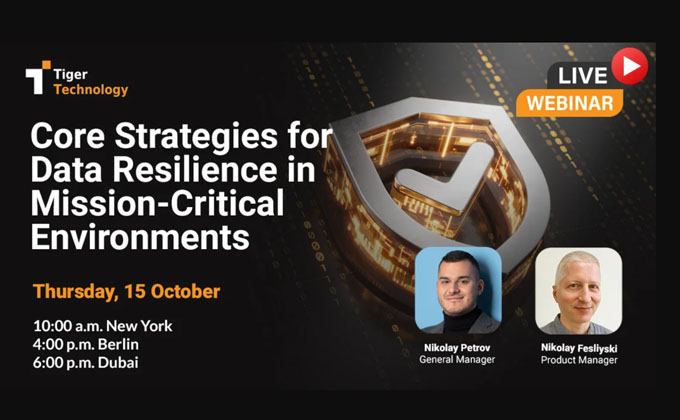
Tiger Technology will host a free webinar titled “Core Strategies for Data Resilience in Mission-Critical Environments” on October 15, focusing on data protection and business continuity in environments where even a few hours of downtime or data loss can pose serious business and regulatory risks. The 30-minute webinar will begin at 4:00 p.m. Berlin time (CEST), 10:00 a.m. in New York, and 6:00 p.m. in Dubai, allowing interested participants from different regions to join the event live. Nikolay Petrov, General Manager, and Nikolay Fesliyski, Product Manager at Tiger Technology, will guide participants through the key topics and practical examples.
Participants will learn how to move from scheduled backups to continuous data protection and how to align hybrid cloud architecture with the actual level of risk their organization faces. Particular attention will be given to mechanisms that can accelerate recovery following an incident and reduce the impact of downtime in mission-critical IT environments. The webinar will conclude with a live demonstration of continuous file-based data replication and recovery following a ransomware attack and hardware failure.
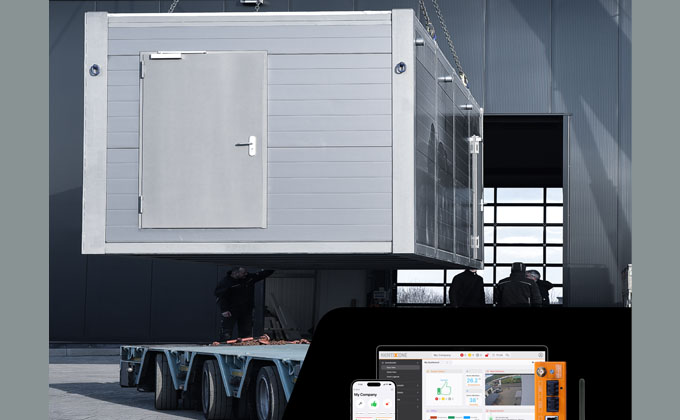
Prior1, a leading provider of modular IT infrastructure solutions, develops container data centers to meet the highest security and energy efficiency standards. Their containers require optimum protection against both physical threats and environmental risks. To provide this, Prior1 sought a security solution for their new “IT Container FIX” products which offers seamless monitoring and is flexible, scalable, and meets the requirements of EN 50600 certification.
By choosing KentixONE as their central platform, Prior1 identified the comprehensive security solution they need. KentixONE enables the central control and monitoring of all security-relevant devices and sensors in real time. Its central dashboard provides data center managers with an overview and full control of every vital parameter. They can also stay in control while on the move via the KentixONE app, a powerful mobile control center.
“By integrating Kentix’s security solutions, we created a state-of-the-art container data center that not only meets the highest security standards but also offers the necessary flexibility for dynamic IT operations,” says Oliver Fronk, Team Coordinator at Prior 1. “This partnership has shown us how innovative technologies and modular systems can optimally support the requirements of digital transformation.”
Powerful access oversight and monitoring
The KentixONE solution protects Prior1 customers against a vast scope of physical and environmental threats. Its seamless networking and intuitive, unified platform enable continuous monitoring and rapid response to incidents – critical to maintaining data integrity and security.
With SmartAccess functionality, Kentix IP wall readers ensure strict access control with two-factor authentication. Every access event is logged; unauthorized attempts immediately trigger an alarm. All data is stored in KentixONE and can be retrieved at any time. In addition, all accesses may be tagged with a short video sequence. Access control and sensor technology combines to create alarm zones which protect against unauthorized intrusion. These zones may be armed and disarmed both manually via access control and automatically.
Smart video surveillance integrated within KentixONE detects security-relevant events in real time. Recordings can be called up and live images support the assessment of the situation in any emergency.
Powerful integrated SmartMonitoring is enabled via Kentix multisensors which continuously track environmental factors like temperature, humidity, and air quality. An integrated 4-factor early fire detection system detects anomalies which may indicate critical conditions at an early stage. This enables timely action to prevent damage. All external units such as air conditioning and UPS systems are seamlessly integrated and continuously communicate their operating status.
Kentix SmartPDUs also monitor current and energy parameters, as well as ambient conditions within the server racks. The integrated residual current measurement (RCM) ensures electrical safety and fire protection, and detects creeping device failures. Anomalies are transmitted to KentixONE in real time so prompt action may be taken. KentixONE provides efficiency indicators such as PUE (Power Usage Effectiveness) and generates an energy report at the end of the month.
With the help of KentixONE, then, Prior1 is able to offer customers future-proof infrastructure that combines the highest security and monitoring standards alongside management flexibility and seamless scalability. It is a game-changer for the holistic management of any data center.
To learn more about implementing innovative physical security for your data center, visit: kentix.com
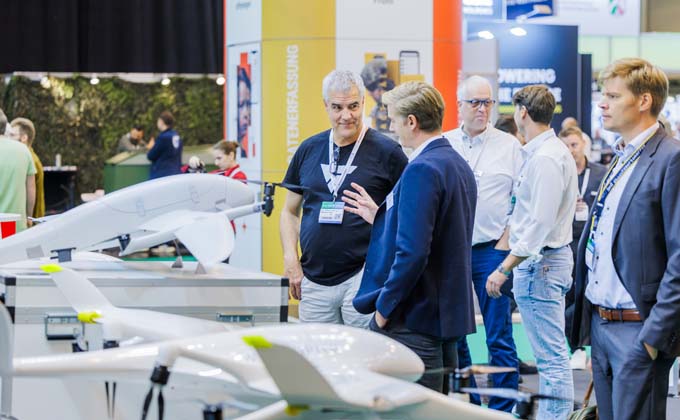
Four days, around 900 exhibitors from 49 countries and 30,000 trade visitors: the very first EURO DEFENCE EXPO (EUDEX) and Security Essen, held at Messe Essen, have ended with excellent results. Trade visitors from 96 countries attended both events to find out about new technologies and solutions for defence and civil security. Exhibitors and visitors alike were highly satisfied with the combination of the new trade fair for the defence industry and the established security trade fair.
“With this dual trade fair event ‘made in Germany’, we have broken new ground in linking civil-military cooperation. This unique platform offered participants visibility and new opportunities,” said Oliver P. Kuhrt, CEO of Messe Essen. He particularly highlighted the calibre of the trade visitors: 83 per cent of EUDEX trade visitors are decision-makers in purchasing and procurement, whilst the figure for Security Essen is 76 per cent.
Drones, AI and connectivity were the defining topics at both trade fairs
Key topics at both events were AI, the interconnection of systems, robotics and unmanned aerial systems. The overlap in content was particularly evident when it came to drones: at EUDEX, remote-controlled systems for reconnaissance, resupply and other military applications were on display. One exhibitor unveiled its new long-range reconnaissance drone for the first time, with a flight time of up to eight hours.
At Security Essen, companies showcased solutions for surveillance, inspection and the protection of critical infrastructure, as well as for the detection and defence against unauthorised aerial vehicles. One in four trade visitors at Security Essen was particularly interested in the drone sector, whilst at EUDEX, unmanned systems and robotics were the most important topic for 40 per cent of trade visitors.
EUDEX celebrated a successful launch
EUDEX kicked off for the first time with 365 exhibitors from 28 countries. Trade visitors came primarily from industry and the armed forces, but also from government bodies, research, politics and diplomacy. They made the most of the new trade fair format to engage in direct dialogue.
The products and services on offer ranged from unmanned systems and robots, AI and software, through to personal protective equipment, transport containers, mobile protective infrastructure, supply and packaging solutions, right up to command and communication technologies, reconnaissance and surveillance solutions, as well as vehicles and heavy equipment. EUDEX specifically sought to forge links between the defence industry and companies from other industrial sectors.
Dr Jens Bodo Koch, CEO of Heckler & Koch GmbH: “In our view, the inaugural EUDEX was a success. It is good and right that Messe Essen here in Germany took the lead early on in establishing a defence trade fair alongside its Security Essen event. We encountered an international trade audience here and held numerous discussions with end-users, suppliers and decision-makers. Even in its very first edition, EUDEX has thus demonstrated that it can be an interesting platform for professional exchange within the security and defence industry. We were also particularly pleased with the very positive response to our products and solutions.”
Stefan Houben, Key Account Manager for Defence and Public Affairs at SCANIA: “EUDEX provided us with an effective platform to present our transport and mobility solutions for the defence sector to a high-calibre specialist audience. We found the exchange with representatives from industry and politics, as well as with military users from both Germany and abroad, particularly valuable. We held many high-quality discussions and arranged specific meetings to further develop business opportunities. We are very satisfied with the footfall and response at our stand. The organisation and compact structure of the trade fair also contributed to our positive overall assessment of the event.”
Another increase in visitor numbers at Security Essen
With a rise in visitor numbers of around ten per cent, Security Essen once again underlined its strong position as the leading international trade fair for the civilian security industry. 522 exhibitors from 41 countries presented the full range of modern security technology to trade visitors – from access control, fire and burglary protection, through video and perimeter security, to risk management, services and civil protection.
The exhibitors’ innovations included, for example, AI agents for control centres, solutions for new programming interfaces in hazard management systems and the centralised management of various access technologies, as well as new developments for improved protection of critical infrastructure. To this end, companies presented, amongst other things, enhanced biometric identification options, high-performance photoelectric barriers for perimeter protection and centralised alarm systems.
Dipl.-Ing. Markus Kock, Managing Director of WAGNER Deutschland GmbH: “Security 2026 provided us with an excellent platform for engaging with customers and prospective clients. The attractive stand location and high footfall enabled us to hold numerous meaningful discussions. In particular, the presentation of our new TITANUS REX® aspirating smoke detector attracted a great deal of attention. The response to our solutions for fire prevention, firefighting and risk management showed that these topics are of great relevance to many of the trade fair visitors. Overall, we consider our participation in the trade fair to have been a success.”
Klaus Hirzel, Director Sales DACH, Honeywell Technologies: “Security Essen once again showed how important connected solutions are for our customers. For us, it is a strong signal to bring fire and life safety, security and access solutions, and building automation together as one integrated offering.”
Stefanie Goetz, Director Sales DACH, Honeywell Technologies: “The many positive conversations at Security Essen showed that connected Building Automation solutions continue to play an important role for our customers – from fire detection and alarm systems to access control, video surveillance, intrusion detection and building automation. For us, it is therefore especially important to bring these areas together and present them as integrated solutions.”
Visitors were satisfied with their participation
Nine out of ten visitors to Security Essen were satisfied with their visit, would recommend the trade fair to others and intend to attend the next event as well. Visitors to both trade fairs praised the international character of the events, the presence of market leaders and the range of new products on offer. The combination of the two events was also taken full advantage of: one in two visitors to EUDEX also visited Security Essen. A total of 30,000 trade visitors attended the twin trade fairs. In addition, numerous members of the press, political delegations and guests of honour were in attendance.
The next Security Essen and the next EUDEX will take place from 19 to 22 September 2028 at Messe Essen.