Following the outbreak of the coronavirus pandemic, the market for rapid and massive temperature screening technologies, including those intended for body temperature measurements, could record enormous unplanned growth. Based on what we have seen so far, the global crisis is highly likely to change our understanding of the importance of thermal imaging systems.
Even before the outbreak of the current health and economic crisis, forecasts for thermal cameras were optimistic. The global thermal scanner market was expected to reach $ 6.7 billion by 2025, with a growth of 10.3%. These are the data from the report on the state of this market from 2019 to 2025.
Thermal Cameras in a Time of Pandemic
In parallel with the growing demand for advanced security solutions, rapid urbanization around the world is leading to stronger growth of the global thermal scanner and camera industry. Infrared thermal scanners can, for example, detect passively absorbed infrared radiation from objects. Based on their ability to be easily installed on cameras, resist interference and offer advanced detection features in all weather conditions, infrared thermal scanners are now used in military research and surveillance. Key factors driving the growth of this market include the growing demand for mass and rapid screening of body temperature of passengers at airports, large investments in the aviation and defense industries, and the increased use of thermal scanners in the automotive industry.
However, a key event that could change this market forever is the outbreak of the global coronavirus pandemic in early 2020. Advanced thermal imaging systems can detect the presence of fever caused by flu and pneumonia in a large number of people at the same time. Their main features include contactless quick inspection of the whole body, monitoring of large areas and distances, smart alarms and high accuracy of elevated temperature measurements. Thermal cameras have been on the front lines of the fight against coronavirus for months now, while drawing increased attention from both manufacturers and end users.
Mass Temperature Screening
The warehouses of the global sales giant Amazon have recently become places of strife that pitted employees against their management. At the beginning of the spread of the SARS-Cov-2 virus, the employees accused Amazon of not paying enough attention to their safety. The answer came in the form of installing thermal cameras in Amazon’s warehouses in the UK and other countries, with the aim of mass and rapid checkups of workers for coronavirus symptoms. The cameras helped detect the presence of fever by comparing a person’s body heat to ambient temperature and thus proved to be a faster solution compared to using hand-held thermometers for close contact. The application of thermal camera technology also served as a response to the claims of workers that it was almost impossible to maintain the so-called social distancing in the warehouses. Amazon has opted for the prevention in the form of thermal cameras which, in addition to facilitating their application in multiple locations, should also ensure uninterrupted business operations.
This and other similar cases have the potential to create high demand for thermal cameras across sectors, with a new challenge being the one to actually respond to the sudden increase in the number of product orders during the pandemic. Despite warnings from the World Health Organization that mass temperature measurements may entail false positives, the technology has so far proved to be very accurate and it could become a key weapon in the fight against coronavirus, except in asymptomatic patients who do not suffer from fever.
On the Front Lines
The beginnings of the application of thermal cameras in the field of biological protection are linked to the outbreak of the SARS epidemic in 2003, when users began to consider the use of these systems for rapid screening of body temperature in a large number of people. Seventeen years later, 2020 could prove crucial for Dahua Technology, one of the leading manufacturers of video surveillance solutions, which has been involved in the fight against the dangerous disease since the beginning of the coronavirus epidemic in the Chinese city of Wuhan. The application of the company’s thermal cameras for mass measurement of body temperature is not limited to the Asian continent where these solutions have already found their place in banks, stations and other public spaces. In the British city of Manchester, Dahua’s cameras are one of the most sought after products in the battle against coronavirus precisely because of their ability to offer an automatic screening of body temperature. Cameras are placed at the entrances to buildings with high circulation of people because these are the most suitable places to monitor the body temperatures of a large number of people. Finally, the cameras are not prevented from doing their job by masks or face visors worn by users. They also have the ability to recognize faces, which means that other hot objects such as heated food or drink containers will not be able to trigger false alarms. In addition to business facilities, it is expected that these cameras would find their place in schools, hospitals and law enforcement agencies because they all have a common need for rapid temperature screening in a larger number of people.
“In the previous period, the use of several different solutions, hand-held thermal cameras and others was discussed. Unfortunately, these are not reliable solutions, because, in addition to having deviations in measuring the temperature of the human body, they tend to increase the risk of cross-infection during and after the measurement itself. Also, some of the available thermal solutions without a reference body have deviations of as much as +/- 2 degrees, which is certainly not acceptable and is very dangerous in the case of medical application. Thanks to their high precision, high efficiency, strong adaptability and easy application, Dahua’s thermal solutions can be used in various types of scenarios”, says Dahua’s Sales Manager Elis Hrkalović.
Measuring Body and Equipment Temperature
COVID-19 proved to be an unwanted, yet attractive enough challenge for solutions that use the smart thermal sensors. FLIR Systems has introduced the A400 / A700 line of solutions with a smart thermal sensor, which also features streaming imaging technology. This sensor was originally intended for the cameras which are used to monitor equipment, production lines and critical infrastructure, but it will now also find its use in screening for elevated skin temperatures. These smart and adaptable systems offer precise, contactless temperature monitoring in a wide range of applications, including production process control, product development, emission monitoring, waste management, facility maintenance and environmental, health and safety (EHS) enforcement. Today, they will have an opportunity to prove themselves in keeping an eye on persons suspected to be infected with the coronavirus. For this task, these cameras should also be helped by technology that speeds up data flow and enables faster decision-making in the field, which, along with higher productivity, is a key factor in protecting people from the spread of the virus. This is why the A400 / A700 models are shipped with two configurations to meet the specific needs of users in a more flexible manner. The first one is the thermal sensor configuration, which is recommended for measuring elevated skin temperature and includes advanced measurement tools and alarms associated with edge computing to enable faster decision making.
At the same time, the image streaming configuration offers multiple serial displays of thermal images for easier control of production processes, better protection of product quality, and easier monitoring of potential failures that could jeopardize the operations of the production lines. By choosing one of these configurations, users can, in fact, design their own systems depending on the resolutions they need, and then activate the appropriate lenses and a number of optional functions that suit their individual mode of application. Jim Cannon, President and CEO of FLIR, commented on the use of thermal cameras to protect people in the era of the pandemic. “For more than 40 years, FLIR thermal imaging has provided technologies for professionals to improve not only their capabilities, but also their safety on the job. As the world works together to face the global COVID-19 pandemic, given the need for this technology, FLIR will prioritize initial deliveries of this new A-series camera to professionals using it in elevated skin temperature screening as an adjunct to other elevated body temperature screening tools to help to fight the spread of the virus,” he says.
MOBOTIX has had a thermal imaging program since 2016, and the company has so far mostly used thermal radiometry for the purpose of monitoring production processes and security, using integrated algorithms in the camera itself to help with the detection of unusual phenomena. “Recently, the market has been seeking help with detecting elevated temperatures and it is currently focusing on that. The MOBOTIX camera is an all-in-one solution, which users can easily use for any purpose. We’ve been using camera metadata for years to give our users insights into that data with the help of MFILES (Document Management Software), and the integration with AI, deep learning and video analytics software is something the market demands and is easily achievable through Konica Minolta’s portfolio,” says Vito Lalić, Business Development Manager for the Adriatic region at Konica Minolta. As the biggest advantage of their system, he stresses the fact that it is a stand-alone German-made system with integrated analytics inside the camera, and that no additional servers, recorders and equipment that increase the price for the user are needed to achieve the high-quality results.
Benefits of Thermal Cameras Will Be Sought Even After the Pandemic
At the end of the day, the use of thermal cameras to combat the coronavirus will not change their basic purpose. Their key advantage is reflected in the ability to support the installation of a smaller number of cameras within an installation and ensure saving money & time in the process, particularly compared to the use of conventional video surveillance cameras. Due to having access to larger surveillance ranges, organizations can place fewer thermal cameras along the perimeter compared to what is needed in the case of visible light cameras and achieve the same or even better coverage levels. Lower infrastructure investment saves time and resources both for end users and system integrators.
In addition, the prices of thermal cameras have dropped significantly in recent years and are now inching closer to those for standard cameras. All of this is creating more space for their wider application across all verticals. Martin Jensen, Global Product Manager for Thermal Cameras at Axis Communication, claims that the fact that thermal cameras create images solely on the basis of the heat radiated by people and objects is particularly important for these developments. This means that they can “see” a clear outline of a potential threat, no matter how poor the visibility is, and that they are equally effective in complete darkness and on a sunny day. “This is particularly useful for 24/7 monitoring in hazardous or remote areas where there may be no light at night and that are impossible to monitor physically,” says Jensen, adding that “Combined with features such as cross-line and motion detection and advanced analytics, thermal cameras consistently deliver a low rate of false alarms. In addition, as thermal cameras don’t deliver images that allow reliable personal identification, such as specific facial features, it’s a useful device in areas where surveillance is necessary but mustn’t interfere with people’s privacy (e.g. hospitals).”
Eyes of the Perimeter Security Team
Thanks to their features, thermal cameras will find their place most easily in perimeter protection. In ideal conditions, the most suitable place for the implementation of these devices is found right inside the perimeter, especially in the one that has stricter requirements for alarm triggering and detection. This means that thermal cameras can, in principle, serve as the literal “eyes” of perimeter security teams. This is especially true for tracking objects, vehicles and intruders, which is a task that thermal cameras can easily perform even in complete darkness, with strong lighting and in extreme weather conditions. “If deep learning algorithms are built into thermal cameras, they can even offer a classification of people and vehicles for more accurate target detection and more reliable perimeter protection. Another application relates to contactless temperature screening of objects. A thermal camera can help detect and visualize temperature anomalies and activate an alarm when a temperature value approaches a dangerous one. This effectively raises the possibility of sending warnings in a timely manner before, for example, a fire breaks out. It is ideal for industrial use, waste management and other applications,” says Myler Zhong, Hikvision’s General Manager for the Adriatic Region. His colleague David Montague, Senior Director EMEA, Security at FLIR Systems, shares this view. According to him, thermal cameras are breaking new ground as a key component of comprehensive security solutions for perimeter protection, especially in the segment of commercial security. The reason for this is the fact that they can offer superior image contrast in the widest range of work environments, from complete darkness to the most extreme weather conditions. In addition, they offer long-distance detection, which, depending on the lens and technology used, can go up to 20 km.
Artificial Intelligence and Analytics as Allies
Thermal cameras will also benefit greatly from advances in artificial intelligence (AI) and analytical functions that are used to support their work. Combined with analytics, for example, they can analyze a potential detected threat and automatically reject the target which was recognized but classified as harmless. In addition, they can immediately send notifications to security personnel about critical events. The application of video analytics on the camera itself, i.e. on the edge, allows the camera to operate much faster when it comes to determining the level of threat. “The image can be analyzed immediately within the camera, reducing bandwidth for data transfer as well as storage costs,” says Jensen.
His colleague Montague also stresses the role of integrated or external artificial intelligence in achieving the top-notch results with thermal cameras. Together, these technologies can offer much more than standard cameras, as thermal cameras have the lowest false alarm rate and reduce operating costs. Their visual display is simpler and does not depend on the lighting levels. This can be a key consideration for installations connected to remote alarm monitoring centers. The same is true for the users that have to deal with limited bandwidth and networking resources, as the installation of thermal cameras reduces their operating and infrastructure costs. “Thermal cameras enable AI on long distances without the need of illumination, reducing the number of cameras needed, civil works and total cost of ownership. Thermal cameras will operate on adverse climate conditions like fog and rain, providing customers a true 24/7 operational security system. Thermal cameras are the best option available for accurate and effective auto-tracking handoff from fixed cameras, enabling automatic and autonomous intruder tracking operations“, says Montague.
Hikvision representatives state that two types of solutions are currently used in the thermal camera industry for this purpose. The first type includes thermal cameras manufactured with built-in artificial intelligence and video analytics, in which the image is processed with the help of a graphics processing unit (GPU). They can help customers save on the cost of licensing third-party video analytics systems. Another approach is for device manufacturers to allow algorithm companies to integrate their video analytics solutions with their hardware to offer behavioral analysis, people counting, and other features.
Manufacturers Are Looking Ahead
In response to growing demand, Axis is offering the Q1941-E thermal network camera. The model enriches the company’s product portfolio with a special video analytics application called Perimeter Defender. The solution focuses on stability and affordability, paired with simplified calibration for the ease of use. “The camera includes Electronic Image Stabilization that delivers more clarity in the footage, and the software allows simple and remote configuration of the system. Thanks to the recently added Axis Perimeter Defender PTZ Autotracking application, it’s also possible for a fixed thermal camera running Axis Perimeter Defender analytics to automatically steer a PTZ camera to zoom-in on and follow an alarm object,” says Jensen. Last year, Hikvision also introduced thermal cameras in the economy class. This product series offers a resolution of 160×120 and is designed to offer short-range protection of perimeters and prevent fires. The company expects this solution to emerge as an affordable option for applications such as warehouses, museums, data centers and offices. Models from the DS-2TD2617 series of thermal network bullet cameras, such as the S-2TD2617-3/P, stand out in particular. “It makes thermal technology an affordable solution for small to medium businesses for the first time and helps raise more awareness about the public perception towards thermal and its advantages,” says Zhong.
FLIR also decided to make use of its rich experience in working with the military industry to offer to the commercial market the thermal technologies that have already proven themselves in this segment and passed detailed testing. The usability of this hardware is significantly complemented by the capabilities of the related technologies, which is why FLIR has focused on software, video management system, PSIM and hardware. Fixed and PTZ thermal cameras offer a wide range of available lenses and use edge computing or server analytics, with optional support for third-party analytical systems, if they are needed. FLIR wants to offer advanced and comprehensive security solutions, which is why, in addition to thermal cameras, the company offers sophisticated radar systems, drone detection systems, CCTV cameras, drones and TruWitness, a centralized security system for managing global events.
Additional Solutions
During the coronavirus crisis, thermal cameras have emerged as a tool to help assess whether someone is healthy or not and determine the exact criteria for allowing a person to gain access to spaces with many people. “The problem is that they are expensive for the regional market, which will deter many from buying them,” says Boris Popović, owner of Alarm Automatika, adding that “we must not forget about more affordable solutions in the fight against the spread of coronavirus, such as contactless IR long-range thermometers which can be used for the same purpose. They are reliable and contactless, they do not obstruct the flow of people and can signal if someone has a fever.” The company states that, after the prescribed hygiene measures of the crisis headquarters began to affect the organization of businesses, they quickly noticed that the application of numerous measures can be significantly facilitated and automated by security which also allows for better record keeping and higher level of control over the consistent implementation of the measures. Examples include the constraints on the number of persons in business premises, public and public transport areas, keeping mandatory distance between persons, shorter working hours, wearing face masks and body temperature screening. “Translated into the language of security, it is about increased surveillance of gatherings of people in excess of the allowed minimum (video surveillance), more rigorous recording and controlling of people entering indoor spaces (intercoms, access control, video surveillance) and communication without physical contact (intercoms), and we immediately started working on new ways of applying what we know very well. That is why in a short time we managed to devise a series of practically applicable solutions to be implemented during the coronavirus crisis, which our customers will continue to use in the usual way even when this crisis is finally over”, says Popović, adding that due to the wide range of offers even the so-called corona solutions are now available in several versions for applications of varying levels of risk, and the website and B2B pages of Alarm Automatika offer insights into all of them.
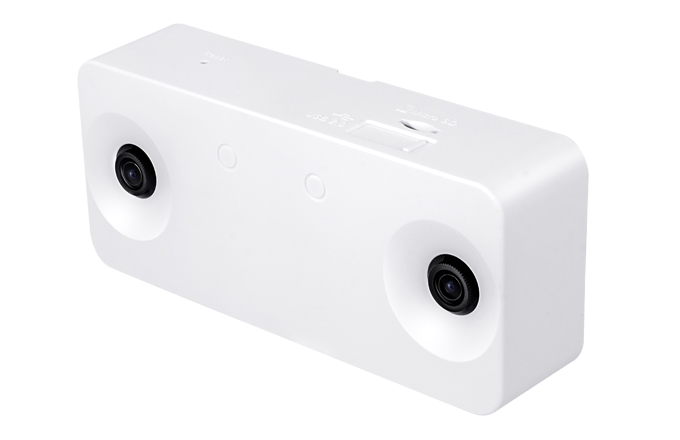
VIVOTEK also offers a solution that, although not based on temperature measurement, can certainly help in the fight against the spread of the epidemic. It is a 3D people counting technology based on artificial intelligence. “Our solution is mainly intended for users who have to maintain social distance indoors, so we can automatically control the entry of people. The solution has a wide range of applications and it is mainly focused on the retail and transport sectors which work with larger groups of people”, says Đorđe Baćić, Business Development Manager at VIVOTEK. The solution has many applications. The most important is social distancing, which can greatly prevent the spread of the virus, while other useful functions include relieving employers and employees of the burden of maintaining social distancing measures, where, instead of employees, the system itself controls the entry of people indoors, thus protecting employees themselves. In the end, once we return to normal times, the system will not lose its functionality, but rather continue to be used in collecting data on the fluctuation of visitors in specific spaces.
Bright Future Even After the Epidemic?
Lower prices of thermal cameras have propelled them into the spotlight for both the users and manufacturers of security equipment. Although they have been a valuable component of security systems since the earliest days of this technology, their availability has been primarily limited by cost. By removing both of these barriers and catching up with the growing interest in the use of thermal cameras to monitor biological parameters, this technology could experience a genuine revolution in terms of expanding its scope of use and simultaneously increasing users’ willingness to include them in various security installations in many verticals.
Five Key Advantages of Thermal Cameras
Thermal cameras allow users to see what their eyes cannot – invisible thermal radiation emitted by all objects, regardless of lighting levels. Some of the key advantages of these systems actually concern the security domain and it is here that thermal cameras demonstrate their strengths compared to other technological solutions intended for surveillance.
Low light conditions. When ordinary cameras are used to monitor the perimeter of a building, they often have to deal with low light conditions. This is an area in which thermal cameras can do their best because light does not affect their performance.
Visual limitations are not an obstacle. Standard cameras and even human eyes often have trouble tracking objects and terrain through natural barriers that obscure the field of view and block the reflected light. As thermal radiation passes through visual barriers, thermal cameras can “see” what is happening in the field in situations in which the ordinary cameras are generally powerless.
No camouflage. Standard cameras that monitor only visible light can be deliberately fooled in some cases. This can be achieved by visual camouflage or in situations in which similar colors or patterns blend into each other. This can make objects or people that need to be identified temporarily invisible to the camera. Thermal cameras are resistant to these tricks.
Fewer false alarms. Often, these cameras are proven to be more cost-effective in protecting business and other facilities because they help reduce the number of false alarms. This is accomplished by using advanced analytics software which can easily work with both high-contrast images and videos created by means of tracking thermal radiation.
Higher return on investment. Thermal cameras are a very affordable option for many companies and other organizations that want the best and most economically efficient solutions in the security market. The total cost of a security system with thermal cameras is generally lower than that of a single CCTV security system. Due to the superior performance of thermal cameras, the projects require a significantly lower number of surveillance cameras. In addition, the majority of ordinary cameras cannot see beyond 200 meters at night and need additional lighting, which is a new source of expenditures for the users, even without counting the installation and maintenance costs.