Home Articles posted by a&s Adria (Page 35)

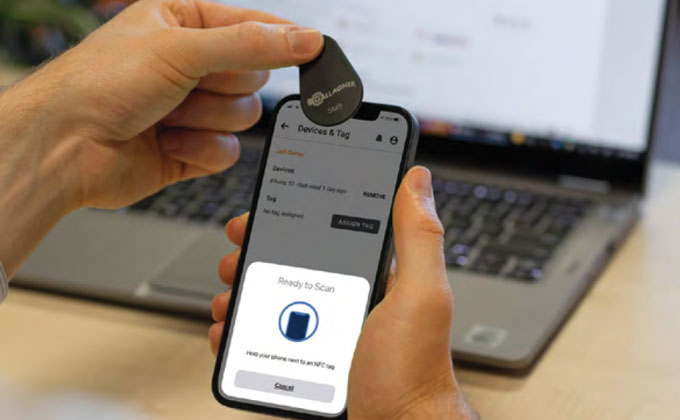
Building Resilient Access Control Systems That Withstand Real-World Challenges

As access control systems become more deeply integrated with identity management platforms, HR systems, video surveillance, and cloud-based applications, the question of reliability during outages or data mismatches has become central for physical security professionals.

By: Prasanth Aby Thomas, Consultant Editor, asmag.com

For systems integrators and consultants, resilience is no longer an optional feature. It is a design principle. Recent expert insights from Hanchul Kim, CEO of Suprema, Steve Bell, Strategic Technology Advisor at Gallagher Security, and Gaoping Xiao, Director of Sales-APAC at AMAG Technology, highlight a consistent message: access control systems must be architected to operate predictably and securely, even when parts of the ecosystem fail.

Designing With Disruption in Mind

Modern access control systems rarely operate in isolation. They are connected to identity providers such as Microsoft Entra ID or Okta, HR systems that act as authoritative identity sources, and often to video management systems for event verification.

This interconnectedness increases operational efficiency, but it also introduces dependencies. If a network connection fails or an upstream database is temporarily unavailable, doors still need to function safely and consistently.

Steve Bell frames the issue clearly. “Reliable access control systems should be designed with disruption in mind, not as an exception,” he said.

According to Bell, integrators and end users should adopt a risk-based approach. “Integrators and customers need to take a risk-based approach to determine which functions must remain operational during outages or disaster scenarios. In many environments, maintaining safe and controlled access to people and critical areas is more important than secondary capabilities such as video monitoring.”

For integrators, this means identifying critical doors, sensitive areas, and life safety considerations at the design stage. The goal is to ensure that authentication and authorization decisions can continue even if central servers, cloud platforms, or network links are unavailable.

Distributed Intelligence at the Edge

One of the key architectural approaches discussed by all three experts is distributed intelligence.

Hanchul Kim describes Suprema’s approach as intentionally practical. “Suprema has taken a deliberately pragmatic approach when it comes to reliability. In distributed architectures, each smart reader can operate as an independent node, storing authorization data locally and continuing to make access decisions even if connectivity is interrupted. This allows doors to keep operating safely and predictably during outages.”

In this model, the reader or controller at the door holds sufficient credential and authorization data to validate users without real-time communication with a central server. For integrators, this reduces reliance on constant network connectivity and minimizes the risk of widespread disruption caused by a single point of failure.

Bell echoes this distributed approach. “This resilience is achieved by distributing intelligence across the system so that authentication and access privileges can continue to be enforced for extended periods, even when central systems or connectivity are unavailable.”

For integrators working in critical infrastructure, healthcare, data centers, or manufacturing environments, this capability is essential. Extended outages are not theoretical scenarios. They can occur due to power failures, cyber incidents, or maintenance events. A system that relies entirely on centralized decision-making can become a liability under such conditions.

The Role of Centralized Architectures

While distributed systems are increasingly favored, centralized architectures still have a role to play.

Kim points out that architecture selection should be driven by site requirements. “Centralized architectures still have a place. Panel-based systems with two-door or four-door controllers remain appropriate in certain environments, and we support those models as well. The key is choosing an architecture that matches a site’s operational and regulatory requirements.”

For consultants, this highlights the importance of tailoring system design to the client’s regulatory obligations, operational complexity, and risk profile. In some environments, panel-based controllers with centralized oversight may align better with compliance or legacy infrastructure.

Gaoping Xiao reinforces the need for distributed capabilities at the panel level. “First, integrators should design systems with a distributed architecture, ensuring that access control panels can continue to operate independently even if servers or databases are temporarily unavailable. This ensures that existing cardholders and credentials remain functional during outages.”

The practical takeaway for integrators is that resilience can be built at multiple layers. Whether intelligence resides primarily in smart readers, door controllers, or panels, the critical factor is the ability to continue enforcing access decisions locally.

Establishing a Single Source of Truth

Beyond hardware architecture, identity management practices are equally critical. As access control systems integrate with enterprise IT platforms, inconsistencies between systems can arise. Data mismatches between HR systems, identity providers, and physical access databases can lead to delayed revocations, incorrect permissions, or audit gaps.

Kim stresses the importance of clarity in identity ownership. “Whether organizations use an identity management platform such as Microsoft Entra ID or Okta, or rely on an HR system as the authoritative source, what matters most is that there is a clearly defined single source of truth. When identity ownership is unambiguous, access control systems can remain consistent and predictable even when upstream systems are temporarily out of sync.”

For integrators, this means engaging early with IT stakeholders. During system design, it is critical to define which platform owns identity data and how synchronization processes function. Without a clearly designated authoritative source, temporary outages can create confusion about which credentials are valid.

Designing for resilience therefore includes both physical hardware redundancy and logical data governance.

Managing Data Mismatches and Recovery

Outages are not the only challenge. Data mismatches between systems can also undermine reliability.

Xiao emphasizes the importance of recoverable integrations. “Second, integrations between identity sources and connected systems should be designed to be recoverable, with clear backup and resynchronization procedures in place. In the event of data mismatches or outages, identities should be able to be restored or resynced in a controlled and auditable manner.”

For consultants advising enterprise customers, this raises several practical considerations. Are synchronization logs retained? Is there a defined procedure for reconciling discrepancies? How are changes tracked and audited?

An access control system that resumes operation after an outage but leaves inconsistent permissions in place can create compliance and security risks. Controlled resynchronization and auditability are therefore essential components of a resilient design.

Kim underscores that resilience is about operational continuity under imperfect conditions. “In practice, designing for reliability is less about preventing every outage or mismatch and more about ensuring that access decisions remain auditable and secure when those situations occur.”

For integrators, this reframes reliability as a management issue rather than purely a technical one. Systems must be designed to behave predictably, generate reliable logs, and support post-event review.

Building Multi-Layered Redundancy

In addition to distributed intelligence and data governance, redundancy at multiple system levels is a recurring theme.

Bell highlights the importance of layered resilience. “Well-designed access environments build redundancy at multiple levels – including controllers, readers, and supporting infrastructure – so core access control can continue operating during events such as power loss, network outages, or cyber incidents.”

For integrators, this can include redundant power supplies, battery backups, network failover mechanisms, and segmented architectures that prevent a single cyber incident from disabling the entire system.

Bell also links physical access design to broader organizational planning. “Aligning
physical access design with broader operational resilience planning is what separates systems that work in theory from those that perform reliably in the real world.”

This alignment is increasingly relevant as organizations adopt enterprise resilience frameworks. Physical security professionals must coordinate with IT, facilities, and risk management teams to ensure that access control systems support overall business continuity objectives.

Selecting Proven Solutions and Support Structures

Technology design alone does not guarantee reliability. Implementation quality and ongoing support are also decisive.

Xiao advises integrators to prioritize proven ecosystems. “Finally, integrators should deploy proven solutions supported by certified system integrators and manufacturer-backed support programs, ensuring long-term reliability, and operational confidence.”

For consultants, this means evaluating not only product specifications but also vendor support capabilities, firmware update processes, and long-term roadmap alignment.
Access control systems are long lifecycle investments. Choosing platforms with robust support structures can reduce the risk of operational instability over time.

Practical implications for integrators

Taken together, the expert perspectives converge on several practical design principles for integrators and consultants:

  1. Adopt a risk-based approach to identify critical functions that must remain operational.
  2. Distribute intelligence so that authentication and authorization can continue locally.
  3. Match architectural models to regulatory and operational requirements.
  4. Establish a clearly defined single source of truth for identity data.
  5. Design integrations with backup, resynchronization, and audit capabilities.
  6. Implement redundancy across controllers, readers, power, and network infrastructure.
  7. Align access control strategy with broader resilience planning.

As access control systems become more integrated and data-driven, resilience must extend beyond door hardware. It encompasses identity governance, system interoperability, and coordinated incident response.

For physical security professionals, the objective is not to eliminate every possible failure. It is to ensure that when disruptions occur, doors behave predictably, access decisions remain secure, and the organization maintains control.

In an increasingly connected security environment, reliability is no longer defined solely by uptime. It is defined by how well systems continue to function under stress, how transparently they recover, and how confidently integrators can stand behind their designs.
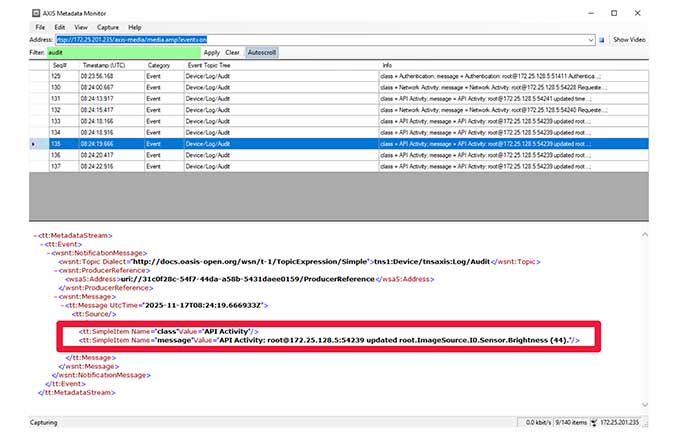

Axis: The Corner for System Designers: Audit Logs as a Key Component of Modern Security Systems

Security systems have fundamentally changed in recent years: what were once closed, hardware-centric isolated solutions have evolved into highly networked, software-based IT systems. Video surveillance, access control, and perimeter protection are now integral parts of IT infrastructure – and therefore exposed to the same threats as traditional IT systems.

With this development, the importance of audit logs has increased significantly. Audit logs are immutable, chronological records of actions in IT systems that document who did what, when, where, and with what effect. They serve traceability, security, compliance, and forensic analysis. Audit logs chronologically and tamper-proof document security-relevant activities, system events, and user actions. They are therefore a central tool for ensuring transparency, traceability, and control in increasingly complex security architectures.

New Attack Vectors – New Requirements for Evidence and Control

In addition to classic external threats such as malware, ransomware, APTs, or DDoS attacks, internal risks are moving further into focus. Authorized users in particular pose an increased risk. Administrators, maintenance personnel, or external service providers often have deep technical knowledge and extensive access rights. Manipulations may occur intentionally or unintentionally – and without appropriate mechanisms for evidence, they often remain undetected.

This is precisely where audit logs come into play – they close this gap. They document, for example, changes to configurations and parameters, access to live or archived video data, as well as user and role changes, system events, and software interventions. This turns a potentially invisible manipulation into a traceable action that, depending on the severity of the change, can also trigger a proactive alert.

Especially in cases involving insider threats or indirect attacks – for example through compromised credentials – audit logs are often the only reliable and robust source of evidence. Audit logs therefore form the basis for detecting threats from typical manipulation scenarios along the entire video chain – from the camera to data transmission to storage and display.

Audit Logs in the Context of Security by Design Axis consistently follows a Security-by-Design approach. Audit-log functions are an integral part of the Axis ecosystem – both at the device level and within the video management software. Combined with: user and role management, certificate-based authentication (e.g., IEEE 802.1X), encryption (TLS), and software and configuration monitoring, a security concept emerges that not only makes attacks more difficult but, above all, makes manipulations visible.

Audit logs can be accessed through various interfaces – for example via event streams to VMS systems, via HTTP/HTTPS using the VAPIX Audit Log API, or via remote syslog to central IT and SIEM platforms.

Audit Logs and Software Monitoring – Two Sides of the Same Coin

Modern security architectures increasingly rely on software monitoring (software sealing) to detect manipulations by authorized users. Audit logs form the operational foundation for this: detecting configuration changes, triggering seal breaks, and integrating changes into clearly defined approval and workflow processes. Without audit logs, any software monitoring remains incomplete, as changes cannot be clearly attributed.

Regulatory Requirements: KRITIS, NIS2, ISO 27001

Audit logs are no longer a technical detail but a strategic element of modern security architectures. They play a crucial role in open, networked architectures where monitoring and tracking activities are essential to detect and prevent security incidents at an early stage. They are also indispensable for meeting increasing regulatory requirements – keyword: compliance – such as those defined by KRITIS, NIS2, and ISO 27001.

These regulations require comprehensive documentation and monitoring of system activities to ensure compliance and close potential security gaps. Furthermore, audit logs are of great importance when dealing with internal and privileged users. They help identify and prevent misuse and unauthorized access, thereby sustainably strengthening the internal security and integrity of systems.

Aikom: Why WISPs Must Refocus on Network Fundamentals in 2026

Over the past 10–15 years, the fixed wireless connectivity market has undergone radical transformation. The noise floor has increased, spectrum has been consumed, competition has emerged from fiber, fixed 5G, and LEO, while ARPUs have stubbornly remained flat in most regions.

For WISPs, this means the margin for error is shrinking. Approaches that once worked, such as reactively adding capacity, chasing peak speeds, or replacing platforms every few years, are no longer sustainable. In 2026, success will depend more than ever on a network’s ability to scale economically, grounded in the fundamentals that have remained constant.

This is why many WISPs are returning to the basics — and why solutions such as ePMP continue to play a central role in long-term WISP networks, with a clear and practical path toward Evo’s converged architecture, Cambium’s new integrated platform. Evo introduces multiple innovations, including dual- or tri-band radios, multi-user MIMO, Massive MIMO, interference mitigation, frequency reuse factor one, OFDMA, and Multi-Link Operation (MLO).

Back to the Basics — With a Clear Path Forward

While the WISP landscape continues to evolve, the physics and economics governing network performance have not changed, and networks still succeed or fail based on a few core principles: how predictable performance is under load, how well interference is tolerated as noise increases, how economically the network scales as subscriber density grows, and how easily the infrastructure evolves without forcing disruptive upgrades.
ePMP was designed from the beginning around these core principles. The ePMP 4000 series is fully Evo-ready, enabling WISPs to deploy high-performance connectivity today while maintaining a deliberate and structured path toward Evo.

Predictability Matters More Than Peak Speed

Peak throughput may look impressive in marketing materials, but WISPs know that real networks are judged during peak hours—under load and in imperfect RF conditions—and ePMP’s predictable airtime behavior enables operators to plan capacity with confidence, deliver competitive high-speed service tiers, and prevent a small number of subscribers from degrading performance for everyone else.

These same predictable performance characteristics form the foundation for future Evo convergence, allowing performance improvements over time without discarding what already works.

Interference Is No Longer an Edge Case

Noise levels are now the default operating condition. Co-location, spectrum reuse, and competitive deployments mean WISPs must assume interference will be present from day one — and that it will not disappear.

ePMP addresses this reality through deterministic scheduling, synchronization, uplink control, and interference-tolerant design. These capabilities ensure reliable operation today while enabling seamless migration to Evo when operators choose to take that step — without costly or disruptive rebuilds.

Economics Must Align with Network Design

ARPUs are unlikely to increase in the near term. Subscriber acquisition costs, truck rolls, recurring fees, and upgrade cycles accumulate quickly. Platforms requiring frequent hardware replacement or monthly licensing fees rapidly erode margins. One-size-fits-all solutions that impose a macrocell mindset regardless of subscriber density will never deliver sustainable ROI.

By aligning subscriber costs with real-world ARPU, eliminating recurring licensing fees, and supporting incremental upgrades, solutions like ePMP allow WISPs to enhance performance today while avoiding large-scale equipment replacement tomorrow.

Seamless Evolution Is Now a Requirement

Few WISPs can afford radical upgrades or forced transitions, so networks must evolve gradually, driven by business needs—not vendor timelines—and with backward compatibility and Evo-ready hardware, ePMP enables operators to upgrade performance immediately, migrate when and where it makes commercial sense, protect existing capital investments, and avoid the cost and disruption of mass replacements.

ePMP is the proven production platform for today’s WISPs and the first step toward Evo, ensuring a smooth transition to what comes next. The result is a network strategy built for longevity, predictability, and operational control.

Aikom International, as an official distributor of Cambium Networks, plays a key role in bringing these innovations to the market. The company supports its partners at every stage of the project lifecycle – from pre-sales consultancy to technical training, from solution design to after-sales assistance – ensuring that resellers and system integrators can always count on tailored expertise and dedicated support to maximize the value of Cambium’s technologies.

Hanwha Vision Launches Global “Now You See” Campaign Focused on Vision Intelligence

Hanwha Vision has introduced its new global brand campaign, “Now You See,” which takes a cinematic approach to present a different perspective on modern security technologies. The campaign is directed by Michael Gracey and features actress Amanda Seyfried in the lead role, further emphasizing its strong narrative and production quality. Unlike traditional promotional content, the campaign does not focus on hardware, but rather on how technology influences perception and decision-making. At its core is the concept of Proactive Vision Intelligence (PVI), which represents a shift from passive monitoring to active data analysis and the generation of actionable business insights.

Through various scenarios, including retail, smart cities, finance, education, and industry, the campaign demonstrates how modern systems can analyze human movement, detect anomalies, predict risks, and improve operational processes. This clearly highlights the transformation of security from a reactive to a proactive approach.

A particular emphasis is placed on the integration of artificial intelligence into image and data processing, enabling more precise pattern recognition and faster real-time response. In this context, Hanwha Vision’s solutions contribute to full situational awareness through a combination of video and audio analytics.

The company notes that these technologies are already being deployed in real-world environments, including the banking sector and critical infrastructure, where reliability and response speed are essential. Additional emphasis is placed on privacy protection through advanced features such as dynamic masking.

The “Now You See” campaign represents a new phase in the development of security technologies, where data is transformed into actionable insights and decision-making support. At the same time, it symbolizes the beginning of the Vision Intelligence era, in which security systems become more intelligent, proactive, and aligned with real user needs.

You can watch the campaign video at: https://www.youtube.com/watch?v=2zwcRHEgEUM

IDIS Announces Interactive Experience at FireSafety & Security Event 2026

IDIS has announced its participation at the FireSafety & Security Event 2026, which will take place on April 15–16 at the Brabanthallen in Den Bosch. This year, the company is introducing a concept that goes beyond traditional technology presentations. At its booth, IDIS will offer an interactive experience that blurs the line between reality and technology, allowing visitors to test their skills through a simulated security scenario. The focus will be on reaction speed, precision, and decision-making under pressure.

According to IDIS, the goal of this approach is not only to showcase solutions but also to demonstrate the real value of security technologies through hands-on experience. Visitors will have the opportunity to actively participate and understand how tactics, situational awareness, and composure play a crucial role in modern security operations.

The company also noted that details of the experience will not be revealed in advance, further encouraging visitors to discover what awaits them at booth H.13. The event in Den Bosch will bring together leading companies and professionals from the fire safety and security sectors, with IDIS’s interactive concept standing out as one of the more engaging highlights of this year’s edition.

VIVOTEK Chroma24: AI Solution for Reliable Video Surveillance in the Dark

VIVOTEK has highlighted its AI Night Vision solution, emphasizing the advanced capabilities of Chroma24 technology for video surveillance in low-light conditions. The solution enables full-color imaging even in near-total darkness, without the need for additional lighting. At the core is the VIT04A-W camera, which combines a large sensor, wide aperture, and advanced AI-ISP algorithms to deliver clear and reliable nighttime images. Particular emphasis is placed on accurate color reproduction and improved visibility of motion details, even for fast-moving objects.

Chroma24 technology automatically detects changes in lighting conditions and activates night mode without the need for manual adjustments. This ensures continuous and stable monitoring across different environments and scenarios. VIVOTEK notes that such solutions address the growing demand for reliable 24/7 surveillance, especially in urban environments and critical infrastructure where image quality is essential for security operations.

The use of artificial intelligence in image processing further enhances system performance, confirming the increasing integration of AI technologies into video surveillance platforms.


Registration Open for Adria Security Summit 2026 in Zagreb

Registration is now open for the Adria Security Summit 2026, one of the most important regional events in the fields of security, IT, and smart technologies. The Summit will take place on October 7–8, 2026, at Zagreb Fair, where we will once again bring together experts, companies, and decision-makers from across the region and beyond.

As every year, our goal is to provide a central meeting point for the industry, where you can explore the latest solutions in security, IoT, artificial intelligence, and smart cities. We have placed a strong emphasis on the practical value of the event, enabling direct interaction with manufacturers, integrators, and partners with whom you can develop real-world projects. This year, we have further enhanced our B2B matchmaking platform to help you connect more quickly and efficiently with the right contacts. In addition, we have prepared a comprehensive program of expert talks, panel discussions, and live demonstrations focused on real challenges and practical applications of technology.

Zagreb, as a well-connected regional hub, is the perfect choice for this year’s gathering. We invite you to secure your place in time and join us as we explore what the future holds for the security industry.

Registration is available via the official website www.adriasecuritysummit.com, where early bird tickets are also available.


TOA Introduces TS-790 Conference System for the EMEA Market

TOA Electronics Europe has introduced the new TS-790 conference system series, designed for corporate, government, and educational environments across the EMEA region. This wired solution is built to deliver reliable communication and high-quality audio performance during meetings of all sizes.

The system features an integrated power amplifier, ensuring strong and consistent audio output with high speech intelligibility. This enables clearer communication and more productive discussions among participants. The TS-790 series supports up to 192 conference units, making it suitable for a wide range of applications—from small meeting rooms to large conference halls. With a simple plug-and-play setup, the system allows for quick deployment and minimal configuration time.

Another key advantage is its stable, interference-free wired communication, which is essential in environments where reliability is critical. The system also offers multiple discussion modes, providing flexibility in managing different meeting formats. According to TOA, the TS-790 is engineered to enhance communication flow and meeting efficiency, regardless of the size or purpose of the space.

More information is available at: https://lnkd.in/dvsTkY9k

Canon Inspiration Days 2026 in Belgrade: Focus on Real Challenges and the Future of Business

At the end of March, Canon Inspiration Days 2026 was held in Belgrade, bringing together business leaders, experts, and Canon representatives to exchange insights and discuss the key challenges of modern business operations. The event focused on topics that have a direct impact on organizations, including workflow optimization, security, and cost management. Through expert discussions and presentations, participants had the opportunity to explore practical approaches to addressing everyday operational challenges.

A key part of the program included live solution demonstrations in real-world environments, showcasing how Canon technologies can enhance workflows and improve efficiency. The focus was on integrating smarter processes, strengthening security, and achieving better cost visibility, all of which contribute to measurable business outcomes.

Canon Inspiration Days highlighted the importance of aligning technology with business strategy, with a clear goal of helping organizations take the next step toward more secure and efficient operations. Canon also expressed its appreciation to all participants, as well as to the Canon Adria team and partners who contributed to the successful organization of the event.