Synology and Wasabi Technologies have announced a strategic partnership aimed at simplifying enterprise data protection and providing more flexible and cost-effective options for data storage and recovery. Thanks to native integration with Synology’s ActiveProtect line of backup appliances, users can now directly extend their backup strategies to Wasabi Hot Cloud Storage, improving data security without added complexity, new management consoles, or unpredictable costs.
The solution allows IT teams to protect mission-critical workloads from a single platform and use Wasabi as an S3-compatible destination for off-site copies, long-term retention, and immutable backup. Wasabi is available directly within ActiveProtect Manager, enabling organizations to quickly deploy off-site backups while maintaining full visibility across on-premises and cloud environments.
The partnership comes at a time of increasing ransomware threats, regulatory requirements, and data growth, prompting businesses to seek more resilient and easier-to-operate backup solutions.
The integration supports modern protection models such as the 3-2-1-1-0 approach, ensuring data availability and recoverability in the event of an incident. The system provides unified backup management for on-premises, SaaS, and cloud resources, helping prevent tampering and catastrophic data loss. According to the companies, the combination of centralized administration, immutable storage, and predictable costs enables organizations to manage data more securely and at scale.
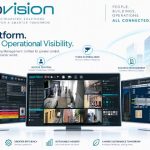
VIVOTEK has announced major enhancements to its VORTEX cloud platform, introducing the generative AI-powered “Think Alert” feature and new personal safety detection capabilities. The upgrades are aimed at public- and private-sector organizations seeking faster risk response, greater operational resilience, and more efficient security management. At the same time, the cloud ecosystem has been expanded through integration with multiple access control service providers, unifying video surveillance and access control within a single operational interface.
The platform is designed as a centralized, scenario-based security command center focused on the user. The new Think Alert function uses generative artificial intelligence and a visual language model, allowing users to define alarm rules using plain text without complex configuration.
The system automatically recognizes predefined situations and immediately triggers alerts, significantly reducing response time and enabling earlier intervention. Examples include detecting smoking in restricted areas, the presence of animals in designated spaces, or vehicles entering a loading zone. In this way, searching, analyzing, and identifying footage becomes as simple as typing a message, shifting security from reactive review to proactive intelligence.
The platform also introduces personal safety protection features such as detection of protective equipment, including helmets and reflective vests, as well as fall or loss-of-consciousness detection. The solution enables continuous monitoring and incident logging, reduces workplace risks, and accelerates emergency response in factories, retail environments, public transportation, and social care facilities.
Through integration with ACaaS partners Brivo, Kisi, and PDK, administrators can correlate access control events with video footage and simplify investigations and remote management. The company states that VORTEX, as a unified cloud platform, combines AI applications, flexible deployment, and a partner ecosystem, representing a step toward scalable, proactive, and sustainable security management.
SALTO WECOSYSTEM has announced a strategic investment in Portuguese door hardware manufacturer ATZ aimed at accelerating innovation and strengthening supply chain resilience. Based in Águeda, ATZ has more than 35 years of experience in the design and manufacturing of locks and related hardware and is recognized for quality and advanced locking solutions. Its portfolio includes more than 9,000 products, such as door levers, mortise locks, door pulls, cabinet hardware, and accessories.
The acquisition of a majority stake highlights the importance of mechanical components in electronic locks, as they directly influence product quality, certification, and adaptability to various standards and door types. SALTO WECOSYSTEM says combining ATZ’s manufacturing capabilities with its in-house development will accelerate the creation of more competitive and innovative products.
“This investment allows us to combine ATZ’s mechanical expertise with our own development, further strengthening collaboration and speeding up the development of new solutions,” said Marc Gomez, CEO of SALTO WECOSYSTEM.
He added that the partnership will bring critical production capabilities closer to the organization and reduce the risk of disruptions in the global supply chain.
The move is also expected to ensure more stable availability of key components for electronic locking solutions.
ATZ representatives say the partnership marks an important milestone after years of cooperation and opens the door for joint development of new components. SALTO WECOSYSTEM adds that the investment confirms its long-term commitment to smart access and electronic locking technologies while increasing value for customers worldwide.
Italian operator Connetta has demonstrated that speeds comparable to fiber connectivity can be achieved using advanced wireless infrastructure, even in the demanding geography of the Apennine mountains. Active in three provinces and serving more than 3,500 customers, the company upgraded its network with support from Aikom Technology and solutions from Cambium Networks. Although FTTC and FTTH networks exist in the area, natural barriers and complex terrain made fiber deployment difficult, so the goal was to reach similar performance with faster implementation.
By introducing ePMP 3000 and Force 300 devices, the operator increased the number of users per sector and improved network stability, while the transition to the ePMP 4000 platform enabled speeds of up to 300 Mbps per user, comparable to fiber connections. The upgrade was carried out gradually, as the new radio units are compatible with existing CPE devices, allowing modernization without service interruption. The compact form factor also simplified installations, including those at hard-to-reach sites.
Users gained higher bandwidth, lower latency, and reliable operation even in adverse weather conditions, with centralized monitoring via the cnMaestro platform for configuration, monitoring, and remote maintenance. Company director Antonio Rosa noted that the operator can now compete with fiber networks even in areas where their deployment is challenging. The project also expanded the service portfolio through the Cambium Protection Pack, providing advanced firewall, SD-WAN, and network service management. The new architecture combines primary connectivity, wireless backup, business Wi-Fi, and cybersecurity protection within a single system, while the network continues to expand and legacy equipment is gradually being replaced.
Azitrend has announced its participation in the international trade fair Green Energy Expo & Romenvirotec 2026, which will take place from March 3 to 5 at the Romexpo exhibition center in Bucharest. The presentation will focus on security solutions for energy projects such as photovoltaic parks, hybrid systems, and energy storage systems (BESS). The company says it will demonstrate protection architectures tailored to the specific requirements of energy facilities, using artificial intelligence and advanced event processing.
The solutions include intelligent perimeter protection for solar and hybrid parks, integration of video analytics, thermal cameras, and radar into a unified system, as well as the GEF (Guard Events Flow) event management concept, enabling clear and correlated alarms in dispatch centers. This approach reduces false alarms and improves operational control.
The presented technology is designed for continuous 24/7 operation at large-scale sites, with straightforward implementation and integration into existing projects, aiming to provide better risk control without unnecessary system complexity. Azitrend invites partners, system integrators, and investors in energy projects to visit booth 114 and learn more about solutions for protecting energy facilities.
PPDS made three key new product announcements in Barcelona, each designed to deliver exciting new opportunities and enhanced capabilities to partners, customers and AV/IT managers around the world. These included the new ‘all-inclusive’ Philips LED Configurator, the ‘elemental’ Philips Signage 2000 Series, plus ‘game-changing’ updates to the Philips Wave remote management platform.
PPDS, the exclusive global provider of Philips Professional Displays and complementary solutions, unveiled a range of ‘game-changing’ and ‘experience-enhancing’ hardware and software solutions at ISE 2026 in Barcelona, with three major product announcements. In what was one of PPDS’ biggest and busiest ISE shows to date, the new solutions unveiled on the AI-themed Philips booth, centred around bringing new creative and time-saving possibilities for Philips LED walls, enhanced remote display management capabilities, plus a new generation of ‘elemental’ digital signage displays.
Supporting all market verticals, including retail, corporate, education, hospitality, transportation, broadcast, food and beverage, public venues, entertainment, stadia/arenas, control rooms, and more, the announcements included:
Philips LED Configurator
The groundbreaking new Philips LED Configurator takes traditional online configuration tools and project management to the next level, bringing seamless video wall design, ordering and installation to partners and customers. Free to use, the intuitive Philips LED Configurator – hailed internally as the most comprehensive of its kind – lets customers in any industry, effortlessly create and accurately visualise their creative ambitions, down to the finest specifications and details, on screen.
Partners and customers can select from PPDS’ full suite of indoor and outdoor Philips dvLED panels, factoring in their specific project needs, including size, pixel pitch, brightness, and refresh rates, among other factors. And that’s not all. PPDS has teamed up with some of the AV industry’s leading manufacturers of components – including producers of brackets, mounts, control boxes, data cables, light sensors, finishing kits, and more – so that customers can select a full range of components as part of the design process, ready to be ordered as part of the package.
This optional ready-to-go approach eliminates any concerns around compatibility, while saving substantial time on research for solutions specific to a project. Marco van der Knaap, Head of Strategy and Transformation Philips dvLED at PPDS, commented: “The journey from creation to installation of LED walls can sometimes be a complex, and frustrating experience, with many aspects to consider. Having worked in this space for over 25 years, I have seen and experienced them all, and these provided the foundations for the new Philips LED Configurator. We have designed the platform to be easy to use and virtually foolproof, with the intuitive menus making the entire process – from selection to design – universally usable.”
Philips Signage 2000 Series
Bringing greater affordability and accessibility to PPDS’ growing digital signage portfolio, the ‘elemental’ Philips Signage 2000 Series amalgamates some of the company’s most celebrated and sought-after features, capabilities, and visual technologies into a new standard yet stylish design for maximum impact without breaking the bank. Bringing UHD digital signage back to basics, this exciting new Series continues PPDS’ global efforts to deliver the broadest portfolio of visual solutions, supporting the range of needs and budgets while bringing powerful benefits and competitive advantages to customers of all sizes – from small independents to international conglomerates.
Redefining and raising the bar for so called ‘standard’ signage displays, the Philips Signage 2000 Series brings together some of PPDS’ most acclaimed features, capabilities and technologies, ensuring maximum impact and control for installations in 16/7 dawn-to-dusk environments. Guaranteed to make a positive impression – including installations inside retail stores, corporate offices, hotel lobbies, bars, cafes or restaurants, museum exhibits, school corridors, and more – the Philips Signage 2000 Series launches in a range of screen sizes to suit, including 43”, 50”, 55” and 65”.
Portrait or landscape mountable, each display has been designed to pack a punch, equipped with a stunning 4K UHD, 400 nits of brightness, and finessed with a stylish, even bezel design for a premium presentation.
For complete peace of mind – particularly for more demanding commercial applications – the Philips Signage 2000 Series also features PPDS’ exclusive FailOver technology, which ensures screens never go blank, automatically playing back up content on screen in the unlikely event of a media player failure. Andrea Barbuti, Global Product Management Lead EMEA at PPDS, commented: “At PPDS, we don’t believe in barriers, and we work hard to ensure we provide solutions that support the many, rather than the few. The Philips Signage 2000 Series brings signage right back to basics, equipped to support and satisfy simpler integrations that don’t require some of the bells and whistles found on our more premium offerings.”
Philips Wave
Designed for system integrators and trusted by organisations around the world, PPDS’ evolutionary cloud-based remote management ecosystem delivers its most transformational upgrade since its debut at ISE 2022. With a raft of new time-saving and opportunity-generating features for SIs, plus new security measures, Philips Wave now offers the most extensive levels of remote display management in the market for Android SoC Philips Professional Displays.
Developed in-house, the Philips Wave platform unlocks the full potential, versatility and intelligence of Android SoC Philips Professional Displays, while helping to inspire more sustainable business operations. Designed with flexibility and versatility in mind, Philips Wave provides a centralised system for AV/IT managers and system integrators – whether employed internally or as part of a service contract – to deploy, configure, monitor, manage, and maintain entire display fleets entirely remotely, with screens tailored to support the precise needs and requirements of the customer and environment.
Among the flood of new updates for 2026, Philips Wave now offers a wealth of new configuration tools designed to help take the hassle out of display setups, saving substantial time, effort, and cost, while delivering on customers’ desired outcomes and ambitions.
Tailored to the current and future needs of the market, system integrators and AV/IT management teams can create and/or duplicate display configuration settings and then seamlessly deploy them to multiple screens – locally or around the world – at the click of a button.
Ensuring optimum performance at all times, new features, settings, applications, firmware, and software can be effortlessly scheduled and added – collectively or to specific displays – as they become available, all from a single centrally managed location.
Trialled and perfected with several existing PPDS partners in recent months, the latest configuration tools have been proven to dramatically reduce installation times – approximately 75 per cent in some instances – saving on both effort and cost.
Furthermore, Philips Wave also offers enhanced power scheduling opportunities by switching off screens when not required and adjusting the brightness to reflect the lighting conditions based on factors like the display’s location or even the time of year.
Philips Wave, which now features powerful notification features. The system will automatically send live alerts to selected email addresses when a screen’s activity falls outside its defined parameters. Examples include when a display scheduled to be on is unexpectedly switched off or if it begins displaying incorrect or unauthorised content.
The notifications provide 24/7 security and reassurance, further empowering system integrators and AV/IT managers to take immediate action and provide greater value as a platform and as part of a service contract.
Stuart Millward, Technical Director and UK Education Sales Manager at PPDS, who has initiated and managed the latest enhancements to Philips Wave, commented: “These new configuration updates will be a game changer, substantially simplifying and speeding up project roll-out processes and reducing configuration errors, delivering greater value to our partners, and providing new revenue-generating opportunities. This is another landmark moment in the evolution of Philips Wave.”
Milestone Systems has appointed Andy Burnett as Chief Technology Officer (CTO) after he had been serving in the role on an interim basis since September. According to the company, during that period Burnett ensured clear technological direction and stable execution of key development initiatives. “Andy has demonstrated exactly the kind of technology leadership Milestone needs — focused, collaborative, and strongly committed to both people and performance. His understanding of our technology landscape and vision for future development make him the right person to lead the Product & Technology Group,” said Milestone CEO Jeppe Frandsen.
Burnett joined the company in 2023 and has since contributed to shaping product and technology strategy, including work on Project Hafnia, collaboration with NVIDIA, and the development of solutions in video management software, analytics, and next-generation innovations such as the Milestone Visions Language Model. Prior to Milestone, he held senior technology leadership roles at TV 2 Danmark, YouView, and ITV, where he led digital transformation programs and platform modernization initiatives. “I’m excited about the role and the journey ahead. We have a strong team and clear goals, and our focus will be on executing the strategy and further developing new opportunities,” Burnett stated.
New research from Berg Insight shows that the European market for alarm systems in households and small business premises still has considerable room for expansion, as penetration in the residential segment remains low at around 6.5%. According to the report “The Home and Small Business Security System Market – 15th Edition,” approximately 19.6 million monitored alarm systems were active across the EU27+3 region at the end of 2024, corresponding to an overall penetration rate of 7.9% among roughly 250 million households and small business sites.
By comparison, North America is almost twice the size of the European market, with about 37.2 million active systems and a penetration rate of 23.9%, expected to grow to 44.1 million by 2029. In Europe, the number of monitored alarms is projected to reach 24.5 million by 2029, with an average annual growth rate of 4.6%. The fastest expansion is anticipated in countries with a more developed home security industry such as Spain, France, and Sweden, while more fragmented markets are likely to grow at a slower pace.
Analysts emphasize that interactive security services and smart home solutions will be key drivers of demand in the coming years. Among leading companies in Europe, Verisure stands out with more than 5.6 million customers, while other notable providers include Prosegur, EPS (Crédit Mutuel), and Sector Alarm. The market also includes telecom operators, insurance companies, and DIY solution manufacturers such as Ring, Yale, and Bosch, further accelerating the development of this security segment.
Spanning all eight halls at Fira de Barcelona Gran Via, ISE 2026 delivered four days of record-breaking energy, creativity, and innovation, bringing the global audiovisual and systems integration community together like never before.
By: Charlotte Theobald-Park, PR Coordinator, Integrated Systems Events
E-mail: ctheobaldpark@iseurope.org
Integrated Systems Europe (ISE) 2026 has officially closed its doors following four days of inspiring firsts that pushed beyond the expected to redefine the possible and reinvigorate the AV and systems integration industry. ISE 2026 broke all records welcoming 92,170 visitors from around the world. A total of 1,751 exhibitors, including 323 making their debut at the event, contributed to the largest total show floor space in the event’s history at 101,000 sqm.
ISE 2026 delivered exceptional attendance growth, underlining the continued expansion and global appeal of the show. By Tuesday, the event had already welcomed 55,156 unique attendees, a 10% increase compared with Tuesday 2025 (49,981). By Wednesday, total unique attendance across all show days reached 76,035, while the show recorded its largest single day ever, with 64,198 visitors onsite, almost equalling the pre-pandemic record attendance of an entire ISE show (64,908 at ISE 2019 in Amsterdam). Momentum continued through Thursday, as total unique attendance climbed to 87,648, officially marking the highest attendance in ISE history. Overall, ISE 2026 achieved a 8% increase in total attendance compared with 2025, demonstrating unprecedented energy, scale, and industry engagement, and confirming its position as the world’s leading event for the audiovisual and systems integration community. The total number of registrations reached 120,914 with over 212,000 visits across the four days.
“As ISE 2026 comes to a close, I’m truly inspired by the passion and strength of our community,” said Mike Blackman, Managing Director of Integrated Systems Events. “Over four extraordinary days, we celebrated groundbreaking technology, ignited bold ideas, forged lasting connections, and set new benchmarks for our industry. What excites me most is the creativity, energy, and diversity of our exhibitors and partners, and the unwavering dedication of the ISE team that makes it all possible.”
Growing and Empowering the ISE Community and Beyond
At ISE 2026, Spark debuted as a show of unity for creativity and technology – a new initiative driving innovation and knowledge sharing across the creative industries. The new event format brought together the creators of tomorrow, uniting the brightest minds from Broadcast, Live Events, Marketing, Design, and Gaming into one immersive experience. Spark served as a hub for creative professionals, technologists, and decision-makers to connect, share ideas, and explore the future of creativity. With an outstanding line-up of partners and speakers, Spark 2026 showcased how technology transformed the audience experience, on screen, in physical spaces, and live, and demonstrated how innovation and collaboration are shaping the next generation of creative work.
In another first, ISE announced the ISE Foundation, an initiative spearheaded by ISE, and backed by co-owners AVIXA and CEDIA, with support from the City of Barcelona and the Government of Catalonia. The ISE Foundation aims to empower the AV and systems integration community, with an emphasis on teamwork, innovation, and lasting impact under the tagline “Powering On, Together”. The foundation launched at a press conference, with distinguished speakers David Labuskes, CEO of AVIXA; Daryl Friedman, Global President & CEO of CEDIA; Raquel Gil, Deputy Mayor of Barcelona; and Miquel Sàmper, Minister for Business and Labour, Government of Catalonia.
From Iconic Landmarks to AI Insights, ISE 2026 Showcased the Future of Creativity
The keynote sessions at ISE 2026, delivered by Matt Clark and Sol Rashidi, electrified the event, drawing full-capacity audiences. Clark took attendees “Behind the Façade: Building a Performance-led Mapping at Casa Batlló, from Concept to Implementation,” revealing the creative and technical mastery behind the mapping at one of Barcelona’s most iconic landmarks. Rashidi’s “The AI Reality Check: What It Takes to Scale and the Future of Leadership” offered a compelling look at how AI is reshaping industries and the leadership needed to navigate this transformation. Together, their presentations showcased ISE as the ultimate stage for innovation, creativity, and forward-thinking industry leadership.
Barcelona Welcomes International Officials to ISE 2026
ISE’s partnership with Barcelona continues to play a vital role in the event’s success. The 2026 show featured a notable delegation of VIPs and government officials, including representatives from Latin American countries, reflecting Barcelona’s status as a global technology hub. Attendees included leaders in national and regional governments, as well as experts in digitalisation and AI policy, highlighting ISE’s impact on international collaboration and regional growth.
“ISE jumpstarts every year as the largest gathering of AV professionals. But beyond the numbers is a more remarkable story: people connecting with one another from different corners of the world and exchanging ideas that will live on past the convention center walls,” said David Labuskes, CTS, CAE, RCDD, Chief Executive Officer of AVIXA. “The week was full of brilliant minds that push this exciting industry forward. AVIXA is proud to collaborate with the ISE and CEDIA teams to deliver such a vibrant forum.”
“ISE 2026 once again demonstrated the extraordinary power of collaboration across our global technology ecosystem,” said Daryl Friedman, Global President and CEO of CEDIA. “As co-owners of ISE, we are proud to see the event continue to expand its influence as a platform where innovation, education, and partnership converge. The energy on the show floor and throughout the conference programme reflects a thriving industry that is not only embracing emerging technologies, but shaping how they enhance the spaces where people live, work, and connect.”
See You at ISE 2027
As the industry looks ahead, ISE 2026 leaves a lasting impression, as a showcase of cutting‑edge solutions, and a catalyst for collaboration and progress across the AV and systems integration landscape. ISE will return for ISE 2027 from 2 – 5 February 2027 at Fira de Barcelona Gran Via – save the dates and prepare to push beyond even further.
In the new episode, we sit down with Olivier Pelland from LAMATEL, who shares how his early interest in communication and experience in the Canadian military shaped his career in the telecom and security manufacturing sector. He explains why communication and reliable logistics are often more decisive than technology itself, especially in mission-critical environments.
Olivier reflects on lessons from the COVID-19 period, highlighting the importance of supply chains, maintaining stock, and active listening with partners.
He also discusses how LAMATEL supports partners with end-to-end solutions, ensuring quality and reliability, and how the company adapts to digitalization and growing AI-driven data demands.
Finally, he shares insights on building long-term, trust-based partnerships and offers advice for those starting a career in distribution, manufacturing, or security and telecom.
Discover how LAMATEL drives partner success and reliable solutions.