Home Articles posted by a&s Adria (Page 88)

ASSA ABLOY’s Aperio® wireless locking further extends support for mobile access

London, April 2024 – Compatibility with a range of credential technologies can be a critical factor when selecting access control. As organizations across the world explore a move to mobile keys for access, it is more important than ever.

 Aperio’s open technology platform has been built on compatibility. Its range of battery-powered access hardware for integration with third-party access control systems can secure almost any opening.

Customers have a choice of wireless Aperio handles, escutcheons, cylinders, security locks, server rack locks and new cabinet/cupboard locks. With Aperio, it is straightforward to control all access points digitally.

And with the rapid growth of mobile adoption in security, Aperio is extending support for mobile credentials, to keep offering high convenience and security benefits to customers.

Extending mobile access options

Changes in end-user demand are reflected in a survey for the Wireless Access Control Report 2023, which suggests 29% of organizations already use mobile credentials — instead of or alongside RFID cards — while another 40% of respondents anticipated deploying them within the next two years*.

The single most important factor when considering a switch to mobile, according to Report data, is convenience.

Aperio native mobile access is built on HID Seos®, a next-generation platform with class-leading cryptography, authentication and privacy protection. Seos Mobile Access supports both NFC and BLE. Unlocking an Aperio device by phone is easy and intuitive: users simply present their phone at the reader, just like a smart card. They don’t even need to open an app.

In response to growing demand for mobile solutions, Aperio has also integrated cutting-edge mobile access credentials from Gallagher and STid. With this, Aperio broadens the range of options available, facilitating seamless integration with mobile devices and enhanced flexibility.

“The open nature of the Aperio development platform removes compatibility worries for OEMs, integrators and other partners — which translates to high convenience for their customers,” says Piet Van Den Bossche, Business Development Manager at ASSA ABLOY Opening Solutions EMEIA.

“It is a natural progression for us to now add support for STid and Gallagher mobile credentials, to reflect their growth among our integration partners.”

Aperio openness: “No lock-in, only choice”

“Aperio’s approach supports an ecosystem where customers are not constrained by their initial choices,” adds Van Den Bossche. “Aperio users can effortlessly transition to the latest mobile credential technologies without being tied down, ensuring they are always equipped to meet evolving security demands and new challenges.”

In addition, to increase flexibility, Aperio locks can handle multiple credential technologies at the same site: Security managers may gradually roll-out mobile access while RFID cards already issued remain valid.

Aperio’s credential compatibility has grown in tandem with the platform. Aperio wireless devices now unlock via the widest range of RFID technologies, in both Online and Offline mode.

“To continue to make these convenience and security advantages available to the widest possible market, Aperio will continue to be an open platform which supports the growth in mobile credentials,” confirms Van Den Bossche.

To learn more about mobile access with Aperio, visit https://campaigns.assaabloyopeningsolutions.eu/aperio-mobile-access

The key to finding a door closing solution for every application at a large site? Product range and expert support

London, April 2024 – With approximately 29,000 employees worldwide, Amdocs is a leading global software company providing services and solutions to communications and media companies. When building a new campus in Ra’anana, Israel, their large site with four office buildings and three underground floors required a door closer solution tailored to every door, taking into account their different size, type and usage. Finding a single supplier to meet all their needs was a challenge – but they succeeded.

This new site required reliable, flexible door closing solutions tailored for use at several hundred doors of multiple types: fire doors, public entrances, for high and low traffic, and many more. For such a complex project, they also sought trustworthy specification support from an established, experienced manufacturer with a proven track record and a team with local knowledge.

“ASSA ABLOY has many access solutions related to openings in the building, including door closers. I am pleased that our project specification team was able to provide the right solutions for our customer’s requirements,” says Avi Kimhazi, Managing Director at ASSA ABLOY Israel. This included full support for choosing, supplying and installing solutions for doors across the campus. ASSA ABLOY’s expertise and advice was always available.

 Product portfolio to meet the individual needs of every opening

The vast range of available ASSA ABLOY Door Closers, Electric Strikes, Locks, Panic Exit Devices and other products ensured every opening at Amdocs Park campus was equipped with its ideal solution, without compromises. Certifications – including fire compliance across the full range – help to remove regulatory worries for specifiers and facilities managers.

Models supplied include ASSA ABLOY Cam-Motion® Door Closers for several applications: With innovative Cam-Motion technology, the push-force required to open a door falls rapidly, providing barrier-free access for all plus secure closing to keep premises safe.

ASSA ABLOY’s Cam-Motion DC700 model creates comfortable, secure access to high-traffic public doors in the building. The DC840 model conceals the same technology within the door leaf itself, and so is deployed where minimal aesthetic impact was a requirement.

For smaller door sizes, choosing the cost-efficient DC200 rack and pinion door closer helped the project hit its budget targets.

Hitting project deadlines with the help of comprehensive specification support

The project was managed using BIM principles from the outset. As part of the BIM process, ASSA ABLOY’s local specification team became a hub for coordinating and disseminating up-to-date information for every door solution.

Alongside providing timely specifications, the team made sure supply and installation hit timelines which construction managers required. Detailed specifications were supplied and updated digitally, so designers could visualize door solutions accurately and the right solution was specified for each opening.

Openings Studio® software was a key tool for everyone involved in the project. This user-friendly software ensures accurate specification data is logged and, when approved, transmitted to the live Revit® design. With detailed specifications supplied and updated digitally, designers visualize door solutions accurately as soon as possible – and ensure the right solution is specified for each opening.

And because every stakeholder can have appropriate Openings Studio access, they work transparently and with accurate, up-to-date specifications.

To learn more about ASSA ABLOY’s comprehensive product portfolio, visit https://www.assaabloy.com/group/emeia/solutions/topics

Adria Security Summit Introduces Prestigious Awards to Honor Industry Excellence

Adria Security Summit proudly announces the introduction of its industry excellence awards, marking a significant milestone in its history. The awards will be presented during the 9th edition of the Adria Security Summit, scheduled to take place from October 9 to October 10, 2024, in Sarajevo. With this move, the organizers aim to recognize distinction and innovation in the security industry, aligning with the Summit’s mission to drive advancements and recognize outstanding individual and organizational contributions.

In line with global conference trends, the Summit will present awards across several categories, covering various aspects of security solutions, including Access Control, Video Surveillance, Intrusion Detection, Fire Alarm, PA/VA Systems, Cybersecurity, Best Project, Best Startup, Most Innovative Product, and Best Security Manager.

The award selection process will involve a panel of distinguished judges alongside audience participation. This inclusive approach ensures that the awards reflect the consensus and expertise of industry stakeholders, fostering transparency and credibility in the recognition of achievements.

Adria Security Summit 2024 and the award presentation ceremony will take place at the renowned Convention Center Hills, the largest and best-equipped event venue in the region. Hosting over 160 exhibitors, welcoming 3500+ visitors, and facilitating more than 5000 B2B meetings, the organizer and participants are eagerly anticipating this high-profile event. Adria Security Summit continues to witness a steady increase in both visitors and sponsors, with an anticipated record number of attendees from over 50 countries worldwide.
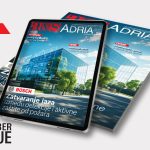
All interested parties are invited to learn more about the awards and the nomination process by contacting summit@asadria.com or seid.malanovic@asadria.com.

For more information about the 9th Adria Security Summit 2024, including registration details and the event agenda, please visit www.adriasecuritysummit.com, contact summit@asadria.com, or call +387 33 788 985.

Salvador Technologies Secures Investment From Deutsche Telekom

Salvador Technologies, a pioneering cyber-attack recovery platform provider for critical infrastructures and industrial organisations, has secured investment from Deutsche Telekom, the largest telecommunications provider in the European Union.

Deutsche Telekom executed this investment in Salvador Technologies through its hubraum Fund, the company’s early stage investment arm. hubraum helps its portfolio companies connect with the fund’s global network of business and technology ecosystem partners and provides the opportunity to tap into Deutsche Telekom’s customer base.

Salvador Technologies will use the proceeds from this investment to accelerate the expansion of the company’s sales distribution network for its cyber-attack recovery platform. The company is currently focusing on engaging sales channel and technology ecosystem partners in the DACH region and Poland in Europe as well as in the United States.

Salvador Technologies has developed a patented security failover technology to prevent downtime damage and ensure ongoing operational continuity for Operational Technology (OT) and Industrial Control Systems (ICS). The company’s cyber-attack recovery platform consists of hardware connected to the HMI or SCADA, an agent software and a monitoring system, enabling full visibility of the operations. The platform bypasses standard recovery protocols and allows critical infrastructure operators and industrial enterprises to recover from cyber-attacks and any malfunction within only 30 seconds.

“Deutsche Telekom is committed to ensuring business continuity, especially in light of the spike in cyberattacks against critical infrastructure and operational technology systems over the past few years and we recognize the significant potential of Salvador Technology’s recovery solution for critical systems,” said Tamar Shlimak, Investor at Deutsche Telekom’s hubraum Fund. “OT/ICS security has become increasingly important to industrial enterprises, so we are excited to have the opportunity to work with Salvador Technologies’ team and contribute to the company’s positive impact.”

“We are tremendously pleased with our strategic efforts with Deutsche Telekom both as an investor and a potentially valuable business partner,” said Alex Yevtushenko, Co-Founder and CEO of Salvador Technologies. “The proposed collaboration could offer significant advantages through leveraging Deutsche Telekom’s global network to potentially expand our business presence in Europe and the United States.”

I-Pro Enables Legacy & New Camera Support For Security Center SaaS

I-Pro will enable Security Center SaaS support in its new edge AI-enabled cameras while also releasing an app for existing cameras in the field at no cost. Users of AI-enabled I-Pro cameras will be able to simply install an application on the camera to give direct access to Genetec Security Center SaaS.

“Genetec has taken a bold step forward in providing customers with unprecedented flexibility and scale,” said Hiroshi (Huey) Sekiguchi, CMO, I-Pro Co., Ltd. “At I-Pro our goal is to offer a wide range of new and existing AI-enabled camera models for customers to choose from when connecting to Security Center SaaS. Most importantly, we want our customers to be able to leverage their existing I-Pro camera investment when taking advantage of this important new SaaS solution.”

Genetec Security Center SaaS is a highly scalable, enterprise-grade unified physical security solution that is offered as a service and deployed on a hybrid-cloud architecture. It offers ease of deployment and the flexibility for organisations to choose the devices and cameras that work best for their business.

“Security Center SaaS was designed to deliver flexibility and scalability through an open platform approach,” said Andrew Elvish, Vice President, Marketing, Genetec Inc. “I-Pro shares the same core values which makes our combined solution that much more valuable to our shared customers.”

I-Pro AI cameras can deliver 98 different metadata attributes, including unique descriptions such as the colour of shoes and bags carried or whether a person has a beard or not. The cameras also support various 3rd party analytic applications including video and sound to provide operators with unprecedented “event alarm” capabilities for both people and vehicles.

Growing Gap Between Alarm Response Expectations vs. Reality

New Parks Associates research finds expectations among security system owners regarding emergency response to an alarm diverge significantly from reality. The firm’s new white paper, “Expectations vs. Reality: Enhancing Alarm Monitoring Response”, reveals 86% of security system owners expect a police response to an alarm within 30 minutes, including 42% within 10 minutes, while in many municipalities, actual response times can be upwards of 146 minutes.

The white paper highlights the threat this gap poses to the security industry, strategies for professionally monitored security to better align with customer expectations, and revenue opportunities emerging from these new and expanded solutions.

“Security system owners expect a rapid, reliable response, should the need arise,” said Daniel Holcomb, Senior Analyst, Smart Home Research, Parks Associates. “Among security owners with professional monitoring, 83% say reliable and fast response to security events was ‘highly important’ to their system purchase decision. Even among security owners without pro-monitoring, the majority — 59% — still report that the promise of a fast police response was a very important factor in choosing their security system.”

Widening gap between expectations and reality

“The widening gap between what security customers expect and what the police can deliver is seen by many as an existential threat to our industry,” said Mark Zimmerman, CEO, RSPNDR. “We see an opportunity. An opportunity for the industry to deliver a better customer experience and grow RMR significantly by providing on demand private guard service.”

The value consumers place on their security services comes through in their likelihood to recommend their service providers to others, measured by Net Promoter Score (NPS). Security service providers consistently score higher NPS than other home services, such as internet service, mobile service, and video services. Security companies risk this prime position if their customers receive a delayed response or poor experience from an alarm event.

Remote guarding an option

To protect their reputation, and open avenues to new revenues, security companies can explore new business models that could include services like private guard and remote guarding. These services could be marketed as an added layer of protection and reassurance, potentially reducing the need for immediate police response and alleviating the burden on local first responders.

“By integrating private guard solutions and other innovative services, security providers can differentiate themselves in a competitive market while addressing the evolving needs and concerns of their customers,” Holcomb said.

World’s First Code of Practice on Ethical Use of Facial Recognition

The first ever British Standard code of practice focusing on the ethical use and deployment of facial recognition technology (FRT), developed on recommendations by the BSIA, has been released this month by the British Standards Institute (BSI).

The code of practice, Facial recognition technology – Ethical use and deployment in video surveillance-based systems – Code of practice (BS 9347:2024) – has been developed by the BSI, in its role as the UK National Standards Body, to allay concerns by helping organisations build public trust with its proliferation prompting concerns about safe and ethical use. The BSIA’s leadership on the issue began in 2020 with the setting up of a special interest group dedicated to the issue, publishing the industry-first ethical and legal guide on facial recognition, which was acknowledged by UK Government and was the initial template for developing the new standard.

The standard, written for the industry, by the industry, will now allow the legal and ethical usage of this technology advancement in improving the safety and security of people, property and places. Addressing the ethical challenges faced by those using this artificial intelligence(AI) technology, its foundation is based on six overarching AI principles of ‘trustworthiness’, namely governance and accountability, human agency and oversight, privacy and data governance, technical robustness and safety, transparency and explainability, diversity, non-discrimination, and fairness. The origin of the principles of trustworthiness come from the Organisation for Economic Co-operation and Development (OECD), EU, and alignment with UK AI Regulatory principles.

The standard sets out to build trust with those that develop, use, and are subject to its use. It is applicable to the whole supply chain, beginning with an assessment to determine the need to use FRT, to its procurement, installation, and appropriate and continued use of the technology.

To avoid confusion, the standard also provides a clear delineation between the types of FRT deployment. Those being its use for identification (who is it?) purposes where a ‘human-in-the-loop’ is necessary, and for Verification (is it you?) purposes where human intervention is not needed.

Pauline Norstrom, CEO, Anekanta Consulting and Anekanta AI, also Chair of the BSIA’s AI & Biometrics Special Interest Group, said: “The release of the FRT code of practice is a significant moment in the journey towards the ethical use of this AI biometric technology in the United Kingdom, and as the first of its kind in the world, it shows that British Industry is leading the way in this work with a procedural standard written for developers, integrators, deployers and stakeholders of FRT.”

New Genetec SaaS Supported by Axis, Bosch, Hanwha and I-Pro

Genetec is creating and expanding technology partnerships with Axis, Bosch, Hanwha Vision and I-Pro to extend the scope, capacity and versatility of its newly launched Security Center SaaS platform.

Based on an open platform architecture, Security Center SaaS enables organisations to connect direct-to-cloud with the latest Axis, Bosch, Hanwha, and I-Pro cameras. Security Center SaaS also brings organisations’ existing access control and camera hardware to the cloud through the new range of Genetec Cloudlink appliances – maximizing existing infrastructure investment.

Support for Axis, Bosch, Hanwha and I-Pro devices

In addition to an open portfolio of cameras by a range of manufacturers, Security Center SaaS takes full advantage of the newly announced Axis Cloud Connect solution, and the existing Axis Powered by Genetec network door controller. Security Center SaaS enables customers to securely connect, enroll, and manage Axis devices in a diversity of deployment options, including direct device-to-cloud streaming of video, metadata, and access control data.

The latest Bosch cameras also offer to seamlessly integrate with Genetec Security Center SaaS. With firmware version 9.21 releasing later this year, according to Genetec, Bosch will provide camera configuration capabilities and video viewing in the Security Center SaaS platform through direct-to-cloud connections.

In a further partnership, Hanwha Vision’s Q series are also planned to be fully compatible with Security Center SaaS. Over time, Hanwha Vision will continue to add support for Security Center SaaS across its entire product line to enhance its integrated systems.

I-Pro will make as many existing camera models as possible compatible with the new Genetec solution through an app-based approach. Users of AI-enabled I-Pro cameras will be able to simply install an application on the camera to give direct access to Genetec Security Center SaaS.

ASSA ABLOY Acquires Messerschmitt Systems in Germany

ASSA ABLOY has acquired Messerschmitt Systems, a well-established German developer and manufacturer of access control hardware and software solutions for the hospitality market including products for access control and in-room control.

“I am very pleased to welcome Messerschmitt Systems into the ASSA ABLOY Group. This acquisition delivers on our strategy to strengthen our position in developed markets through adding complementary products and solutions to our core business,” says Nico Delvaux, President and CEO of ASSA ABLOY.

“Messerschmitt Systems has a long history in hospitality access control and has developed an attractive product portfolio which complements our existing solution offering for our customers. The acquisition provides synergy opportunities and an attractive potential to accelerate our growth in the DACH region and Middle East,” says Stephanie Ordan, Executive Vice President.

Messerschmitt Systems was founded in 1985 and has some 100 employees. The main office is located in Schwaig, East of Nürnberg, Germany. Messerschmitt Systems will be part of Global Solutions business area Hospitality.

Sales for 2023 amounted to about MEUR 11.

Access solutions can impact sustainability performance across the full life-cycle of a building

London, April 2024 – Embedding sustainability within any organization requires a broad, strategic perspective. Scrutiny should include the physical infrastructure itself: According to the IEA, buildings consume around 30% of global energy*.

 These considerations are already part of many architecture and design workflows. The demand for green building certifications, for example, is growing among decision-makers in the built environment space, according to a recent survey of 4,000 professionals**.

Yet the entire building life-cycle is equally important. Even when the building is in use, many design and specification decisions also impact ongoing sustainability performance and energy management. The choice of access solutions is one which can contribute to an overall sustainability strategy.

From the initial ideas stage through to product supply and the maintenance, repair or retrofitting of older premises, access control procurement choices matter in at least these 4 different ways.

Stage #1: Specification support for greener buildings

From doors and door closers to complete digital access solutions, ASSA ABLOY manufactures and supplies products for almost any building or opening. “This range gives us uniquely broad-based knowledge about standards and certifications,” explains Dikesh Pattni, Specification Manager at ASSA ABLOY Opening Solutions EMEIA.

“Our locally based specification experts can help customers choose solutions which reduce energy use, for example, or door products which improve the thermal efficiency of indoor spaces.”

ASSA ABLOY offers in-depth support for architects and developers seeking accreditation in any of six leading green building certifications: BREEAM, LEED, Green Star, WELL, DGNB, HQE***. Specifiers can be confident that ASSA ABLOY devices benefit from ongoing supply-chain innovations which specifically target reducing embodied carbon.

In Poland, for example, developer Torus aims for the highest level of LEED certification for all their new properties in the Gdansk area. Where possible, they choose products which have Environmental Product Declarations (EPDs) and Green Circle documentation, favouring access solutions which reduce both carbon footprint and energy costs.

ASSA ABLOY have provided expert knowledge, delivered by the local BIM and specification team. They supplied products which are manufactured to eco-design principles and help reduce ongoing energy use: Robust, reliable, battery-powered Aperio® wireless access control devices which secure doors consume much less energy than a comparable wired solution. HID Signo door readers have an Intelligent Power Mode (IPM) which saves 41% in energy compared to equivalent readers without IPM configuration****.

Detailed, product-specific EPDs highlight the concrete benefits delivered by ASSA ABLOY’s investments in using more reusable and recyclable materials, and in embedding low-energy and eco-design principles across its operations — detailed information which will be essential when the European Performance of Buildings Directive is implemented from 2026.

Stage #2: Fast, easy installation with less materials used

Installation of any building solution can be energy intensive. However, businesses reduce energy use by choosing a wireless digital access solution: ASSA ABLOY offers a range of options from smart-key operated access management systems to locking devices powered by energy harvesting technology.

With solutions which require no wiring around the door, there’s no drilling or cabling, which reduces power consumption. There’s much less damage to the building fabric. And because wireless installation is faster, fitters make fewer journeys to and from the site.

“The lack of wiring significantly reduces materials use, reduces costs, and ensures quick installation,” confirms Torus’ Roman Sokolowski.

In addition, implementing smart product design principles — such as the common template shared by multiple ASSA ABLOY Cam-Motion Door Closers — helps installers get the job done quickly and accurately, saving time, costs, and energy.

Stage #3: Reduced energy consumption during use

Use stage for any digital building system means ongoing energy consumption, 24/7 and year-round for most business premises. Traditional wired security and access systems can be surprisingly power-hungry.

Wireless systems work differently, however. During operation, instead of an ‘always on’ mains electricity connection powering lock magnets, wireless devices only ‘wake up’ when presented with a credential. Energy use in operation is eliminated altogether if locks are powered by energy harvesting technology. These self-powered devices do not require batteries or any other external electricity source.

At A Place To, a 400-apartment mixed-use development in Esbjerg, Denmark, doors are secured with ASSA ABLOY PULSE key-operated electronic cylinders with energy harvesting technology. PULSE devices are self-powered: The cylinder’s encrypted electronic security is energized with power generated by key thrust. “It was a big plus with PULSE that keys and locks are battery and cable free,” says Peter Høpfner, A Place To’s COO and Founder.

Smart key technology also offers the opportunity to cut wasted journeys. ASSA ABLOY’s award-winning CLIQ® Connect keys and app are designed to minimize travel to and from a base to collect, return, update or revalidate access rights. With CLIQ Connect, everyone carries their own programmable CLIQ key and keeps its permissions up-to-date on the move via a Bluetooth connection to their smartphone — meaning fewer miles driven and less money wasted on unnecessary fuel.

“CLIQ Connect offers an easy win for businesses examining the impact of a mobile workforce on their sustainability performance,” says Stephan Schulz, CLIQ Product Manager at ASSA ABLOY Opening Solutions EMEIA. “And of course, spending less on fuel will also help with budget concerns, too. There’s a concrete, immediate ROI.”

Furthermore, the option to deploy ASSA ABLOY devices which can be unlocked with mobile keys stored securely on a user’s smartphone, instead of cards, fobs or traditional metal keys, reduces materials use and further cuts unnecessary travel. Granting or amending someone’s access is done over the air, with no need to return to base or an update point and no physical credential to issue or manage.

Stage #4: Less frequent, less invasive maintenance

Every building system needs maintenance. However, they don’t all require the same level or frequency of maintenance visits. Less maintenance translates to fewer journeys and lower energy consumption. Again, wireless access technologies with a proven track record of reliability and durability hold a significant advantage.

Many ASSA ABLOY wireless locks, including Aperio, use standard batteries which are optimized for a long lifetime — typically 2 years or more, although this varies by model and usage. Under normal circumstances, a battery change is the only maintenance they need, unlike wired systems where specialist electrical maintenance is a frequent requirement.

Programmable key systems with electronic or electromechanical devices are likewise designed for minimal lifetime maintenance. An eCLIQ cylinder, for example, has an integrated lubricant reservoir which ensures it typically remains maintenance-free for up to 200,000 cycles. Battery-powered eCLIQ keys have a typical lifetime between battery changes of up to 10 years.

“We have made energy efficiency a driving force behind the development, design and manufacturing of our innovative solutions,” adds Olympia Dolla, Head of Sustainability Program at ASSA ABLOY Opening Solutions EMEIA. “Energy harvesting technology, mobile keys and energy efficient devices help enhance sustainability performance right away — and equip you with the flexibility for challenges to come.”

To learn more, download a free Access Solution Sustainability Guide at https://assaabloy.com/emeia-blueprint/en/documents/solutions/topics/sustainability/ASSA-ABLOY_Sustainability_Brochure_A4_Landscape_04_2024_FINAL.pdf