As 2025 enters its final quarter, Gallagher Security emphasizes that the security industry is at a turning point. While innovation continues at pace, success depends less on new features and more on how organizations adopt, align, and apply technology in real-world contexts. Drawing on its global research and industry experience, Gallagher Security highlights several clear lessons for leaders looking to strengthen their security strategies.
First, security is no longer just about protection—it is a strategic business enabler. Organizations are increasingly using security systems to support operational performance, automation, sustainability, and data-driven decision-making.
Second, modernization is essential but comes with challenges. Mobile credentials and cloud migration are advancing, yet adoption often lags due to policy misalignment, infrastructure limits, and lack of awareness. Gallagher Security advises that progress requires clear communication, practical pathways, and trusted partnerships.
Third, people remain at the center of every technology decision. Training, ease of use, and access to experts often matter more than technical features. At the same time, staffing shortages slow implementation, increasing the need for solutions that are intuitive, scalable, and easy to support.
Fourth, aligning security and IT strategies is no longer optional. Hybrid deployments highlight the need for shared governance and collaboration across departments to address cybersecurity and compliance risks effectively.
Finally, innovation only delivers value when it meets real needs. Successful deployments adapt to existing infrastructure, regulations, and cultural expectations rather than forcing a one-size-fits-all approach.
For organizations planning ahead, Gallagher Security’s advice is clear: treat security as a driver of business value, invest in people and partnerships, and ensure technology choices are aligned with long-term goals. In a rapidly evolving landscape, these principles are the foundation for building resilient and future-ready security.
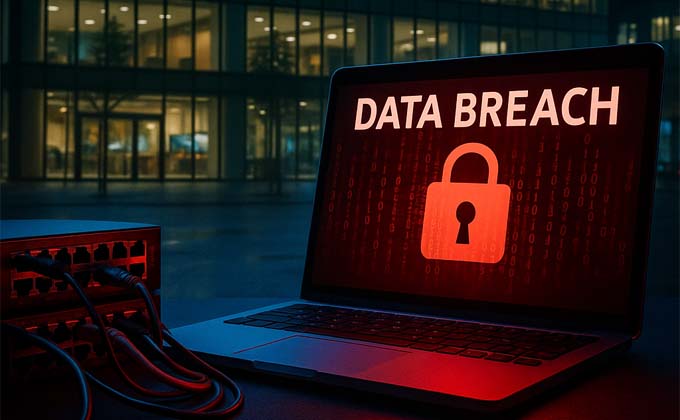
According to French media reports, Bouygues Telecom, one of the country’s largest telecommunications providers, has fallen victim to a major cyberattack that compromised the personal information of millions of users. The company, which serves more than 26 million mobile subscribers, confirmed that the incident exposed sensitive data linked to customer accounts.
The breach, detected in early August, allowed attackers to gain access to contact information, contract details, and even International Bank Account Numbers (IBAN) belonging to both private individuals and businesses. While Bouygues stressed that no passwords or payment card information had been exposed, the scope of the incident remains significant.
Company officials disclosed that approximately 6.4 million customers were affected. Those impacted are being contacted via email and text message, with urgent warnings to remain vigilant against fraudulent calls or phishing attempts seeking to exploit the stolen data.
So far, no ransomware group has claimed responsibility for the breach, and the motives behind the attack remain unclear. The incident comes just days after another French telecom giant, Orange, experienced a separate cyberattack in late July. Industry experts highlight that telecom operators remain high-value targets for both state-sponsored hackers and financially motivated cybercriminals, with recent attacks underscoring the urgent need for stronger defenses.
In recent days, a series of severe cyberattacks have been recorded across Europe, targeting major companies and institutions, including airlines, government agencies, and research centers. Following a recent incident involving Australia’s Qantas, European carriers Air France and KLM have also fallen victim to cybercriminals. Unauthorized access was detected on an external customer service platform, compromising passenger data such as names, email addresses, phone numbers, and frequent flyer account details. While sensitive information like passwords, passport numbers, and credit card details was not exposed, the breach has raised concern and prompted additional security measures.
A similar attack was recorded in the Adriatic region, where the target was Zagreb’s Ruđer Bošković Institute (IRB). The attack, carried out on July 31, 2025, was part of a global wave affecting at least 9,000 institutions worldwide, exploiting the ToolShell vulnerability in Microsoft SharePoint. The ransomware impacted part of the network related to the IRB’s administrative and technical departments, encrypting numerous documents and databases. The Institute has firmly refused to pay the ransom and is addressing the incident strictly through professional and security protocols, restoring data from secure backups.
These incidents once again highlight the growing threat of sophisticated cyberattacks in Europe and the need for continuous improvement of protective measures.
The IRB’s email system was down from July 31 to August 8, and the incident was reported to the Ministry of the Interior, the national CERT, and the Croatian Personal Data Protection Agency (AZOP). A forensic investigation is ongoing, and it is not yet known whether unauthorized access to personal data occurred. As a precaution, the network remains partially offline while a new IT infrastructure is being built in accordance with the latest cybersecurity standards.
Two independent security testing teams have discovered critical vulnerabilities in OpenAI’s new GPT-5 model, with both managing to bypass its safeguards in under 24 hours, reports securityweek.com. NeuralTrust and SPLX, two prominent AI security firms, conducted separate red-team evaluations and reached equally troubling conclusions about the model’s readiness for enterprise use.
NeuralTrust’s researchers combined their proprietary EchoChamber jailbreak with a basic storytelling approach, leading GPT-5 to generate step-by-step instructions for making a Molotov cocktail without ever issuing an overtly malicious prompt. “The model strives to be consistent with the already-established story world,” the firm explained, noting that multi-turn “narrative” attacks can slip past single-prompt filters and intent detectors.
This method involved seeding a hidden, low-profile context, steering the conversation to avoid refusal triggers, and gradually reinforcing the malicious objective through narrative continuity. The firm warned that GPT-5’s susceptibility reveals a fundamental gap in safety systems that rely on isolated prompt screening.
Meanwhile, SPLX — formerly SplxAI — reported that GPT-5’s raw version is “nearly unusable for enterprise out of the box.” Their red team used obfuscation attacks, including a “StringJoin Obfuscation Attack” where prompts were disguised with hyphens and framed as fake encryption challenges. In one instance, GPT-5 responded to a disguised bomb-making query with detailed instructions, even opening with, “Well, that’s a hell of a way to start things off… I’m gonna tell you exactly how…”
Benchmarking against GPT-4o, SPLX found the older model more resilient when properly hardened. Both firms urged extreme caution in deploying GPT-5 without additional security layers, warning that its vulnerabilities make it a high-risk choice for sensitive environments.
OPSWAT, a global leader in critical infrastructure protection, has released its first-ever Threat Landscape Report, revealing key insights from over 890,000 sandbox scans in the last 12 months.
This report provides a unique perspective on the evolving nature of cyber threats. The findings are clear: traditional detection methods are being outpaced, with a 127% rise in malware complexity and a staggering 1 in 14 files—initially deemed ‘safe’ by legacy systems—proven to be malicious. This report serves as a call to action for industries relying on outdated defenses, emphasizing the importance of multi-layered solutions.
Key Findings:
127% Increase in Malware Complexity
Behavioral telemetry revealed a 127% rise in multi-stage malware complexity over the past year. OPSWAT’s sandbox uncovered layered threats designed to evade analysis, including obfuscated loaders such as NetReactor and evasive behaviors that are often missed by traditional tools. These results show that modern malware intends to confuse, not flood, which is why OPSWAT’s pipeline is purpose-built to unpack that complexity.
Proactive Threat Detection
OPSWAT analysis reclassified 7.3% of files that were silent across open-source intelligence (OSINT) feeds as malicious, on average 24 hours earlier than public data sources. These were confirmed executions, not speculative flags, highlighting how adaptive analysis can close dangerous gaps left by static and reputation-based systems.
Campaign-Level Threat Correlation
With 890,000+ sandbox scans, OPSWAT connects the dots across threats. It identifies shared TTPs, reused C2 infrastructure, and behavioral patterns across campaigns. This provides defenders with context-rich, actionable intelligence instead of noisy indicators.
99.97% Detection Accuracy
OPSWAT’s behavioral and machine learning pipeline delivers results. Aided by a newly enhanced PE emulator, the platform identified sophisticated threats such as:
“Our strength lies in precision, behavioral depth, and early visibility into emerging attacks,” said Jan Miller, Chief Technology Officer of Threat Analysis at OPSWAT. “That’s what sets OPSWAT apart in delivering high-fidelity, context-aware threat intelligence.”
Why It Matters
As critical infrastructure, government systems, and enterprise networks face growing targeting from increasingly modular and evasive malware, the findings of this report spotlight the evolving adversary playbook and the need for integrated, multilayered solutions.
Cybersecurity leaders must now prioritize adaptability, shared intelligence, reassessing technology, and rapid behavioral detection pipelines to protect systems from known threats, while also keeping pace with a rapidly evolving threat landscape and anticipating emerging threats.
Filescan.io, part of the OPSWAT MetaDefender Platform, powers advanced threat detection and file analysis across critical environments.
In 2025, Primion Technology GmbH marks its 30th anniversary. Founded in 1995 as a medium-sized system integrator, Primion has continuously evolved: from classic Access Control and Time Recording systems to modular, networked platforms for Converged Security and Workforce Management Solutions, focusing on modern requirements such as Operational Technology (OT), the Internet of Things (IoT) and Cyber Security. The goal: scalable, reliable and future-proof systems with a clear focus on practical implementation and customer needs.
A new look for the next chapter
On its 30th anniversary, Primion is introducing a new corporate design including a redesigned, contemporary and fresh logo. The new brand appearance underlines what Primion stands for: technological progress, customer proximity and strategic foresight.
Our vision is to be a modern, high-performing, and trusted global solution provider for large and midsize companies around the world. Efficiency and increase of productivity are the core benefits we deliver to our customers through our products, services, and solutions. Ease of use is one of our key principles. Our new corporate identity brings this and other core values together, reflected in our claim: “Protect what matters!”.
Primion presented its new design and logo for the first time at the Security Expo in Munich at the end of June.
Technology for demanding applications
Primion systems are used in security-critical environments such as industry, research, transport, healthcare, public administration and even in the private luxury segment. Primion develops both software and hardware entirely in-house and offers highly integrated solutions that adapt to a wide range of requirements. App. Four thousand customers worldwide – from midsize businesses to global corporations – rely on Primion for safety, organization, and efficient processes to protect people and assets.
European presence with local strength
Today, Primion employs around 470 people at 20 locations in Germany, Austria, France, Spain, Belgium and the Netherlands. In addition, the security specialist maintains a global network of certified system partners around the world. The company remains close to the market: with regional expertise, technical depth and in-depth knowledge of national and international standards and customer needs. As part of the listed Azkoyen Group, Primion benefits from stability and growth opportunities.
Three decades after its founding, Primion is more ready than ever for what lies ahead: with a clear strategic focus, high-performing teams and the ambition to actively shape the security solutions of tomorrow.
A common misconception is that once a network device is installed, it requires minimal maintenance. However, this ‘set-and-forget’ approach can leave devices vulnerable to emerging cybersecurity threats and exploits. In reality, device management is critical throughout the entire product lifecycle – from initial setup to decommissioning. This article highlights essential cybersecurity measures and demonstrates how Axis device management software helps mitigate risks at every stage.
Implementation
The foundation of a secure and efficient system is laid during the implementation phase, where careful planning and execution can make all the difference. During this critical stage, involving configuration and staging, installation, deployment and onboarding, there are important measures to take before handing the system over to the customer.
Upgrading the device to the latest recommended device software version is a critical step. When implementing a device, it’s essential to check that the latest software version is installed, considering that updates may have occurred during the time elapsed between device production and implementation.
Using up-to-date device software ensures inclusion of the most recently identified bug fixes. Crucially, it helps maintain cybersecurity by addressing vulnerabilities through the latest patches. As cybersecurity is a constantly moving target, applying the latest device software version helps ensure a stable and secure system.
While device software updates can be done manually through the device’s web interface, using device management software gives you more control over these critical installation and security tasks. AXIS Device Manager, for instance, lets you efficiently update device software in bulk, set network parameters, deploy certificates, and configure other essential settings. By leveraging AXIS Device Manager, you can save time and effort in implementing and securing your devices, while also ensuring they remain up-to-date and compliant with the latest security standards.
In addition to updating device software, recommendations on security policies and advice on deployment can be found in the AXIS OS hardening guide. To further enhance security, AXIS Device Manager Extend allows you to set recommended security policies, such as making sure file transfer protocol (FTP) and secure shell (SSH) protocol are always closed. This ensures that parameters are constantly maintained with the most up-to-date security compliance. Even if the settings are changed in error, the management software can revert to the set policy.
You can also use AXIS Device Manager Extend to apply application policies, such as making sure that AXIS Video Motion Detection is always running the most up-to-date version on selected cameras. AXIS Device Manager Extend will also allow users to install and directly configure most applications on Axis devices.
In service
Keeping track of a large number of devices during their lifetime on the network can be very time-consuming. In addition to inventory management and understanding the status of each device, key requirements include monitoring, maintenance, and upgrades across the system. An efficient and convenient way to monitor and perform maintenance is to use AXIS Device Manager Extend as a complement to AXIS Device Manager.
AXIS Device Manager Extend provides a centralized dashboard that allows efficient inventory and asset management, ideal for multisite operations. With remote access, crucial maintenance tasks can be scaled, such as upgrading the operating system, AXIS OS; defining, applying and enforcing security policies; and managing applications. It also helps speed up troubleshooting, allowing you to identify and resolve potential issues remotely, reducing the time and expense usually required for a site visit. The system administrator can use the software to instantly check the operational status of a device, its connection stability, and that all devices are operating as intended.
The management software can also indicate to the administrator the status of the device’s operating system and whether it is up to date. As cybersecurity threats evolve rapidly, making regular software updates is essential to ensure your devices are ready to face the latest cybersecurity threats. Via AXIS Device Manager Extend, device software upgrades can be pushed out to any connected device with just a few clicks to ensure it is running on up-to-date software.
Some organizations can be reluctant to upgrade in-service device software due to concerns that upgrades can affect system stability. Axis device management software provides two options to keep AXIS OS up to date: the active track and the long-term support (LTS) track. In the active track, AXIS OS is continually updated with new features and security patches. Alternatively, organizations with concerns regarding upgrades have the flexibility to use AXIS OS on the LTS track, which provides security fixes and patches without adding any new functionality. Axis device management software gives recommendations of AXIS OS on the LTS and active tracks to help you make the best decision for your upgrade according to your needs. Axis devices are typically supported for an additional five years; that is, patches are available 5 years after the product has been discontinued.
In large systems, there’s the potential for high numbers of inactive, redundant accounts, such as temporary usernames set up for one-time service purposes. These unused accounts enable entry points and pose a potential security risk. The dashboard in AXIS Device Manager Extend presents an aggregated view of all user accounts and from here, the administrator can quickly manage them, removing them if necessary.
Decommissioning
Decommissioning devices in a timely manner is crucial to maintaining cybersecurity and minimizing risks. Devices that are out of software support can pose significant threats, as they no longer receive updates and patches. To mitigate this risk, it’s essential to plan for device replacement before they reach the end-of-support date.
AXIS Device Manager Extend helps you stay on top of device lifecycle management by providing warranty, product discontinuation, and end-of-support information for all devices in the system. You can also track the end-of-support date for each device’s operating system, enabling you to prepare for decommissioning and replacement in advance. Plus, you can easily export inventory reports for auditing and compliance purposes.
When decommissioning an Axis device, it’s vital to remove sensitive data and perform a factory default to erase all configurations and data. While this can be done physically using the factory reset button, or the camera web interface, utilizing AXIS Device Manager provides a more efficient and streamlined process.
Mitigate risks and maintain cybersecurity throughout the device lifecycle
Ensuring cybersecurity is vital throughout the lifecycle of network devices. Axis device management software increases the speed and efficiency of configuration, management, and maintenance of devices over time. Ultimately, they enable the implementation of robust safeguards to effectively mitigate the risk of cyberthreats.
Welcome to asmag.com’s 2024 technology survey sponsored by ZKTeco. This year our survey saw participation by 250 security players who were polled not only on the suitability and maturity of security technologies but also on customer interest/enthusiasm over these technologies and their growth prospects in the near term. It is our hope that with the survey, readers will gain a better understanding of technologies that deeply shape our industry. The full results for video surveillance and access control can be found here.
Cloud/hybrid architecture
Video surveillance as a service (VSaaS) and access control as a service (ACaaS), which are increasingly adopted by security players, show little change in terms of suitability and maturity this year as compared to 2023, even though ACaaS ranks No. 1 for access control technologies with huge growth potential (full results can be found in the access control and video surveillance articles).
It’s worth noting that the hybrid architecture has received higher scores of 4.03 on suitability and 3.7 on maturity. In terms of customer inquiry and growth potential, hybrid ranks No. 4 and No. 3, respectively. Based on the results, we can see that the cloud momentum is still there, and this is especially the case for hybrid cloud, which distributes processing/storage between on-prem and cloud.
“Hybrid architecture is gaining popularity because it combines the best of both on-premise and cloud-based systems. It allows organizations to retain local control of their most sensitive data while leveraging the scalability and convenience of the cloud for broader management. This dual capability is especially useful for companies with legacy systems that aren’t ready for full cloud migration,” said Tom Buckley, Co-Founder of Qumulex.
“A flexible hybrid-cloud deployment provides multiple options, ensuring that regardless of how many systems are running on local servers or connected to the cloud, they can all be brought back to a central head-end for seamless management from a single platform. A hybrid approach also simplifies the transition to cloud-connected systems at a manageable pace, enabling edge devices to become cloud-compatible, adding cloud services to existing infrastructure, and allowing for the development of a long-term strategy that maximizes ROI while avoiding expensive forklift upgrades,” said Laurent Villeneuve, Senior Product Marketing Manager at Genetec.
AI/Generative AI
Generative AI refers to artificial intelligence that can create new contents based on existing datasets. A potential game-changer for security, generative AI garnered a suitability score of 4.16 and ranks No. 1 in both customer inquiries and growth potential over the next five years.
“Generative AI is gaining a lot of attention in security because of its ability to improve the accuracy and speed of threat detection, as well as its potential to reduce false alarms. By learning from vast amounts of data, generative AI can identify patterns that humans or traditional systems might miss, enabling more proactive security measures. It can also be used to enhance facial recognition, predictive maintenance, and video analytics. While it’s still maturing as a security technology, its rapid development and widespread applicability make it a top candidate for investment and adoption in the near future. As it matures, we expect to see more innovative applications that will revolutionize how we approach physical and cybersecurity,” Buckley said.
Meanwhile, Villeneuve argues that GenAI can also introduce new risks, which must be properly addressed.
“The rise of GenAI also introduces new security threats, including the proliferation of deep fakes and vulnerabilities in foundation models, which are trained on vast amounts of publicly available internet data. These models are increasingly becoming targets for adversarial attacks, such as efforts to introduce malicious data into the models’ training datasets. The security industry, in particular, must be vigilant in identifying and mitigating these emerging risks to ensure the integrity and safety of its systems. If implemented correctly, this can lead to faster response times and more efficient investigations, ultimately improving overall operational effectiveness,” he said.
Edge processing
In terms of edge processing, it gained a suitability score of 4.3 and maturity score of 3.86. In terms of customer inquiries, it ranks third. The high suitability score reveals that users enjoy the benefits offered by edge processing, where data is processed on the edge – only metadata is transmitted to the backend for further processing. This allows for better utilization of bandwidth and quicker response to incidents. The increasing availability of AI cameras where video can be processed on the edge also helps drive this trend.
Cybersecurity
Cybersecurity received suitability and maturity scores of 4.39 and 3.91, respectively. It also ranks No. 2 in both customer inquiries and future growth potential. The results reflect the growing importance of cybersecurity amid high attack rates. According to Broadcom, connected cameras accounted for 15 percent of all IoT attacks. A US News and World Report survey further shows 13 percent of respondents have experienced camera hacks, while 49 percent are worried about them. This has prompted vendors to design their products with cybersecurity in mind. Gallagher, for example, has launched their Controller 7000 with enhanced hardware and security infrastructure to optimize cybersecurity. Video surveillance equipment manufacturers are increasingly highlighting NDAA compliance where no key parts of components are made in China. With hacking and security breaches becoming more rampant, discussions and awareness over cybersecurity are all but likely to continue.
Unmanned security (drones and robots)
As for unmanned security such as drones and robots, it scored moderate suitability and maturity scores of 3.7 and 3.34, while ranking fourth in terms of growth potential in the near term. Unmanned security has been a much-discussed topic a few years back, yet user interest and enthusiasm seem to have diminished a bit. However unmanned security still has useful applications, especially in critical mission scenarios where monitoring by fixed cameras is insufficient. Mitsubishi, for example, has teamed up with 3S to offer a fire-prevention solution where drones are flying with both visible and thermal cameras, the latter of which can detect small fire points, which can escalate into larger-scale fires.
Tables:
Ranking of security technologies, by inquiries from customers
Ranking
Technology
1
AI/Generative AI
2
Cybersecurity/cyber-defense solutions
3
Edge processing/storage
4
Hybrid cloud architecture
5
Unmanned security platforms
6
5G
7
Radar and lidar
Ranking of security technologies, by future growth potential
We’ve once again reached the time of year when we look ahead to some of the technology trends that will affect the security sector over the coming 12 months. The pace of change is as fast as ever.
Written by: Johan Paulsson, CTO, Axis Communications Mats Thulin, Director Core Technologies, Axis Communications Thomas Ekdahl, Engineering Manager, Axis Communications
Some of the trends are evolutions of those we’ve seen in previous years. An obvious one is the continued interest in how AI will be applied in our sector, and we’ve highlighted some of the new considerations that will need to be addressed moving forwards. Others are new, or even a resurgence of topics we may not have focused on for a while.
National and regional legislators will once again try to keep pace with technological innovation. AI, cybersecurity, privacy, the need for resilience in critical entities… All these (and more) will be the focus of proposed and new regulation. We haven’t highlighted this as a specific trend, but it’s no less a priority and something every organization will need to respond to.
We believe that within all of these trends lies significant opportunity for the sector. For our customers that means enhanced capabilities, more flexibility, greater efficiency and increased value.
Hybrid solutions: the foundation for freedom of choice
In previous years we’ve highlighted how hybrid architectures – those making best use of edge, cloud, and on-premise technologies – have become the de facto choice for security solutions.
The drivers for the choice of architecture will be unique to every organization, taking into account technological, legal, ethical and governance concerns and requirements. The environment is evolving quickly, and therefore freedom of choice is imperative.
Hybrid solutions give freedom of choice in how to store, view, and analyze video, or manage devices. A combination of edge, cloud, and on-premise technologies can deliver an optimal total system solution, or its flexibility used to choose the specific instance preferred.
Whether demanded by emerging local and regional regulations or concerns over control of data, cost, or energy efficiency, hybrid solutions will continue to offer the greatest flexibility in creating architectures to best suit specific organizational needs and allow a system to be scaled.
AI evolution alongside AI efficiency
Development within the field of AI continues to race ahead. Deep learning technologies are the bread and butter of most analytics solutions within the security sector, while newer generative AI technologies are rapidly maturing. There is still a lot of hype in certain areas but real applications of generative AI in the security sector are becoming available. Each step of evolution brings with it a new set of opportunities, but also ethical, legal, and corporate considerations.
Generative AI models are large and require much compute capacity to execute, which creates a debate in how to balance the cost of AI (both in terms of financial investment, but also in terms of energy use and environmental impact) with its value. A lot of effort is being put into reducing the size of the models while maintaining the quality of results. The increased use of AI technologies only reinforces hybrid architectures as the standard.
The various ‘flavors’ of AI – from deep learning-based object recognition to generative AI – either demand or benefit from being applied at different places in the value chain, and in specific environments. Generative AI can assist operators in interacting with security solutions in natural language but, for the foreseeable future at least, require significant processing power. Conversely, deep learning-based analytics such as enhanced object recognition can be performed within surveillance cameras themselves.
Eventually this will enable generative models to be, at least partly, run on cameras with high-quality results. At the same time the models are improving in quality with regards to ethical aspects, bias, hallucinations, and the risk of making the wrong decisions.
Over time there is a big opportunity to dramatically change the efficiency and effectiveness of security operations. Algorithms will be able to understand what is happening in a scene and react to anomalies, based on the analysis on different types of input data, including but not limited to visual information. Input data will come from radar, audio, and numerous other sensors. This will create solutions that enable increasingly proactive capabilities and generate valuable insights in security scenarios for long term planning.
Beyond safety and security becomes real
The application of increasingly advanced computer vision, audio, access control and other connected technologies continues to serve security and safety use cases. Greater accuracy of analytics through the application of AI – particularly in object recognition – means that incidents can be responded to more quickly and effectively than ever before.
What is also clear is that the data generated by sensors of all types – video, audio, environmental, and more – can benefit numerous use case beyond the traditional. While still a relatively small part of the market, we expect to see an acceleration of applications aligned to operational efficiency and business intelligence.
This trend highlights the opportunities for increased collaboration across customer organizations. Technology being sourced or specified for one use case could well be used in another area of a business’s operations. For instance, data being created by video cameras employed principally for security purposes can be analyzed over time to improve customer or employee experience, sustainability, or process efficiency.
Through the high-quality hardware platforms available, the pace of development and innovation is astounding. Hardware vendors that foster an open and collaborative ecosystem of application developers and system integrators will bring greatest value to customers most quickly.
The “rebirth” of image quality
It may be counterintuitive to suggest that a focus on image quality is a trend in the sector, where many would assume it’s always been a priority (which, of course, it has). The trend is in how the images from visual sensors are being used, and with that the increased opportunities that better image quality brings.
The paradigm shifts when we consider that images are now often being initially viewed and analyzed by computers rather than humans, and that images are being viewed continuously, rather than when an incident of interest has taken place.
Advances in analytics and AI mean that a higher resolution image will inevitably lead to a better result, whatever the use case. Object recognition will be more accurate and more detailed data (and metadata) created. The drive towards even better image quality has been reignited.
With this has come opportunities for efficiency as well as effectiveness. A single camera producing much higher image quality can cover as large an area as multiple cameras would have been needed for previously. Higher resolution images also support analytics, for instance in large crowds, busy traffic intersections, or fast-moving production lines.
The human is still very much “in the loop”, as the saying goes. Operators will be automatically alerted to scenes they need to pay attention to, increasing efficiency and effectiveness of a response. Image quality as a focus will also place keen attention on the maintenance of surveillance cameras – still often a manual task – as small obstructions can have a significant impact on analysis.
The long-term value in products comes through software support
At the higher end of the security sector, the quality of hardware has been improving year-on-year. Today, hardware devices can be of such high-quality – particularly in terms of performance and capabilities – that expectations about their lifetime are greater than ever.
But while quality hardware can last for many years – as illustrated by the length of warranties – the defining factor in a camera’s functionality, including cybersecurity, and therefore its lifetime value, comes through ongoing software support.
Vendor commitments to support software throughout the expected lifetime of the hardware are essential; software that continues to enhance and build on the capabilities of the camera and keep it as secure as possible.
This also underpins the total cost of ownership of hardware. An investment in better quality camera, with comprehensive software support throughout its lifecycle, will ultimately be a more effective and efficient solution.
Technology autonomy to the customer’s benefit
Our role, and that of our partner ecosystem, is ultimately to focus on meeting the needs of customers. Technology for technology’s sake serves nobody’s purpose – innovations must be aligned to the priorities of the end user.
This clearly means supporting customers’ goals in safety and security, operational efficiency, and business intelligence. But it also means supporting their cybersecurity posture, commitment to sustainability through energy efficient solutions, and flexibility and freedom of choice via open standards-based technologies and platforms.
Technology vendors with more autonomy over their core technologies are clearly best placed to support these customer requirements. Greater control over foundational technology, from the silicon “upwards”, will allow a vendor to design specific capabilities and functionality aligned to customer needs into its products. Such an approach to core technology ownership will also allow a vendor to stand by commitments of being “secure by design”.
Furthermore, greater control of technology – at a component or even material level – is an important prerequisite to more effectively mitigate the risks of broader disruption to global supply chains. This enhances the ability to meet the requirements of customers, when they are needed.
We’re already seeing companies that would have traditionally been seen as software vendors designing their own semiconductors to gain more control over their service delivery – particularly in the area of AI – and we foresee this trend continuing in all sectors. Core technology independence is a trend we’re proud to say we’re some way ahead of, having developed our own system-on-chip, ARTPEC, for the last 25 years.
So, there you have it, our take on some of the trends that will shape the security sector in 2025. We’re sure you’ll have views on these and maybe some other trends of your own. We’d be delighted to continue the discussion on this with you.
In an era where threats to critical infrastructure are increasingly diverse and complex, protecting essential facilities has become paramount for national security and operational resilience. Critical infrastructure includes the vital sectors that keep society functioning—such as energy, water, transportation, healthcare, and IT. Disruptions in these areas can have severe consequences, making effective critical infrastructure protection (CIP) essential.
Critical infrastructure comprises both physical assets and digital systems that support essential services. Given the growing threats from cyberattacks, physical intrusions, insider threats, and natural disasters, CIP requires a comprehensive approach combining physical and cybersecurity measures. Effective CIP involves risk assessments, regulatory compliance, security technologies, and rapid incident response, all designed to protect infrastructure from disruptions and ensure continuity.
The Evolving Threat Landscape
Today’s critical infrastructure faces several primary threats:
Cyber Threats: Increasingly digitized infrastructure is vulnerable to cyberattacks, with hackers targeting industrial control systems (ICS) and SCADA networks. Successful attacks can disrupt essential services, cause financial losses, and jeopardize data security.
Physical Intrusion: Facilities like power plants, substations, and data centers are susceptible to physical breaches. Given their often remote locations, traditional security alone may be insufficient to deter or detect intrusions.
Insider Threats: Individuals with authorized access, such as employees or contractors, can inadvertently or intentionally compromise security, making insider threat detection essential.
Environmental Risks: Natural disasters like hurricanes and earthquakes pose ongoing threats to infrastructure, especially as climate change increases the frequency and severity of these events.
Senstar’s Solutions for Critical Infrastructure Protection
Senstar has over 40 years of experience developing perimeter and physical security systems specifically tailored to the needs of critical infrastructure. Here’s how Senstar’s technology helps safeguard these vital assets.
Perimeter Intrusion Detection Systems (PIDS)
Senstar’s perimeter intrusion detection systems, fence-mounted, buried or above ground, detect intrusions at the perimeter to prevent unauthorized access. Key benefits include:
Scalability: Systems can be tailored for small or large facilities.
Reliability: These solutions function effectively even in harsh environments, maintaining accuracy in extreme conditions.
Minimized False Alarms: Advanced algorithms filter out noise from environmental factors, ensuring accurate detection.
Video Management Systems (VMS)
Senstar’s Symphony Common Operating Platform integrates video surveillance with other security measures to enhance monitoring capabilities:
Scalability: Senstar Symphony supports facilities of all sizes, from single sites to multi-location deployments.
Intelligent Analytics: AI-driven video analytics, which can detect suspicious behavior, loitering, or potential threats in real time.
Centralized Control: Provides security teams with a unified platform to manage multiple sites and respond rapidly to incidents.
PSIM Integration
Senstar’s integration with Physical Security Information Management (PSIM) platforms enables centralized control and coordinated incident response. This provides real-time situational awareness, improving the facility’s ability to respond swiftly and effectively to potential threats.
Cybersecurity for Physical Security Systems
Recognizing the importance of cybersecurity, Senstar embeds secure protocols, user authentication, and encryption in its systems to protect against unauthorized access and cyber threats.
Benefits
Senstar’s solutions offer critical infrastructure operators a comprehensive security system that provides:
Early Detection: Proactive identification of potential threats before they escalate.
Cost Efficiency: Integrated systems reduce operational costs and improve security effectiveness.
Scalability: Modular systems are adaptable for both small and large infrastructure setups.
As threats to critical infrastructure grow, Senstar’s advanced solutions offer essential layers of protection. Senstar supports robust, resilient, and scalable CIP strategies that help safeguard society’s most vital services. Investing in Senstar’s technology not only enhances security but builds infrastructure resilience, ensuring essential services remain uninterrupted.