Security Services


In the midst of a century of technology and rapid change, security is a constant concern for our society. Companies that focus on developing security technologies and solutions are in a privileged position to respond to these challenges. A notable example of this is New Akord Security, which participated in the prestigious Adria Security Summit 2023 event on October 25-25 in Ljubljana, Slovenia. The event was dedicated to their discussions about modern security and technology challenges and developments in security, technical and physical protection, smart cities and homes, ICT, IoT, AI and more.
Brief presentation of New Akord Security
New Akord Security’s participation in Adria Security Summit 2023 was a great opportunity for the company to highlight its expertise and innovations in non-lethal security. The event gathered leading representatives from the security industry as well as technology and security experts.
New Akord Security is a Romanian company specialized in developing and providing non-lethal security solutions. With a rich experience and a varied portfolio, the firm has managed to establish itself as an important player in the security industry. The company stands out for developing advanced technologies to prevent and deter crime without resorting to lethal violence. The equipment and solutions provided by New Akord Security cover a wide range of areas, from personal security to defending the perimeters of strategic infrastructures.
One of the key elements of the company is its commitment to sustainable development and respect for human rights. This is reflected in the technological innovations they propose, which aim to minimize collateral damage and environmental impact.
“Safety Revolution: The Impact of Non-Lethal Weapons on Personal Protection and Authorities”
In an increasingly tense world, personal security and the protection of law enforcement are constant concerns. In this context, non-lethal weapons have become an essential element for maintaining peace and order. In this article, we’ll explore two of the most innovative and effective non-lethal weapons available today: the BolaWrap 150 device, the TX100P and TX200P electric shock pistol, and the EXO2, the portable fire gun. We will look at how these revolutionary devices have transformed the security and protection of individuals and authorities.
During Adria Security Summit 2023, New Akord Security showcased a number of notable innovations in non-lethal security. These included:
BolaWrap 150 – A safe revolution
BolaWrap 150 is a patented and innovative manual remote immobilizer designed to provide an effective and safe way to immobilize a person. Using patented technology, BolaWrap implements a durable 2.5-meter Kevlar® rope to temporarily immobilize subjects from a distance of 3 to 4.5 meters. He uses a special projectile to launch two cables with hooks at the end, which twist around the body of the targeted person. This innovative device allows law enforcement to quickly and safely capture a suspect without resorting to brute force.
One of the biggest advantages of BolaWrap 150 is its ability to neutralize subjects without causing them serious damage. This approach significantly improves safety and minimizes the risk of physical damage. In addition, BolaWrap can be used in a wide range of situations, from interventions with people with mental health problems to controlling violent people.
Electroshock device – TX200P: a modern approach to technology
The TX200P electroshock device is an example of a non-lethal electrical immobilization technology that has been developed to be more efficient and accurate. This device uses high-tech electrodes to provide quick and effective immobilization of individuals who pose a risk to public safety.
What makes the TX200P remarkable is its ability to provide precise control over the intensity of electric shock, allowing operators to adjust the level of force used according to the situation. Also, the device is equipped with video recording technology to document and evaluate events involving its use.
On this occasion, we succeeded, for the first time in Romania, in implementing a pilot program through which public order policemen from Bucharest police stations will receive electroshock devices. This approach was possible as a result of the partnership concluded between the European Police Union EUROPOL and New Akord Security, following which the first 20 electroshock devices were offered for use to the Bucharest Police Directorate, and another 20 pieces will be supplied as soon as possible.
In the next period, the first 300 police officers will be trained on the characteristics and use of electroshock devices and on the punctual situations they may encounter during interventions. Under these circumstances, towards the end of the year, these devices can already be seen in the equipment of police officers and can already be used.
The institutional desideratum to provide public safety must be a zero priority, along with the concern to protect the policeman at work, in the interventions he participates in, but also to protect the integrity of aggressors or violent people who require restraint. Through this pilot project, Romania joins countries such as Spain, Great Britain, Italy, Switzerland, Poland, Hungary, etc., where law enforcement already uses electroshock devices.
Exo2 Fire Gun: Protection against Fire and Disaster
The Exo2 is a revolutionary fire gun developed to deal with fire and disaster threats. This innovative device uses technology to design a special substance that can extinguish type B fires, create protective barriers and ensure the safety of people.
The Exo2 pistol is designed to be easy to handle and use in emergency situations. It can be used to extinguish small to medium sized fires and provide a high level of safety and protection in critical situations.
The impact of innovations on security
The innovations presented by New Akord Security at Adria Security Summit 2023, including BolaWrap 150, TX200P stun device and Exo2 fire gun, have a significant impact on non-lethal security. These devices offer ethical and effective alternatives to traditional technologies and can change the way we handle threats in a variety of contexts.
These innovations enable security operators and police officers to act more precisely and minimise the risk of collateral damage. They represent a step towards safer and more ethical security, which focuses on protecting the life and integrity of the individual.
Reasons for equipping with non-lethal weapons:
Reducing the risk of death and serious injury: The use of non-lethal weapons significantly reduces the risk of death or serious injury during forceful interventions. This is essential to protect both civilians and law enforcement.
Improving public security: Non-lethal weapons offer a safer alternative to firearms, which can help reduce violent incidents and conflict escalation.
Efficiency in crisis management: Equipping with non-lethal weapons provides law enforcement with effective tools to manage crisis situations, including situations with people in mental health crisis, where the use of lethal force would be inappropriate.
Reducing healthcare costs and legal proceedings: The use of non-lethal weapons reduces costs associated with medical care and forensic investigations following firearms incidents.
Law enforcement protection: Equipping them with non-lethal weapons gives police and gendarmes an extra tool to defend themselves and intervene in dangerous situations without endangering their lives.
Increasing public trust: The deployment of non-lethal weapons demonstrates that law enforcement is concerned about protecting the lives and safety of citizens. This can help increase public trust in law enforcement.
Decrease incidents of abuse: The use of non-lethal weapons can help reduce incidents of abuse and unjustified use of force by law enforcement.
Operational flexibility: Non-lethal weapons give law enforcement more flexibility in handling diverse situations, which can lead to more efficient and less dangerous solutions.
Safety of implementation:
To ensure the safety of implementing the equipping of law enforcement with non-lethal weapons, it is important to consider the following points:
Appropriate training and training: Members of law enforcement must receive appropriate training in the proper use of these devices to minimize the risk of undue use.
Clear regulations and procedures: Implementation should be accompanied by clear regulations on the use of non-lethal weapons, reporting and monitoring procedures to prevent abuses.
Constant evaluation: The use of non-lethal weapons must undergo constant evaluation to ensure that they are used appropriately and that the expected benefits are achieved.
Public consultation: Implementation should be preceded by a public consultation and community involvement to ensure transparency and understanding of the reasons and benefits of this decision.
Equipping law enforcement with non-lethal weapons can bring significant benefits to public safety and law enforcement. However, it is essential that the implementation is carefully managed, taking into account all the aspects mentioned above to ensure proper and safe use of these devices.
Conclusion
New Akord Security’s participation in Adria Security Summit 2023 was a special moment for the company, allowing it to showcase its innovative products in the field of non-lethal security and underscore its commitment to a safer and more humane world. The presence of New Akord Security at ADRIA Security Summit aimed to promote non-lethal concepts for law enforcement, but also to create partnerships and collaborations for the dissemination and implementation of these equipment and technologies in the Adriatic countries. This presence underscored the crucial role technology and innovation play in shaping the future of security. With a strong vision and commitment to innovation, New Akord Security continues to assert itself as a leader in non-lethal security and a promoter of ethical and sustainable values in the industry.

Vigilance and economy are the most important factors in the world of security. The convergence of traditional man guarding and state-of-the-art video analytics is revolutionizing physical security. One of the most important advantages of this integration is budget optimization
By: Doru Asmarandei, CEO, AziTrend; E-mail: doru.asmarandei@azitrend.ro
Historically, organizations have relied heavily on man guarding as the primary means of safeguarding their assets. Trained security personnel, equipped with surveillance equipment, have diligently patrolled facilities, monitored access points, and responded to potential threats. This human-centric approach undoubtedly provides a level of security but comes with several limitations, including high labour costs, the potential for human error, and limited coverage due to the finite number of personnel available.
The advent of video analytics, powered by Aziguard’s cutting-edge technology, has redefined the security landscape. By seamlessly integrating video analytics with man guarding, organizations can unlock a multitude of benefits that significantly enhance their security measures while simultaneously optimizing their budgets.
Enhanced Surveillance Capabilities
Aziguard’s video analytics modules are equipped with advanced algorithms that can identify and track suspicious activities, unauthorized access, and anomalies in real time. This means that even in the darkest corners of a facility or during the late hours when human guards may be fatigued, Aziguard’s vigilant eye remains unwavering. The software can instantly alert security personnel to potential threats, ensuring rapid response times and minimizing the risk of security breaches.
One of the most compelling advantages of integrating video analytics with man guarding is its substantial cost savings. Aziguard’s intelligent algorithms can monitor vast areas simultaneously, reducing the need for a large number of on-site guards. This optimisation can lead to more than 40% cost reductions, freeing up financial resources for other critical aspects of your business or organisation.
Data-Driven Decision Making
Aziguard’s video analytics generates valuable data and insights that go beyond security. Organizations can make informed decisions about facility management, resource allocation, and customer experience enhancement by analysing patterns, foot traffic, and occupancy rates. This data-driven approach not only improves security but also contributes to overall operational excellence.
Aziguard’s flexible architecture allows for easy scalability. Whether you’re securing a small business or a sprawling industrial complex, the software can adapt to your needs, ensuring that your security solution remains robust as your organization grows.
Conclusion
In an era where security threats are ever-evolving, and cost-efficiency is a top priority, Aziguard’s integration of video analytics with man guarding stands as a beacon of innovation. This powerful synergy empowers organizations to bolster their security measures, respond swiftly to threats, and achieve substantial budget optimization. Embrace the future of security with Aziguard and experience a transformative shift in the way you protect your assets. Say goodbye to the limitations of traditional man guarding and unlock the full potential of video analytics to safeguard what matters most. Your security and your bottom line will thank you.

When buying a security system, decisions often come down to the price tag of cameras, storage, and installation, yet taking this approach can leave the end user with major challenges ahead. Surveillance systems last anywhere from five to 20+ years, so condensing all cost considerations down to the initial expense fails to consider the bigger picture.
By: Ricardo Marranita, Product Growth Manager, Axis Communications; E-mail: ricardo.marranita@axis.com
The initial costs to purchase and set up a security system tend to account for just 30% of the total costs experienced during the lifetime of the system – also known as the total cost of ownership. Despite this, many end users may even make their decision based on the price of cameras alone. In effect, they are making their choice with just a 10-15% view of the total security system costs. The reality is that roughly 70% of expenses come after the system has been installed. Sadly, these can come as a nasty surprise for those end users who have not considered the indirect security system costs.
Taking some time to think about how the system will be used and the costs associated with that use can create significant savings in the long run. Initial choices – such as the type of device to deploy –impact future expenses, from power consumption to monitoring and maintenance. While we’ll focus on cameras specifically here, this principle applies to any device within a surveillance system. Considering the total cost of ownership will help you to identify the questions to ask as you make your decision on which new security system to purchase.
Look Beyond the Cameras’ Price Tag
Filtering is an important step in the purchase process: setting out your surveillance requirements and the available budget is key to narrowing down your choices. Unfortunately, too many initial conversations around requirements focus on the cameras alone, without considering the broader requirements of the system as a whole – from energy use to storage needs.
It might be tempting to focus the budget conversation on cameras, rather than where money will need to be spent to operate and maintain those cameras. Yet the security system will need to support your needs for the foreseeable future. It’s worth remembering that the costs to operate, monitor and maintain certain cameras often exceed the devices themselves and must therefore be weighed up before the purchase is made.
Forecasting Storage Costs
If you’re in the market for a new surveillance system, it’s very likely that you’ll need to consider how to store footage once recorded. On average, legislation requires potential evidence to be stored for a month. Yet in some regions or use cases, this is extended to 180 days – making storage a considerable factor in overall security system costs.
To avoid being caught out with significant server and electricity expenses after cameras are installed, it’s critical to consider the different storage costs associated with each camera model you’re considering. It can be a false economy to purchase cheaper cameras to cut down the initial outlay if they come with vast storage requirements, forcing you to spend more on servers and energy costs in the long run.
Equally, if you plan to reduce storage costs by shrinking the size of the video stored, you will need to carefully choose the right devices to ensure that compressing the video doesn’t compromise evidence quality by pixelating or blurring images to the point that it’s no longer possible to identify a suspect. Ending up with poor-quality footage that cannot act as useful evidence can defeat your objective of installing the security system in the first place. Some cameras come with sophisticated technology that can reserve all the important forensic detail you need while lowering bandwidth and storage requirements, and therefore long-term costs. It’s worth checking any claims of high-quality footage with low storage requirements before you install the system to ensure it meets your expectations.
Each set of requirements is unique. For example, you may require high-quality images even in the dark. While some cameras might compensate for low light levels by increasing the gain and therefore, storage requirements and costs, other options use alternative light-optimizing technologies that do not have the same large-scale impact on storage costs. They might even help you to save your budget by removing the need for additional external lighting.
Anticipating All Indirect Costs
The type of device you choose will influence costs far beyond storage. To forecast the full security system cost, monitoring, maintenance, and electricity use must also be considered.
Once you crunch the numbers, the costs can start to build up quite quickly but crucially, the devices you choose will have a knock-on impact on the extent of these figures. Opting for more economical cameras and devices at the start can result in staggering indirect costs. By contrast, choosing higher-quality cameras and devices at the outset can enable you to cut those indirect security system costs in the long term, introducing savings that you can use to reinvest in and grow your business faster.
As one example, owners of surveillance systems installed in tough environmental conditions, such as a maritime port or chemical plant, may face significant maintenance bills to clean salt water and dust off cameras. By upgrading to more sophisticated cameras that offer remote cleaning functions, or have been designed with self-cleaning materials and components, such as a hydrophilic dome, they can reduce the maintenance – and therefore costs – required.
Turning a Purchase Into an Investment
By considering how your initial decision on which type of camera to buy can impact the chain of future costs, you can shift the purchasing decision into an investment. Achieving this can be as simple as asking yourself just a few questions.
The first concerns the features you want to get with the camera, as well as the need for storage space that getting such a camera entails. Another question concerns the projected costs of powering such a system in the long run. It is important to get a picture of the role of supporting technologies in the camera in the formation of total costs. Finally, it is worth looking at their share in general costs.
The question ‘How much does a security system cost?’ goes far beyond the initial purchase. Making the right choice for you based on the bigger picture can mean a slightly higher initial outlay, but it pays itself back in the long run.
In short, taking the time to ask the right questions at the outset – and finding partners who are open to answering those questions and helping you calculate the long-term costs – allows you to avoid any nasty surprises in future electricity, storage, operational, or maintenance costs. Importantly, it will also ensure that you end up with the security system that is right for your specific requirements.
Five Steps to Optimize Your Investment
Deciding which security system to purchase demands careful consideration. After all, security systems can last for five years or more, so weighing up all relevant factors at the start can lead to significant cost savings and an improved return on your investment (ROI) in the long run. While it may feel daunting, there are five straightforward steps you can follow to ensure you are making the most of your investment. Following these steps enables you to decide on the right security system for your organization, while also optimizing your investment.
Choose the Camera According to the Value It Adds
It may seem obvious but as an initial step, ask yourself “Why are you buying cameras?” Device price and features are important considerations, but it’s vital to understand what your organization needs the cameras to do before you start to weigh up the value of the different functions on offer in each.
Clarity here is vital to figuring out if the cameras on your shortlist will perform in the way you need or provide the evidence you require. For example, are you installing a security system to protect profits in a retail environment by tackling theft and fraud? Are you aiming to optimize production and avoid downtime in a factory? Or are you looking to ensure the safety and security of your employees and passengers in a public transport setting?
There are many different ways in which security systems can be deployed to help your organization – from improving security to creating business value. Narrowing down why exactly you are purchasing the system is a key first step to ensuring you are set up to optimize your investment.
Calculate How the Device Influences the Rest of the System
Next, you will need to figure out how your camera choice affects the rest of the system. Storage is an obvious factor in this calculation. More inexpensive cameras may seem appealing but if their compression technology is limited to reducing bitrate to lower bandwidth and storage requirements, that saving comes at the cost of quality footage – jeopardizing the very reason you’re installing the system in the first place. On the other hand, more sophisticated cameras may have a higher initial cost but come equipped with intelligent algorithms that preserve relevant forensic information in full resolution and at a full frame rate while requiring a lot less storage space. As a result, you can recoup the initial price through lower storage costs in the years to come.
Yet storage requirements and costs are only one piece of the calculation to consider at this point. What about ease of installation? Or how fast it will be to configure the devices and add everything to your system?
It’s also worth thinking about what accessories you will require to ensure the security system meets your objectives if you choose certain camera models. For example, if the cameras you have chosen require extra accessories to mount, this will have a knock-on impact on installation – making it slower and more costly than initially predicted. If you realize this on the day of installation, there is a significant risk of delays to the whole project. To optimize a security system investment, the full picture of all costs – not just the devices themselves – is important.
Estimate the Cost of Using and Running the System
It’s also important to ask, ‘What happens once the system is up and running?’ This step is often overlooked: some may accept the system’s operational costs as the natural cost of doing business, while others may not put too much thought into it if it ends up under another department’s budget. Yet spending some time to think about the costs required to keep the system up and running is important for all decision-makers involved in purchasing a security system: it’s where the bigger losses creep in. While it might not affect you or your department directly, it impacts your organization. And if your company loses money through the system’s high running costs, it could eventually impact your budget too.
This means that it is worth thinking about the electricity usage, required maintenance and the costs of monitoring the system. But how can the different cameras in your shortlist affect these costs? You can assess this by writing down a few key questions.
First, you need to consider how much power your cameras use and how this might affect your electricity bill? On a related note, how much storage do you need for specific cameras and how does that affect your electricity costs in the long run? Finally, you need to know if the cameras offer any smart functionality to reduce the overall cost. For example, do they offer superior analytics performance such as deep learning and edge analytics, reducing false alarms and speeding up forensic search to reduce operational costs? The devices you choose will ultimately impact all the costs to come throughout the security system’s lifecycle.
Predict the Impact the System Will Have on the Business
Once you have mapped out the bigger picture cost implications for the cameras on your shortlist, consider the end result: how will the system help your business? Will it drive greater efficiency, reduce theft, improve the service you provide to customers, and improve employee retention by creating a safer workplace?
Ultimately, the correct security system for your organization can create business value, which translates to improving the bottom line. It’s important to quantify how the security system will impact your business so you can weigh those benefits up against the total costs when making your decision.
Thinking this through often involves collaboration across departments, ensuring the bigger picture of the system’s impact on the business as a whole is considered. As an added benefit, cross-departmental cooperation also opens up the possibility of tapping into bigger budgets and getting additional buy-in on the surveillance system as well as the advantages it can bring to the business.
Make the Best Decision for Your Organization
This final step is about evaluating the information you have uncovered in the previous stages and factoring all of those insights into your final decision. As long as you are taking some new insight from this process, whether considering the value added of the device you are choosing or calculating its associated running costs, you are taking a step in the right direction – moving from purchasing a security system to making an investment that can reap better rewards for your organization.
Completing this exercise of working through the various scenarios attached to purchasing different security devices will set you up to optimize the system you buy to your company’s benefit. Rather than making a choice based on upfront cost, you are making a decision with the long-term view in mind and reducing the risk of unpleasant surprise costs cropping up in the years to come.
Working with the right partner to select the right system
Importantly, you don’t need to do this alone. The process of asking these questions helps you identify which partners are invested in your organization’s long-term success. It’s critical to find the right partner who will work through these scenarios with you to find the system that works in your best interest – both in terms of a total cost of ownership that works for you and a system that meets your requirements to drive long-term value.

Whereas conventional RF technology measures distance by signal strength using the RSSI method, UWB measures distance by TOF. In the TOF method, signals are sent similarly to how radar works. Signal strength often decreases due to environmental influence, making it difficult to use this measurement as an absolute standard. However, signal speed is always constant.
By: Artem Arifov, Business Development Manager, Suprema Europe and North Africa; E-mail: aarifov@supremainc.com, sales_eu@supremainc.com
As of 2023, smartphones from both Apple and Samsung now come equipped with ultra-wideband (UWB) technology. Apple devices use UWB for AirDrop proximity sharing with iPhones and for location tracking via digital tags to keep tabs on users’ important items like wallets and bags. The SmartThings Find feature on Samsung’s Galaxy phone models uses UWB to find lost digital devices.
At first glance, it may seem that finding devices and objects is a very simple function. However, from a technical standpoint, it is actually very difficult to achieve high enough accuracy to instantly find devices and objects in a complex indoor space such as a home or office. UWB is an RF technology that makes this accuracy possible.
TOF–Based Distance Measurement
It is known that UWB can measure an object’s exact position within an error of only about 5 to 10 cm. To achieve such high accuracy, UWB makes use of wideband communication and Time-of-Flight (TOF)–based distance measurement technology.
While 2.4 GHz-based short-distance wireless communications such as Wi-Fi or Bluetooth Low Energy Protocol (BLE) generally have a communication band of several MHz, UWB has a communication band of several GHz. This much higher bandwidth allows for far fewer communication failure retries and a faster response speed.
Whereas conventional RF technology measures distance by signal strength using the RSSI (Received Signal Strength Indicator) method, UWB measures distance by TOF. In the TOF method, signals are sent similarly to how radar works, with distance measured as a time difference when the signal returns. Signal strength often decreases due to environmental influence, making it difficult to use this measurement as an absolute standard. However, signal speed is always constant, making TOF-based ranging more accurate than RSSI-based ranging, and a much better measurement for use as an absolute standard. Furthermore, if a signal’s angle is added, even more precise position measurement is possible.
Will UWB Change Access Security?
GPS-based positioning is subject to a general error of about 50 meters. In an outdoor environment, a 50-meter error may not be significant. However, in the case of indoor positioning, it is important to have a much higher degree of precision.
Increased accuracy indoor positioning technology has been continuously studied for decades through various methods such as Wi-Fi, Bluetooth, and geomagnetism. With UWB, it has finally reached a level of performance that can satisfy the market and users. UWB makes it possible to identify the user’s exact location information within a building, and this information can be used as data to work with various services.
Now let’s shift the perspective and consider how accurate location information will change access security:
Accurate distance measurement, when used together with face recognition or mobile access credentials, will enable walk-through entry and exit without any need for special authentication procedures — finally making possible a highly futuristic technology that everyone in the access security industry has been imagining for decades.
Accurate location measurement will lead to the emergence of an access security system that no longer requires the installation of authentication readers on every door. It will be possible to check and verify the credentials of every person trying to access each door without using individual door access readers at all.
UWB will enable accurate distance and location measurement. These two features will enable safe and convenient access for both companies and users, without any need to install separate access readers or go through a separate authentication process for each door one is trying to access.
UWB Advances With Smartphones
One important prerequisite must be met before UWB can enable this change: it is necessary for UWB to be supported in all smartphones on the market.
That being said, UWB is already supported in Apple iPhones and Samsung’s Galaxy series, and mid-range smartphone brands such as Xiaomi have also announced plans to enhance their new products with UWB technology. Considering the rapid adoption rate in existing smartphones, there is a high probability that almost all smartphones will support UWB within just two to three years, making our prediction for the future of access security that much closer to becoming a reality.

Are you fed up with using testers that don’t meet your expectations, or had to carry multiple testers to find a fault? Finally available through EGAL, d.o.o., Ljubljana in Central and South-Eastern Europe, AEM is a company that not only values customer feedback but also strives to offer the best products available.
AEM’s award-winning CV-100 platform and its Network Service Assistant (NSA) has been improved with the New Enhanced Range of testers, which has now become the company’s standard range. AEM has made several enhancements based on customer feedback – the most notable being a capacitive touchscreen that is easier to use and navigate, with much-improved screen resolution.
Feature packed
It’s not just the screens that have improved. All CV-100 platforms, including the K50E, link adaptors even more rugged and durable, which means more time on-site and less downtime. For installers that need to carry out optical fiber testing, the K51E and K61E kits now come with more standard equipment including an inspection probe. This allows you to inspect fiber ends for dust or damage, ensuring your fiber connectors are always clean and ready for testing. The testers come with SC connectors and launch leads included, making both the K51E and K61E, LC, and SC ready right out of the box!
Perfect solution
Companies that specialize in smart/intelligent buildings should look at AEM’s K60E and K61E testers, which are the perfect solution for those requiring even more advanced features. Both testers get all the additional kit mentioned above but also come with a Category 6A patch cord adaptor, allowing you to carry out modular plug terminated link (MPTL) tests – essential for any installer installing Wi-Fi access points or IP CCTV cameras. This ensures that all Internet of Things now come with a new set of permanent link adaptors. These adaptors feature a ruggedized cable that is built to last and they have also been upgraded to meet Cat 8.1 standards. The shroud to plug has also been improved, making these permanent (IoT) devices can be installed to the correct standard, ensuring your work is always up to par.
Don’t just take our word for it – AEM testers have been tried and tested by real customers who have given glowing testimonials about their effectiveness and value for money.
Smart thinking
AEM CV-100 testers have always had advanced smart/intelligent building capabilities and are designed for more than just straight cable certification. They offer features like power over Ethernet (PoE) under load to determine if IoT devices have enough power, network tests that produce MAC and IP addresses, and traceroute to identify faults outside the local network. Plus, now they’re even better!
AEM understands that investing in equipment can be a significant expense, which is why it offers a 3-year care plan, including calibration and accidental damage. All adaptors can be swapped out once a year when worn, ensuring that your equipment is always ready when needed. AEM even protects your tester if it’s accidentally damaged – if it cannot be repaired, AEM will replace it.
Get in touch
For more information about AEM in the Central and South-Eastern European countries, call our EGAL sales team on + 386 (0)31 737 831 or send an email sales@egal-eu.com.
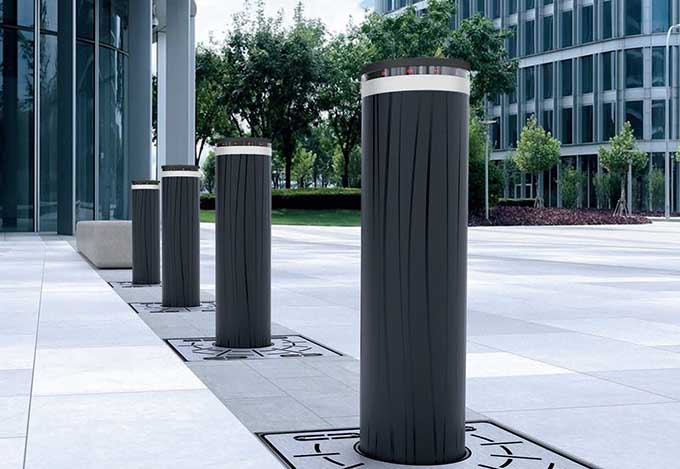
We often discuss electronic security systems such as video surveillance and access control. Yet certain physical barriers are also important elements in security. Among them are bollards, which have various applications.
By: William Pao, asmag; E-mail: asmag.com
Bollards serve many purposes. For store owners, bollards can play a key role in protecting customers/staff against vehicle crashes. “They can be used as delineation devices to separate moving traffic from another area. Sometimes this can be to delineate a vehicular traffic lane from a bike lane, or they can be utilized to differentiate a pedestrianized area (for example outside a stadium at the ticket lines) from a parking area or roadway. We also see them utilized many times to protect critical infrastructure (for example electrical equipment) or retail storefronts from vehicular impact,” said Joseph Hauss, President of Gibraltar Perimeter Security.
The Most Expensive Bollard in the World
Retail storefront safety can be much enhanced by bollards, the lack of which can be quite devastating. This is underscored in an incident in which, according to an article by the Security Industry Association, a Chicago-area man lost both his legs after an accidental crash in 2017 outside a 7-Eleven store where bollards were not installed. According to the article, the man in February received a record-breaking US$91 million settlement from 7-Eleven.
To this, Rob Reiter, Principal at Reiter and Reiter Consulting and Co-Founder of the Storefront Safety Council, commented: “What’s the most expensive bollard in the world? The one that was not installed in front of the sidewalk at a 7-Eleven store in Chicago. I have been studying the problem of storefront safety and vehicle-into-building crashes in the United States since 2010. We founded the Storefront Safety Council in 2012 to bring focus and hard data to a serious public health and safety problem that was being overlooked. What we have found after all these years is that safety has been very often neglected in those retail and commercial areas where Americans most often eat, work, play and shop.”
Thousands Injured Annually
Using the council’s statistics, Reiter cited certain figures that are particularly alarming. “Vehicles run into commercial and retail properties more than 100 times per day or more than 36,000 times per year. Each year, more than 16,000 customers, pedestrians, and employees are injured, and as many as 2,600 are killed. Many of these crashes are low-speed parking lot incidents that are easily preventable,” he said.
He added: “In the recent 7-Eleven legal settlement, evidence was revealed that confirmed more than 6,300 storefront crashes occurred at unprotected 7-Eleven stores over 14 years. Approximately 800 stores were struck three times or more, with more than 100 struck more than five times. The totals worked out to 1.3 storefront crashes per day or about 500 crashes per year at unprotected stores.”
These incidents highlight the importance of installing bollards at these premises. “Some of these areas have no protective bollard devices in place, while other places have bollards in place, but it is the wrong bollard and they still have an incident. The best practice is to procure a crash test-certified bollard from a reputable U.S. manufacturer,” Hauss said. “Bollards can be designed with aesthetics in mind with a number of decorative sleeve designs and marketing wraps that can be utilized as a revenue driver for the end user, as it can be ad space.”
Selection
The next question, then, becomes how to choose the right bollard solution for the storefront. According to Hauss, most bollards are made of carbon steel or stainless steel that is crash test-certified. “However, there are some products in the marketplace that combine proprietary materials outside of this in their design with some combination of carbon steel and/or stainless,” he said.
He adds that the user should also identify what their threat vehicle is and the location and traffic directions around the facility. “Is it just nose-in parking and pedal error that you are concerned with, or could a vehicle come off the road directly into your building at 50 miles per hour (for example errant vehicle at high speed)? Do you have high-value assets in your store that make it a target for ram raid attacks where someone will try to physically knock down the security bollard with multiple impacts from a vehicle to leave it and make a getaway in another vehicle? These are just a couple of questions to look at when identifying the correct bollard and the vehicle type and penetration necessary for your facility,” Hauss said.
Installation
The installation of these bollards is also important. According to Hauss, bollard spacing depends on vehicle vector analysis. “There are sites where nose-in parking is at a 45-degree angle and others at 90-degree. ADA (Americans with Disabilities Act) spacing also must be looked at when implementing bollards, which can differ by the municipality on what their minimum requirements are for gaps. Can the vehicle actually come in at 90 degrees? This is an important question on the spacing,” he said.
Hauss adds that spacing can also depend on the manufacturer and how they were tested and certified. “Typically, 48- to 60-inch maximum clear spacing between bollards will accommodate the angled and nose in parking and meet ADA, but you must look at how the product was tested and certified,” he said. “If a product was tested with 36-inch spacing and it is installed at 48-inch clear, it may change the loading, as two to three bollards would be impacted in the test, but only one bollard would be hit in the actual 48-inch installation, as most vehicles are less than 8 feet in width. It all starts with utilizing a well-versed consultant that knows what products are in the marketplace and then utilizing a reputable U.S.-based manufacturer.”

With the company’s strategic adjustment and business upgrade, Uniview has gradually transformed into a global AIoT product and solution provider, exploring new growth opportunities. Energy storage is one of the most important directions.
By: Tsing Tang, CEO, East Europe, Zhejiang Uniview Technologies; E-mail: tangsiqing@uniview.com
Battery energy storage systems are a crucial component of the new energy industry and have the potential to revolutionize our daily lives. They can provide power to homes during outages and enable off-grid energy solutions. Uniview constantly integrates power electronics and digital technologies to meet the ever-changing market demands. Uniview hopes to bring cleaner and more sustainable energy to consumers around the world.
The First System for Residential Environments
Among the latest exciting developments is the release of the Uniview ESS SAH5B10 A EU, the company’s first whole home energy storage system designed for residential consumers. This all-new solution serves as an excellent option for those seeking a more sustainable and efficient way to power their homes.
Uniview RESS is an energy storage system that keeps your home powered during an outage and provides energy independence from the grid. It’s just like an energy bank account where you can make deposits and withdrawals as you see fit. By storing sufficient power within the batteries, Uniview RESS can reduce or eliminate your reliance on the utility electrical grid, make electricity more affordable, and get well-prepared for unexpected blackouts, emergencies, and other disasters. Recharging UNV RESS with lower prices of off-peak grid power can also effectively reduce monthly electricity bills.
Features
To meet the market demand, Uniview RESS bears the following highlights:
- Easy installation: With just 3 step cable connection, you can set up a residential ESS
- Good components, good quality
- Smart control and monitor: With the APP, you can control and monitor ESS just by fingertips
- 7% increase in usable capacity: Uniview B10 provides 97% of the rated battery capacity to be usable, while others only 90%
- As long as 15 years lifespan: 6000+ cycles over 70% SOH, 3500+ cycles over 80% SOH
- On-grid & off-grid hybrid ESS system: Minimize the modification of home circuitry
Multiple Uses
Uniview provides accountable, high-quality, easy-to-use, and safe products, ranging from portable power stations (Portable RESS) and portable solar panels to residential energy storage systems (RESS) for homes and businesses worldwide. With the integrated and applied technologies of both lithium-ion battery energy storage and AIoT technologies, Uniview is dedicated to developing the state of art ESS products to meet the various demands of different scenarios, products to meet the various demands of different scenarios, from portable power stations to residential ESS.
More information please visit www.uniview.com. If you have any business queries, please contact
chenkexin@uniview.com

The new DoorBird A1051 Internet Firewall is now available worldwide. DoorBird is the first in the industry to launch a user-friendly solution that provides additional protection for the network of door communication systems.
The easy-to-install firewall increases security for all networks where DoorBird products are used – both inside and outside. The Berlin-based manufacturer Bird Home Automation GmbH creates another unique selling point in the field of smart IP video communication with the DoorBird A1051 Internet Firewall product. The firewall reliably stops unauthorized network traffic without the need for complicated configurations. The product is pre-configured at the factory and ready for immediate use. The installation takes place between the local Internet router and the DoorBird IP video door communication network – easily and without any prior technical knowledge. The network is protected against unauthorized access at main and side entrances, underground garage entrances, floor accesses` or other rental areas indoors. This makes the Internet firewall suitable for large office complexes, commercial buildings, apartment buildings, and single-family residences. For example, a tenant could misuse the network cable connected to an IP video indoor station to surf the Internet or gain unauthorized access to other network components in the building. Implementing firewall solutions for this purpose with well-known firewall products is expensive, complicated and most of all very time-consuming to implement on a day-to-day basis. Part of ASSA ABLOY 2 In order to meet individual network requirements, smart home systems from third-party providers (e.g. DoorBird Connect partners) can be whitelisted. The Internet Firewall can be configured comfortably remotely via app or browser.

Data centers are like many mission-critical facilities, overwhelmed by an ever-increasing volume of data generated by many siloed safety and security systems. While all these systems provide valuable information, the sheer volume of unfiltered and uncorrelated inputs results in data “noise” that drowns out what’s essential and overloads operators.
By Prasanth Aby Thomas, asmag.com
“Today, more data centers are implementing situational awareness platforms that allow operators to focus on critical insights and execute the necessary actions to help protect what matters most,” explains Alan Stoddard, President of Cognyte Situational Intelligence Solutions. “These types of technologies identify the data needed to protect an organization’s most significant assets — in this case, network infrastructure — and are also part of the power of the intelligent security operations center.”
Additionally, the data visualization framework empowers security leaders to present historical data from systems into a live dashboard. With this type of centralized, real-time view, security teams can transform the way they track, visualize, analyze, and reach their security goals.
Focus beyond the data in data centers
Data centers should consider deploying the same types of countermeasures that you would in any mission-critical facility, such as multi-factor authentication, anomaly detection, identity management, access control, and video surveillance.
But John Rezzonico, CEO of Edge360, points out that often the focus is still on the data security side. If the same protocols in establishing cybersecurity measures were used across physical security, these facilities would be better prepared to protect physical assets from threats.
“It’s also crucial for data centers to closely evaluate their video management platforms to ensure they can scale as risks and needs evolve,” Rezzonico said. “New VMS solutions today are built on modern IT infrastructure and containerization. A containerized system leads to better security because full-application isolation makes it possible to set each application’s primary process in separate containers. This also provides ease of maintenance and sustainment across an enterprise, which is more important when maintaining critical systems remotely.”
Physical security without compromising cybersecurity
While physical security integrators do need to look beyond data to get their work done, this should come at the cost of cybersecurity. In fact, ensuring both physical and cyber security with equal importance should become a prerogative for integrators because of the interconnected nature of modern devices.
“Security integrators need to ensure the vendors they are working with follow a security-first strategy when developing physical security systems,” Stoddard said. “Manufacturers should be providing physical security products that are cyber secure and tested regularly to ensure optimal compliance. This is non-negotiable in today’s evolving risk environment.”
Cyber security and physical security go together, and integrators need to know how to consider the impact of both physical and cyber breaches as part of their deployments. They must invest in understanding both sides of the security equation to deliver comprehensive service to mission-critical businesses like data centers. If not, they are opening the door to risk.
What integrators should know
Worldwide IT spending is projected to total $4.5 trillion in 2022, an increase of 3 percent from 2021, according to the latest forecast by Gartner. Spending on data center systems is forecast to experience the strongest growth of all segments in 2022 at 11.1 percent. This suggests the potential growth for physical security in this segment.
But while data centers offer a great business opportunity for security systems integrators, they need to make the customer realize its relevance. It’s essential for security integrators to work closely with the customer to make sure they know the considerations that need to be completed and the requirements for physical security within these complex environments.
“If integrators cannot teach the customer why they need to deploy the protections necessary, they shouldn’t be working within the data center market,” Rezzonico said. “To be truly successful in this market, integrators must understand the needs of the market and facilities as it relates to physical security and the customer’s complete business strategy.”
In short, to take advantage of the demand in this sector, integrators must have a clear understanding of the market and should be able to impart this knowledge to the customer. There are a number of solutions at their disposal for data center projects, but working with the unique requirements of each customer would prove to be the key.
Data centers often receive more attention for cybersecurity because of the nature of the assets they hold. While this is important, it leaves the physical side of things vulnerable to theft, robbery, and vandalism. Post the pandemic, this has become an even more critical issue because of the increased amount of data entrusted to these places.
The seriousness of the situation is not lost on most major data center managers. A quick search on Google for data center physical security would throw up specific pages on how AWS and Microsoft Azure protect their sites. That these companies feel the need to explain the measures they take indicates the severity of the matter.
But the biggest challenge in protecting data centers is the rapid pace at which they grow and evolve. Integrating physical and logical systems in such a dynamic environment requires careful consideration of various factors and optimized strategy. Asmag.com spoke to some of the top industry professionals to understand the biggest threats to data centers and how integrators can go about protecting them.
Major threats to data centers
Most data centers focus on software and implement data security tools such as firewalls to identify and mitigate cyber threats. But the need for the physical security of these facilities is paramount. A breach in physical security can lead to data theft and cause breaches that compromise data security.
“With the increasing threat of cyberattacks and natural disasters, we must work to ensure the security of data centers to protect intellectual property, ensure compliance and maintain security and resiliency standards to keep these facilities safe,” said Alan Stoddard President at Cognyte Situational Intelligence Solutions. “Additionally, we must be cognizant that data centers are evolving. The increased deployment of cloud-based and edge data center facilities will increase the demand for physical security solutions in the coming year.”
But perhaps the real problem now is not the lack of technology to protect data centers but the lack of its appropriate use. John Rezzonico, CEO of Edge360, pointed out that the lack of timely upgrades and maintenance is a major cause of concern.
“Data centers typically have many physical security devices in a small space or area, which can be challenging to manage,” Rezzonico said. “On top of that, many data centers establish security systems and then allow physical security software, like video management platforms, to become outdated. But this fact must change: As more businesses shift to remote work and the storage of critical data via the cloud and within these data centers expands, the need for solid security in these facilities is growing, and protecting them becomes more critical.”
It’s also important to note that the focus for these facilities has primarily been on protecting the network, which means physical security programs have taken a back seat. But the protection of the brick-and-mortar facility is just as, if not more, important as ensuring captured data is protected.
Checklist for data center physical security
Data center security should follow a specific formula for protecting assets, with the idea of concentric circles. The outer layer represents perimeter security; the next is the hardening of the facility itself and preventing unauthorized access.
Next, security leaders should focus on securing the racks where the data and servers are stored. Finally, there must be another added layer of security around the controls for those server rooms to prevent any bad actors from accessing them.
“At each level, there needs to be a standard amount of physical and cyber security protection, which should be common practice across data centers, whether public, private, co-located, or on-site,” Rezzonico said. “The same policies and methodologies should be applied no matter the size, type of data center, or location. Still, they are often not, creating a facility that lacks the proper security measures for protecting critical data.”
Stoddard agrees that the best way to secure a data center is to manage it in layers. A multi-layered approach best supports proactive planning and makes identifying and mitigating a failure or breach easy. Here are some best practices that he suggests to consider:
1.Conduct regular audits: Internal audits ensure that systems and processes are working as intended. Audits should check for vulnerabilities in the data center facilities as well as across systems and devices.
“Access control systems, video surveillance cameras, and electronic locks must be checked to ensure proper function,” Stoddard said. “Security leaders should also continually assess whether a change in personnel calls for an update in the procedures and systems.”
2. Strengthen situational awareness: Any facility requiring extra protection, like a data center, should adopt an intelligent security approach. Funneling all data and systems into one centralized platform provides a higher level of oversight over security and operations.
3. Establish redundancy: Avoid the opportunity for downtime or system failure that results in a shutdown by creating redundancy across your data center operations. Data center failures can be prevented with proactive planning, testing, and awareness.
4. Enhance video surveillance: Video systems should be comprehensive and cover indoor and outdoor areas. Additionally, 24/7 video monitoring is critical to helping identify potential anomalies before they become more significant issues. Security guards can also be an essential component in augmenting technology.
5. SOP updates: Standard operating procedures need to be evaluated and tested regularly. This process also includes refresher training on the emerging or new security measures that need to be followed. Because risks are changing and evolving rapidly, regular checks of existing processes and procedures are recommended.
Conclusion
The technology needed for physical security at data centers is not complex. But what is often not up to the mark is the maintenance and operation. Steps like regular audits and SOP updates that Stoddard suggested highlight this concern.
In the coming years, we will likely see the number of data centers increase worldwide as more customers become aware of the importance and convenience of cloud-based solutions. This means more opportunities for physical security systems integrators. While challenges are a concern, it presents new growth areas with the right approach.