Fire safety is a fundamental requirement in modern construction as it saves lives, property, and investments.
Electrical smoke ventilation systems not only ensure safe evacuation routes and minimize structural damage during a fire but also enhance everyday building functionality.
Beyond emergency use, these systems integrate comfort ventilation for daily use to improve indoor air quality and comfort for building users.
For building owners and users, these systems represent a solution that delivers on every level – from compliance and cost-effectiveness to safety and user experience.
The ability of electrical smoke ventilation systems to combine reliability, energy efficiency, and advanced technology makes them indispensable in modern construction.
What are electrical smoke ventilation systems and how do they work?
Electrical smoke ventilation systems are designed to remove smoke and heat during a fire. By creating controlled airflows, they keep escape routes clear and minimize damage to the building.
Electrical smoke ventilation systems typically consist of:
Electric opening systems: Open and close ventilation points like skylights.
Smoke and heat detectors: Trigger the system when dangerous levels of smoke or heat are detected.
Control panels: Automatically activate the system or allow manual activation during an emergency.
When triggered, the system opens strategic ventilation points to create natural airflow. This process, called Natural Smoke and Heat Exhaust Ventilation (NSHEV), achieves:
Smoke-free escape routes for safe evacuation.
Lower temperatures to protect the building’s structural integrity.
Improved visibility for firefighters, enabling faster response.
The precision and reliability of electrical systems ensure consistent performance in critical moments.
Why choose electrical systems?
There are various technologies on the market for smoke ventilation. However, electrical solutions offer several key advantages, including:
Low maintenance and service costs: Electrical systems have very few maintenance demands. In the event of service or a fault alarm, skylights can be closed remotely from the control panel, eliminating the need for manual intervention on the roof.
Built-in comfort features: The electrical system has an integrated option for natural ventilation/climate control (comfort). Upgrading existing systems to comfort ventilation only require the addition of specific accessories.
Great reliability: Electrical systems are less sensitive to environmental factors like temperature changes, ensuring consistent performance. Systems like those from Actulux are tested to operate reliably in both extreme heat during summer and freezing winter conditions, making them suitable for a variety of climates.
Communication and integration: Electrical solutions can be easily adapted to modern building automation systems and allow remote monitoring and control. They work seamlessly with centralized controls, enabling real-time communication of alarm/fault signals from the control panel.
Local compliance: Electrical systems can be adapted to meet regional safety regulations, ensuring smooth integration into local construction standards.
Benefits of electrical systems for building owners
Building owners benefit significantly from electrical smoke ventilation systems, both in terms of safety and cost efficiency. The key advantages for building owners include:
Low maintenance and long lifespan: Electrical systems require minimal upkeep, helping to reduce operational costs over time.
Regulatory compliance: Meeting strict safety standards simplifies approval processes with local authorities.
Integration with building automation systems: Electrical solutions can be seamlessly integrated with alarms and centralized control platforms, providing full oversight of the building’s safety measures.
For building owners, these systems represent a forward-thinking investment in operational efficiency and safety.
Benefits of electrical systems for building users
The ultimate beneficiaries of electrical smoke ventilation systems are the people who live, work, or visit the building. Benefits for users include:
Enhanced safety during fires: These systems ensure clear evacuation routes by removing smoke quickly and effectively.
Improved indoor air quality and comfort: Many electrical systems double as ventilation solutions for daily use, improving air quality and comfort.
Peace of mind: With advanced monitoring and self-testing, occupants can trust that the system is always ready to protect them in an emergency.
For building users, these systems deliver both immediate safety and long-term benefits, improving their overall experience within the building.
Please insert this text in a factbox:
Why must skylights open in the event of a fire?
Opening skylights is a crucial aspect of fire safety as it allows smoke and heat to escape, protecting both lives and the building itself. Smoke poses the greatest threat during a fire, often being the primary cause of fatalities due to reduced visibility, toxic inhalation, and blocked escape routes.
By opening skylights strategically, smoke and heat are expelled, providing several critical benefits:
Smoke removal: Open skylights create natural airflow, allowing smoke to rise and escape. This prevents it from accumulating in hallways and other critical areas.
Clear evacuation routes: By removing smoke, escape routes such as staircases and corridors remain accessible, giving occupants a safe path to exit the building.
Structural protection: Heat trapped inside a building can weaken its structural elements, increasing the risk of collapse. Proper ventilation lowers the temperature, protecting the building’s integrity.
Support for firefighters: Ventilating smoke and heat improves visibility and prevents fire from spreading, enabling first responders to work more effectively.
Modern electrical systems automate this process, ensuring that skylights open quickly and strategically during a fire, saving precious time and lives.
Akureyri is the “Capital of North Iceland” and is the second largest urban area outside of Reykjavík. Situated at the head of Eyjafjörður, one of the longest fjords in Iceland, and with Hlíðarfjall mountain as a backdrop, it’s no surprise that the town is also a hub for adventure tourism.
At the base of Hlíðarfjall with views over Akureyri sits Hótel Hálönd, a new self-service hotel. Local, certified ICT Partner, Securitas Iceland were challenged to keep the property secure and provide guests with an automated check-in process, to minimize the need for staff onsite helping keep hotel rates down.
Challenge.
Accessible, but secure feel for visitors and staff
Automatic delivery of guest access codes
Remote monitoring and notifications for staf
Solution.
Protege GX with keypad readers for keyless entry
Data Sync sends PINs to guests 15 minutes after booking
Email/mobile notifications for staff if response needed
“Not many people believed in our idea of an unmanned hotel, but Securitas changed that with a smart technology solution from ICT. “
– Írena Sædísardóttir, Hotel Manager at Hótel Hálönd
Outcome.
Find out more. Server-based access control system, Protege GX, uses Data Sync to talk to the hotel reservation system. This software licence allows easy bi-directional integration with external data sources. At Hótel Hálönd it syncs customer bookings and access rights to the hotel, so when guests are confirmed, access codes are automatically sent within 15 minutes. It also ensures that PINs are only usable for the booking period and deleted when guests leave.
The tSec Keypad Readers connected to each door means that each unique guest PIN can be used to access guest rooms, ski/bike equipment storage, and other areas. Video surveillance also makes it easy to monitor and ensure the safety of guests in the hotel.
This solution delivers considerable cost savings as Hótel Hálönd has minimal staff, so guests benefit from competitive prices. They also have the freedom of no key or card to carry, easy access to communal areas, and no check in and out formalities.
“Protege GX meets all the customer’s needs. The flexible, modern technology makes it easy to bring self-service to life for the hotel.”
In today’s digital world, it’s little surprise that cybersecurity is top of mind in many boardrooms. Indeed, 96% of CEOs say that it’s essential to their organisation’s growth and stability, according to Accenture.
And they are right to be concerned, because cybercrime is projected to cost the world a staggering $9.5 trillion USD in 2024 according to research firm, Cybersecurity Ventures. Such losses can be business-ending, without even considering the cost of reputational damage and unscheduled downtime.
By Jos Beernink, Vice President EMEA at Milestone Systems
The cyber-risks of video
Being aware of the risks of an insecure video surveillance system – and how to mitigate these – is therefore a critical skill for all security leaders. Cameras, connected sensors, and video management software (VMS) can present attractive targets for malicious actors, thanks to the data collected by them. This data can be used for blackmail or to gather confidential information. Hackers can sell footage of your building layout and staffing levels at different times of the day to criminals, for example.
IP cameras can also be used as gateway devices for larger attacks, including global distributed denial of service (DDoS) attacks that use connected cameras and other devices to send a flood of traffic to targeted websites and other infrastructure.
When it comes to protecting businesses, no two systems will be the same. The protections for a school will be very different to that of a data centre or solar farm. The first step in protecting your organisation and its surveillance systems, therefore, is understanding what needs to be protected, how, and from whom. Plus the potential damage that can occur when (not if) an attack happens.
The NIS2 Directive
Protecting your camera and video systems is about to become even more important due to the incoming NIS2 Directive, a Europe-wide legislation that aims to boost the overall level of cybersecurity in network and information systems. Any surveillance installation that falls within targeted “essential” industries will be impacted by this (these include the energy sector, transport, banking, public administration, and digital infrastructures).
Under NIS2, users are required not only to assess their own systems, but also conduct a comprehensive risk assessment to ensure their entire supply chain is compliant. In today’s interconnected systems, achieving compliance across the supply chain can be challenging.
By way of an example, the Log4j vulnerability recently affected millions of computers across the world, and highlights the direct impact on systems utilising this open-source logging library as a small part of their software suite. It’s notable that a few software manufacturers, including Milestone Systems, which prioritize secure design and avoid any use of open source, remained unaffected.
The NIS2 Directive recognises that physical security threats pose a significant risk to organisations with digital operations. Installing cameras and other systems to control access to digital assets like server rooms and data centres is vital. Such organisations will need to take active, ongoing, steps to ensure their video network’s security is as robust as possible.
The importance of physical security
One unique aspect of video networks is how many devices are located in public, potentially vulnerable, areas. Most organisations need to install cameras to monitor busy areas, entrances and exits to restricted areas, or remote parts of a site. This can have the effect of putting cameras at higher risk; making it easier for attackers to gain access and disconnect devices. This means that multi-layered security to keep devices safe and separate from the wider IT network is essential. It also means that without adequate protection, a video surveillance system can be less secure than a classical IT system. That’s worth bearing in mind when addressing your video and IT network cybersecurity as a whole.
Everyone’s responsibility
The NIS2 Directive emphasises that IT and security work together to build a robust cybersecurity strategy. Your IT team will need to be closely involved when implementing your video cybersecurity strategy. They will work with you on some of the foundational elements of protecting your VMS and connected devices, because of their experience in areas like virtual private network (VPNs) and virtual local area networks (VLANs).
Knowing who takes care of what, can help you to assign accountability for things like upgrades, auditing, and penetration testing. Sometimes an external party, like a manufacturer or installer, is responsible for some aspects of your cybersecurity. Therefore, when starting your cybersecurity strategy, you’ll need to check:
Assess the nature of the business – and its goals.
Determine the local rules and regulations.
Confirm who is responsible for maintaining your system.
Ask who monitors your system. Unusual traffic or alerts of technical errors can be an indication of a cyber-attack.
Be clear about who has access to your video and computer network. Is the level of access appropriate to their needs? Does an operator have too high a level of access, or does someone who has left your organisation still have login credentials?
Speaking of access, you’ll also need to consider physical elements like who has access to a VMS server room. Alarms and access control measures can help to prevent unauthorised individuals from getting into sensitive areas where your video data is located.
Consider the human element
It’s worth considering your overall training program, as the human factor can be a significant weakness in your cybersecurity — accounting for between 88 to 95% of data breaches, according to a joint study by Stanford University Professor Jeff Hancock and security firm Tessian. Even something as simple as re-using a personal password to log into a VMS account, or falling for social engineering attacks (like an ‘urgent’ email from a manager requesting account details) can undermine every technical cybersecurity feature you implement.
Hence why regular training for your security team is important, as it can keep them updated on the latest threats and new ways to protect themselves and your system from harm. User control can also assist here, with admin and data access rights only given to those who require it. Assigning different VMS user credentials will (hopefully) prevent password sharing and allows you to remove a user’s access when they leave your company.
Foundational cybersecurity measures
Alongside this, there are some basic foundations that you can ensure you’re following to make your video system less attractive to attackers. These include updating your cameras’ firmware and VMS device drivers to the newest versions. Updates are typically made on an ongoing basis, so make sure your camera manufacturer issues regular security updates that include vulnerability patching and additional protections against new threats. Much like how keeping your smartphone or laptop updated reduces the risk of a hack, staying up to date with your VMS and camera updates will make them less attractive to hackers.
Disabling your cameras’ built-in admin account, or changing the default password is one of the first things to do when installing a new device. Then you can ensure your cameras are only supporting HTTPS (the secure version of HTTP).
To ensure the best protection, your chosen password should be a combination of lowercase and uppercase letters as well as special characters and numbers. They should contain no easily guessable words or phrases – using the word ‘password’ is an absolute no! Passwords also shouldn’t contain any information that identifies a user, or that a hacker could gain off of their public profiles and social media. As importantly, VMS accounts shouldn’t be shared by multiple users.
Keep your networks separate
Generally speaking, it’s a good idea to keep your video network separate from your wider IT network. You can do this through VPNs (which is essential if you have people accessing your systems remotely, outside of your local network), and through VLANs that keep your video system partitioned and isolated from your other computer systems. If your cameras or VMS are compromised, for example by someone accessing a device located on the street or from an operator unwittingly using a USB with malware on it, a hacker cannot use your video system to access more of your organisation’s data. It serves to limit the damage.
The importance of multi-layered security
A widescale breach in 2021 offers a hard lesson in what can potentially go wrong when you fail to secure your camera systems effectively. A cyber-attack on a system provider in the USA exposed video recordings from 150,000 cameras, but also the sensitive financial information of high-profile customers. Hackers gained access to the provider’s systems using a username and password that was exposed in the public domain. This illustrates the importance of good password habits (regular password changes, using hard-to-guess passwords, and training people not to share their passwords with others).
Over 100 employees had ‘super admin’ privileges in the provider’s system, which gave access to footage from thousands of customer cameras, unknown to them. Setting the right access level for each user, ensures that the risk and potential spread of a hack is limited. Put another way, the more admins you have, the more targets there are for hackers to exploit.
Finally, alongside camera footage, hackers could also access sensitive financial and customer information through the breach. Separating your video network from your IT network limits how far a hacker can go if they do access your system. It prevents them from accessing your business’ financial and product data, operations, and other sensitive systems.
Cybersecurity is continuous
With all that said, every system will have vulnerability and the cybersecurity space is constantly evolving. Being aware, in control, and responsible when using video will go a long way in protecting your organisation.
To help you on your journey towards a cybersecure video network, Milestone Systems is hosting a series of cybersecurity webinars. Whether you are starting out on cybersecurity or are looking at building on existing cyber measures, these webinars and events will help you build resilience in your video system. More details of these webinars, including the first webinar on the foundational elements of a video cybersecurity strategy, can be found here: t.ly/nuvno.
Learn what Milestone can do for your organization. Our video management software (VMS) can be customized to meet your every need. From keeping people and property safe to operating businesses more efficiently. We invite you to experience the power and functionality of Milestone’s VMS software through the exclusive Demo Trail, providing a hands-on experience with our state-of-the-art video management solutions.
About Milestone Systems
Milestone Systems is a leading provider of data-driven video technology software in and beyond security that helps the world see how to ensure safety, protect assets, and increase business efficiency. Milestone enables an open platform community that drives collaboration and innovation in the development and use of network video technology, with reliable and scalable solutions that are proven in more than 500,000 customer sites worldwide. Founded in 1998, Milestone is a stand-alone company in the Canon Group. For more information visit: www.milestonesys.com. For news and other press releases, visit our Newsroom.
When buying a security system, decisions often come down to the price tag of cameras, storage, and installation, yet taking this approach can leave the end user with major challenges ahead. Surveillance systems last anywhere from five to 20+ years, so condensing all cost considerations down to the initial expense fails to consider the bigger picture.
The initial costs to purchase and set up a security system tend to account for just 30% of the total costs experienced during the lifetime of the system – also known as the total cost of ownership. Despite this, many end users may even make their decision based on the price of cameras alone. In effect, they are making their choice with just a 10-15% view of the total security system costs. The reality is that roughly 70% of expenses come after the system has been installed. Sadly, these can come as a nasty surprise for those end users who have not considered the indirect security system costs.
Taking some time to think about how the system will be used and the costs associated with that use can create significant savings in the long run. Initial choices – such as the type of device to deploy –impact future expenses, from power consumption to monitoring and maintenance. While we’ll focus on cameras specifically here, this principle applies to any device within a surveillance system. Considering the total cost of ownership will help you to identify the questions to ask as you make your decision on which new security system to purchase.
Look Beyond the Cameras’ Price Tag
Filtering is an important step in the purchase process: setting out your surveillance requirements and the available budget is key to narrowing down your choices. Unfortunately, too many initial conversations around requirements focus on the cameras alone, without considering the broader requirements of the system as a whole – from energy use to storage needs.
It might be tempting to focus the budget conversation on cameras, rather than where money will need to be spent to operate and maintain those cameras. Yet the security system will need to support your needs for the foreseeable future. It’s worth remembering that the costs to operate, monitor and maintain certain cameras often exceed the devices themselves and must therefore be weighed up before the purchase is made.
Forecasting Storage Costs
If you’re in the market for a new surveillance system, it’s very likely that you’ll need to consider how to store footage once recorded. On average, legislation requires potential evidence to be stored for a month. Yet in some regions or use cases, this is extended to 180 days – making storage a considerable factor in overall security system costs.
To avoid being caught out with significant server and electricity expenses after cameras are installed, it’s critical to consider the different storage costs associated with each camera model you’re considering. It can be a false economy to purchase cheaper cameras to cut down the initial outlay if they come with vast storage requirements, forcing you to spend more on servers and energy costs in the long run.
Equally, if you plan to reduce storage costs by shrinking the size of the video stored, you will need to carefully choose the right devices to ensure that compressing the video doesn’t compromise evidence quality by pixelating or blurring images to the point that it’s no longer possible to identify a suspect. Ending up with poor-quality footage that cannot act as useful evidence can defeat your objective of installing the security system in the first place. Some cameras come with sophisticated technology that can reserve all the important forensic detail you need while lowering bandwidth and storage requirements, and therefore long-term costs. It’s worth checking any claims of high-quality footage with low storage requirements before you install the system to ensure it meets your expectations.
Each set of requirements is unique. For example, you may require high-quality images even in the dark. While some cameras might compensate for low light levels by increasing the gain and therefore, storage requirements and costs, other options use alternative light-optimizing technologies that do not have the same large-scale impact on storage costs. They might even help you to save your budget by removing the need for additional external lighting.
Anticipating All Indirect Costs
The type of device you choose will influence costs far beyond storage. To forecast the full security system cost, monitoring, maintenance, and electricity use must also be considered.
Once you crunch the numbers, the costs can start to build up quite quickly but crucially, the devices you choose will have a knock-on impact on the extent of these figures. Opting for more economical cameras and devices at the start can result in staggering indirect costs. By contrast, choosing higher-quality cameras and devices at the outset can enable you to cut those indirect security system costs in the long term, introducing savings that you can use to reinvest in and grow your business faster.
As one example, owners of surveillance systems installed in tough environmental conditions, such as a maritime port or chemical plant, may face significant maintenance bills to clean salt water and dust off cameras. By upgrading to more sophisticated cameras that offer remote cleaning functions, or have been designed with self-cleaning materials and components, such as a hydrophilic dome, they can reduce the maintenance – and therefore costs – required.
Turning a Purchase Into an Investment
By considering how your initial decision on which type of camera to buy can impact the chain of future costs, you can shift the purchasing decision into an investment. Achieving this can be as simple as asking yourself just a few questions.
The first concerns the features you want to get with the camera, as well as the need for storage space that getting such a camera entails. Another question concerns the projected costs of powering such a system in the long run. It is important to get a picture of the role of supporting technologies in the camera in the formation of total costs. Finally, it is worth looking at their share in general costs.
The question ‘How much does a security system cost?’ goes far beyond the initial purchase. Making the right choice for you based on the bigger picture can mean a slightly higher initial outlay, but it pays itself back in the long run.
In short, taking the time to ask the right questions at the outset – and finding partners who are open to answering those questions and helping you calculate the long-term costs – allows you to avoid any nasty surprises in future electricity, storage, operational, or maintenance costs. Importantly, it will also ensure that you end up with the security system that is right for your specific requirements.
Five Steps to Optimize Your Investment
Deciding which security system to purchase demands careful consideration. After all, security systems can last for five years or more, so weighing up all relevant factors at the start can lead to significant cost savings and an improved return on your investment (ROI) in the long run. While it may feel daunting, there are five straightforward steps you can follow to ensure you are making the most of your investment. Following these steps enables you to decide on the right security system for your organization, while also optimizing your investment.
Choose the Camera According to the Value It Adds
It may seem obvious but as an initial step, ask yourself “Why are you buying cameras?” Device price and features are important considerations, but it’s vital to understand what your organization needs the cameras to do before you start to weigh up the value of the different functions on offer in each.
Clarity here is vital to figuring out if the cameras on your shortlist will perform in the way you need or provide the evidence you require. For example, are you installing a security system to protect profits in a retail environment by tackling theft and fraud? Are you aiming to optimize production and avoid downtime in a factory? Or are you looking to ensure the safety and security of your employees and passengers in a public transport setting?
There are many different ways in which security systems can be deployed to help your organization – from improving security to creating business value. Narrowing down why exactly you are purchasing the system is a key first step to ensuring you are set up to optimize your investment.
Calculate How the Device Influences the Rest of the System
Next, you will need to figure out how your camera choice affects the rest of the system. Storage is an obvious factor in this calculation. More inexpensive cameras may seem appealing but if their compression technology is limited to reducing bitrate to lower bandwidth and storage requirements, that saving comes at the cost of quality footage – jeopardizing the very reason you’re installing the system in the first place. On the other hand, more sophisticated cameras may have a higher initial cost but come equipped with intelligent algorithms that preserve relevant forensic information in full resolution and at a full frame rate while requiring a lot less storage space. As a result, you can recoup the initial price through lower storage costs in the years to come.
Yet storage requirements and costs are only one piece of the calculation to consider at this point. What about ease of installation? Or how fast it will be to configure the devices and add everything to your system?
It’s also worth thinking about what accessories you will require to ensure the security system meets your objectives if you choose certain camera models. For example, if the cameras you have chosen require extra accessories to mount, this will have a knock-on impact on installation – making it slower and more costly than initially predicted. If you realize this on the day of installation, there is a significant risk of delays to the whole project. To optimize a security system investment, the full picture of all costs – not just the devices themselves – is important.
Estimate the Cost of Using and Running the System
It’s also important to ask, ‘What happens once the system is up and running?’ This step is often overlooked: some may accept the system’s operational costs as the natural cost of doing business, while others may not put too much thought into it if it ends up under another department’s budget. Yet spending some time to think about the costs required to keep the system up and running is important for all decision-makers involved in purchasing a security system: it’s where the bigger losses creep in. While it might not affect you or your department directly, it impacts your organization. And if your company loses money through the system’s high running costs, it could eventually impact your budget too.
This means that it is worth thinking about the electricity usage, required maintenance and the costs of monitoring the system. But how can the different cameras in your shortlist affect these costs? You can assess this by writing down a few key questions.
First, you need to consider how much power your cameras use and how this might affect your electricity bill? On a related note, how much storage do you need for specific cameras and how does that affect your electricity costs in the long run? Finally, you need to know if the cameras offer any smart functionality to reduce the overall cost. For example, do they offer superior analytics performance such as deep learning and edge analytics, reducing false alarms and speeding up forensic search to reduce operational costs? The devices you choose will ultimately impact all the costs to come throughout the security system’s lifecycle.
Predict the Impact the System Will Have on the Business
Once you have mapped out the bigger picture cost implications for the cameras on your shortlist, consider the end result: how will the system help your business? Will it drive greater efficiency, reduce theft, improve the service you provide to customers, and improve employee retention by creating a safer workplace?
Ultimately, the correct security system for your organization can create business value, which translates to improving the bottom line. It’s important to quantify how the security system will impact your business so you can weigh those benefits up against the total costs when making your decision.
Thinking this through often involves collaboration across departments, ensuring the bigger picture of the system’s impact on the business as a whole is considered. As an added benefit, cross-departmental cooperation also opens up the possibility of tapping into bigger budgets and getting additional buy-in on the surveillance system as well as the advantages it can bring to the business.
Make the Best Decision for Your Organization
This final step is about evaluating the information you have uncovered in the previous stages and factoring all of those insights into your final decision. As long as you are taking some new insight from this process, whether considering the value added of the device you are choosing or calculating its associated running costs, you are taking a step in the right direction – moving from purchasing a security system to making an investment that can reap better rewards for your organization.
Completing this exercise of working through the various scenarios attached to purchasing different security devices will set you up to optimize the system you buy to your company’s benefit. Rather than making a choice based on upfront cost, you are making a decision with the long-term view in mind and reducing the risk of unpleasant surprise costs cropping up in the years to come.
Working with the right partner to select the right system
Importantly, you don’t need to do this alone. The process of asking these questions helps you identify which partners are invested in your organization’s long-term success. It’s critical to find the right partner who will work through these scenarios with you to find the system that works in your best interest – both in terms of a total cost of ownership that works for you and a system that meets your requirements to drive long-term value.
With the company’s strategic adjustment and business upgrade, Uniview has gradually transformed into a global AIoT product and solution provider, exploring new growth opportunities. Energy storage is one of the most important directions.
Battery energy storage systems are a crucial component of the new energy industry and have the potential to revolutionize our daily lives. They can provide power to homes during outages and enable off-grid energy solutions. Uniview constantly integrates power electronics and digital technologies to meet the ever-changing market demands. Uniview hopes to bring cleaner and more sustainable energy to consumers around the world.
The First System for Residential Environments
Among the latest exciting developments is the release of the Uniview ESS SAH5B10 A EU, the company’s first whole home energy storage system designed for residential consumers. This all-new solution serves as an excellent option for those seeking a more sustainable and efficient way to power their homes.
Uniview RESS is an energy storage system that keeps your home powered during an outage and provides energy independence from the grid. It’s just like an energy bank account where you can make deposits and withdrawals as you see fit. By storing sufficient power within the batteries, Uniview RESS can reduce or eliminate your reliance on the utility electrical grid, make electricity more affordable, and get well-prepared for unexpected blackouts, emergencies, and other disasters. Recharging UNV RESS with lower prices of off-peak grid power can also effectively reduce monthly electricity bills.
Features
To meet the market demand, Uniview RESS bears the following highlights:
Easy installation: With just 3 step cable connection, you can set up a residential ESS
Good components, good quality
Smart control and monitor: With the APP, you can control and monitor ESS just by fingertips
7% increase in usable capacity: Uniview B10 provides 97% of the rated battery capacity to be usable, while others only 90%
As long as 15 years lifespan: 6000+ cycles over 70% SOH, 3500+ cycles over 80% SOH
On-grid & off-grid hybrid ESS system: Minimize the modification of home circuitry
Multiple Uses
Uniview provides accountable, high-quality, easy-to-use, and safe products, ranging from portable power stations (Portable RESS) and portable solar panels to residential energy storage systems (RESS) for homes and businesses worldwide. With the integrated and applied technologies of both lithium-ion battery energy storage and AIoT technologies, Uniview is dedicated to developing the state of art ESS products to meet the various demands of different scenarios, products to meet the various demands of different scenarios, from portable power stations to residential ESS.
More information please visit www.uniview.com. If you have any business queries, please contact
Digital infrastructure technologies are now available to the building industry as it seeks to reduce energy consumption while hosting billions of connected devices. The use of Ethernet cable infrastructure for combined power and data communications solves smart building connectivity, power delivery, network topology, and thermal management issues. This will streamline processes and improve building performance while creating fully connected and environmentally sustainable 21st-century spaces.
By: Robert Zore, Business Development Manager, EGAL
In a security context, public and private multiple and single-use buildings require ever more security and access control. For example, schools, hospitals, government, and other public buildings must balance the needs for accessibility and security by ensuring a building’s physical security at access points and through the expansion of video monitoring. Another change is that the future direction of buildings in urban environments is upward. That means major changes to modern buildings as multi-use and shared environments become ever more common. It is forecast that future city dwellers will live, work, learn, and find leisure within single complexes. This will fundamentally change the number of data sources and data patterns managed by the infrastructure. Single-use environments will also see more need for robust, secure, low-energy digital infrastructure.
These trends all point towards ever-increasing numbers and variety of connected nodes, and the necessity to maintain energy use with optimized parameters for buildings. BSRIA’s (Building Services Research and Information Association) Convergence and Digitalisation of Commercial Buildings in the US, predicts substantial growth for PoE-powered devices across the business environment, as illustrated below:
Device Use Cases
Infrastructure operations, interactivity, and interoperability have been evolving toward PoE over time. The use of PoE started with VoIP in the 1990s, moved on to CCTV around 2000, and onto HVAC controls and lighting. This expansion of capabilities meant the control of these applications being transferred onto the data infrastructure plane. Now PoE is extending to powering and communicating with an ever-growing variety of physical devices.
Low voltage cameras, embedded sensors, kiosks, wireless access points, physical access points, digital signage, and displays are being deployed in ever greater numbers. Market forecasts show an explosion in the number of devices about to enter buildings. Wireless access point numbers alone are forecast to expand by 30% per year until 2027. Kiosks and digital screens will become ubiquitous in multi-use environments.
According to a report on the Global Kiosk Market, published by KBV research, the global kiosk market will reach $5.4 billion by 2024, at a growth rate of 26.4% CAGR. The demand for self-service machines and automated devices, wireless communication, technology advancements, and remote management are some of the notable factors driving the global kiosk market.
Proven, Viable, and Cost-effective Solution
High-performance cable infrastructure is the base layer for these smart technologies. All these different devices need to run over a single network that provides power and data. With lower installation costs, fewer hazards, and more flexibility, PoE is a proven, viable, cost-effective solution. Since 1995, history tells us that connected devices are moving to PoE for power. For example, the latest standards show PoE delivering up to 99w over twisted pair cables – this is easy enough to power the latest lighting, wireless access points, kiosks, and more.
In the built environment, too many networks remain siloed and separate. This approach is no longer suitable for the new era of intelligent buildings. The new generation of architects and engineers are those responsible for the delivery of the next generation of smart digital buildings. Understanding the power and benefits of future-proofed PoE cable infrastructure is at the core of physical, economic, and digital innovation.
As buildings become increasingly complex and we see the rise in smart buildings, the use of building management systems (BMS) will only continue to grow to control the many systems installed in a building. Vladimir Zrnic, Sales Manager for Southern Europe at Advanced explains more.
BMS is a relatively new addition to modern buildings. Thirty years ago, each individual system in a building was controlled separately and manually. This evolved into each system being controlled and monitored by a computer. The next step was to unify the equipment into one master control system that networked all the mechanical, electrical, IT, and security systems of a facility. And so BMS was created.
Integrating all the components into a single cohesive unit allows the various systems to share information so they can work more effectively. The resulting interoperability is greater efficiency, lowered operating costs, and a more secure, safer, and responsive building environment. It also improves reporting, information management, and decision-making with facility-wide insight and control for better performance.
Early BMS was limited to connecting to building systems from one manufacturer but there has been a rise in open communication protocols such as BACnet and Modbus which allow third-party devices, such as fire panels, to be easily integrated with the BMS. So how do third-party devices communicate with the BMS?
Fire Safety
A field controller for integration, such as the Advanced Commander, is a powerful IP-based solution for customers that need protocol translation between an Advanced addressable fire panel and a BMS. The Advanced Commander is a simple bridge between manufacturers’ components. It’s also bi-directional so it can monitor and communicate with other systems the BMS is connected to. For example, the BMS can send messages to an Advanced fire panel and the panel can send messages back – so, in a fire, it could close dampers in the ventilation system to stop smoke spreading, shut down fans, start the smoke extraction system, and send all the elevators to the ground floor and park them to prevent people from using them. This two-way communication is particularly useful in complex buildings, such as data centers which rely on power and cooling systems. Here through integration with the fire panel and the BMS, there may be a connection with HVAC, allowing control of dampers and fans, as well as the access control system and power supply system monitoring and control.
It’s also beneficial if a field controller offers flexibility by being able to work with both the BACnet and Modbus open networks, such as the Advanced Commander, which also goes one step further. If a field controller is incorrectly specified to one of the protocols by the customer, they can simply call Advanced and have the protocol changed remotely.
Easy configuration is also vital. With the Commander, users can configure exactly what they require to meet the fire safety needs of each building e.g. the number of connected devices and loops etc. The Commander supports up to 640 Objects/Tags of information, which can be configured and passed between network components and delivered to the BMS using TCP/IP technology. TCP/IP connectivity allows the Commander to be located locally to the distributed network of fire control panels, but at the same time caters for remote programming and BMS access. The Advanced Commander has a built-in Webserver to provide advanced control, display and management.
BMS integration is set to go further still. With new smart buildings, a BMS will be able to control a building without anyone actually managing it on site allowing users to monitor and change things in a building from a distance. BMS is already offering building managers efficiency, reduced costs, and reliability and with the advent of open communication protocols and field controllers, like the Advanced Commander, users are able to seamlessly integrate their fire system and monitor and control their buildings. With the rise of smart buildings, BMS is set to be an essential part of any commercial building.
For further information on Advanced’s AxisGo email: vzrnic@advancedco.com or visit: https://uk.advancedco.com/
Ajax innovations have reached a new level. Contrary to the technology from the 80s that is still present in the security industry, our engineers have developed Fibra — a digital-generation wired technology. Fibra combines the reliability of wires with the freedom of radio connection. An ordinary four-core cable, coupled with Fibra, demonstrates absolutely unordinary features.
Up to 2,000 meters of connectivity, compatibility with all types of devices, 60 hours of operation of a system consisting of 30 devices on a backup battery, advanced anti-sabotage, photo verifications, instant notifications, hassle-free installation and remote configuration through an app — everything that was possible in wireless Ajax is now available with wires and Fibra.
Wireless experience in a wired connection
At the physical level, Fibra looks like a bus connection: detectors are connected to a control panel with a four-core cable. However, the real revolution is hidden at the software level. Fibra communication protocol has inherited all the advantages of Jeweller radio technology; it requires minimum power for two-way packet data transmission. This feature provides more freedom when installing the system compared to both the analog and digital solutions available in the market.
One Fibra line can connect one detector or dozens of various detectors, sirens, and keypads in any combination. MotionCam Fibra detectors are no exception. You don’t need a separate cable to receive photo verifications. They are transmitted over the same line that the system devices use to communicate events. In the Ajax app, devices are organized by rooms and groups, regardless of their physical connection to a hub. This means the security system has both physical and digital architecture.
Multiple Fibra lines allow the wiring to go by a convenient and safe route and then adjust the digital architecture of the system in the PRO app. With such flexibility and a 2 km of length margin, no matter whether you’re protecting a multi-floor building or several buildings, you don’t need to complicate your system with signal amplifiers or additional power supplies.
The Fibra communication protocol logic ensures collision protection: even 30 detectors connected to one line will communicate steadily even while being triggered simultaneously. Alarms are transmitted in 0.15 seconds.
Unprecedented energy efficiency
Thanks to Fibra, the detectors consume tens of microamperes. That’s 100 times less than the industry average for digital wired detectors. This low power consumption allows more devices to be connected with a single line and enables longer wired connections. This is due to the logic of the protocol that inherited the key Jeweller features.
Fibra communication is organized according to the TDMA principle. Each device is allotted a short time frame to exchange data with a hub. The rest of the time, their communication modules are inactive. This significantly reduces power consumption and helps avoid interferences even when multiple devices communicate simultaneously.
The result is the outstanding system autonomy in case of a blackout. 30 wired Fibra devices will run for 60 hours on a 7 Ah backup battery. This is 5 times more than Grade 2 requires, and meets the Grade 3 requirements.
Advanced antisabotage
To protect the transmitted data, Fibra uses encryption featuring a dynamic key. Hacking and getting to the data will take enormous computing power and time. In other words, it is a futile effort. However, even encrypted data still needs to be reached. Each communication session between a hub and a device begins with authentication: unique markers and properties are compared. If at least one parameter fails the verification, a hub ignores the device commands. Therefore, there is no point in tampering or intercepting data.
An Ajax system constantly monitors its status: a hub polls the connected devices at the shortest possible regularity, automatically determined by the system.. The voltage on each device is monitored. If the line is damaged and power starts to drop, you will receive a notification as well. The system instantly detects a short circuit on the line and notifies the monitoring station and the users. And when the problem is fixed, there is no need to replace the fuses: the system will restore operation automatically.
Moreover, the upcoming OS Malevich update will enable physical protection of the Fibra line from being broken. To do this, connect the beginning of the line to one hub terminal and its end to the other. Such a connection creates a ring topology. In case of a line fault, the ring splits into two working segments, a security company and users are notified of the incident.
New features in PRO apps
Fibra has fully inherited the Ajax wireless user experience. Apps notifications contain comprehensive information: the event type, date, time, the detector name, the placement room. Due to the addressability of devices, you know exactly what is happening in the system and at the facility — even if a dozen detectors are connected to one line. Add to this the MotionCam motion detector photo verifications, and you get maximum system informativeness and control at your fingertips.
To simplify the Fibra wired devices installation, we have developed special software tools. The line scan function automatically finds devices not assigned to the hub and allows adding them to the system — in just a couple of clicks.
The built-in stress test of power consumption helps ensure that the system has sufficient power in any scenario. After installing the system, the installation engineer uses the PRO app to simulate the maximum possible power consumption: detectors give alarms, keypads are activated, and sirens are turned on. If the system passes the test, it will have sufficient power in any case.
If you use an integrated PRO Desktop app to monitor Ajax systems, the list of convenient features is supplemented with automatic system synchronization. After the installation and setup process, all Ajax equipment configuration is automatically downloaded from the cloud server. The monitoring station engineer does not waste time on the manual transfer of devices, which eliminates mechanical errors.
Fibra stands for flexibility, reliability, and control. As part of the Ajax ecosystem, new wired technology has made a consistent user experience possible, regardless of the connection between the devices and the hub. Efficient hardware and sophisticated software laid the foundation for the development of another Ajax product line setting a new standard in the security industry.
Initially conceived as an international company, ZKTeco started out modestly, with only its products being sold abroad, without services and customization for customers. But then, at the global level, something happened that, contrary to expectations, opened new opportunities for many companies – the global economic crisis. In 2008, many security companies decided to try their hand at making it big in international markets. ZKTeco was among the pioneers.
Our editorial team has covered many events in the past sixteen years. Having published no less than 178 issues of a&s Adria magazine so far, we witnessed the emergence and maturation of technologies, innovations that caused controversies only to become commonplace, the disappearance of former industry greats who were thought indestructible, the rise of new companies, we talked and hung out with the professionals who, in fact, can be said to have sown everything that has grown in the past decades. But, after all those years, one thing manages to impress us every time – a story about a name and reputation that grow together out of the vision that everything is possible, regardless of the challenges. In search of one such story, this time we went to the suburbs of Madrid, a city and a corporate “forest” in which countless businesses flourish. Madrid is also the seat of the European headquarters of a company whose access and entrance control is an evergreen tree in this corporate forest. We want to tell you a story about ZKTeco.
Watch the video report:
Creativity from all over the world
The European headquarters and warehouse were founded in 2010 and have been located in Madrid for twelve years. A pioneer in biometrics and RFID technologies, ZKTeco is now a multinational company with close to 3600 employees. From the beginning, its founders and engineers sought to independently develop algorithms to verify the biometric characteristics of the body, which over the years has become an ecosystem for identity verification and smart security. Both hardware and firmware as well as software are produced internally, at research and development centers scattered from from the India to Xiamen, Dalian and Dongguan. Today, the company’s offer is rounded up not only with biometric and RFID modules but also with access control systems, turnstiles and barriers, video surveillance, metal detectors, and integrated security solutions. At its European headquarters, where the service, sales, development, and financial departments are located together with a warehouse whose capacities will soon double by moving it to a new location, ZKTeco’s partners and distributors can receive all the necessary services. From there, they provide support to other European subsidiaries: British, German, and Italian offices, whose numbers they also intend to increase.
The economic crisis is an opportunity to change strategy
We were greeted by an extremely pleasant team of people, led by Even Wang, General Manager of the European Business Group at ZKTeco, in whose company we felt as if we were members of the personnel. Socializing took place until the afternoon and was spent in pleasant and useful conversations. Their friendly synergy, we noted later, is certainly one of the wheels that powers the company’s business on European soil, about which we will learn more later.
“ZKTeco started as a small company, with two or three people”, says Mr. Wang from the outset of our conversation and continues: “The founder is Mr. John Che. The business started as a technology firm that was researching biometrics. At that time, biometrics were not so common in the world, so they tried to design one biometric module to offer to the market. Step by step, they decided that they could develop a time and attendance terminal. So, some money was raised to move to Shenzhen, a zone known for its electronics industry.” The company started to grow but that was not enough for a major breakthrough in the market. The business was mainly done in China, and only its products were sold abroad, without service and customization offered to the clients. But then, at the global level, something happened that, contrary to expectations, opened new opportunities for many Chinese companies – the global economic crisis. In 2008, Chinese companies decided to try their hand at making it big in international markets in order to prevent financial problems. “ZKTeco was among those who adopted this strategy at the earliest stage. In the beginning, we had a small team of people, but we were also lucky that the demand for biometric systems increased sharply”, adds our interlocutor. ZKTeco made a difference in the market by offering an attractive price, a broad range of products, and quality service. Clients knew that they could count on people who are always at their disposal, which is very important in business.
This resulted in rapid business growth. They are proud, they say, of the decision taken at the time. But it was not easy. “You go to another country where no one knows you, you have to learn to live there, find customers, talk to them in your poor English. I joined the company in 2010. I initially worked in India and I know how hard it is for a Chinese company to start from scratch outside their home country. Language, laws, taxes – these are all great challenges. But we were trying to gradually adapt, find local people and partners, understand each other and bridge the cultural gap. I can say that after 14 years of development we have a great team. We now have 3600 employees, of which 450 are internationals. I think that’s the largest number of foreign employees in a Chinese company,” says Wang.
Going public
Another important turning point for ZKTeco happened in 2020, and it was marked by yet another trend among Chinese security companies – going public. The higher inflow of capital enabled them to further strengthen and expand. ZKTeco started the process of the initial public offering (IPO) a little earlier in order to become a public company and increase capital investments in expanding production and opening new offices. “The money will mainly be invested in research and development, especially in the software segment. The second part will be related to the service network; we will open five new offices, new warehouses and continue to employ local people. I think we need to have local people in every country because the value is to offer services to our clients locally”, explains Wang. ZKTeco currently has 38 subsidiaries in Hong Kong, Macau, Taiwan and overseas, but they want to open many new ones. In Europe, they plan to open offices in France, Romania, and Poland, as well as in other countries.
People are the greatest resource
Just in time when the company went public, the coronavirus pandemic broke out. Yet again, as it happened in the past with the economic crisis, ZKTeco has found an opportunity to offer new solutions to its customers, this time in the form of a cost-effective and adaptable solution for measuring body temperature and detecting the wearing of protective masks. “We got a lot of great clients, such as Telecom Italia and Spanish Telefonica, as well as the opportunity to gain access to many banks and government institutions. That helped us a lot to get through the difficult period in 2020. We have kept and even increased the number of employees. We kept working in all countries and continued with our development and research. We even opened our office in the UK during the pandemic. Even in the most difficult period in May 2020, our team continued to help our clients in Italy”, recalls Wang.
The greatest strength in the focus on entrance control
Although it initially presented itself as a biometric company, ZKTeco is always trying to adapt to different applications. “We are currently fully focused on developing entrance control technologies and solutions, including those handling the passage of vehicles, people, and luggage. I think that we can offer a high value in that. As much as AI and IoT change the world, people have to start from the entrance. The entrance is a key point for home automation and office security. For the past twenty years, ZKTeco has been working on one thing only – entrance control. We try to offer the best hardware and software solutions. That is why we have no less than 10 product ranges today. Our greatest strength lies in this type of focus”, says Even Wang, General Manager of the European Business Group at ZKTeco.
Breaking stereotypes
How ZKTeco managed to expand its business in Europe year after year was the topic we discussed in detail with Kinga Zarzyck, International Business Development Manager with ZKTeco, who was both our host and the person behind the organization of our visit. For years, ZKTeco kept facing one obstacle that prevented them from stepping out of the widespread stereotypical mold. In the eyes of its users, the company was mostly seen as a supplier of access control and time & attendance hardware. In recent years, however, they have focused on delivering solutions, ranging from offering consultancy and adapting solutions to project requirements to assisting with their implementation. “Our goal in the coming years is to change this perception because ZKTeco is changing and growing constantly, not only in terms of its revenue but also in terms of its solutions and their quality. To achieve this, we have opened local branches in Germany, Italy, and the UK in the last five years. We also have salespeople in Romania and Poland. We intend to open local offices in these countries as well as in France in the near future. It is very important for us to be close to our partners and to react faster and adapt our solutions to the needs of the local markets “, explains Zarzycka.
In order to provide the best possible customer support, the European branch expanded the most in the segment of its pre-sales and project departments. It is, in fact, a new segment of ZKTeco that was created not so long ago to support partners chiefly through products. While distribution is important, integration is another channel that needs support. They currently work with more than 100 partners across Europe. Upon asking whether they work directly with installers and integrators or with distributors only, we were told that everything depends on the country. “We also work with integrators, and not only with the larger ones that have the capacity to develop their own solutions. Yet, it all depends on the strategy in a particular country and how that country is organized. Not every distribution channel in a country can function at the same level or be as good as, for example, the Adriatic region”, says Zarzycka, citing the Czech Republic, the Netherlands, and the UK as examples of countries focused mainly on integration with security system management software.
More solutions for the customers
Our host is also in charge of organizing business in our Adriatic region. She has been cooperating with partners from Southeast Europe for four years, and for that purpose, she was a guest at our Adria Security Summit on no less than three occasions. “We have tried to get even closer to our partners throughout these years through the support received at the Adria Security Summit. We plan to attend the coming Summit in October in Croatia. It’s one way to meet potential partners and companies we could work with. It is not just about offering them our access control technology, which is our best-selling product in the region, but rather about introducing them to other solutions we can offer, such as parking ramps and turnstiles. In addition to small and medium-sized enterprises, we are also getting involved in other larger and more complex projects with varied and non-standard requirements”, says Zarzycka. To achieve this goal, they are constantly investing resources in educating partners and customers about new series of products and solutions. This is done while simultaneously working on integration with different security platforms, which means that they will be able to access the projects not only with ZKTeco’s hardware but also with a full range of specialized products aimed at other complementary security segments. Regarding the manufacturing segment, ZKTeco will soon move its warehouse to a new facility in Madrid. So, it’s all about a comprehensive approach whose proper implementation will make success inevitable.No delays in production and delivery
When it comes to storing products with the aim of timely delivery in difficult times marked by the chip shortages in the global market, ZKTeco claims that they have prepared for the lack of materials and stored a lot of raw materials. “We have no production delays, and in addition, we have doubled the stock of all the products we sell here in Europe, so we have no problems with delivery. It’s all just a matter of proper planning. I am sure that with a larger warehouse, the situation will be even better, that is, it will be an even smaller problem than it is now “, says our interlocutor. However, due to rising raw material prices and multiplied transport costs, they were forced to revise the prices of their products. But, on the other hand, they compensated for this by extending their warranty to three years.
Showroom Tour
To get acquainted with the entire range of ZKTeco’s solutions, we visited a beautifully decorated showroom, which is divided into product segments, from access control and time and attendance to smart locks for hotels and smaller housing units. We were greeted by Mr. Robertodino Sebastiano Leita, an amiable International Presales Engineer with ZKTeco Europe. As an excellent connoisseur of ZKTeco’s products and solutions, he introduced us to each product group and answered all our questions in detail.
ZKBioSecurity – the Core of ZKTeco’s Solutions
At the heart of ZKTeco’s solutions is the ZKBioSecurity web platform, which integrates multiple functionalities. It is all about the so-called modules for access control, time and attendance, online and offline elevator control, hotel and visitor management, parking lots, mobile patrols, and video surveillance. There are also new modules that allow data management from all access control devices, including body temperature measurement. VMS modules that support thermal cameras and network recorders are also included. When ProFace X [TD] or SpeedFace V5L [TD] face recognition devices are used, the person’s image is sent to the software, with the security guard being able to identify the person with the higher body temperature than usual. The people flow management feature has been added to the time and attendance module. The latest version of the platform also provides advanced security features such as FP online registration, HTTPS encrypted communication, registration using a QR code, an LCD screen to display a log of live access events, etc.
“The platform is one of our main services. I do not define it as a product, but rather as a service because it includes all the necessary solutions within the security framework. Access control is at the core of what we do, and to that, we can add more functionalities that are translated into modules. The control we provide is primarily focused on user protection. By this, I mean any type of information, such as normal entries, normal events, alarm events, and some types of anomalies – all of which are perfectly controlled. It is possible to integrate not only with our other devices but also with the products made by our partners via APIs and SDKs directly. Each module communicates with other modules, which is fundamental. This means that if you want to verify the alarm caused by an access control system or activate the alarm, open or close the door due to an event in the CCTV or sensor module, you are actually able to do it”, says Leita. The platform can be used in projects of all sizes. Its optimized architecture, which enables advanced biometric identification, and a modern interface provide users with a completely new experience and easy management of various systems.
Time and attendance from anywhere
When it comes to time and attendance data and associated hardware, the key difference is that ZKTeco generally does not use controllers but rather terminals. Still, “the market has changed a lot over the years and we are aware that mobile and cloud solutions are taking precedence. That is why one of our latest innovations is GoTime Cloud, in which a user can now use a mobile phone in addition to traditional card and biometric verification methods, while the supervisors have total control over employees: where they are, what kind of work they do, etc. You can see on the screen that each working code is marked with an image and all of them can be exported as reports”, explains Leita. Localization is available in the form of a map, which is increasingly in demand in the market, and you can also create advanced calendars, custom shift schedules, or configure all changes in your company.
Integration of mechanical entrance control and access control
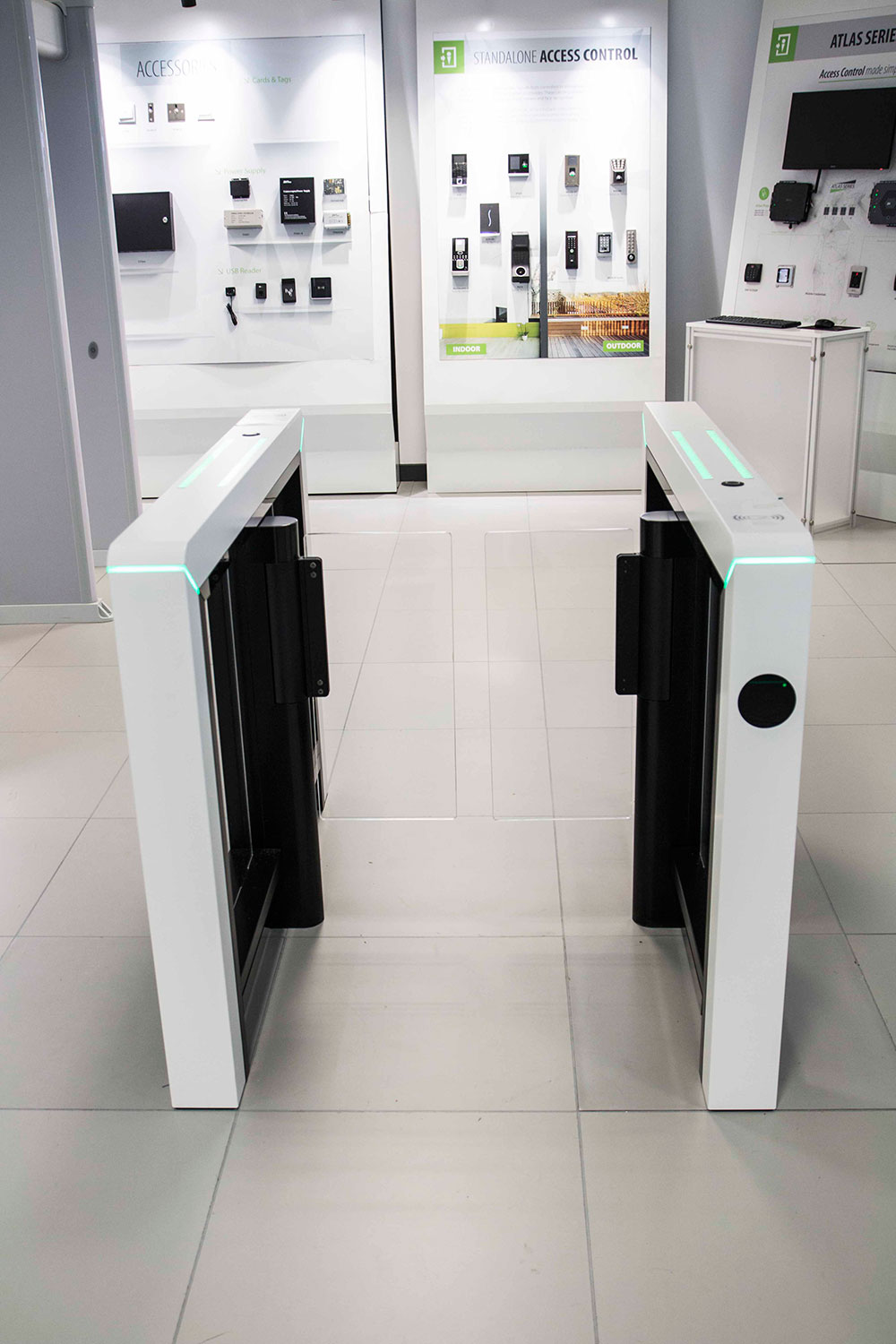
The entrance control product series features several categories. There are several types of turnstiles and barriers available, which are divided based on the level of mechanics and electromechanical control one needs. The showroom featured various three-arm turnstiles and turnstiles with curved and flat flaps and barriers for parking lots, together with vertical tripod barriers used in football stadiums. But the real benefit is found not only in the products themselves but in the fact that they can integrate with their own access control. “It is important to mention that we can perform any mechanical and software integration ourselves because we are the proprietors of our technology. This means that no matter what kind of reader or controller is demanded for turnstiles, we can offer it to our customers. This greatly simplifies the work of the installers who install them in the field”, says our host.
Innovation at work
To get an idea of the designing prowess of their engineers, we were introduced to the ZPad Plus, one of ZKTeco’s best-selling products. Originally, it was a device used for time & attendance, but during the pandemic, there came a need to check the green certificate. So, they used the original public applications certified by the Italian government and integrated them with their hardware, which can now make decisions and open doors or activate an alarm relay based on the validity or invalidity of the certificate. “It is one of our best designs so far and it has been a great success, especially because we have improved the algorithm that has the ability to check personal documents, so we can be sure that the certificate belongs to the person who shows it”, says Leita.
We also had the opportunity to check the Mars Pro series of turnstiles with flat or curved flaps, designed for spaces with a large flow of people. It has a modular structure and comes with new features, such as frame modularity, which can be easily assembled and disassembled. No matter what level of damage is done to your turnstile, only its impacted part will need to be replaced. However, the most important functionality is the number of ten million cycles, which is a rarity on the market.
Radar-equipped barriers
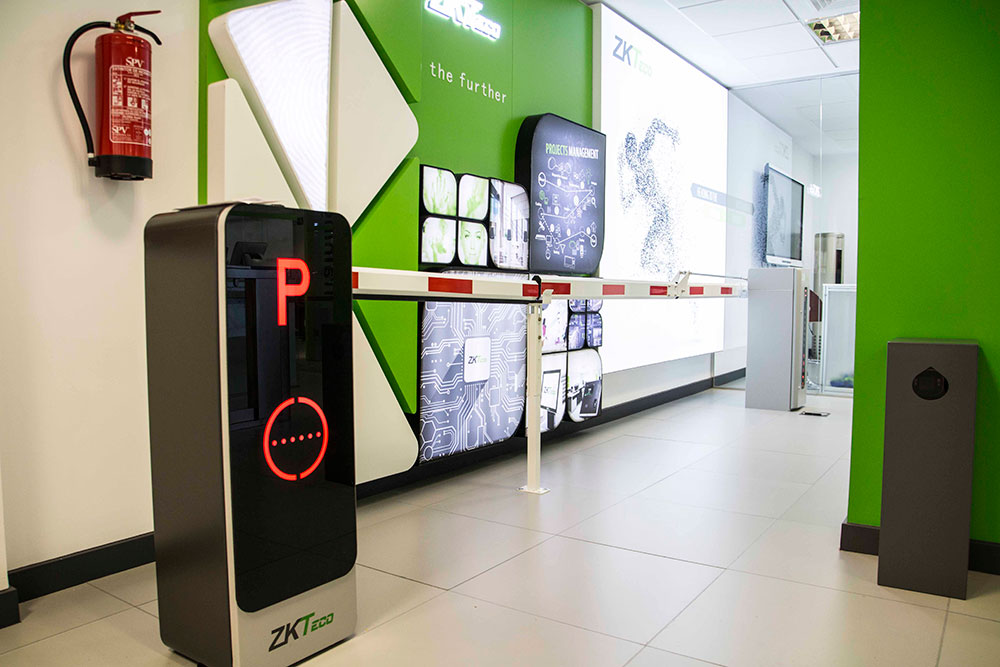
There are two types of barriers on the market: those with strong mechanical components, which can raise arms up to six meters long, and cost-effective barriers for residential and commercial areas. ZKTeco offers both types. The parking solution is based on LPR bullet and dome cameras integrated with barriers equipped with VR10 radar, which completely eliminates the need for any induction loop. When the vehicle leaves an area, it is not necessary to re-read the plates so a copper spiral is usually installed in the ground and it detects the weight of the vehicle and sends a signal to the barrier to open. With radar, there is no need for that, because it is simply pointed to the right side and calibrated. The license plates are controlled locally by a camera, while the VR10 controls the arms without the need to install a magnetic loop, which also makes the job easier for installers. Another good thing is the anti-shock mechanism, which detects an obstacle (e.g. a child passing by) and prevents the arm from falling. “An additional important functionality of this solution is that it can work independently or you can connect it to our ZKBioSecurity platform. So, in addition to all the information about vehicles that pass through the barrier, you can also link each car with a user in the system”, concludes Leita.
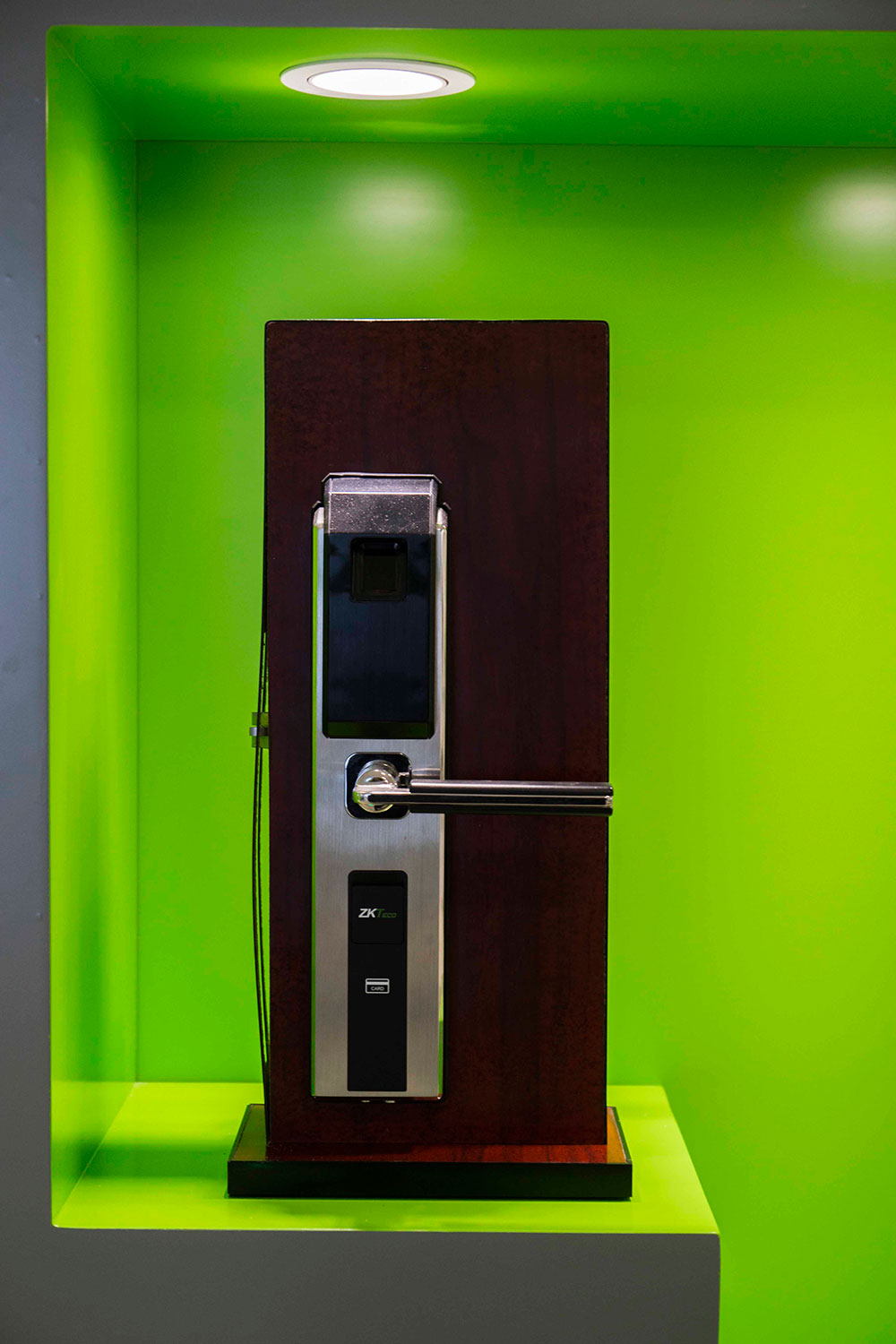
We ended our showroom tour by checking the solutions with smart locks for hotels and smaller housing units, with ZKTeco offering four series: online hotel management, offline hotel management, smart locks with local Bluetooth connection, or smart locks with cloud connection via an e-mail account. This enables remote management of credentials, without the need to go to the site.
Thirteenth security company in the world
After a full-day tour of ZKTeco’s European headquarters and the meetings with the leading people from its management, business development, and technical departments, we were left with the feeling that the company has made a lot of progress during all these years. When we reflect on its first appearances at major security fairs only ten years ago and its modest biometric solutions which focused on cost-effectiveness back then, we simply have to compare it with what we had the opportunity to see and hear during our visit. It is no wonder, then, that ZKTeco ranked 13th among the top fifty security companies in the world according to Security 50 list. They have come a long way from one product group to multi-series solutions but managed to keep the focus on one thing – entrance control. And that is the biggest advantage of ZKTeco.
This 6,000 sqm property in Provence in the South of France which is part farmhouse renovation and part new build, has recently been equipped with the latest in innovative Intelligent Building Technology from frogblue.
The frogblue Bluetooth LE mesh based system not only controls the individual functionalities of the lighting system, the ventilation, the shutters, blinds and awnings, the alarm systems and access control it also combines all of these into one interactive intelligent system. At certain times of the day and under predefined conditions the system will react according to configured commands.
Video surveillance is carried out by MOBOTIX ™ cameras which are integrated with the frogblue system via the frogblue USB link and so offer all the combined benefits of frogblue functionality and MOBOTIX intelligent surveillance, alarm notifications and commands.
For this particular cable free Smart Home System the following specific functions were requested by the customer:
Central- Off when leaving the house, Central-On as a Panic Mode Command ( where all lights will be turned on with or without flashing mode) and predefined lighting scenarios for the terrace, Pool and outside areas.
In alarm mode, a notification is sent when a door or window is open or tilted.
At night, corridor lights are activated at a preset brightness level when any of the outside doors are opened.
A double click on a light button can activate the panic function in defined parts of the building.
A triple click, on selected light buttons will activate/deactivate all the lights in the building e.g. if the owner comes home when it is dark.
What were the main factors that made frogblue the obvious choice for this property owner?
As soon as the local electrician installed the frogblue modules in the rooms all lights could be turned on/off and dimmed – without any configuration.
The cableless installation meant minimum disruption in the buildings and
the configuration of the messaging and notification, the setup of room and signal names, room scenarios, frogblueHome App and frogDisplay as well as the setup of the central functions took less than two days, which meant enormous time savings for the installer and financial savings for the house owner compared to other systems.
The frogblue system does not require a central control unit, internet or cloud connection for set up and no IT installation. Each frog has a built in logic module which enables every frog to receive, analyze and forward messages from every other frog in the system, a decentralized, robust and intelligent solution with no potential central point of failure and no problems with distance. The communication between frogs is highly encrypted using both frogblue 128bit and Bluetooth ™ network encryption.