How Connected Digital Access Helps Organizations Cut Costs and Manage Risk
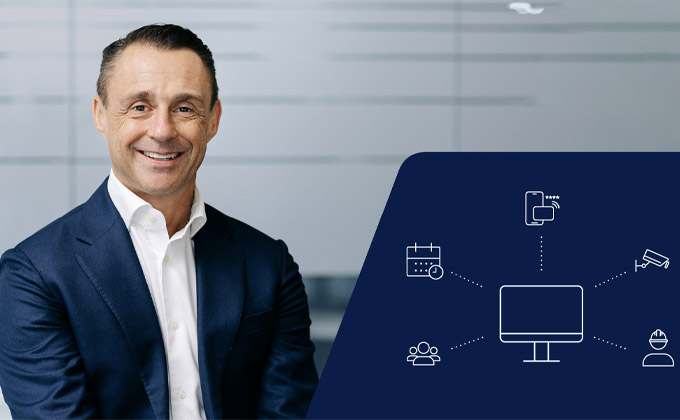
The digital transformation of buildings is accelerating – and so are the expectations placed on security and facilities managers. In a landscape where cost pressures, compliance demands, and user convenience collide, the ability to extend digital control and automation is a major advantage. However large or small the premises, connecting digital access with complementary systems helps achieve this.
“We can work with our customers to implement a new integration-ready digital access solution from scratch. Here we encourage them to adopt platforms which are ‘open’ to some degree: this simplifies ongoing scalability and ensures they are future-proofing this investment,” says David Moser, SVP & Head of Digital Access Solutions at ASSA ABLOY Opening Solutions EMEIA.
“Alternatively, we can extend the reach, functionality, and connectivity of an existing security or access system with compatible technologies which administrators continue to control from their existing, familiar interface. This way we create more joined-up knowledge and information for the business.”
Extending digital control
Connecting digital devices such as battery-powered locks, mobile-operated padlocks, electromechanical door devices, biometric readers, or electronic escape route technology can become a first step to transforming a fragmented building system into a cohesive, responsive network*. It is straightforward, for example, to replace access points’ mechanical locking with wireless locks and then integrate these seamlessly with existing access management software. One interface still controls everything. This ensures the legacy system adapts to evolving needs and reduces the overhead of multiple standalone solutions being managed in parallel.
“Integration can also break down operational siloes, fostering collaboration between security, facilities, and IT teams as well as day-to-day efficiencies that business leaders will notice on the balance sheet,” adds Moser. “Integrating visitor management with an access system, for example, helps create a convenient contactless check-in experience. Integrating company digital ID with room booking software, and room access, removes unnecessary manual admin. And so on.”
The overall result of increased connectivity is not only a more secure environment, but also an efficient and future-proof one. What follows are just 5 among the many practical, actionable benefits.
Less workflow waste, fewer errors
Besides added security, the most obvious benefit of extending an existing access system is the simplification of daily operations. Instead of toggling between platforms, security managers have one unified interface for configuring, monitoring, and auditing building performance across every connected device and site. Such consolidation within a familiar environment reduces staff training needs and minimizes human error. This quickly translates to lower admin costs which are sustainable over the long term. Making visible real-time audit trails and status updates for more openings ensures greater transparency and accountability. This additional functionality – and much more – is available by extending an access solution with proven, trusted devices.
Data-driven efficiency and risk reduction
The additional data generated by an extended digital access system is not merely informative. Improved space utilization analytics, for example, provide insights into how and when areas of a building are used. This real-time intelligence allows organizations to adjust their physical footprint and energy consumption, trimming the costs of under-utilized spaces. For facilities managers who face budget constraints, this alone may quickly generate a measurable ROI. Predictive risk management can bring another operational boost. By analysing patterns in access events – such as repeated failed attempts or unusual entry times – security teams can anticipate and prevent incidents before they occur. This shift from reactive to proactive security not only enhances safety but also reduces the likelihood of breaches or regulation violations.
Compliance and the threat landscape
Extending the capacity and connectivity of a system can enable organizations to meet compliance demands while adapting to their specific security challenges, including the growth in hybrid cyber-physical security threats. ENISA’s 2025 Threat Landscape report highlights the increasing sophistication and convergence of cyber-physical threats, noting that attackers are now exploiting vulnerabilities across both digital and physical systems to maximize their chance of success. Digitalizing access at more openings is one way to close security gaps. Here, of course, compliance with standards such as ONVIF and OSDP ensures customers choose a future of effective interoperability.
Smarter credential management
Key and digital credential handling are streamlined when businesses do not deploy multiple access systems or workflows at the same premises. Users no longer need to juggle multiple fobs, cards, or keys. Instead, they rely on one programmable credential for access across all their authorized openings. This simplification not only improves user experience; it also cuts overhead by reducing the time spent issuing, tracking, and deactivating credentials. Savings are especially significant when equipping and connecting doors which are currently secured with mechanical locks. Fewer lost or duplicated keys helps to reduce emergency rekeying costs and the need for unplanned service visits. Fitting wireless locks to these openings brings an easy cost-management win.
Scalability with future-proof systems
For organizations of every size and type, scalability is critical. No one can perfectly anticipate what is ahead. A trusted integration partner provides ongoing, region-specific support and certified solutions tailored to local standards – ensuring seamless deployment and compliance. Where appropriate, extending control can future-proof an existing system without requiring businesses to start again from scratch. As new devices and technologies emerge, a flexible, connection-ready platform can continue to evolve, without costly overhauls, by the incremental addition of connected devices. This adaptability ensures that security managers are not locked into outdated systems, but instead have a scalable, forward-looking solution that grows with them.
ASSA ABLOY’s connected Digital Access Solutions
“Security managers may not know what comes next. But with a connected system, built on architecture which enables even greater connectivity in the future, they do not need to,” says Moser. “ASSA ABLOY offers a vast and growing range of connectable solutions designed to plug directly into any new or existing access system. Extending the reach of control, with this suite of devices and solutions, helps them prepare their premises for what’s ahead.”
ASSA ABLOY’s suite of connectable digital access solutions includes the following:
- Aperio® Wireless Locks: Seamlessly integrated with over 130 access control systems, enabling centralized management of previously mechanical access points, with support for online and offline operation, RFID cards, mobile credentials, and a wide range of lock types.
- ABLOY® CUMULUS: A cloud-based, mobile-first platform providing easy integration of digital access devices and mobile access through open APIs and SDKs, with full audit trails and real-time status monitoring.
- CLIQ® Programmable Keys & Cylinders: Combining mechanical security with electronic access management, offering more than 60 cylinder and padlock variants plus intuitive, connectable management software and integration capabilities.
- ABLOY® Electric Locks: Meeting compliance standards for high-security, high-traffic doors and integrating seamlessly with access control, alarm, and building management systems for real-time security and safety monitoring.
- effeff Electric Strikes: The gold standard in door strike technology, enabling convenient remote unlocking at the push of a button and seamless integration with access control, intercom, and building management systems.
- effeff ePED® Electronic Escape Route Technology: Electrically controlled panic exit devices that combine certified safety, compliance, and integration with access control and security systems for safe emergency egress.
- Control iD Biometric Readers: Featuring advanced facial and fingerprint recognition, operating as standalone solutions or integrated with access control systems for scalable, secure access management.
To learn more visit: www.assaabloy.com/group/emeia/solutions/topics/access-control