Home 2022 (Page 10)

Ten “deadly sins” when installing a video surveillance system

We are all humans, so we all make mistakes. However, there are such common cases that you should be aware of and avoid. Specialists of Partizan company have collected, systematized and listed them to say once and for all – it should not be like that!

 1. DHCP remains enabled after adding to NVR

Most CCTV cameras have DHCP enabled by default. What does it mean? A static IP address does not work, but a dynamic IP address, on the contrary, is active. That is, the CCTV camera, after entering your local network, will find its own IP address. The plus is that you don’t need to input this address manually each time. And the minus is that these addresses can change every time the router is rebooted. The result is that after the reboot, the CCTV camera will get a completely different IP, the client will get a terrible black screen instead of an image, and you will receive urgent calls: “Hey, where did my CCTV camera go?”. Do you really need it?

2. Outdated firmware and password

There are also simple, trivial, but surprisingly widespread reasons for incorrect device operation. The thing is, even if you bought your device yesterday, it doesn’t mean that a new firmware didn’t appear while it was in stock. Always check its relevance and install the latest version. Ideally, you should check the firmware once every few months. Regarding the password — often users and even installers are too lazy to change passwords and sometimes leave it at the default: admin, 1111, etc. A good chance for a hacker!

3. Time synchronization is disabled. Incorrect playback time

A non-obvious mistake, but it can also cause pain and suffering. If we have a desynchronization in time, then even knowing when the alarming event occurred, it will be very difficult to find it in the archive. By the way, there is an easy way to synchronize the recorder (and therefore the CCTV camera) with real-time. Just add the NVR to Partizan Cloud and our service will do everything instantly and clearly.

4. Settings, connection and recording

It may seem obvious to some, but there is one simple thing. If you want the recording to be turned on only by alarms, motion detection or at certain intervals – no one will do it except you. Enter the settings yourself. Now about the connection. There are CCTV cameras that can be connected using the “native protocol”, and there are all others. With the native protocol, everything is finally clear: company’s cloud CCTV camera can be easily connected to its cloud recorder, the SH camera to the SH recorder. But if the connection takes place, for example, according to the Cloud-camera scheme to the SH-recorder (or vice versa), or in general a third-party CCTV camera is used, the Onvif protocol should be used.

5. Incorrect installation of your CCTV camera

The topic, of course, is very broad, moreover, there are many different opinions. So, at this point, we will try to derive a common “denominator” that is understandable even for a new installer. A good, professional installation of video equipment is when:

a) The correct branded accessories are used, including cable junction boxes.

b) The cables are not visible next to the CCTV camera and they do not stick out in all directions. They should be brought inside the building, or at least hidden in PVC pipes or corrugations.

Of course, budgets can be “cut”, but this does not mean that you have to compromise on quality.

6. Incorrect viewing angle or CCTV camera installation location

It is also a rather versatile field for discussion, so let’s highlight the most important points.

  • There is a large object close to the CCTV camera – tree, wall, lamp post, etc.). Such proximity can lead to “reflection” of IR illumination, and at the same time to CCTV camera blindness.
  • The CCTV camera is aimed at a glowing lantern or at a sunrise/sunset. This also results in CCTV camera blindness or image illumination.
  • IR diodes in the dome CCTV camera are under its body. In this case, the backlight is reflected from the housing into the lens. The result is that the CCTV camera stops “seeing” at night.
  • Dirty lens glass or dome CCTV camera sphere. A very simple, but surprisingly common cause of poor image quality.
  • The CCTV camera is installed on a metal or conductive surface without grounding. This is trivially dangerous, because it causes the risk of short circuits and even the CCTV camera catching fire.
  • The CCTV camera is at a low altitude. A real find for criminals and vandals!
  • The dome CCTV camera is installed without proper protection from above. If the model does not have a high degree of resistance to dust and moisture (at least IP66), moisture form of rain or snow can get inside the equipment.
  • The CCTV camera is installed in close proximity to high-voltage power lines. This causes not only a high risk of electric shock, but also provokes interference in image transmission.

7. Bad Internet

Probably everyone knows about such a problem, but not everyone is aware of its depth. By the expression “bad Internet” we primarily mean two points: low connection speed and changes in flow transmission. And if everything is clear with the first parameter, then in the second case, even at high speeds, sags and entire seconds of video may drop out. So make sure that the speed of your Internet is adequate for both input and output, and the connection is stable, without losing data packets.

8. Incorrect cable connection

It is not good if the cable of the installed CCTV camera is less than 30 cm from the power cable. It is a very bad idea to put the wires of the video surveillance system and the home electrical network in one box. This is especially true for analog CCTV cameras. Therefore, it is always worth laying the CCTV camera switching separately. So there will be no obstacles or unnecessary picture jumps in the image.

The second point is the considerable distance between the CCTV camera and the recorder. For a coaxial cable, problems with image transmission can begin as early as 500 meters. And the optimal distance is the “hundred meter” familiar to many. It is always better to work with the correct lengths of cable than to be faced with the fact that the video signal does not arrive normally, or the CCTV camera does not have enough power. If we are talking about IP CCTV cameras with a POE system, then the distance to the recorder should be 50-80 meters.

When dealing with an analog system, it is worth remembering that problems may also arise when connecting several CCTV cameras to one power supply unit. Imagine that we have two CCTV cameras. One is at a distance of 10 meters from the power supply unit, the other is at a distance of 50 meters. So, after six months, you can unexpectedly encounter, for example, the failure of the IR illumination of the remote CCTV camera. And the issue here is not the quality of the equipment. It is all about incorrect switching. Therefore, we advise using a separate power supply for each CCTV camera. Why? The CCTV camera must receive its “legal” 12 volts and the correct amperage. And a considerable distance can cause a drop in power supply.

And, of course, always and everywhere you should use the right cables. Trying to save money, some installers “throw away” aluminum or steel wires. But what may be OK for budget Internet in the entrance, will not work for the video surveillance system. Such cables simply will not transmit a normal video stream. Our minimum is copper twisted pair of category 5e. We will not emphasize the correct crimping of the twisted pair. This is an axiom!

9. Low-quality or inappropriate third-party equipment

Use quality routers! We usually recommend the following brands: MikroTik, Zyxel, Cisco, HP, Linksys. Everything will be fine with them. The same can be said about POE equipment. All the above mentioned brands make decent switches.

Hard drives! This is generally the key to success for a video surveillance system. Partizan is an authorized European dealer of Toshiba and we use HDDs of this brand for our recorders. We consider its products to be ideal in view of:

  • Possibility of long-term stable work in 24/7 mode
  • Simultaneous recording support from 32 CCTV cameras
  • Ability to withstand multiple write/overwrite cycles
  • Spindle rotation speed optimal for NVR
  • Resistance to vibrations, high temperature, voltage drops
  • Correct interface (Sata 3)
  • High data transfer rate

10. Incorrect calculation of power and quality of components

You should not save money on third-party components of the video system! Let’s say, the cost of a high-quality power supply unit and a low-quality one will not differ that much. This is a matter of tens of dollars, not, say, hundreds or thousands. But you should always remember that a low-quality product can damage the equipment or cause the quality of the image to deteriorate (bands and waves in the picture, etc.).

We recommend using power supplies with an additional power reserve of at least 30% compared to the expected power consumption of the video surveillance system. It will definitely not be superfluous, and it will protect you and the client from unpleasant surprises.

Of course, these are far from all the mistakes that happen in our field. However, by keeping at least these simple points in mind, you can make life much easier for yourself and your customers. As they say, go and install quality, professional CCTV and do not make more mistakes.


Interview: Michal Riha, CEE Sales Manager, Zenitel

a&s Adria: Mr Riha, thank you for sparing time to talk to our readers. Could you present yourself, your educational and professional background, and what business area are you in charge with at Zenitel?

Riha: I am Zenitel’s area sales manager, safety and security, for Central and Eastern Europe. I have 25 years of sales experience with selling B2B and technical solutions. With all my positions I have enjoyed establishing new relationships in new markets and increasing sales.

a&s Adria: Zenitel has many years of experience in research and development of public address and intercom systems. On the road of becoming one of the global leaders in this area, Zenitel has experienced a lot challenges and milestones. Tell us more about your company’s history, its important milestones, its present state in number of employees, sold products, revenue, etc.?
Riha: While Zenitel history dates back to 1901, we were the first company in 2006 to introduce IP-based intercom systems (VoIP). In 2014, we incorporated IP video in our intercom stations. An important additional milestone for Zenitel was in 2021, when we joined forces with ASL (Application Solutions Limited). With more than 30 years of experience, ASL has a strong offering in Public Address, General Alarm and Voice Alarm Solutions (PAGA/PAVA), as well as Control Management products.

Zenitel’s primary solution offering is within intercom and public address. Among others, we actively focus towards building security, public safety, education, healthcare, transportation, manufacturing, and retail markets. Ease of integration is one of the key features of our solution as our solutions are very easy to integrate with most third-party Access Control, Video Surveillance/Video Management Systems, Alarm Systems, Security Management Systems, Radio Integrations, Telephony and DECT, and PA Systems. Our 300-person team of engineers, sales, product managers, customer service, and more are located around the world.

a&s Adria: Could you briefly present your product portfolio? What are your core technologies?

Riha: Zenitel solution are designed to deliver crystral clear communication no matter what the situation might be. Our product portfolio includes IP intercoms, IP speakers and public address solutions. The audio quality for our solution is best in class as in our solutions carry features such as active noise and echo cancellation, automatic volume control, automatic gain control, a 10W speaker, a 10W class D amplifier, and a 100db sound pressure level.

a&s Adria: What product or product group would you stand out as flagship or most sold both in public address and in intercom systems portfolio and why?
Riha: Our Turbine series is the most popular intercom solution. Since its early design and development, the Turbine Intercom has delivered high audio performance in situations where communication is critical. The Turbine IP Intercom achieves this by combining an array of innovative features that push the limits of audio and acoustic technology. For example, a10W speaker, matching 10W class D amplifier, and digital MEMS microphones can provide open, duplex, hands-free communication. And with an audio amplification that powerful, the intercom solution can also be used as a public address speaker.

In addition, the Turbine intercom can adjust a voice that is too loud or too soft to an intelligible signal for the call recipient. The speaker volume automatically adjusts to an audible level to overcome ambient noise levels, even up to 30dB. And while many intercoms impose physical constraints upon its users, where a person must stand close to the station in order to be heard clearly, the Zenitel Turbine intercom solution automatically adjusts the gain on the speaker’s voice, effectively maintaining a constant volume level to the receiver, regardless of the speaker’s distance from the station. This drastically increases the intercom’s usability and improves safety, as not only are the speaker’s hands free, but they are also no longer restricted to a close proximity of the intercom.

Within the public address domain, our Vipedia & Integra system are known for their quality and reliability. The solutions provide exceptional audio performance, with 16bit/48kHz sampling and high-quality audio processing that results in crystal clear, high intelligibility message reproduction. In addition, the solutions are designed for high availability and 10-year operating lifespans, while meeting rigorous safety standards, with EN 54-16, UL, and CSA certifications.

a&s Adria: You have launched a next generation of intelligent IP speaker series, some of which, like ELSII-10HM IP horn speaker and ELSIR-10CM ceiling speaker, you presented at this years’ Intersec and ISC West. What are their key features and benefits?

Riha: IP speakers are essential for mitigating security and safety challenges, especially in demanding environments. The interactivity and integration features of our new IP speakers provide many benefits over traditional public address systems, to include talk back functionality, ambient listening, automatic volume control, and flexible zoning. Even more, each speaker has their own built-in amplifier that eliminates the need for central or localized amplifiers and reduces cabling. Our use of open standards such as SIP, Multicast, and RTP streaming enables easy integration. Our three modes of operation, SIP, IC-EDGE, and ICX-AlphaCom allow users to scale to their needs, from single devices to standalone systems, to enterprise grade solutions. Last, the speakers conform to IEEE802.1x network standards, providing a cybersecure deployment.

There are many uses for our new IP speakers, including around a building and fence line for perimeter protection, anti-theft and vandalism in stores and parking lots, paging for employee and visitor announcements, crowd and queue management in large areas such as sports stadiums, as part of a passenger information solution in transportation hubs, and more.

a&s Adria: All Zenitel TCIV+ stations, kits, and IP speakers are now packed with the ONVIF Profile T features and you also use open-source code. How does that help to seamlessly integrate and map Zenitel solutions with other security systems?
Riha: ONVIF is an open industry forum that provides and promotes standardized interfaces for effective interoperability of IP-based physical security products. ONVIF profiles make it easy to recognize how ONVIF conformant devices and clients are compatible with one another. An ONVIF profile has a fixed set of features that must be supported by a conformant device and client. It ensures that a client that conforms to Profile S, for example, will work with a device that also conforms to Profile S. There are also conditional features, which are features that shall be implemented by an ONVIF device or ONVIF client if it supports that feature in any way, including any proprietary way. Optional functionalities are also defined, they do not need to be implemented but can if it’s chosen. Video and audio from our devices can be recorded, either manually or based on trigged events, or by other hardware and rule-sets in the security management system. As a company, Zenitel is committed to seamless compatibility.

a&s Adria: In 2021, Zenitel was awarded Work Boat Intercom Supplier of the Year by publication Baird Maritime. Since maritime is one of the most important verticals for Zenitel, your company did a lot of updates to its maritime intercom solutions. Update of the Ex Intercom stations as well as updating and adding new features to their range of IP Intercoms was part of this. Most importantly was probably the DNV classification of its new ICX AlphaCom System. Tell us more about these updates and what does DNV classification stands for?

Riha: Since we are a Norwegian company, we always seek DNV approval first for our range of maritime & energy products where this is required. Meeting DNV standards are important when there is requirement that needs this assessment. DNV is by far the leading classification society in our markets, and also when receiving a DNV approval it is easier when seeking other approvals for markets where this is required – such as ABS (American Bureau of Shipping), CCS (China Classification Society), LR (Loydss Register) and other. Meeting stringent requirement is a necessity in our markets, but at the same time the requirement are quite specific and doesnt necessarily cover all configuration and product groups. What is important is to meet the key requirements – usually related to central equipment and central functionality. When it comes to the ICX AlphaCom System this is then in compliance with:

  • DNV rules for classification – Ships
  • IMO Res. A.694(17) General requirements for shipborne radio equipment forming part of the global maritime distress and safety system (GMDSS) and for electronic navigational aids
  • IMO A.1021(26) Code on alerts and indicators (2009)
  • LSA Code VII 7.2
  • IMO MSC Circ 808

a&s Adria: Thanks to Zenitel, digital technology is going to play an even bigger role in the future of maritime, with more interfaces between systems and preferences for a “smarter” way of processing and distributing information. What will become possible in near future?

Riha: The maritime industry, although a traditional and long lasting industry segment is undergoing a global change to become smarter, safer and greener. Part of this is also the critical onboard communication systems. We see a change in RFQ’s towards more digital systems, based in IP technology and with interface between systems such as PAGA, Intercom, CCTV, Wireless communication and information & entertainment systems. However systems still need to be redundant and there is also a requirement in IMO regulations to have a secondary system onboard that is outside the main power of the vessel, so although we see core systems requiring more digital setup, there is still a huge market on analog systems as they are “safer” for pure onboard communication. Things we will see in the near future is more use of touch screens on the bridge and engine room control systems, where the onboard communication will be accessed via application interface on the main monitor. We also see that CCTV combined with audio is getting a stronger position, something that creates great opportunities for us as we have gained great experience interfacing CCTV systems with our own developed audio systems both in PAGA and Intercom segment. Lastly crew welfare is becoming increasingly important, and an onboard info & entertainment systems is not just a stand alone TV system anymore, but interfaced with other critical communication systems to make sure crew and passengers are notified early in case of emergency.

a&s Adria: As one of few organizations that have contributed to creating industry standards for safety and security, what is Zenitel’s approach to cybersecurity and can you highlight some of your strengths when it comes to preventing cyber attacks?
Riha: Zenitel is committed to keeping critical communication systems secure. We have kept IP security at the forefront for many years. In 2010, we were the first IP intercom vendor to implement IEEE 802.1X network access control. Zenitel is a member of the Center for Internet Security (CIS), a forward-thinking nonprofit entity that harnesses the power of the global IT community to safeguard private and public organizations against cyber threats. The CIS Controls and CIS Benchmarks are the global standard and recognized best practices for securing IT systems and data against the most pervasive attacks. These proven guidelines are continually refined and verified by a volunteer global community of experienced IT professionals. CIS is home to the Multi-State Information Sharing & Analysis Center (MS-ISAC), the go-to resource for cyber threat prevention, protection, response, and recovery for state, local, tribal, and territorial governments.

Learn more from our Cybersecurity Hardening Guide here.

a&s Adria: By Market and Market’s estimates, the digital twin market is valued at $3.1 billion today and is projected to reach $48.2 billion by 2026. As a technology or a model that connects the dots between IoT, AI and big data, digital twin will help companies to increase situational awareness, reduce and mitigate security and safety threats, optimize operations, etc. Where does Zenitel see its role as digital twin technology adaption increases?

Riha: Zenitel sees its participation in a digital twin ecosystem through some of its solutions, such as IP speakers, intercoms, and public address/voice alarm systems. We believe our solutions will support digital twin by providing data/events that will allow businesses to further enhance their safety and security capabilities in different use cases such as access control, parameter management, emergency response, and more. We are ensuring that our solutions and systems have the necessary connectors that feed digital twin with events and data. For example, our range of IP devices has built-in hardware acceleration for edge AI, allowing better control of data to be kept private or to be shared with the digital twin.

Learn more here.

a&s Adria: Zenitel will be exhibiting at the Adria Security Summit next month in Zagreb. What do you expect from Adriatic region’s largest conference and exhibition, are you looking for new partners and distributors, and what is your opinion about Adriatic region’s security market in general?

Riha: First and foremost, we look forward to this event as an opportunity to meet many of our partners and customers. While we will be sharing our solutions, we are excited to have conversations with our partners and customers around emerging trends and how they are shaping up their expectations from a global player like Zenitel.

Iloq appoints new Chief Marketing Officer

Johanna Wretdal has been appointed as Iloq’s CMO, and she will also become a member of the company’s management team. Prior to joining Iloq, Johanna was the CMO for Silo AI.

Johanna is equipped with two decades of global experience, ranging from local startups to internationally listed, leading organisations. She will take overall responsibility of the company’s marketing and communications agenda, along with playing a key role in ensuring an end-to-end brand development that ultimately supports the organisation’s strategy. Johanna holds a Master’s Degree in Economics (Management & Organizations) from the Swedish School of Economics and Business Administration (Hanken).

“I am excited to become a member of the Iloq family, and together with the team and customers boost further impactful growth!” says Johanna Wretdal.

Flame detector market to reach $2.1 billion by 2027

The global flame detector market is expected to grow from USD 1.7 billion in 2022 to USD 2.1 billion by 2027, at a CAGR of 5.0% during the forecasted period. The major drivers for the growth of flame detector market include growing adoption of flame detectors across major industries such as oil and gas, energy and power, pharmaceuticals, and automotive among others, technology improvement in the flame detection devices, and also the implementation of policies, regulations, and government initiatives is having an impact.

The flame detector market is dominated by major manufacturers such as Johnson Controls, Carrier Global, Honeywell, Siemens, Halma, MSA, Robert Bosch, Emerson Electric, Minimax Viking, and Draeger among others. These companies have their manufacturing facilities spread across various countries in Asia Pacific, Europe, North America, South America, and Rest of the World.

UV/IR flame detectors to witness the highest growth

The UV/IR flame detector is expected to witness the highest growth rate during the forecast period due to the high reliability of the detectors. The UV/IR flame detectors can detect flames in both UV and IR spectrums and offer minimum false alarms. In addition, UV/IR flame detectors have been present in the market for a significant time and they are trusted by the consumers. Additionally, implementing UV/IR flame detectors reduces the operations cost as compared to implementing two different types of flame detectors within a fire protection system. This is one of the key factors driving the demand for UV/IR flame detectors.

Wireless technology on the up

Wireless flame detectors are a new and emerging market. Companies are still conducting research and product development in the wireless flame detector market. Yet, the demand for wireless flame detectors from various industries such as pharmaceuticals, marine, logistics, and chemicals is increasing due to the ease of implementation in complex locations where wiring would often be difficult. The demand for wireless flame detectors with Wifi and Bluetooth connectivity options is also growing, as these devices utliise a new and emerging technology, and the fact that they offer ease of use and installation means that the highest growth rate is being seen for these devices during the forecast period.

Pharmaceuticals fastest growing vertical, North America the largest region

The demand for flame detectors is rapidly growing in the pharmaceutical industry. The increasing usage of flammable products and chemicals for testing and manufacturing of pharmaceutical products is the leading factor for the fastest growth rate.

The analysts report that the North American region is the largest market for flame detectors, driven by the US and Canada. The region has the presence of major flame detector manufacturers, and some of the key players have their headquarters in that region. Thus, new and innovative flame detector products are easily available in the region. Additionally, the region has strict rules and regulations for the safeguarding of humans lives and protecting assets from fire. The region has a robust supply chain for flame detectors from suppliers to end users. The growing oil and gas, energy and power and automotive industries in the region are also key drivers for the flame detector market.

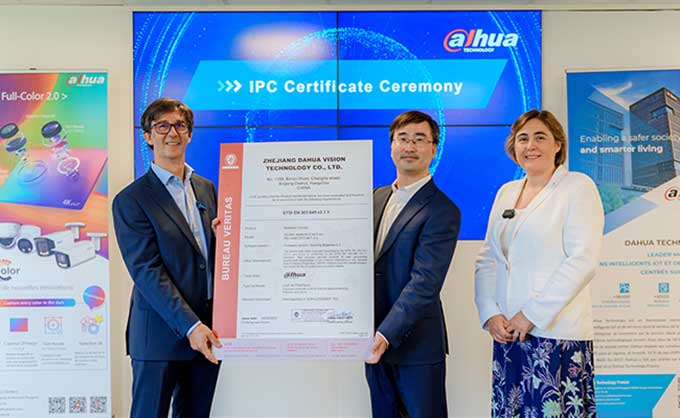
Dahua IP products passed ETSI EN 303 645 cybersecurity standard

Dahua Technology, a world-leading video-centric smart IoT solution and service provider, proudly announces that its network camera and video recorder products have passed ETSI EN 303 645 standard. As the most recognized standard that ensures protection of consumer IoT devices against common cybersecurity threats, compliance with this standard fully demonstrates Dahua’s comprehensive product design capabilities and industry-leading cybersecurity and data protection capabilities.

ETSI EN 303 645 is a globally applicable standard for consumer IoT cybersecurity released by European Telecommunication Standard Institute. It provides a foundational assessment method to prevent cybercriminals from taking control of global devices, launching DDoS attacks or spying on users. The technical standard covers security requirements in 14 areas including minimum attack surface, secure communications, and personal data protection, establishing a security baseline for Internet-connected consumer devices, and reducing the risk of personal data breach while helping devices to better comply with GDPR.

For a long time, Dahua has been attaching great importance to information security in the field of smart IoT, taking cybersecurity and privacy protection as one of the company’s highest priorities. Adhering to the concept of “compliance, openness and transparency”, Dahua has implemented data security and privacy protection control measures in strict accordance with default privacy protection design requirements. It covers all stages of the planning, design, development and delivery of a full range of products and services. Dahua products strictly follow the fundamental requirements for data minimization and privacy compliant settings, and continuously integrate privacy protection technologies and applications such as data masking, data encryption, face occlusion, trusted computing, etc.

In addition, Dahua always adheres to its core values of openness and constantly seeks cooperation with international authoritative security institutions to jointly build a robust security ecosystem while improving its own security capabilities and solutions. The company has established auditing and certification cooperation with a number of international security institutions, including British Standards Institution (BSI), TÜV Rheinland, Intertek EWA-Canada as well as many others. So far, Dahua’s capabilities in product security and corporate cybersecurity management has been certified by several global standards such as ISO/IEC27001, ISO/IEC 27701, FIPS 140-2, and ETSI TS103645.

With customer-centered approach to innovation and development, Dahua will continue to invest in cybersecurity to produce and deliver secure products and services that follow industry standards and to help customers better comply with relevant regulations.

Adria Security Summit Welcomes 11 Brands from the Global Security 50 List

One of the largest industry events in Southeast Europe Adria Security Summit powered by Intersec 2022, will once again open its doors from October 5 – 6, 2022 in Croatian capital Zagreb.

Among all the exhibitors and sponsors, at least 11 brands stand out – those featured on the globally relevant Security 50 list.

The list is an unbiased industry ranking of the top 50 security manufacturers and companies in the world, based on product sales revenue and profit. It is one of the most-read and the longest-running industry rankings featuring both global leaders and new market entrants.

The following companies will enrich the event with their presence and offer their expertise, innovations, and an extended hand of partnership:  ASSA ABLOY, Axis Communications, Dahua Technology, Hikvision Digital Technology, Konica Minolta, Milestone Systems, Motorola Solutions, Suprema, Uniview Technologies, VIVOTEK, and Zenitel.

Of these, Hikvision Digital Technology, Dahua Technology, ASSA ABLOY, Axis Communications, Motorola Solutions, Uniview Technologies are the top 10 best-ranked companies based on the revenue generated, according to the latest edition of the Security 50 list.

Through their rich portfolio of products and services, they will present the latest in the increasingly converged industries, including security, safety, smart solutions, mobility, cyber security, ICT, IoT & home automation, security & safety training, business optimization, and education.

All of these segments will be presented in the form of B2B matchmaking events, keynote speeches, presentations, case studies, panels, and side events.

Register today to get the opportunity to meet and mingle with the representatives of the most renowned global tech companies and kickstart cooperation that will give your business a major boost and a competitive edge.

All information is available on the official website of the Summit, dedicated social media accounts, or via the email summit@asadria.com.

Advanced’s Growth Continues with Appointment of New Sales Director

Mike Cottam has been appointed as Sales Director at leading fire protection solutions company Advanced.

Mike joins Advanced from global science-based technology company 3M, where, over the past 19 years, he has held a variety of roles covering sales and marketing, integration and Lean Six Sigma.

In his latest position as EMEA Segment and Channel Leader within 3M’s Abrasive Systems Division based in Dubai, Mike successfully headed up the sales and marketing strategy to expand the division’s customer base into key metal working segments across Europe, the Middle East and Africa.

In his new role, Mike will draw on his wide-ranging experience to lead Advanced’s sales, marketing, customer service and technical support teams in delivering excellent customer experience and accelerated growth in new and existing markets. Promoting the business’s values and building upon its strong brand reputation will also be important areas of focus.

Mike said: “Advanced has a clear purpose of creating a safer future, something I’m very passionate about and eager to play my part in achieving. I am excited to be joining the company at a time when, despite a challenging economic backdrop, the business is continuing to thrive and expand into important new areas of fire and life safety. I look forward to working with teams across Advanced to build upon the excellent foundations already in place and develop new markets and channels that will allow us to bring the benefits of our solutions to an ever-wider range of customers.”

Advanced’s Managing Director, Pete Browitt, said: “Mike brings a valuable breadth of skills and experience to our leadership team. Having worked across diverse sectors including healthcare, personal safety, infrastructure protection and abrasives, he will be able to draw on best practice from these areas to introduce new opportunities and approaches to our business. His proven commercial background, combined with strong customer focus, will help take us to the next level of our growth strategy and keep us at the forefront of our industry.”

The biggest cyber security conference in Slovenia – INFOSEK – celebrates the 20th anniversary!

INFOSEK Conference offers participants the opportunity to learn from the best information security experts from Slovenia and abroad.

We are happy to announce that this year’s keynote speaker is Mikko Hyppönen – worldwide authority on computer security and the Chief Research Officer at WithSecure.

Mikko Hyppönen said: »Technology shapes the world. The more successful a new technology becomes, the more reliant we will become of it. This has always happened and will happen in the future too. In many ways, internet is the best and worst innovation done during our lifetime.«

How did we get here? And what will happen next?

Join us from 7th to 9th September 2022 in Nova Gorica (Slovenia) and find out.

You are kindly invited to check the conference PROGRAM and REGISTER NOW.

Why should you attend INFOSEK Conference?

1. There are 3 conferences at the same place (INFOSEK, CIO FORUM and COACHING)

2. You will meet well-known IT and information security experts and have the unique opportunity to participate in their sessions.

3. INFOSEK Conference offers you brand new knowledge and experience.

REGISTER NOW and secure your world!

For further information or group registration you can contact:

Kristina Velišček
kristina.veliscek@palsit.com
+386 51 344 875


Energy harvesting electronic locks are the perfect fit for a Danish “sustainable construction” project

London, August 2022 – Esbjerg’s new “A Place To” housing complex focuses on sustainability. It aims to maintain a green profile throughout its life-cycle. The developer is a Premium Member of Green Building Council Denmark — an organization which promotes sustainable construction — and sought efficient access control in keeping with A Place To’s contemporary style and sustainability ethos.

Over 300 apartments are divided between three towers. These connect with common areas which offer multiple opportunities for social activity and “co-living”. There’s a cafe, fitness and yoga, a big screen, reading nooks and workstations, communal kitchens and more.

For efficient access control, they looked for an energy-saving solution which would operate without batteries or wires. They wanted to benefit from cloud-based access management to give staff convenient, 24/7 control from anywhere.

Integration-readiness was another priority, to provide seamless operation with other building technologies, including online readers and door-phones, and inbuilt future-proofing: They can add new features or capacity anytime.

Energy harvesting locking with cloud management

PULSE key-operated electronic cylinders with energy-harvesting technology now secure more than 300 apartments at A Place To: “We went for a future-proof solution which was maintenance-free and where we did not have to change batteries,” explains Peter Høpfner, COO and Founder, A Place To.

PULSE devices are self-powered and run without any external energy source. The power generated on key insertion is harvested to energize encrypted electronic security. “It was a big plus with PULSE that keys and locks are battery and cable free,” he adds.

Access control at the site is managed in the cloud with Incedo Open software. The administrator can change anyone’s access permissions online; keys are quickly updated at integrated door-phones or online readers. This ensures resident authorizations are always current.

Incedo Open makes it easy to disable lost keys. An administrator can see who has used a lock at any time, which helps to foster a sense of security among residents. The PULSE key also contains an RFID chip: It doubles as an access card for the entrance and communal areas, for convenience and efficiency.

Importantly, the platform-based Incedo ecosystem is “future-proof, so there is the possibility of future integrations with other systems,” says Høpfner. When new needs arise at A Place To, their system can grow and adapt on demand.

Building Energy Award winner

During May, PULSE was awarded winner of the Building Energy Award 2022, organised by BYGGERI, Denmark’s largest construction fair. This award is given to energy-saving building parts and components for the construction sector.

The awards purpose is to celebrate innovative products and solutions within construction and to increase knowledge of climate-friendly building materials.

To learn more about PULSE energy-harvesting digital locking, visit https://campaigns.assaabloyopeningsolutions.eu/pulse