Home 2022 (Page 4)

HEP Group once again relies on cooperation with MSR-Electronic

Using energy once, profiting twice – that is the principle of combined heat and power (CHP). Whereas electricity and usable heat were usually generated separately so far, cogeneration combines these processes. The result is that less fuel is required overall. Its application offers enormous potential for climate protection and conservation of resources. The increased use contributes to reducing CO2 emissions and lowering the demand for primary energy.

The Croatian energy company HEP-TE-TO Sisak

HEP TE-TO Sisak (HEP Group) is a Croatian energy company in the Sisak Moslavina district, south of Zagreb. It has been engaged in the generation, distribution and supply of electricity for more than a century. For the last decades it also deals with the distribution and supply of thermal energy and natural gas.

The entire thermal power plant consists of various production units. The highly efficient combined heat and power unit EL-TO, Unit C. This is powered by natural gas, generates electricity of 235 MW and a thermal output of 50 MWt. Natural gas is an ideal fuel for CHP plants and at the same time a naturally occurring gas consisting largely of methane gas. In the gas-processing industry, gas warning systems from MSR-Electronic can reduce fire and explosion risks immensely, as they provide very early warning of dangerous situations.

Copyright HEP Group

Stationary gas detectors for safe methane gas monitoring

MSR-Electronic develops and produces reliable fixed gas detectors. The permanent monitoring and storage of the measured values serve the primary explosion protection and thus the safety of human life and equipment. Once again, after a carbon monoxide gas detection system in 2016, the HEP Group relies on MSR-Electronic and this time on a methane gas monitoring application.

PolyXeta PX2 gas detector

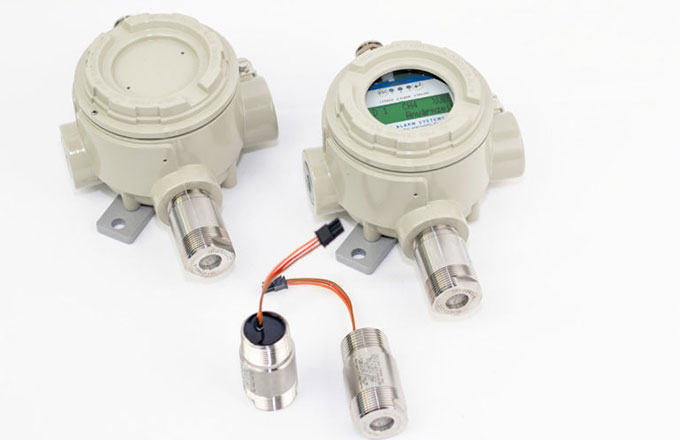
The PolyXeta2 PX2 gas detector by MSR for the ATEX zone is used for detecting methane gas leakage. The microprocessor-based gas sensor with output signal as well as alarm and fault relays (all SIL2 certified) monitors the ambient air for combustible gases and vapours using: an infrared sensor element and a catalytic sensor element (pellistor). Analog signal values (4–20 mA), such as measured values and alarm activation, are sent to the DCS (Distributed Control System). The digital signal of the detector is sent to the ventilation cabinet to activate additional fans and to shut down the air chambers.

The 4–20 mA / RS-485 Modbus output signal makes the sensor suitable for connection to: PolyGard2 gas controller series from MSR-Electronic, other controllers from MSR-Electronic, and automation devices from MSR. As an option, the PolyXeta2 sensor is also available with LCD and relay output.

Sensors with LCD have an integrated calibration routine that is started from the outside by means of a permanent magnet without opening the housing. In the event of an alarm or error, the backlight changes from green to red. The calibration of sensors without LCD display is carried out via the handy MSR calibration device STL06-PGX2 or the PC software PCE06-PGX2.

The methane gas detectors were installed near the gas turbines and in the final gas filtration area at unit C, in zone 2, by the Croatian MSR partner Aurel d.o.o.

Further information on MSR products can be found in the current online catalog or in the webshop.

MSR-Electronic’s methane gas detector PX2

MSR-Electronic’s methane gas detector PX2


Smart cities market predicted to grow by almost 15% to 2027

According to a research report published by Marketsandmarkets, the smart cities market is expected to grow from USD 511.6 billion in 2022 to USD 1024.4 billion by 2027, at a CAGR of 14.9% during the forecast period.

The smart cities market is growing due to the rising need for public safety and advanced communication infrastructure, growing adoption of connected and smart technologies, rising energy optimisation requirements, and intensifying citizen engagement.

Smart transport

By smart transportation solution, passenger information management is expected to register the fastest growth rate during the forecast period. The passenger information system is an important link between passengers and transit service providers and keeps travellers updated quickly and precisely. It focuses on the current location of the bus, estimated arrival time and departure time, and vacant seats and keeps the passenger updated. It is an electronic operating tool that provides its passengers with, at any given time, visual and acoustic information to passengers on a route, both automatically and programmed manually.

Building automation

In terms of the actual smart buildings, it is the commercial sector that the analysts estimate will account for the largest market share in 2022. The HVAC, smart lighting, and monitoring are some of the important factors affecting the comfort and productivity of employees in commercial settings. HVAC control systems provide precise temperature control and improve the air quality in commercial buildings. The automation of building temperature, security, and maintenance increases the overall efficiency of commercial buildings. The energy performance of commercial buildings is a major challenge for the commercial sector as these buildings consume higher energy and generate more waste in the form of carbon and other solid wastes. Therefore, appropriate and tailor-made solutions are needed for optimised energy performance to reduce building energy consumption without compromising comfort or security.

Dynamic urbanisation

Geographically, Asia Pacific is projected to be the fastest-growing market for smart city solutions due to the adoption of new technologies, rising investments in digital transformation, and growing GDP in the Asia Pacific countries. Developed economies, such as China, Japan, and South Korea, which are the most technologically advanced, are the highest contributors to the smart city market in the region. The region also constitutes major economies, such as Singapore, Australia, and India. As the world’s most dynamic region for urbanisation, Asia Pacific is home to a majority of developing Asia Pacific members experiencing rapid urbanisation. Major vendors such as ZTE, Huawei, and NEC Corporation have already invested huge amounts in telecom infrastructure, and this spending is expected to increase. Due to the large number of 5G deployments and initiatives taken by major Asian mobile operators to resolve the problem of high bandwidth requirements, the smart cities market in the Asia Pacific is expected to have enormous growth in the coming years.

Main market players

The major vendors covered in the smart cities market include Cisco, IBM, Siemens, Microsoft, Hitachi, Schneider, Huawei, Intel, NEC, ABB, Ericsson, Oracle, Fujitsu, Honeywell, Accenture, Vodafone, AWS, Thales, Signify, Kapsch, Motorola, GE, Google, TCS, Nokia, Samsung, SAP, Tomtom, Appway, Ketos, Gaia, Takadu, Flamencotech, Xenius, Bright Cities, Maydtech, Zencity and Ixden.

MOBOTIX completes MOBOTIX 7 camera series with three indoor models

MOBOTIX completes its MOBOTIX 7 camera series with the MOBOTIX v71, c71, and p71 indoor cameras. Maximum MOBOTIX 7 performance without needing costly weather protection enables lower system prices than outdoor versions. In addition, the indoor models can be operated particularly energy-savingly in PoE Class 3 (max. 12.95 W). Depending on the application area, in many cases, the maximum illumination intensity or peripheral devices supplied via USB are not required. It is easy to switch to the higher PoE+ class for full power requirements via the camera software.

Best image quality day and night

The hemispherical c71 has a detailed 360° HiRes image sensor with 4K resolution, automatic day and night switching, and IR light. The v71 and p71 indoor domes – with and without domes – are available with 4K UHD (Ultra High Definition) or maximum light-sensitive 4MP Ultra LowLight day & night sensors and lenses with 15° up to 120° (120° only for p71) horizontal viewing angle.

The new p71 is particularly eye-catching. It not only impresses with its distinctive design but also does without a dome, which completely avoids potential light reflections and thus guarantees the best possible view. For indoor applications with maximum lens and vandalism protection, such as in public buildings, the robust dome variant v71 with IK10 polycarbonate dome is recommended. In general, the wide range of lenses, the use of high-quality components and materials (e.g., aluminum housing), the additional IR LEDs integrated into all models, and the high-resolution light-sensitive sensors ensure reliability, durability, and brilliant image quality in all lighting conditions.

Far more than just security applications

All new video systems are part of the open MOBOTIX 7 platform, designed to meet the most demanding challenges, using AI-based apps that enable customized and future-proof solutions.

“Video technology has long since gone beyond pure security applications,” said MOBOTIX CEO Thomas Lausten. “Our intelligent systems detect hazards, support processes and workflows, and relieve the burden on people and equipment in many applications. For example, in healthcare, the systems take over monitoring tasks for nursing staff, freeing them up to provide more intensive personal care. In industry, we have already been able to achieve impressive savings through targeted process monitoring for companies in various sectors,” says Lausten. “In some cases, the cameras pay for themselves in just a few months.”

This is made possible by appropriately powerful and expandable hardware and by the open software platform, on which even resource-hungry applications based on artificial intelligence can be operated with high performance. Each MOBOTIX 7 camera, therefore, comes with a comprehensive range of integrated applications. Optionally, applications from well-known partner companies and individual applications that fully meet a customer’s needs and areas of application can be developed and integrated.

“Our previous MOBOTIX 7 camera models were primarily designed as outdoor cameras. With the indoor versions, we now offer a more cost-effective option – also in the long term thanks to further reduced power consumption – for using MOBOTIX 7 applications wherever the complex weather protection of the outdoor models is not necessary,” explains Lausten.

Specifications of the MOBOTIX 7 indoor cameras

As is customary at MOBOTIX, the systems developed in-house are hand-assembled and intensively tested in Langmeil. Thomas Lausten is particularly proud of this: “Our “Made in Germany” quality standard, the diligence of each employee, and, of course, the cybersecurity that is constantly verified by penetration tests are essential factors that set us apart from our competitors as a MOBOTIX family.

Billion people without legal identity

The world’s population has now reached the landmark figure of eight billion people, according to the United Nations. However, one billion people still have no legal identity and are thus excluded from social participation and the opportunities of the modern world. About 237 million children under the age of five do not have a birth certificate. With this having serious implications for those individuals, Veridos is committed to supporting the UN’s Sustainable Development Goal (SDG) of giving all people a legal identity by 2030.

“A legal identity is the prerequisite for modern life in a connected world. Only a legal identity enables to uphold fundamental rights and participate in social, political and financial life,” explains Marc-Julian Siewert, CEO at Veridos. “We firmly believe that a legal identity is a human right. That’s why we are striving to develop both secure and innovative identity technologies that enable governments to guarantee this right to their citizens.”

Official identity documents, such as passports and birth certificates, do not only establish a sense of belonging for individuals, but they also guarantee them access to social benefits and services such as healthcare, education, humanitarian aid and financial support. They also enable them to exercise fundamental rights such as the right to vote or inherit.

Internationally recognized documents enable people to travel across borders for business and tourism. But they also allow them to receive medical care abroad or pursue specialized or technical education in  foreign countries. Finally, identities give citizens secure access to important services for economic growth, such as setting up a bank account.

For these reasons, Veridos supports the UN Sustainable Development Goal 16.9, which calls on all countries to provide all citizens with a legal identity by 2030. Veridos is a member of the United Nations Global Compact, a worldwide pact between the UN and companies for the social and ecological shaping of globalization.

Gas Detection in Commercial and Institutional Buildings

 Why it’s critical and how to make the right choice

By Renato Torres, EN-54 Life Safety Systems Portfolio Director, Honeywell

In most European countries, commercial and institutional buildings are not governed by strict regulations for gas detection. Gas detection is often not well understood or applied in these applications.

There are several challenges to implementing gas detection solutions in commercial and institutional buildings. Many gas detection systems operate independently of building management systems (BMS) or fire and smoke detection systems. This makes them cumbersome to manage and maintain. Building managers and fire engineers need flexible and scalable solutions that are easy to use and maintain.

Gas hazards in commercial and institutional buildings

Gas monitoring is critical in facilities like hospitals where oxygen is stored and used as part of normal daily operations. Storage facilities are another area of concern where oxygen leaks can increase the risk of fire or explosion.

Besides hospitals, light industrial plants use gases for production systems, welding or inert blankets. Industrial environments have the added complication of dust, water and other gases that might be present in the environment, which can be damaging to sensitive detectors and electronics.

Underground car parks also can pose a risk. Exhaust fumes contain carbon monoxide, which is particularly dangerous because it is invisible and has no odor. Liquefied petroleum gas (LPG)-powered vehicles may use underground parking areas, which adds the risk of an explosive atmosphere caused by an LPG leak.

What are the challenges?

Detection systems are critical for keeping workers and the public safe from toxic and flammable gases. Yet, regulations governing gas detection are not always in place, nor are they consistent from one area to another. In the absence of clear regulations, the onus is on facility managers and fire engineers to implement robust systems that will provide adequate warning of gas leaks. As such, it is critical to select the right technology partner that can advise on the best approach for their application.

Many facilities have smoke and fire detection systems, but gas detection systems are less widespread. If they are installed, they tend to be independent of other building systems making them more cumbersome to manage, thus potentially increasing the risk that a gas leak may go unnoticed. An integrated approach covering fire and smoke detection, gas detection, and building management could help facilities manage their risks comprehensively.

Hospitals and light industrial plants are not static. Wards get changed from one service to another, and new wings are added. Light industrial facilities also expand and can increase the volume and type of gases they use over time. Many legacy detection systems are not flexible or scalable, lacking the adaptability to meet the changing needs of an organization. Newer systems from leading technology suppliers can overcome these shortfalls.

Selecting the right gas detection solutions

Honeywell supplies gas detection solutions for commercial and light industrial applications, including parking garages and hospitals. There are three main solutions applicable to these environments:

PARK

The PARK system provides CO monitoring for parking garages. This gas detection system can sound audible alarms to warn people of danger. It can activate common ventilation systems when the CO level exceeds safe limits. A PARK2000 panel can manage up to 32 CO detectors, divided into up to two zones, and the PARK5000 model can manage up to 80 CO detectors, divided into up to five zones.

NFG-8

The Notifier NFG-8 system meets Safety Integrity Level (SIL) 1 using 4-20mA gas detectors and is ideally suited to the light industrial environment. This solution allows for three different threshold limits and several output options. For example, NFG-8 can control ventilation, activate warning signs, and communicate with third-party BMS devices.

AM4000G

The AM4000G is an addressable system that can cover the needs of an entire building, including its parking garage. Up to 396 sensors can be connected to the AM4000G on four loops using the reliable two-wire Fieldbus communication. This solution allows various hazardous conditions to be managed independently using complex cause-and-effect scenarios.

Key benefits

Benefit Description
Flexibility Honeywell gas detection solutions can scale from small systems for specific applications to large addressable solutions that cover all the needs of an entire building. They can operate as standalone systems for gas detection or integrate with other systems like building management or fire and smoke detection.
Reliability Honeywell is a global supplier of gas detection technology to buildings and parking garages. Experience with multiple customers across multiple industries and locations gives Honeywell unique insight into how products are used and enables solution designs that meet the needs of customers. Honeywell offers reliable gas detection systems that deliver consistent performance using the best available technology.
Rated casings Honeywell supplies both IP55 and ATEX-rated casings. IP55 casings are certified against dust or moisture ingress while ATEX versions can be used in dangerous environments, depending on the specific needs of the area. These solutions cover the full spectrum of needs for light industrial applications where some areas require rated casings and others do not.
Mobile application for calibration and maintenance A mobile application from Honeywell enables users to perform calibration, programming changes, and maintenance on detectors. This tool is easy to use and saves technicians time, especially when performing regular tasks like bump tests or limit changes.

Working with a technology partner

Many management teams for commercial and institutional buildings like hospitals and light industrial plants lack detailed knowledge of gas detection systems. It is advisable to work with a technology partner who understands their solutions and the environment in which these solutions are applied.

Gas detectors must be installed correctly to provide the desired protection. For example, CO detectors should be installed at an equivalent height to the average human. This is because CO has a similar density to air. It does not accumulate at floor or ceiling level; therefore, detection must occur at the height of most significant risk, where humans can breathe in the toxic gas.

All gas detectors experience drift over time. Their readings will become less accurate unless they are regularly checked and calibrated. Regulations do not always cover these critical aspects of the long-term effectiveness of gas detection systems. Trusted technology suppliers have the technical expertise to advise users on their system’s appropriate maintenance and calibration schedules.

Conclusion

Commercial and institutional buildings are not well regulated regarding gas leak detection, but this does not mean the risks are low. Gas leaks can cause serious incidents, like fires and injuries, including the loss of life.

Honeywell offers gas detection solutions for commercial and institutional buildings, including hospitals, parking garages, and light industrial plants. Its team of experts and channel partners can help advise on the best solutions to solve difficult problems.

Click here to find out more about Honeywell products.


New version X5 of the PSIM platform WinGuard

For three decades, WinGuard has been one of the leading PSIM platforms for the unified visualization and control of subsystems. Recently Advancis has presented its new version WinGuard X5 which is based on the new software platform AOP and thus offers more flexibility through open access for 3rd party applications.

 As networking and digitization steadily continue to advance, it is important for control room personnel to work with software platforms that can be operated intuitively and are flexible to extend. A multitude of single systems provides a mass of information that is hard to keep track of – whether from security management, building automation, or communication technology. The unification of numerous sensor data by using a PSIM platform is the only logical solution.

Scalability

WinGuard PSIM is used in various verticals like industry, finance, transport, and healthcare –from small installations with only one workstation up to crosslinked network solutions with numerous international locations. The platform is scalable and can be extended seamlessly by further interface or function modules. Currently, over 470 interface drives to different security, building management as well as communication systems are available and related systems such as ticketing, computer-aided dispatch systems, and IoT technologies can also be connected.

The new version WinGuard X5 is based on the Advancis Open Platform (AOP), offering even more flexibility by open access for third-party developers. A growing number of PSIM projects with more and more specific and partly very individual requirements has led to the fact that solutions have to be more and more realized based on generic concepts. Now partners and customers can extend the software as desired with functionalities, interfaces, and individual UI components. All extensions integrate seamlessly into the existing application and are based on a uniform API which can be used in principle with any programming language.

Important milestone

AOP is strategically the most transformative product development in Advancis’ corporate history. This milestone paves the way for expansion by creating an open platform that offers almost unlimited possibilities. When implementing extensions, a partner or customer does not have to start from scratch. Redundant network structures, distributed data storage, system communication, object modeling as well as diverse UI components are available as a framework for different programming languages. Created components can be certified within the Advancis Developer Partner Program to license them to other users. The new version WinGuard X5 is an important milestone, as due to AOP, the software can be customized to a previously impossible level. Customers’ needs about the realization of a PSIM project can be met faster and more extensively.


Euralarm raises concerns over data sharing provisions of proposed European Data Act

Following initiatives from the European Commission regarding legislation promoting the data economy, Euralarm has raised concerns over specific provisions in the proposed Data Act that may generate security risks.

In particular, Euralarm notes chapter II of the proposal that makes the sharing of data with third parties mandatory.

Euralarm’s position is as follows:

“Data related to security activities are linked to critical and very sensitive operations and procedures. With access to this data, it would be possible to gain a very deep understanding of the installation and performance of the system or service. This would result in a very high risk of security breaches, including cyber security breaches, both to a given customer installation and to the whole security system itself.

“Furthermore, the criticality of data generated by security systems (such as video surveillance systems) is already recognised by national laws regulating private security and the installation of video surveillance systems. These laws limit the right to share information related to or generated by these systems. The data sharing provisions of the draft Data Act are therefore in conflict with these national laws.

“Finally, access to pure operational data/metadata does not provide any benefit to the end-user, neither allows a smoother switching of provider. Therefore, there is no benefit in allowing/imposing any requirement in the way the data has to be accessed or managed.”

In a recently published Position Paper Euralarm proposes several amendments, as well as a new article to the draft Regulation in order to exempt security-related data from the obligation of sharing. Services Directive 2006/123/EC excludes private security services from its scope via Article 2(2)(k). Euralarm therefore believes that a similar exemption in the Data Act should be feasible.

A copy of the Position Paper can be downloaded from the Euralarm website here.

Dynamic event filtering

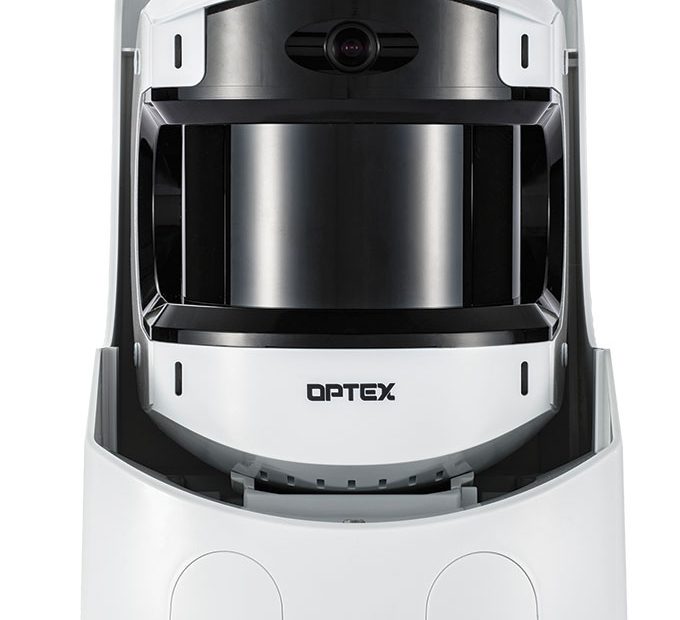
OPTEX’s ONVIF-compliant LiDAR REDSCAN Pro series allows the ability to create alerts based on specific detection criteria or logic. Alarms can be raised based on the sequence of zone detection or based on detection in multiple zones. One zone would be considered a ‘judgment zone’ and the second as an ‘alert zone’. With this REDSCAN Pro can generate smart alerts dynamically by processing both the ‘judgment zone’ and ‘alarm zone’ status. There are many dynamic event-filtering applications, each requiring a certain configuration. Some of the most common applications are explained here:

Directional tracking protection

If there is a requirement to only allow movement in one direction, REDSCAN Pro can generate alarms for movement in the unwanted direction and no alarm when a person goes in the desired direction. One example of this application would be an exit-only walkway. For this application, REDSCAN Pro is installed on the horizontal mount and the alarm and judgment zones are allocated to suit the site requirement.

 Alerts for un-audited entry when a security guard is absent

In this example, there is a requirement for an alert when a person enters a zone and the security guard is not on location; there is no alert when the security guard is present.

REDSCAN Pro is mounted horizontally and we set the security guard standing area as a judgment zone and the entry area as an alert zone.

Minimum height limit requirements at the loading bay

An intelligent logic can be created in a logistics or warehouse environment based on the height of vehicles positioned by the loading bays. Delivery lorries or trucks entering the detection zones would not trigger any alarms, but smaller vehicles such as vans or cars would trigger the system. In this application, an alert is raised if a small car or van approaches a truck loading bay and there would be no alert for big trucks.

The REDSCAN Pro is installed in a vertical mount generating a virtual wall parallel to the loading bays. The area above the minimum required height is set as the ‘judgment zone’ and the area below the minimum height as the ‘alert zone’.

 Tunnel protection

The REDSCAN Pro dynamic filtering feature can be used for rail tunnel entry protection to ensure there is an alert if a person walks into the tunnel but no alerts for trains. The REDSCAN Pro can be installed in a vertical mount to generate a virtual door in the tunnel entrance.

Parked car protection

In this application, there is a requirement for an alert when a person approaches an area while a car is parked, but no alert when there is no car. The REDSCAN Pro is installed in a horizontal mount. We set the location where the car is normally parked as the ‘judgment zone’ and all the areas around the parked car as the ‘alert zone’.

If you would like more information about the REDSCAN Pro series and its possible applications,

please contact: optex@optex.com.pl, www.optex-europe.com.

Choosing the Right Networked Fire System

Today there are greater demands on fire systems than ever before. Many fire panels are powerful computers, working with intelligent detectors to report on changing conditions across the fire system, alerting people to emergencies by voice, light, and/or sound. They also control the release of suppressants, operate smoke control systems, link to graphical control systems, and integrate with third-party building management systems. This list is constantly growing, as well as the demand for fire panels to operate across larger, more complex sites.

By Vladimir Zrnic, Regional Sales Manager for Southern Europe, Advanced

Flexible system architecture

A networked fire alarm system communicates data between all panels/network nodes on a site, allowing for greater control over the fire safety of the whole building.

The network’s design should allow buildings to be protected by distributing fire panels across the site. Using a true peer-to-peer system, information from any input or output device can be sent over the network and displayed on any control panel, allowing the system to display details of all fires on any panel or repeater in the building.

The interconnection of fire alarm control panels over a proprietary network allows many panels, often in physically different locations, to communicate using a two-core cable (or fire-resistant two-core screened twisted pair cable depending on local legislation). Information from any one panel is available to any or all of the other panels in a network, distributing intelligence, reducing installation costs, and saving time on maintenance.

A looped system is recommended to ensure greater system security as it uses diverse cable routing techniques. Should a single fault occur, affecting communications, the system can still function and communicate to provide a coordinated response.

System speed

In large, complex sites, it is vital networked panels perform effectively. As the number of panels and input and output options on a network increase, some systems can slow down dramatically compromising safety and reliability.

Advanced’s peer-to-peer standard or fault-tolerant networks can be configured to allow the interconnection of up to 200 panels (nodes) in a fault-tolerant configuration. The maximum cable length between nodes is 1.5km, with a total loop length of 20km. The network can withstand a single fault between nodes without losing communications to any single panel by using a standard two-core, fire-resistant cable.

EN54-13 specifies maximum times for relaying fire alarm signals around the network. EN 54-13 (E) 4.3.2.1 states that “a fire alarm condition on Control and Indicating Equipment (CIE) shall be indicated on the main CIE within 20sec.” The typical delay on an Advanced Ad-NeT+ 50 panel network, for each panel to indicate a fire from any zone, is less than one second and 3.5 seconds for a full 200 panel system.

This is important, since what is the point of having an investigation delay set to 30 seconds if communication through the network takes a whole minute? Failure to acknowledge the alarm through the network and start an investigation will result in full evacuations on large complex sites, which is not what we want.

Scalability

A truly scalable fire network will allow different typologies suitable for sites of various sizes with vast cause-and-effect options, and intuitive, easy programming. As buildings are increasingly networked, fiber optic cable has become popular, allowing fire alarm networks to cover greater distances.

Fire systems need to work quickly and reliably, and process large numbers of changing signals in the event of a real fire. On larger sites, seconds count and fast systems are highly valuable in maximizing verification time, escape, and firefighting. Individually, many fire systems may appear to meet these challenges but in complex buildings with networked systems attaining adequate performance isn’t always achievable with inferior fire panels.

For further information on Advanced’s AxisGo email: vzrnic@advancedco.com or visit: https://uk.advancedco.com/


VMS Evolution – VAST Security Station

 Beginning in early 2023, VIVOTEK will release to the market a new and greatly improved video management system. VAST Security Station (VSS) is VIVOTEK’s newest offering to security VMS, with new solutions that expand beyond its predecessor VAST 2. The camera license methodology has been updated, with 3 different options for VSS.  For entry users, there is VSS Lite (which supports up to 32 channels). VSS Standard is available for SMB users (supports up to 64 channels).  For large-scale projects and power users, there is VSS PRO (supports 65+ channels).

In September of this year at the security tradeshow Essen, VSS was presented for the first time. Soon after it was demonstrated again in Zagreb at the A&S Adria Summit, followed by another demonstration one week later in Hungary by our partner at the Alphasonic Expo.  Feedback from these VSS presentations was overwhelmingly positive, with most visitors impressed with the new solutions added to VSS.

The presentation of VSS at the a&s Adria Summit included a live demo. At the main entrance, one camera was installed for monitoring and recording. Over the course of two days, the a&s Adria Summit had more than 2,500 visitors. Given a large number of people at the event, VSS was given the opportunity to demonstrate live its newest technology feature: Deep Search. Visitors were able to use VSS and Deep Search to easily find themselves from the main entrance camera footage. Many used their clothing information (top color, bottom color) as search criteria to find themselves. In the end, Deep Search proved very useful as all participants found themselves very easily. Some even found it fun.

Deep Search uses AI to improve search functionality, and it is comprised of three main functions: Attribute Search, Scene Search, and Re-Search. No longer relying on scrolling through the video footage frame by frame, VIVOTEK Object Analytic cameras provide metadata to enable intelligent video evidence search. By utilizing metadata-defined attributes and rules, Deep Search provides smarter, faster, and easier post-event search analysis.

Attribute Search uses specific attributes (e.g. gender, age group, clothing/vehicle color, vehicle type, etc.) to quickly and accurately search for people/vehicles. With Attribute Search, users can narrow down their search parameters to specific factors, such as a red motorcycle or blue shirt female.

Scene Search allows users to quickly review VIVOTEK Object Analytic camera footage by using intrusion, line crossing, or loitering detection on the recorded video. For example, using line crossing detection, users can draw a line at a point of interest in the video footage and select a time period to quickly find results of all events where someone, or vehicle, crossed that line.

A special addition to the in-depth investigation of recorded material is the Re-Search function. After finding a person of interest on one camera, users can use that image to search for them again (i.e. Re-Search) across all other cameras in the entire VSS system. This helps users identify and track all the activities of this person of interest throughout the property.

VSS is only taking over where VAST 2 left off. Many popular functions from VAST 2 will continue on in VSS, including:

  • Recognition of license plates
  • Management of Cybersecurity events
  • Analytical events from cameras (Line Crossing Detection, Loitering Detection, Intrusion Detection, Face Detection, Missing Object Detection, Unattended Object Detection, Crowd Detection, Smart Tracking, Running Detection, Parking Violation Detection, Restricted Zone Detection)