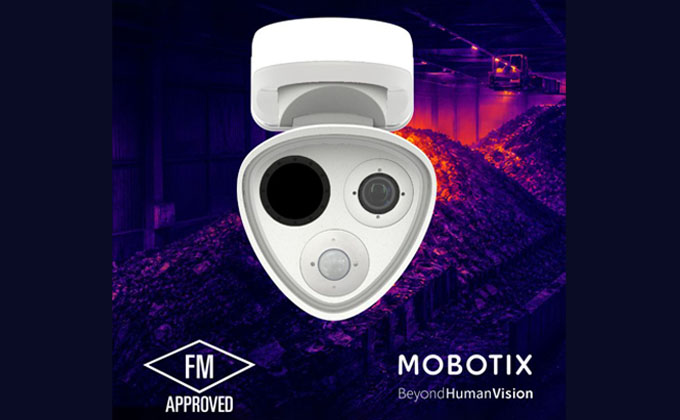
MOBOTIX announced that its M73 Thermal camera has received independent certification to the ANSI/FM 3260 standard, confirming its reliability for professional early fire detection in demanding industrial environments. ANSI/FM 3260 is one of the key standards for thermal fire detection systems, validating a camera’s ability to detect abnormal heat build-up before flames appear. This enables earlier intervention and helps reduce the risk of major fire incidents in industrial facilities, warehouses, energy sites, and other critical infrastructure.
According to the company, the M73 Thermal delivers reliable performance in dusty, windy, and open-air environments while eliminating false alarms caused by steam, dust, or airflow. The system is designed for continuous 24/7 autonomous monitoring, helping protect people, facilities, and valuable assets before a fire can develop.
“This milestone reinforces what matters most to customers: helping prevent fires before they start. The FM Approval validates the reliability of MOBOTIX technology in demanding real-world environments and further strengthens our commitment to proactive fire prevention,” the company said.
Security Essen is once again providing strong momentum for the security industry – not only through innovative products and technologies, but also with a high-calibre supporting programme. From 22 to 25 September, the leading trade fair for civil security will place current challenges and future-oriented topics centre stage through conferences, expert forums and themed days. Whether talent development, cybersecurity, drone technology or the protection of critical infrastructure, the programme at Messe Essen combines knowledge transfer, networking and practical insights at the highest level. Best of all, most events are freely accessible and already included in the trade fair ticket.
A key focus is on attracting young talent: the Training and Further Education Day will take place on 22 September. Companies, educational institutions and associations will provide information on career paths, qualification opportunities and prospects within the security industry. Young people will gain practical insights into a wide range of professions and have the opportunity to speak directly with potential employers. Also on 22 September, the Emergency Services Day will be held. Representatives of the police, fire services, anbulance services and other emergency response organisations will learn about current operational scenarios, new technologies and cross-organisational cooperation.
Cybersecurity and knowledge transfer at the highest level
Running in parallel, the DNS Digital Networking Security Conference will begin on 22 September and continue until 23 September, highlighting the latest developments in digital security. Experts from industry, research and public authorities will discuss current threat scenarios and strategies for a secure digital future. Topics will include cyber defence, network security and artificial intelligence, as well as insights into the dark web and phenomena such as doxing.
Continuous knowledge transfer will also be provided by the Security Experts Forum, which will take place throughout all four days of the exhibition. In practice-oriented presentations, specialists will showcase trends, solutions and best practices from all areas of the security industry.
Future technologies and the protection of critical infrastructure
Another highlight will be the European Drone Conference, taking place on 23 and 24 September. The event focuses on the opportunities and challenges of unmanned systems in the security sector. International experts will provide insights into current applications and future developments in this technology, which is becoming increasingly
The Banks and Savings Banks Day on 24 September is specifically aimed at security professionals in the financial sector. The focus is on current requirements for the protection of branches, cash machines and safe-deposit facilities. In light of rising threats and growing security requirements, the event offers valuable insights for banks, savings banks and financial service providers.
Tickets available online
Tickets for Security Essen 2026 are available online. A day ticket costs 49 euros. The exhibition is open from Tuesday to Thursday from 9 am to 6 pm and on Friday from 9 am to 4 pm.
Important note: A separate exhibition ticket is required for EUDEX, the international defence industry trade fair taking place at the same time.
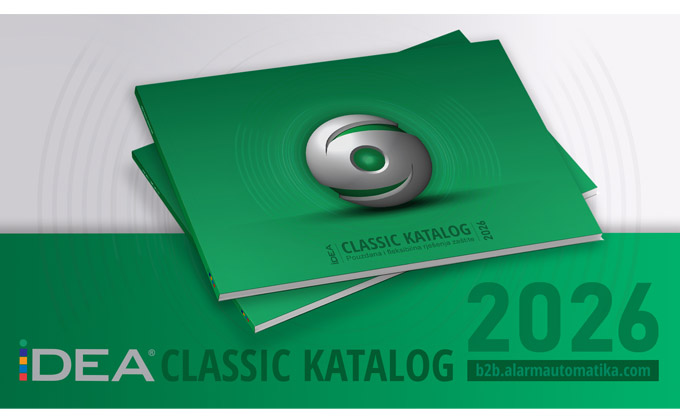
Alarm automatika has released the 28th edition of its iDEA Classic Catalogue, the most comprehensive edition to date, offering an overview of the latest technologies and solutions in the technical security industry. First introduced nearly three decades ago as a product catalogue, iDEA Classic has evolved into a practical guide to modern security technologies, market trends, and integrated solutions for designers, installers, and other industry professionals.
The new edition features solutions for video surveillance, intrusion detection, fire detection, video intercoms, access control, entrance automation, networking equipment, public address systems, and integrated security platforms. In addition to products from Alarm automatika’s own DVC brand, the catalogue includes solutions from leading global manufacturers such as Ajax Systems, Hikvision, Reolink, Inim, Comunello, Ruijie, Wi-Tek, Fonestar, inOUT, Tedee, and Yale, with a strong focus on integrating multiple technologies into unified security systems.
The catalogue also highlights Alarm automatika’s in-house development solutions. According to the company, its R&D department has been developing software platforms for more than 30 years, with over 150 implementations across the region, reflecting the company’s ongoing investment in proprietary technologies alongside the distribution of leading global brands.
Alarm automatika emphasizes that the iDEA Classic is much more than a sales catalogue, serving as a practical guide to modern security technologies and an everyday reference for professionals involved in the design and implementation of technical security systems.
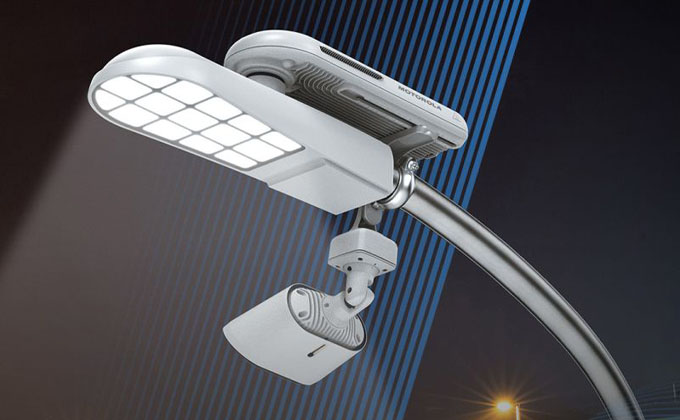
Transforming streetlights into intelligent security hubs is the concept behind the new ENVR2X platform from Motorola Solutions. This rugged all-in-one solution combines a network video recorder, PoE switch, LTE modem, and power supply in a single appliance that mounts directly onto existing streetlights, eliminating the need for civil works or electrical installation.
The platform comes preloaded with Avigilon Unity Video 8 software, supports up to eight security cameras, and features 4 TB of onboard SSD storage for local recording. Powered by an integrated NVIDIA Jetson processor, it enables advanced AI analytics to run directly on the appliance. Among its AI capabilities are person and vehicle detection, Appearance Search, facial recognition, visible firearm detection, and occupancy counting, helping security operators search video footage faster and respond more efficiently to incidents.
Through a partnership with Ubicquia, ENVR2X also supports smart street lighting management, allowing municipalities to combine public safety and lighting control on a single infrastructure platform. The appliance is built for demanding outdoor environments, featuring IP66 ingress protection and an IK08 impact rating, while also supporting remote system monitoring and management.
According to the company, the system can be installed by a two-person team in less than an hour, significantly reducing deployment time and the cost of upgrading urban security infrastructure. The ENVR2X platform is currently available exclusively in the United States.
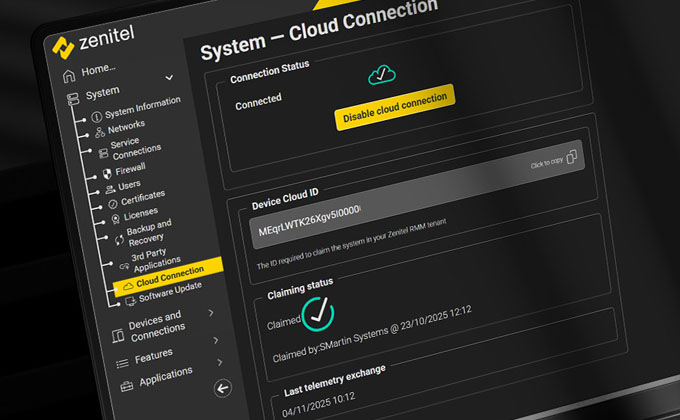
Continuous monitoring and remote management of critical communication systems are at the core of the new Cloud RMM solution introduced by Zenitel. The solution is designed for environments where the reliable operation of intercoms, voice alarm systems, and other communication devices is essential to protecting people and critical infrastructure, including transportation hubs, public spaces, and correctional facilities.
The company points out that faults in these systems often remain undetected until they are needed, making traditional maintenance based on scheduled inspections and on-site service visits increasingly inadequate for today’s complex security environments. Cloud RMM provides continuous visibility into device status, automatically detects anomalies, and enables issues to be resolved proactively before they impact system availability.
The Zenitel Connect Pro platform with Cloud RMM capabilities enables centralized management of devices across multiple sites, remote software updates, and diagnostics without dispatching technicians to the field. This approach helps reduce operational costs, accelerate incident resolution, and improve the overall availability of critical communication systems.
According to Zenitel, modern cloud platforms are built on encryption, controlled access, and recognized cybersecurity standards, making the cloud a tool for reducing operational risk rather than introducing new vulnerabilities. The company believes that cloud-assisted remote monitoring and management will become the industry standard for maintaining critical communication infrastructure, particularly for organizations operating across multiple locations.
Salto Systems has expanded its Ælement Fusion smart locking range with a new version designed for exterior doors and installations exposed to demanding weather conditions. The launch marks a significant extension of the existing solution, bringing Salto’s signature “invisible” locking concept to hotel entrances, premium residential developments, and other outdoor applications for the first time.
The system retains its minimalist design, with no visible electronic lock hardware on the door surface. All key components—including the electronics, battery packs, and control modules—are concealed inside the door, while users interact through a discreet circular reader compatible with smart credentials, mobile keys, and Wallet technology.
The new version has been specifically engineered for outdoor environments and features climate-resistant gaskets that protect the system against rain, humidity, and extreme temperatures. With an IP55 rating for dust and water protection, it allows property owners to maintain the same clean architectural design across all doors, from hotel rooms and apartments to main entrances and shared spaces.
At the same time, Ælement Fusion integrates seamlessly with Salto’s smart access ecosystem, supporting real-time management, mobile credentials, and centralized access administration.
“With this launch, we have bridged the gap between weather resistance and premium architectural design. Property operators no longer need to choose between aesthetics and the robustness required for exterior environments, as Ælement Fusion combines both in a single solution,” Salto said.
Today, Ljubljana-based EGAL is celebrating its 36th anniversary, marking more than three decades of building a strong reputation in infrastructure solutions for data centers, structured cabling, optical networks, signage, and measuring equipment. Since its establishment in 1990, the company has continuously expanded its portfolio while working closely with partners, suppliers, customers, and industry experts on infrastructure projects across a wide range of sectors.
To mark the anniversary, EGAL expressed its gratitude to its employees, business partners, and customers for their trust and support over the past 36 years. The company emphasized that, alongside its business achievements, it is particularly proud of the long-lasting relationships it has built with its partners and collaborators.
Over more than three and a half decades, EGAL has grown into one of the region’s recognized distributors and providers of networking and data infrastructure solutions. The editorial team of a&s Adria congratulates EGAL on its 36th anniversary and wishes the company continued success, many new projects, and sustained growth in the years ahead.
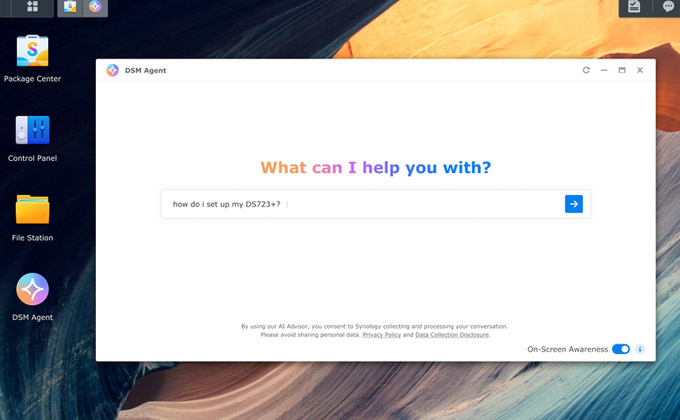
Synology has introduced DiskStation Manager (DSM) 7.4, the latest version of its operating system, bringing AI-powered system management, enhanced collaboration tools, and improved storage efficiency. Among the key additions is DSM Agent, a built-in AI assistant that provides contextual recommendations for NAS configuration and management, simplifying administration and enabling more proactive system maintenance. The company also announced that the upcoming DSM Agent 2.0 will support more advanced natural language workflows, including system health monitoring, backup verification, and task automation across the Synology ecosystem.
DSM 7.4 also introduces beta versions of Synology ChatPlus and Synology Meet, enterprise collaboration tools offering on-premises deployment, granular permission controls, and AI-powered live translation to support secure communication while maintaining full data privacy. In addition, Synology Drive now features AI Search, allowing users to locate files using natural language descriptions while recognizing content within images and documents on GPU-enabled systems.
The new release also improves storage efficiency by introducing post-processing deduplication and compression for HDD-based volumes, helping reduce storage consumption without affecting overall system performance.
“As artificial intelligence becomes more capable, the real challenge is no longer building intelligence itself, but putting it to work where data lives. With DSM 7.4, we’re providing users with a platform where AI drives greater productivity and smarter management, while keeping them in full control of their data and infrastructure,” said Bie-i Chu, Executive Vice President of the Synology NAS Group.
According to a new analysis by MarketsandMarkets, the global fingerprint sensor market was valued at USD 4.71 billion in 2025 and is projected to reach USD 6.98 billion by 2032. The market is expected to grow at a compound annual growth rate (CAGR) of 5.7% between 2026 and 2032, driven by the increasing adoption of biometric authentication across consumer electronics, financial services, government institutions, and access control systems.
Analysts attribute this growth to the rising demand for more secure and convenient authentication methods, as well as growing concerns over cyber threats, identity theft, and unauthorized access. Continuous advancements in capacitive, optical, ultrasonic, and 3D fingerprint sensing technologies are further supporting market expansion by improving authentication accuracy, speed, and overall user experience.
The growing adoption of digital payments, mobile banking, e-commerce, and digital identity programs is also fueling demand for biometric security solutions. At the same time, the expansion of the Internet of Things (IoT), smart homes, and connected digital ecosystems is creating new opportunities for fingerprint sensor applications beyond the traditional smartphone and laptop markets. Leading companies in the sector include Shenzhen Goodix Technology, Apple, Fingerprint Cards AB, Synaptics, Egis Technology, Qualcomm Technologies, CrucialTec, NEXT Biometrics, Novatek Microelectronics, and Qtechnology.