We used our knowledge of IT to create advanced video surveillance solutions
Ms Zhao, thank you for addressing to our readers. For a start, could you present yourself, your educational and professional background, duties you are performing at Uniview, etc.?
I am Hebe Zhao with a master’s degree in MBA from Zhejiang University and a bachelor’s degree in background engineering from Southeast University. I used to work in telecommunication and network equipment manufacturer as a senior channel manager for nearly ten years. I have been working for Uniview for six years and have been the Director of East European Business Dept. in the past 3 years.
Uniview is one of the largest players in video surveillance in the world, ranking sixth in 2020 Security 50 research. Can you give us a brief history of Uniview, what were the most important milestones on your way to success? How many people do you now employ now, in how many countries do you sell your products and have offices, what is your growth rate, revenue, etc.?
Uniview is a pioneer and leader in IP video surveillance. We are the third largest player in video surveillance in the Chinese market. Our goal is to become a global leader in the video surveillance industry, which is committed to building a safer world by providing professional, reliable products and services.
Uniview has a complete IT industry background. Before Uniview was founded in November 2011, the whole team used to be the Storage & Multi-media product line of H3C, which has now grown into the largest network equipment manufacturer in China. We have an absolute advantage in storage products, especially in IP SAN.
We have accumulated more than 15 years of experience in R&D of storage products. When we talk about solutions related to IP protocols and network architectures, the Uniview product consistently delivers the best performance. Uniview was awarded China’s second National Science and Technology Progress Award for “Key Technologies and Equipment of Media Stream in Large Scale Metropolitan Surveillance.” It is the highest honor in the entire security industry awarded by China State Council. We are also the first security manufacturer to receive this award.
Uniview has complete IP video surveillance product lines. Can you present your product portfolio in brief?
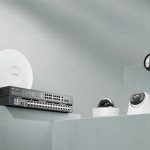
Currently Uniview has a complete IP video surveillance product line: IP cameras housing in bullets, domes, fisheyes and PTZs; NVRs, Hybrid NVRs and XVRs; VMS and IP storages; Monitors, LCDs and LEDs; Access control Terminals; Smart Interactive Displays, etc. tries to deliver not only products to our customers, but also the entire solution from the front end to the back end.
What is the difference between three types of product series: Easy, Prime, and Pro, and what are their benefits?
Since 2018, we have classified our CCTV products into 3 categories: Easy, Prime and Pro. The main reason for this classification is to better adapt to the market segmentation of CCTV. At present, the surveillance market can be roughly divided into 3 categories: vertical industry markets, SMB markets, and retail markets. Different market categories have different price requirements and product function requirements. Using only one product category to meet different market needs is obviously not the right choice. The Easy series is currently positioned itself at the entry level category to meet the basic CCTV requirements, the extremely high cost-effective is the benefit they can to bring to customers. Regarding the Prime series, we added smart functions, richer interfaces and better image effects, to bring additional value to our customers. Move on to the Pro series, we empower them higher computing capability, more high-end functions (e.g. Optical Defog, SFP) and more diversified product forms (e.g. Panaromic, LPR, Positioning System) to meet the diverse needs of high-end projects such as safe cities, hospitals, subways, airports and so on. By dividing these product levels, we will bring more choices to our customers and bring them the most appropriate product value.
Which low-end camera type do you sell most of – and which high-end camera is most popular?
Depending on the region, there are different best-selling products in different regions. When it comes to the Balkans, the Easy series cameras with a focal length of 2.8mm and a resolution of 4 mega would be the best-selling cameras, as well as a 1-SATA, 4-channel plastic chassis network video recorder. On the high-end side, our license plate recognition cameras and AlphaView series cameras are the best sellers. In addition, our high-end integrated management server Unicorn has been adopted by an increasing number of projects and is being recognized by more and more customers due to its high reliability and rich features.
Last week you launched new generation of Prime-I products. What are theirs features and how do they overcome conventional intrusion prevention products’ limitations via Smart Intrusion Prevention?
Well, the biggest feature of Prime-I series definitely is definitely the smart intrusion prevention, which we call SIP for short. Compare with conventional intrusion detection, SIP technology adopts deep learning algorithm instead of just image contrast change detection. SIP can achieve less than 1% false positives when people and vehicles are detected. It filters out most distractions, such as swaying leaves, lights, pets, wind and other non-target objects and alarms are triggered only by interested targets, such as people, vehicles and non-motorized vehicles. Related videos are sorted by category for easier search, and each category box represents a color to provide a clearer trigger type, which will greatly improve search efficiency.
Were you affected by the coronavirus pandemic and what did you do in terms of innovation to keep the business running?
As Uniview is the third largest CCTV manufacture in China, we were greatly affected by Covid-19 in 2020. During the last lunar New Year period, from January 23 2020 to the end of March, the whole of China was under lockdown and almost all the Chinese residents took part in the campaign against the coronavirus. People stayed at home and work from home, but for us, many engineers were at the forefront of this battle. We have not only brought CCTV products to the public but also the Heat-Tracker series fever screening products. Uniview launched the fresh new Heat-Tracker series products in just 2 months during the lockdown period. The Heat-Tracker series products helped Uniview and its partners to keep their business on track, and in some countries and regions, this has even helped the partners generate better revenue than they did in 2019.
PixelSense is one of your core technologies.How does it increase the quality of the picture?
The main goal of video surveillance is to see clearly anytime, anywhere. Cameras have to be well prepared for providing high-resolutions and colorful images under different illumination conditions. Day& Night are two essential scenes due to different illumination environments. Unfortunately, conventional cameras usually adopt hardware sensor to determine whether it’s day or night scenes, such as photocells, which are less reliable in most cases, and there are plenty of complaints about conventional methods in the market. For example, if a conventional camera is just set beside a shining lamp-box, the camera will determine itself to open daytime mode, but the actual environment may be midnight. To solve this problem, Uniview applied unique PixelSense technology to replace the hardware sensor with a more accurate intelligent algorithm, which significantly improves the accuracy of the day and night conversion. Therefore, it significantly improves the image quality to adapt to different illumination conditions.
With the improvement of video quality, it affects the demand for more storage. Uniview has innovated and updated U-code and UBS technologies. What are they and how do they reduce storage capacity?
U-code is a patent codec technology invented by Uniview, the main goal of U-code is to reduce the bandwidth and storage costs based on the standard H.264/H265. Unlike conventional video compression technologies which try to reduce storage costs by sacrificing resolution and frame rate indiscriminately, U-Code 2.0 chooses to use “IRP” (Intelligent Region Perception) to detect movement within each frame. With U-code technology, it can save up to 95% in bandwidth and storage costs, which brings greater value to our customers. UBS is the abbreviation of Universal Block Storage, which is an advanced storage structure invented by Uniview , more suitable for CCTV applications. Unlike the traditional file recording systems like FAT or NTFS, which waste a lot of space due to file fragmentation, UBS saves some storage costs by splitting video data directly and mapping it to hard disks within the original block of data, thereby avoiding file fragmentation and making full use of hard disks.
The most important trends in video surveillance are artificial intelligence and loT. What must Uniview provide in these areas?
In fact, we started investing in AI technology very early on. Our AI-related products have been widely used in the past few years, and China State Television has reported some successful cases on Uniview. In overseas markets, we started deploying AI products last year. You may notice that we’ve already released a number of cameras with AI, and we’ll be offering backend products in the near future. This has been one of our strategic directions regarding loT. We are involved in the construction of many smart cities in China. The loT is the foundation of smart cities and cameras are an important part of loT. In addition, we also released some smart home products, such as access control terminals, PM2.5 sensors, landmark devices and so on. We will also release more products related to loT in the near future.
Uniview insists on high quality. How do you ensure reliability at design and test?
Uniview strives for high quality in design, materials, R&D and testing. For example, Uniview’s IR anti-reflective glass can increase IR transmittance by 8% compared to regular glasses. Uniview also uses automotive-grade LEDs to improve infrared compensation by 15%. Our three-phase stepping motor driving PTZ dome cameras moves smoothly at 300 degrees/s without shaking, resulting in stable video, more reliable and more cost effective. Water and vandal proof seal design helps prevent water and dust, providing easy installation of screw out of seal. Uniview’s all color and laser IR compensation technology are able to provide vari-focal compensation methods, and also support IR ranges up to 500m. This can definitely be applied to our 44x zoom PTZ dome cameras to view longer and wider images. In addition, our NVR comes with a lot of great hardware designs. This is This is a carefully designed case from NVR that is designed to prevent injury accidents with rounded corners. Maglev fans can reduce friction and control noise while the equipment is running, thus extending its service life. Flame-resistant materials compliant with UL-94-V0 to prevent more serious injury or damage caused by fire. High quality capacitance, one of the highest quality components, ensure product stability and safety. The housing of our bullet camera is made of cast aluminum is therefore 6mm thick and 200% thicker than a normal shell. You can feel weight and substance by playing. Uniview has a unique test center to test IP cloud exchange ability. As mentioned earlier, Uniview was awarded the 2nd National Science and Technology Progress Award for “Key Technologies and Equipment for Media Stream in Large Scale Metropolitan Surveillance.” Our test center in Hangzhou can actually be seen as a validation program for this technology. With this test center, we can effectively improve data processing and reduce costs by 30%.Uniview also established a reliability lab to test products during the validation phase. We will sample and test the products during the mass production phase. We have ESS tests, drop tests, vibration tests and salt spray tests.
What vertical markets do you focus on? Can you present or enlist the most important case studies, especially on European soil?
There are over 1100 high-end cases covering more than 140 countries and areas including America, Japan, Russia, UAE, Australia, etc. At the same time, Uniview products are also widely used in different scenarios like safe cities, enterprises, banks, education, health care, shopping malls, hotels, etc. With rich experience in video surveillance, Uniview is confident to go further in the international market and provide professional services to customers around the world.
In European countries, we offer our products and services extensively to our customers. For example, the safe city in Bergamo, Italy; The safe city in Poznan, Poland; InterContinental Hotel in Bucharest, Romania; Pam Panorama, Parma Store in Italy; Zalando Campus in Berlin, German; etc.
The industry has been concerned about cyber security for years. How do you prevent data leakage and loss?
Cybersecurity has always been our focus, and we invested in it very early on. We believe there are four levels of risk across the entire CCTV system. They are the perception layer, the transport layer, the management layer and the application layer. The main problem of the perception layer is that the perception device may be hijacked. The transport layer is subject to network attacks, such as DDOS attacks. The management layer can be illegally hacked and then stolen. A hacker on a PC or application device may attack the application layer. We have security considerations on each layer, I’m not going to dive into all the details, but I can give you a few examples. The main reason why the camera is hacked is that the user does not have the consciousness to modify the default password, but default password is known by everyone. We adopted the double password mechanism, so users logging in remotely from the Internet need a strong password. In addition, we have turned off the Telnet port by default, this block the possibility of controlling the device over this port. In addition, all network traffic between devices is encrypted with SSL. In short, with Uniview products, you don’t have to worry about network security.
What are your thoughts on the safe markets in Southeast Europe (Slovenia, Croatia, Bosnia and Herzegovina, Serbia, Montenegro, northern Macedonia and Kosovo)? What are your plans for this area? Are you looking for regional partners? Do you plan to expand your market share?
Countries in Southeast Europe have enjoyed rapid economic growth and have maintained close cooperation with Chinese manufacturers. Although the geography here is a little complicated, and the transportation across the country is not very convenient, but we are still willing to actively communicate with our partners. We can feel that the end users and partners here are very open, they are willing to enjoy new technology and try new options. We have good partners in many countries and our market share has grown rapidly in the past few years. Our business in Southeast Europe last year has achieved a growth rate of more than 50%. Of course we can predict that the coming year 2021 will be an explosive year. We will invest more human and material resources, to bring our new products to develop this market. We hope our partners and end users here can find their true value and here and succeed with Uniview.
In terms of product portfolio expansion, new business strategies, technologies, new offices and markets, what can we expect from Uniview in the coming years?
Uniview is an innovative company. Every year, we spend more than 10% of our revenue on developing new technologies and products. At the end of 2020, Uniview held nearly 2,000 Chinese patents, and the number is growing. We are capable of scientific research. In addition to the sterilizer box and smart infrared wrist thermometer, the next addition to the Uniview range is a very good video conferencing device. We will open a new office in Southeast Europe by the end of this year to better support our partners and provide better service to our customers locally.