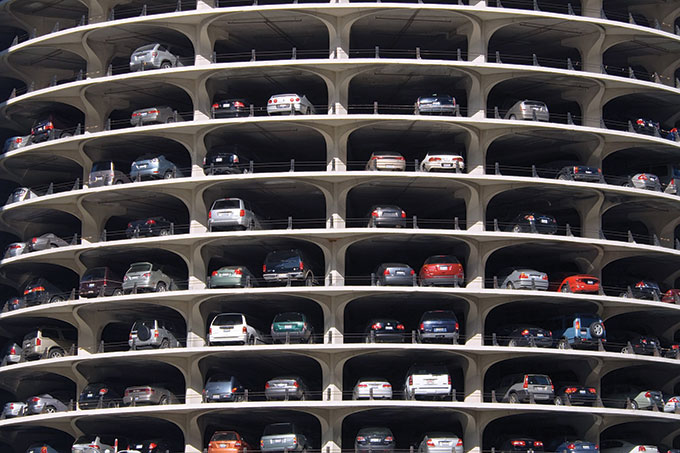
Urban traffic congestion is a headache for drivers in every city. Luckily, the use of IoT devices and smart technologies is helping traffic controllers mitigate road congestion through the use of smart traffic management systems.
Izvor: a&s International
E-mail: redakcija@asadria.com
In 2018, drivers in world’s most congested urban areas lost hundreds of hours to road traffic. In Bogotá, Colombia, drivers lost 272 hours per capita — the highest in the world — to road congestion, according to the 2018 INRIX Traffic Scorecard. Americans on average lost 97 hours in congestion, with Boston, Mass., topping the country at 164 hours — the city also experienced the greatest costs globally from congestion at US$2,291 a year.
Government initiatives for traffic management, however, are increasing as the drive for smarter and safer cities continues. This and hyper-urbanization in developing countries are major factors in the growth of traffic management solutions, according to a report by MarketsandMarkets. On the intelligent transportation system (ITS) side, MarketsandMarkets estimates the global ITS market will reach US$30.7 billion by 2023, up from nearly $23.4 billion in 2018.
From smart traffic signals to IoT devices, there is a clear rise in adoption of smarter, better traffic management solutions globally. At the same time, manufacturers of ITS and traffic management solutions are working hard to develop technologies aimed at easing urban traffic congestion.
IoT Developments Help Ease Urban Traffic Congestion
The internet of things (IoT) is helping traffic controllers around the world ease urban traffic congestion.
While there is no way to truly prevent congestion, the use of ICT and IoT solutions is enabling traffic controllers to ease it significantly. Todd Kreter, SVP and GM of Roadway Sensors at Iteris explained that in the past five to 10 years, the traffic industry had focused on “introducing the kind of sensors and connectivity that enables us to help public agencies with a rich set of data.”
Rapid development of ICT and IoT solutions offers new possibilities to increase the capacity of existing infrastructure, according to Bas van der Bijl, Manager, and Stefan Hjort, ITS Expert at Sweco. “Communication between road users and traffic systems, and also more and cheaper IoT sensors, provide more traffic information for the systems to optimize the flows,” they said. “It becomes also possible to guide road users around congested areas, dividing the load over the network more equally.”
Some companies have developed solutions focused on integration of smart, real-time traffic signal control with emerging connected vehicle technology — the radios that will be going into vehicles to enable direct vehicle-to-infrastructure (V2I) communication. According to Stephen Smith, Co-Founder and Chief Scientist at Rapid Flow Technologies, this integration provides additional opportunities for mitigating/reducing congestion.
“In the longer term, V2I communication will provide much more accurate sensing of vehicles approaching a given intersection, and hence lead to better optimization of traffic flows. In the shorter term, there are also mobility enhancements that can be provided,” Smith said. For the most part, the majority of traffic data comes from video and radar devices. Applying intelligent software algorithms to this collected data gives traffic controllers the tools to control congestion. For example, video outputs could help traffic controllers determine where cars are traveling, how fast they are going and what areas are most congested.
Using machine vision cameras to ease traffic congestion is one way to do this, explained Matthew Trushinski, Director of Marketing at Miovision. Machine vision can identify cars within video footage and count vehicle numbers. “Instead of a snapshot, traffic engineers can get a much bigger picture of how traffic is moving,” he said. Including this technology in smart intersections can allow traffic engineers to measure what is happening 24/7. Insights from this data can allow cities to make changes and measure the results, iterating until congestion measurably improves.
Urban Traffic Management Experts from Kapsch TrafficCom noted that traffic solutions deployed to measure, detect and respond relied on several sources, from widely used traffic sensors (e.g., loops) to specialized video processing, as well as FCD (floating car data) and also crowdsourcing (e.g., Waze). “IoT is mostly centered on highly distributed sensing networks or mobile devices, such as vehicles themselves that provide raw data to be processed for incident detection using time-series methods,” Kapsch TrafficCom said.
After detection, response plans can be selected from a pre-engineered library or built more dynamically according to recent available resources in the congestion area. In both cases, plans tend to reduce congestion by strategies such as information, rerouting and/or dynamic speed adjustment, according to Kapsch TrafficCom. While daily traffic congestion cannot be truly prevented, it can be controlled for planned events (e.g., roadworks, sports events, etc.), recurring situations (e.g., rush hour) or short-term forecasts. This is achieved by designing mitigating actions such as action plans that can be launched on-demand and automatically according to predefined triggers, explained Kapsch TrafficCom. “The more proactive traffic operators and systems can be, the less impact we can achieve.”
Smart Traffic Signals Make Intersections Safer, More Efficient
Smart traffic signals are becoming a regular part of urban traffic management, helping to make roads safer for drivers, pedestrians and cyclists.
Traffic signals are an integral part of keeping both drivers and pedestrians safe at intersections. As traffic control systems have become more intelligent, the use of smart traffic signals to optimize urban traffic flow has become increasingly important.
For decades, intersections ran independently using inductive-loop traffic-detection technology. However, the advent of internet of things (IoT) devices means more intelligent radar and video detection sensors that can count, measure direction and speed of travel, and also determine whether an objects is a car, bike or pedestrian. With this information, Todd Kreter, SVP and GM of Roadway Sensors at Iteris said “traffic engineers at a central traffic management center (TMC) can immediately modify signal timing, including how long a particular approach gets red or green, and then optimize timing throughout the day as traffic volume fluctuates.”More advanced smart strategies for traffic signals address highly dynamic changes in time durations for each and every movement within the intersection (cycle and split adjustments) and also across arterials (offset adjustments), explained Urban Traffic Management Experts from Kapsch TrafficCom.
Acquiring data for these adjustments can be done by using detectors (e.g., magnetic loops) or more advanced sensors, including video-based detection, and radar/doppler technologies. Additionally, advanced strategies are not limited to traffic counting, speed and occupancy measures. Adjusting cycle, split and offset in intersections in short intervals (e.g., 5 seconds) provides continued adaptation to varying traffic, and manages proactive adaptations, according to Kapsch TrafficCom.
Adaptive signaling regulation can be taken a step further with artificial intelligence (AI), using rules-based engines, machine learning or other AI capabilities, including recurring situations and also “human behavior,” to solve the most difficult situations, Kapsch TrafficCom said.
Rapid Flow Technologies’ Surtrac traffic signal system combines concepts from AI and traffic theory. The system allocates green time to different approaches at intersections in real time to optimize the movement of actual traffic on the road.
“The system puts computing at the edge (i.e., a computer at every intersection) to produce ‘signal timing plans’ in real time, collects information on approaching traffic in real-time from independent sensing devices (e.g., video cameras, radar, etc.) mounted at the intersection, and depends on real-time communication between networks to achieve network level coordination,” explained Stephen Smith, Co-Founder and Chief Scientist at Rapid Flow Technologies. Sweco is developing Smart Traffic, a traffic light controller that utilizes data already available from traditional loop detectors along with new data sources like floating car data, cameras and radars. The data from its real-time and predictive traffic model is fused into a reliable image of the traffic on the level of individual vehicles, cyclists and pedestrians. Based on the predicted arrivals of traffic at the intersection, green phases are scheduled in advance optimizing both the duration as the sequence. Controlling traffic lights in this way results in reduced waiting times and CO2 emissions, according to Bas van der Bijl, Manager, and Stefan Hjort, ITS Expert at Sweco. “In addition it is also possible to inform road drivers about the scheduled green phases, offering the possibility to adopt their arrival speed at the intersection in order to prevent unnecessary stops and increasing the comfort,” they said.
Miovision offers a smart traffic signal platform called TrafficLink, which provides a range of solutions needed for a traffic team to collect, monitor and understand their traffic signals. The solutions include a managed cellular connection, and tools for signal monitoring, video streaming, maintenance alerts, as well as traffic data insights. Their SmartSense component brings traffic AI to the intersection, processing data gathered by its SmartSense 360 camera and enabling vehicle detection and ongoing studies of traffic, said Matthew Trushinski, Director of Marketing at Miovision.
In terms of solution implementation, there are many challenges when it comes to urban traffic signal control. One, according to Sweco, is finding the balance between optimal traffic light control and providing a reliable prediction of the future green phases to arriving traffic.
“The earlier drivers are informed about the signal changes, the harder it becomes to react to the actual traffic situation at the intersection,” Sweco said. They suggest using the latest sensor technology (e.g., intelligent cameras) in combination with predictive traffic models to make reliable predictions of the arrivals of traffic at an intersection for the next minute, making possible to optimize the traffic light control and to inform drivers about the scheduled green phases for the next minute.
Other challenges include pedestrian and bicycle detection. Effective traffic signaling in urban road networks must be able to distinguish different traffic modes (e.g., pedestrian, bicyclist, bus, passenger vehicle) and utilize this information in traffic signal control decisions, Smith explained. “Most current commercial vehicle detection devices are not capable of simultaneously detecting vehicles and pedestrians, and the option of using additional detection hardware to enable pedestrian detection is often not an extra expense that cities are willing to bear,” Smith said. The situation, however, is changing with more commercial detection companies introducing detection hardware capable of integrated vehicle and pedestrian detection.
How Everyone Can Benefit From Data Sharing of Real-Time Traffic Information
Sharing real-time traffic information across different agencies is the key to developing smarter traffic solutions.
Real-time traffic information is only available when traffic signals have a connection back to a central traffic management center. It is currently estimated that more than half of all signals are not connected, according to Todd Kreter, SVP and GM of Roadway Sensors at Iteris. Once connected though, agencies can access real-time traffic information through an advanced traffic management system in a variety of formats. They can then determine a signal’s status, as well as its diagnostic status.
With so many IoT devices being deployed for traffic management, the data being gathered is a gold mine for not only traffic controllers, but also other transportation and law enforcement agencies, as well as drivers. However, only when this data is shared can all parties reap the benefits.
Several solutions can address information exchange between agencies according to real-time needs and interagency agreements. Shared information can be achieved by using a shared data repository acting as a data hub, considering that agreed data is generated and consumed according to pre-agreed roles.
“Most or all agencies can also articulate an agreement for a shared ‘umbrella system,’ each one can already use such system for information dissemination and for coordination of actions across agencies,” said Urban Traffic Management Experts from Kapsch TrafficCom. They added the main challenges were defining agreements as firm as possible for consortia creations, building common platforms if agreed and intensive use of existing and future systems for the agreed goals.
Having data in standardized formats and an open architecture that avoids vendor lock-in are ways to avoid the challenges of data sharing, according to Matthew Trushinski, Director of Marketing at Miovision. His company believes in open architectures “to allow other city departments, third-party vendors and other partners to leverage the data generated at the street-level to make city life better.”
Bas van der Bijl, Manager, and Stefan Hjort, ITS Expert at Sweco, also noted that real-time open data would be used more and more. “Sharing information is the key to be able to develop smart solutions for the traffic in urban areas. When open data is available, the threshold for new solutions to enter the cities will be lowered,” they said.
Current developments in traffic management software are helping to facilitate better use of and sharing of collected data. “To effectively share information between city agencies, a common framework for representing city data is a prerequisite, and developing this common representation is the main challenge,” said Stephen Smith, Co-Founder and Chief Scientist at Rapid Flow Technologies. For example, Surtrac currently provides an API for communicating real-time traffic information to a municipality — one of its current deployments is starting to tap into this data as part of their Open Data initiative.
Kreter explained how Iteris’ Signal Performance Measures (SPM) was being developed to make better use of the information provided by IoT sensing devices as well as by the traffic signal controllers. “This can provide information on vehicle volumes, speeds, locations, signal status, as well as bicycles and pedestrians and can provide multiple views of overall traffic signal performance,” he said. All this data, when shared, could significantly help various agencies improve traffic management.
Popular consumer navigation apps like Waze are also doing their part to share data. In April 2018, Waze signed a deal with Waycare, a traffic management startup, to bring “two-way data sharing” of municipal and road traffic data. According to a press release from Waycare, the collaboration will enable “cities and public agencies to communicate directly with vehicles on the road and to harness real-time in-vehicle data for advanced traffic management operations.”