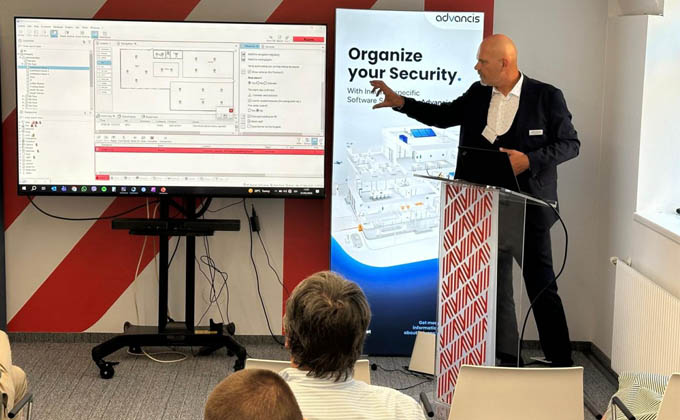
Advancis Austria organized a professional event in Hungary dedicated to the future of integrated security systems and technology interoperability in complex environments. Held in cooperation with ADVANTAGE AUSTRIA Hungary, the event focused on networked security solutions, communication platforms, and the collaboration of different systems aimed at achieving more efficient protection and greater operational resilience.
During the event, discussions centered on how video technologies, network infrastructure, communication systems, and integrated platforms are jointly shaping a new security ecosystem capable of addressing the increasingly complex demands of modern facilities and infrastructure. Particular emphasis was placed on interoperability and data exchange between different security technologies.
Partners including barox Kommunikation, Dallmeier electronic, and Zenitel also participated in the event, presenting practical implementation examples and current trends in integrated security together with representatives of Advancis Austria. Sergej Piculin, representing Advancis Austria, spoke about practical approaches to connecting different security systems and the importance of centralized management in environments where business continuity, resilience, and rapid information exchange are essential for daily operations.
He emphasized that modern security concepts are increasingly dependent on open platforms and the ability of different technologies to operate as a single system, which is becoming one of the key directions in the development of the security industry.
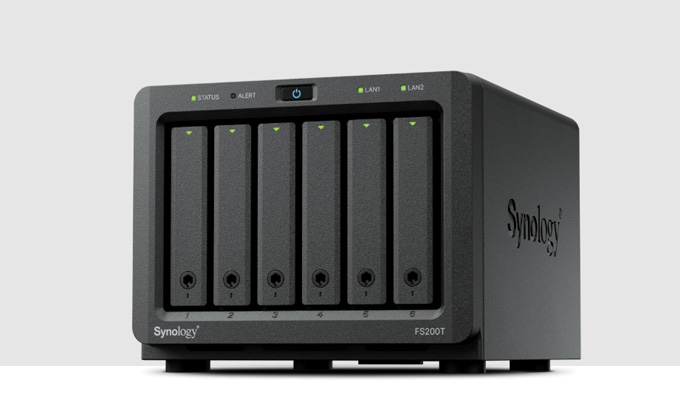
Synology has introduced the new FlashStation FS200T, a compact all-flash NAS solution designed for home users and small offices seeking high performance, quiet operation, and a minimal footprint. The new system measures just 121 x 151 x 175 mm and features six 2.5-inch SSD drive bays. According to Synology, the FS200T is aimed at users running virtualization workloads, lightweight containerized applications, or those looking to build a private cloud environment without the noise typically associated with traditional storage systems.
The device is equipped with 2.5GbE and 1GbE network ports, providing faster data transfers and network redundancy, with performance that the company says is up to 2.5 times higher than its predecessor.
Powered by Synology’s DiskStation Manager (DSM) operating system, the FS200T offers access to Synology Drive for building a private cloud environment, as well as Active Backup Suite for protecting computers, virtual machines, and cloud accounts. The system also supports third-party SSDs without functional limitations, while Synology SSDs remain the recommended option for validated performance and compatibility.
The FS200T has been available since May 27 through Synology partners and resellers worldwide.
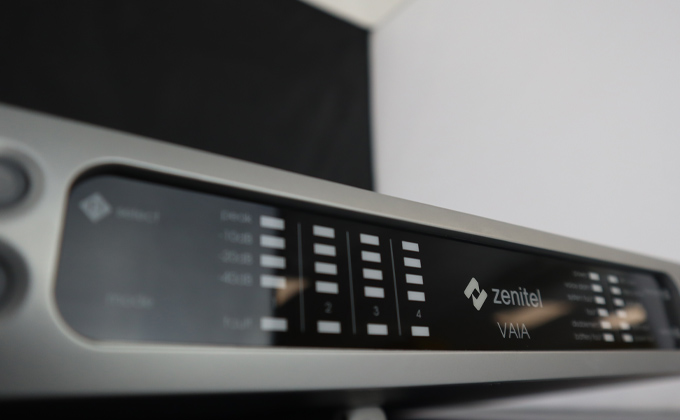
Zenitel today announced the launch of Zenitel VAIA, a new compact and fully integrated Public Address and Voice Alarm (PAVA) platform designed to simplify deployment while delivering the performance, reliability, and intelligibility required for critical communication environments.
Developed for a wide range of applications — from commercial buildings and education facilities to transportation, healthcare, and industrial environments — Zenitel VAIA combines voice alarm, public address, advanced DSP processing, amplification, and battery charging into a highly compact platform optimized for modern installations.
At the core of Zenitel VAIA is a newly patented amplifier architecture that delivers transformer-like output performance without the need for traditional bulky transformer designs. This breakthrough enables ultra-high-density amplification while maintaining exceptional audio quality, system efficiency, and operational reliability.
Delivering up to 1000 W RMS power in just 1U, Zenitel VAIA provides a fully integrated platform designed to reduce system complexity, minimize rack space requirements, and simplify installation and maintenance.
“Modern buildings and infrastructure demand communication systems that are not only reliable and compliant, but also easier to deploy, manage, and scale,” said Sri Sutharsan, VP of Marketing for Zenitel. “With Zenitel VAIA, we are bringing together our long heritage in critical communication with a new generation of compact and intelligent PAVA technology — designed to deliver exceptional intelligibility, operational efficiency, and simplified deployment without compromise.”
The introduction of VAIA also represents another important step in Zenitel’s Unified Critical Communication (UCC) strategy — bringing together intercom, Public Address, Voice Alarm, IP speakers, and operational audio workflows into one cohesive communication ecosystem. Combined with Zenitel Connect Pro and the highly scalable Vipedia platform, VAIA expands Zenitel’s ability to support everything from compact standalone deployments to complex, multi-site critical communication infrastructures.
Zenitel VAIA has been engineered to support both operational communication and life safety applications within a single unified platform. While fully supporting emergency communication requirements, the platform also delivers the high acoustic performance needed for operational announcements, security messaging, and background music applications.
Key highlights of Zenitel VAIA include:
Compact, all-in-one 1U architecture
Up to 1000 W RMS integrated amplification
Advanced DSP for exceptional speech intelligibility and audio quality
EN54-certified Voice Alarm functionality
Built-in battery charger and backup capabilities
Reduced system complexity and fewer hardware components
Flexible and scalable deployment architecture
Designed with cybersecurity and system resilience in mind
Zenitel VAIA expands Zenitel’s broader PAVA portfolio, complementing both IP speaker solutions and the scalable Vipedia PAVA platform for larger and more complex installations. With more than 125 years of experience in audio and critical communication, Zenitel continues to deliver solutions designed to help organizations hear, be heard, and be understood.
For more information about Zenitel VAIA and Zenitel’s PAVA portfolio, visit: Zenitel PAVA Solutions
The global market for advanced data storage systems could reach a value of USD 99.48 billion by 2032, according to a new report by MarketsandMarkets. Analysts estimate that the market will grow at a compound annual growth rate (CAGR) of 6% between 2026 and 2032, while its value in 2025 was estimated at USD 65.55 billion.
The research shows that market growth is primarily driven by artificial intelligence, big data analytics, cloud infrastructure, and the accelerated digital transformation of companies worldwide. The increasing volume of unstructured data, combined with investments in hyperscale data centers and high-performance infrastructure, is further boosting demand for advanced data storage solutions.
Key market segments include SSD drives, NAS systems, and locally based storage solutions, with SSD technologies accounting for around 60% of the market share in 2025. At the same time, the file and object-based storage architecture segment is expected to record the fastest growth.
MarketsandMarkets states that cloud service providers, telecom operators, government institutions, and large enterprises remain the main users of advanced data storage systems. Additional momentum is being generated by the development of edge computing, 5G infrastructure, and AI applications that require increasingly larger capacities for data processing and storage.
In terms of regional trends, the Asia-Pacific region has been identified as the fastest-growing market, while North America currently holds the largest market share, accounting for 43.1% of revenues generated in 2025. Leading market players include companies such as Dell Technologies, Hewlett Packard Enterprise, NetApp, Huawei, IBM, and Micron Technology, while Wasabi Technologies, LucidLink, and Wishelf are among the companies strengthening their positions in specialized market segments.
Analysts emphasize that the future development of the market will be strongly linked to the needs of AI environments, the growth of cloud services, and increasing demands for greater efficiency, scalability, and real-time data availability.
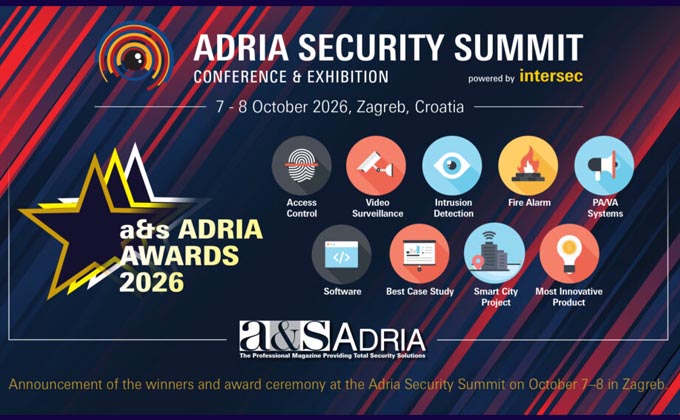
As part of the 11th edition of Adria Security Summit 2026, which will take place on October 7–8 in Zagreb, the third edition of the a&s Adria Awards program will also be held, aimed at promoting the most successful products, projects, innovations, and professionals in the security industry.
The program was launched with the goal of recognizing and promoting the most significant achievements of the regional security market, while this year’s edition will include a total of 11 categories. These include access control, video surveillance, intrusion detection, fire alarms, PA/VA systems, software, the most innovative product, best case study, and smart city projects. In recent years, the a&s Adria Awards have become one of the more important programs within the regional security industry, providing companies with additional visibility, promotion of innovation, and an opportunity to present successful projects to a professional audience and partners from the security and technology sectors.
The organizing team stated that the number of submissions has grown year after year, and this year’s edition is also expected to attract a large number of manufacturers, distributors, system integrators, technology companies, and security professionals from across the region. In the coming period, the organizers will announce the submission opening dates, nomination deadlines, and other details related to the application process, while the members of the professional jury responsible for evaluating submitted projects and solutions will also be presented at a later stage.
The organizers of Adria Security Summit 2026 have announced the list of partner hotels for participants and international visitors attending this year’s event, which will take place on October 7–8 in Zagreb. The partner hotels will provide exhibitors, speakers, partners, and visitors with easier access and a more convenient stay during Southeast Europe’s largest security and technology event. Particular attention has been given to hotels with good connections to the Zagreb Fair, the official venue of the Summit, as well as benefits that include promotional rates and easier access to the event location.
The official hotel partners include Hotel Aristos, Hotel International Zagreb, Zonar Zagreb, The Westin Zagreb, and Sheraton Zagreb Hotel. The organizers also noted that selected hotels offer special promotional conditions for Summit participants through the ADRIA promo code, providing access to discounted rates and additional booking benefits.
For years, Adria Security Summit has gathered leading companies, manufacturers, distributors, system integrators, and experts from the fields of security, smart technologies, ICT infrastructure, and automation, while this year’s edition is also expected to attract a large number of regional and international participants.
More information about accommodation options and reservations is available on the official event website: Adria Security Summit
Ajax Systems has announced a new Roadshow tour across the United Kingdom, where security professionals will have the opportunity to explore the latest Ajax technologies through live demonstrations, expert-led presentations, and discussions with industry specialists.
This year’s Ajax Roadshow will take place in five UK cities throughout June, bringing together installers, system integrators, distributors, and other professionals from the technical security sector. The tour begins on June 4 in Altrincham, followed by Glasgow on June 9, Dartford on June 11, Bristol on June 16, and Nottingham on June 18.
According to the organizers, participants will gain deeper insight into wireless Grade 3 intrusion protection solutions, EN 54-compliant fire safety systems, AI-powered video surveillance, and other advanced security technologies that are becoming increasingly important within modern security infrastructures. Particular attention during the events will be given to practical demonstrations and presentations of real-world application scenarios, alongside knowledge exchange between industry experts and Ajax Systems partners.
In recent years, the roadshow concept has become one of the most important formats for direct communication with the security market, enabling companies to showcase new technologies and industry trends through hands-on presentations and networking opportunities.
Ajax Systems stated that the Roadshow events will provide valuable insight into the technologies shaping the future of the security industry, especially in the areas of integrated security systems, intelligent detection, and AI analytics.
Synology has globally unveiled the PAS7700, a new high-performance enterprise storage platform marking the company’s entry into the top-tier active-active enterprise storage segment. The new model is part of the newly introduced Parallel Active Station (PAS) series and represents Synology’s most ambitious solution to date for mission-critical environments and demanding workloads.
The PAS7700 comes in a 4U form factor and is based on an active-active architecture featuring two separate 2U controllers, each powered by an AMD EPYC 7443P 24-core processor. The system supports up to 1 TB of DDR4 ECC memory per controller, while storage capacity includes up to 48 U.2/U.3 NVMe SSDs, expandable to a total of 216 drives using additional expansion units.
Particular emphasis has been placed on performance and network connectivity. The PAS7700 supports up to four 100GbE ports, twelve 25GbE connections, and Fibre Channel options, making it suitable for applications requiring extremely high throughput and low latency. According to Synology, the system can deliver up to two million 4K random read/write IOPS and up to 30 GB/s sequential read throughput, placing it among the fastest solutions in the company’s portfolio.
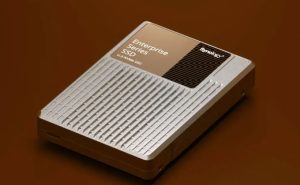
At the same time, Synology introduced the new PAX224 expansion unit with 24 NVMe bays, along with SPU7200D U.3 NVMe SSDs specifically designed for the PAS7700 platform. The new self-encrypting SSD models are available in capacities ranging from 1.92 TB to 7.68 TB, offering up to 140,000 4K write IOPS performance.
The PAS7700 was not developed solely for conventional data storage, but also for modern enterprise workloads such as virtualization, AI analytics, real-time data processing, and Kubernetes environments. The system supports NVMe-FC, NVMe-oF, SMB, NFS, and iSCSI protocols, while integration with the Kubernetes CSI driver enables easier management of persistent storage environments.
An important part of the new platform is DSM Enterprise, a specially adapted version of Synology’s operating system developed for the PAS series. The system includes support for active-active operations, live firmware and software updates without downtime, advanced data deduplication, RAID-TP protection, and a BTRFS architecture designed to preserve data integrity.
Particular attention is given to the platform’s “zero-downtime” policy, under which all software, firmware, and application updates are performed without interrupting service availability. During the upgrade process, workloads are automatically shifted between controllers, ensuring uninterrupted operation in enterprise environments where downtime is unacceptable.
In terms of capacity, the PAS7700 can deliver up to 1.65 petabytes of raw storage, while Synology estimates that with deduplication and data optimization, the effective capacity can reach as much as 8.25 petabytes. The system is also designed for maximum resilience, allowing operation even in the event of up to three drive failures without data loss.
Alongside the PAS7700, Synology also announced the more compact PAS3600 system, scheduled to arrive later this year. The new model will use SATA drives and is intended for organizations looking for a more cost-effective entry point into the PAS ecosystem.
The importance of delivering complete solutions has grown significantly, now extending beyond product selection to encompass everything from system design to long-term maintenance and support. In general, customers expect excellent service throughout the entire process, from the sales proposal and system design to deployment and ongoing services.
Increasingly, they’re also looking for service-minded integrators who deliver value-added offerings, expecting solutions to be delivered as a service, with predictable costs, ongoing support, and regular updates included.
The easiest way to meet these expectations is by choosing a solution from a single vendor—one that also provides smart tools and platforms to simplify every step of the customer journey from initial design to ongoing maintenance. This approach supports service-based delivery models by enabling long-term customer opportunities.
Unlocking efficiency through data-driven deployment
Modern system design tools increasingly support the seamless transfer of data from the planning phase to system deployment. Auto-configuration features allow integrators to generate setup files directly from the design, including device and system configuration settings, as well as detailed installation instructions, to help ensure a smooth and successful installation.
By minimizing manual on-site configuration, these applications reduce the risk of human error, accelerate deployment, and ensure consistency across the system. Devices can be preconfigured and connected with minimal effort, enabling faster integration and minimizing setup time. The result: quicker deployment, lower labor costs, and faster access to a fully operational system.
What’s more, built-in verification tests and performance reporting add real value. These features validate system functionality, build customer confidence, and simplify project handover. Early issue detection reduces return visits and downtime, while detailed system performance documentation strengthens quality assurance and serves as a baseline to help integrators deliver more reliable, high-performing solutions in the future
Smart design tools help streamline workflows
Time is money. Every delay or rework cut margins and can impact customer trust. Smart design tools are essential for streamlining workflows, helping to avoid delays, reducing on-site adjustments, and ensuring smoother, faster installations.
These tools go beyond basic planning—they streamline the entire design process, saving time and resources while also ensuring the right devices and accessories are selected based on customers’ specific floor plans and coverage needs. The result is more efficient and effective surveillance systems, tailored to meet customer expectations from day one.
With clear visualizations, floor plans, automated reports and integration with Building Information Modeling Systems (BIM), these applications improve communication with stakeholders and ensure a shared understanding of the solution. In addition, they enable faster decision-making, quick adjustments, and reduce the risk of costly revisions later on.
These design tools also calculate total cost of ownership (TCO) by factoring in bandwidth, storage, and power consumption. Therefore, customers are empowered to make informed and sustainable decisions, while considering the long-term environmental and economic impacts of owning and operating the solution.
At the handover stage, the documentation generated by these tools simplifies training and ongoing support, ensuring a smooth transition and long-term customer satisfaction.
Deliver more value with System Health Monitoring and Device Management
All customer systems can be managed centrally to deliver proactive maintenance, meet agreed service levels, and support active engagement with the customer base. With a clear overview of all customers’ systems, integrators can continuously track device status, warranty and end-of-life dates, and other key system performance metrics, allowing issues to be identified early, often before they become visible to the customer. Real-time data from all connected sites is consolidated into a single, easy-to-use, and remotely accessible dashboard. This enables efficient maintenance, software updates, and configuration adjustments, helping ensure systems remain secure, optimized, and up to date.
This proactive approach supports faster response times, reduces downtime, minimizes costly site visits, and strengthens both the service offering and customer relationships, driving growth in recurring business.
Take your business to the next level with AXIS Camera Station Integrator Suite—an all-in-one toolkit designed to streamline processes and ensure every customer installation is a success.
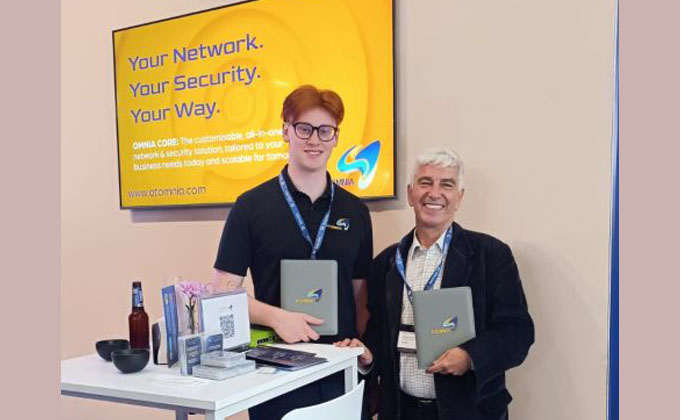
Advanced Cyber Security (ACS) and ATOMNIA continued discussions on strengthening cyber resilience and developing security ecosystems during Cybersec Europe 2026, currently taking place in Brussels. The meeting was held at the Prodata Systems stand by Nils Kelecom representing ATOMNIA and Branislav Dobrosavljević representing Advanced Cyber Security (ACS), with discussions centered on modern infrastructure, secure connectivity, and the increasingly complex cyber threats organizations face today.
According to ACS, cooperation with ATOMNIA reflects the type of partnership the market currently requires — a combination of complementary expertise, practical technologies, and a shared understanding of modern security challenges. Particular emphasis was placed on the integration of the ARMADA platform within the ATOMNIA security ecosystem, with the goal of improving visibility, threat detection, security event correlation, and faster incident response.
Cybersec Europe 2026 gathered a large number of companies and experts from the fields of cybersecurity, cloud infrastructure, and critical systems protection, while key topics of this year’s event included cyber resilience, secure network architectures, and integrated security platforms.