Building security trends: Smart cameras, hybrid cloud and open platforms

Building managers attach great importance to security. At the same time, they are looking for ways to improve a building’s overall efficiency and energy savings. In this note we look at some smart building solutions that help managers achieve those objectives.
Source: asmag.com; mail: redakcija@asadria.com
Needless to say, security is of paramount importance in commercial buildings, where we work, get business done or visit clients. People and assets need to be well protected. Accidents and mishaps can cause financial losses and reputational damage to building owners. To provide a safe and secure environment for tenants and visitors, building managers turn to smart technologies, some of which are discussed as follows.
Smart cameras
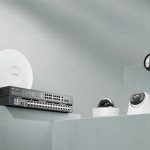
Smart cameras can play a key role in building security and safety. They are also called AI cameras. Typically deployed on the edge, smart cameras are equipped with AI analytics to detect objects and abnormalities, for example flames and weapons.
“One vital use of smart cameras in building security is the role they can play in fire and safety prevention through the early detection of flames, smoke or spills in buildings. Video analytics combined with AI and computer vision are able to detect incidents in an early state and trigger alarms faster and more reliably than humans. This can lead to the lowering of insurance costs for a facility as well,” said Casey Rawlins, Technical Solutions Consultant at Security & Safety Things. “Smart cameras can also offer early and real-time detection of weapons, such as knives and guns, identify potentially suspicious behaviors such as lurking or loitering in certain areas or detect a suspicious package left behind.”
Smart cameras can also perform people counting functions to make buildings more efficient. “The same set of analytics can also detect a large crowd of people at the base of an escalator or analyze other building foot traffic patterns, produced by people counting or flow detection video analytic apps. This information can be useful to building decision-makers and owners to improve building design through the removal of obstructions that cause bottlenecking, or chokepoints at access points,” Rawlins said.
Finally, smart cameras can help with disease control and prevention, amid and post-pandemic. “The first and most obvious solution (amid COVID) is probably touchless and contactless technologies. For smart cameras, this can be facial recognition for employee entrance into a workplace. In parking garages, it can be license plate recognition for barrier-free entry and automated payments – resulting in a touch-free and contactless experience. These types of entry and exit solutions I anticipate seeing become more and more in demand, as they not only promote safe hygiene practices, but also an optimized experience,” Rawlins said.
Hybrid cloud
A hybrid cloud approach is increasingly seen in building security. Conventionally, building security entails an onsite architecture. Yet more and more, building managers turn to hybrid cloud for more scalability and flexibility.
“The misconception often is that smaller businesses are looking to make the switch to cloud but that’s not always true. We are seeing a number of large enterprise end users deploying cloud for some of their smaller sites or locations for a more hybrid, mixed approach between on-premises and cloud. While on-premises will never fully go away, cloud does offer ease-of-use and less infrastructure that is really attractive to some businesses,” said Chris Sessa, Director of Key Accounts at Salient Systems.
Integration and open platforms
Building security can benefit a lot from integration and open platforms. Managers can view on a single dashboard data generated from various systems. These can be both security- and non-security.
One example is integration between security and a building’s HVAC system. “HVAC systems can be programmed to minimize power demand charges and equipment cycling times by adjusting temperature to live traffic and occupancy. HVAC systems can also be integrated with the building’s security system to adjust room temperature to a specific person’s preferences using facial recognition and historical data on that person,” Rawlins said.
End users from various industries may want to integrate their vertical-specific systems with security to streamline their business. “For example, in healthcare environments, many end users want the ability to integrate cameras and their video management system with software that allows them to track assets, such as patients, staff, medical goods and pharmaceuticals. They also want to integrate medical scope management, which is everything doctors log into a system – from surgeries, COVID tests and more, into the video management system,” Sessa said. “Financial institutions might use a VMS for security purposes, but they can also tie different platforms into it to see what’s happening in their other locations across different states.”
This, then, underscores the need to have open platforms, which have become increasingly important in building security. “In an ideal scenario, all security devices would be integrated into one single VMS, access control system or a larger platform; but having worked with systems integrators for quite some time, we know that many systems are still set up as silos. This is due to a large number of proprietary security systems that all use different protocols and standards,” Rawlins said. “However, end user demand continues to grow for custom solutions and unique integrations to solve their specific pain points. This will no doubt increase the popularity of open platforms and standardized approaches, such as what we offer at Security & Safety Things.”
Integrating all types of systems into one platform, including building management for large enterprise end customers, is becoming more prevalent, as they invest more into other software to streamline processes. VMS manufacturers have to be open to what can be integrated into a platform, from video surveillance and facial recognition, access control badging – it’s all fed into one system,” Sessa said.
Integrator’s role
Amid the latest building security trends, systems integrators should be aware of the latest technologies and solutions to provide tenants and customers with what they need. Cybersecurity, meanwhile, is another issue SIs need to look at. “When working with an end user, integrators should ensure building security is scalable, open and easy-to-use. Complex systems tend to worry customers and present more opportunities for things to go wrong,” Sessa said. “Cybersecurity is a main concern across all sectors right now, as it should be. If you’re an integrator, you should plan for and have certifications to ensure you’re up to date on all best practices. Integrators should make sure they work with manufacturers that take cyber security seriously and offer hardened products.”
Benefits of integrating various technologies into a smart building ecosystem
Reopening commercial office buildings in the midst of COVID-19 requires careful consideration of new health and safety guidelines. Adoption of more smart building technologies is expected to help enforce these rules.
As a driving force behind smart buildings, the IoT has brought with it the ability to optimize all areas of building operations, from HVAC to video surveillance, and offers massive potential for building owners to create added value for customers, according to Adam Wynne, Software Engineering Manager at Security & Safety Things.
“While many facilities are still pursuing goals, such as reducing energy consumption and utilizing space, they have shifted to solutions that help make workspaces and common areas safe, and usable. Building managers must now focus on finding technologies that allow for contactless access control, remote monitoring, management of building occupancy and maintaining of social distancing guidelines, while ensuring proper facial protection is being worn,” Wynne said.
Integrating various systems for maximum efficiency
Entelec Control SystemsWith all the newly drafted safety and health protocols, it is important to see how different building systems can help correctly carry them out. In many cases, insights from an integrated system can be used to understand what visitors were on the premises, who came into contact with who, the airflows from the HVAC, etc.
Koen Schoofs, Marketing and Communications Specialist at Entelec Control Systems, explained the benefits of having visitor management at entrances in combination with video surveillance software integrated in the same platform. He emphasized that doing this centrally is very helpful and eliminates the need to invest in more employees doing checks on the premises.
Schoofs also pointed to centrally managing HVAC units with a PSIM platform, something that has gained more interest recently. “In case of an outbreak for example, you want to minimize the spread of the virus, and must thus be able to quickly stop certain units from spreading the virus with their airflow,” he said.
Optimizing workspaces with building data
Many people are working remotely because of COVID-19, and it’s possible remote working will continue even after the pandemic ends. Add on top of this social distancing and office buildings as we know it will need to be reshaped and reimagined. One way of doing this is with technologies that will enable office and building managers to optimizing their spaces.
The number of enterprise-level buildings expected to connect data from building management system (BMS) platforms to space utilization and optimization software is expected to grow, according to research from Omdia. Investment in standalone solutions is also expected to grow, with the ultimate objective to consolidate space and reduce costs across an entire portfolio of buildings.
“This software primarily uses occupancy sensors to track occupied/unoccupied areas in an office building, and further data is collected related to the numbers of employees present, employees’ habits during working hours, and the times of days these rooms are available. Collecting and analyzing data from multiple sensors and sources within a building to deliver actionable insights enable businesses to better use, optimize and prioritize building spaces while ensuring high levels of comfort for employees in the building,” reported Omdia.
Integrating health and wellness data
Building managers and employers are expected to focus even more on creating safe, healthy and hygienic workplaces for employees and visitors to return to in the post-COVID-19 world. This can be achieved by collecting health and wellness data from different systems.
For example, Omdia addressed the deployment of “smart technologies that can detect fevers or other key symptoms, and help offices create different working ‘zones’ in case of contamination.” This includes devices such as thermal cameras and frictionless security equipment. They also point to investment in workplace hygiene solutions such as smart restroom systems.
Open BMS is not just about protocols
The term “open” has become quite popular in recent years. From open architecture in VMS to open protocols that allow integration of different brands, the concept suggests inclusiveness, which is good both for businesses and customers.
But in the building management systems industry, the word open refers to something much more than protocols, according to Wendy Torell, a Senior Research Analyst at Schneider Electric’s Data Center Science Center.
“The term “open” is often used to describe desired functionality of a Building Management System (BMS),” explains Torell in a blog post on the company website. “It is thought to be essential in achieving the ambition of a smart building. But interestingly, that term itself, while often used by building owners/operators as requirements for their system, as well as by vendors to describe attributes of their systems, generally creates much confusion and ambiguity since the industry lacks a standard definition.”
Developing a framework for open BMS
In a recent white paper published along with her colleagues at Schneider Electric, Torell proposes a logical framework that would help businesses better understand open BMS. This framework consists of three layers that define the concept of open. Each of these layers presents certain expectations that an open BMS needs to meet and build on top of one another.
“This means the capabilities from layer 1 are pre-requisites for achieving the capabilities of layer 2, and layer 2 are pre-requisites for achieving layer 3,” Torell says. “For each of the three layers in the framework, we have defined three criteria for assessing how open the system is: (1) Interoperability, (2) Engineering complexity, and (3) Who performs the work.”
As the name suggests, interoperability evaluates how well one component of a BMS operates seamlessly with another or how well one system works with another. Engineering complexity refers to the level of difficulty to achieve this interoperability. The third criterion checks if the people who operate the BMS need specialized training, making things difficult for customers.
Torell added that there are often tradeoffs with these criteria. For instance, you might be able to achieve a highly open system in terms of interoperability by sacrificing engineering simplicity; or work can be done without engineering complexity, but only by a vendor’s certified technician. Having this construct for discussing a BMS’s degree of “openness” brings these important topics and tradeoffs into the picture.
The three layers
The first layer of the proposed framework is data acquisition and sharing. This is critical to any BMS because sensors that send data and receivers that capture and process them form the foundation of a smart building.
“Controllers require protocols to communicate,” Torell said. “More and more, controllers use open protocols, and to consider a BMS open, it should be interoperable across multiple OT protocols (i.e., BACnet, LonWorks). But just because it uses an open protocol doesn’t mean it is interoperable. The needed data must be exposed by the vendor. The system should also support the extension of native protocols, in order to limit the number of gateways required to serve as “translators” to the sensors, actuators, and controllers.”
The second layer is integration, as BMS solutions extend beyond their conventional role to work alongside security, safety, and other segments. An open BMS solution should allow standard protocols that enable integrators and customers to unite all their solutions and operate them together. Finally, the third layer is building orchestration, which refers to the efficient coordination of all systems under the BMS.
Conclusion
As systems like BMS continue to develop, there is definitely a need to define their role and functions clearly. Knowing what constitutes an open BMS would help customers make better purchase decisions. Other segments like surveillance and access control would also benefit from considering this kind of framework.