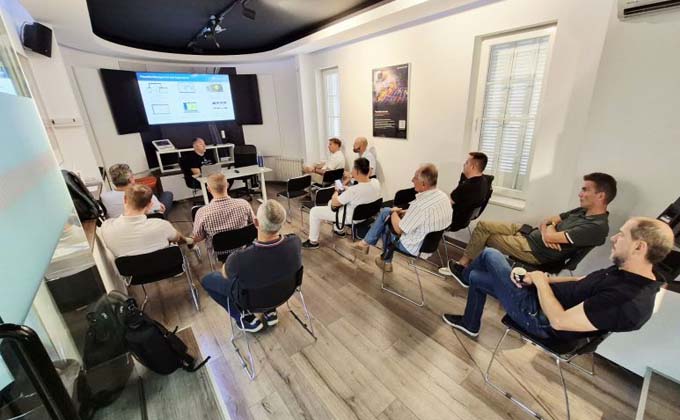
IP WAY recently organised a professional training session for its partners, focusing on advanced networking technologies and the latest solutions from Cambium Networks. The training followed the IP WAY team’s own advanced training on Cambium Networks technologies, with the knowledge gained now shared across its partner network. The session focused on the practical application of new solutions from the company’s portfolio and their use in upcoming projects.
IP WAY said that sharing expertise is intended to further strengthen its partners’ capabilities and contribute to a more stable and competitive business ecosystem. The training was delivered with professional support from the Cambium Networks team, while IP WAY is looking to continue working closely with its partners on new projects.
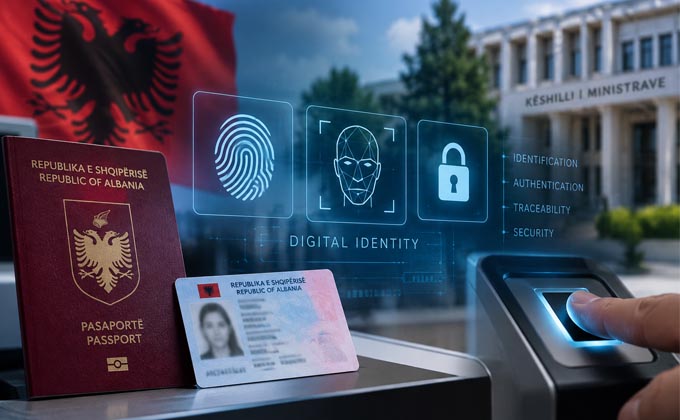
Albania has expanded the responsibilities of the state-owned company supported by ALBTraceCo, extending its previous focus on biometric document production to digital identity systems and the protection of citizens’ sensitive data, IDTechWire reported, citing a decision by the Albanian Council of Ministers. The new mandate covers the administration and development of systems designed to protect identity and biometric data, as well as blank physical biometric documents and critical state platforms and systems.
Its responsibilities now also include electronic systems related to biometric and digital identity, electronic identification, authentication, traceability, and electronic verification. ALBTraceCo is named as the provider of the capacity and high-security technology supporting these activities, while the Ministry of the Interior, the company responsible for biometric documents, and ALBTraceCo are tasked with implementing the decision. The move brings the production of physical identity documents and the digital infrastructure used to establish, authenticate, and verify identity under the same state-controlled framework.
The expanded mandate comes as Albania develops a national digital identity system for access to public and private services and invests in specialised biometric infrastructure, including fingerprint and facial recognition capabilities. The decision will take effect following publication in Albania’s Official Gazette.
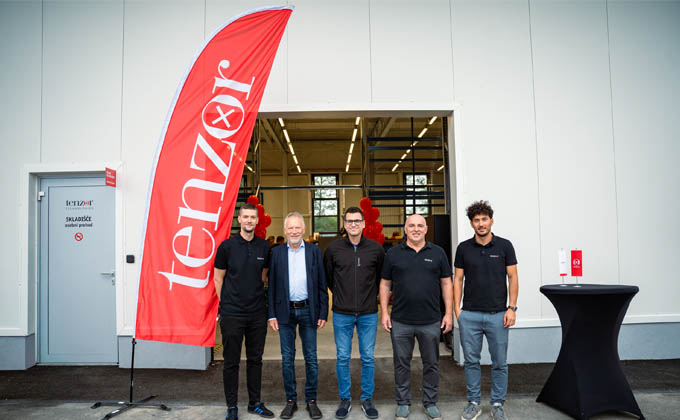
Tenzor has opened a new small-batch production facility in Kidričevo, dedicated to manufacturing technology products developed in-house. The new facility was created by expanding the company’s existing warehouse and will provide greater production capacity and better control over the entire process, from development to final manufacturing. Products to be manufactured at the facility include SCI self check-in kiosks, Biblioverse library solutions, COPS Systems intelligent warning systems for road and industrial safety, and Urban Informatics parking systems.
In-house small-batch production will enable Tenzor to respond more efficiently to the requirements of individual projects and customers while shortening certain stages of implementation. “The new facility gives us greater flexibility, increased production capacity and better quality control, but above all, better conditions for bringing good development ideas into practice more quickly,” said Miha Senčar, Director of Tenzor. The facility has opened just ahead of 16 September, when the company will celebrate 33 years in business.
Over more than three decades, Tenzor has evolved alongside technological developments and changing market needs, with products based on its own expertise becoming an increasingly important part of its business. The new investment therefore represents an important step in bringing development and production closer together while laying the foundation for the company’s next phase of growth.
Croatian company Kamir has become the official distributor of ComfortClick Building Automation solutions in Croatia, further expanding its portfolio in the fields of smart buildings and building automation. ComfortClick is a Slovenian technology company based in Ljubljana, founded in 2008, which develops multi-protocol servers and software solutions for the integration and automation of smart building systems.
With more than 20 years of experience in technical security, KNX technology, and building automation, Kamir will provide local system integrators with access to ComfortClick solutions and professional support in the Croatian market.
The new partnership strengthens ComfortClick’s presence in Croatia while creating additional opportunities for the deployment of its technologies in smart building projects. The cooperation will focus on connecting and automating different building systems and developing more efficient and better-integrated smart building solutions.
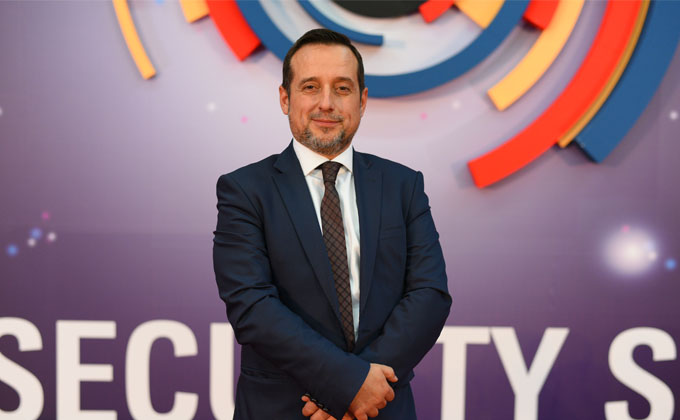
Mahir Hodžić is a security expert with more than 20 years of experience across the public and private sectors. As the owner of Global Security, the publisher of the security trade magazine and online platform a&s Adria, as well as the international media platform a&s Middle East, he plays an active role in informing, educating, and connecting professionals throughout the security industry.
Hodžić chairs the Organizing Committee of the Adria Security Summit, Southeast Europe’s largest security industry event, as well as the Organizing Committee of the newly established Bulgarian Security Summit. Through the media, business, and conference platforms he leads, he has spent the past two decades following the sector’s development, connecting its key stakeholders, and helping bring important questions about the future of security to the forefront.
In this interview, he discusses the changes brought about by artificial intelligence, the practical application of AI solutions, the risks of automated decision-making, the importance of education, and the development of new skills. He also considers how prepared companies and institutions across the region are to use emerging technologies responsibly, as well as the role of the summits in Zagreb and Sofia in further connecting and advancing the regional security industry.
How would you describe the current state of the security industry, and which developments are having the greatest impact on how companies and institutions manage security today?
Hodžić: The security industry is extremely dynamic and evolving virtually every day. Technologies continue to advance, security threats are changing, user expectations are growing, and new regulatory requirements are being introduced. As a result, everyone working in the sector must be prepared to learn continuously, keep pace with emerging trends, and improve their processes. Case studies and the exchange of experience gained through real-world projects are particularly valuable, as they show us what truly works in practice and what needs to change.
The convergence of physical and cybersecurity is particularly evident. It is no longer sufficient to protect facilities, networks, and data separately; risks must be managed through an integrated approach. Cybersecurity has become a key priority for institutions and companies because it is directly linked to business continuity, reputation, user trust, and the effective operation of critical processes.
AI is becoming increasingly integrated into security systems. Where do you see its greatest practical value today?
Hodžić: I see AI’s greatest practical value in its ability to rapidly transform vast amounts of data into actionable insights and alerts. In video surveillance, AI can identify unusual behavior, reduce false alarms, and support the early detection of incidents. In cybersecurity, it accelerates the detection of phishing, intrusion attempts, and anomalies in user behavior.
The automation of routine analysis is particularly important because it gives security professionals more time to assess risks and make informed decisions. AI should therefore not replace people, but enable them to respond faster and with greater precision.
Its greatest value lies not only in more advanced technology, but also in enabling a shift from reacting after an incident has occurred to proactively identifying and preventing threats.
Alongside the opportunities it creates, AI also raises certain concerns. What are the greatest risks associated with its use in the security sector, and how can responsible governance, transparency, and human oversight of automated decisions be ensured?
Hodžić: The greatest risks include inaccurate or biased assessments, insufficient transparency regarding how a system reached its conclusion, threats to privacy, and the potential manipulation of both the data and the AI model itself. In the security sector, a single misidentification or uncritical reliance on an automated recommendation can have serious consequences.
AI should therefore be used as a support tool, not as a substitute for responsible human decision-making. Organizations must clearly define where AI is used, what data it operates on, and who is accountable for the outcome. Regular testing, decision logs, independent audits, data protection measures, and mechanisms that allow an authorized individual to stop or override an automated decision are all essential. Particularly when decisions affect people’s rights, safety, or privacy, humans must retain the final say.
How prepared are companies and institutions in the region to use AI as a tool for improving business and security processes, rather than simply viewing it as another technology to purchase?
Hodžić: Readiness varies considerably. Some companies in the region are already using AI successfully for data analysis, video surveillance, automation, and cybersecurity. However, a significant number of organizations still approach it primarily as a technology to be purchased. Legacy systems, fragmented data, and slower procurement and approval processes pose particular challenges for institutions. As a result, the introduction of AI solutions must be gradual and carefully planned.
AI cannot fix a poorly defined process; it can only repeat its flaws more quickly. The first step is therefore to identify a specific business or security problem, ensure access to high-quality data, assign clear responsibilities, and set measurable objectives. AI should then be tested within a limited process, with the results carefully monitored before its use is expanded.
The organizations best prepared to harness AI will be those that invest simultaneously in technology, employee training, and responsible change management.
What role do education and the development of new skills play in this process? Can AI accelerate professional training while also helping the industry address the shortage of qualified personnel?
Hodžić: Education is essential because technology is now evolving faster than formal education programs can keep pace with. One-time training is no longer sufficient for professionals; continuous development through hands-on training, incident simulations, case studies, and the exchange of experience is essential.
AI can significantly accelerate this process. It can tailor training to an individual’s level of knowledge, create realistic scenarios, support incident analysis, and make technical documentation more accessible. At the same time, by automating routine tasks, it allows experienced professionals to focus on more complex assessments and mentoring younger colleagues.
However, AI will not solve the workforce shortage on its own. It can help alleviate the problem and increase productivity, but it cannot replace human experience, critical thinking, and accountability.
The Adria Security Summit is coming to Zagreb this year, while Sofia will host the inaugural Bulgarian Security Summit. What will these two events bring to the regional security industry, and what role can they play in strengthening its connections and supporting its continued development?
Hodžić: For years, the Adria Security Summit has served as the central gathering place for Southeast Europe’s security industry. By bringing the event to Zagreb, we are continuing its regional mission and bringing together manufacturers, system integrators, distributors, institutions, end users, and professionals from different countries. As one of the region’s most important business and transportation hubs, Zagreb provides an excellent opportunity to connect European Union markets with the countries of Southeast Europe.
The Bulgarian Security Summit represents the next step in the development of this regional ecosystem. Bulgaria has a well-developed market, highly capable specialist companies, and a strategically important geographical position. However, it has lacked a specialized international platform connecting all segments of the security industry. Together with our partner, the National Association of Industrial Security Companies (NAFTSO), we aim to give Bulgarian companies greater international visibility while making it easier for global and regional manufacturers to enter the Bulgarian market.
The value of these two events extends beyond showcasing new products. Their more important role lies in facilitating knowledge exchange, sharing experiences from real-world projects, and fostering dialogue. Through the conference program and B2B meetings, participants can discover new solutions, find business partners, and engage directly with decision-makers—all in one place.
Today’s security threats do not stop at national borders, and the industry’s response cannot remain confined to individual markets. Our goal is for both Summits to be places where participants do more than discuss trends—where they exchange practical experience, forge partnerships, and develop projects that can enhance security across the entire region.
Rohde & Schwarz is a global technology group dedicated to enabling a safer and connected world. With more than 90 years of innovation and expertise in communications, cybersecurity and critical infrastructure solutions, the company supports governments, enterprises and public institutions in achieving technological and digital sovereignty. Operating in around 70 countries worldwide, Rohde & Schwarz develops trusted technologies that combine security, reliability and long-term value.
At this year’s Summit, Rohde & Schwarz will showcase solutions that address some of the most important challenges facing modern organizations: secure communication, protection of sensitive information and resilient network infrastructure.
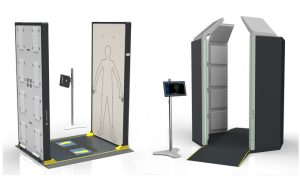
A key focus will be QPS/QPW (Body Scanners) solutions, designed to support the protection of critical environments and public spaces. As security requirements continue to evolve, organizations require technologies that enable efficient screening processes while maintaining a smooth user experience and operational effectiveness. Rohde & Schwarz solutions help customers strengthen security without compromising efficiency.
Another highlight will be LANCOM Systems, the networking and cybersecurity specialist within the Rohde & Schwarz Group. LANCOM delivers secure European networking solutions including enterprise Wi-Fi, switching, SD-WAN and cloud-managed network infrastructure. Organizations increasingly seek reliable alternatives that combine high performance, security and compliance requirements. LANCOM helps customers build scalable and future-proof networks while supporting digital sovereignty and cybersecurity resilience.
Visitors will also have the opportunity to learn more about Apple Indigo, Rohde & Schwarz’s secure mobile working solution designed for organizations with the highest security requirements. Apple Indigo enables protected communication and collaboration on Apple mobile devices through trusted device management, secure VPN connectivity, strong encryption and centralized administration. The solution supports secure handling of sensitive information while providing users with the flexibility and productivity of a modern mobile work environment. Together with Rohde & Schwarz cybersecurity technologies, Apple Indigo helps organizations achieve secure mobile communication without compromising usability.
As cyber threats continue to grow and digital transformation accelerates, organizations need trusted partners who understand both networking and security. Rohde & Schwarz combines decades of expertise in communications, cybersecurity and critical infrastructure protection to deliver integrated solutions that help customers operate securely and confidently in an increasingly connected world.
We invite visitors to meet our experts at the Summit and explore how Rohde & Schwarz, together with LANCOM Systems, Apple Indigo and QPS/Walk (Body Scanners), can support secure digital transformation, resilient communications and future-ready infrastructure.
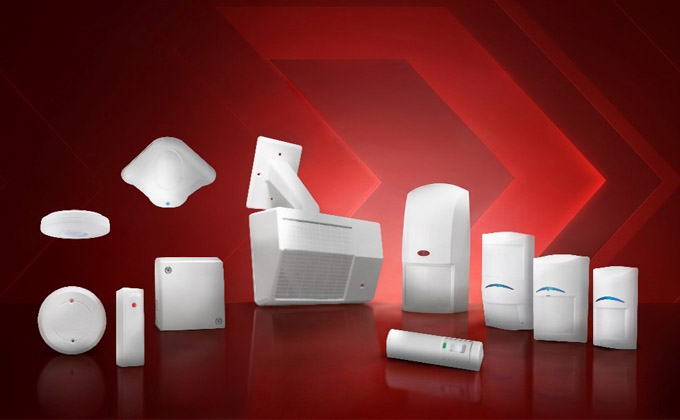
Radionix proudly represents Bosch intrusion alarm solutions worldwide, delivering advanced intrusion systems and reliable motion detectors. Radionix, a part of KEENFINITY Group, builds on trusted technology to deliver mission control for your security. Security that’s more than a system. It’s a mission that never rests.
At this year’s Summit, visitors can discover why Bosch intrusion solutions continue to set industry benchmarks for detection accuracy and reliability. Our renowned motion detectors have earned a global reputation for patented innovation and award-winning performance, delivering best-in-class catch performance while virtually eliminating false alarms. In addition, our motion detectors are designed with unique features that simplify installation and reduce errors that can lead to false alarms or missed detection, reducing installation and maintenance costs.
It doesn’t stop there, we continue to invest not only in new solutions, but also in our existing portfolio, to keep up with current requirements and challenges. Our latest Blue Line Series and Commercial Series motion detectors have been designed for today’s increasingly connected environments. These detectors offer enhanced radio frequency interference (RFI) immunity up to 6 GHz, making them resistant to interference from devices such as Wi‑Fi routers and other wireless technologies. This ensures stable, reliable operation even in increasingly connected environments. At the summit we will show our entire intrusion detectors portfolio, including panoramic ceiling detectors, glass break, shock and seismic and Request-to-Exit detectors.
Next to that, you will be able to get a preview of the new Solution Series intrusion system to be launched in 2027. Designed to deliver a complete, reliable intrusion system that combines protection, control, and connectivity in a single platform. Built around simplicity and everyday usability, the system provides an intuitive user experience while advanced connectivity technologies work seamlessly in the background.
Visit Radionix at the summit, meet with our experts to learn more about our trusted motion detection technologies, and be among the first to discover the new Solution Series intrusion system.
Modern security systems, LANs, IP surveillance, and industrial infrastructure are getting increasingly vulnerable to the effects of surges caused by lightning strikes, power grid interference, and potential differences. This is due to the miniaturization of electronic components; even a short surge can lead to device damage, system downtime, and costly repairs.
EWIMAR has specialized in the design and manufacture of surge arresters for CCTV, LAN, and industrial automation systems for 15 years. Our solutions are designed for installers and end users who expect not only high protection effectiveness but, above all, system stability.
Our products are designed to meet the PN-EN 61643-21 standard, allowing them to be used in LPZ 0/LPZ 1 zones and higher – those are defined by the EN-62305 standard.
Our product range includes surge arresters for CCTV (VSS) systems. It has been divided into three product series: ECO, PRO, and EXT, which allow for the optimal selection of protection levels for specific installations. The ECO series is designed for indoor applications with a lower risk level. The PRO series is a solution for professional outdoor installations requiring a higher level of surge immunity. It features two levels of surge suppression, along with protection against surges on PoE pairs, in any power supply standard. The protection level is 2.5kA (8/20 μs) per conductor. The EXT series, in addition to the components used in the PRO series, features an additional level of protection in the form of ultra-fast MOSFET fuses with automatic reset. The MOSFET fuse reduces surge voltage levels and extends the life of the surge arrester. The protection level is 2.5kA (8/20 μs) per conductor.
The core of our offer is single-channel protection in various housing variants. Depending on the intended use, they are available for mounting in camera boxes, on DIN rails, and in hermetic enclosures. To achieve full protection, the other side of the signal line must also be protected. For this purpose, we have designed 4-channel modules, which, together with a 1U housing for a 19″ rack, create an integrated multi-channel panel. This approach allows for flexible and optimal selection of the protection level to suit the installation’s needs.
Thanks to our solutions, installers can build a security system precisely according to the project’s needs – from single security elements to complex multi-port systems. Modules can be easily replaced, expanded, and serviced without having to disrupt the entire installation.
Solutions dedicated to various communication buses are also very popular in our product lineup. In addition to surge protectors for the RS-485 bus, customers are also gladly choosing PTZ protocol converters. These products enable the integration of legacy CCTV systems with modern devices.
See you at the Adria Security Summit at booth 139!
The Croatian Personal Data Protection Agency (AZOP) has launched an ex officio investigation into the Croatian Pension Insurance Institute (HZMO) following reports of a possible cyberattack and the public disclosure of Croatian citizens’ personal data, according to ICTbusiness. The investigation was initiated after a group calling itself INF Group claimed to have obtained a database containing 105,000 records allegedly originating from HZMO systems. According to the attackers’ claims, the exposed information includes names, personal identification numbers (OIBs), phone numbers and email addresses.
However, the authenticity of the published database and its connection to HZMO’s information systems have not yet been officially confirmed, and the origin of the data can only be established through technical and forensic analysis. Following the initial reports, HZMO stated that it had no information confirming a security breach, while AZOP has so far not received a personal data breach notification from the Institute or any other authority. The investigation will seek to determine whether unauthorized access actually occurred, when HZMO may have become aware of the incident and whether its reporting obligations under the General Data Protection Regulation (GDPR) were triggered.
Under Article 33 of the GDPR, a data controller must notify the supervisory authority of a personal data breach within 72 hours of becoming aware of it, unless the breach is unlikely to pose a risk to individuals’ rights and freedoms.
If the reported data compromise is confirmed, the combination of exposed information could increase the risk of targeted phishing, vishing, identity theft and other forms of social engineering. If the breach is assessed as posing a high risk to affected individuals, the GDPR also requires them to be informed directly, subject to certain exceptions. Final conclusions regarding the potential data breach and any possible responsibility of HZMO will only be possible once the investigation and analysis of the collected information have been completed.
Intelligent Security and Mobility Solutions – From Edge Intelligence to Unified Operations At the conference, we will showcase our portfolio of integrated security solutions that bring together advanced technologies, artificial intelligence, edge computing and system integration to create safer, smarter and more efficient environments.
Our integrated security solutions combine access control, intrusion detection, video surveillance and advanced video analytics within a unified, centrally managed environment. By connecting traditionally separate security systems, our customers gain a comprehensive view of security events in real time and can respond faster to potential threats. Integrating video with access control events and alarms enables automated event verification, improved situational awareness and more efficient security operations from large industrial facilities, airports to commercial premises to corporate headquarters.
A key part of our presentation will be AI-powered video analytics, using deep learning algorithms to detect incidents, security threats and other relevant events in real time. Our solutions can operate as standalone systems or be integrated with access control, intrusion detection and other security platforms, providing organizations with proactive protection of people, assets and critical infrastructure.
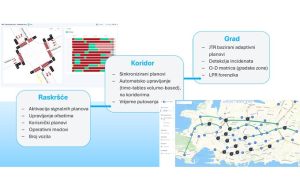
We will also present our Intelligent Transport Systems and advanced Traffic Management solutions, designed for urban environments, highways, tunnels, bridges and other critical transport infrastructure. These solutions combine video surveillance, automatic license plate recognition, traffic sensors, incident detection, traffic management and decision-support capabilities into open and scalable architectures.
Attention will be given to our proprietary FED edge technology, which enables data collection, processing, integration and intelligent decision-making directly at the edge. FED devices are designed for demanding distributed environments, where real-time processing, system resilience and autonomous operation are essential. By reducing dependence on centralized processing, edge intelligence enables faster response times, greater reliability and improved operational safety.
In addition, our Traffic Analytics solutions transform data from road sensors, cameras and moving vehicles into actionable intelligence. By providing insight into traffic flows, congestion, travel times and abnormal events, they support more informed operational decisions and long-term infrastructure planning.
At the conference, we will demonstrate how AI, edge computing, video analytics and open system integration can work together to create a unified technology ecosystem – improving security, mobility, operational efficiency and the resilience of critical infrastructure.