HID and ASSA ABLOY’s collaboration on the biometric eGate, the BG100 Speedgate, has been awarded the prestigious Red Dot Award for Product Design 2025, in the category of interior design elements. This award acknowledges the groundbreaking design and functionality of the solution, which redefines airport security and passenger experience.
The BG100 Speedgate combines HID’s Facepod facial recognition technology with ASSA ABLOY’s Speedgate system, offering an enhanced, frictionless travel experience. By integrating advanced biometric capabilities and a modular design, it streamlines key airport processes, from check-in and boarding to immigration, all while maintaining top-level security.
Central to the BG100’s design is the HID Facepod, a multi-functional biometric system featuring an advanced camera, intuitive touchscreens, and LED guidance.
This seamless integration allows airports to offer passengers a touchless, secure, and faster journey through critical touchpoints. Its clean, modern design and user-friendly features made it stand out to the Red Dot jury, meeting high standards for innovation and usability.
Vito Fabbrizio, Vice President of Product Management and Innovation at HID, expressed pride in receiving the Red Dot Award, emphasizing the company’s commitment to revolutionizing the aviation and travel sectors with cutting-edge biometric solutions.
With a highly modular design, the BG100 Speedgate is easy to install and customizable to fit any airport environment. Its advanced security features, including anti-tailgating and wrong-way detection, ensure passenger safety while maintaining efficiency.
“This recognition speaks to the strength of our partnership with HID,” said Robert Zimmerman, Head of Airports Business at ASSA ABLOY. Together, we are reshaping the future of travel, enhancing both security and user experience.”
The Red Dot Award, which has been held for decades, is one of the world’s most esteemed design competitions, evaluating products on functionality, aesthetics, user-friendliness, and responsibility.
The unique shape of the building, comfortable working conditions and location in the very center of the city make Rondo 1 one of the most prestigious skyscrapers in Central and Eastern Europe.
Rondo 1 is the first AAA class high-rise building built in Warsaw (192 meters height, 41 above-ground storeys, 103 000m2 of total area). It was designed by world-renowned architects from the American studio Skidmore, Owings & Merrill.
The office building consists of two buildings: a 40-storey glazed tower (Building B) located parallel to Jana Pawla II Avenue and a 10-storey Building A, located at Swietokrzyska Street, with a façade made of opaque frosted glass. Rondo 1 offers office and service space that meets the highest standards. Premises for rent can be arranged in any way to fully meet the needs of even the most demanding tenants.
Rondo 1 was the first European skyscraper to receive the LEED® Gold ecological certificate in the “Existing Buildings” category. In 2016, the recertification process was completed, as part of which Rondo 1 received the highest ecological certificate – LEED® Platinum.
The LEED® certificate in the “existing buildings” category is characterized by continuous verification of the building’s operating parameters and requires continuous improvement of the efficiency of its operation in order to meet the newer and more stringent requirements of the certification system. The process evaluated, m.in other things, sustainable location, efficient use of water and energy resources, and materials used.
Rondo 1 is one of the most characteristic office buildings in the very center of Warsaw. It is chosen by companies that care about reputation, high quality office space and that everything is close by; to the railway station, to fashionable restaurants, shopping mall or cinema.
Integrated Control Technology (ICT) enterprise access control solution, Protege GX helps to control people flow and security for this iconic building. Every morning, thousands of people pass through gates secured by Protege GX. Each gate is equipped not only with entry/exit readers but also with OTIS panels. Thanks to seamless integration between Protege GX and OTIS – each user passing a gate is automatically assigned to one of many elevator cabins – which will allow to reach default destination floor in fastest way. This functionality is crucial to relieve the traffic of thousands of people in the morning hours. ICT readers equipped with secure MIFARE and DESFire technology have also BLE (Bluetooth Low Energy) option to allow flexibility for users to use any type of access credentials.
ICT certified partner xPro Security Technology, a long-standing partner in Poland was instrumental to implement the Protege GX system which includes over:
several dozen system controllers
hundreds of door expanders
dozens of intelligent and monitored power supply’s 4A
several hundred of proximity RFID readers
Server-based access control system, Protege GX, uses its native HLI lift integration to talk to a dozen of OTIS elevators. Another dozen elevators are managed by input-output expanders.
“We are very proud that our solution not only secures this iconic building but also makes it more efficient at managing the flow of employees through the integration with the lift system” says Milos Kohout, Sales Director for Central and Eastern Europe .”This type of projects show the flexibility of our Protege GX platform and, when combined with the knowledge of our partner xPro Security, it delivers a successful solution, saving time for all users of the building.”
Oskar Strøm, a renowned expedition leader, heads film expeditions in Svalbard. These expeditions focus on documenting polar bears in their natural Arctic habitat. To capture unique footage, the film crew lives in extreme conditions: enduring very low temperatures, residing in small sleeping pods, and positioning themselves in close proximity to polar bears. Strøm required a solution to secure the camp and protect his team and valuable equipment from polar bears wandering around searching for food.
Protecting a remote site from furry intruders
Living next to polar bears in Svalbard to film them presents unique safety risks for Oskar Strøm’s crew. Hungry polar bears often dare into human camps to search for food and can threaten crew members or damage valuable equipment. Moreover, the lack of infrastructure necessitates generators, increasing fire risks. The crew’s compact sleeping pods create concerns about carbon monoxide buildup. This combination of wildlife threats, fire hazards, and potential CO poisoning in a remote Arctic location demands a comprehensive and reliable security solution capable of simultaneously addressing multiple risks in extreme conditions.
Designlarm’s task was to develop a system to detect polar bear intrusions and alert the crew immediately. The solution had to protect personnel and expensive equipment, including generators and filming gear, while also including fire and carbon monoxide detection. The system needed to be easy and intuitive to install, requiring minimal maintenance, and capable of operating without laid cables or constant internet connectivity.
This comprehensive security setup had to function effectively and self-sufficiently in Svalbard’s harsh environment, where technical support is not readily accessible.
A wireless security system that withstands extreme Arctic conditions
Designlarm chose the Ajax system for Oskar Strøm’s expeditions for its versatility, reliability, and intuitiveness. The Ajax ecosystem offers a comprehensive range of products that address all the expedition’s security needs. The system’s wireless operation was crucial for covering the camp area, where sleeping pods are spread out, and there are no structures for cable attachment. This wireless capability allowed for flexible placement of devices across the entire site, ensuring protection without the need for complex wiring.
The security system for the Arctic expedition is built around Hub 2 Plus Jeweller. This control panel uses Ajax proprietary radio protocols Jeweller to ensure reliable communication between all devices without leaning on internet access. This feature is crucial in the Arctic, where 2G/3G/4G coverage is nonexistent, and the team relies on limited and expensive Starlink internet access. Thanks to reliable two-way communication, Hub 2 Plus Jeweller receives alarms from detectors and delivers them to users. This ensures no alarm will be missed, guaranteeing protection even without Wi-Fi or cellular communication. At the same time, occasional internet connections allow for system updates. Powered by 12-24V PSU (type A), the Ajax hub operates on low-voltage sources instead of relying on a standard power grid, which is absent in remote Svalbard.
Four DualCurtain Outdoor Jeweller detectors are placed around the camp’s perimeter to guard the camp against polar bear intrusions. Each device features two narrow-angle motion detectors facing opposite directions and providing a total detection range of up to 30 meters (15 meters in each direction). This way, the bear’s approach will be registered in advance, not on the doorsteps of the sleeping pods. The viewing angle can be adjusted by 3 degrees horizontally on each side, eliminating blind spots and ensuring comprehensive coverage. To minimize false alarms caused by snow or small animals, the detectors use a software algorithm that analyzes signals from IR sensors. When triggered, DualCurtain Outdoor Jeweller detectors send alarms to indoor and outdoor sirens, effectively alerting the crew if a polar bear enters the camp.
MotionCam Outdoor (PhOD) Jeweller detectors serve as a second line of defense and provide motion detection with visual verification of alarms. When a polar bear crosses the perimeter, monitored by DualCurtain Outdoor Jeweller detectors, the system immediately triggers an alarm. While the bear moves around the camp, the built-in camera from MotionCam Outdoor (PhOD) Jeweller takes a series of photos, which the crew can see in the Ajax app within 9 seconds when connection to the internet is available. This visual verification allows the team to monitor the bear’s actions and exact location within the camp.
Indoor and outdoor sirens were installed in the camp to alert the team of security violations and deter curious or aggressive polar bears. HomeSiren Jeweller devices are installed inside sleeping pods to quickly wake the crew if a polar bear breaches the camp perimeter. The sirens provide immediate notification of danger and are impossible to ignore. StreetSiren Jeweller devices are deployed for external alerting. They serve a dual purpose: warn the crew about an intrusion and aim to deter approaching polar bears thanks to a tone. StreetSiren can produce a sound of up to 113 dB, lasting up to 3 minutes.
The Ajax SpaceControl Jeweller key fob is an essential component of Oskar Strøm’s security system. This compact device allows control of the alarm system even without the internet. With the key fob, users can arm, disarm, set night mode, or trigger an alarm manually. Its impressive 1,300-meter connection range to the hub ensures system control from various points around the camp.
In addition to the threat of polar bears, the expedition team faced the invisible danger of carbon monoxide poisoning. This risk is high in their small, tightly sealed sleeping pods, where CO can quickly accumulate to dangerous levels. To address this issue, Designlarm installed FireProtect 2 (Heat/Smoke/CO) Jeweller detectors. They have a built-in siren and LED indicator to alert when a sensor detects a threatening CO level. The detector is always active and reacts 24/7, regardless of the system’s security mode. In addition, the detector will also alert the team of the fire. Its unique smoke chamber doesn’t require regular cleaning, while a dual-spectrum sensor differentiates smoke from steam, reducing false alarms.
The Ajax security system has demonstrated remarkable durability and reliability even in extreme Arctic conditions. Despite being rated for temperatures down to –40 °C, the system operated effectively at –45 °C. Over 1.5 months, outdoor devices such as DualCurtain Outdoor Jeweller, MotionCam Outdoor (PhOD) Jeweller, and StreetSiren Jeweller have been operating without issues in these severe conditions. The only notable effect of extreme cold was faster battery drainage, which is expected at such low temperatures. However, this wasn’t a significant issue as the system informs users about low battery levels in advance. Anticipating this challenge, the expedition team had prepared by bringing an ample supply of spare batteries.
Why Ajax
Performance surpassing expectations. Ajax devices have demonstrated exceptional reliability in the harsh Arctic conditions and outperformed their specified operational parameters. They provided dependable protection against polar bear encounters and other potential threats in one of the world’s most challenging environments.
Reliable operation without constant connectivity. An Ajax security system functions effectively without continuous connection to the internet. Hub 2 Plus Jeweller maintains communication between all devices and continues to process and respond to alarms even when there is no internet connection.
System mobility and ease of installation. One person managed to install and configure the entire system using the intuitive Ajax app. The whole process is fast and does nor require specialized tools.
In an era where threats to critical infrastructure are increasingly diverse and complex, protecting essential facilities has become paramount for national security and operational resilience. Critical infrastructure includes the vital sectors that keep society functioning—such as energy, water, transportation, healthcare, and IT. Disruptions in these areas can have severe consequences, making effective critical infrastructure protection (CIP) essential.
Critical infrastructure comprises both physical assets and digital systems that support essential services. Given the growing threats from cyberattacks, physical intrusions, insider threats, and natural disasters, CIP requires a comprehensive approach combining physical and cybersecurity measures. Effective CIP involves risk assessments, regulatory compliance, security technologies, and rapid incident response, all designed to protect infrastructure from disruptions and ensure continuity.
The Evolving Threat Landscape
Today’s critical infrastructure faces several primary threats:
Cyber Threats: Increasingly digitized infrastructure is vulnerable to cyberattacks, with hackers targeting industrial control systems (ICS) and SCADA networks. Successful attacks can disrupt essential services, cause financial losses, and jeopardize data security.
Physical Intrusion: Facilities like power plants, substations, and data centers are susceptible to physical breaches. Given their often remote locations, traditional security alone may be insufficient to deter or detect intrusions.
Insider Threats: Individuals with authorized access, such as employees or contractors, can inadvertently or intentionally compromise security, making insider threat detection essential.
Environmental Risks: Natural disasters like hurricanes and earthquakes pose ongoing threats to infrastructure, especially as climate change increases the frequency and severity of these events.
Senstar’s Solutions for Critical Infrastructure Protection
Senstar has over 40 years of experience developing perimeter and physical security systems specifically tailored to the needs of critical infrastructure. Here’s how Senstar’s technology helps safeguard these vital assets.
Perimeter Intrusion Detection Systems (PIDS)
Senstar’s perimeter intrusion detection systems, fence-mounted, buried or above ground, detect intrusions at the perimeter to prevent unauthorized access. Key benefits include:
Scalability: Systems can be tailored for small or large facilities.
Reliability: These solutions function effectively even in harsh environments, maintaining accuracy in extreme conditions.
Minimized False Alarms: Advanced algorithms filter out noise from environmental factors, ensuring accurate detection.
Video Management Systems (VMS)
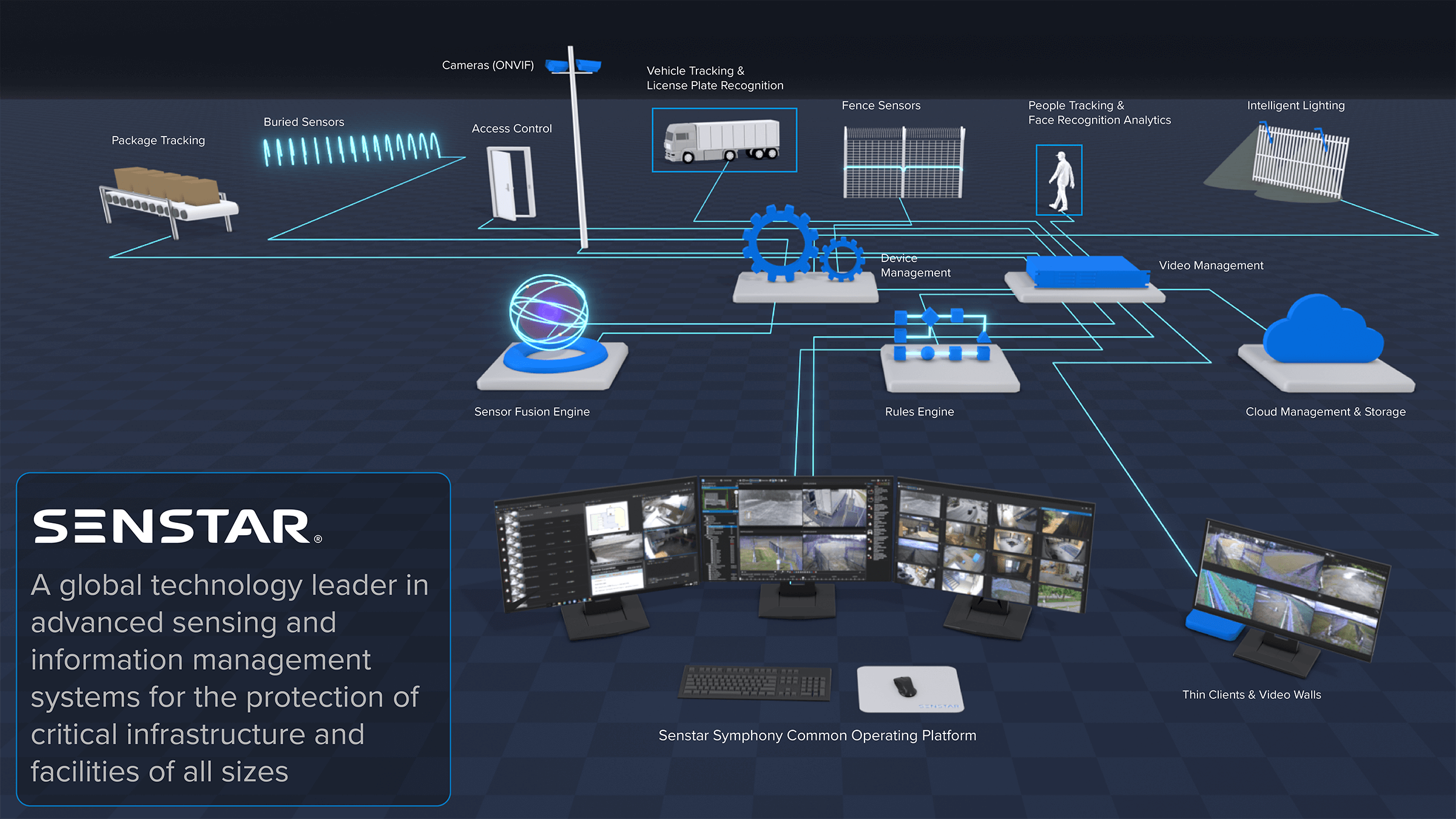
Senstar’s Symphony Common Operating Platform integrates video surveillance with other security measures to enhance monitoring capabilities:
Scalability: Senstar Symphony supports facilities of all sizes, from single sites to multi-location deployments.
Intelligent Analytics: AI-driven video analytics, which can detect suspicious behavior, loitering, or potential threats in real time.
Centralized Control: Provides security teams with a unified platform to manage multiple sites and respond rapidly to incidents.
PSIM Integration
Senstar’s integration with Physical Security Information Management (PSIM) platforms enables centralized control and coordinated incident response. This provides real-time situational awareness, improving the facility’s ability to respond swiftly and effectively to potential threats.
Cybersecurity for Physical Security Systems
Recognizing the importance of cybersecurity, Senstar embeds secure protocols, user authentication, and encryption in its systems to protect against unauthorized access and cyber threats.
Benefits
Senstar’s solutions offer critical infrastructure operators a comprehensive security system that provides:
Early Detection: Proactive identification of potential threats before they escalate.
Cost Efficiency: Integrated systems reduce operational costs and improve security effectiveness.
Scalability: Modular systems are adaptable for both small and large infrastructure setups.
As threats to critical infrastructure grow, Senstar’s advanced solutions offer essential layers of protection. Senstar supports robust, resilient, and scalable CIP strategies that help safeguard society’s most vital services. Investing in Senstar’s technology not only enhances security but builds infrastructure resilience, ensuring essential services remain uninterrupted.
Digitalization has been a trend for over 10 years and data-driven decision-making has spread across аll industries including parking & traffic management. Data is abundant in parking systems and it comes from various sources, such as sensors, LRP cameras, payment machines, mobile apps, RFID cards, barriers, etc. However it is of crucial importance to have the right business intelligence tools to be able to access and present this information in a meaningful way. Once such a tools are in place data turns into actionable insights and growth opportunities for business based on real customer behaviors.
In this short article we will discuss 3 main ways in which the customers of SmartPark have benefited from implementing our data-centric parking management system.
Implementing SmartPark can significantly increase revenue opportunities. With our dynamic pricing features, you can adjust rates based on demand, capitalizing on peak times while offering more attractive rates during off-peak hours. Additionally, the system opens up new revenue streams, such as premium parking areas, affiliate parking and parking validation.
Next, SmartPark offers the opportunity to leverage historical data and analyze various external factors in order to make smarter business decisions. By examining past occupancy rates, businesses can identify patterns and trends related to peak usage times. This insight enables them to implement targeted marketing strategies that attract customers during quieter periods. One of our clients, for example, reduced his parking rates by 50% from 7 PM to 8 AM. This change attracted a new group of customers. Now, instead of just serving professionals during the day, his facility also appeals to local residents seeking overnight parking.
A third way data-driven parking management benefits customers is through increased reliability and minimized downtime of parking equipment. The SmartPark system continuously monitors the performance of devices such as barriers, payment machines, and sensors. If the system detects a malfunction or if any equipment is not working properly, it can immediately alert parking staff. This proactive approach ensures that issues are resolved quickly, reducing disruptions for customers and minimizing the likelihood of delays caused by faulty equipment. As a result, customers experience smoother operations and more dependable service, enhancing overall satisfaction.
Ready to unlock the full potential of your parking facility? Contact us today at info@smartpark.bg and discover how SmartPark can elevate your business and improve customer satisfaction.
There are multiple challenges associated with securing the perimeters of large facilities. In a previous issue we examined some of these challenges, and now we will consider others and how to mitigate them.
By: Brad Martin, Director Product Management, Senstar
Maintaining real-time monitoring capabilities across a large site can be an obstacle. Delays in identifying and responding to security threats can be a real problem.
Senstar solutions provide immediate and precise information on security threats:
Immediately locate intrusions to within a few meters or feet and graphically display results to local or remote security operation centers.
Empower response forces with real-time data on their mobile phones, including live camera feeds and active alarms.
Track person and vehicle activity with outdoor-optimized video analytics.
Cost
A major challenge associated with securing large facilities is a lack of power and networking infrastructure along the perimeter, especially at remote locations located away from main buildings or daily activity. Any solution that requires the installation of new power and networking cabling will quickly drive up costs. In addition to the upfront cost, maintaining in-field equipment may increase operating costs if it is not designed for long-term deployment in extreme environmental conditions.
Senstar intrusion detection sensors are designed to reduce installation and operating costs. Our products are rigorously tested across their entire service life at our outdoor test facility where they experience extreme temperatures and all-weather conditions.
Depending on requirements, Senstar offers several cost-effective solutions:
FiberPatrol: Suitable for both fence and buried applications, this fiber optic sensor requires no active in-field components. Its fiber optic cables have a lifespan of 20+ years and a single unit can cover perimeters up to 80 km in length. In addition, its unused fibers can be repurposed to provide networking for other perimeter equipment such as cameras.
FlexZone: A cost-effective intrusion detection solution for fences, FlexZone reduces infield infrastructure requirements by carrying networking and power over its sensor cables. Each processor covers a distance of up to 600 m and up to 5 processors can share a single low-voltage power supply.
OmniTrax: A covert, buried solution, OmniTrax reduces infield infrastructure requirements by carrying networking and power over its sensor cable. Each processor covers a distance of up to 800 m per sensor processor and up to 3 processors can share a single low-voltage power supply.
Balancing security and access
Ensuring daily operations while maintaining security is a critical requirement. When security becomes complex, the likelihood of processes being ignored may increase. This risk can be minimized via careful consideration of processes combined with technology solutions:
Senstar intrusion detection sensors with ranging capabilities allow for authorized activity at high-volume areas like gates while maintaining 24/7 protection at adjacent segments or zones.
A secure perimeter is the first line defense and an important part of an organization’s operations. When facilities are large or widespread, a number of challenges may be present. Let’s examine some of these and how the right technology solutions could help mitigate them.
Scale and Complexity
A properly designed perimeter security solution acts as a force multiplier, freeing up human resources instead of consuming them. To ensure the overall physical protection system (PPS) meets the facility’s requirements, system designers and integrators need to select security technology that provides facility operators with the critical information they need to maintain situational awareness:
To manage complexity, Senstar sensors share a common communications frameworkand report precise intrusion information to centralized security operations centers. A comprehensive portfolio includes fully integrated solutions for fences, walls, entrance gates, and access control devices.
When Senstar sensors are combined with the Senstar Symphony Common Operating Platform, intrusion locations are graphically displayed on facility maps and can be used to automatically call up specific video surveillance feeds or trigger specific actions. A unified interface simplifies training requirements and empowers operators with the tools they need to respond to a range of threats.
Resource Allocation
Perimeter intrusion detection technology frees up personnel by providing human insight to unfolding situations and responding to threats. Intrusion detection alarms direct operator attention to critical events and help them to coordinate appropriate responses.
Instead of requiring multiple people to passively observe screens for suspicious events,individual operators can monitor larger areas, freeing up human resources for other activities.
To reduce operator distractions, Senstar sensors are designed to minimize nuisance alarms. Field-tested and proven, sensors include environmental disaggregationas well as AI-based sensor fusion
Maintenance staff can use data obtained from sensors to quickly locate damaged or loose fence fabric, reducing the frequency and time requirements of physical inspections.
Limited Surveillance Coverage
Vulnerabilities like blind spots or line-of-sight (LOS) issues are a challenge for all facilities but especially large ones. Physical realities may make it cost-prohibitive for complete, high-quality surveillance coverage. Similar concerns apply to LOS sensors like ground-based radar. Fortunately, for this specific deployment challenge, Senstar fence-mounted and buried perimeter intrusion detection sensors reveal one of their major strengths: detection coverage of the entire facility, with no coverage gaps that an intruder can exploit to get inside undetected.
Senstar also offers solutions that improve capabilities of surveillance cameras:
Perimeter lighting: The Senstar LM100provides a 2-in-1 perimeter illumination and intrusion detection solution. Low-power, uniform fence line illumination with a high color rending index (CRI) value improves the assessment capabilities of surveillance cameras, ensuring high quality nighttime visibility without hotspots.
Secure networking: When fiber sensors are deployed along the perimeter, unused fibers may be repurposedfor use by network cameras, avoiding the need to run additional networking cables, reducing overall installation costs while maintaining a higher level of security over that of Ethernet cabling.
Initially conceived as an international company, ZKTeco started out modestly, with only its products being sold abroad, without services and customization for customers. But then, at the global level, something happened that, contrary to expectations, opened new opportunities for many companies – the global economic crisis. In 2008, many security companies decided to try their hand at making it big in international markets. ZKTeco was among the pioneers.
Our editorial team has covered many events in the past sixteen years. Having published no less than 178 issues of a&s Adria magazine so far, we witnessed the emergence and maturation of technologies, innovations that caused controversies only to become commonplace, the disappearance of former industry greats who were thought indestructible, the rise of new companies, we talked and hung out with the professionals who, in fact, can be said to have sown everything that has grown in the past decades. But, after all those years, one thing manages to impress us every time – a story about a name and reputation that grow together out of the vision that everything is possible, regardless of the challenges. In search of one such story, this time we went to the suburbs of Madrid, a city and a corporate “forest” in which countless businesses flourish. Madrid is also the seat of the European headquarters of a company whose access and entrance control is an evergreen tree in this corporate forest. We want to tell you a story about ZKTeco.
Watch the video report:
Creativity from all over the world
The European headquarters and warehouse were founded in 2010 and have been located in Madrid for twelve years. A pioneer in biometrics and RFID technologies, ZKTeco is now a multinational company with close to 3600 employees. From the beginning, its founders and engineers sought to independently develop algorithms to verify the biometric characteristics of the body, which over the years has become an ecosystem for identity verification and smart security. Both hardware and firmware as well as software are produced internally, at research and development centers scattered from from the India to Xiamen, Dalian and Dongguan. Today, the company’s offer is rounded up not only with biometric and RFID modules but also with access control systems, turnstiles and barriers, video surveillance, metal detectors, and integrated security solutions. At its European headquarters, where the service, sales, development, and financial departments are located together with a warehouse whose capacities will soon double by moving it to a new location, ZKTeco’s partners and distributors can receive all the necessary services. From there, they provide support to other European subsidiaries: British, German, and Italian offices, whose numbers they also intend to increase.
The economic crisis is an opportunity to change strategy
We were greeted by an extremely pleasant team of people, led by Even Wang, General Manager of the European Business Group at ZKTeco, in whose company we felt as if we were members of the personnel. Socializing took place until the afternoon and was spent in pleasant and useful conversations. Their friendly synergy, we noted later, is certainly one of the wheels that powers the company’s business on European soil, about which we will learn more later.
“ZKTeco started as a small company, with two or three people”, says Mr. Wang from the outset of our conversation and continues: “The founder is Mr. John Che. The business started as a technology firm that was researching biometrics. At that time, biometrics were not so common in the world, so they tried to design one biometric module to offer to the market. Step by step, they decided that they could develop a time and attendance terminal. So, some money was raised to move to Shenzhen, a zone known for its electronics industry.” The company started to grow but that was not enough for a major breakthrough in the market. The business was mainly done in China, and only its products were sold abroad, without service and customization offered to the clients. But then, at the global level, something happened that, contrary to expectations, opened new opportunities for many Chinese companies – the global economic crisis. In 2008, Chinese companies decided to try their hand at making it big in international markets in order to prevent financial problems. “ZKTeco was among those who adopted this strategy at the earliest stage. In the beginning, we had a small team of people, but we were also lucky that the demand for biometric systems increased sharply”, adds our interlocutor. ZKTeco made a difference in the market by offering an attractive price, a broad range of products, and quality service. Clients knew that they could count on people who are always at their disposal, which is very important in business.
This resulted in rapid business growth. They are proud, they say, of the decision taken at the time. But it was not easy. “You go to another country where no one knows you, you have to learn to live there, find customers, talk to them in your poor English. I joined the company in 2010. I initially worked in India and I know how hard it is for a Chinese company to start from scratch outside their home country. Language, laws, taxes – these are all great challenges. But we were trying to gradually adapt, find local people and partners, understand each other and bridge the cultural gap. I can say that after 14 years of development we have a great team. We now have 3600 employees, of which 450 are internationals. I think that’s the largest number of foreign employees in a Chinese company,” says Wang.
Going public
Another important turning point for ZKTeco happened in 2020, and it was marked by yet another trend among Chinese security companies – going public. The higher inflow of capital enabled them to further strengthen and expand. ZKTeco started the process of the initial public offering (IPO) a little earlier in order to become a public company and increase capital investments in expanding production and opening new offices. “The money will mainly be invested in research and development, especially in the software segment. The second part will be related to the service network; we will open five new offices, new warehouses and continue to employ local people. I think we need to have local people in every country because the value is to offer services to our clients locally”, explains Wang. ZKTeco currently has 38 subsidiaries in Hong Kong, Macau, Taiwan and overseas, but they want to open many new ones. In Europe, they plan to open offices in France, Romania, and Poland, as well as in other countries.
People are the greatest resource
Just in time when the company went public, the coronavirus pandemic broke out. Yet again, as it happened in the past with the economic crisis, ZKTeco has found an opportunity to offer new solutions to its customers, this time in the form of a cost-effective and adaptable solution for measuring body temperature and detecting the wearing of protective masks. “We got a lot of great clients, such as Telecom Italia and Spanish Telefonica, as well as the opportunity to gain access to many banks and government institutions. That helped us a lot to get through the difficult period in 2020. We have kept and even increased the number of employees. We kept working in all countries and continued with our development and research. We even opened our office in the UK during the pandemic. Even in the most difficult period in May 2020, our team continued to help our clients in Italy”, recalls Wang.
The greatest strength in the focus on entrance control
Although it initially presented itself as a biometric company, ZKTeco is always trying to adapt to different applications. “We are currently fully focused on developing entrance control technologies and solutions, including those handling the passage of vehicles, people, and luggage. I think that we can offer a high value in that. As much as AI and IoT change the world, people have to start from the entrance. The entrance is a key point for home automation and office security. For the past twenty years, ZKTeco has been working on one thing only – entrance control. We try to offer the best hardware and software solutions. That is why we have no less than 10 product ranges today. Our greatest strength lies in this type of focus”, says Even Wang, General Manager of the European Business Group at ZKTeco.
Breaking stereotypes
How ZKTeco managed to expand its business in Europe year after year was the topic we discussed in detail with Kinga Zarzyck, International Business Development Manager with ZKTeco, who was both our host and the person behind the organization of our visit. For years, ZKTeco kept facing one obstacle that prevented them from stepping out of the widespread stereotypical mold. In the eyes of its users, the company was mostly seen as a supplier of access control and time & attendance hardware. In recent years, however, they have focused on delivering solutions, ranging from offering consultancy and adapting solutions to project requirements to assisting with their implementation. “Our goal in the coming years is to change this perception because ZKTeco is changing and growing constantly, not only in terms of its revenue but also in terms of its solutions and their quality. To achieve this, we have opened local branches in Germany, Italy, and the UK in the last five years. We also have salespeople in Romania and Poland. We intend to open local offices in these countries as well as in France in the near future. It is very important for us to be close to our partners and to react faster and adapt our solutions to the needs of the local markets “, explains Zarzycka.
In order to provide the best possible customer support, the European branch expanded the most in the segment of its pre-sales and project departments. It is, in fact, a new segment of ZKTeco that was created not so long ago to support partners chiefly through products. While distribution is important, integration is another channel that needs support. They currently work with more than 100 partners across Europe. Upon asking whether they work directly with installers and integrators or with distributors only, we were told that everything depends on the country. “We also work with integrators, and not only with the larger ones that have the capacity to develop their own solutions. Yet, it all depends on the strategy in a particular country and how that country is organized. Not every distribution channel in a country can function at the same level or be as good as, for example, the Adriatic region”, says Zarzycka, citing the Czech Republic, the Netherlands, and the UK as examples of countries focused mainly on integration with security system management software.
More solutions for the customers
Our host is also in charge of organizing business in our Adriatic region. She has been cooperating with partners from Southeast Europe for four years, and for that purpose, she was a guest at our Adria Security Summit on no less than three occasions. “We have tried to get even closer to our partners throughout these years through the support received at the Adria Security Summit. We plan to attend the coming Summit in October in Croatia. It’s one way to meet potential partners and companies we could work with. It is not just about offering them our access control technology, which is our best-selling product in the region, but rather about introducing them to other solutions we can offer, such as parking ramps and turnstiles. In addition to small and medium-sized enterprises, we are also getting involved in other larger and more complex projects with varied and non-standard requirements”, says Zarzycka. To achieve this goal, they are constantly investing resources in educating partners and customers about new series of products and solutions. This is done while simultaneously working on integration with different security platforms, which means that they will be able to access the projects not only with ZKTeco’s hardware but also with a full range of specialized products aimed at other complementary security segments. Regarding the manufacturing segment, ZKTeco will soon move its warehouse to a new facility in Madrid. So, it’s all about a comprehensive approach whose proper implementation will make success inevitable.No delays in production and delivery
When it comes to storing products with the aim of timely delivery in difficult times marked by the chip shortages in the global market, ZKTeco claims that they have prepared for the lack of materials and stored a lot of raw materials. “We have no production delays, and in addition, we have doubled the stock of all the products we sell here in Europe, so we have no problems with delivery. It’s all just a matter of proper planning. I am sure that with a larger warehouse, the situation will be even better, that is, it will be an even smaller problem than it is now “, says our interlocutor. However, due to rising raw material prices and multiplied transport costs, they were forced to revise the prices of their products. But, on the other hand, they compensated for this by extending their warranty to three years.
Showroom Tour
To get acquainted with the entire range of ZKTeco’s solutions, we visited a beautifully decorated showroom, which is divided into product segments, from access control and time and attendance to smart locks for hotels and smaller housing units. We were greeted by Mr. Robertodino Sebastiano Leita, an amiable International Presales Engineer with ZKTeco Europe. As an excellent connoisseur of ZKTeco’s products and solutions, he introduced us to each product group and answered all our questions in detail.
ZKBioSecurity – the Core of ZKTeco’s Solutions
At the heart of ZKTeco’s solutions is the ZKBioSecurity web platform, which integrates multiple functionalities. It is all about the so-called modules for access control, time and attendance, online and offline elevator control, hotel and visitor management, parking lots, mobile patrols, and video surveillance. There are also new modules that allow data management from all access control devices, including body temperature measurement. VMS modules that support thermal cameras and network recorders are also included. When ProFace X [TD] or SpeedFace V5L [TD] face recognition devices are used, the person’s image is sent to the software, with the security guard being able to identify the person with the higher body temperature than usual. The people flow management feature has been added to the time and attendance module. The latest version of the platform also provides advanced security features such as FP online registration, HTTPS encrypted communication, registration using a QR code, an LCD screen to display a log of live access events, etc.
“The platform is one of our main services. I do not define it as a product, but rather as a service because it includes all the necessary solutions within the security framework. Access control is at the core of what we do, and to that, we can add more functionalities that are translated into modules. The control we provide is primarily focused on user protection. By this, I mean any type of information, such as normal entries, normal events, alarm events, and some types of anomalies – all of which are perfectly controlled. It is possible to integrate not only with our other devices but also with the products made by our partners via APIs and SDKs directly. Each module communicates with other modules, which is fundamental. This means that if you want to verify the alarm caused by an access control system or activate the alarm, open or close the door due to an event in the CCTV or sensor module, you are actually able to do it”, says Leita. The platform can be used in projects of all sizes. Its optimized architecture, which enables advanced biometric identification, and a modern interface provide users with a completely new experience and easy management of various systems.
Time and attendance from anywhere
When it comes to time and attendance data and associated hardware, the key difference is that ZKTeco generally does not use controllers but rather terminals. Still, “the market has changed a lot over the years and we are aware that mobile and cloud solutions are taking precedence. That is why one of our latest innovations is GoTime Cloud, in which a user can now use a mobile phone in addition to traditional card and biometric verification methods, while the supervisors have total control over employees: where they are, what kind of work they do, etc. You can see on the screen that each working code is marked with an image and all of them can be exported as reports”, explains Leita. Localization is available in the form of a map, which is increasingly in demand in the market, and you can also create advanced calendars, custom shift schedules, or configure all changes in your company.
Integration of mechanical entrance control and access control
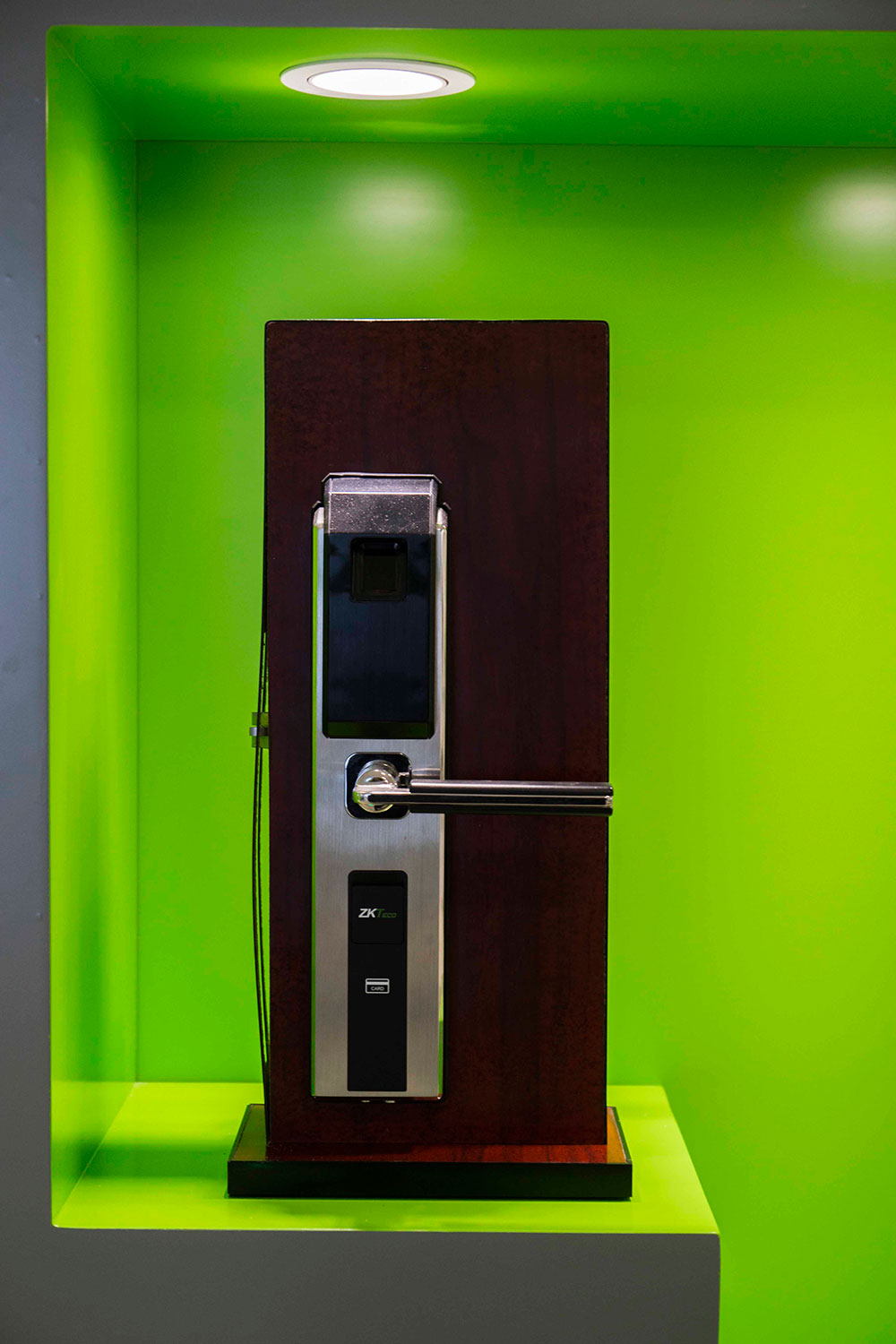
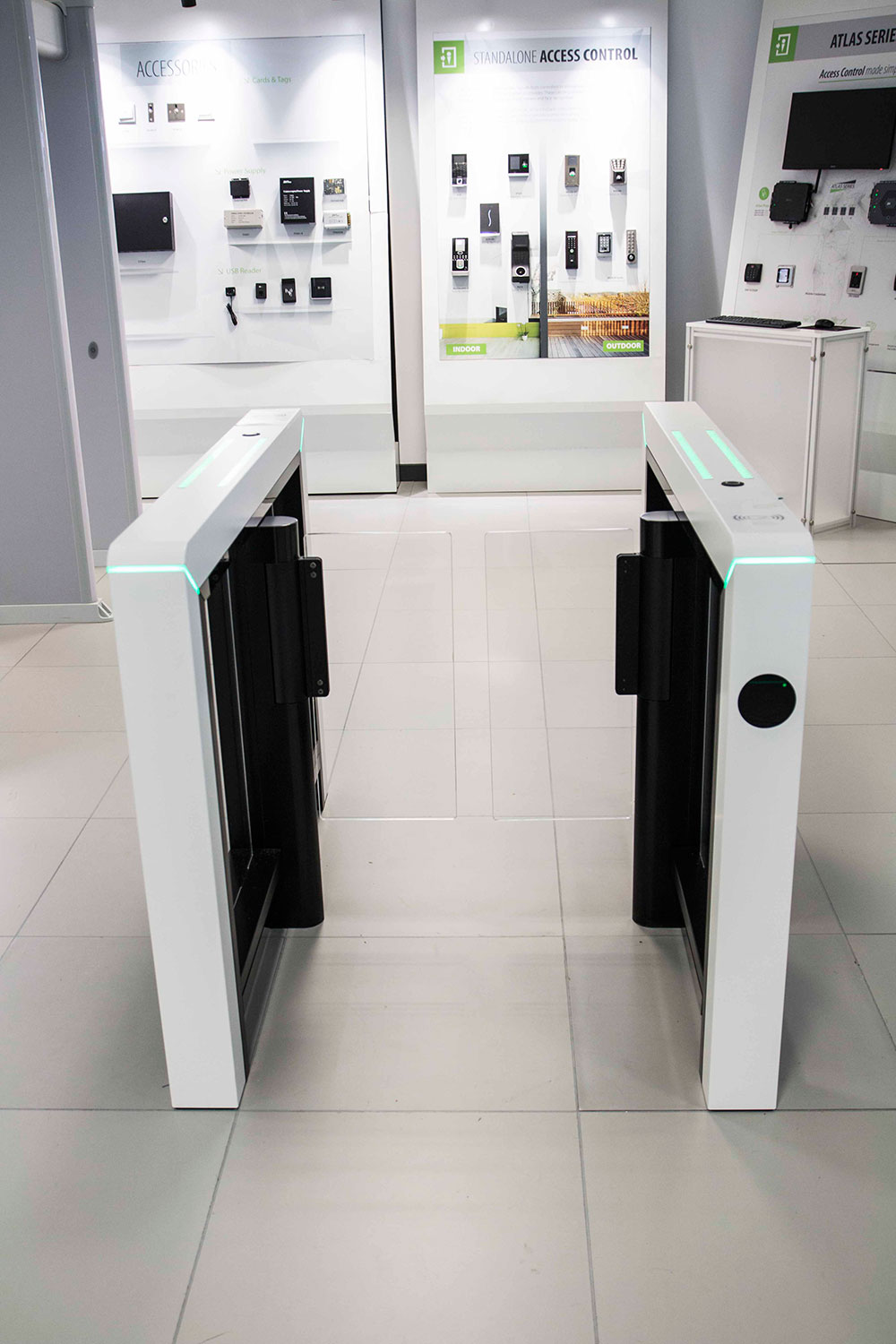
The entrance control product series features several categories. There are several types of turnstiles and barriers available, which are divided based on the level of mechanics and electromechanical control one needs. The showroom featured various three-arm turnstiles and turnstiles with curved and flat flaps and barriers for parking lots, together with vertical tripod barriers used in football stadiums. But the real benefit is found not only in the products themselves but in the fact that they can integrate with their own access control. “It is important to mention that we can perform any mechanical and software integration ourselves because we are the proprietors of our technology. This means that no matter what kind of reader or controller is demanded for turnstiles, we can offer it to our customers. This greatly simplifies the work of the installers who install them in the field”, says our host.
Innovation at work
To get an idea of the designing prowess of their engineers, we were introduced to the ZPad Plus, one of ZKTeco’s best-selling products. Originally, it was a device used for time & attendance, but during the pandemic, there came a need to check the green certificate. So, they used the original public applications certified by the Italian government and integrated them with their hardware, which can now make decisions and open doors or activate an alarm relay based on the validity or invalidity of the certificate. “It is one of our best designs so far and it has been a great success, especially because we have improved the algorithm that has the ability to check personal documents, so we can be sure that the certificate belongs to the person who shows it”, says Leita.
We also had the opportunity to check the Mars Pro series of turnstiles with flat or curved flaps, designed for spaces with a large flow of people. It has a modular structure and comes with new features, such as frame modularity, which can be easily assembled and disassembled. No matter what level of damage is done to your turnstile, only its impacted part will need to be replaced. However, the most important functionality is the number of ten million cycles, which is a rarity on the market.
Radar-equipped barriers
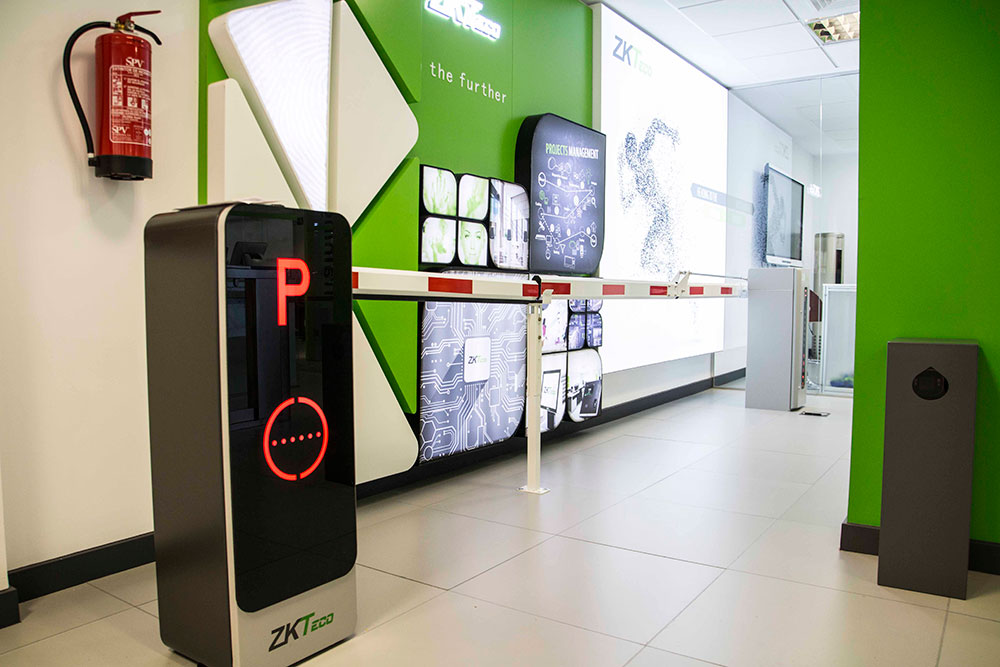
There are two types of barriers on the market: those with strong mechanical components, which can raise arms up to six meters long, and cost-effective barriers for residential and commercial areas. ZKTeco offers both types. The parking solution is based on LPR bullet and dome cameras integrated with barriers equipped with VR10 radar, which completely eliminates the need for any induction loop. When the vehicle leaves an area, it is not necessary to re-read the plates so a copper spiral is usually installed in the ground and it detects the weight of the vehicle and sends a signal to the barrier to open. With radar, there is no need for that, because it is simply pointed to the right side and calibrated. The license plates are controlled locally by a camera, while the VR10 controls the arms without the need to install a magnetic loop, which also makes the job easier for installers. Another good thing is the anti-shock mechanism, which detects an obstacle (e.g. a child passing by) and prevents the arm from falling. “An additional important functionality of this solution is that it can work independently or you can connect it to our ZKBioSecurity platform. So, in addition to all the information about vehicles that pass through the barrier, you can also link each car with a user in the system”, concludes Leita.
We ended our showroom tour by checking the solutions with smart locks for hotels and smaller housing units, with ZKTeco offering four series: online hotel management, offline hotel management, smart locks with local Bluetooth connection, or smart locks with cloud connection via an e-mail account. This enables remote management of credentials, without the need to go to the site.
Thirteenth security company in the world
After a full-day tour of ZKTeco’s European headquarters and the meetings with the leading people from its management, business development, and technical departments, we were left with the feeling that the company has made a lot of progress during all these years. When we reflect on its first appearances at major security fairs only ten years ago and its modest biometric solutions which focused on cost-effectiveness back then, we simply have to compare it with what we had the opportunity to see and hear during our visit. It is no wonder, then, that ZKTeco ranked 13th among the top fifty security companies in the world according to Security 50 list. They have come a long way from one product group to multi-series solutions but managed to keep the focus on one thing – entrance control. And that is the biggest advantage of ZKTeco.
DEA Security is an Italian company which designs, develops and produces a wide range of perimeter intrusion detections systems. Result of an extensive research and development activity and covered by International patents, these systems are employed in the protection of perimeter of any size in military, industrial, commercial and residential sectors.
DEA Security systems create four layers of protection ranging from the outermost perimeter to the heart of the protected site, typically a building. Starting from the outer layer, we can find FUSION, SERIR and TORSUS fence-mounted systems, SISMA CP 50 buried system, SISMA CA system for flooring and SERIE A03PRO, SPC PRO and XENSITY indoor systems.
DEA Security has full in-house competence and expertise: from concept to hardware and software design, from construction and testing of prototypes to final product. This allows us to master all the technologies employed in our products and to control the manufacturing process in each single phase to assure very high product quality.
FUSION P2P is the new fence-mounted system employing the state-of-the-art DEA Sensor Fusion (DSF) dual-tech technology, patented at the International level. The system can be installed both on flexible metal fences (rolled fence or light welded panels) and rigid panels.
FUSION P2P detects and analyses the vibrations of a fence as a consequence of an intrusion attempt for cutting (also perfomed by means of hacksaws or grinders), breakthrough or climbing, discriminating all those nuisances which could trigger improper alarms.
Thanks to the possibility of individually calibrating the detectors, the same sensor-string can be applied to heterogeneous structures without dividing it into more strings.
The detectors employ two different sensitive elements: a well proven PIEZO transducer and a MEMS accelerometer. The data coming from the two sources of signal are processed and analysed using adaptive intelligence algorithms which enhance the detection capability, the adaptability and the reliability of the system.
SISMA CP 50 is a buried intrusion system which detects a person walking on the surface. It is so sensitive that it can perceive the lightest step.
SISMA CP 50 is compatible with several types of surfaces without concrete foundations, such as surfaces covered with grass, gravel, tarmac and interlockings. It creates an invisible and unidentifiable detection band which, depending on the cases, can protect the whole perimeter of a site or specific driveways and walkways. If the surface to be protected is made of flooring with concrete screed, the system to be used is SISMA CA.
As companies adapt to the ‘new normal’, they are having to be innovative to survive. Those in the hospitality industry are facing a world where far fewer people travel. It’s also dramatically affected events, like trade shows and conferences, which have been cancelled or postponed all over the world. German conference organizer Hotelreservierungs- und Tagungsmanagement (HUT) sought a temporary solution to get events going again – and the solution was made up from Hikvision technologies by local reseller Michael Telecom AG.
Challenge
HUT organizes events for the EHI Retail Institute, the German authority responsible for retail outlets, among others. Before the lockdown, the Institute successfully held one of the biggest retail trade shows in Europe – EuroShop in Düsseldorf in February 2020. But later in the year, they reassessed the situation and decided future events could only take place in a ‘hybrid’ format. This meant there were more activities online and strict hygiene and access measures should be taken.
HUT needed a way to ‘pre-test’ all visitors – including participants, exhibitors and employees – and to ensure they were wearing masks, for example. As part of the strict monitoring regime in place, they also needed this information to be displayed at an information counter, where a member of staff could monitor the situation and act, if necessary.
Although a temporary one, the solution needed to be installed at all entrances and exits for the duration of the event. This included assembly and dismounting times.
Solution
The solution provided by Michael Telecom used up to 3 MinMoe Temperature Screening Terminals (DS-K1T671TM-3XF) at an event entrance for admission control. Each terminal is equipped with its own wi-fi router in order to establish flexible communication with its 7” monitor. This means that the units can be used flexibly on the move.
The MinMoe terminals include a 2MP wide-angle lens and a thermal sensor which allows a person’s skin surface temperature to be taken as they look into the screen. The temperature can display on the screen, and anything higher than a predetermined level can be flagged to an operator.
The smart nature of the camera also means that it can determine if a person is wearing a mask. Again, the ‘mask-wearing’ status can be displayed on the screen and a non-compliance alert flagged to an operator.
At the information counter, a 7” Touch-Screen Indoor Station (DC-KC001) is installed to give an operator the ability to monitor the situation. They can act prompted by an alert, if needed, and are able to generally keep an eye on the situation at the entrance.
The systems were first used in August at a hybrid event LOG2020 (a trade logistics congress), and then in September at Retail4robots. The next event – EHI-BIG3 – was truly ‘hybrid’ as it was a pure live streaming event. However, people still needed to be present for the event to go ahead, and the entrance control measures were used for the studio participants and event personnel.
These products were specifically chosen by Michael Telecom because they are quick to set up and configure – a crucial element of any temporary solution requirement.
Horst Bauer, CEO of HUT, says: “The products proved to be really flexible, giving us a lot of options to cater for all our needs in different scenarios. The fact that they are also easy to use, and to set up, is a real added bonus.”
There’s potential to develop the solution further too. A connection to an event reservation system using the cloud and an app is currently being developed. This would allow participants to check themselves in at the terminal via a QR code.
With the addition of flexible temporary monitors, events can slowly realign to the new normal. Although their digital aspect will ramp up and more will become ‘hybrid’, there will still need to be people present. And those people can feel better knowing that their safety is being taken seriously.