Home Vertical Solutions Archive by category Healthcare

Healthcare

Aikom: Motorola Solutions Launches the New V200 Bodycam in Europe

The new Motorola Solutions V200 bodycam is now available in Europe, an advanced solution for mobile video surveillance ideal for supporting frontline workers: from private security personnel to urban safety staff, as well as healthcare services, public transportation, hospitality, and retail.

By: Marko Peica, Sales Manager for Adriatic region, Qatar, Türkiye, and Greece, Aikom International; E-mail: marko.peica@aikominternational.com

The Motorola Solutions’ V200 was developed in response to the growing demand for reliable wearable tools that can integrate into workflows and document every interaction in high quality—even in real time.

One of the standout features of the V200 bodycam is its ability to livestream video, paired with the GoLive Audio function, which allows operators to communicate instantly with a supervisor or control center.

This dual functionality enables more effective emergency management and real-time monitoring, increasing responsiveness in critical scenarios and enhancing operator safety in the field. The HD wide-angle camera ensures image quality, while its 12-hour battery life supports operation throughout the entire shift.

Smart, Functional Design for Immediate Use

The V200 bodycam is designed to be intuitive and easy to use, thanks to dedicated recording and escalation buttons that ensure quick activation, even while in motion or under stress. A built-in top display shows real-time Wi-Fi connectivity, control center link status, and battery level.

Thanks to RFID Touch Assign technology, each unit can be quickly assigned to an operator via RFID badge, simplifying management in multi-shift environments. The device also connects to an integrated dock station, allowing for charging and secure transfer of recorded videos, optimizing the management of collected material.

Data Security and Regulatory Compliance

Information protection is a core element, and the V200 bodycam delivers. Data recorded by the V200 is end-to-end encrypted, both during capture and when uploading to Motorola Solutions’ VideoManager cloud. The system complies with GDPR and digital evidence management policies, ensuring enterprise-level cybersecurity.

Each V200 bodycam can be customized with identifying labels based on the client’s brand or operational department, simplifying assignment and management—even in large or multi-site fleets.

Available from Aikom International

The V200 bodycam is now available for the European market, distributed by Aikom International, Motorola Solutions’ official partner and distributor.

AUREL MSR: Why Aren’t All Gas Sensors Mounted at the Same Height?


Different gas characteristics and complex interactions in the environment mean that not all gases are detected at the same height. The height and positioning of a gas sensor are therefore of crucial importance for detecting dangerous gases and vapours early on.

Why are gas sensors mounted at different heights?

Gas density

Not all gases are detected at the same height, as gases concentrate at different heights due to their density. A gas may be heavier or lighter than the air. Heavy gases tend to sink downward, while lighter gases rise upward. As a result, a heavy gas that remains near the floor will not be detected in higher areas and a light gas that rises upward will not be detected near the floor.

For example, carbon monoxide in the garage is measured at almost the same density as air and at breathing height. Carbon dioxide, on the other hand, has a relative density of 1.53 and is measured near the floor. Methane has a relative density of 0.56, moves quickly to the ceiling and is measured in that area.

Gas distribution

Gas distribution in the environment is also of crucial importance. The way in which a gas is distributed in a room depends on various factors, such as ventilation, temperature and the position of the source.

The concentration of gases is thus higher near the potential source than it is near the floor or ceiling. Positioning the gas sensor correctly ensures that a hazardous gas concentration will be detected immediately, before it spreads through the room.

Reaction times and sensitivity

Different reaction times and gas sensor sensitivity are also of crucial importance. A gas sensor located near the floor will react to gas that accumulates there faster than a gas sensor near the ceiling.

What else affects the gas sensor height?

Environmental conditions: Environmental conditions in the industry vary. By placing gas sensors at a variety of heights, differences in temperature, air current, or gas distribution, for example, are easier to detect.

Adapting to process requirements: Some processes require gas sensors to be placed in specific locations in order to monitor and control the relevant parameters. This is particularly true of complex production environments such as beverage manufacturing and automatic processing machines. The atmospheres in these areas are often made up of inert gas, which changes the specific density of gases relative to one another. One example of this is measuring oxygen in an argon atmosphere.

Safety standards: Placing gas sensors at different heights helps to ensure safety by monitoring potential hazards or gas leakages on different levels of a building or a plant and triggering an immediate alarm in the event of a hazard. These safety standards may be required by standards. So for example, a sensor height of 1.5-1.8 m is defined in garages for measuring carbon monoxide.

How are the gas sensors mounted?

The gas sensors are mounted in housing that protects them from outside influences. For comprehensive IP protection, the housing is installed with the gas sensor head pointing down. If the gas sensor is mounted at the wrong height, for example, the gas cannot be detected early. If the gas sensor is mounted mechanically incorrectly, the sensor’s IP protection is not guaranteed. It must also be clarified whether there is an air current and whether the gas sensor should be mounted on the ceiling or floor.

In garages, for example, there is a static current. A sensor here can detect the gases within a radius of 7-11 m, corresponding to approx. 400 m².

Which type of connection does MSR-Electronic offer?

MSR-Electronic uses a 3-conductor system for analogue gas sensor connections and a 4-conductor system for bus connections. The 3-conductor connector for the 4-20 mA connection is a stable connection type for an analogue connection. Each individual gas sensor is connected to the controller by means of complex wiring.

With the bus connection, on the other hand, only one cable is placed leading from the controller to the area being monitored. The individual bus users, such as “small light bulbs”, are mounted on a string of lights. The gas sensors are addressed here and communicate digitally with the controller.

Mobile Children’s Heart Hospital Receives Bespoke Advanced Fire Protection

A mobile children’s heart hospital, built in El Salvador, was recently equipped with an Advanced wireless fire safety system, ensuring top protection for children undergoing heart surgery, their doctors, and staff.

Run by Kinderherzen, the mission of the hospital is to ensure that children born with serious heart conditions receive the treatment they need to go on and enjoy healthy lives. Kinderherzen operates in Germany and mobilises doctors to provide critical care for young patients in areas of the world with limited medical services.

Working alongside fellow Halma company Crowcon, Advanced was approached to devise a reliable fire safety system that would be easy to install, uninstall, and reinstall as the mobile hospital moved between locations across Europe.

For speed and ease of setup, Advanced’s innovative solution was to create a bespoke, wireless fire alarm system. At the centre of the installation is an Axis EN single-loop panel paired with a translator and 19 devices including point detectors, sounder-beacon bases, and call points covering various rooms within the hospital.

The system was pre-programmed at Advanced’s headquarters in Newcastle upon Tyne (UK) and shipped to El Salvador, ready for immediate fitting to minimise on-site setup time.

The wireless nature of the system not only simplifies the installation process but also provides flexibility for future expansions or reconfigurations of the hospital layout. This adaptability is particularly important for a mobile facility that may need to adjust its setup based on the specific needs of each location it serves. The ability to quickly and efficiently adapt the fire protection system without extensive rewiring or hardware changes ensures that high safety standards are maintained at all times.

Despite logistical challenges, the installation process was incredibly efficient thanks to the use of special mounting plates for the control panel, translators, detectors, and sounders, which reduced setup time to less than half an hour.

Speaking about the project, Paul Duffy, Technical Services Manager at Advanced, said: “We are extremely proud to support Kinderherzen in their mission to provide critical medical care to children in need. Given the temporary nature of the hospital, the fire alarm system needed to be robust but highly versatile. The reliability and ease of use of Advanced equipment make it perfect for this unusual brief, ensuring the ideal combination of mobility, performance, and safety.”

This Axis EN wireless installation ensures Kinderherzen staff can carry out their essential work with peace of mind that their team, facilities, and patients are protected by the highest standards of fire safety.

To learn more about Axis EN, visit: www.advancedco.com

For more information please contact:

Vladimir Zrnic

vzrnic@advancedco.com

+44 (0)345 894 7000

Temperature screening and weather: there is no place for humans

An ordinary thermal scanner in a guard’s hands in a mall, school or government agency is not the best way to avoid the spread of viruses. He works slowly and imprecisely. Another thing is an access control system with face recognition and temperature screening. Partizan STD-2MP, for example, takes into account a lot of related factors. Weather conditions are one of the most important.

There is no such thing as bad weather…

… but it strongly affects the measurement results. In cold weather, the temperature of exposed parts of the body can drop one degree below real. In the heat, on the contrary, to rise to 37.4 °, in reality being the canonical 36.6 °. But STD-2MP can’t be fooled! Analyzing a person’s condition, the device takes into account everything – even the temperature difference between hair and a cap.

An algorithm based on the principles of artificial intelligence comes into play. The device compares the temperature of a person and the objects around him. It captures the warmth of previous visitors and calculates their normal temperature at the current moment. For example, in the morning the average temperature of visitors was 36.2 degrees. But the day was hot and sunny. Therefore, by lunchtime, people “warmed up” to 37.2. The device takes the weather into account and makes the measurement as clearly as possible. “Come on in, guys, everything is ok.”

Failure is not an option

It is also important to note that scanners are usually installed indoors, and people come from the street, where the temperature is completely different. The intelligent algorithm of Partizan STD-2MP calculates the nominal normal temperature from the total human flow. It is enough for the device to check just 3 visitors and the algorithms for detecting persons with abnormal temperatures are activated.

Does it sound complicated? Let’s look at the example. The device measured the forehead temperature of three visitors. It turned out to be at the level of 35.4-35.8. Partizan STD-2MP compares the obtained data with real body temperature and gets the real result – 36.4-36.8. But when a visitor with a forehead temperature of 36.9 is going in, everything seems to be within the normal range. But no. The device “understands” that real body temperature is much higher. “You shall not pass!”

Put on your mask!

In addition to temperature screening of visitors, Partizan STD-2MP can also recognize their faces. The system does this even with a mask on. So no one needs to take it off. We’re still talking about fighting viruses, aren’t we?

And, of course, Partizan STD-2MP can do everything what a proper control system should be able to do:

1. Keep records of visits (including registering arrival and departure time)
2. Restrict or grant access
3. Give an alarm signal in case of violation

How does it look like

The Main Partizan STD-2MP module is no larger than a regular tablet with a 7” IPS display. There is also a temperature screening module, a white backlight, a 2MP IP CCTV camera, and a built-in access controller. Partizan STD-2MP can be installed near the turnstile, on the walk-through frame or just at the entrance doors. To do this, the accessories catalog has all sorts of different brackets – both for floor and wall.

By the way, about accessories. You can put a cover on the device, for example, in the form of funny ears. The cutest life hack that will come in handy if you take Partizan STD-2MP to use in preschool institutions. Kids will love it.

Body temperature screening at the entrance to public places has become a routine act since the coronavirus 2020. Partizan STD-2MP will make this process invisible, fast and maximum efficient. Far better than make “beeps” using manual scanner aiming against visitor’s forehead each time.

In case of any questions please contact:
sales@partizanstore.eu
tel (English and Hungarian languages): +420 608 496 889
tel (Czech and Slovak languages): +420 608 880 986
tel (Russian language): +420 608886587


Bringing Trust to the Workplace

HID Global became its own case study in safely opening its sites

Author: By Jaroslav Barton, Director Product Marketing, Global Regions, HID Global
Contact: chris.gibbs@vol4comms.com
HID Global: https://www.hidglobal.com/access-control

As businesses and governments enter a new era of workplace safety, two prerequisites are preparedness and the ability to pivot quickly. Widely adopted access control, authentication, Internet of Things and other trusted identity offerings provide the foundation for safely and confidently reopening workplaces.

Facing the challenges
HID Global faced the same challenges in returning its employees to work. The first step the company took was to develop a strategy and comprehensive playbook, as well as processes for communicating to employees in a time of rapid change. These elements help guide the safety and security of employees while ensuring operations continue to run smoothly. The Return to Workplace playbook provided clear recommendations and reassurance for site leaders, employees and support for customers in an ever-changing environment.

Health and safety are front of mind for employees. It is essential to anticipate very real emotions and valid concerns. Equally important is looking ahead and showing what the ‘new normal’ looks like for employees by defining and providing reassurance about the new behaviours needed in an otherwise familiar place. The playbook provided this reassuring clarity.

Every office or facility has to adapt to its individual needs, but for HID Global they concentrated on four core areas: protection, cleaning, messaging and distancing.

For protection and distancing, HID Global turned to its own product and solution portfolio. Site-specific distancing guidance was provided related to face-to-face meetings and the time and spacing constraints, as well as greeting practices, dining habits and managing mail and package deliveries. The guidelines also covered activities related to meeting rooms, personal offices and workstations Site leaders also concentrating on how they could reconfigure assembly stations and other density- management challenges. Ongoing focus areas include ensuring compliance in cube arrangements, traffic flow pattern design and management, and the use of plexiglass and other barriers for ensuring separation.

Putting the guidelines in place
With these separation guidelines in place, HID then applied its own technologies to automate the process of compliance. There are two key components:
– Dynamic Workplace Safety – Cloud-based visitor management, remote employee and visitor badge issuance, and fully touchless access solutions reduce person-to-person contact. Rule-based physical distancing management provides immediate insights and alerts to keep employees compliant with safety and sanitation requirements.
– Automated Rapid Response and Compliance – Automated visitor compliance, contact tracing, physical distancing, and hygiene behaviour removes the burden of tracking new health and safety procedures.

HID piloted its solutions with 200 essential workers soon after public health distancing guidelines went into effect. The solutions were deployed across different physical environments from manufacturing floors to cubicles, eating areas and entrance lobbies. Each employee was given a Bluetooth Low Energy (BLE) fog on a lanyard, which uses peer-to-peer capabilities to sound an alert if people are closer than 2m for a specified time period. Simultaneously, this data was sent to the cloud for analysis and location information to identify where the incident took place within the building.

As an alternative to fobs, the same capabilities can be delivered using a badge/ badge holder that is easily added to existing ID cards. In either case, there is a full digital trail of an employee’s whereabouts and historical interactions while at work. Fobs can be issued to all onsite visitors and contractors as well. Employers define distancing policies and alert parameters for mitigating an infection outbreak per public health guidelines, and zones can be created with geo-fences around high-traffic areas (breakrooms, hallways, lobbies) to minimize large congregations of people.

Playing a key role
The solution also plays a key role when someone tests positive. With a click of a button, detailed reporting enables contact tracing using historical data on movement and interactions. This triggers safety protocols based on reporting that includes a chronological list of all the times two people were in the same zone or had a distance incident. The facility can assess the risk of each employee exposure and minimize disruption as it rapidly responds to cases and activates isolation procedures as needed.

The HID Global pilot revealed much about employee reactions to the global health crisis. They generally wanted to be part of something that could have a tremendous impact on the worldwide workforce. Their participation in the pilot also revealed how best to implement guidelines while also creating the optimal experience for employees. Additionally, the pilot underscored how an IoT ecosystem can quickly scale and adapt to the dynamic requirements of hospitals, manufacturing facilities and enterprise organizations. Real-time time monitoring and analytics capabilities can help ensure compliance with a number of other safety requirements, such as hand hygiene policies and other regulations introduced as part of the ‘new normal’. At the same time, organizations can leverage their investment in these IoT solutions beyond today’s global health crisis, since they lay the foundation to easily add even more IoT applications, all of which can be centrally managed on a single platform.

UNV thermographic fever screening solution

As the emergence spreading globally and the cases of Coronavirus rapid growing in Europe, the national economy in each country is hit hard. Thus resumption of work and production as well as back to school becomes serious challenge to economic recovery currently. For this epidemic situation, abnormal body temperature is one of the symptoms of pneumonia, it is essential to effectively detect and control the flow of people from areas with high incidence of the epidemic.

In order to help organizations respond to the epidemic situation, Uniview recently releases the latest thermographic fever screening products and solutions which will make a fast preliminary human skin-surface temperature screening without any contact and better to prevent infection from entrance area.

For the UNV newly thermographic fever screening solution, it consists of optical & thermal bi-spectrum camera, blackbody, AI NVR and tripods, which is an all- in- one delivery solution with easy to install and available for rapid and temporary deployment. The bi-spectrum camera adopts 4MP 1/8 inch optical sensor and 384*288 thermal detector to provide clearer image and measure temperature differences in people entering the field of view, besides the camera is built in mic and speaker and red & blue alarm flash light which is easy to warn personnel on site when cases happen. UNV solution uses blackbody device to help calibrate the temperature measurement, making it more accurate and stable especially in less controlled environments where the elements can influence the reading. At the back-end, the AI NVR will allow two bi-spectrum cameras to access in and record simultaneously, and it can provide intuitive demonstration interface to visually display temperature status, mask wearing status, abnormal (elevated) temperature counts, not wearing mask counts and total counts, etc. Moreover, in this smart solution, AI technology ensures thermographic cameras only detect human skin-surface temperature based on face detection, which will filter false alarm caused by other heat source, such as hot water or food.

With its sophisticated component in hardware and excellent performance in image and software, UNV thermographic fever screening solution can support no more than ±0.3℃(with blackbody)deviation at recommended range of 3~6 meters, and be widely applied to multiple scenes such as schools, hospitals, commercial buildings, transportation hubs, etc.

Helping to monitor temperature in unsure times

Keeping people safe and healthy in unsure times is a very modern challenge. Authorities and companies alike are scrambling to find ways to help manage this and reduce risks. Hikvision offers temperature measurement solutions to help them build processes and infrastructures to prevail.

Taking the temperature of the situation
Temperature is an important indicator of physical health. In many scenarios, people with abnormal temperatures could have a health issue. To have a proper effect, it’s crucial that this is detected and monitored quickly and accurately. But traditional methods of temperature measurement are time-consuming and can put operators at risk. At times like these, technology can provide an efficient alternative.
With advanced detectors and algorithms, Hikvision’s Temperature Screening Thermographic Cameras are designed to detect elevated skin-surface temperatures. This means they can be used for rapid and preliminary temperature screening in hospitals, stations, airports and other public places. The cameras have an accuracy rate of up to ±0.5°C, giving a valuable indication of which persons should be further tested for fever.
It takes just one second to detect a person’s skin-surface temperature, and the system can measures multiple people at the same time. This means it is efficient in an entrance, for example, where a number of people will be passing at the same time.
The use of AI technology means non-human heat sources, for example a hot coffee, are ignored, reducing false alarms.
Once a person is identified by the camera as having a higher skin-surface temperature, they can be flagged for further measurement. The system can also be useful to monitor a situation, providing useful anonymous data from a safe distance supporting end users’ potential analysis or research.
All this is also achieved with fewer people, not only making it easier to manage and more efficient but also reducing the overall risk of unnecessary exposure.

Flexible solutions
Hikvision’s thermal portfolio has a number of options to help with temperature screening. For example, a Turret/Bullet Camera with AI combined with iVMS 4200, a laptop and a bracket can be used as a quick solution that can be easily and quickly installed. For higher accuracy, a solution with a Blackbody calibrator gives an accuracy of ±0.3°C. There’s also a more mobile option, using a Handheld Camera that can connect to a smart phone or PC through wifi to a Hik-Thermal app. This also features a built-in speaker for audio alarm.
There are also solutions that combine temperature screening with access control, allowing lobbies to be monitored and, if necessary, people measuring above a certain skin-surface temperature refused entry until they are double-checked by alternative methods.
It’s important to remember that Hikvision’s temperature screening thermographic cameras are designed for the detection of skin-surface temperatures so as to achieve rapid preliminary screening in public areas. Actual core body temperatures should be further confirmed using clinical measurement devices.
This is just one element of a complex infrastructure to overcome challenges in unsure times. It can also give managers and researchers useful information, collected in a safe manner. Hikvision is committed to developing technologies to empower vision for decision-makers and practitioners, and enhance safety and advance sustainable development around the world.

VIVOTEK: How the IP Surveillance Industry Manages and Enables Social Distancing

Video Analytics During COVID-19
1. Queue management and crowd detection
Queue management was designed to optimize customer experiences and reduce wait times. During the pandemic, the queue management is focused on manage customer flows and avoid physical queues
2. People Counting
In response to the entry control management, there is no doubt people counting solution is the idea video analytics for supermarket chains. It can easily identify occupancy level and real-time monitor the number of people entering and exiting a store, thereby providing customers and staff with a safer environment.
3. Crowd Detection
Crowd Detection video analytics can be used to identify how many people present in a given area. Stores and business’ can n effortlessly manage social distances between customers, automatically sending alert notifications when exceeding the maximum capacity.
4. Personal Proactive Equipment (PPE) detection
Personal Proactive Equipment (PPE) is equipment that can protect the user against health or safety risks at work. Items including safety helmets, gloves, eye protection, high-visibility garments, safety footwear and so on. During the COVID-19 pandemic, it can identify people who are not wearing masks, hardhat, vest or other critical equipment.

Smarter is Safer: Crowd-Control Solutions
These AI-driven video analytics and smart-edge cameras are enabling IP surveillance solutions to better assist users to manage their business under the increased pressures of pandemic conditions. VIVOTEK, a global IP surveillance solution provider aims to provide a solution for retail businesses to maintain maximum occupancy as well as a safer and healthier environment. VIVOTEK Crowd Control Solutions can easily monitor the number of people entering and exiting a store, thereby providing customers and staff with a safer environment. This intelligent people-counting camera and analytics system can be deployed at points of entry to areas with a higher likelihood of social interaction such as shops, supermarkets, pharmacies, banks, and restaurants.
Below are benefits of VIVOTEK’s Crowd Control Solutions.
1. Social Distancing Compliance
Putting safety first, implementing VIVOTEK’s Crowd Control Solution enables effective management of crowds in places where social distancing must be upheld.
2. High Accuracy
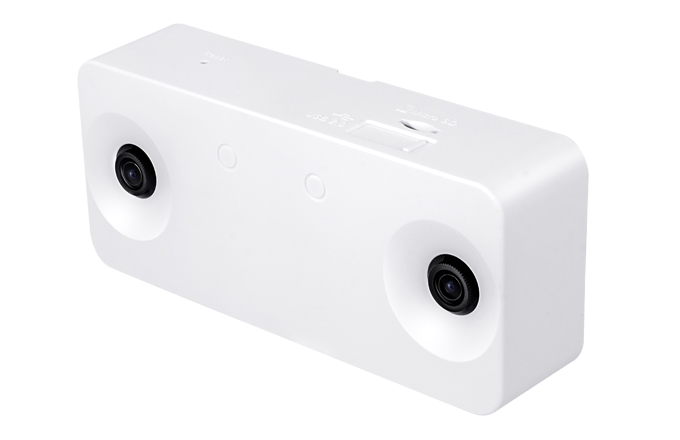
When retailers recruit security staff or part-time employees to manually count traffic this leads to a less than satisfactory result. VIVOTEK’s 3D counting camera provides precise tracking and a counting accuracy of up to 98%. This accuracy is further increased by the ability to transfer large datasets.
3. Real-time
Combing AI with deep-learning analytics, video data can be gathered, analyzed, and applied in real-time, enabling retail businesses to respond promptly to any change.
4. Lowered Risk of Infection
The deployment of VIVOTEK’s Crowd Control Solution also means a minimization of physical contact, providing both customers and employees a safer working and shopping environment.

We Stand Together
COVID-19 has changed our lives and the way we interact and communicate. It also has a growing impact on the global economy. From AI to video analytics, VIVOTEK’s Crowd Control Solution has become essential at this time of social distancing. The need for social distancing will eventually end. In a post COVID-19 world, the solution can be redeployed as a Retail Business Intelligence Solution to optimize retail operations. Until then VIVOTEK will continue to stand together with and serve our customers, while providing AI-based solutions in our fight against the pandemic.
Learn more about VIVOTEK’s crowd control solution. (link to EDM or product page)

ZKTeco Adds Body Temperature Screening & Mask Detection features to Security Solutions

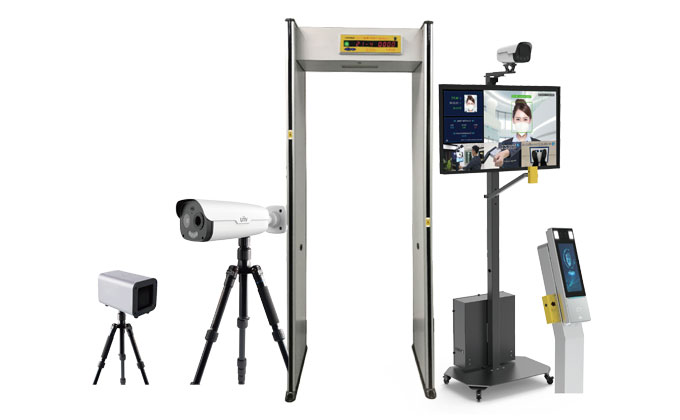
Security and access control management company ZKTeco, top leading multinational manufacturer of biometric market, has recently incorporated to some of its access control readers, IP surveillance cameras and walk-through metal detectors some upgrades to now have body temperature screening and mask detection capabilities.

Now that critical period of COVID19 is nearly ending, still much of the global population remains socially isolated to prevent the spread of disease. The question is how to return back to certain normality and of course how to return to work after lockdown, regardless of how this reincorporation is going to be scaled, one thing is for sure, we have to be cautious not to reignite infections rate and that means we have to return to our physical working places counting with the necessary measures to avoid spreading risk of contagion. For that, there are three basic guidelines we need to follow: social distancing and no contact, everyone must wear masks and regular check for symptoms.

In words of ZKTeco’s Europe CEO, Fernando Ducay, “Our newly released security solutions with body temperature detection have become a real ‘need to have’ especially in recent times, as they help identifying and restrict people having elevated body temperatures from entering large highly dense public places including schools, hospitals, as well as commercial & residential properties” . Not only that he added “Besides securing people’s environment, we would like to also protect their health and do our best to prevent the spread of the coronavirus”

At ZKTeco we made an effort to deliver new capabilities to our solutions that respond to the rules enforced due to the coronavirus pandemic, adding the necessary features like temperature screening and mask detection to our security solutions to grant compliance with such guidelines and permit returning to normal functionating while keeping our people and business safe and secure preventing outbreak of disease.

More flexible working helps to maintain social distance and no contact. For example, flexible clock-in and clock-out time to prevent too many people from entering and leaving the office building at the same time or smart working, activities that can be monitored on site or remotely with our cloud time and attendance solution called GoTimeCloud.

So, what about controlling access of people not wearing mask or having a body temperature measurement over recommended? No contact and body temperature measurement are granted with our Touchless Biometric devices.

ZKTeco recently took a deeper step into the facial recognition market with the launch of its new series of visible light facial recognition (VLFR) products. The company says VLFR overcomes the shortcomings of previous facial recognition products and uses deep learning to improve recognition and reliability, and it is far better at catching fake faces. The deep learning systems deals with the lighting situation, the not 100% dead-straight images of faces, as well as spoofing. By passing its recognition software through ‘continuous training’, it has been able to enhance the performance of its recognition algorithms to a stage where it is now ready for real-world use.

The VLFR system ZKTeco developed beats fake faces through its anti-spoofing algorithm, which conducts liveness detection by learning how to differentiate lighting, texture, and resolution. The system also uses two cameras. One is a visual light camera that is used for recognition and verification, the other is an infrared camera used to detect fake faces. People who try to verify a fake identity by using a picture on paper or on their phone or tablet, for example, will quickly find their access is denied. Even using a high-definition video of a face will not be accepted. The utility of these systems is in the flexibility of the verification process, people can be recognized ‘on the move’ as they approach the point of entry. The VLFR system will detect their face and track and identify them as they approach. It is also able to recognize an enrolled face with a deflection angle of 30% – left to right, and up and down. It can detect and recognize faces, more than one at a time, and it can also capture faces in a certain area, for example at a sporting event or in retail environments.

Thanks to the incorporation of thermal sensors and improvements developed in firmware, our access control readers’ facial recognition capabilities are also able to identify individuals wearing protective masks — for example, healthcare workers — allowing them to safely keep the masks on during the biometric verification process, in addition to their touchless palm and facial recognition sensors — capable of detecting a person’s body temperature within 0.3/0.5ºC deviation range from 0,5 m away, allowing them to be used for entry and exit screening in public venues where an abnormal body temperature could be an indicator of COVID19 and therefore warrant restricting access to an individual who may be showing symptoms. Installers have a wide range of possibilities for installing them, as they are suitable for almost any support: on wall or desktop, integrated to turnstiles and speed gates or simply with a pedestal on floor.

Not only that, ZKTeco’s ZN-T5/W IP surveillance camera, which has both thermal and visible light capabilities, when paired with the ZN-TH01 — which uses black body radiation technology for recalibration — can read the body temperature of a group of up to 30 people from up to 5 meters away, with an accuracy within 0,3º degrees Centigrade.

Rounding out ZKTeco’s solutions that have temperature sensors is the ZKMD3180-TD walk-through metal detector, which scans people for both metal objects and a body temperature that falls within a specified ‘safe’ range. Audio and visual alarms sound to indicate when an individual with a body temperature that falls outside of the accepted parameters walks through the device.

To complete upgrade of our access control and time and attendance systems with temperature measurement and mask detection feature, a new module has been added to our existing software for access control, ZKBioaccess and ZKBiosecurity, and the functionality also has been incorporated in our cloud time and attendance application GoTimeCloud, so that, reports can show temperature status and the use of mask associated to every log and confirm if entrance is granted or not.
Let us get a closer view of mentioned solutions.

Temperature Detection Systems available
ProfaceX-T and V5L-TD are designed for traditional access control and time and attendance tasks. Both have anti-spoofing algorithm so, no video no picture will work and of course are 100% Touchless Access. The Rapid facial recognition within 0.3 sg. Work even in total darkness or bright sunlight (<50,000 Lux). Face verification is also possible while wearing protective mask and temperature measurement is extremely accurate with measurement deviation of ±0.3°C average performance and measurement deviation of ±0.5°C, without the need of a black body since the sensor is thermocouple based. Measurement distance comes from 30 to 50 cm.

Then, which are the differences between these two devices? Proface X we can say is big brother of these device family, showing more capacity in general. We are very proud to say is the The Govies Government Security 2020 Platinium Awarded thanks to its unbeatable features.

ZKMD3180S, our metal detector with temperature sensor, is available with 18 or 33 over-lapping detection zones and sensitivity for each zone is adjustable in increments 0-255. The unit is easy to assemble as there are only 2 pieces to be mounted. Infrared remote control and 4-8 hours backup battery are optionally available. The sound & LED alarms located on both sides indicate clearly where metal is detected. Automatically counts people and alarms and it is completely safe to operate and walk through as well as completely harmless to heart pacemaker, pregnant women, magnetic media, etc. Body temperature detection average performance measurement is by ±0.3°C and accuracy measurement deviation is ±0.5°C for a measurement distance up to 50cm.

ZN-T5/W & TH-01 ZKTeco’s Body Temperature Measurement Network Camera & Portable Black Body is the perfect solution when temperature needs to be detected at a longer distance and for more than one individual at the same time. Our cameras of course ONVIF compatible are featuring smart body detection and body temperature measurement for up to 30 individuals. Main characteristics of the system are on-board temp-detection algorithm, one IP address two channels, effective pixels 400×300, sensitivity ≤40mK, thermal: 8mm fixed lens and visible: 2.7~12mm motorized lens. The temperature measure accuracy is 0.3ºC and response time ≤30ms with 17 color control.

Which scenarios will need body temperature measure solutions in a short term?
All size business will request them indeed since taking temperature to employees, visitors or even clients will become essential to stop outbreak of the disease, in fact, many countries have already regulated officially and included as mandatory. Any business can find perfect solution in ZKTeco’s offer when looking for thermal devices as prevention tool.

Many workers use public transportation to reach their working places, services like metropolitan bus and metro, same than any other scenario involving people crowd, they need to control symptoms like body temperature under accepted threshold to avoid spread of contagion.

In all countries we need that people from our financial and public institutions are kept safe from any risk of disease to help working them hard to recover our weakened economy in these troubling times. Our solutions can help in preventing such risk.

And what about when we are finally able to normally enjoy our free time again? Gyms and sport centers will require an easy and cost -effective way of upgrading existing systems at their entrance, with the capability of body temperature screening. Our installing kit specifically designed to adapt to turnstiles allows a smooth assemble of the reader and people over temperature threshold allowed will be access denied. Not to talk about touristic places, think about Museums or historical buildings, traffic of people inside touristic places can be safely managed with our metal detectors incorporating thermal sensor identifying if people getting in is fever detected for immediate action.

Last but not least, we need to think about preserving our future and how to take best care of our future generations which will role the country soon we need to keep students at any educational centers safe and secure.

From standalone to networked solution for environments requiring more complex solutions, ZKTeco is able to offer you best possible solution to try to prevent the spread of disease.

Fisheye cameras: leaving no blind spots in sight

In video surveillance, covering blind spots has long been a challenge. As a result, fisheye cameras offering 360-degree panoramic views have become a popular alternative for end users seeking to monitor large areas. This article discusses some of the advantages and limitations of fisheye cameras, which the user should know before selecting a model that truly fits their objectives.
Izvor: a&s International
E-mail: redakcija@asadria.com

End user organizations seeking to monitor large areas, like retail outlets, hotel lobbies or warehouses, often find themselves constrained by using conventional box or bullet cameras, which point in one direction at a time. This leaves certain blind spots that are not covered and that can be exploited by criminals. A panoramic camera offering 180 or 360-degree views, be it a multisensor camera or a fisheye camera, can address this challenge.

Benefits and Limitations
One major advantage of fisheyes over multisensor cameras is size and weight. A multisensor camera, as its name suggests, has three to four sensors in one unit and therefore tends to be heavy and bulky; some models can have 314 x 512 millimeters in dimensions and weigh 4.8 kilograms. Fisheye cameras, on the other hand, are much smaller and lighter, with the diameter ranging from 146 to 160 mm and weighing less than 1 kg. While fisheye cameras offer certain advantages, it’s important to know their limitations as well.

Specifically, they have less resolution compared to multisensor cameras. “The early fisheye cameras did not have enough resolution to see the details of person’s face unless the person was very close to the camera. The latest single IP camera solutions use 4K cameras, with up to 12-megapixel resolution,” said Bob Mesnik, President of Kintronics. However, there is a caveat with that as well. “The resolution of the panoramic camera varies from the center to the outer edge of the view,” Mesnik said. “The resolution is best at the edge and worst in the middle.” Meanwhile, the viewing distance is something that the user should also know. According to Kintronics’ calculations, a fisheye camera with 4000 x 3000 resolution and an 180-degree lens allows enough resolution to recognize a person that is less than 11.9 feet or 3.6 meters away from the camera; further away the user sees less detail.

“Single-sensor 360-degree fisheye cameras have been around for many years. The problem with panoramic cameras has always been the lack of detail available at a distance,” Mesnik said. Outdoor applications can be an issue, too. “For most outdoor applications fisheye cameras are not better than multisensor cameras. For example, a corner of a building — users will not get the depth or overall image quality that can be achieved with a multisensor. That being said, for smaller indoor rooms fisheye cameras can be superior if the application requires full coverage,” said Thomas Carnevale, Founder of Umbrella Technologies.

According to Mesnik, fisheye cameras are best at providing situational awareness for users monitoring a large area instead of complex applications such as facial recognition, for example. “Fisheye cameras are used in some commercial applications where it is helpful to see an overview of an area,” Mesnik said. “If the prospect asks for other usage, we steer them to standard cameras. For example, we sometimes need to explain that the panoramic camera is not good for facial recognition.” Or, the user can pair fisheye cameras with standard cameras to achieve better monitoring. “For example, a retail store may use the wide area view to see everything in the store while using a camera at the door to view a person’s face as they enter or leave,” Mesnik said.

Some Applications of Fisheye Cameras
Generally speaking, fisheye cameras can be used in all vertical markets, helping end users monitor large areas. According to TKH Security in a blogpost, public transportation and healthcare can especially benefit, as blind posts can pose threats to the wellbeing of passengers and patients. Another vertical cited by TKH is marine vessels. “Marine vessels are usually gigantic and complex ships consisting of many different compartments and various areas, and fisheye cameras can come in handy,” the company said. “A wide-angle fisheye camera ensures full coverage of the area, using up less of the valuable space at the same time. The on board operations manager can cover a much larger amount of areas with half or even one third of the amount of cameras normally used.”

According to Mesnik, fisheye cameras are all very similar. “It’s important to note that it’s not the cameras that are significant for a vertical, but rather the dealer/ installer’s experience. Most dealers select cameras based on the relationship they have with the manufacturer, the reliability of the cameras, the support and return policies of the manufacturer (or distributor),” Mesnik said. “The cameras they choose are also affected by the video management software that works with the camera, the pricing they can get, their installation experience and the range of models available from the manufacturer.”

A Note About De-warping
Panoramic views captured by fisheye cameras, while useful to monitor all corners of a given area, are often distorted and can seem unnatural to the human eye. This is where mapping or de-warping comes in, a technology that corrects this distorted view. De-warping is done by software that creates a corrected version of the 360-degree video stream transmitted by the fisheye camera. The type of fisheye lens plays a key role in this process. “The lens can provide stereo- graphic, equidistant, equidistant angle or orthographic images. The software mapping will be different depending on the lens,” Mesnik said. The de-warping process can be done in the camera firmware or in the supporting video management software. “Some camera manufacturers provide a software plug-in that does the mapping in the VMS. For example, Hikvison has provided software for Milestone,” Mesnik said. “A software- and-lens combination is available from Immervision. This company provides both a lens and algorithms that run in the camera. The company provides special Panamorph lenses and software that improves the quality of the video.”

Yet the user should know about some of the issues with de-warping. “Some fisheye camera manufacturers only have in-camera de-warping with no client-side de-warping ‘plug-in’ to a VMS, while others have in-camera de-warping but the de-warping algorithm is not sophisticated and the images look warped,” Carnevale said. “In addition, the video management software community is fragmented at best as it relates to true client-side de-warping of fisheye cameras. Some VMS’s have their own de-warping algorithms and others are brand- or model number-specific with an SDK integration. Still some integrations are just very generic between camera brands and video management software companies, leaving the user with heavy processing power issues with live de-warped displayed images.”

Selection and Installation Tips
The specification sheet of a fisheye camera may include a lot of information. According to Carnevale, users should look at the optics first. “Fisheye lenses are in much lower production than traditional board or P-Iris or varifocal lenses. Because of that, the quality gap is wide. This traditionally affects the image quality on the outer perimeter of the fisheye causing artifacts and uneven focus. More resolution is not always better when selecting fisheye cameras for this reason,” he said. “A close second place is low light. Evenly illuminating fisheye cameras is not an easy task. I’ve seen several models that only illuminate the image ‘straight-down’ so outside a five-feet radius the image is completely dark. Also because there are several IR illuminators focused this can cause over exposure.”

According to Mesnik, choosing the right products really depends on the customers’ own needs and requirements. “We ask questions such as what detail do you need to see? How far away do you want to be able to see a target? What are the lighting conditions? Is the camera facing a bright window that requires wide dynamic range? Do they want to view an area that is very dark?” he said. “Selecting the right fisheye camera starts with the customer’s objectives.”

Fisheye cameras are typically mounted on the ceiling to get the maximal result.

The following are some of the installation tips, according to Reolink in a blogpost:
– Avoid placing a 360 fisheye camera in or near a corner, as the walls will hinder its panoramic view.
– If the user plans to install a panoramic fisheye IP camera to the ceiling, make sure the camera is located in the center of the monitoring zone; otherwise the images will be reshaped.
– Keep the camera away from air conditioner vents and electric entrance doors.
– Make sure the fisheye camera is not near ceiling lamps or indicator light, which will interfere with the image signal and affect the camera’s image quality.
– Stabilize the 360-degree fisheye security camera with expansion screws to prevent it from falling down over a long period of time