Philips Signage 5000 Series marks a new generation of AI-ready digital displays

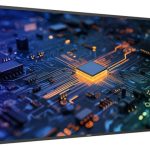
PPDS, the exclusive global provider of Philips Professional Displays and complementary solutions, has officially unveiled the new Philips Signage 5000 Series (D-Line), its most powerful and intelligent line of professional digital displays to date. The new series delivers processing power of six trillion operations per second, making it the most advanced digital signage display in the PPDS portfolio, with full readiness for AI applications.
The Philips Signage 5000 Series represents an evolution of the highly successful Philips Signage 4650 line, which has gained global popularity across retail, transportation, education, corporate, and public environments. Redesigned using the latest UHD visual technologies, improved energy efficiency, and significantly enhanced processing capabilities, the new series is engineered to deliver outstanding image quality and reliable 24/7 operation.
The displays are available in both portrait and landscape orientations, with screen sizes ranging from 32 to 98 inches, enabling deployment across a wide variety of professional use cases. The series will make its first public appearance at ISE 2026 in Barcelona, where it will be showcased at the Philips booth 3N500.
A key technological advancement is the integration of an octa-core processor and a 6 TOPS neural processing unit, making the Philips Signage 5000 Series the first Android SoC display in the PPDS lineup to offer this level of AI performance. This architecture enables faster and smoother execution of AI tasks without placing additional load on CPU and GPU resources, ensuring stable and seamless system operation.
As Andrea Barbuti, Global Product Management Lead for the EMEA region at PPDS, points out, “As artificial intelligence continues to advance rapidly, so do the opportunities it brings to business users, regardless of industry or market.” He adds that the Philips Signage 5000 Series has been designed to meet both current and future partner requirements, while ensuring that AI applications operate seamlessly and transparently for end users.
The displays offer a high level of reliability thanks to FailOver technology, which automatically ensures continuous content playback even in the event of an external source failure. Behind the screen, the system runs on a professional Android 14 platform, with native support for direct app installation, eliminating the need for external media players.
Integration with the Philips Wave cloud ecosystem enables remote management, monitoring, updates, and optimisation of entire display networks worldwide. A strong focus has also been placed on sustainability, with reduced power consumption and a modular design that extends product lifespan and helps minimise electronic waste.