World Police Summit 2026 Strengthens Global Cooperation and Tackles Emerging Security Threats
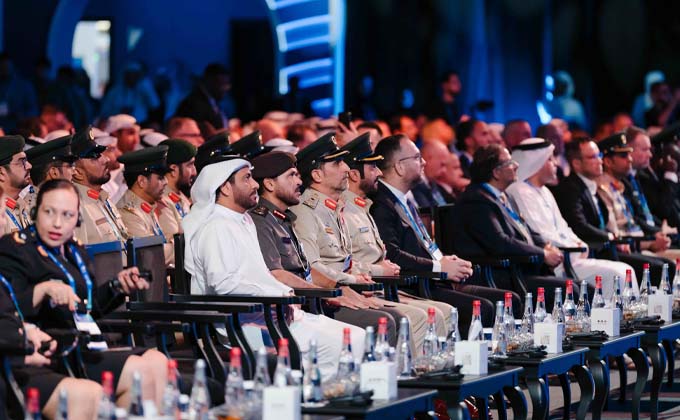
The first two days of the fifth World Police Summit, held at the Dubai World Trade Centre from 16 to 18 November, brought together international police leaders, security experts and technology specialists to address emerging threats and strengthen global law enforcement cooperation. Under the theme “Connected for Impact: Uniting Global Policing to Safeguard Future Generations”, the summit featured more than 170 exhibitors and a comprehensive conference programme covering artificial intelligence, cybercrime, organised crime, digital investigations, border security and public safety. Discussions also explored autonomous robotics, drones, satellite intelligence, financial crime and the growing importance of technological innovation in modern policing.
Opening the summit, Colonel Dr Expert Rashid Hamdan Al Ghafri, Chairman of the World Police Summit Secretariat, said that rapidly evolving security challenges require police organisations to move beyond communication and coordination and deliver measurable results. He warned that transnational organised crime generates more than $870 billion annually, while estimates suggest that the global cost of cybercrime could exceed $10.5 trillion per year. Al Ghafri called for a shift from reactive investigations to proactive prevention, supported by real-time intelligence sharing and stronger integration between security systems across national borders.

North Macedonia’s Interior Minister Panche Toshkovski emphasised that no country can guarantee its security independently of others, highlighting an operation in which intelligence shared by North Macedonian police helped French authorities seize 68 kilograms of cocaine. UNODC Regional Representative Dr Hatem Aly similarly stressed that no police or judicial institution, regardless of its capabilities, can independently address today’s complex criminal threats, calling for stronger legislation, specialised training and greater private-sector involvement.
Representing INTERPOL, Stephen Fry introduced two major initiatives, the Silver Notice for tracing criminal assets and a joint task force model designed to coordinate international operations against organised crime networks. Fry explained that rapid information sharing and mutual trust were instrumental in preventing a fraudulent transfer involving millions of dollars through cooperation between authorities in Singapore and Oman. Australian Federal Police Assistant Commissioner Stephen Nutt highlighted three priorities for modern policing: investing in digital investigative capabilities, adapting rapidly to emerging threats and strengthening international cooperation. Referring to Operation Ironside, he explained how an encrypted communications platform used by criminal networks was turned into an investigative tool through coordinated law enforcement action.

On the second day, Lieutenant General Abdulla Khalifa Al Marri, Commander-in-Chief of Dubai Police, held bilateral meetings with senior law enforcement officials from eight countries, including Slovakia, Morocco, Uzbekistan, Denmark, Estonia, Mongolia, Australia and Armenia. The meetings focused on strengthening strategic partnerships, improving information sharing and exchanging operational expertise to address cross-border crime and emerging security challenges. Al Marri reaffirmed Dubai Police’s commitment to expanding international partnerships, emphasising that the World Police Summit enables security leaders and decision-makers to exchange expertise and develop practical responses to evolving threats.
Another major development was the opening of the International Drug Control Conference by Sheikh Zayed bin Hamad bin Hamdan Al Nahyan, Chairman of the National Drug Enforcement Authority, bringing together experts from organisations including UNODC and the European Union Drugs Agency. Discussions addressed synthetic drugs, international trafficking networks, rehabilitation programmes and the use of artificial intelligence to analyse drug-related cases. Experts also examined approaches adopted by Australia and Colombia to combat drug trafficking, alongside measures to prevent the misuse of chemicals used in synthetic drug production.

More than 60 sessions and panel discussions on the second day explored AI-powered criminal investigations, digital forensics, cryptocurrency tracing, aviation and maritime security, drone threats and community policing. The investigations programme examined the growing role of genomics, bioinformatics and artificial intelligence in forensic science, while transport security discussions addressed the protection of aviation, railway and maritime infrastructure.
Child protection received particular attention, with UNICEF representative Lana Al Wreikat stressing that child protection systems must ensure consistent support regardless of whether children report abuse to police, healthcare professionals or educational institutions. Olivia Lind Haldorsson, Secretary General of the Barnahus Network, emphasised that every child has the right to be heard and that listening to children can improve investigations while reducing repeated psychological trauma. INTERPOL child protection specialist Rachel Bensadon warned that AI-related crimes against children present challenges no single organisation can address independently, highlighting the importance of coordinated interviews and international cooperation.
Alongside the conference programme, the exhibition showcased AI-powered video analytics, surveillance systems, biometric identification, drones, secure communications and digital forensic technologies, demonstrating the growing role of innovation in modern policing. The summit continues on 18 November with its final conference sessions and the World Police Summit Awards ceremony.