Suprema Launches XPass Q2: A Unified Reader for QR, Mobile, and RFID Access in High-Traffic Environments
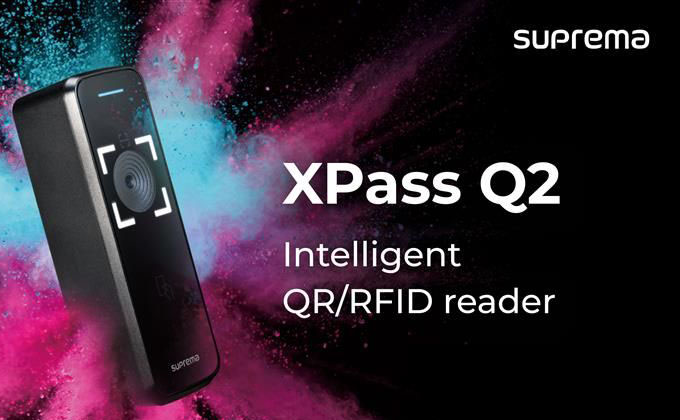
Suprema has introduced its new XPass Q2 access control reader, designed for facilities with high user flow and increasingly diverse identification methods. The device arrives at a time when access is no longer tied to a single credential, but instead combines RFID cards, mobile identities, and QR and barcode technologies, which are increasingly used for visitors and temporary users. Traditional readers, primarily built around RFID, struggle to meet these demands, especially when QR functionality has been added later, often resulting in slower performance and additional hardware.
XPass Q2 brings all major non-biometric credentials into a single device, enabling the reading of QR codes, barcodes, RFID cards, and mobile credentials via BLE and NFC. This eliminates the need for separate readers and external scanners, simplifying installation and reducing maintenance costs while ensuring a consistent user experience regardless of credential type.
A strong focus has been placed on speed and reliability in high-traffic environments. The device reads QR and barcode credentials in fractions of a second, even in low-light conditions, thanks to its integrated camera module with an operating range of 5 to 15 centimeters.
Its IP65-rated enclosure ensures reliable performance in both indoor and outdoor settings, while LED indicators and audio feedback help maintain a smooth flow of users by reducing hesitation at entry points. The solution integrates natively with the BioStar X platform, enabling centralized management of access for visitors, members, and employees. Through its open API, it can also connect with third-party visitor management and ticketing systems, supporting complete workflows from credential issuance to real-time access logs.
With its slim form factor and modern design, XPass Q2 blends seamlessly into a wide range of environments, from office buildings to sports and event venues. From Suprema’s perspective, the device represents a response to increasingly complex access control requirements, offering a unified solution that combines multiple technologies while simplifying everyday access management.