Global Smart Home Market Could Reach $139 Billion by 2032
The global smart home market continues to expand steadily, driven by the rapid digitalization of the residential sector and the growing demand for integrated home management systems. According to a new analysis by the research firm MarketsandMarkets, the market could reach approximately USD 139 billion by 2032, with an average annual growth rate of around 6.4 percent.
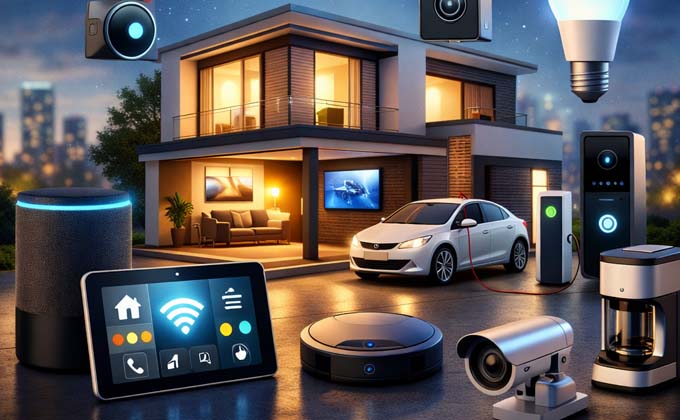
Analysts note that one of the main drivers of the market is the increasing need for centralized platforms that allow users to manage various household functions more easily—from lighting and climate control to security systems and home entertainment. A growing number of connected devices, smart appliances, and AI-powered solutions is reshaping the way people interact with and manage their living spaces.
The expansion of broadband networks and the development of new residential projects are further encouraging investment in interoperable ecosystems that integrate lighting, HVAC systems, multimedia, and access control within a single user interface. Within these systems, IoT sensors, cloud platforms, and intelligent control solutions play an increasingly important role, enabling the monitoring of security, energy consumption, and everyday household activities.
The home entertainment segment currently holds the largest share of the smart home market, supported by the widespread adoption of smart speakers, streaming devices, and centralized control platforms that enable integrated management of multimedia and other household systems.
The analysis also indicates that the strongest growth in the coming years is expected in retrofit installations, meaning the upgrade of existing residential properties with smart technologies. Property owners are increasingly integrating smart lighting, heating and cooling controls, security systems, and energy management solutions into already built homes without the need for major structural modifications.
Advances in wireless connectivity, easy-to-install devices, and mobile configuration applications are further simplifying system deployment and reducing installation costs. At the same time, rising awareness of energy efficiency, security, and comfort is driving increasing interest in home automation among consumers.
Among the key companies operating in the smart home market, analysts highlight major technology and industrial players such as Johnson Controls, Siemens, Assa Abloy, Schneider Electric, Amazon, Apple, ADT, Bosch, and ABB.