Home Archive by category a&s Adria Talks (Page 6)

a&s Adria Talks

Memoori: The major trends shaping the physical security as we move into 2023

Memoori Research Senior IoT and Security Analyst Owen Kell shares his insights on the trends that will shape the physical security industry in the year ahead.

By: Owen Kell, Senior IoT & Security Analyst, Memoori Research

Ongoing geopolitical & trade tensions threaten to put the brakes on Chinese expansion

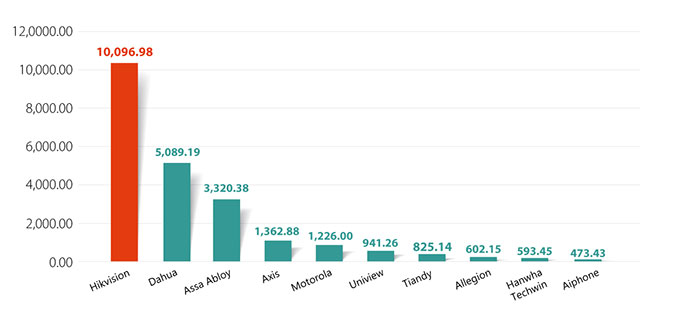
China’s leading video surveillance giants have become increasingly dependent on foreign markets. In terms of global revenues, giants Hikvision and Dahua Technology have retained their dominance through 2022, reporting strong overseas sales growth in H1 2022, and generating revenues of over $16.7 billion in 2021.

Their future growth is, however, threatened by a combination of weak domestic demand (largely due to the knock-on effects of the Chinese government’s increasingly controversial zero-Covid approach and resultant regular lockdowns of major cities), ongoing trade tensions between China and the West, and a weakening global economic outlook.

Tensions over alleged human rights violations and the ongoing trade war between China and the U.S. has seen continued legislative moves, new sanctions, and tit-for-tat trade barriers erected that have hugely disrupted the flow of both physical security products and key product components critical to ongoing innovation between the two nations, as well as the ability of their respective manufacturers to trade in their respective markets.

Furthermore, the recently announced US government export restrictions imposed on leading chip designers NVIDIA and AMD will stymie China’s ability to cost-effectively carry out the kind of advanced computing required to remain competitive in the fields of computer vision and natural language processing AI.

Restrictions on Chinese physical products sales to particular market verticals (or indeed a total bar on sales of all of a particular company’s technology) continue to increase not only in the U.S., but also in other Western nations, and it seems that the geopolitical and trade tensions are set to get worse before they get better.

Chinese chipmakers are not yet capable of replicating the performance of these advanced NVIDIA and AMD chips, so as a result, Chinese AI researchers may be forced to revert to using multiple lower-end chips to replicate the processing power.

AI adoption goes mainstream

After several years of false dawns and over-hype, through a series of incremental steps, AI-enabled solutions have become increasingly commercially viable in the physical security space. The pace of change over the past 12 months has been particularly remarkable, with new research papers that push the boundaries of what is possible being released on virtually a weekly basis.

We have observed significant improvements in terms of the speed, accuracy and cost of machine-learning solutions for practical applications in security-related fields including complex facial recognition, cutting-edge video surveillance scene processing, audio analytics and robotics/drones, to the extent that leading AI algorithms in several areas now far exceed human capabilities for several use cases.

While the most advanced AI relies on significant computational power and processing capability, a combination of improved edge processing capabilities at the device level and flexible access to increasingly affordable cloud-based computing resources now make accessing these innovations a viable option for many firms.

The race is now on between vendors to integrate next generation AI-enabled security functionality into end-user focused applications in a way that facilitates accessibility, practicality and ease of use for everyday security scenarios. AI is increasingly replacing the manual effort required for some roles, with data interpretation that formerly required human input now being handled algorithmically, automating processes or steps to make managing security that much easier.

For security staff, this will lead to a reduction in the amount of time spent monitoring screens or watching out for alarm notifications, and more time spent conducting higher-value work. AI will be leveraged to help analyze, evaluate and prioritize data feeds, and then provide real-time prioritization and recommendations on security issues requiring the attention of the security staff.

Making this kind of AI functionality accessible to security professionals will also require integration of AI/ML tools into existing software and platforms in a way that minimizes the need for coding or technical expertise to operate, as well as providing accessibility through multiple media including handheld devices.

While concerns over the ethical usage of AI and algorithm biases will persist, the increasing levels of integration of AI tech into all manner of everyday services and solutions (particularly into digital media generation) will lead to increasingly widespread acceptance of the technology in society as a whole.

An increasingly cyber-conscious customer base

Smart buildings are experiencing an explosion in the volume of IoT devices being deployed, as well as ever-increasing levels of convergence between IT and OT networks. These factors, combined with the growing sophistication of malicious actors and increased reliance on cloud services mean that smart buildings are becoming increasingly vulnerable to cyberattacks.

The last 18 months have seen a huge rise in ransomware attacks, as well as rising costs per incident of cyberattacks on businesses around the world[1]. All too often, IoT-enabled building automation or physical security systems have acted as the “soft underbelly” of organizational cyber defense, with multiple high-profile cases of security breaches serving to highlight the risk and vulnerabilities posed.

At the customer level, awareness of cyber risk, cost implications and even the adverse effect of cyber risks on building owners/operators’ ability to effectively insure their buildings, is steadily increasing. We have observed increasingly strict cyber policies adoption among more sophisticated clients over the past year to mitigate these growing threats, with many companies adopting a “Zero Trust” approach to network architectures, as well as continuous verification as well as investments into systems hardening.

Here again, AI will also play an increasing role – both in cyberattacks and cyber defense.

Memoori’s recent report into AI & Machine Learning in Smart Buildings found that AI tools and building blocks for launching an offensive AI-driven cyberattack have already been developed by bad actors, with several incidents identified by researchers indicating that AI had been used to execute attacks faster or to gain deeper access into a system. In terms of protecting against the threat, AI is increasingly being deployed to provide cyber-risk analytics for improving organizational resilience and understanding cyber risk by improving threat intelligence, prediction, and protection as well as enabling faster attack detection and reducing the need for human cybersecurity experts.

As demonstrable cybersecurity capability moves from being a “nice to have” to a “must have” in the eyes of an increasingly cyber-conscious customer base, security solution vendors seeking to differentiate themselves will need to invest in areas including security by design, gaining cyber certification, demonstrating cyber standards compliance, and independent testing and validation of their products to help differentiate their offerings.

Other trends to watch out for in 2023

Other trends we’re actively monitoring that we believe will continue to significantly impact the market for Physical Security include:

  • Ongoing global supply chain woes, which look set to continue well into 2023, impacting stock levels, price inflation and component availability.
  • Continued blurring of the lines between cloud and on-prem physical deployments as increasing numbers of end users embrace hybrid deployment models for at least part of their security solution.
  • Rising demand for security systems integration and interoperability for better reporting and control of other building/business functions for applications including occupancy analytics, energy efficiency and improving the employees or tenant experience.

The ideas presented in this article draw on the findings of several recent Memoori’s research reports into cybersecurity for smart buildings, IoT in smart buildings, and AI applications for smart buildings, and will form part of Memoori’s forthcoming annual research into the Physical Security market, due for publication in December 2022.

[1] https://www.ibm.com/security/data-breach

Novaira Insights: Video surveillance market growth continues; price has increased, too.

Video surveillance is a key element in security. So how has the video surveillance market fared recently, and how is it expected to perform in the years to come? asmag.com spoke with Josh Woodhouse, Lead analyst and Founder, and Jon Cropley, Principal analyst, of Novaira Insights, which recently released a video surveillance market report.

By: William Pao, Senior Reporter

According to the report, “The world market for video surveillance hardware and software,” the global video surveillance market grew 16.4 percent in 2021. An easing of restrictions on movement and efforts to meet pent-up demand post-COVID were cited as some of the key growth drivers. Indeed, amid project resumptions and construction booms in various parts of the world, a continuation of growth in the video surveillance market is all but expected.

Price hikes resulting from supply shortages

However, the report cited the global average price of a network camera increased by over 7 percent last year, making 2021 the first year in which the global average price of a network camera increased rather than decreased. A main reason cited by the report was a shortage of components used for production of video surveillance equipment, resulting in higher prices for those components; this then forced video surveillance equipment vendors who were unable to absorb such cost increases to raise the prices of their own equipment.

Especially, vendors were faced with a shortage in semiconductors, which are the basis for image signal processors and SoCs that are key components in IP cameras.

CHIP Act may help somewhat, but not in short term

“A shortage of semiconductors was particularly problematic. However, there was also shortages of resistors and materials such as some plastics and metals,” Woodhouse and Cropley said, adding that the CHIP Act recently signed into law in the United States may improve the chip shortage situation somewhat, but not anytime soon.

“It is likely that the CHIP Act will lead to greater production of semiconductors in the U.S. in the longer term. However, it will take years for new production facilities to be built and for volumes to ramp up. The impact of the CHIP Act is therefore likely to only start being felt towards the end of the forecasts in our report (our forecasts run to 2026),” Woodhouse and Cropley said.

According to both, general inflationary pressures will force vendors to increase prices yet further in 2022 and 2023. This, then, is expected to produce an impact in the video surveillance market. “SIs and end users will purchase fewer surveillance cameras than they would do if prices weren’t rising. This will mean that camera unit shipment growth will be lower in 2022 than it was in 2021. Growth will then be even lower in 2023 than it was in 2022,” Woodhouse and Cropley said. “The global average price of a network camera and an analog camera is forecast to fall again in 2024. However, a more prolonged period of high inflation presents a serious risk to this forecast.”

As for next year, the report said the global video surveillance market for hardware and software is forecast to grow at 11.7 percent in 2022 and will be worth an estimated US$28.2 billion. “We are forecasting much lower growth in 2023 followed by gradual recovery with growth increasing from 2024 onwards,” Woodhouse and Cropley said.

Cloud adoption increases, especially in U.S.

Technology-wise, a gradual trend to using the cloud for video surveillance also continued in 2021, particularly in the Americas region where the market for cloud video management software exceeded $150 million, the report said. It forecasts the number of cloud-connected surveillance cameras in the Americas will grow on average over twice as quickly as new network camera shipments between 2021 and 2026.
Especially, the report found the United States has been quicker to adopt cloud for video surveillance than most other countries in the world. Woodhouse and Cropley explains why this might be.
“It is down to a mixture of factors. A major factor is that it has many organizations with distributed sites, each with a small number of cameras. Furthermore, these organizations operate in a large country using a common language and a common set of rules on data residency, privacy etc. Bandwidth availability and cost have been more favorable than in some other countries too,” they said.

OSSA: Orchestrating the Digital Data Flow

Open Security & Safety Alliance (OSSA), a collaborative initiative focused on creating a framework for standards and specifications in the security, safety and building automation space, shares their thoughts on the unfolding trend that will change the security industry in the year to come.

By: Gijs van den Heuvel, Chair of Marketing at the Open Security & Safety Alliance (OSSA) and Manager Strategy and Partner Collaboration at Bosch Security Systems

As an industry alliance, we have a good idea of what’s in the works by our members when it comes to innovating across important areas within security, safety and beyond. OSSA representatives hail from some of the most influential companies in this space – such as Bosch, Hanwha Techwin, Milestone Systems and VIVOTEK – and together are determined to continue bringing forth an open, data-driven ecosystem.

The IoT is all about connecting things to make life easier, more intelligent, more intuitive and more productive. OSSA workgroups have projects underway that are primed to unify and elevate the market as a whole, so that there will be headspace to grow for all participants.

Already, OSSA organizations specified hardware and software conditions to make it possible to run third-party (AI) analytics applications securely on existing, brand-agnostic computer vision devices (starting with cameras). Working together spurred a handful of specifications for building common components (e.g., for core system requirements, cyber security directions and application interface APIs) that can be utilized jointly.

Now, a notable future trend our members are funneling expertise into is bringing about new levels of data and information sharing to all we do when it comes to smart cameras and related IoT devices. How can we achieve next-level dissemination of extremely valuable data flows sensed by products that collect data in their brand-specific siloes? How do we establish open but secure pathways to easily share and uniformly interpret data to connect the dots when it comes to surveillance and activities being captured and contained on edge-computing devices?

Millions of “things” generate, accumulate and house heaps of factual insights that – unfortunately all too often – remain untapped and stagnant once recorded. If corralled, connected and optionally given an artificial intelligence/ML scrub, this information brings a bigger picture of what transpired across, for example, surveillance systems. Taking frames or moments from various devices and drawing relationships between them to form a cohesive “data flow” opens up a massive new corridor of IoT-based possibilities. According to our group, there resides tremendous value in making data from one source consistently interpretable for another.

Imagine harnessing content from a camera that captures a car and applies its license plate app to read the details. This car crosses in front of the building, and minutes later another camera across the facility records an individual scaling a fence in the vicinity where the car was last detected. Finally, a third camera on the opposite side of the building records an individual onsite in an unauthorized area, and an open platform app detects a gun in hand. The system immediately then alerts security personnel about a potential threat. Tying this crucial information together seamlessly across a natural path of data flowing from security and safety devices takes us to a new frontier delivering not only what’s “seen” but more importantly what’s “sensed.” This is the future if device manufacturers and other stakeholders participate in an industry-driven ecosystem.

OSSA members are working on a set of generic, vendor-neutral data Application Programming Interfaces (APIs) to enable this type of uniform consumption and data interpretation across cameras or computer vision gateways in adherence with OSSA standards. It is also designed to apply across other device types within the IoT security and safety domain to provide a loose coupling between any pair of send/receive applications that collect, digest and interpret data. Enabling content from various brands and device types to be interpreted in an open forum brings newfound levels of storytelling and safety to our security situations.

Coupled with progress that continues around allowing for easy integration of third-party AI analytics applications on “Driven by OSSA” video cameras and gateways in an agnostic fashion, OSSA facilitates cooperation on many levels. There’s a front-row seat for anyone interesting in expanding this collaboration framework to together lift our industry to new levels of openness, innovation, interoperability and success.

HEP Group once again relies on cooperation with MSR-Electronic

Using energy once, profiting twice – that is the principle of combined heat and power (CHP). Whereas electricity and usable heat were usually generated separately so far, cogeneration combines these processes. The result is that less fuel is required overall. Its application offers enormous potential for climate protection and conservation of resources. The increased use contributes to reducing CO2 emissions and lowering the demand for primary energy.

The Croatian energy company HEP-TE-TO Sisak

HEP TE-TO Sisak (HEP Group) is a Croatian energy company in the Sisak Moslavina district, south of Zagreb. It has been engaged in the generation, distribution and supply of electricity for more than a century. For the last decades it also deals with the distribution and supply of thermal energy and natural gas.

The entire thermal power plant consists of various production units. The highly efficient combined heat and power unit EL-TO, Unit C. This is powered by natural gas, generates electricity of 235 MW and a thermal output of 50 MWt. Natural gas is an ideal fuel for CHP plants and at the same time a naturally occurring gas consisting largely of methane gas. In the gas-processing industry, gas warning systems from MSR-Electronic can reduce fire and explosion risks immensely, as they provide very early warning of dangerous situations.

Copyright HEP Group

Stationary gas detectors for safe methane gas monitoring

MSR-Electronic develops and produces reliable fixed gas detectors. The permanent monitoring and storage of the measured values serve the primary explosion protection and thus the safety of human life and equipment. Once again, after a carbon monoxide gas detection system in 2016, the HEP Group relies on MSR-Electronic and this time on a methane gas monitoring application.

PolyXeta PX2 gas detector

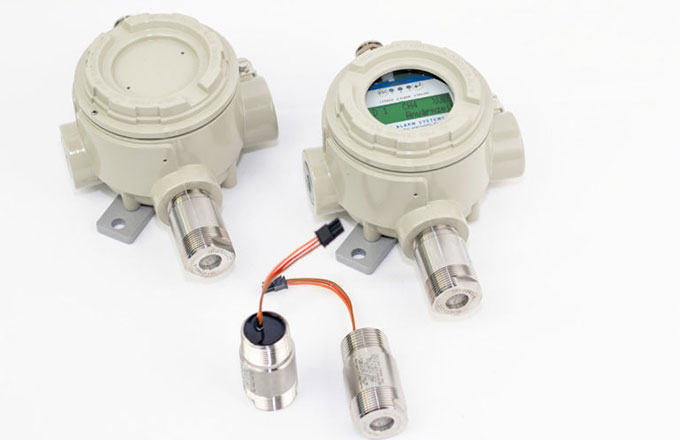
The PolyXeta2 PX2 gas detector by MSR for the ATEX zone is used for detecting methane gas leakage. The microprocessor-based gas sensor with output signal as well as alarm and fault relays (all SIL2 certified) monitors the ambient air for combustible gases and vapours using: an infrared sensor element and a catalytic sensor element (pellistor). Analog signal values (4–20 mA), such as measured values and alarm activation, are sent to the DCS (Distributed Control System). The digital signal of the detector is sent to the ventilation cabinet to activate additional fans and to shut down the air chambers.

The 4–20 mA / RS-485 Modbus output signal makes the sensor suitable for connection to: PolyGard2 gas controller series from MSR-Electronic, other controllers from MSR-Electronic, and automation devices from MSR. As an option, the PolyXeta2 sensor is also available with LCD and relay output.

Sensors with LCD have an integrated calibration routine that is started from the outside by means of a permanent magnet without opening the housing. In the event of an alarm or error, the backlight changes from green to red. The calibration of sensors without LCD display is carried out via the handy MSR calibration device STL06-PGX2 or the PC software PCE06-PGX2.

The methane gas detectors were installed near the gas turbines and in the final gas filtration area at unit C, in zone 2, by the Croatian MSR partner Aurel d.o.o.

Further information on MSR products can be found in the current online catalog or in the webshop.

MSR-Electronic’s methane gas detector PX2

MSR-Electronic’s methane gas detector PX2


Interview: Pawel Grzegorczyk, Area Account Manager, Hungary and Balkans, 2N

Our goal is to lead our sector. That means continuous innovation, both in terms of technology and design, and the acquisition by Axis has really helped us here. Before it, we used to introduce a wide range of different products with the idea that, if one didn’t work out, we would try something else. We are now much more focused, concentrating exclusively on smart IP intercoms and access control.

a&s Adria: Mr. Grzegorczyk, what is your role at 2N, which department and markets are you in charge of?

Grzegorczyk: My name is Pawel Grzegorczyk. I am Area Account Manager, responsible for Hungary, Poland, and the Balkan region: Serbia, Bosnia & Herzegovina, Montenegro, Croatia, Slovenia, Albania, North Macedonia, and Kosovo. I received the ‘Ing.’ title – which is granted to graduates of Master’s programmes – from the Faculty of Applied Informatics at Tomas Bat’a University in Zlín, Czech Republic, where I specialized in Security Systems and Management. I worked at CSC Computer Sciences as a technical support and then spent two years at Hewlett-Packard Enterprise as an Account Manager. I joined 2N in September 2017.

a&s Adria: For 30 years 2N has been at the forefront of access control and telecommunications. Among other things, you developed the first IP and LTE intercoms. What were the most important milestones and, in numbers, what does 2N looks like today when it comes to revenue, number of employees, offices, and countries you sell your products to?

Grzegorczyk: 2N is the global leader in IP access control systems. We were founded in 1991 in the Czech Republic, and it’s true that we have been in the vanguard of innovation in the sector, developing the world’s first IP intercom in 2008 and the first LTE/4G intercom ten years later. We now cover the full range of solutions in the field of access control systems for buildings and communication within buildings, with a focus on contactless technology.

Prague remains our global headquarters, but we now have teams in many other countries, including the USA, UK, Germany, Italy, Spain, Netherlands, France, UAE, and Australia, as well as an extensive distribution network across the rest of the world. In 2016, we became part of the Axis Group. This has helped us to continue to innovate, as has the fact that we reinvest 14% of global revenues in R&D to meet the growing demand for smarter access control systems.

a&s Adria: In 2016, you became a part of the Axis family, which again became a part of Canon. How did that complement your business throughout these years? Can you give us an example of their support?

Grzegorczyk: The acquisition by Axis has been hugely beneficial for our business. The global trend from analog intercoms to IP technology has helped us significantly, but we have delivered an average annual growth rate of 20% since the acquisition. Our goal is to differentiate and lead our sector. That means continuous innovation, both in terms of technology and design, and the acquisition has really helped us here. Before it, we used to introduce a wide range of different products with the idea that, if one didn’t work out, we would try something else. We are now much more focused, concentrating exclusively on smart IP intercoms and access control, and working with Axis has accelerated our product development. For example, we are developing new intercoms on the Axis Artpec chipset platform and are getting into video processing technology and video compression based on what Axis has developed over the last twenty years.

Perhaps the most important impact, though, has been on 2N’s mindset. We used to be a mid-sized company in terms of our thinking and behavior. We think much bigger now. Some of our recent projects illustrate this. For example, 2N intercoms are in the One Palm project in Dubai and our lift technology is in Warsaw’s Varso Tower, the European Union’s tallest building.

Axis is more focused on the security vertical, whereas 2N supplies access control solutions to the residential and commercial sectors that Axis is not targeting. There have, however, been instances of 2N and Axis working together on integrated residential projects. One example is in Boston, where Urban Property Management maintains a portfolio of more than one hundred upscale condominium properties in the city and outlying suburbs.

But the bigger picture is our long-term strategic vision: to become number one in the intercom market in our priority regions – North America, Europe, and Australia – which are less price sensitive than elsewhere and which value innovation most highly. This will require us to accelerate the transition from analog intercom systems to IP smart intercoms, a task that 2N and Axis are taking on together.

a&s Adria: As the “number one company in IP intercoms“, to quote 2N’s CEO, Michal Kratochvil, you certainly have an extensive portfolio in that segment. Can you present your IP intercoms portfolio in brief and single out one flagship (or the most sold) product/s?

Grzegorczyk: The real strengths of our IP intercoms are their modularity and enhanced capabilities. The modularity allows the functions of the intercom to be modified very precisely based on the user’s requirements. Most of our installations are now assembled with the Bluetooth module which allows residents and office workers to eliminate entry cards and use mobile phones as a means of identification to gain entry.

In terms of one flagship product, I would single out the 2N IP Style because it incorporates the best camera, the best video transmission, and display, and has a quality user interface that can be activated by a simple tap of a smart device. It’s also beautiful. The 2N IP Style has already won multiple awards around the world, including three in the US for technological innovation: a CE Pro BEST (Best Electronics Systems Technologies) Award at the CEDIA Expo in Indianapolis and two separate awards at the IoT/Connected Product Awards. It has also won two high-profile design awards: an iF Award for product design innovation and a Red Dot Design Award, one of the most prestigious awards available for product design.

a&s Adria: 2N’s IP Style range of intercoms has received four awards for design in 2022. What makes it so appealing and suitable for modern architecture and what multiple technologies does it combine?

Grzegorczyk: We definitely take design just as seriously as technological innovation. In the case of the 2N IP Style, it has a minimalistic design built around two main elements: a horizontal bar at the top which shelters ‘invisible’ speakers and the best camera on the intercom market, and below it, a thin, 480 cm2 glass touchscreen. The touchscreen is unprecedented in the intercom market both for its size and for being complete without buttons. The glass is also IP65 and IK08 certified for durability and tested to endure heavy rain, a dusty environment, or vandalism.

However, design is of limited value on its own, which is why we prioritize the combination of design and functionality in our products. Technologically, there are a few things about the 2N IP Style that elevate it above the competition in the market. For instance, it incorporates a 5MP camera with a wide dynamic range (WDR) and our revolutionary WaveKey mobile access technology. We recently added a bi-directional video and a QR code reader as well. The QR code upgrade, in particular, was a response to changing trends in consumer behavior and working patterns, specifically the acceleration of e-commerce and companies operating hybrid, less centralized working models.

a&s Adria: What are the benefits of IP technology in the intercom segment of access control?

Grzegorczyk: IP technology has transformed access control since the 2N IP Vario was launched in 2008. It has enabled the development of smart, flexible, fully customizable solutions – which can also be integrated into complex, comprehensive security systems. The kinds of innovative solutions that are commonplace today would simply not be possible without them. IP technology has also enabled access control systems to be managed remotely, in real-time. This has made a huge difference in residential buildings, where building managers are able to monitor, maintain – and fix – a large number of devices from one place.

But I believe that one of the most transformative impacts of IP technology is still in the relatively early stages: mobile access control. It seems so natural to us now, but phones have replaced watches, cameras, calculators, calendars, CD players, TVs, books, newspapers, and, most recently, credit cards. Keys will soon be added to this list. Driven by the convenience it offers, industry forecasts indicate exponential growth in mobile credentials over the next few years.

In residential buildings, for example, we also expect to see an acceleration in the trend of homeowners integrating access control into their home automation systems. As more and more people start to appreciate the full potential of IP intercoms and answering units, these devices are being transformed into the central control panel, regulating everything from the lights, air-conditioning and music system through to the garage door and lawn irrigation system. They are also being connected with security systems to deter intruders while, at the same time, allowing couriers to deliver packages even when no one is at home.

 a&s Adria: You’ve enriched the new 2.35 version of the 2N OS with several new useful features. Bi-directional video is especially a great feature for the hearing impaired, but leaving the video message and pinching-to-zoom is also something that will be a standard in intercoms. Tell us more about these updates.

Grzegorczyk: It’s true that bi-directional video helps ensure that 2N’s devices can be used by the hard of hearing, as it allows them to communicate using sign language. However, that wasn’t our only motivation in adding bi-directional video. It was also a response to the fact that, based on CBRE’s EMEA Occupier Survey 2022, 72% of companies are moving towards a ‘hybrid workplace’ model. Over 60% of companies are looking to increase the provision of mixed, shared or mobile work settings, with nearly 80% planning to downscale dedicated assigned seating. This change has led more and more companies to reconsider the viability of a ‘traditional’ receptionist: a person sitting on the front desk for the full working day to oversee access into the building. For buildings that decide to go without a dedicated reception, bi-directional video is great because visitors can still see the person they are talking to as well as vice versa.

Pinching-to-zoom on the answering unit is a clear security benefit because it allows users to see the caller’s face, name tag or ID more clearly.

a&s Adria: Thanks to open standards, IP Intercoms from 2N can connect with a wide range of external devices. What kind of devices and from what manufacturers? Also, since ONVIF settings have had a total rework, what profiles do 2N intercoms now support?

Grzegorczyk: 2N’s products can be integrated with the largest players in the residential market, including Control4, Stratis, and Brivo. With more and more customers seeing the value of integrating access control into their home automation systems, for example, this is becoming a huge advantage because easy integration is key in this area. Consumers – quite rightly – have no patience for smart home devices that don’t work well together, so proprietary, closed systems which can’t be interconnected with different brands are a real problem. It means that the buyer then has to seek out a home automation vendor that specializes in custom solutions – which, probably, means buying a whole range of appliances that the vendor is endorsing, thereby increasing the costs.

The re-work of the ONVIF settings means that 2N intercoms now support T as well as S profiles. The S profile already supported basic video streaming; the T profile enables advanced video streaming. This opens up a range of new possibilities, including motion detection and tamper alarms, as well as the support of bi-directional audio. This therefore even further broadens the integration options with third-party security devices, allowing customers to connect 2N’s devices to fully comprehensive security solutions.

 a&s Adria: The residents like being able to monitor their entrance and open the front door remotely using the 2N Mobile Video app. As a key service provided by My2N, which is hosted on Amazon servers, it provides top-level reliability. Thanks to what architecture can you guarantee a high percentage of connectivity to your customers and what are other key benefits of using your cloud service?

Grzegorczyk: Our rapid developments in cloud computing have brought the option of remote administration and scalable solutions, as well as a reduction in costs. Remote management is one of the key selling points of 2N IP access control devices – and emergency lift communication systems too. Being able to configure, integrate and administer our devices online, via the My2N portal, allows service providers to monitor a huge number of units from wherever you are based, 24/7, and it’s a free service.

a&s Adria: Last year, you introduced WaveKey. What features make it “the fastest mobile access technology on the market, with unrivaled reliability and absolute security,” as you state on your website?

Grzegorczyk: WaveKey is our next-generation Bluetooth-based mobile access technology. The new patented technology is capable of unlocking a door in just 0.3 seconds, which is twice as fast as an RFID card. The secret lies in its unique pre-authentication system of up to eight mobile phones within the reader’s range.

In terms of security, WaveKey solves the challenge around the unwanted door opening. Thanks to our adaptive algorithms and RSSi signal trend analysis, the reader knows whether the user is approaching the reader or moving away from it. A phone within range but lying on a table will never open a door. WaveKey thus resolves limitations that have sometimes been associated with earlier versions of Bluetooth access control technology. Bluetooth communication is also fully protected in our own secure channel. We used AES-128 and RSA-1024 encryption keys.

And in terms of reliability, WaveKey was tested intensively over a six-month period in busy office buildings. We tested over 15,000 door openings with 100 different phone models covering 20 brands – all to guarantee that our customers can trust WaveKey.

 a&s Adria: 2N has developed solutions for different industries’ properties and scales. Among many case studies, you recently finished projects in the Park One building in Bratislava, the Churchill Residence in Prague, and Varso Tower in Warsaw, the new tallest building in Europe. On a couple of these examples, how did you meet customers’ needs for a premium and complete access control and/or elevator system?

Grzegorczyk: Park One, in the center of Bratislava, is a good recent example of a project which incorporated a large number of 2N devices. It’s a 12,000 m2 office space plus a four-story parking lot and 72 2N Access Unit Ms form the heart of the solution. The 2N Access Unit M is the ideal reader for office buildings like Park One. As well as being quick to install and affordable even for projects requiring a large number of units, the glass front panel remains scratch-free even after years of daily use.

Four 2N IP Verso intercoms were also used. Thanks to its modularity, the 2N IP Verso is fully configurable to the needs of each project and is easy to interface with other systems to achieve even higher site security. The intercom makes it possible to create a contact list of tenants in the building similar to that in your mobile phone and is scrollable via the touchscreen in the same way. It is also water and vandal-resistant. As the winner of a prestigious Red Dot award for design, the 2N IP Verso also fitted the Park One project’s focus on aesthetics.

2N Access Commander, 2N’s software tool for managing its devices, then allows the status of the intercoms and access control units to be monitored remotely, in real-time.

Four relay A9188 modules were also used for the lifts. The relay is part of 2N’s lift access control solution and is designed to be connected to both the 2N IP Verso and the 2N Access Unit M. Park One is a 13-floor building (nine above ground, four below) but the solution is capable of operating up to 64 floors.

The Varso Tower in Warsaw was a very different project. It is the European Union’s tallest building at a height of 310 meters, with 53 floors. The project developer selected the market leader in high-rise elevators, Schindler Elevators, to install 29 lifts (two of which are evacuation lifts in case of fire) in the building, and the 2N Lift8 – Central Unit was selected for emergency communication. It’s a highly modular lift communication system that only needs a two-wire bus and therefore does not increase the requirements for traveling cable. The system comes with its own application for surveillance. 2N Call Centre software can be supplied as well.

Up to eight lift shafts can be connected to one 2N Lift8 – Central Unit. Each shaft can have up to six communicators. It also offers a wide range of communication interfaces, including PSTN/GSM/UMTS/IP. The communication interface can be changed on a modular basis, without having to replace the whole system.

Within each of the shafts, it’s possible to run a conference call between all of the connected units, including the unit in the machine room. This makes service maintenance easier and is a 2N smart enhancement for the emergency communication system.

Finally, the fireman communication unit operates during fire-fighter interventions. It activates a top-priority call and allows you to establish a connection with the cabin communicator and machine room in the same lift shaft.

Separate from the emergency lift communication, 83 IP intercoms from 2N were also installed to upgrade the access control system, at the main entrance to the Tower and on each floor at the main doorway to the companies renting the building.

A third prestigious project is Šumi, a contemporary urban building situated in the center of Ljubljana, Slovenia, which was opened in the spring of 2022. The complex comprises residential, commercial catering, and hotel areas. The residential part of the project incorporates a string of award-winning products, such as the 2N IP Style, 2N IP Verso, and 2N Indoor View answering units. It also includes WaveKey, our new Bluetooth access control technology.

 a&s Adria: What are the most important trends in intercom and access control markets and what can we expect from 2N in the following years?

Grzegorczyk: First, the switch from analog intercoms to IP technology is the most significant trend shaping our industry right now. With the IP intercom, you have features like HD, incredible audio quality, and a huge range of integration options. HD video intercoms are already being widely used in residential properties. The second trend is mobile. Mobile-based access systems were already in huge demand before Covid, but the pandemic will accelerate this because they limit skin contact with shared surfaces and so help provide a safe and secure home access experience. And the third trend we are seeing is the integration of new solutions like mobile access control and video calls from door intercoms into home automation control apps. To be able to do that, your devices must be IP-based to be able to offer appropriate APIs. It is also essential that you, as a manufacturer, can offer SDKs for your app, so it can be integrated into home automation applications.

 a&s Adria: Your opinion on the Adriatic region access control market and your company’s position in it? What are your plans in this area, are you looking for a regional partner?

Grzegorczyk: The situation varies from country to country. In Croatia and Slovenia, we are active in the access control segment, but mostly as a module for intercoms. It is not common for us to install standalone access control devices, although sales are slowly growing in this area. We won’t be looking for another distributor in those two countries just yet. In Serbia, Bosnia & Herzegovina, and Montenegro, we are mostly focused on the industry, transportation, and commercial segments. In this region, we would be interested in another partner with a focus on the residential sector.

Interview: Stacey Lien, EMEA Sales Director, VIVOTEK

a&s Adria: Can you briefly introduce yourself to our readers?

Lien: I am Stacey Lien, the VIVOTEK EMEA Sales Director. I am managing the sales team, customers, and partners in the EMEA region.

 a&s Adria: You are VIVOTEK EMEA Sales Director. Can you tell me more about the EMEA team organization?

Lien: VIVOTEK focuses on the EMEA market since 2012. We have the branch office and the warehouse established in the Netherlands, which helps dispatch stock all over the EMEA seamlessly. Meanwhile, our sales representatives are located within EMEA, and you can easily find our representatives to provide security solutions. Instead of adapting crowd tactics to sell to the channel market, we focus more on those vertical markets which need professional know-how and take plenty of time to do PoC (Proof of Concept). Hence, we get extraordinary achievements in transportation markets, such as in Germany, France, Poland, the Czech Republic, Italy, the UK, and Ireland. We can proudly say: “VIVOTEK is the invisible safeguard to most of the EU trains.” Besides, we also have success cases for the retail market in the UK, and the healthcare market in Germany. Accurate AI can be a good solution to solve manpower and operation issues.

a&s Adria: VIVOTEK is part of Delta Electronics Group. Can you tell us more about VIVOTEK inside of Delta and Delta Electronics in general?

Lien: VIVOTEK is a Delta Electronics subsidiary, leading power management and IoT solutions provider in Taiwan. The company has a team of over 80,000 professionals worldwide, catering to various industries, including smart building, energy, and infrastructure. In the past, VIVOTEK and Delta have partnered and consolidated resources in the development of smart buildings, smart factories, and smart street lamps. These projects have facilitated VIVOTEK’s endeavor in global expansion.

a&s Adria: How did VIVOTEK overcome the pandemic, the lack of electronic components on the market, and the increase in the price of raw materials and transport?

Lien: Despite the current challenges that we are facing, and with everyone’s collective efforts in adjusting input/output, we were able to maintain healthy revenue growth YoY. So far, we have been very successful in adapting to the current situation and meeting all the needs of our partners.

a&s Adria: VIVOTEK manufactures all its devices in Taiwan. In 2020, you opened the first automated testing line, and you are in the process of building the fourth factory. To what extent have you upgraded your production capacity, how many units do you now produce per hour?

Lien: VIVOTEK is both branded and headquartered in Taiwan. Since its inception in the IP surveillance industry as an R&D enterprise some 22 years ago, VIVOTEK has built up a complete business ecosystem that spans research and development, manufacturing and production, and three exceptional factories, all within Taiwan. To ensure continued expansion and enhance production efficiency, the company shifted its factory development strategy to automation in 2020. VIVOTEK has made many milestones, including ISO9001, ISO14001, and SO14064-1 certification compliance, and built an excellent reputation as an international brand.

a&s Adria: You have implemented your solutions at your mother company’s new plant, creating synergy between VIVOTEK’s total smart IP surveillance solution and USGBC LEED Gold-certified DET plant 7. What type of products did you install and how did you make it cyber secure?

Lien: The Delta Electronics new Plant 7 in Wellgrow Industrial Estate, Chachoengsao received the LEED (Leadership in Energy and Environmental Design) Gold certification in the New Construction category from the United States Green Building Council (USGBC). The certification categories include sustainable sites, energy & atmosphere, materials and resources, indoor environmental quality, water efficiency, innovation in design, and regional priority credit. VIVOTEK designed a total solution including IP cameras, NVRs, POE switches, and the VAST 2 VMS. The system has over 178 units of smart IP surveillance cameras including 5MP IB9387-HT Indoor/Outdoor Varifocal Bullet cameras, 5MP FD9187-HT Indoor Varifocal Fixed Dome cameras, 5MP FE9380-HV Indoor/Outdoor 360° Fisheyes. In addition, the system has POE switches, Outdoor POE cabinet switches as well as the VAST 2 VMS. VIVOTEK VAST 2 IP video management software meets the real-world needs of DET 7 Plant by providing easy operation on multiple monitors with Matrix Video Wall software and a custom layout to accommodate both corridor and panorama orientations.

VIVOTEK collaborated with industry-leading cybersecurity software partner, TrendMicro, to provide network cameras with Trend Micro’s anti-intrusion software. VIVOTEK’s cybersecurity solution meets industry protocols and constantly provides solid shields to increase protection from various cyberattacks. VIVOTEK brings high-security protection and robust network surveillance to ensure a safer network environment for Delta Plant 7. As a global ESG leader and green building advocate, the new Delta Thailand Plant 7 is not only a remarkably efficient green building, but it is secure as well. By choosing customized VIVOTEK’s surveillance total solution, Delta Plant 7 achieves both security and sustainability at a world-class level.

a&s Adria: You have mentioned that you strongly focus on transport and traffic. Did you have any exemplary projects in that vertical in the EMEA region?

Lien: Yes, we have recently integrated a traffic surveillance solution for the Garneton Toll in Zambia. The Wilson Mofya Chakulya Toll Route is a brownfield toll road concession that runs along the T3 in that country. Connecting the nearby suburbs of Chimwemwe, Mindolo, and Mindolo North, the Garneton Toll is one of the most important routes in the region. VIVOTEK collaborated with system integrator, Africa Technology Operations and Maintenance (ATOM), to upgrade and replace dozens of cameras. This included connecting individual surveillance cameras to a centrally managed system using VIVOTEK’s VAST 2 software. A total of 8 VIVOTEK IB9367‐HT cameras were installed at the lanes. These cameras are outdoor-ready with weather-proof IP66, IP67, and vandal-proof IK10-rated housings, and their built-in IR illuminators are effective for up to 30 meters.

Additionally, 9 VIVOTEK IP9165-LPR-A Kit cameras were installed along the route to provide superior nighttime surveillance. Certified by numerous LPR software manufacturers around the world, this camera can cover both scene overview and LPC view while capturing vehicle speeds of up to 90 km/hr. The camera’s supreme anti-glare capability and CaMate IR illuminator with Continuous Variable Angle Technology (CVA Tech) guarantee high accuracy and plate recognition at night when visibility is poor. Moreover, this camera is easy to install and requires little maintenance, effectively minimizing costs and labor hours. Furthermore, 4 VIVOTEK CC8160 cameras were installed inside the Control Building to secure a good overall view indoors. The 2-megapixel CMOS sensor features a 180° horizontal panoramic view with a built-in microphone, capturing audio data along with visual information. Fitted with Smart Stream II to optimize bandwidth efficiency, the CC8160 is WDR enhanced and produces hi-res images at 30 fps any time of day.

VIVOTEK provided an excellent traffic solution for the client. The NRFA was able to replace their old system with a network of highly reliable surveillance cameras that boast accurate Automatic Number Plate Recognition. Using the VAST 2 central management software, the surveillance cameras are consolidated into a seamless IP surveillance system. VAST 2 simplified the management of the cameras while providing end-user analytics. The entire system with all peripheral benefits was achieved, satisfying the client’s demands for an accurate and reliable surveillance system.

 a&s Adria: Are you satisfied with VIVOTEK’s business in the region of Southeast Europe?

Lien: In 2022, our business in the Adriatic region is very good. As a large number of projects were stopped or slowed down during the pandemic, a good part started to return in the second half of last year and this year. Therefore, in the first half of this year, we had a growth of over 60%. First two quarters we worked very hard. At the beginning of the summer, the market calmed down in terms of orders and deliveries of equipment. The fact that we had excellent delivery time leads helped us a lot to achieve growth, and in this way, we were able to attract new partners to try and get to know VIVOTEK as a brand. Our new partners were also convinced of the quality of VIVOTEK products and the service that we as a brand provide. This year we have also had strong pre-sales. For the past 6 months, we have been working every day to offer solutions and equipment to our partners, both long-term and new ones. For me, the greatest recognition is that our long-term and new partners are satisfied and that we, as a brand, manage to fulfill their needs and market expectations in these demanding times for business.

a&s Adria: Which direction will VIVOTEK product development go in and which solution can we expect in the future?

Lien: VIVOTEK is well-known as an IP surveillance solution provider in this industry. Our more-than-20-year expertise led us to take great success in the past. However, this is a rapid-changing era. 10 years ago everybody talks about AI but doesn’t know how to utilize it, while 10 years later some already control the core technology, and are ready to enhance and enlarge its accessibility. We are also ready to face this exciting epoch. AI-driven tech is a big scope in our plan. We all see those old movies: a police officer sits in front of the desk, seeking hours to find a suspicious video clip for a case. With AI, the “Deep Search” feature helps you find fragments among hundreds of hours of video clips not only for one camera but also in all connected cameras.

This is just a piece of AI’s picture. Imagine what can be done if we can create more AI rules and adapt them to software, storage device, and even to cameras. The main function of IP cameras is to capture images. So we were eager for the high resolution and kept improving the low light performance. When these become commonplace, a camera that has AI to analyze images can be expected. This is another trend, called “Edge Camera.” When stepping into the “Edge world,” we can’t avoid talking about the “Cloud.” In our industry—we call it VSaaS—Video Surveillance as a Service. This brand-new direction is more suitable in selected regions due to it relying more on internet traffic and users’ habits. In short, in the following 3-5 years, VIVOTEK will devote itself to AI-driven, edge applications, and cloud services. As to the strategy for EMEA—we are highly motivated. We maintain our efforts on what we have done, continue to watch the industry trends and then focus on vertical markets and new segments.

a&s Adria: And in Southeast Europe?

Lien: In the future, in the Adriatic region we will continue to develop our primary verticals, such as business related to transportation (railways), a vertical based on traffic solutions, and, certainly, on SMB solutions for small and medium businesses. As almost every train in Europe has a VIVOTEK camera, we also plan to continue with that vertical in this part of Europe. Since railway transport in Adriatic region countries has been somewhat neglected after the events of the 1990s, we expect a strong investment in that segment. This part of Europe is very important in the railway network of Europe since it connects the East and West. Even the once famous Orient Express passed through this region. As the past decade was more related to investment in road connectivity, I believe that this decade will see the investments in railway infrastructure and return to the importance it had before the 1990s.

Ten “deadly sins” when installing a video surveillance system

We are all humans, so we all make mistakes. However, there are such common cases that you should be aware of and avoid. Specialists of Partizan company have collected, systematized and listed them to say once and for all – it should not be like that!

 1. DHCP remains enabled after adding to NVR

Most CCTV cameras have DHCP enabled by default. What does it mean? A static IP address does not work, but a dynamic IP address, on the contrary, is active. That is, the CCTV camera, after entering your local network, will find its own IP address. The plus is that you don’t need to input this address manually each time. And the minus is that these addresses can change every time the router is rebooted. The result is that after the reboot, the CCTV camera will get a completely different IP, the client will get a terrible black screen instead of an image, and you will receive urgent calls: “Hey, where did my CCTV camera go?”. Do you really need it?

2. Outdated firmware and password

There are also simple, trivial, but surprisingly widespread reasons for incorrect device operation. The thing is, even if you bought your device yesterday, it doesn’t mean that a new firmware didn’t appear while it was in stock. Always check its relevance and install the latest version. Ideally, you should check the firmware once every few months. Regarding the password — often users and even installers are too lazy to change passwords and sometimes leave it at the default: admin, 1111, etc. A good chance for a hacker!

3. Time synchronization is disabled. Incorrect playback time

A non-obvious mistake, but it can also cause pain and suffering. If we have a desynchronization in time, then even knowing when the alarming event occurred, it will be very difficult to find it in the archive. By the way, there is an easy way to synchronize the recorder (and therefore the CCTV camera) with real-time. Just add the NVR to Partizan Cloud and our service will do everything instantly and clearly.

4. Settings, connection and recording

It may seem obvious to some, but there is one simple thing. If you want the recording to be turned on only by alarms, motion detection or at certain intervals – no one will do it except you. Enter the settings yourself. Now about the connection. There are CCTV cameras that can be connected using the “native protocol”, and there are all others. With the native protocol, everything is finally clear: company’s cloud CCTV camera can be easily connected to its cloud recorder, the SH camera to the SH recorder. But if the connection takes place, for example, according to the Cloud-camera scheme to the SH-recorder (or vice versa), or in general a third-party CCTV camera is used, the Onvif protocol should be used.

5. Incorrect installation of your CCTV camera

The topic, of course, is very broad, moreover, there are many different opinions. So, at this point, we will try to derive a common “denominator” that is understandable even for a new installer. A good, professional installation of video equipment is when:

a) The correct branded accessories are used, including cable junction boxes.

b) The cables are not visible next to the CCTV camera and they do not stick out in all directions. They should be brought inside the building, or at least hidden in PVC pipes or corrugations.

Of course, budgets can be “cut”, but this does not mean that you have to compromise on quality.

6. Incorrect viewing angle or CCTV camera installation location

It is also a rather versatile field for discussion, so let’s highlight the most important points.

  • There is a large object close to the CCTV camera – tree, wall, lamp post, etc.). Such proximity can lead to “reflection” of IR illumination, and at the same time to CCTV camera blindness.
  • The CCTV camera is aimed at a glowing lantern or at a sunrise/sunset. This also results in CCTV camera blindness or image illumination.
  • IR diodes in the dome CCTV camera are under its body. In this case, the backlight is reflected from the housing into the lens. The result is that the CCTV camera stops “seeing” at night.
  • Dirty lens glass or dome CCTV camera sphere. A very simple, but surprisingly common cause of poor image quality.
  • The CCTV camera is installed on a metal or conductive surface without grounding. This is trivially dangerous, because it causes the risk of short circuits and even the CCTV camera catching fire.
  • The CCTV camera is at a low altitude. A real find for criminals and vandals!
  • The dome CCTV camera is installed without proper protection from above. If the model does not have a high degree of resistance to dust and moisture (at least IP66), moisture form of rain or snow can get inside the equipment.
  • The CCTV camera is installed in close proximity to high-voltage power lines. This causes not only a high risk of electric shock, but also provokes interference in image transmission.

7. Bad Internet

Probably everyone knows about such a problem, but not everyone is aware of its depth. By the expression “bad Internet” we primarily mean two points: low connection speed and changes in flow transmission. And if everything is clear with the first parameter, then in the second case, even at high speeds, sags and entire seconds of video may drop out. So make sure that the speed of your Internet is adequate for both input and output, and the connection is stable, without losing data packets.

8. Incorrect cable connection

It is not good if the cable of the installed CCTV camera is less than 30 cm from the power cable. It is a very bad idea to put the wires of the video surveillance system and the home electrical network in one box. This is especially true for analog CCTV cameras. Therefore, it is always worth laying the CCTV camera switching separately. So there will be no obstacles or unnecessary picture jumps in the image.

The second point is the considerable distance between the CCTV camera and the recorder. For a coaxial cable, problems with image transmission can begin as early as 500 meters. And the optimal distance is the “hundred meter” familiar to many. It is always better to work with the correct lengths of cable than to be faced with the fact that the video signal does not arrive normally, or the CCTV camera does not have enough power. If we are talking about IP CCTV cameras with a POE system, then the distance to the recorder should be 50-80 meters.

When dealing with an analog system, it is worth remembering that problems may also arise when connecting several CCTV cameras to one power supply unit. Imagine that we have two CCTV cameras. One is at a distance of 10 meters from the power supply unit, the other is at a distance of 50 meters. So, after six months, you can unexpectedly encounter, for example, the failure of the IR illumination of the remote CCTV camera. And the issue here is not the quality of the equipment. It is all about incorrect switching. Therefore, we advise using a separate power supply for each CCTV camera. Why? The CCTV camera must receive its “legal” 12 volts and the correct amperage. And a considerable distance can cause a drop in power supply.

And, of course, always and everywhere you should use the right cables. Trying to save money, some installers “throw away” aluminum or steel wires. But what may be OK for budget Internet in the entrance, will not work for the video surveillance system. Such cables simply will not transmit a normal video stream. Our minimum is copper twisted pair of category 5e. We will not emphasize the correct crimping of the twisted pair. This is an axiom!

9. Low-quality or inappropriate third-party equipment

Use quality routers! We usually recommend the following brands: MikroTik, Zyxel, Cisco, HP, Linksys. Everything will be fine with them. The same can be said about POE equipment. All the above mentioned brands make decent switches.

Hard drives! This is generally the key to success for a video surveillance system. Partizan is an authorized European dealer of Toshiba and we use HDDs of this brand for our recorders. We consider its products to be ideal in view of:

  • Possibility of long-term stable work in 24/7 mode
  • Simultaneous recording support from 32 CCTV cameras
  • Ability to withstand multiple write/overwrite cycles
  • Spindle rotation speed optimal for NVR
  • Resistance to vibrations, high temperature, voltage drops
  • Correct interface (Sata 3)
  • High data transfer rate

10. Incorrect calculation of power and quality of components

You should not save money on third-party components of the video system! Let’s say, the cost of a high-quality power supply unit and a low-quality one will not differ that much. This is a matter of tens of dollars, not, say, hundreds or thousands. But you should always remember that a low-quality product can damage the equipment or cause the quality of the image to deteriorate (bands and waves in the picture, etc.).

We recommend using power supplies with an additional power reserve of at least 30% compared to the expected power consumption of the video surveillance system. It will definitely not be superfluous, and it will protect you and the client from unpleasant surprises.

Of course, these are far from all the mistakes that happen in our field. However, by keeping at least these simple points in mind, you can make life much easier for yourself and your customers. As they say, go and install quality, professional CCTV and do not make more mistakes.


Interview: Michal Riha, CEE Sales Manager, Zenitel

a&s Adria: Mr Riha, thank you for sparing time to talk to our readers. Could you present yourself, your educational and professional background, and what business area are you in charge with at Zenitel?

Riha: I am Zenitel’s area sales manager, safety and security, for Central and Eastern Europe. I have 25 years of sales experience with selling B2B and technical solutions. With all my positions I have enjoyed establishing new relationships in new markets and increasing sales.

a&s Adria: Zenitel has many years of experience in research and development of public address and intercom systems. On the road of becoming one of the global leaders in this area, Zenitel has experienced a lot challenges and milestones. Tell us more about your company’s history, its important milestones, its present state in number of employees, sold products, revenue, etc.?
Riha: While Zenitel history dates back to 1901, we were the first company in 2006 to introduce IP-based intercom systems (VoIP). In 2014, we incorporated IP video in our intercom stations. An important additional milestone for Zenitel was in 2021, when we joined forces with ASL (Application Solutions Limited). With more than 30 years of experience, ASL has a strong offering in Public Address, General Alarm and Voice Alarm Solutions (PAGA/PAVA), as well as Control Management products.

Zenitel’s primary solution offering is within intercom and public address. Among others, we actively focus towards building security, public safety, education, healthcare, transportation, manufacturing, and retail markets. Ease of integration is one of the key features of our solution as our solutions are very easy to integrate with most third-party Access Control, Video Surveillance/Video Management Systems, Alarm Systems, Security Management Systems, Radio Integrations, Telephony and DECT, and PA Systems. Our 300-person team of engineers, sales, product managers, customer service, and more are located around the world.

a&s Adria: Could you briefly present your product portfolio? What are your core technologies?

Riha: Zenitel solution are designed to deliver crystral clear communication no matter what the situation might be. Our product portfolio includes IP intercoms, IP speakers and public address solutions. The audio quality for our solution is best in class as in our solutions carry features such as active noise and echo cancellation, automatic volume control, automatic gain control, a 10W speaker, a 10W class D amplifier, and a 100db sound pressure level.

a&s Adria: What product or product group would you stand out as flagship or most sold both in public address and in intercom systems portfolio and why?
Riha: Our Turbine series is the most popular intercom solution. Since its early design and development, the Turbine Intercom has delivered high audio performance in situations where communication is critical. The Turbine IP Intercom achieves this by combining an array of innovative features that push the limits of audio and acoustic technology. For example, a10W speaker, matching 10W class D amplifier, and digital MEMS microphones can provide open, duplex, hands-free communication. And with an audio amplification that powerful, the intercom solution can also be used as a public address speaker.

In addition, the Turbine intercom can adjust a voice that is too loud or too soft to an intelligible signal for the call recipient. The speaker volume automatically adjusts to an audible level to overcome ambient noise levels, even up to 30dB. And while many intercoms impose physical constraints upon its users, where a person must stand close to the station in order to be heard clearly, the Zenitel Turbine intercom solution automatically adjusts the gain on the speaker’s voice, effectively maintaining a constant volume level to the receiver, regardless of the speaker’s distance from the station. This drastically increases the intercom’s usability and improves safety, as not only are the speaker’s hands free, but they are also no longer restricted to a close proximity of the intercom.

Within the public address domain, our Vipedia & Integra system are known for their quality and reliability. The solutions provide exceptional audio performance, with 16bit/48kHz sampling and high-quality audio processing that results in crystal clear, high intelligibility message reproduction. In addition, the solutions are designed for high availability and 10-year operating lifespans, while meeting rigorous safety standards, with EN 54-16, UL, and CSA certifications.

a&s Adria: You have launched a next generation of intelligent IP speaker series, some of which, like ELSII-10HM IP horn speaker and ELSIR-10CM ceiling speaker, you presented at this years’ Intersec and ISC West. What are their key features and benefits?

Riha: IP speakers are essential for mitigating security and safety challenges, especially in demanding environments. The interactivity and integration features of our new IP speakers provide many benefits over traditional public address systems, to include talk back functionality, ambient listening, automatic volume control, and flexible zoning. Even more, each speaker has their own built-in amplifier that eliminates the need for central or localized amplifiers and reduces cabling. Our use of open standards such as SIP, Multicast, and RTP streaming enables easy integration. Our three modes of operation, SIP, IC-EDGE, and ICX-AlphaCom allow users to scale to their needs, from single devices to standalone systems, to enterprise grade solutions. Last, the speakers conform to IEEE802.1x network standards, providing a cybersecure deployment.

There are many uses for our new IP speakers, including around a building and fence line for perimeter protection, anti-theft and vandalism in stores and parking lots, paging for employee and visitor announcements, crowd and queue management in large areas such as sports stadiums, as part of a passenger information solution in transportation hubs, and more.

a&s Adria: All Zenitel TCIV+ stations, kits, and IP speakers are now packed with the ONVIF Profile T features and you also use open-source code. How does that help to seamlessly integrate and map Zenitel solutions with other security systems?
Riha: ONVIF is an open industry forum that provides and promotes standardized interfaces for effective interoperability of IP-based physical security products. ONVIF profiles make it easy to recognize how ONVIF conformant devices and clients are compatible with one another. An ONVIF profile has a fixed set of features that must be supported by a conformant device and client. It ensures that a client that conforms to Profile S, for example, will work with a device that also conforms to Profile S. There are also conditional features, which are features that shall be implemented by an ONVIF device or ONVIF client if it supports that feature in any way, including any proprietary way. Optional functionalities are also defined, they do not need to be implemented but can if it’s chosen. Video and audio from our devices can be recorded, either manually or based on trigged events, or by other hardware and rule-sets in the security management system. As a company, Zenitel is committed to seamless compatibility.

a&s Adria: In 2021, Zenitel was awarded Work Boat Intercom Supplier of the Year by publication Baird Maritime. Since maritime is one of the most important verticals for Zenitel, your company did a lot of updates to its maritime intercom solutions. Update of the Ex Intercom stations as well as updating and adding new features to their range of IP Intercoms was part of this. Most importantly was probably the DNV classification of its new ICX AlphaCom System. Tell us more about these updates and what does DNV classification stands for?

Riha: Since we are a Norwegian company, we always seek DNV approval first for our range of maritime & energy products where this is required. Meeting DNV standards are important when there is requirement that needs this assessment. DNV is by far the leading classification society in our markets, and also when receiving a DNV approval it is easier when seeking other approvals for markets where this is required – such as ABS (American Bureau of Shipping), CCS (China Classification Society), LR (Loydss Register) and other. Meeting stringent requirement is a necessity in our markets, but at the same time the requirement are quite specific and doesnt necessarily cover all configuration and product groups. What is important is to meet the key requirements – usually related to central equipment and central functionality. When it comes to the ICX AlphaCom System this is then in compliance with:

  • DNV rules for classification – Ships
  • IMO Res. A.694(17) General requirements for shipborne radio equipment forming part of the global maritime distress and safety system (GMDSS) and for electronic navigational aids
  • IMO A.1021(26) Code on alerts and indicators (2009)
  • LSA Code VII 7.2
  • IMO MSC Circ 808

a&s Adria: Thanks to Zenitel, digital technology is going to play an even bigger role in the future of maritime, with more interfaces between systems and preferences for a “smarter” way of processing and distributing information. What will become possible in near future?

Riha: The maritime industry, although a traditional and long lasting industry segment is undergoing a global change to become smarter, safer and greener. Part of this is also the critical onboard communication systems. We see a change in RFQ’s towards more digital systems, based in IP technology and with interface between systems such as PAGA, Intercom, CCTV, Wireless communication and information & entertainment systems. However systems still need to be redundant and there is also a requirement in IMO regulations to have a secondary system onboard that is outside the main power of the vessel, so although we see core systems requiring more digital setup, there is still a huge market on analog systems as they are “safer” for pure onboard communication. Things we will see in the near future is more use of touch screens on the bridge and engine room control systems, where the onboard communication will be accessed via application interface on the main monitor. We also see that CCTV combined with audio is getting a stronger position, something that creates great opportunities for us as we have gained great experience interfacing CCTV systems with our own developed audio systems both in PAGA and Intercom segment. Lastly crew welfare is becoming increasingly important, and an onboard info & entertainment systems is not just a stand alone TV system anymore, but interfaced with other critical communication systems to make sure crew and passengers are notified early in case of emergency.

a&s Adria: As one of few organizations that have contributed to creating industry standards for safety and security, what is Zenitel’s approach to cybersecurity and can you highlight some of your strengths when it comes to preventing cyber attacks?
Riha: Zenitel is committed to keeping critical communication systems secure. We have kept IP security at the forefront for many years. In 2010, we were the first IP intercom vendor to implement IEEE 802.1X network access control. Zenitel is a member of the Center for Internet Security (CIS), a forward-thinking nonprofit entity that harnesses the power of the global IT community to safeguard private and public organizations against cyber threats. The CIS Controls and CIS Benchmarks are the global standard and recognized best practices for securing IT systems and data against the most pervasive attacks. These proven guidelines are continually refined and verified by a volunteer global community of experienced IT professionals. CIS is home to the Multi-State Information Sharing & Analysis Center (MS-ISAC), the go-to resource for cyber threat prevention, protection, response, and recovery for state, local, tribal, and territorial governments.

Learn more from our Cybersecurity Hardening Guide here.

a&s Adria: By Market and Market’s estimates, the digital twin market is valued at $3.1 billion today and is projected to reach $48.2 billion by 2026. As a technology or a model that connects the dots between IoT, AI and big data, digital twin will help companies to increase situational awareness, reduce and mitigate security and safety threats, optimize operations, etc. Where does Zenitel see its role as digital twin technology adaption increases?

Riha: Zenitel sees its participation in a digital twin ecosystem through some of its solutions, such as IP speakers, intercoms, and public address/voice alarm systems. We believe our solutions will support digital twin by providing data/events that will allow businesses to further enhance their safety and security capabilities in different use cases such as access control, parameter management, emergency response, and more. We are ensuring that our solutions and systems have the necessary connectors that feed digital twin with events and data. For example, our range of IP devices has built-in hardware acceleration for edge AI, allowing better control of data to be kept private or to be shared with the digital twin.

Learn more here.

a&s Adria: Zenitel will be exhibiting at the Adria Security Summit next month in Zagreb. What do you expect from Adriatic region’s largest conference and exhibition, are you looking for new partners and distributors, and what is your opinion about Adriatic region’s security market in general?

Riha: First and foremost, we look forward to this event as an opportunity to meet many of our partners and customers. While we will be sharing our solutions, we are excited to have conversations with our partners and customers around emerging trends and how they are shaping up their expectations from a global player like Zenitel.

Going Deeper: Mine Security

Established long before data mining and bitcoin mining, mining the earth continues to be a major economic driver. The International organizing committee for the world mining congress issues a yearly World Mining Data report. The 2021 report states that world mining production in 2019 was 17.9 billion metric tons (roughly the weight of 96,000 Boeing 747 Jumbo jets). Most of the production (58.9%) was in Asia, followed by North America (15.8%), in terms of countries, China, U.S., Russia and Australia are the four biggest mining nations. In the last few years, Australia and China have seen the most growth and surpassed Africa, especially in the production of minerals like Lithium, Gallium and Niobium needed for the battery industry, demand for which doubled since 2015.

Challenges in mining security and safety

The mining industry faces extreme and multi-faceted challenges in both security and safety. The key concern of security managers in the mining sector are keeping employees safe, however, they are also tasked with preventing theft of valuable raw materials and equipment, choosing equipment that can work in extreme environmental conditions, maintaining compliance with health, safety and environmental regulations and more often than not, working in politically unstable countries.

Working in harsh conditions

Mining security faces three main challenges: harsh conditions, large areas and high costs for installing comprehensive solutions. Compared to commercial-use security systems, mine security systems must work in harsh environments. Dust, humidity, fog, low light, heavy water flow, flammable gases and extreme temperature are common. At the depths of mines, the temperatures could reach in excess of 45 degrees Celsius and the environment is constantly moist and humid. The outside climate in countries like Australia, South Africa or Russia can also be challenging with freezing temperatures in winter or searing desert heat in summer.

“When considering these conditions, equipment should be tested and certified with appropriate impact and ingress ratings, and this should be further evidenced and supported by the manufacturer through long product warranties. Reliable equipment ensures the system continues to do its job and the business continues to operate profitably whilst protecting its workforce” emphasized Mike Margrain, National Technical Manager for Gallagher in Australia.

Equipment therefore needs to be ruggedized and customized to mining operations. Operators need sealed, waterproof units with vibration dampers, which can function over a wide temperature range. All cables need to be secured in airtight or waterproof material, preventing dust and other particles from damaging them. Explosion-proof devices must be installed with appropriate cable management systems.

Cabling technique for example is different for mines, since drilling or attaching cables to rock can only be done by engineering personnel. The solution is pre-installed infrastructure cabling that provides power and communications for conveyor systems or vehicle workshops to most underground points.

Ensuring mine employee safety

Employee safety is the primary concern in the harsh working environments in mines, and verifying authorized personnel is the first step in accomplishing this.

Access control at mines should only admit personnel who passed safety inductions, medical checks and training. Added features include license renewal and expiry notifications. Management is increasingly aware of the cost related to worker safety failures, loss of lives and loss of material and equipment. Other than passing government regulations, increasing the level of security and safety could save money, increase productivity, reduce losses in infrastructure and cut production downtime.

“In underground operations, it is paramount that the location of workers is known due to the elevated risk in these environments. Cardholder location tracking is implemented to ensure workers can be accounted for in the event of an emergency, or to safely manage underground blasting” explained Margrain and described how this works in the field: “Providing electronic ‘tagging’ stations and implementing long-range tracking of personnel ensures the control room operators not only know how many people are in locations underground, but in which area each worker resides. Integrating this data into firing procedures ensures explosives cannot be triggered until all personnel are accounted for in safe areas. Tagging portals which provide feedback to the worker with personal information (and photo ID images) provide peace of mind that the system has indeed logged their location as they travel to different areas while on shift. Furthermore, long-range tracking of workers can be employed in underground operations where travel is required in buses, light vehicles, or machinery. This ensures the location data can be captured without requiring personnel to exit vehicles in dangerous locations to present to a physical access point. The method of access credential utilized for this safety data becomes extremely important as the risk of missed movement can have real implications for personnel health and safety”.

In addition to controlling access, monitoring the work zone is essential for protecting employees. The use of video surveillance underground helps to monitor miner safety by viewing rock falls or accidents in real time, speeding up search and rescue time, and help inhibit illegal activity such as theft or pirate miners. For large areas, radar integrated with video detects if a worker is in a hazardous area or is near hazardous materials or gases. It secures transport and storage of ammonia nitrate, explosives and other hazardous materials.

Should an accident occur, the operational health and safety (OH&S) solution must track miners by access control, sensors and RFID systems. The solution should generate “muster reports” quickly, providing the exact number of individuals in an area to the control room personnel at any given time.

Access control solutions in mines

Access control in the mining and resources sector is generally used less for security and more to manage governance, risk, and compliance; “it’s all about protecting the safety of workers and ensuring business continuity,” said Gallagher’s Margrain. “This includes managing personnel competencies to only allow access to those that hold active qualifications and inductions for the site, or within a particular onsite area.  Contractors may also perhaps only enter if they hold current insurance and have an active work order. In many countries, there are state or government legislated licenses that a worker must hold before they can work on a mining site. These competency level controls will differ depending on what role a worker has and where they are working — for example, there will be different enforcement rules for someone working underground, than those working only on the mine surface” he added.

“Fatigue is a significant risk to workers at an organization that operates 24/7, particularly to those who work night shifts or are working in dangerous environments. We see these rules being applied in more stringent ways for such personnel to prevent a worker from breaching fatigue policies during their shift. An access control system allows sites to quickly locate workers for risk assessments and a potential change of personnel – not only saving time, but also preventing disruption to the site. This type of management (with appropriate enforcement and proactive dynamic notifications) therefore becomes even more important for personnel that are working underground,” explained Margrain. To prevent theft, most attention is focused on access control and intrusion detection for storage, processing areas and areas where heavy machinery is present.

Whilst biometric access control has rapidly increased in popularity in recent years, the uptake in the mining and resources industry has been slow. The primary reasons for this are because daily work environments can impact the ability to reliably match workers via biometrics, due to workers becoming dirty or wearing PPE (personal protective equipment).

Video surveillance in mine security

Security requirements differ by the mine type. Open-pit mines are based on authority and risk levels and put emphasis on access control, while underground mines — with a higher requirement for safety — put emphasis on people location management.

The large area of mines poses a challenge to security. Fencing and lighting might be very expensive, and even with the most comprehensive security solution installed, surveillance is not considered as a viable option for many underground mines, due to harsh conditions and extended tunnel length. Large mines can have hundreds of kilometers of tunnels, which simply cannot be effectively monitored by cameras.

Intrusion detection in mines

While priority areas depend on the site, a mine’s security profile is generally developed from the outside in, making perimeter security the first concern. However, although perimeter fencing is important, it is often impractical due to the large and difficult landscape of mine sites.

Video surveillance can detect perimeter intrusion. Day and night cameras are suited for open areas with good light over long distances. Infrared cameras can perform close-range monitoring at low light entry and exit points. For dark outdoor areas, thermal imaging cameras can see intruders.

Preventing equipment theft

Some mine vehicles are worth millions of dollars and are costly for downtime and repairs, so monitoring and securing equipment is important. Other than asset tagging, sensor solutions such as onboard vehicle collision alert technology also help protect property. The collision alert system detects hazards in the vehicle’s path and alerts drivers for potential collisions, preventing damage to the vehicle and protecting worker safety. Solutions like these provide invaluable production data feedback in difficult-to-reach areas. When integrated with access control, mine companies can make sure that only authorized personnel can operate the vehicle. The option of combined driver & vehicle identification increases security as you know exactly who was driving which vehicle.

Driver-based automatic vehicle identification (AVI) ensures that a vehicle can never leave, or get access to a secured area unless occupied by an authorized driver. Vehicle and driver access traditionally requires the driver to stop and badge or present their access card. This can often result in traffic congestion around access points/gates. Current solutions allow vehicles (both trucks and cars) to activate gates far enough in advance (up to 10m, at speeds up to 200 km/h) which eliminates the need for vehicles to stop, ensuring an uninterrupted flow of traffic. This is a notable feature for mining sites where it is disruptive to stop and start heavy machinery.

Trends in mine security

The United States Mine Safety and Health Administration (MSHA) maintains a database of all mine-related accidents and fatalities in the U.S. MSHA accident reports show that footage from video surveillance is often used in the forensic investigation of accidents.

On May 2, 2020, Rodger A. Zimmerman, a 56-year-old front-end loader operator died when he was engulfed by material inside a collection container (hopper) at Enon Sand & Gravel mine. Zimmerman entered the hopper to clear a blockage caused by material inside the hopper. Once inside, a large amount of material dislodged, engulfing Zimmerman. Video evidence from the mine’s surveillance system verified entry into the hopper to dislodge blockage from underneath was a common practice and occurred repeatedly on previous days captured on the video. The surveillance video showed miners on the belt structure and/or inside the hopper not wearing safety belts or harnesses and not equipped with lifelines, while the belt was operating and without engaging in lock-out-tag-out (LOTO) procedures.

Today’s video analytics can be used to detect and stop this type of accident before happening. Video analytics can raise an alert when employees are getting too close to dangerous equipment or if they are not wearing the right safety equipment like a hard hat or safety harness. Hikvision for example installed a system in a coal mine in China that increased worker safety by monitoring the areas around winches and other equipment, and by sending alerts if employees get too close. The Hikvision solution was also configured to support specific mining-safety applications, such as constant monitoring of surface water levels in different areas of the mine. Constant seepage from rock formations means that surface water can accumulate in different areas of the mine, which is a problem in terms of potential flooding, damage to infrastructure, and worker safety risks. The Hikvision system monitors surface-water levels constantly and allows the mine staff to take action to deal with any problems that arise before water levels exceed safe limits.

Ai-driven video analytics are gaining traction as a means to minimize false alarms. Avigilon’s H4 Thermal camera for example is embedded with Avigilon self-learning video analytics to provide long-range perimeter protection and leverages thermal technology to operate under challenging conditions while minimizing false alarms. It detects the movement of people, vehicles and partly camouflaged objects in complete darkness or areas with challenging light conditions.

Security systems are also used to drive compliance with OH&S regulations. Access control manufacturer Gallagher allows cardholder information to be recorded in the Gallagher system and shared bi-directionally with existing HR/people management systems for accurate, real-time use. Staff records provide a full audit trail to ensure compulsory training and testing are undertaken. This minimizes corporate liability and enables organizations to meet their Duty of Care.

Mobile smartphone devices are commonly used to spot-check workers on-site (i.e., to validate they are trained and inducted to be where they are, or performing their current task), as well as being able to be used for mobile evacuation procedures and access control movements.

Compliance driving product requirements

Given the risks associated with mining operations, government legislation can be stringent but differ immensely in different parts of the world.  “We have seen an increase in concern around fatigue and exposure, and the need for reporting to assist with state levy calculations. Cases of corporate manslaughter against negligent management have certainly created more interest in systems which can demonstrate duty of care and protect workforces,” said Margrain. In many cases, not only do such system implementations meet those goals while ensuring business continuity, but they also demonstrate a reduction of operational cost through improved efficiency. Margrain recommended factoring this into vendor selection: “Having a system with governance, risk, and compliance solutions that can be tailored to meet changing requirements, without significant reinvestment, should be factored into vendor selection. By working with their vendor, sites operating in unique conditions like that of mining, can design a system that is tailored to the specific needs of their site and ensure health and safety requirements are met at the required level”.

(Source: asmag.com)

Interview: Ilia Yashmakov, Ajax Systems

a&s Adria: Mr Yashmakov, we go a long time back, since you worked for a known video surveillance provider. For those who haven’t read our magazine then, can you present your business experience in brief, with an emphasis on your move to Ajax Systems and your role within that company?

Yashmakov: Yes, we do go a long way back – I was there in 2015 for the first edition of the Adria Security Summit in Sarajevo, but my career in Security started long before that, so I guess I am as experienced as they come. But what does it mean to be “experienced” in today’s world? Experience helps you to avoid mistakes in a stable and predictable environment – but those two descriptions are no longer valid, so I think the new skillset for management should be attitude and adaptability. As many things in life usually are – my transition from Hikvision to Ajax was completely unexpected and unplanned because I was not looking to change my job. I remember I did my first Ajax interview mostly out of good manners because they invited me, so my curiosity was not so much about the job – but more about the company. My plan was to challenge Ajax with all the difficult questions that I could think about – but when the interview was over I realized that because my plan didn’t work my eyes were open to something that I couldn’t see until this point – “the future of Security”. I felt inspired by Ajax and I agreed to help built a new local team and set-up a new market structure in the Balkans&Adriatic – a region which I know well.

a&s Adria: Even though Ajax Systems has been in this business for only ten years, it has reached some impressive numbers. How did it all start for your company? What were its most important milestones, how many employees do you have now, and where do you sell your products? Last year, you reached a notable number of premises under your protection?

Yashmakov: Yes the company is around 10 years old but the first few years were tough, I mean the operational capacity was not yet at the same level as the vision and enthusiasm of the company. Our first Wireless panel was released in 2011 and at that time it was called “Страж” (meaning Guard in English). If you don’t recognize it today it means that this was not a huge success on the market. J This low point of our history is exactly what drove our CEO to go back to the drawing board and he redesigned everything: R&D, manufacturing, marketing the whole company was redesigned, even the logo of Ajax was changed to the one you know today and we added the word “Systems” after Ajax to make it clear that we provide professional systems. We have a belief in the company that there should be no compromise with quality, design and user experience, the products are just the outcome of this belief and this is why Ajax Systems is known for having “Zero Bullshit” policy. Today we have over 2000 employees out of which around 500 are local and are spread out in all major European countries, South Africa, India, UAE, America, Canada and Australia. Through our global distribution network, we sell in more than 130 countries – we are guided by common sense in everything we do.

a&s Adria: As a Ukranian company, Ajax Systems is facing a difficult time being in the midst of an attack from the Russian army. If you can share with us, what is it like for your colleagues to work in those conditions? Did you face losses in men or equipment, how did you keep your production going, and did you have to evacuate to another premises? Has your recently equipped research laboratory at the Faculty of Electronics at Kyiv Polytechnic Institute and your R&D offices in Kyiv and Kharkiv been affected?

Yashmakov: This is a sensitive topic for everyone at Ajax Systems and everyone in Ukraine for that matter. Rather than focus on this ruthless and unprovoked war, I prefer to tell you about an unexpected (to me at least) side effect of this situation. Ajax lead by our CEO showed the world a masterclass of leadership, crisis management, resource allocation, re-settlement of employees, logistics of finished goods and factory equipment, exceptional planning and all this while bombs are falling and people are in panic. Within the first week almost 500 people from Ajax were relocated to the west part of the country, accommodation was arranged for them and the salaries for the next month were paid in advance to them. Within the second week of the war a new factory building (more than twice the size of the old one) was introduced and equipped with more production lines than the old one. By the third week we had our first ready products produced in the new factory and we acquired a new warehouse with more capacity than we need for now. In the meantime, more talent is being hired in R&D because simply more of it is available and is concentrated just in the west part of the country – which means that our roadmap for the new products will come ahead of the planned time. So, in between Covid; Silicon shortage; Technical challenges from suppliers and bloody war in Ukraine – Ajax is coming out stronger than before. This is because of extreme dedication, motivation and unity between everyone in our ecosystem including our users of course. Imagine what Ajax will achieve when the environment calms down a little bit.

a&s Adria: You came up with a slogan as a means of resistance to violence. What message does it send?

Yashmakov: Basically the slogan is self-explanatory – Through our products Ajax Systems offers the feeling of being safe and having peace of mind about your property and loved ones. We work against thieves, fires or leaks – therefore “We stand against evil”!

a&s Adria: Having a lot of customers, how will you continue servicing their equipment and securing their premises?

Yashmakov: Yes, we have many users I think we already passed 1.3M and this number is growing fast and all of those users have never experienced a drop in our service. The reliability aspect of what we offer to the market is a major selling point for us therefore it is important that we do not rely on open-source platforms or use outdated technology. One example is the communication between our Hub to our cloud, we created our own HTS protocol which is a binary protocol so it’s very fast and can work on small bandwidths plus we are hosted on Amazon cloud with multiple notes working in a cluster in three different locations in Europe which first of all provides excellent load balancing in order to accommodate our huge growth in the number of users and also we have one cluster always in hot back-up mode. If your readers are interested in some fun statistics, I can tell you that Amazon is giving Ajax 99.9% reliability of the cloud service, and together with our technology we can bring the availability of the cloud up to 99.99% throughout the year to our customers. To most people these numbers sound funny, but our business is based around this reliability. Our products on the other hand have a general defect rate of just 0.3% (this is a peak value) so our RMA center is not really overloaded as you can understand.

a&s Adria: As a part of your engagement against violence, you developed an app Air alert in just one day. What is it used for and how many people use it at the moment?

Yashmakov: This is a simple but very effective app made to help the Ukrainian people who live in remote areas or generally in places where the civil defense sirens are not so effective. We saw the need to have a reliable alternative tool to generate a loud alert warning of an airstrike or chemical attack or any type of danger to the public issued by the Ukrainian Government. This app supports “critical alerts” function, meaning that notifications will sound even if your phone is in sleep mode or is on silent. How many people are actually using it – I don’t know, but I think most everyone that is in Ukraine right now.

a&s Adria: Lets get back to your offerings. Your first product line is Jeweller wireless intrusion detection, fire protection, and leak detection. Can you present in detail its most important features?

Yashmakov: All of our peripheral devices are designed to detect specific threats, it could be unauthorized movement inside or outside the property with video verification for example, or detection of CO (Carbon monoxide) built-up in your garage, or water leakage in your server room, or smoke in your kitchen, or unusual temperature build-up in your warehouse or unexpected high electrical consumption – actually there are almost unlimited number of threats. Being able to detect is one thing, but being able to act on a threat in real-time is really what gives you the feeling of safety and peace of mind that we spoke about earlier. Being able to create your own specific scenario and to be part of the process yourself is what I think is the best feature of the system, for example – if water leak detected – then stop the water supply, or if fire detected -stop electricity, or if intruder detected – call monitoring company and switch on lights and so on.

a&s Adria: How far away from the hub do Ajax devices really work and how does your special energy-efficient radio protocol prolong the usage of batteries in your devices?

Yashmakov: The topic of wireless range and battery life always brings a lot of attention to the customers, because this is something easy to understand and more importantly easy to measure and compare. Unfortunately for everyone, this is far from the truth. In real life nobody uses a MotionProtect detector in open space in direct line of sight to the Hub, and nobody can predict how many alarms will need to be transmitted, what will be the temperature and how far the detectors will be installed from the hub – in order to fulfill the maximum range and battery life. So why do we give absolute values if they are never used? The answer is that there is no other way to measure in a fair and consistent way the performance of your products other than in a laboratory environment. This is why all manufacturers are following the same guidelines when making similar measurements to make sure we are not misleading the market (at least I hope all manufacturers are doing that).

To answer your question, in terms of wireless range we claim up to 2000m. To put this in perspective so your readers can have a clear picture – your average WiFi range is about 150m with very high-power requirement, then you have the ZigBee and Z-Wave networks which are made for smart home devices and are very low-power – but their range is still about 150m. So, by this comparison you can understand that we developed our own closed wireless protocol “Jeweller” to be low-power, high distance and most of all secure. Because of this, some of our detectors can run for 7 years without replacing the battery.

a&s Adria: How can a user monitor the Ajax security system?

Yashmakov: When I think about it, the answer to this question is the reason why Ajax Systems is breaking through one of the most boring, stagnant and uninteresting markets – the Intruder alarm market. So what is the answer? It’s called “User Experience”. Finally, the users are given the chance to have control of the system they paid money for, the users have the chance to help design their own system and to be informed about everything that is going on during their absence. All you need is internet connection and a smartphone. No additional fees or surprises.

a&s Adria: One of the most common requests from industry professionals is for a hybrid security system. The combination of wires and radio allows covering large and industrial facilities. The expertise developed since 2011 results in Fibra. What advantages embody the new Fibra product line of wired devices? The first release includes nine devices. What are they?

Yashmakov: I think it’s nice that you think that the most common requests from the industry is for a hybrid system, I wish this was the case. The Adria region and the Balkan region generally reacts with a small delay compared to North-West Europe when it comes to adopting new technology, but this is not a bad thing. Ajax is not trying to change the local habits of the market, we are trying to adapt to them. This is partly the reason we decided not to release “Fibra” products to the whole Europe but just parts of it, so the official release date is still pending for the Adria region.

Let me explain what’s the idea behind the Hybrid Hubs using “Fibra” communication technology. “Fibra” combines the reliability of wires with the freedom of radio connection, it is a digital-generation wired system. At the physical level, Fibra looks like a bus connection where detectors are connected to a control panel with a 4-core cable, but the benefit is actually hidden at the software level because our customers get the same user experience but in a wired connection. “Fibra” is taking all the benefits of the wireless so it is extremely low-power which means that 30 wired “Fibra” devices will run for 60 hours on a 7 Ah backup battery. This is 5 times more than Grade 2 requires, in fact it meets the Grade 3 requirements. In terms of the wired devices that you can add to the system, basically they are the usual indoor Motion detectors: MotionProtect, MotionProtect Plus and MotionCam. Magnetic door contacts: DoorProtect and DoorProtect Plus, and then you have Glass break detectors: GlassProtect and CombiProtect, then you have the StreetSiren and HomeSiren and the KeyPad.

a&s Adria: Like in Jeweller devices, data transmission within Fibra is encrypted. What anti-sabotage technologies are the devices equipped with?

Yashmakov: Yes for sure encryption is at the center of our R&D’s minds when they develop new communication methods. In the case of “Fibra” we use dynamic encryption where the Hub and devices change the encryption algorithm at every communication session, so good luck if someone is trying to decrypt the system using brute force. The Hub is always in monitoring mode and it scans all connected devices according to the settings made by the installer so the user (or monitoring company) gets notified if there is a drop in the voltage of any device or if the line is broken and power starts to drop. The latest upgrade of the system will bring the anti-sabotage one step higher as it will enable physical protection of the “Fibra” line from being broken. To accomplish this you need to connect the beginning of the line to one hub terminal and its end to the other. Such a connection creates a ring topology and in case of a line fault, the ring splits into two loops working independently of each other.

a&s Adria: Ajax Systems expanded the automation product line and developed a Socket (type G). You marketed that it has an unprecedented over-the-air communication range? And in what way are its settings more flexible?

Yashmakov: The type G socket is not really the main focus in this region because this standard is used only in the UK, Cyprus and Malta but if you are asking about the Socket in general then yes, being an Ajax device it has a range of about 1000 m but is also fully compatible with the Range extenders (ReX and ReX2) so that distance can be easily extended. The Socket gives you the ability to control appliances remotely and to monitor the power consumption of your premises, but I think its best feature is to help automate your security system. You can create scenarios with the Socket where the top power consuming devices are switched off as you leave your house so you never have to worry if you left something on, or switch off the lights in your office automatically when leaving, or turn on your coffee machine at a certain time in the morning. Those are just examples.

a&s Adria: Can you connect video surveillance cameras to the Ajax security system? With what video surveillance manufacturers’ cameras did you integrate your system with?

Yashmakov: Video verification of alarms is something Ajax really believes in, and considering the huge amount of CCTV cameras already installed it makes sense to combine your security system and video surveillance in one app. There are 3 quick ways to do that:

  1. Use Ajax motion detector with a photo camera – MotionCam or MotionCam Outdoor (Winner of the Intruder product of 2020 – PSI Premier Awards)
  2. Connect to Hikvision, Dahua, Uniview and Safire cameras and DVRs in less than a minute with no additional configuration needed (cloud to cloud integration)
  3. Unlimited choice of manufacturers – using RTSP stream, which is a standard protocol in most IP streaming devices

a&s Adria: Can you present or enlist some of the most complex and important installations you have done throughout the years?

Yashmakov: Over the years we’ve had very interesting projects in remote locations, unconventional design solutions, and the value of the protected properties ​​have won respect for integrators and developers. In the spring of 2021, the Ajax security system with the FireProtect and FireProtect Plus detectors was installed at the Ukrainian Vernadsky Research Base in Antarctica, the polar station plans to install even more Ajax devices. Thanks to the alternative power supplies for hubs and the Enterprise API, Ajax systems are now installed on yachts worth tens of millions of dollars. The system achieved a good track record on movable properties like mobile homes, freight transport, and food trucks, and is now confidently opening new vertical markets. This is a manifestation of great trust.

a&s Adria: What will the future of Ajax Systems look like, especially taking into account the latest unfortunate events?

Yashmakov: Pandemic health crisis, silicon shortage, technical issues from suppliers of components and now a brutal and completely destructive war in your home country – most companies will not survive. Ajax Systems however, is not like most companies, we are made up of tough people who are motivated and are willing to self-sacrifice because we all share a common belief that we are the driving force of the security market and we are pulling it forward by being different and not lead by old stereotypical views. The biggest prove that we have already changed the way people perceive security is that other manufacturers 10 times bigger than us are following our lead, some more successful than others.

I look forward to revealing our roadmap for the next 6-12 months and I can promise you that we are just beginning our journey to re-shape the market – but this will be done in the correct time and in the right venue together with our partners who have stayed loyal and have been very supportive and patient with us.


Interview: Günter Landa, Managing Director, Advancis Austria

In 2001, Advancis has expanded to a medium-sized company acting on a global scale, today being one of the international market leaders in Physical Security Information Management software. Our business is based on the principle of constant growth by creating sustainable and well-designed solutions for its customers. In addition to its in-house developed PSIM software, Advancis also offers the necessary services, support and maintenance

a&s Adria: Mr Landa, could you present yourself to our readers: when did you start working for Advancis, what is your role/what are you in charge of, and your educational and professional background?

Landa: As Managing Director of Advancis Austria, the Advancis area representation in charge for the Austrian and Southeast European market, I live and work in Vienna. I am 54 years old, happily married and have two children. I am a software engineer and worked in this sector – last in a leading position – until 2008. In the year 2009, I started focusing on building automation and management. During this time I encountered the open PSIM software WinGuard from Advancis. I was immediately captivated and very fascinated by the broad functionality of this product so that I came to the decision to market it locally. In 2010, there was an agreement with Jan Meiswinkel, CEO of Advancis, and I founded the first Advancis area representation in Austria.

Today, Advancis Austria is responsible for both sales and services in Austria and Southeastern Europe. We now have nine employees in Sales, Support & Service and our customers appreciate that they can contact us locally for all issues.

a&s Adria: Tell us about Advancis: what were its most important milestones, how many employees and offices do you now have, revenue, in which countries do you do business, etc.? I noticed that in the last couple of years you opened several new offices?

Landa: Advancis Software & Services GmbH is an ISO 9000 certified software company headquartered close to Frankfurt, Germany. Advancis was founded in 1994 as a regional software manufacturer by one of its Managing Directors, Hartmut Nöll. The company pioneered with regard to cross-domain security management, inventing its open PSIM software WinGuard, which is developed exclusively in Germany by qualified software engineers. With the participation of the second Managing Director Jan Meiswinkel in 2001, the company has expanded to a medium-sized company acting on a global scale, today being one of the international market leaders in PSIM. Advancis is based on the principle of constant growth by creating sustainable and well-designed solutions for its customers. In addition to its completely in-house developed PSIM software that is steadily improved, Advancis also offers the necessary services, support and maintenance.

In the course of time, the number of Advancis employees has continuously grown, leading to a steady increase of office space, resulting in the construction of an own Advancis Campus at the Advancis headquarters close to Frankfurt in Germany in the year 2014 as well as in the recent opening of several new area representations. Today, Advancis has around 130 employees worldwide with offices in Austria, the UK, U.A.E., the Netherlands, Belgium and Sweden – approximately 50 % of the company sales come from outside the German-speaking countries. According to a B2B sales model, international WinGuard partners (integrators) certified by Advancis market and distribute the software around the world, execute related projects at customer sites and render any necessary additional services.

a&s Adria: Physical Security Information Management (PSIM), a software platform that integrates several non-connected security systems, is at the core of your business. But, Advancis offers something more – your software platform WinGuard is defined as PSIM+. What is the difference between the two: PSIM and PSIM+?

Landa: A PSIM software is a platform that integrates different security systems, controlling them via only one user interface. This enables the operator to detect occurring events triggered by different security systems and to resolve them in an optimal way.

With our PSIM+ software WinGuard which is an open and vendor-neutral platform, we offer a solution reaching far beyond the common scope, realizing cross-domain integration not only of the complete security, but also building management and communication technology. Furthermore a direct connection to higher-tier mission control systems or further process-supporting software is possible, e.g. incident management, ticketing or data mining systems.

a&s Adria: Explain in detail the main features of WinGuard?

Landa: WinGuard is an open architecture software platform so that the total technical infrastructure of a building can be visualized and controlled. The operator works with an intuitive and adaptable user interface providing them with contents such as maps and camera images depending on the situation. Key is to collect live information from all connected systems and to filter this information to facilitate event processing, particularly the handling of emergency incidents. The systems integrated in WinGuard interact automatically in case of an incident: For example, in the event of an unauthorized access attempt, the cardholder’s data is automatically transferred to the operator, the video camera in the monitored area is displayed, an intercom connection is established, etc. Most important are the guided workflows (SOPs) that support the user in event processing and lead them through the required actions for a quick and secure resolution of the situation. It is possible to forward an event message automatically from the control center to other operators or personnel on site by phone, e-mail or SMS. Automatic actions and dynamic workflows increase security in case of emergencies or malfunctions, but also simplify daily control center tasks. As all actions are logged, reports and evaluations can be easily generated, offering a quick overview of relevant key figures. For external use, this information can be exported into standard formats or provided in real-time.

The reliability of WinGuard is ensured by redundancy concepts, e.g. using hot standby servers. If there is a failure of an important component, system availability is ensured. The complete database of the main system is continuously kept on one or more other computers, avoiding downtime and data loss.

WinGuard is scalable from a single workstation system to an internationally cross-linked control center to monitor several sites of a company in different cities or countries. The software can be extended anytime by further servers and clients, function and interface modules. Currently, remote access is in high demand to facilitate working from remote operator stations or from home. With the WinGuard App for iOS and Android, mobile access to the platform and all connected systems is possible at any time.

a&s Adria: What types of security and other systems can it integrate?

Landa: WinGuard integrates all technical systems installed in a building and the monitored premises, i.e. security, building management and communication systems of lots of different manufacturers. This can be CCTV, intercom, access control, fire and intrusion alarm, perimeter protection and personal security systems, key management, HVAC, leak detection, parking management systems and a lot more. In addition, the direct connection of related systems such as ticketing or computer aided dispatch systems is possible.

Further system types are possible to add to the integration scope anytime as Advancis steadily develops new interfaces, both independently and upon request.

a&s Adria: Easy operation is one of the important advantages justifying the investment in vendor-neutral PSIM software. How does it help in reducing operational costs and streamlining procedures?

Landa: It is simple to use, saving money by enabling control room operators to be trained quickly for security monitoring and incident handling as they work with only one system and user interface. The software consolidates information from all connected systems and prepares it for the user so that those incidents are detected which are really critical instead of having to care about lots of false alarms. Whenever an incident happens the software guides users step-by-step with dynamic workflows that show them the specific procedures for any security alert from any connected systems. This means that the workload is managed very efficiently and may reduce the need for staffing levels. Using a PSIM software, a multi-location company can monitor all its sites centrally, e.g. during the night, requiring less personnel resources.

As an open PSIM can integrate any technical system, the customer can freely decide which hardware products they prefer to deploy, extend or renew in their organization – on the one hand, regarding costs, but on the other hand they can choose whatever system is most suitable for their internal processes and infrastructure.

Open PSIM automates information gathering and sharing, streamlines procedures and removes much of the human error from the management of an incident. It possesses integrated evaluation and reporting tools to help further analyze and improve how incidents should be handled in the future.

a&s Adria: You market several types of WinGuard: Express, Basic, Professional, and Enterprise. Are they intended for different purposes?

Landa: To provide the optimal solution for projects of any size, we offer four product versions, from WinGuard Express for small projects (single location not requiring any further clients) up to WinGuard Enterprise, designed for multi-site systems with an unlimited number of locations, clients and interfaces such as the distributed stores of a global retail chain.

The four different versions mainly differ about the number of sensor connections and system interfaces that are already included. There are customers who only like to link access control with video surveillance or visualize and control fire alarm systems including automated printout of fire detector positioning plans in case of an event, so they can go for the small WinGuard Express solution. Others require a large number of sensors and clients to be connected as well as multiple redundancy levels, e.g. in the finance sector, data centers or other highly sensitive areas, choosing WinGuard Professional or Enterprise.

However, the selected version itself does not limit a customer to a certain size or scope, it only serves as the basic installation for a project because WinGuard is scalable so that a smaller installation can be extended to a more comprehensive one anytime.

a&s Adria: Last year alone, you had 30 new and 188 extended interfaces. For those not familiar with your software, what do these interfaces represent, how many do you offer up to this point, and with how many companies do you cooperate with?

Landa: There are two ways to realize the connection of technical systems to a PSIM software: either via standard protocols such as BACnet, OPC or Modbus IP, or via manufacturer-specific interfaces. The second is preferrable as only individual interfaces can integrate the entire functional scope of the respective system in the superordinated PSIM software and they can also be updated in case functions or features of the connected technical system are changed by its manufacturer. Advancis advises to integrate systems via such individual interfaces and has focused on their development and extension. Currently, almost 500 interface drivers to security, building management and communication systems of lots of different manufacturers are available in WinGuard, new ones are constantly developed.

As Advancis do not sell any hardware and can develop new interfaces anytime, end customers remain totally free in the choice of their installations. This also enables us to form strong collaborations with system manufacturers when developing and maintaining interfaces, ensuring we improve the quality of integrations. To support this further, we launched our technology partner program in mid-2019. In particular with our premium technology partners, we communicate continuously and share technical know-how to always keep interfaces up to date and provide excellent project support for our joint customers.

For us as the manufacturer of WinGuard it is, of course, important to develop both interfaces and functionalities ourselves, but in addition we offer our integration partners and users the possibility to become more flexible in case they would like to realize very specific project requirements. Therefore the current WinGuard version is already supporting 3rd party developments of interface drivers – even if a functional project scope is very unique, it can be provided individually.

a&s Adria: This is a success taking into account all the pandemic-related issues. How was generally your business affected by the pandemic? Were you able to adapt to the changed conditions?

Landa: Our PSIM platform WinGuard is deployed across a diverse range of industries such as defense, critical national infrastructure, retail and finance to name just a few. The pandemic has been a challenge for everyone, however some of our customers in certain sectors have been affected more than others. The leisure and entertainment industry and public transport have been hit hard by the crisis, whilst other sectors such as healthcare, pharmaceuticals, data centers and other critical infrastructures have been less affected and, in many cases, increased revenues.

Secondly, mostly up to a few years pass between the decision of a customer for a PSIM system and project start, meaning that projects distribute over time so that our company did not experience any order leak during the pandemic.

a&s Adria: What cyber security measures did you undertake to ensure secure data transfer?

Landa: The latest WinGuard version offers innovations in cyber security such as encryption of network communication and databases using AES. Secured signature storage protects all external files such as CAD floor plans from unauthorized manipulation. The support of central key management (PKI) allows an easy administration as well as the integration into already existing systems and security concepts.

Given the recent global focus on network and device security, WinGuard is one of the most highly protected systems of its kind in the market.
a&s Adria: How many installations have you done so far and can you present some of the most complex and significant ones?

Landa: Advancis has realized 2,000 installations in different business sectors in more than 70 countries worldwide. As confidentiality is a top priority in the security industry, very few customers agree to have their names or details of their installations published. Amongst those we are allowed to name are the world leader in semiconductor solutions, Infineon, the Austrian Federal Railways OEBB, the chemical company Henkel, the supermarket chain Auchan and the German leisure park Europa-Park. For all available references please check our website: https://advancis.net/resources/success-stories/.

a&s Adria: In June 2021 the SPELL research project funded by the German Federal Ministry for Economic Affairs and Energy has been launched. Your company is a part of it. Can you tell us more about the project? How will artificial intelligence be used to help the population in case of crises?

Landa: SPELL is the abbreviation for “Semantic platform for intelligent decision-making and deployment support in control and situation centers“. The aim of this project is to use artificial intelligence to initiate emergency response, emergency aid and supply measures for the population more quickly and in line with the situation in case of crises (e. g. major incidents, pandemics, natural disasters or widespread power failures). Precondition is a data-based overview of all relevant information as an overall picture of the situation and the networking of all involved parties. Artificial intelligence can create this basis and significantly support decision-making and implementation to minimize incorrect decisions.

Advancis’ focus within the project is on the integration, harmonization and utilization of sensor data from security, building management, communication and information technology in near real time. With the help of artificial intelligence as well as data technologies, a significant information and time gain in incident management is to be achieved in crisis situations. Advancis will primarily test this in concrete applications of networked BOS and industrial control centers.

a&s Adria: What are the most important global trends that define the PSIM market? And according to that, what can we expect from Advancis in the years ahead?

Landa: In the future, an even larger number of systems will have to be integrated in a PSIM platform which involves high effort and lots of resources for the development of new interface drivers. In addition, system manufacturers are constantly improving and extending their functional scope so that the interface drivers must be constantly kept up to date. Besides the high effort of interface development, the PSIM platform itself has to offer a broad range of functions and steadily increase them further. As new technologies appear and security continues to converge, there is no doubt that integration will be at the heart of the industry’s future.

Therefore, in the coming years, we would like to focus even more on the openness of our software. Our goal is to offer a totally flexible platform to process and prepare data. We constantly enhance WinGuard’s functionality to address new and existing challenges in the management of incidents, prioritization of events, intelligent automation, data security and analysis. The more functions the systems connected to WinGuard cover, the more they have to be intelligently integrated in the PSIM platform too so that the user receives well-prepared data depending on the incident. Think of creating intelligent graphics for the display of value comparisons or the integration of communication mechanisms to inform exactly those team member that are currently available on site to handle an incident.

a&s Adria: In October 2021, you attended the Adria Security Summit in Belgrade. What is your opinion on the Adriatic region security market and Advancis’ position in it? What are your plans in this area, are you looking for a regional partner?

Landa: The security market in the Adriatic region is still a young market but shows lots of potential. Advancis as a global player in PSIM can make a valuable contribution here and sharpen the perception for security, networked systems, the use of synergies and guided workflows. We can observe this in various tenders: PSIM has already found its place in the security landscape and its benefits are highly appreciated.

Our sales structure aims at establishing and strengthening local integration partners so that the best possible support for the end customer and be provided locally. We already work together with highly qualified companies that distribute our software in the Adriatic region, execute projects at customer sites and render any additional services such as individual adaptations by customizing or maintenance. However, we are still looking to further expand our partner network in the region.


How sanctions on Russia could impact US security buyers

Source: Prasanth Aby Thomas, Consultant Editor, asmag.com

The US and many nations have imposed sweeping and severe sanctions on Russia after it invaded Ukraine. These sanctions could have certain downstream effects for US security buyers.

Asmag.com recently spoke to Brian Schwab, Founder and Principal Consultant of S3SDC and partner at eSRX, to understand the extent of these effects. This category includes video surveillance equipment, access control, intrusion detection equipment, etc. The current sanctions list prohibits the export of advanced, dual-use technology to Russia. This will seriously curtail that country’s ability to produce physical security components or equipment of any value for export purposes. But the impact will not be the same for buyers in the US.

“When analyzing the overall global physical security equipment market, in my opinion, Russia does not produce any equipment in this area that is qualitatively or technologically distinctive from any other global producer,” Schwab said. “Generally speaking, physical security equipment, or components thereof, are what economists call “substitutional goods.” This means that given price and availability, a consumer can simply switch from one equipment manufacturer to another and still be able to meet their immediate security needs with little noticeable loss in quality.”

That said, Russia is not a major global market player in equipment production. Most of the top physical security equipment manufacturers are in Asia, western Europe, and the Americas. The market for Russian physical security goods in the US is already minuscule, and these sanctions may not have any noticeable impact on US buyers in sourcing products.

 More impact on cybersecurity

Any tangible impact of the sanctions is likely to be felt in the cyber security realm. The COVID-19 pandemic transformed the everyday work environment making telecommuting or remote work the new norm. Online communication devices and info sharing platforms (such as Zoom, Teams, and Dropbox) have become extremely popular. This has increased the number of potentially vulnerable devices and network connections, resulting in a sharp rise in the number and type of potential threats US businesses and other organizations face.

“One major Russian cyber security firm, Kaspersky Labs, has already said it will be unaffected by the sanctions and that it will fulfill its contracts and obligations to international customers and partners,” Schwab continued. “This seems to be because Kaspersky opened a security network data center in Zurich, Switzerland, to handle information voluntarily shared with users in North America, Europe, and Asia.” This allows Kaspersky to mollify any concerns that Russia can exploit data, with or without the company’s cooperation or consent. Yet, Kaspersky’s sales in the US market were flat in 2020 and were estimated to have increased by 2.8 percent in 2021.

Any specter of doubt in the minds of many US security buyers, already cautioned by the 2017 National Defense Authorization Act and actions taken by the US Department of Homeland Security that same year, will likely have already caused many to switch their service provider to a non-Russian organization.

Cybersecurity threats also impact buyers

A second-order effect of the sanctions would be hacktivist or state-sponsored cyberwarfare activities aimed at disrupting business activities, compromising data, and other nefarious activities conducted on behalf of the Russian state.

“This is where I would anticipate the largest financial impact to US security buyers will likely be seen through an increase in costs associated with data protection measures,” Schwab said. “However, with increasing ransomware attacks over the past few years, many US firms have already begun to move in this direction. As such, the second-order effect of implementing these security activities may already be factored into these US firms’ acquisition process and not as much of a heavy lift as one may at first think.”

For those who have not switched but remain committed to using one of several large data analytics firms of Russian origin or location, there are legal issues that must be measured and assessed as part of those firms’ Enterprise Security Risk Management process. This will likely require US buyers to assess their contracts with these Russian firms to determine whether force majeure measures exist, whether these protections would apply (i.e., the undeclared war Russia launched may not be included under force majeure provisions), and how any potential risk of data exposure, compromise, or loss may impact the US company’s downstream clients. If force majeure is not viable, protections may be available under “Restatement of Contracts,” which would allow cancellation of existing contracts due to either supervening impracticability or frustration of purpose. While these will not protect against possible misuse/abuse of data these Russian firms maintain, they will provide some measure of legal protection if data is breached or maliciously compromised.

Impact on the supply chain

 Russia plays a small but essential role in supplying specific raw materials used to create security- and defense-related equipment. Russian raw materials, such as titanium, are integral parts of defense and aerospace equipment.

“However, many US firms had begun to diversify their raw materials suppliers following the 2014 Russian takeover and annexation of Crimea,” Schwab pointed out. “Firms may now begin to look to China to pick up the slack, but this is not a guaranteed way to eliminate supply issues caused by sanctions, given the trade war between the US and China that began during the Trump Administration as well as the growing Sino-Russian “strategic partnership.”

Conclusion

 In short, Russia’s penetration into the US security market was limited even before this war started. Given Russia’s lack of market share, it is unlikely that US security buyers will see a significant impact from the sanctions imposed on Russia in the wake of its invasion of Ukraine.

The real impact will likely be a drop in immediate supplies of raw materials needed to create security-related equipment and devices. This will potentially cause short-term shortages that will increase prices and the availability of some equipment. However, as new raw material sources are developed, this is likely a short- to mid-term impact only for US buyers.

Finally, US firms will have to assess their existing contracts with Russian firms to protect themselves legally. While this is a time-consuming process in itself, US firms may also experience a corresponding increase in cyber security spending above pre-invasion levels to protect themselves against anticipated Russian cyberwarfare and other state-sponsored malicious hacking activities.