On 25 acres of commercial space, Telford Shopping Centre in the UK offers a selection of retail stores, restaurants, as well as hotels and a cinema. Sound is a key part of the customer experience, from ambient music to customer announcements and safety messages. The shopping mall operator was looking to upgrade the existing public address system with a future-proof and IP-networked solution. Enter the new public address and voice alarm system from Bosch.
Next generation voice alarm system for retail environments
From the start, PRAESENSA managed to keep installation costs low for the new shopping center public address system without sacrificing performance. System integrators were able to refurbish the existing loudspeakers installed at Telford Centre across 16 zones via minor modifications on the end lines. This required only replacing the obsolete control equipment – including a cumbersome call station with analog buttons – and amplifiers for an upgrade to the latest generation of IP-based audio system.
The upgrade is most notable in the call station that puts personnel in full control per touch screen with an intuitive graphic user interface. Managed via OMNEO media networking technology, the software-based system combines recordings from various media sources, including ambient music in MP3 format, commercials from a message library, plus end-of-day mall closing messages running on automated schedules. In case of an emergency, the public address system integrates with the fire alarm system to play pre-recorded alerts and evacuation messages targeted to specific zones. At any time, shopping center security personnel can send live voice messages and manually trigger the evacuation protocol.
Secure and fail-proof from the start
Out of the box, PRAESENSA meets the latest standards as a fully secure IP solution. All control equipment is connected via Secure IP, including encryption and authentication for complete protection against eavesdropping and hacking. The system also fulfills the needs of shopping center operators for around-the-clock availability: All critical system elements are supported by built-in redundancy to avoid outages, plus fault notification within 100 seconds meeting EN54-16 standards.
“We were very pleased with the installation of the equipment by North which caused minimal disruption and they also managed to keep us operational whilst the Shopping Centre was open. We are extremely happy with the quality and operation of the new Bosch equipment and the team are finding the system easy to use. Its of paramount importance to have a reliable system and this is definitely ticking all the boxes,” said Chris Titley, Facilities Manager, Savills (Telford Centre).
Whether in transportation and industry, universities, hotels, or shopping malls, public address and voice alarm systems help people stay informed and feel safe and comfortable. PRAESENSA from Bosch goes one step further. This advanced and extremely cost-efficient IP-connected solution also makes a statement for sustainability: It saves energy, conserves resources, and reduces CO₂ emissions. Can a public address system make buildings more sustainable? Yes. With energy efficiency on a whole new level.
Latest technology that uses existing infrastructure
As an IP-based system, PRAESENSA can often use existing IP building infrastructure with standard cabling and network switches. This can generate considerable cost savings for system integrators, installers, and building owners. A good example of this is the Telford Centre shopping mall in the UK. System integrators were able to refurbish the existing loudspeakers across 16 zones via minor modifications on the end lines. This required only replacing the obsolete control equipment and amplifiers for an upgrade to the latest generation of IP-based audio system. Thus, the service life could be extended and waste could be avoided.
Small in size, big on energy saving
As the latest in a long line of public address systems, PRAESENSA unlocks a new level of cost savings and sustainability. First is the form factor: While the legacy system occupied two rack spaces in the server room, the new solution cuts the size in half. This is achieved by integrated standby amplifiers that reduce the cost (especially for cooling) and space of the rack housing while also providing an effective redundancy measure.
Second, the system achieves a low energy footprint via smart power partitioning across amplifier channels. It adapts intelligently to loudspeaker loads, dividing the available output power across all channels to a maximum of 600 watts. As a result, overall power usage over the system’s lifetime is lowered, especially in the idle state where most systems spend most of their time.
In addition to high energy efficiency, PRAESENSA also offers the possibility of remote diagnosis and maintenance via internet. System integrators can work remotely with customers, minimizing costly on-site visits and effectively reducing travel and CO2 emissions.
Highly flexible and future-proof
The IP based PRAESENSA solution can immediately accommodate changes to building use. When you add or define new areas for use, the system updates the changes effortlessly. All devices across the system are IP-connected, facilitating both centralized and decentralized setup, as well as easy interconnectivity with other systems. The key hardware devices are controlled by custom software solutions, resulting in a system that is feature-rich and future-ready, with the potential for further capabilities to be added over time. This safeguards the installation and supports its longevity. PRAESENSA is now at the heart of the new safety system at Wycombe Wanderers’ Adams Park Stadium: The football club decided on a reliable and future-proof solution to keep fans safe, improve the match-day experience and save energy, hardware and space.
Initially conceived as an international company, ZKTeco started out modestly, with only its products being sold abroad, without services and customization for customers. But then, at the global level, something happened that, contrary to expectations, opened new opportunities for many companies – the global economic crisis. In 2008, many security companies decided to try their hand at making it big in international markets. ZKTeco was among the pioneers.
Our editorial team has covered many events in the past sixteen years. Having published no less than 178 issues of a&s Adria magazine so far, we witnessed the emergence and maturation of technologies, innovations that caused controversies only to become commonplace, the disappearance of former industry greats who were thought indestructible, the rise of new companies, we talked and hung out with the professionals who, in fact, can be said to have sown everything that has grown in the past decades. But, after all those years, one thing manages to impress us every time – a story about a name and reputation that grow together out of the vision that everything is possible, regardless of the challenges. In search of one such story, this time we went to the suburbs of Madrid, a city and a corporate “forest” in which countless businesses flourish. Madrid is also the seat of the European headquarters of a company whose access and entrance control is an evergreen tree in this corporate forest. We want to tell you a story about ZKTeco.
Watch the video report:
Creativity from all over the world
The European headquarters and warehouse were founded in 2010 and have been located in Madrid for twelve years. A pioneer in biometrics and RFID technologies, ZKTeco is now a multinational company with close to 3600 employees. From the beginning, its founders and engineers sought to independently develop algorithms to verify the biometric characteristics of the body, which over the years has become an ecosystem for identity verification and smart security. Both hardware and firmware as well as software are produced internally, at research and development centers scattered from from the India to Xiamen, Dalian and Dongguan. Today, the company’s offer is rounded up not only with biometric and RFID modules but also with access control systems, turnstiles and barriers, video surveillance, metal detectors, and integrated security solutions. At its European headquarters, where the service, sales, development, and financial departments are located together with a warehouse whose capacities will soon double by moving it to a new location, ZKTeco’s partners and distributors can receive all the necessary services. From there, they provide support to other European subsidiaries: British, German, and Italian offices, whose numbers they also intend to increase.
The economic crisis is an opportunity to change strategy
We were greeted by an extremely pleasant team of people, led by Even Wang, General Manager of the European Business Group at ZKTeco, in whose company we felt as if we were members of the personnel. Socializing took place until the afternoon and was spent in pleasant and useful conversations. Their friendly synergy, we noted later, is certainly one of the wheels that powers the company’s business on European soil, about which we will learn more later.
“ZKTeco started as a small company, with two or three people”, says Mr. Wang from the outset of our conversation and continues: “The founder is Mr. John Che. The business started as a technology firm that was researching biometrics. At that time, biometrics were not so common in the world, so they tried to design one biometric module to offer to the market. Step by step, they decided that they could develop a time and attendance terminal. So, some money was raised to move to Shenzhen, a zone known for its electronics industry.” The company started to grow but that was not enough for a major breakthrough in the market. The business was mainly done in China, and only its products were sold abroad, without service and customization offered to the clients. But then, at the global level, something happened that, contrary to expectations, opened new opportunities for many Chinese companies – the global economic crisis. In 2008, Chinese companies decided to try their hand at making it big in international markets in order to prevent financial problems. “ZKTeco was among those who adopted this strategy at the earliest stage. In the beginning, we had a small team of people, but we were also lucky that the demand for biometric systems increased sharply”, adds our interlocutor. ZKTeco made a difference in the market by offering an attractive price, a broad range of products, and quality service. Clients knew that they could count on people who are always at their disposal, which is very important in business.
This resulted in rapid business growth. They are proud, they say, of the decision taken at the time. But it was not easy. “You go to another country where no one knows you, you have to learn to live there, find customers, talk to them in your poor English. I joined the company in 2010. I initially worked in India and I know how hard it is for a Chinese company to start from scratch outside their home country. Language, laws, taxes – these are all great challenges. But we were trying to gradually adapt, find local people and partners, understand each other and bridge the cultural gap. I can say that after 14 years of development we have a great team. We now have 3600 employees, of which 450 are internationals. I think that’s the largest number of foreign employees in a Chinese company,” says Wang.
Going public
Another important turning point for ZKTeco happened in 2020, and it was marked by yet another trend among Chinese security companies – going public. The higher inflow of capital enabled them to further strengthen and expand. ZKTeco started the process of the initial public offering (IPO) a little earlier in order to become a public company and increase capital investments in expanding production and opening new offices. “The money will mainly be invested in research and development, especially in the software segment. The second part will be related to the service network; we will open five new offices, new warehouses and continue to employ local people. I think we need to have local people in every country because the value is to offer services to our clients locally”, explains Wang. ZKTeco currently has 38 subsidiaries in Hong Kong, Macau, Taiwan and overseas, but they want to open many new ones. In Europe, they plan to open offices in France, Romania, and Poland, as well as in other countries.
People are the greatest resource
Just in time when the company went public, the coronavirus pandemic broke out. Yet again, as it happened in the past with the economic crisis, ZKTeco has found an opportunity to offer new solutions to its customers, this time in the form of a cost-effective and adaptable solution for measuring body temperature and detecting the wearing of protective masks. “We got a lot of great clients, such as Telecom Italia and Spanish Telefonica, as well as the opportunity to gain access to many banks and government institutions. That helped us a lot to get through the difficult period in 2020. We have kept and even increased the number of employees. We kept working in all countries and continued with our development and research. We even opened our office in the UK during the pandemic. Even in the most difficult period in May 2020, our team continued to help our clients in Italy”, recalls Wang.
The greatest strength in the focus on entrance control
Although it initially presented itself as a biometric company, ZKTeco is always trying to adapt to different applications. “We are currently fully focused on developing entrance control technologies and solutions, including those handling the passage of vehicles, people, and luggage. I think that we can offer a high value in that. As much as AI and IoT change the world, people have to start from the entrance. The entrance is a key point for home automation and office security. For the past twenty years, ZKTeco has been working on one thing only – entrance control. We try to offer the best hardware and software solutions. That is why we have no less than 10 product ranges today. Our greatest strength lies in this type of focus”, says Even Wang, General Manager of the European Business Group at ZKTeco.
Breaking stereotypes
How ZKTeco managed to expand its business in Europe year after year was the topic we discussed in detail with Kinga Zarzyck, International Business Development Manager with ZKTeco, who was both our host and the person behind the organization of our visit. For years, ZKTeco kept facing one obstacle that prevented them from stepping out of the widespread stereotypical mold. In the eyes of its users, the company was mostly seen as a supplier of access control and time & attendance hardware. In recent years, however, they have focused on delivering solutions, ranging from offering consultancy and adapting solutions to project requirements to assisting with their implementation. “Our goal in the coming years is to change this perception because ZKTeco is changing and growing constantly, not only in terms of its revenue but also in terms of its solutions and their quality. To achieve this, we have opened local branches in Germany, Italy, and the UK in the last five years. We also have salespeople in Romania and Poland. We intend to open local offices in these countries as well as in France in the near future. It is very important for us to be close to our partners and to react faster and adapt our solutions to the needs of the local markets “, explains Zarzycka.
In order to provide the best possible customer support, the European branch expanded the most in the segment of its pre-sales and project departments. It is, in fact, a new segment of ZKTeco that was created not so long ago to support partners chiefly through products. While distribution is important, integration is another channel that needs support. They currently work with more than 100 partners across Europe. Upon asking whether they work directly with installers and integrators or with distributors only, we were told that everything depends on the country. “We also work with integrators, and not only with the larger ones that have the capacity to develop their own solutions. Yet, it all depends on the strategy in a particular country and how that country is organized. Not every distribution channel in a country can function at the same level or be as good as, for example, the Adriatic region”, says Zarzycka, citing the Czech Republic, the Netherlands, and the UK as examples of countries focused mainly on integration with security system management software.
More solutions for the customers
Our host is also in charge of organizing business in our Adriatic region. She has been cooperating with partners from Southeast Europe for four years, and for that purpose, she was a guest at our Adria Security Summit on no less than three occasions. “We have tried to get even closer to our partners throughout these years through the support received at the Adria Security Summit. We plan to attend the coming Summit in October in Croatia. It’s one way to meet potential partners and companies we could work with. It is not just about offering them our access control technology, which is our best-selling product in the region, but rather about introducing them to other solutions we can offer, such as parking ramps and turnstiles. In addition to small and medium-sized enterprises, we are also getting involved in other larger and more complex projects with varied and non-standard requirements”, says Zarzycka. To achieve this goal, they are constantly investing resources in educating partners and customers about new series of products and solutions. This is done while simultaneously working on integration with different security platforms, which means that they will be able to access the projects not only with ZKTeco’s hardware but also with a full range of specialized products aimed at other complementary security segments. Regarding the manufacturing segment, ZKTeco will soon move its warehouse to a new facility in Madrid. So, it’s all about a comprehensive approach whose proper implementation will make success inevitable.No delays in production and delivery
When it comes to storing products with the aim of timely delivery in difficult times marked by the chip shortages in the global market, ZKTeco claims that they have prepared for the lack of materials and stored a lot of raw materials. “We have no production delays, and in addition, we have doubled the stock of all the products we sell here in Europe, so we have no problems with delivery. It’s all just a matter of proper planning. I am sure that with a larger warehouse, the situation will be even better, that is, it will be an even smaller problem than it is now “, says our interlocutor. However, due to rising raw material prices and multiplied transport costs, they were forced to revise the prices of their products. But, on the other hand, they compensated for this by extending their warranty to three years.
Showroom Tour
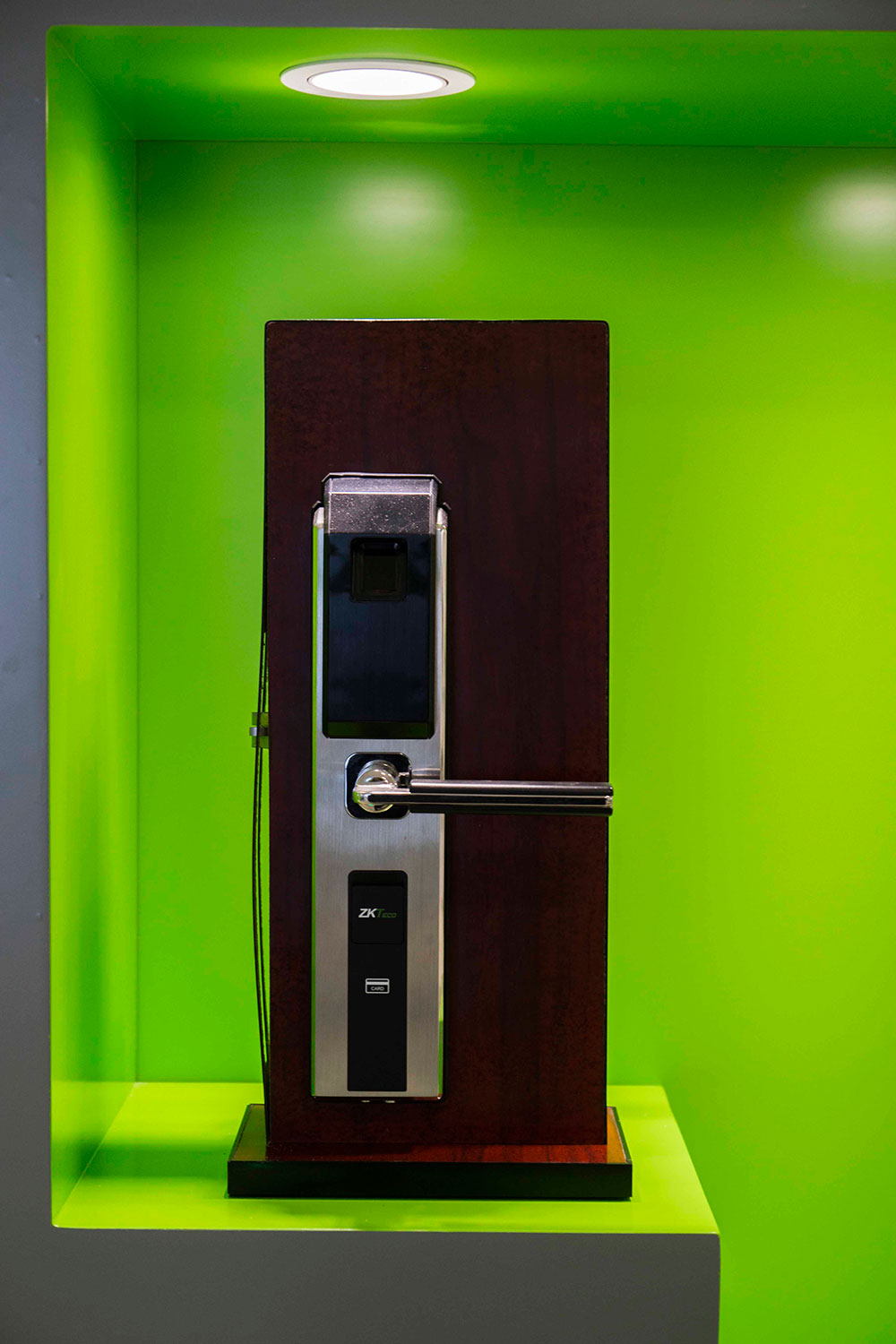
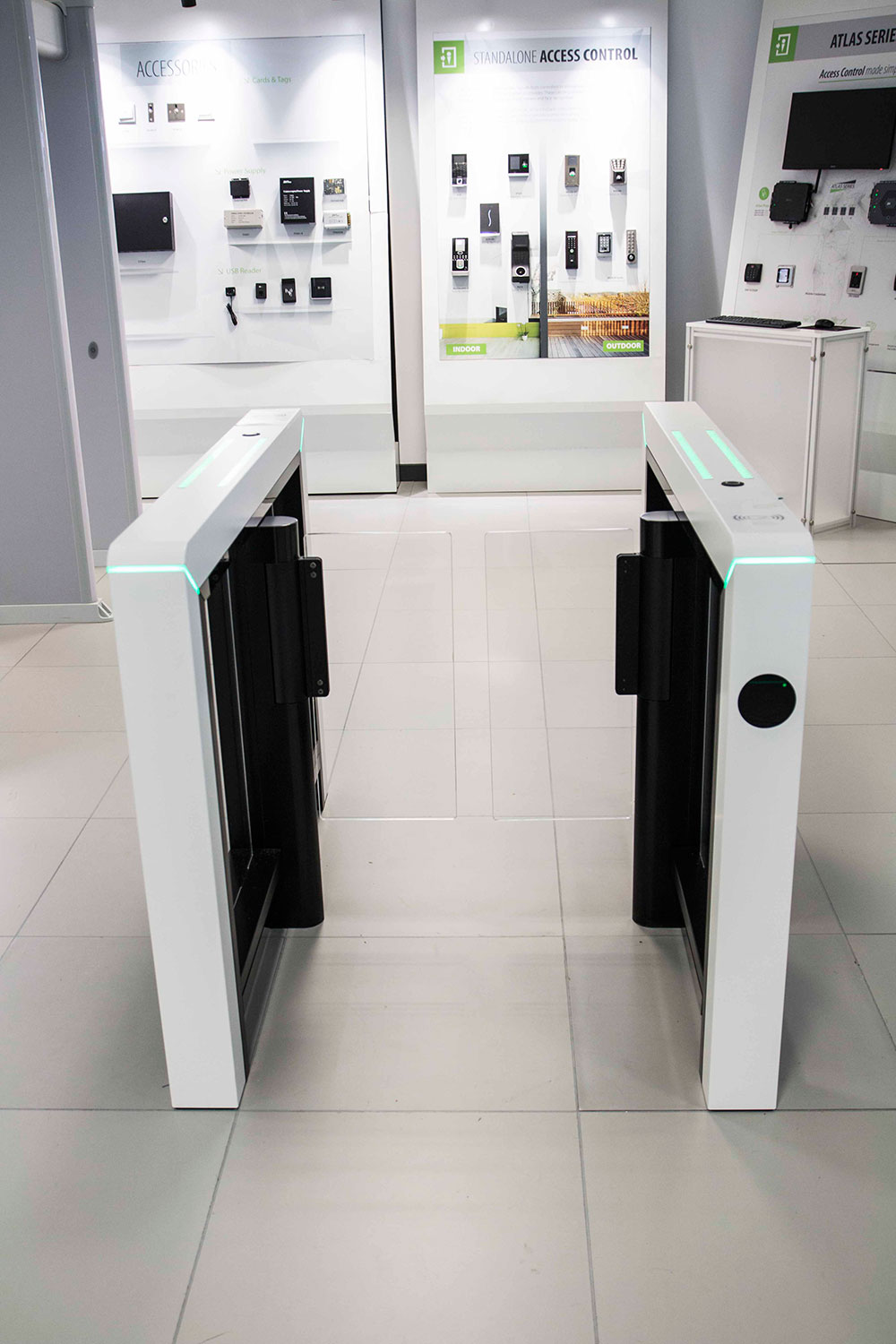
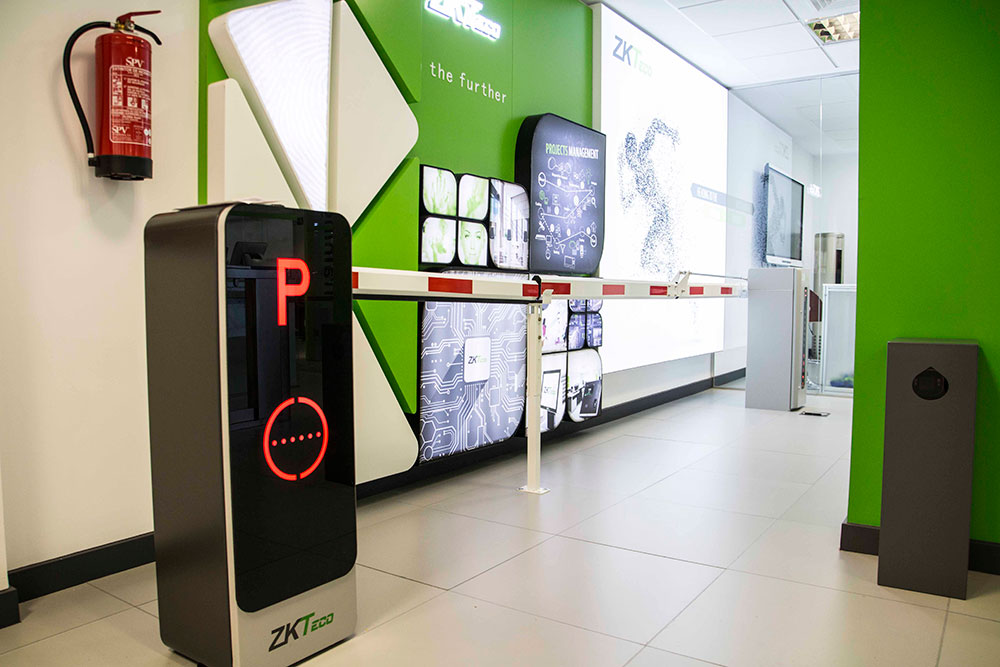
To get acquainted with the entire range of ZKTeco’s solutions, we visited a beautifully decorated showroom, which is divided into product segments, from access control and time and attendance to smart locks for hotels and smaller housing units. We were greeted by Mr. Robertodino Sebastiano Leita, an amiable International Presales Engineer with ZKTeco Europe. As an excellent connoisseur of ZKTeco’s products and solutions, he introduced us to each product group and answered all our questions in detail.
ZKBioSecurity – the Core of ZKTeco’s Solutions
At the heart of ZKTeco’s solutions is the ZKBioSecurity web platform, which integrates multiple functionalities. It is all about the so-called modules for access control, time and attendance, online and offline elevator control, hotel and visitor management, parking lots, mobile patrols, and video surveillance. There are also new modules that allow data management from all access control devices, including body temperature measurement. VMS modules that support thermal cameras and network recorders are also included. When ProFace X [TD] or SpeedFace V5L [TD] face recognition devices are used, the person’s image is sent to the software, with the security guard being able to identify the person with the higher body temperature than usual. The people flow management feature has been added to the time and attendance module. The latest version of the platform also provides advanced security features such as FP online registration, HTTPS encrypted communication, registration using a QR code, an LCD screen to display a log of live access events, etc.
“The platform is one of our main services. I do not define it as a product, but rather as a service because it includes all the necessary solutions within the security framework. Access control is at the core of what we do, and to that, we can add more functionalities that are translated into modules. The control we provide is primarily focused on user protection. By this, I mean any type of information, such as normal entries, normal events, alarm events, and some types of anomalies – all of which are perfectly controlled. It is possible to integrate not only with our other devices but also with the products made by our partners via APIs and SDKs directly. Each module communicates with other modules, which is fundamental. This means that if you want to verify the alarm caused by an access control system or activate the alarm, open or close the door due to an event in the CCTV or sensor module, you are actually able to do it”, says Leita. The platform can be used in projects of all sizes. Its optimized architecture, which enables advanced biometric identification, and a modern interface provide users with a completely new experience and easy management of various systems.
Time and attendance from anywhere
When it comes to time and attendance data and associated hardware, the key difference is that ZKTeco generally does not use controllers but rather terminals. Still, “the market has changed a lot over the years and we are aware that mobile and cloud solutions are taking precedence. That is why one of our latest innovations is GoTime Cloud, in which a user can now use a mobile phone in addition to traditional card and biometric verification methods, while the supervisors have total control over employees: where they are, what kind of work they do, etc. You can see on the screen that each working code is marked with an image and all of them can be exported as reports”, explains Leita. Localization is available in the form of a map, which is increasingly in demand in the market, and you can also create advanced calendars, custom shift schedules, or configure all changes in your company.
Integration of mechanical entrance control and access control
The entrance control product series features several categories. There are several types of turnstiles and barriers available, which are divided based on the level of mechanics and electromechanical control one needs. The showroom featured various three-arm turnstiles and turnstiles with curved and flat flaps and barriers for parking lots, together with vertical tripod barriers used in football stadiums. But the real benefit is found not only in the products themselves but in the fact that they can integrate with their own access control. “It is important to mention that we can perform any mechanical and software integration ourselves because we are the proprietors of our technology. This means that no matter what kind of reader or controller is demanded for turnstiles, we can offer it to our customers. This greatly simplifies the work of the installers who install them in the field”, says our host.
Innovation at work
To get an idea of the designing prowess of their engineers, we were introduced to the ZPad Plus, one of ZKTeco’s best-selling products. Originally, it was a device used for time & attendance, but during the pandemic, there came a need to check the green certificate. So, they used the original public applications certified by the Italian government and integrated them with their hardware, which can now make decisions and open doors or activate an alarm relay based on the validity or invalidity of the certificate. “It is one of our best designs so far and it has been a great success, especially because we have improved the algorithm that has the ability to check personal documents, so we can be sure that the certificate belongs to the person who shows it”, says Leita.
We also had the opportunity to check the Mars Pro series of turnstiles with flat or curved flaps, designed for spaces with a large flow of people. It has a modular structure and comes with new features, such as frame modularity, which can be easily assembled and disassembled. No matter what level of damage is done to your turnstile, only its impacted part will need to be replaced. However, the most important functionality is the number of ten million cycles, which is a rarity on the market.
Radar-equipped barriers
There are two types of barriers on the market: those with strong mechanical components, which can raise arms up to six meters long, and cost-effective barriers for residential and commercial areas. ZKTeco offers both types. The parking solution is based on LPR bullet and dome cameras integrated with barriers equipped with VR10 radar, which completely eliminates the need for any induction loop. When the vehicle leaves an area, it is not necessary to re-read the plates so a copper spiral is usually installed in the ground and it detects the weight of the vehicle and sends a signal to the barrier to open. With radar, there is no need for that, because it is simply pointed to the right side and calibrated. The license plates are controlled locally by a camera, while the VR10 controls the arms without the need to install a magnetic loop, which also makes the job easier for installers. Another good thing is the anti-shock mechanism, which detects an obstacle (e.g. a child passing by) and prevents the arm from falling. “An additional important functionality of this solution is that it can work independently or you can connect it to our ZKBioSecurity platform. So, in addition to all the information about vehicles that pass through the barrier, you can also link each car with a user in the system”, concludes Leita.
We ended our showroom tour by checking the solutions with smart locks for hotels and smaller housing units, with ZKTeco offering four series: online hotel management, offline hotel management, smart locks with local Bluetooth connection, or smart locks with cloud connection via an e-mail account. This enables remote management of credentials, without the need to go to the site.
Thirteenth security company in the world
After a full-day tour of ZKTeco’s European headquarters and the meetings with the leading people from its management, business development, and technical departments, we were left with the feeling that the company has made a lot of progress during all these years. When we reflect on its first appearances at major security fairs only ten years ago and its modest biometric solutions which focused on cost-effectiveness back then, we simply have to compare it with what we had the opportunity to see and hear during our visit. It is no wonder, then, that ZKTeco ranked 13th among the top fifty security companies in the world according to Security 50 list. They have come a long way from one product group to multi-series solutions but managed to keep the focus on one thing – entrance control. And that is the biggest advantage of ZKTeco.
Heavyweight lineup to highlight the event, which will discuss global Internet governance issues, including domain names, URLs and security.
The Internet Corporation for Assigned Names and Numbers (ICANN) and Taiwan Network Information Center (TWNIC) will jointly hold the 3rd ICANN APAC-TWNIC Engagement Forum and the 37th TWNIC IP Open Policy Meeting on May 12 and 13 in both physical and online formats, offering an opportunity for stakeholders from industry, government, academia as well as the global community to re-visit the nature of the Internet and hold in-depth discussions on domain name system, IP addresses policies and cyber security. This event will put Taiwan, which is already a key player in cyber security in the Asia-Pacific region, in a strategic positon to respond to global Internet issues and further build a more secure and stable network environment.
ICANN is a global non-governmental and non-profit organization responsible for ensuring the stable and secure operation of the Internet’s system of unique identifiers, including domain names, IP addresses and root server, taking responsibility for coordinating and securing stable interoperation of the global networks. With increased use of the Internet globally, the DNS abuse has become a more serious issue. ICANN and TWNIC are joining hands again to hold the 3rd ICANN APAC-TWNIC Engagement Forum. Through a format of discussion forum, focusing on the nature of Internet in the three aspects- Domain Name, IP address and cyber security, participants will have a chance to experience in-depth discussions on topics related to Internet and governance, such as DNS (Domain Name System), RPKI (Resource Public Key Infrastructure) and New gTLD (New generic Top-Level Domains) progress.
The forum has specially invited Dr. Vinton Cerf, the father of the Internet, to lead discussions on the nature of the Internet. Other leading speakers and VIP guests will include: Edmon Chung, CEO of DotAsia and ICANN Board Member; Akinori Maemura, General Manager of Internet Development Department of JPNIC and Board Director of ICANN; Andrew Sullivan, President and CEO of Internet Society; Wolfgang Kleinwaechter, Professor Emeritus of International Communication Policy and Regulation Department for Media and Information Studies, the University of Aarhus in Denmark; Paul Wilson, Director General of Asia Pacific Network Information Center; Audrey Tang, Minister without Portfolio at Executive Yuan; Wei-Chung Teng, Commissioner of National Communications Commission; Kuo-Wei Wu, Chairman of Taiwan Internet Governance Forum; Elizabeth Behsudi, Director of Domains & Jurisdiction Program, The Internet & Jurisdiction Policy Network; and many others experts and scholars at home and abroad are gathered to conduct in-depth discussions. In-depth and valuable dialogues on topics such as Internet public policy, Internet governance, privacy and cyber security will be conducted to further promote the stability and safe development of Taiwan’s Internet industry.
Furthermore, the 37th TWNIC IP Open Policy Meeting (OPM) is as a parallel meeting with ICANN APAC-TWNIC Engagement Forum 2022. The IP OPM will provide great opportunities to the participants for the communication on the network technology research and industry development. It also brings together the opinions of various ISPs in Taiwan to provide relevant IP policies and management mechanisms.
The event will be held on May 12 and 13, 2022 at Howard Plaza Hotel Taipei, Taiwan with the live stream online. As event information is continuously being updated, everyone interested may follow the latest information on TWNIC’s official website and blog.
For more details, please visit forum.twnic.tw. Alternatively, please call Ms Michelle Chu at +886 922 891058, or send an email to forum@twnic.tw
Another victory in the MEA region! Partizan equipment protects 270 gas stations of the leading Omani oil company Al Maha Petroleum.
These are IPO-VF5RP and IPD-5SP-IR CCTV cameras from Starlight Cloud line, as well as specialized NVH-1622 PRO recorders. The perfect combination to provide reliable, high-quality supervision at any time of the day, under any circumstances!
Partizan IPO-VF5RP is a varifocal CCTV camera with a resolution of 5.0 megapixels. It provides high detail of the picture and allows you to clearly recognize small objects and bills. The shock-resistant metal housing makes possible operation of such CCTV cameras both: outside and in industrial buildings. For connection you can use a data cable as the power source (POE technology). This makes the installation process much easier.
Partizan IPD-5SP-IR is a dome CCTV camera with a similar resolution of 5.0 megapixels. It provides high-quality images with detailed small objects, a power supply via data cable, shock-resistant housing. Everything is made in the best Partizan traditions!
Partizan NVH-1622 PRO is a multifunctional IP video recorder with the ability to connect up to 16 CCTV cameras. It also can simultaneously record on all channels of observation in real-time. It has four recording modes:
Constant
On alarm
When motion is detected
Scheduled
USB backup function is provided. The data transfer rate reaches 1 Gbps.
In an environment with increasing threats from bad actors, the cybersecurity of video systems is critical. Many of the trends driving cybersecurity in video systems start with government regulations.
The John S. McCain National Defense Authorization Act 2019 (NDAA), Section 889 is influencing how video systems are designed and manufactured not just for use in the United States but in other countries, too. NDAA Section 889 prohibits the U.S. government from procuring video and telecommunication equipment from certain companies and their subsidiaries. In the Adriatic region, both governments and customers are paying attention to the exposure outlined by NDAA.
The Honeywell 30 Series, 60 Series and Modum IP cameras are designed for use as part of video systems which comply with NDAA 2019, Section 889. In addition, our MAXPRO® and Pro-Watch® VMS/NVR ranges, our 30 Series Embedded NVRs and our ADPRO iFT/iFT-E IP NVRs follow our extensive cyber testing process and do not contain components from any of the companies highlighted in NDAA 2019, Section 889. Together with the 30 Series, 60 Series and Modum cameras, they can be used to provide video systems compliant with NDAA 2019, Section 889. These ranges are well suited for a variety of applications in SMB, entry-level enterprise and critical infrastructure where compliance is essential, such as government, utilities, premium commercial, campuses and retail.
NDAA 2019 Section 889 is focused on video surveillance equipment and telecommunications equipment. Although not a video system, our Pro-Watch access control software and hardware is fully cyber tested and does not contain components from any of the companies highlighted in NDAA 2019, Section 889. ProWatch, WINPAK and other access control software and hardware can be used with Pro-Watch VMS/NVR and our Series 30 and 60 cameras in NDAA 2019, Section 889 compliant, integrated systems.
Specific Honeywell products that can be used as part of NDAA Section 889 compliant systems are:
– 30 Series IP Cameras
– 60 Series IP Cameras
– Modum IP Thermal Cameras for Body Temperature Detection
– 30 Series Embedded NVRs
– MAXPRO® and Pro-Watch® VMS & NVRs
– ADPRO iFT/iFT-E IP NVRs
– Pro-Watch® Integrated Security and Access control
– WINPAK® Access Control
Introducing a few product ranges.
30 Series IP Cameras
Honeywell 30 Series IP cameras can be used as a part of an integrated video solution that empowers you to level up the safety and security of your building. With a 50-meter Smart IR LED range, a camera resolution of up to 5MP, and secure stream video encryption, the 30 Series suits both small-to-medium businesses (SMB) and entry-level enterprises that want to reduce their liability cost and their total cost of ownership.
60 Series IP Cameras
Honeywell is taking quality and reliability to the next level with the 60 series line of 5MP IP cameras including a 2MP outdoor speed dome. The cameras, including indoor and outdoor dome, bullet and outdoor speed dome, offer exceptional picture clarity, flexible system integration, secure data transmission, easy installation.
The 60 Series cameras undergo strict quality testing and regulatory compliance and are compliant with security product test and certification. The 60 Series cameras feature TLS1.2 (HTTPS) encrypted streaming, adhere to the Payment Card Industry Data Security Standard (PCI-DSS) and include a built-in NIST FIPS encryption chipset. Together, these elements help meet the increasingly stringent requirements being set by IT Departments to shield businesses against unauthorized access and unsanctioned distribution of data and video.
30 Series Embedded NVRs
The 30 Series Embedded NVRs are affordable, fully-featured NVRs offering 4K HD (UHD) video resolution. A user can choose from 4, 8 or 16 channels NVR, with multiple hard drive options and up to 20 TB of internal storage, for an ideal and flexible solution. Flexible storage options, high recording and networking performance, robust cybersecurity performance make these NVRs ideal for a wide range of security applications where compliance is essential and data is protected.
The reliability, integrity and dependability are hallmarks of Honeywell IP video systems to provide customers with cybersecure products that meet strong regulations and can work in NDAA-compliant systems. Honeywell’s IP video portfolio includes not only IP Cameras, Network Video Recorders and Network Storage solutions but also intelligent video analytics and sophisticated video management systems.
Founded by Iain Liddell in 1984, Uniserve has grown to become the UK’s largest privately-owned logistics and global trade management provider. Uniview is expected to provide the complete video surveillance solution to Uniserve’s headquarter. Seamlessly blending ocean freight, air freight and road freight services with intelligent warehousing, distribution and supply chain, makes the solution much more complex. Including camera’s in a freezer of minus 30 degrees, So many interesting features and nearly every type of Uniview camera used.
To tackle the multi-dimensional challenges of the solution, products like IPC3615LR3-PF28-D, IPC2325LBR3-SPZ28-D, as well as NSW2010-10T-POE, etc. were used in the project.
LightHunter
Traditional infrared light is regarded as a black-and-white picture, which has a difficult time restoring the real surveillance scene. Poor low-light effect and is easy to lost details. Especially for large warehouses. There are different monitoring requirements at different times. You will face large or narrow space, and there are strong light or dark light even no light environment, all these mixed scenes require high dynamic range of camera video. Uniview LightHunter technology ensures ultra-high image quality in low illumination environment. You will get a good picture no matter where you install the cameras.
Low-temperature environment
There are both common warehouses and low-temperature cold-chain warehouses with surrounding temperature ranging from-18℃ to-25℃ for these large storage systems. Electronic devices tend to shut down during low temperature emviornment, that’s if the camera cannot reach the preheating value, it cannot be started if the ambient temperature is too low. Fortunately, Uniview cameras has a wide adapting temperature, range from -30°C to 60°C (-22°F to 140°F) that can perfectly cope with extremely cold environment.
250m PoE
The large-scale storage system covers a large area and the room is empty. Each floor has no independent shaft or operation room for transit, which is very different from the traditional buildings and hotels. The distance between the two mounting points is very far. NSW2010-10T-POE, up to 250m transmission distance on surveillance mode, make the vast logistics land solution come true.
With everyone’s collaborative efforts, the project was greatly recognized and received high praise from the customer. Uniview’s aim is to become a global leader in video surveillance industry which endeavors to build a safer world by providing professional, reliable and cutting-edge products and services.
In 2001, Advancis has expanded to a medium-sized company acting on a global scale, today being one of the international market leaders in Physical Security Information Management software. Our business is based on the principle of constant growth by creating sustainable and well-designed solutions for its customers. In addition to its in-house developed PSIM software, Advancis also offers the necessary services, support and maintenance
a&s Adria: Mr Landa, could you present yourself to our readers: when did you start working for Advancis, what is your role/what are you in charge of, and your educational and professional background?
Landa: As Managing Director of Advancis Austria, the Advancis area representation in charge for the Austrian and Southeast European market, I live and work in Vienna. I am 54 years old, happily married and have two children. I am a software engineer and worked in this sector – last in a leading position – until 2008. In the year 2009, I started focusing on building automation and management. During this time I encountered the open PSIM software WinGuard from Advancis. I was immediately captivated and very fascinated by the broad functionality of this product so that I came to the decision to market it locally. In 2010, there was an agreement with Jan Meiswinkel, CEO of Advancis, and I founded the first Advancis area representation in Austria.
Today, Advancis Austria is responsible for both sales and services in Austria and Southeastern Europe. We now have nine employees in Sales, Support & Service and our customers appreciate that they can contact us locally for all issues.
a&s Adria: Tell us about Advancis: what were its most important milestones, how many employees and offices do you now have, revenue, in which countries do you do business, etc.? I noticed that in the last couple of years you opened several new offices?
Landa: Advancis Software & Services GmbH is an ISO 9000 certified software company headquartered close to Frankfurt, Germany. Advancis was founded in 1994 as a regional software manufacturer by one of its Managing Directors, Hartmut Nöll. The company pioneered with regard to cross-domain security management, inventing its open PSIM software WinGuard, which is developed exclusively in Germany by qualified software engineers. With the participation of the second Managing Director Jan Meiswinkel in 2001, the company has expanded to a medium-sized company acting on a global scale, today being one of the international market leaders in PSIM. Advancis is based on the principle of constant growth by creating sustainable and well-designed solutions for its customers. In addition to its completely in-house developed PSIM software that is steadily improved, Advancis also offers the necessary services, support and maintenance.
In the course of time, the number of Advancis employees has continuously grown, leading to a steady increase of office space, resulting in the construction of an own Advancis Campus at the Advancis headquarters close to Frankfurt in Germany in the year 2014 as well as in the recent opening of several new area representations. Today, Advancis has around 130 employees worldwide with offices in Austria, the UK, U.A.E., the Netherlands, Belgium and Sweden – approximately 50 % of the company sales come from outside the German-speaking countries. According to a B2B sales model, international WinGuard partners (integrators) certified by Advancis market and distribute the software around the world, execute related projects at customer sites and render any necessary additional services.
a&s Adria: Physical Security Information Management (PSIM), a software platform that integrates several non-connected security systems, is at the core of your business. But, Advancis offers something more – your software platform WinGuard is defined as PSIM+. What is the difference between the two: PSIM and PSIM+?
Landa: A PSIM software is a platform that integrates different security systems, controlling them via only one user interface. This enables the operator to detect occurring events triggered by different security systems and to resolve them in an optimal way.
With our PSIM+ software WinGuard which is an open and vendor-neutral platform, we offer a solution reaching far beyond the common scope, realizing cross-domain integration not only of the complete security, but also building management and communication technology. Furthermore a direct connection to higher-tier mission control systems or further process-supporting software is possible, e.g. incident management, ticketing or data mining systems.
a&s Adria: Explain in detail the main features of WinGuard?
Landa: WinGuard is an open architecture software platform so that the total technical infrastructure of a building can be visualized and controlled. The operator works with an intuitive and adaptable user interface providing them with contents such as maps and camera images depending on the situation. Key is to collect live information from all connected systems and to filter this information to facilitate event processing, particularly the handling of emergency incidents. The systems integrated in WinGuard interact automatically in case of an incident: For example, in the event of an unauthorized access attempt, the cardholder’s data is automatically transferred to the operator, the video camera in the monitored area is displayed, an intercom connection is established, etc. Most important are the guided workflows (SOPs) that support the user in event processing and lead them through the required actions for a quick and secure resolution of the situation. It is possible to forward an event message automatically from the control center to other operators or personnel on site by phone, e-mail or SMS. Automatic actions and dynamic workflows increase security in case of emergencies or malfunctions, but also simplify daily control center tasks. As all actions are logged, reports and evaluations can be easily generated, offering a quick overview of relevant key figures. For external use, this information can be exported into standard formats or provided in real-time.
The reliability of WinGuard is ensured by redundancy concepts, e.g. using hot standby servers. If there is a failure of an important component, system availability is ensured. The complete database of the main system is continuously kept on one or more other computers, avoiding downtime and data loss.
WinGuard is scalable from a single workstation system to an internationally cross-linked control center to monitor several sites of a company in different cities or countries. The software can be extended anytime by further servers and clients, function and interface modules. Currently, remote access is in high demand to facilitate working from remote operator stations or from home. With the WinGuard App for iOS and Android, mobile access to the platform and all connected systems is possible at any time.
a&s Adria: What types of security and other systems can it integrate?
Landa: WinGuard integrates all technical systems installed in a building and the monitored premises, i.e. security, building management and communication systems of lots of different manufacturers. This can be CCTV, intercom, access control, fire and intrusion alarm, perimeter protection and personal security systems, key management, HVAC, leak detection, parking management systems and a lot more. In addition, the direct connection of related systems such as ticketing or computer aided dispatch systems is possible.
Further system types are possible to add to the integration scope anytime as Advancis steadily develops new interfaces, both independently and upon request.
a&s Adria: Easy operation is one of the important advantages justifying the investment in vendor-neutral PSIM software. How does it help in reducing operational costs and streamlining procedures?
Landa: It is simple to use, saving money by enabling control room operators to be trained quickly for security monitoring and incident handling as they work with only one system and user interface. The software consolidates information from all connected systems and prepares it for the user so that those incidents are detected which are really critical instead of having to care about lots of false alarms. Whenever an incident happens the software guides users step-by-step with dynamic workflows that show them the specific procedures for any security alert from any connected systems. This means that the workload is managed very efficiently and may reduce the need for staffing levels. Using a PSIM software, a multi-location company can monitor all its sites centrally, e.g. during the night, requiring less personnel resources.
As an open PSIM can integrate any technical system, the customer can freely decide which hardware products they prefer to deploy, extend or renew in their organization – on the one hand, regarding costs, but on the other hand they can choose whatever system is most suitable for their internal processes and infrastructure.
Open PSIM automates information gathering and sharing, streamlines procedures and removes much of the human error from the management of an incident. It possesses integrated evaluation and reporting tools to help further analyze and improve how incidents should be handled in the future.
a&s Adria: You market several types of WinGuard: Express, Basic, Professional, and Enterprise. Are they intended for different purposes?
Landa: To provide the optimal solution for projects of any size, we offer four product versions, from WinGuard Express for small projects (single location not requiring any further clients) up to WinGuard Enterprise, designed for multi-site systems with an unlimited number of locations, clients and interfaces such as the distributed stores of a global retail chain.
The four different versions mainly differ about the number of sensor connections and system interfaces that are already included. There are customers who only like to link access control with video surveillance or visualize and control fire alarm systems including automated printout of fire detector positioning plans in case of an event, so they can go for the small WinGuard Express solution. Others require a large number of sensors and clients to be connected as well as multiple redundancy levels, e.g. in the finance sector, data centers or other highly sensitive areas, choosing WinGuard Professional or Enterprise.
However, the selected version itself does not limit a customer to a certain size or scope, it only serves as the basic installation for a project because WinGuard is scalable so that a smaller installation can be extended to a more comprehensive one anytime.
a&s Adria: Last year alone, you had 30 new and 188 extended interfaces. For those not familiar with your software, what do these interfaces represent, how many do you offer up to this point, and with how many companies do you cooperate with?
Landa: There are two ways to realize the connection of technical systems to a PSIM software: either via standard protocols such as BACnet, OPC or Modbus IP, or via manufacturer-specific interfaces. The second is preferrable as only individual interfaces can integrate the entire functional scope of the respective system in the superordinated PSIM software and they can also be updated in case functions or features of the connected technical system are changed by its manufacturer. Advancis advises to integrate systems via such individual interfaces and has focused on their development and extension. Currently, almost 500 interface drivers to security, building management and communication systems of lots of different manufacturers are available in WinGuard, new ones are constantly developed.
As Advancis do not sell any hardware and can develop new interfaces anytime, end customers remain totally free in the choice of their installations. This also enables us to form strong collaborations with system manufacturers when developing and maintaining interfaces, ensuring we improve the quality of integrations. To support this further, we launched our technology partner program in mid-2019. In particular with our premium technology partners, we communicate continuously and share technical know-how to always keep interfaces up to date and provide excellent project support for our joint customers.
For us as the manufacturer of WinGuard it is, of course, important to develop both interfaces and functionalities ourselves, but in addition we offer our integration partners and users the possibility to become more flexible in case they would like to realize very specific project requirements. Therefore the current WinGuard version is already supporting 3rd party developments of interface drivers – even if a functional project scope is very unique, it can be provided individually.
a&s Adria: This is a success taking into account all the pandemic-related issues. How was generally your business affected by the pandemic? Were you able to adapt to the changed conditions?
Landa: Our PSIM platform WinGuard is deployed across a diverse range of industries such as defense, critical national infrastructure, retail and finance to name just a few. The pandemic has been a challenge for everyone, however some of our customers in certain sectors have been affected more than others. The leisure and entertainment industry and public transport have been hit hard by the crisis, whilst other sectors such as healthcare, pharmaceuticals, data centers and other critical infrastructures have been less affected and, in many cases, increased revenues.
Secondly, mostly up to a few years pass between the decision of a customer for a PSIM system and project start, meaning that projects distribute over time so that our company did not experience any order leak during the pandemic.
a&s Adria: What cyber security measures did you undertake to ensure secure data transfer?
Landa: The latest WinGuard version offers innovations in cyber security such as encryption of network communication and databases using AES. Secured signature storage protects all external files such as CAD floor plans from unauthorized manipulation. The support of central key management (PKI) allows an easy administration as well as the integration into already existing systems and security concepts.
Given the recent global focus on network and device security, WinGuard is one of the most highly protected systems of its kind in the market.
a&s Adria: How many installations have you done so far and can you present some of the most complex and significant ones?
Landa: Advancis has realized 2,000 installations in different business sectors in more than 70 countries worldwide. As confidentiality is a top priority in the security industry, very few customers agree to have their names or details of their installations published. Amongst those we are allowed to name are the world leader in semiconductor solutions, Infineon, the Austrian Federal Railways OEBB, the chemical company Henkel, the supermarket chain Auchan and the German leisure park Europa-Park. For all available references please check our website: https://advancis.net/resources/success-stories/.
a&s Adria: In June 2021 the SPELL research project funded by the German Federal Ministry for Economic Affairs and Energy has been launched. Your company is a part of it. Can you tell us more about the project? How will artificial intelligence be used to help the population in case of crises?
Landa: SPELL is the abbreviation for “Semantic platform for intelligent decision-making and deployment support in control and situation centers“. The aim of this project is to use artificial intelligence to initiate emergency response, emergency aid and supply measures for the population more quickly and in line with the situation in case of crises (e. g. major incidents, pandemics, natural disasters or widespread power failures). Precondition is a data-based overview of all relevant information as an overall picture of the situation and the networking of all involved parties. Artificial intelligence can create this basis and significantly support decision-making and implementation to minimize incorrect decisions.
Advancis’ focus within the project is on the integration, harmonization and utilization of sensor data from security, building management, communication and information technology in near real time. With the help of artificial intelligence as well as data technologies, a significant information and time gain in incident management is to be achieved in crisis situations. Advancis will primarily test this in concrete applications of networked BOS and industrial control centers.
a&s Adria: What are the most important global trends that define the PSIM market? And according to that, what can we expect from Advancis in the years ahead?
Landa: In the future, an even larger number of systems will have to be integrated in a PSIM platform which involves high effort and lots of resources for the development of new interface drivers. In addition, system manufacturers are constantly improving and extending their functional scope so that the interface drivers must be constantly kept up to date. Besides the high effort of interface development, the PSIM platform itself has to offer a broad range of functions and steadily increase them further. As new technologies appear and security continues to converge, there is no doubt that integration will be at the heart of the industry’s future.
Therefore, in the coming years, we would like to focus even more on the openness of our software. Our goal is to offer a totally flexible platform to process and prepare data. We constantly enhance WinGuard’s functionality to address new and existing challenges in the management of incidents, prioritization of events, intelligent automation, data security and analysis. The more functions the systems connected to WinGuard cover, the more they have to be intelligently integrated in the PSIM platform too so that the user receives well-prepared data depending on the incident. Think of creating intelligent graphics for the display of value comparisons or the integration of communication mechanisms to inform exactly those team member that are currently available on site to handle an incident.
a&s Adria: In October 2021, you attended the Adria Security Summit in Belgrade. What is your opinion on the Adriatic region security market and Advancis’ position in it? What are your plans in this area, are you looking for a regional partner?
Landa: The security market in the Adriatic region is still a young market but shows lots of potential. Advancis as a global player in PSIM can make a valuable contribution here and sharpen the perception for security, networked systems, the use of synergies and guided workflows. We can observe this in various tenders: PSIM has already found its place in the security landscape and its benefits are highly appreciated.
Our sales structure aims at establishing and strengthening local integration partners so that the best possible support for the end customer and be provided locally. We already work together with highly qualified companies that distribute our software in the Adriatic region, execute projects at customer sites and render any additional services such as individual adaptations by customizing or maintenance. However, we are still looking to further expand our partner network in the region.
London, March 2022 – Has the growth in working from home (WFH) outpaced our ability to keep a home office environment secure? Hybrid working — combining WFH with on-site attendance — grew steadily in the decade up to 2019*. It is now here to stay: One-quarter of the workforce in Finland, for example, principally worked from home in 2020, according to one study**. However, many repurposed domestic spaces are not equipped with the security or privacy WFH requires.
“In many organizations, the convenience and productivity advantages of home and hybrid working are significant,” says Lars Angelin, Business Development Manager, Aperio & Code Handle at ASSA ABLOY Opening Solutions EMEIA. “WFH will remain — at least for some employees, some of the time. In these cases, the security of the home office needs attention.”
Why lock your home office?
“Home security for hybrid workers does not begin and end at the front door. A domestic workspace requires security of its own. After all, not every houseguest should be reading next quarter’s confidential company data!” adds Angelin.
Privacy is another key concern, whether to make important video calls or have a sensitive conversation. Commercial security is always desirable. In many sensitive industries, it is required by law.
“Cybersecurity is usually down to the employer,” says Angelin. “However, the physical security of documents, data and conversations is the responsibility of those who choose to continue working from home.”
The most elegant, seamless way to put an effective barrier between your residence and a home workstation is with a Code HandleÒ digital door lock.
Simple to fit to almost any interior door
Code Handle is a locking handle with built-in digital PIN keypad suitable for most lock cases and door types. A secure 4- to 6-digit PIN ensures only authorized people enter the home office.
There is no need to use or keep track of a key. At the end of a day, homeworkers don’t even need to remember to lock their office: Code Handle locks itself when the door is closed — and for safety, allows simple, code-free exit from the inside.
Installation is simple: A homeworker can simply swap their existing door handle for a Code Handle. Fitting takes just two screws: It is easy even for non-specialists, and also straightforward for any domestic locksmith. In an ASSA ABLOY competition to find the fastest Code Handle installation, the winning entry took just 26 seconds.
To power the lock’s digital security, standard batteries slot into the handle itself. There is no need for software. Batteries typically last 30,000 lock/unlock cycles.
Code Handle is already trusted at medical surgeries, retail stockrooms, flexible workspaces and almost anywhere else a private door meets a public space. It is perfectly adapted for upgrading a home study, basement, attic or spare room.
“Contemporary and elegant, a Code Handle adds digital PIN security without the hassle of keys or any ugly push-button mechanical device,” says Angelin. “It is the simple, secure, convenient solution for any home office door.”
London, March 2022 – An access control system is familiar technology to organizations of every size. Access control may operate as standalone electronic locking. It can also integrate with complementary business systems such as HVAC, time-and-attendance, in-house payments and more.What many businesses may not know is that, by restricting their access system with wires, they are not using its full potential.
In many companies’ access systems, only the most important doors and locks are wired to mains electricity. Software then filters and monitors traffic. It is a tried-and-trusted way to let the right people in — and keep everyone else out.
Yet the expense and disruption of wiring doors can stop electronic access control in its tracks at the front entrance. This leaves building door control in the hands of mechanical locking, which limits the flexibility and control of security, and its potential contribution to business success.
The answer is to unleash access control from its cables: Extending security with wireless devices — managing access around a building interior — benefits a business in at least three ways.
Make sure only authorized personnel open sensitive doors
Not everyone should be able to walk into the CEO’s office or open the server room. In real-world situations, where staff are busy, relying on manual lock-and-key technology often leaves doors unguarded. If a lock is somehow breached, a security manager will have no idea when, nor will they be able to identify the last person to open the door.
Cable-free electronic locking devices are available for all kinds of internal door, of every size and any material. At Luminy University in France, for example, wireless devices ensure only qualified and authorized staff open rooms where hazardous materials are stored*. They are controlled and monitored from the same system as the university’s wired doors.
Businesses can filter and track access to more than just rooms, too. Wireless cabinet locks add security to cupboards, cabinets and drawers — for employee personal items, controlled medicines or almost anything else. A wired system may find it difficult to reach these openings.
Battery-powered locks can add real-time control and monitoring to server racks, so IT staff know right away if unauthorized access has even been attempted. With the cost of a typical data breach estimated at $4.24m (€3.7m), an investment in wireless Aperio server rack locking could repay itself many times over**.
Convenience for employees, peace of mind for facilities teams
Wireless devices can bring access control much deeper into a building. Employees feel safer at work; facilities and security managers can relax, because important openings beyond the front door are secured and monitored, without any time wasted tracking bunches (or hundreds) of physical keys.
The workload to maintain a network of wireless devices is minimal. For example, Aperio wireless locks only need a change of battery every two years on average, nothing more.
Battery operation is energy — and therefore, cost — efficient, too. Compared to traditional wired locking, wireless devices contribute to an energy-efficiency strategy: Installation is less invasive and less energy intensive; it uses fewer materials like cabling.
For visitors and employees, a single credential still opens all their authorized locks. No one carries large, inconvenient key bunches or wastes time hunting for the right key: Time saved can have a real impact on service delivery, as nurses at the Centre Hospitalier Métropole Savoie have discovered***.
Understand building use (and users)
With the exception of designated “high security doors”, wired access control often stops at the front entrance. Once employees and visitors are inside the building, the system loses track of them. This leaves valuable business data un-gathered.
Extending access control with wireless digital devices can help collect this data and put it to work. Technology protocols and standards such as OSDP and LDAP ensure the data is interoperable with complementary systems, now and in the future.
For example, a better understanding of building use enables more efficient energy management. If no one is occupying a suite of offices, why heat or air-condition them? Data from a more comprehensive access system could help automated systems make intelligent, cost-saving decisions in real time.
Granular access control can also help inform decisions about leasing office space — and of what type — or whether to let leases expire. This type of data will only grow in importance as work patterns become fluid. IBM estimates the global mobile workforce will soon number 1.87 billion people****. Understanding how these workers use space will be critical — and could directly influence business success.