Home Archive by category Najave II (Page 5)

Najave II

Storage in video surveillance

Storage is critical in a video surveillance system. What are the latest trends in storage and how should the user decide which solution to get? This series will address those points.

Source: William Pao

Storage is an important element in video surveillance. It makes sure that the video is properly stored and can be accessed anytime. Indeed, with video datasets constantly growing due to higher resolution and longer retention periods, storage is needed more than ever. According to MarketsandMarkets’ forecast, the global video surveillance storage market size will grow from US$7.5 billion in 2020 to $10.2 billion by 2025, at a CAGR of 6.1 percent.

So what are some of the current solutions and future trends in storage? We take a closer look below.

Storage device

From a device perspective, network video recorders (NVRs) are still the most popular solution. “NVRs that use hard disk drives (HDDs) remain the most popular hardware globally for video storage because of their cost effectiveness, simplicity of installation, and ease of use. Today HDD NVRs are almost like little computers with a raft of internal error correction technologies that make them incredibly robust and reliable. However, quality varies, and users should look for reputable manufacturers that approve HDDs for video recording,” said Peter Kim, Global Technical Consultant at IDIS.

With the increasing popularity of cloud-based video surveillance, more and more NVRs now come with cloud capabilities. “NVR complete with cloud solutions is enabling people to view live or recorded footage remotely over the network, simply by logging into their computer, phone, or tablet. Should an alarm be triggered, an email notification can be sent to a device, and the user can remotely verify, save a snapshot or immediately email the footage to authorities,” said Stefan Lundberg, Senior Expert Engineer at Axis Communications.

Storage medium

From a storage medium perspective, as aforementioned, the hard disk drive is still the mainstream. “Hard disk drives are still the mainstay of almost all video surveillance storage – even in the cloud. There have been some shortages of high-capacity hard disks due to component shortages and a technology shift in cryptocurrency which used massive amounts of storage, although the collapse in cryptocurrency values has significantly decreased the demand for high-capacity drives for those purposes. Solid-state storage has not progressed as expected some years ago, as it has remained too expensive for mass-storage applications such as video. It has also suffered from worldwide component shortages. Therefore, hard disks are still the king of video surveillance storage applications,” said Alastair McLeod, CEO of Veracity.

Software-defined storage

Software-defined storage (SDS) relies on a computer program for managing data storage resources and functionality and has no dependencies on the underlying physical storage hardware. It’s becoming a more popular storage infrastructure in the IT world due to several factors, including the growth of unstructured data, the availability of high-performance servers, and the popularity of the cloud. Increasingly, it’s caught on in the video surveillance industry as well.

“SDS is slowly starting to show some good footing in the video surveillance space. With an agnostic approach to hardware and flexibility of workloads, this option provides great benefits to those well-versed in managing this type of storage infrastructure. Although this approach introduces another layer of complexity, the benefits of SDS can exceed traditional storage environments,” said Eugene Kozlovitser, CTO at BCD. “With the ability to distribute workloads between low-performing and higher-performing systems accordingly, SDS does offer enough elasticity to cater to a broad spectrum of customer service needs. And with every software vendor offering a different approach to this concept, there is a large variety of choices out there for any scale of deployment.”

Hyperconverged infrastructure

Meanwhile, hyper-converged infrastructure (HCI), a software-defined unified system combining compute, networking, and storage elements in a single platform, is also gaining traction in video surveillance. “HCI is the foreseeable next step in the video surveillance market. Although slower inception of the technology, the growth trend has been promising based on some recent market analysis, and more customers are looking to adapt to this model much more quickly and align with the concept of video surveillance as a service (VSaaS),” Kozlovitser said.

Lower energy consumption

Since a storage system consumes a lot of energy, lowering energy consumption has become a priority. “A key trend that will finally emerge as being critically important in surveillance storage systems is energy consumption. Veracity has been arguing this case for many years, but with the recent dramatic increases in electricity costs, many more customers are going to see this as a critical factor in their choice of solution,” McLeod said. “Lower power consumption means lower heat dissipation, and therefore lower-cost A/C systems can be used with lower running costs. Further, lower power consumption means that lower capacity UPS (uninterruptible power supplies) can be employed, again lowering capital and running costs whilst increasing efficiency.”

Increased datasets

It’s important to point out that storage for video surveillance is hugely impacted by the amount of video data, which has become bigger than ever due to higher resolution and longer retention times.

“Across a wide range of vertical market sectors, we are seeing organizations required to store video for longer durations, sometimes significantly longer. For example, in the U.S., regulations state that cannabis operators must store surveillance footage for 90 days across cultivation and logistics sites as well as dispensaries. This is also the standard retention time for a variety of sectors in the Middle East, most notably banking and finance,” Kim said.

He added: “In addition to longer retention periods, the volume of data being generated is also increasing significantly. A few years ago, many users were upgrading to Full-HD systems; now we are seeing 5MP cameras becoming the norm as customers look for the additional benefit of AI-powered video analytics. For wide-area surveillance such as public spaces, parking lots, large perimeters, and stadia, 4K PTZ cameras are also becoming the go-to solution.”

Needless to say, bigger data takes up more space in storage, incurring higher storage costs in the process. Luckily, advances in technology, especially in the area of compression, have been able to address this issue.

“Video compression algorithms are used to encode the original information by reducing and removing redundant information. These algorithms locate regions in the video that have already been transferred so that redundant sending in the next image frame can be avoided. The algorithms also identify places in the video where details can be removed without reducing the visual quality,” Lundberg said.

“Advances in technology have meant that the overall cost of data storage has decreased. The switch from H.264 to H.265 over the last decade brought about a 50 percent reduction in costs, and with the addition of intelligent codecs an additional 30 percent reduction has been achieved, with storage requirements brought down significantly,” Kim said. “In addition, users can choose to use motion adaptive transmission (MAT) technology on specific cameras to gain savings of up to 90 percent on storage and bandwidth compared to older H.264 systems. When switched on – and many users neglect to do this – MAT technology can be a particularly effective tool, restricting transmission during live surveillance to periods without movement in the scene.

How to choose the best solution for you

Storage ensures that the video captured is properly stored and can be accessed whenever needed. Given its important role, purchasing a solution should be done with care. Below we look at how the user should select a storage system that best fits them.

Camera count

One way to select a storage solution is by considering the user’s camera count, which can be divided into low, medium, and high. We take a look at each.

Low camera count (up to 32 cameras)

There are two approaches here if the entity has a low camera count. “One is the conventional NVR system with onboard storage, which may be an integrated appliance, or which may use a separate client application to manage the system. The second is to go for a cloud-based solution, with no on-site equipment other than the cameras. However, the total cost of ownership for the latter can be quite high due to the constant subscription costs, especially compared to one of the more reliable NVR-based VMS systems, which should last for years,” said Alastair McLeod, CEO of Veracity.

“For the smallest applications, compact 4- and 8-channel NVRs will be the most cost-effective. We see these, for example, as a popular choice for individual retail outlets and locations such as coffee shops, restaurants, and pharmacies,” said Peter Kim, Global Technical Consultant at IDIS. “But most SMEs will find that a 16- or 32-channel NVR provides them with the storage capacity they need for full site coverage, internal and external. And these devices give them the flexibility to scale and adapt.”

Medium camera count (32 to 100 cameras)

As the camera count gets higher, a cloud may be less ideal. “Paying for 100 recording subscriptions plus, say, 400Mbits/sec of internet uplink bandwidth (on top of any additional, corporate requirement) can be very expensive,” McLeod said. “The optimum solution here is either one or two NVR units with a client PC, or, depending on camera actual count and retention times required, an integrated high-capacity storage/recording server – again with client PC or web-based management.”

High camera count (100 to 5,000 cameras)

According to McLeod, larger systems require some design effort to ensure the customer gets the solution they require for their application. “We would advise against systems that can store very large numbers of cameras in one server, as this makes the system far less resilient. We would recommend no more than 100 cameras per server. Thus a 1,000-camera system would have a minimum of 10 servers plus at least one failover unit,” he said.

On-prem vs. cloud

As mentioned above, cloud and on-prem solutions each have their own merits and disadvantages. Users should choose based on their scenarios, including camera count and bandwidth availability.

“While cloud storage is gaining ground in the market, the increased bandwidth requirements it brings are an issue. Users may resort to storing lower-resolution video as backup, but this is not ideal if the footage is needed for evidential purposes,” Kim said. “In most cases, on-prem storage can still deliver the best value and most benefits for users. When robust and reliable hardware is used, maintenance issues will be reduced, and choosing a single source provider rather than a mix-and-match solution can also help with this.”

Hybrid, which combines the best of both, may be a better option for some. “A hybrid deployment option is also a great solution for those who have the expertise in managing such an architecture. With the utilization of on-prem servers, a bridge extension to a public or private cloud might just be the better option,” said Eugene Kozlovitser, CTO at BCD.

Storage calculator

To calculate how much storage to get, the user can benefit from a storage calculator. “Over time, business needs are likely to change and so too may the surveillance requirements. A user may add additional locations or add space to an existing location and therefore need to add more cameras. In turn, they’ll need more storage,” Stefan Lundberg, Senior Expert Engineer at Axis Communications. “A storage estimation method is very important, usually this is built into the system design tools. For very large systems it is important to also make a trial to improve the estimate.”

But the user should careful when using a storage calculator. “Most storage calculators are provided by camera manufacturers who will try to emphasize the efficiency of their image compression,” McLeod said. However, the best and most accurate way to estimate the storage required is to use a calculator which uses the average bitrate per camera as an input, rather than the more common frame rate, compression type, scene activity, and resolution settings used by many storage calculators. For example, a full HD camera at 30 FPS and using H.264 compression will produce about 4Mbits/sec for a reliable high-quality video stream.

Additional points

Given storage is as vulnerable to security breaches as other networked devices, cybersecurity measures should be taken. “Things like drive encryption, role-based access control, strong endpoint security, and redundancy are a must for any cyber protection plan. With data in the cloud or data on-prem, securing stored data is, and should be, a top priority for any customer. Regardless of the amount of video surveillance data or where you choose to store it, it’s always best practice to have ‘zero trust’ awareness of any stored private information,” Kozlovitser said.

It’s also important to point out that when the user recycles or disposes of their NVRs, all contents should be erased. “Usually when an NVR or a VMS system is replaced or taken offline, it is kept for the retention period to keep older recordings until they are all automatically deleted. The system is then ready for recycling/disposal; in that process, it is very important to securely erase any video storage medium or any medium containing sensitive configurations like certificates and passwords,” Lundberg said.

“It is best practice to either degauss any storage media or crush the drives completely that have had recorded video data. Overwriting drives do not always guarantee all the data will be fully erased. Recycling old NVR units should always be done by an R2-certified facility and one that can issue a certificate upon completion,” Kozlovitser said.

[SAVE THE DATE] The biggest information security conference in Slovenia – INFOSEK 2023

Why should you attend INFOSEK Conference?

1. Connect with 600+ CIO, CISO and other IT profesionals.

2. Meet 100+ well-known cyber security experts from all over Europe.

3. Participate in 70+ sessions, round tables, workshops, … and gain new knowledge.

4. Visit exhibition stands where vendors showcase latest IT security products and solutions.

5. Have fun at INFOSEK party.Sign-up for INFOSEK ONLINE (16-17 March 2023) and get VIP (free) ticket for the INFOSEK NETWORKING (25 May 2023, Ljubljana) and INFOSEK CONFERENCE (4-6 September 2023, Nova Gorica).

One ticket – three events!

CLICK HERE AND BOOK YOUR EARLY BIRD TICKET NOW

For further information please do not hesitate to contact us: kristina.veliscek@palsit.com / +386 5 338 48 51.

Kind regards,

Palsit team

P.S.: Cyber security experts, welcome to showcase your project, research or case study at:
➡️ INFOSEK ONLINE (16-17 March 2023) and/or
➡️ INFOSEK CONFERENCE (4-6 September 2023, Nova Gorica)
Tell us more about the topic you would like to present >>> Submit the “Call for papers”: https://forms.gle/ft6xL3dJU4Ag38pW6

SEN Magazine test drives FLEXIDOME panoramic 5100i IR camera

Staggering levels of situational awareness and reliable intelligent analytics

“The Bosch 5100 IR is a situational awareness monster that delivers surprising colour in sub 2 lux, as well as performing very well in monochrome supported by its excellent IR. If you need to see everything from a single camera point at a reasonable price, and if you value a mature IVA suite, the Bosch 5100 IR is well worth a look.”

John Adams, Editor of SEN magazine

Test driving the Bosch 5100i IR

The Bosch 5100 IR panoramic camera is a robust external fisheye camera made of cast aluminum and poly – it’s compact enough for discretion, and while it feels solid, it’s not too heavy. The camera is easy to set up on SEN’s test network. Once I get the camera out front of the office on the Magic Arm, it’s clear this Bosch 5100i IR has a stupendous angle of view, giving staggering levels of situational awareness. The panoramic display covers the street from end to end, as well as encompassing the front of the office, the nearby buildings on this side of the street, and looking over to the 4th story of the building opposite.

Reliable video analytics

One of the nice things about all Bosch cameras is their intelligent analytics. I really like the orange outline placed around moving objects and the green line indicating the direction of travel. Sitting at a workstation these indicators quickly become intuitive when you’re scanning an image – later I’m pleased to find it works just as well in low light.

Robust situational awareness

We’ve pointed this out before when testing panoramic cameras but it’s impossible not to highlight it again – you just don’t miss anything across a scene when it comes to situational awareness with the Bosch 5100 IR. I’m able to view someone approaches the front door of the office, while workers sit outside the house directly opposite, a person goes into a diagonally opposite apartment building, a vehicle comes up the road at one end, another goes down the road at the other, and another vehicle fudges reverse parking 30 meters up on my side, and I count 4 separate pedestrian interactions – all in the 1 image.

Low light performance

I test the camera after dark – it’s sub 2 lux under the lens. I’m not sure what to expect from the 5100 IR 6MP in low light but as soon as I sit down at my workstation, I can see the camera is doing a great job scrounging reflectance from streetlamps and windows. Even though the sky is dark, it’s contriving to show blue-grey and throughout the scene, there’s loads of detail. There’s some amplification noise in this image but whatever the camera engine is doing, it’s working.

Big coverage

The big thing with this camera is its massive angle of view – an angle of view that our 180-degree street scene doesn’t adequately reveal. I used the phrase ‘optical omniscience’ to describe the characteristics of the 5100 IR earlier, and this observation remains valid at the end of our test. As well as offering coverage of everything in complex scenes to a reasonable depth, the 5100 IR would excel on building corners and when pendant-mounted in spaces demanding saturation coverage in all directions.

Capture the Whole Scene with Dahua Full-color Dual Lens 180° Panoramic Cameras

Imagine walking on a busy street at night when suddenly you heard loud shouting followed by a large commotion. An incident has just happened right at the corner of your eye. You probably heard some noise and saw bits and pieces. Nevertheless, chances are you would not be able to recall every detail of what happened based on your line of sight and by just plain memory. It was dark after all.

This is basically the same dilemma many establishments face nowadays with traditional security surveillance. There might be cameras in the area, but not enough to cover large scenarios. Large areas typically require more cameras, leading to high deployment costs that many of us cannot afford. Under dark conditions or during nighttime, images captured by traditional cameras are normally just dull black and white footage; ‘recorded with a potato’ as some would say. Also, these devices are typically not equipped with a microphone or speaker, meaning Two-way Talk is simply impossible during an event.

In places such as squares, parking lots, and hallways where full coverage with absolutely no blind spots is imperative, installing a panoramic camera is a no-brainer. A panoramic camera, as its name suggests, is a fixed camera that can provide wide-area coverage, making it an excellent alternative to the daunting installation of multiple cameras just to cover a large scene.

In terms of features and functionalities, the Dahua Full-color Dual Lens 180° Panoramic PTZ & IPC devices tick all the boxes of an efficient security solution that can address the abovementioned monitoring challenges. Let’s check out below what they have to offer.

Seamless Stitching & Advanced Image Fusion Technology

The Dahua Full-color Dual Lens 180° Panoramic PTZ & IPC devices are equipped with dual sensors that deliver a 180-degree field of view. Now, how do these cameras generate a single 180° panoramic image?

First, the right and left lenses capture an image. Next, using standardized image correction technology, the camera calculates the feature values of the left and right images to avoid warping and pixel loss. Lastly, the Dahua advanced pixel-level metadata fusion algorithm enables seamless splicing of the image. The result: a seamless 180° wide-angle image of a large scene using just one camera!

Full-color Technology

For better image performance, both panoramic PTZ and IPC devices utilize Dahua’s very own Full-color technology. Each camera lens supports an F1.0 aperture to collect more light. Compared to the F1.6 aperture, the light intake of the F1.0 aperture is 3 times larger, providing a significantly brighter and clearer color image of the monitored scene even in dark environments or during nighttime. In addition, underneath the lenses are two warm lights, which have a lesser effect on the human eyes, and help reduce light pollution in the monitored area.

EPTZ

One cool feature of the panoramic IPC is EPTZ (electronic pan, tilt, and zoom) which uses digital zoom technology to provide real PTZ-like features on a fixed non-PTZ camera. It provides a panoramic image for a wider view of the scene, as well as sub-images that focus on specific areas or targets. It offers five different layouts or modes. Each mode includes a wide-angle view that can hold 1, 3, or 5 different sub-images for a more convenient monitoring experience.

Independent Mode and Smart Linkage Mode

Both panoramic and detailed views support AI functions for the panoramic PTZ camera. Two cameras can be independently deployed in different directions to cover wider areas. What’s more, the smart linkage mode can be integrated with IVS, enabling the panoramic camera to capture the whole view of the scene while the speed dome camera zooms in to acquire details when alarms are triggered, thus increasing safety in the monitored area.

Two-way Talk

This Dahua panoramic camera is also equipped with a built-in microphone and speaker that supports the Two-way Talk function. When connected to the network, users can communicate through the camera anytime, anywhere. How convenient is that?

AI Functions

These cameras will not be complete without AI functions. The Perimeter Protection utilizes a deep learning algorithm to accurately identify targets with high accuracy. It supports up to 6 types of rules and can provide real-time alarms and push notifications via the mobile app. The IPC has a People Counting function that can accurately calculate the real-time statistics of people entering and leaving a certain area, enabling timely dispersion measures to avoid overcrowding and generating traffic flow and valuable data that can aid business analysis. It also includes Smart Motion Detection (SMD) that can accurately detect targets in the monitored scene by filtering out nuisance objects like leaves, animals, headlights, etc.

To learn more about the Dahua Full-color Dual Lens 180° Panoramic Cameras, check out this video.

Takeaway

Capturing the entire scene in one color image is possible with just a single camera. The Dahua Full-color Dual Lens 180° Panoramic PTZ & IPC devices serve as an intelligent solution that provides wide-area monitoring coverage. A larger scene can be constantly monitored with just one camera, saving time and installation costs for installers and end users. Its built-in mic and speaker enable users to communicate to the detected target in the scene anywhere and anytime. And thanks to Full-color technology, this intelligent panoramic camera can provide clear color images even at night, which is essential in providing 24/7 continuous monitoring in large application scenarios such as squares, hallways, and parking lots.

Dallmeire: A closed security concept for test halls and perimeter

Vilsbiburg, close to Munich in Germany, is the location of the Flottweg SE headquarters and production plant. Here, the separation technology specialist builds plant and machinery for solid-liquid separation on a site covering about 110,000 square meters. In 2021, the company inaugurated its new Factory II, expanding its production area by approximately 18,000 square meters. A decisive element in protecting its business premises of just over six hectares and maintaining its status as an Authorized Economic Operator (AEO) is the video surveillance solution supplied by Regensburg-based manufacturer Dallmeier.

The largest decanter centrifuge in the world

What do crude oil, water, liquid chemicals, and beverages such as beer have in common? Before they can undergo further industrial processing, they have to be purified, or certain constituents must be separated. The systems that perform this mechanical separation are made by Flottweg SE. At its factory facilities in Vilsbiburg, among other products, the company manufactures the largest decanter centrifuge in the world. Flottweg is very proud of its “Made in Germany“ credentials and its record of preserving and creating jobs in the region. Responsibility and quality are inseparable elements of the company philosophy. This applies not only to process optimization and product quality assurance but also to protecting its employees and the company premises.

Security for six hectares of company premises

For the new building in Vilsbiburg with about 18,000 square meters of production area and six hectares of property, the company searched for a security solution that met the latest technical standards, not least to enable it to satisfy the criteria for AEO certification. Robert Waxenberger, Deputy IT Director for Flottweg SE, describes the requirements for the new solution as “Innovative, sustainable, Made in Germany, GDPR compliant“. His experience from working on Factory I, in which single-sensor cameras from Regensburg-based manufacturer Dallmeier have been working reliably for years, was decisive for this new selection. In close cooperation, Flottweg and the security installer Franz Sicherungstechnik developed a new security concept for Factory II with components from the Dallmeier portfolio, consisting of the Panomera multifocal sensor cameras, megapixel dome cameras, the IPS 10.000 recording system, and the SeMSy Compact video management software.

“Unmanned” test run

The centrifuges and decanters undergo a stringent test procedure before shipping, and the test runs are conducted under camera surveillance in nine test bunkers built especially for this purpose. “If anything untoward should happen during a test run, the parts would come at you with unimaginable force. For the safety of our employees, the test process must be carried out “in the absence of humans”. But since we also have to observe the proper conduct of the testing, this is where we use cameras”, explains Robert Waxenberger. The dome cameras help the operator monitor the process.

No AEO certification without closed perimeter protection

With an export ratio of about 80 percent, certification as an Authorized Economic Operator (AEO) is immensely important to Flottweg, as this simplifies shipping arrangements enormously. One part of the requirements for obtaining the certification is a triad of physical security measures. These consist of securing the perimeter, ensuring surveillance of the dispatch hall, and visual supervision of the loading area. The premises surrounding the factory hall are monitored inside a “closed perimeter“. Each section of fence with a corridor of about 90 meters is subject to uninterrupted detection by Panomera S-series cameras. The multifocal sensor systems are ideal for long distances along the fence because their special sensor concept allows them to guarantee high-quality image resolution even at long distances. Consequently, movements of any origin, by people or vehicles, for example, can be tracked for long stretches with no loss of recording or camera switches. And besides protection against unauthorized entry and assistance with the incident investigation, the 1,700 square meters of shipping hall and dispatch area as well as the loading area are subject to visual monitoring by cameras.

More expensive hardware – but lower overall costs

Apart from the image quality, the low costs of infrastructure were a powerful argument in favor of installing the Panomera systems: “If you only consider the hardware components, comparison offers are cheaper. But if you look at the overall situation, we only need a fraction of the infrastructure in terms of cables, masts, networks, and cameras. So as regards overall costs, the Panomera is the least expensive variant. And it also makes the operator’s job much easier because he no longer has to keep track of the images from countless cameras on the monitor wall, there are only a few to watch”, explains Andreas Franz, Managing Director, Franz Sicherungstechnik.

Alarm activation at the gatehouse and integrated site plan

For alarm activation and analysis, Flottweg uses the “SeMSy Compact” Video Management Software (VMS). SeMSy Compact is the optimum VMS solution for smaller and mid-level requirements, and as an innovative assistance system makes it easy for operators to find sequences of interest rapidly with the “Convenient search” function. In conjunction with a graphical user interface in the form of a linked site plan and a user-friendly dashboard, incidents can be categorized quickly and enable efficient investigation management.

Easy installation thanks to Mountera

For Flottweg too, the prize-winning Mountera installation concept (iF Design Award & Red Dot Award Winner) proves its efficiency when installing the Panomera cameras. Andreas Franz is impressed: “Mountera has made our lives much easier. A Panomera system weighs 17 kilograms, and the quick-lock design makes installation much, much simpler.”

Time-saving with number plate recognition

Behind the automated access management system for employees is the new Dallmeier number plate recognition system. The ANPR cameras and associated software read the vehicle number plates and the barrier opens automatically for numbers that are registered. “For the employees, this makes convenient access by vehicle possible, and Flottweg has the certainty that no unauthorized vehicles are present on company premises,” says Andreas Franz. But suppliers and shippers which were approved by Flottweg as part of the AEO certification and have been registered in advance also benefit from easier access to the loading bays.

Privacy & Security by Design

“As a manufacturer, we have a responsibility to supply our customers with safe products”, says Christian Linthaler, Dallmeier Sales Director national/international. “With our guiding principle “Privacy by Design“, we offer a comprehensive range of options for data protection and data privacy settings on our products.” The privacy of employees can be protected via “Privacy Zones” in the camera settings. Sensitive employee areas can, for example, be “blacked out” or completely excluded from the surveillance area. Furthermore, access concepts provide comprehensive protection.

Conclusion

“We were extremely satisfied with the customer-orientated solution and project handling by Franz Sicherungstechnik. They did excellent work”, concludes Waxenberger. “As global players with local roots, both Flottweg SE and Dallmeier combine tradition with leading-edge methods. At the same time, we have the same requirements when it comes to quality for planning, implementation, and products. We are very glad that once again we decided on a Dallmeier solution in cooperation with Franz Sicherungstechnik.”

More information: https://youtu.be/vMsnNLsYc5A

Security 50: Top 10 manufacturers in surveillance and access control

2022 saw marked growth in the market for majority of the Security 50 companies in video surveillance and access control. However, the year is ending with the physical security industry dealing with issues that will point to major challenges in the year ahead.

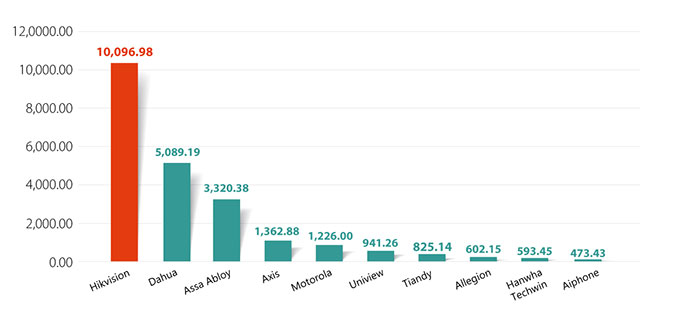
Looking at this year’s Security 50, we can see the Top 10 companies remain somewhat consistent. The top 10 biggest manufacturers in video surveillance and access control (based on 2021 revenue of security product sales) is Hikvision Digital Technology, Dahua Technology, ASSA ABLOY, Axis Communications, Motorola Solutions, Uniview Technologies, Tiandy Technologies, Allegion, Hanwha Techwin and Aiphone. Of note, Hikvision’s 2021 revenue exceeded the US$10 billion mark, standing at $10.1 billion, growing 16.9 percent from 2020’s $8.64 billion.

Security 50 2022: Top 10 manufacturers in video surveillance and access control

“We believe that technological innovation is the key element for successful development of a tech company. Our innovative technologies, products and solutions are creating values for customers, and helping many different people and types of organizations increase safety, operational efficiency and sustainability. We are glad to see that customers demonstrate long-term trust in us in return, which supports growth of the company,” said Frank Zhang, VP of Hikvision Digital Technology. “We have noticed that more external uncertainties emerged last year and this year, as inflation, interest rate hike, and exchange rate changes are affecting growth of different economies. Through optimizing our operations with enhanced flexible manufacturing processes, logistics and localized service, Hikvision has successfully maintained product delivery efficiencies. And we have kept consistent investment in technology research and development, with the R&D spending accounting over 10 percent of our total revenue in 2021. All these efforts ensured continued positive development of the company.”

Six companies are new entrants to Security 50 this year. They are: Dnake (intercom), Jovision (video) and EVETAR (lens), all from China; as well as Evolv, a U.S.-based screening solutions provider; Ava Group, an Australian risk management solutions provider; and Webgate, a Korea-based video surveillance company.

For Chinese companies, a total of 15 are in Security 50 this year. Among them, Hikvision, Dahua, Uniview and Tiandy are within Top 10. Most Chinese companies reported 2021 growth, indicating impacts from U.S.-led trade sanctions on Chinese goods were limited.

It’s interesting to note, however, that a lot of Chinese companies reported year-over-year revenue declines in the first half of this year. Hikvision, meanwhile, posted a total net profit of $848.6 million in the first half of 2022, down 11.14 percent from the first half of 2021, though its 2022 H1 revenue increased 9.9 percent y-o-y.

Yet this has more to do with China’s own domestic COVID and other issues, rather than the trade conflict itself. “Much of this is down to conditions in the Chinese domestic market rather than tariffs and trade restrictions in the US. The first half of 2022 has seen restrictions on movement in several major Chinese cities due to the COVID-19 pandemic. Government spending has therefore been diverted away from other areas and towards battling COVID-19 and supporting its economy during lockdowns,” said Josh Woodhouse, Lead analyst and Founder, and Jon Cropley, Principal Analyst, of Novaira Insights.

Speaking of U.S.-China trade conflict, all eyes are watching whether Taiwan security makers have benefited. Upon an initial look, this is indeed the case as certain Taiwan companies, including Dynacolor, Hi Sharp and GeoVision, reported good growth in 2021. Yet given Taiwan manufacturers’ smaller scale and capacity, whether they can continue to benefit from OEM orders transferred from China remains to be seen. In fact, most Taiwan manufacturers have re-strategized to make niche, value-added solutions in, for example, smart transportation, and that has been one of the contributing factors to their successes.

2021-2022 review: Growth returned to physical security market 

Looking back at 2021 and 2022, indeed growth returned to security due to an easing of the pandemic. “With more availability of vaccines and treatments for COVID-19, many businesses were able to start pivoting their business strategies towards creating a safe environment for employees and customers to return to physical spaces, while also maintaining (and even expanding) the remote solutions implemented during the height of the pandemic,” said Danielle VanZandt, Senior Industry Analyst for Security at Frost & Sullivan. “For many security technology markets, spending and investment opportunities returned back to their pre-pandemic levels, with some technologies witnessing further gains due to ongoing digitalization initiatives—markets like biometrics, access control, video analytics, and digital intelligence all witnessed significant growth this year.”

Across the global markets there is a solid underlying market growth … One driver for that is the overall increasing interest in security and network video solutions. Another driver is that of technology development. The demand for our products increases as we develop new and more innovative products and solutions to address customer demands,” said Ray Mauritsson, CEO at Axis Communications.

2023 forecast: Challenges lie ahead for security industry

Just when we thought the pandemic nightmare was about to be over, a new set of challenges and difficulties have emerged, impacting various industries including security. A post-COVID surge in demand, as well as the aftermath of regional conflicts, have triggered the worst supply chain crisis in a generation. This has also partially contributed to out-of-control, across-the-board inflation in a range of areas, from energy to food to consumer products. To curb inflation, interest rates have been hiked to the highest in years, raising the spectre of recession. Indeed, the world we knew pre-COVID has changed, and, despite a return to growth in security, the above-mentioned challenges bode not so favorably for the industry in the coming year.

Supply chain issues 

As mentioned, the security industry is now faced with certain challenges, one being the worst supply chain crisis in decades. “As with many other companies, we have been affected by supply chain issues. Lockdowns and other disruptions caused by the pandemic was one factor. The shortage of components, which was worsened by the pandemic, was also a major factor. Product re-designs and spot market component purchases has been two examples to minimize the effect of supply shortages. Longer lead times led to slower growth than expected in 2020 and 2021. As we now are starting to see improvements in our supply chain, we are expecting to return to double-digit growth,” Mauritsson said.

Of all the component shortages, semiconductor shortages were particularly severe. This, then, has produced ramifications for security players. “Restrictions on movement due to the COVID-19 pandemic caused a surge in demand for consumer electronics. People required laptops to work from home and for home-schooling and spent more of their income on home entertainment. All this equipment required semiconductors causing huge growth in demand for them. Video surveillance equipment vendors were just one group competing for supply of semiconductors. Car manufacturers and smartphone producers were among the other groups,” Woodhouse and Cropley said.

“As far as components, one of the hardest hit technologies was in chips for any type of processor for analytics, intelligence functions, or edge capabilities. These were high in-demand solutions from all customers, so securing components in a timely manner became a key differentiator for projects pitched and won over the last year. Security vendors who were able to diversify their supply chains to secure these components and not feel the impact of adjusted logistical routes globally found themselves to be the ultimate winners,” VanZandt said.

Inflation 

Inflation is also now affecting a range of industries including security. “The price of video surveillance equipment is now being impacted by inflationary pressures in the wider economy. With utility prices, labor costs and raw material costs all rising quickly, video surveillance vendors will be forced to pass on cost increases to their customers in the form of equipment price increases. The average price of a network camera is forecast to increase in both 2022 and 2023,” Woodhouse and Cropley said.

Amid the price increase, security players had to re-strategize and think of ways to retain customers. “Inflation has caused costs to raise across the board and security technology components were not an exception to this. Many vendors and integrators did have to increase their prices in order to counter this, but they turned towards offering more flexible payment models for customers, as many projects did have longer timelines than they typically would,” VanZandt said. “Additionally, much of the industry focus has turned towards enhancing the overall customer experience including offering more personalized service models. Not only does this service-based approach fit with the overall trends of the industry, but it also helps vendors to prevent significant levels of customer churn.”

Other challenges

Geopolitical conflicts in certain parts of the world have also taken a toll on security players. “The ongoing geopolitical issues that we see is of course causing concern and uncertainty. For instance, we have, as did many other companies, suspended our business operations in Russia due to the invasion of Ukraine,” Mauritsson said.

The specter of potential new data privacy regulations globally also continues to impact many new analysis and intelligence capabilities across the security industry. “Because of this, vendors must build any new solutions with the inherent privacy features already mandated in other regions or countries or have the inherent flexibility in their solution design that they can make quick changes in order to meet any new requirements that come into play,” VanZandt said.

Growth prospects murky for physical security in 2023?

Indeed the security industry is seeing growth return this year. As for next year, things look more uncertain.

“In the first half of the year, our overseas business still maintained a rapid growth, thanks to the company’s years of deep-rooted overseas efforts. It also continued to promote business localization strategies, and improved the global supply chain and various supporting systems. Business opportunities in Asia-Pacific, Africa, Latin America, and the Middle East are relatively optimistic; but there are also regions with relatively weak growth,” said Fu Liquan, Chairman of Dahua Technology. “Looking forward, overseas businesses will continue to face regional factors, inflation and other objective conditions, but the global market is vast, with opportunities and challenges coexisting, and there is still growth potential in the long run.”

Amid the challenges mentioned earlier, there is likely to be a correction in the market, impacting growth.

“The world market for video surveillance hardware and software is forecast to grow 11.7 percent in 2022. It is forecast that economic problems will impact both public and private spending on video surveillance equipment in 2023. At the same time, inflationary pressures will persist. The world market for video surveillance hardware and software is forecast to grow 6.4 percent in 2023,” Woodhouse and Cropley said.

“While I don’t expect that 2023 will be a total downturn in overall industry growth metrics, I do expect that it will cause a market correction, where growth metrics go from their high double-digit figures, and decrease back to a more sustainable, but significant 8-9 percent year-over-year,” VanZandt said, adding while challenges remain, they also bring opportunities.

“Inflation concerns, supply chain challenges, and instability in global energy markets is all causing businesses to pause many new security investments until they can see what the final impacts could be to their budgets and bottom lines. This does offer opportunities for security vendors to work that much closer with their existing customers in order to identify ways that they can augment existing solutions already in use, giving vendors feedback on potential new features to introduce or to offer testing of new capabilities with these customers before restarting investment discussions,” she said.

As for security trends for next year, AI, edge computing, cloud and cybersecurity will continue to dominate. Meanwhile, multi-dimensional perception will be another development to look for.

“From Hikvision’s perspective, multi-dimensional perception will be another big trend that will enable the security industry going to the next level. Beyond visible light imaging, we see more perception capabilities, like radar, thermal imaging, x-ray screening, temperature measuring, humidity sensing, and gas leak detection that are being added to security devices and systems, making them more powerful,” Zhang said. “By better ‘sensing’ the outside environment, identifying events, and providing more detailed information, multi-dimensional perception creates new possibilities for video security systems to be used in ever wider scenarios and applications. We are extending our machine perception technologies to the full electromagnetic spectrum, and have developed innovative products and applications that pick up X-rays, infrared rays, millimeter radar waves, sound waves, and temperature variations.”

Top growth companies share their secrets to success

By: William Pao

Taking a look at this year’s Security 50, we can see clearly that growth has returned to the security industry. In this article we spoke with some of the growth companies to see what their secrets of success were.

In last year’s Security 50, something unprecedented happened, with more companies – 28 – reporting revenue declines than growth in the height of the pandemic. Things are different this year: a large majority of companies reported year-over-year growth in 2021 revenue, reflecting what the industry was like pre-pandemic.

“We have experienced phenomenal growth in EMEA both last year and in 2022. Still, it has been a relief for all of us in the security industry to come out of two years of COVID lockdown. Being able to meet partners and customers face to face has been vital for Milestone and our sales in the first half of the year,” said Jos Beernink, VP for EMEA at Milestone Systems.

“Our growth and profitability are accelerating right into 2022, reflecting our continued leadership in specialty RFID applications for the IoT sector. We’re growing substantially faster than any of our segments which means we’re taking share from other companies,” said Steve Humphreys, CEO of Identiv. “Last quarter our RFID revenue grew 41 percent year-over-year. Our premises business grew 20 percent year-over-year. And our total revenue increase grew 16 percent year-over-year.”

Strategizing for growth

In total, 40 companies in this year’s Security 50 reported growth last year, with 28 growing by double to triple digit. The Top 10 companies in video surveillance and access control that grew the most in 2021 were: Evolv Technologies, CP Plus, DynaColor, Webgate, Intelbras, Dongguan Yutong Optical Technology, Motorola Solutions, Gallagher, Hanwha Techwin and TVT Digital Technology.


Of note, Evolv, a provider of weapons detection security screening solutions, reported a 2021 revenue of US$21.77 million, compared to $3.92 million for 2020 and translating into a y-o-y growth of 455.98 percent, due to the company’s effort to add customers and expand into key verticals and geographic markets.
Indeed, these growth figures demonstrate security companies’ strength and resilience amid various challenges presented by COVID. So how did they do it? We spoke with some of the growth companies to find out.

Staying nimble and responsive

Staying nimble and responsive amid adversity is critical. “All told, it’s been a very interesting past couple of years, first dealing through Phase 1 of the pandemic in 2020, and then phase 2 in 2021. It was our supply chain that got us through these years. We were able to get ahead of the shutdown and pre-order 4x our general monthly orders for our main suppliers once we heard the World Health Organization was in Wuhan, China, knowing how quickly China closes when needed. Two days after our orders were placed, the shutdown happened. So having inventory was certainly a major factor, as much as having production teams willing to be in our headquarters building products for customer orders,” said Jeff Burgess, Founder and CEO of BCDVideo.

Value creation for customers

Another key to growth is value creation for customers who can continue to stick to the supplier.

“With the growth of Dahua’s AI implementation ability and its continuous effort in exploring data value, the company has gradually expanded its business from traditional security to enterprise operation and management. By helping enterprises reduce costs and increase efficiency, the value of each client has been greatly improved. The company’s arduous effort in business has promoted the continuous improvement of each client’s value, which is a significant factor that drives performance growth,” said Fu Liquan, Chairman of Dahua Technology.

According to Humphreys, a commitment to value creation is exactly the reason why the company achieved growth even amid the biggest global supply chain crisis seen in a generation.

“The reality is that supply chain shortages haven’t been this bad since 1972. The RFID industry has predominantly been dominated by companies that just want to get a simple design and then crank them out in the hundreds of millions. From a business perspective that’s never been our position, partly because that’s not where the margins are,” he said. “When we go to market, the entire arc of the whole business platform is going in the direction of higher value add solutions. We are comfortable with long sales cycles. We understand customers aren’t even necessarily going to know what they can accomplish when they start out. We introduce a highly collaborative and educational selling process with customers.”

Commitment to technology innovation

Closely related to value creation is technology innovation, which allows companies to deliver products/solutions required by users. “Identiv is designing and delivering next-generation solutions that are enabling the future of the IoT. We’re a technically deep company, which is helping us to get more market share,” Humphreys said. “Technology touches people every day and it’s at our core and that drives across the premises business and the identity business, especially in RFID. Although finding great talent across all departments is a major challenge in security, we have some of the most innovative and brilliant engineering minds in the industry working in research and development. Those engineers are making the technology more deeply embedded, leveraging it more effectively, and then making it totally pervasive so that security is all-encompassing.”

Respecting local laws and policies

For multinationals, respecting local laws and policies is key to ensuring growth in overseas business. “In the face of the current complex and changeable global political and economic environment, Dahua respects the laws, policies and customs of various countries and adopts the approach of ‘one country, one policy’ to meet the requirements of globalization compliance,” Fu said. “The company continues to strengthen the strategy for the localization of overseas employees by building an international marketing and management team as well as localized marketing and service centers to further explore the global market. Globalization and the continuous growth in overseas market will also contribute to future business growth of the company.”
Growth expected to continue
Looking into 2023, most companies expressed optimism growth will continue. “We are very bullish about the security market because AI and Machine Learning open a whole new scale of possibilities, solutions, and integrations in and beyond security,” Beernink said. “At, for example transportation clients like airports, we see that our clients are enormously challenged to keep their operations running whilst challenged on employees and being confronted with much higher passenger quantity. This as an example drives a demand for clever VMS security solutions. Security managers in our markets are challenged to do more with less resources. We at Milestone Systems have great solutions to fulfil that market trend.”

“Over the past twenty years, we have been through tsunamis, memory factory fires in Japan, recessions, and presidential elections. We have basically seen it all, so we always feel like we are ready for anything. As we continue to challenge ourselves to deliver more platforms to the market, such as the Q4 2022 release of our All-in-One NVR and Deepstor high-availability external storage, it will allow us to widen our brand globally. This is also why we are forecasting twenty-percent year-over-year growth in 2023,” Burgess said.

Memoori: The major trends shaping the physical security as we move into 2023

Memoori Research Senior IoT and Security Analyst Owen Kell shares his insights on the trends that will shape the physical security industry in the year ahead.

By: Owen Kell, Senior IoT & Security Analyst, Memoori Research

Ongoing geopolitical & trade tensions threaten to put the brakes on Chinese expansion

China’s leading video surveillance giants have become increasingly dependent on foreign markets. In terms of global revenues, giants Hikvision and Dahua Technology have retained their dominance through 2022, reporting strong overseas sales growth in H1 2022, and generating revenues of over $16.7 billion in 2021.

Their future growth is, however, threatened by a combination of weak domestic demand (largely due to the knock-on effects of the Chinese government’s increasingly controversial zero-Covid approach and resultant regular lockdowns of major cities), ongoing trade tensions between China and the West, and a weakening global economic outlook.

Tensions over alleged human rights violations and the ongoing trade war between China and the U.S. has seen continued legislative moves, new sanctions, and tit-for-tat trade barriers erected that have hugely disrupted the flow of both physical security products and key product components critical to ongoing innovation between the two nations, as well as the ability of their respective manufacturers to trade in their respective markets.

Furthermore, the recently announced US government export restrictions imposed on leading chip designers NVIDIA and AMD will stymie China’s ability to cost-effectively carry out the kind of advanced computing required to remain competitive in the fields of computer vision and natural language processing AI.

Restrictions on Chinese physical products sales to particular market verticals (or indeed a total bar on sales of all of a particular company’s technology) continue to increase not only in the U.S., but also in other Western nations, and it seems that the geopolitical and trade tensions are set to get worse before they get better.

Chinese chipmakers are not yet capable of replicating the performance of these advanced NVIDIA and AMD chips, so as a result, Chinese AI researchers may be forced to revert to using multiple lower-end chips to replicate the processing power.

AI adoption goes mainstream

After several years of false dawns and over-hype, through a series of incremental steps, AI-enabled solutions have become increasingly commercially viable in the physical security space. The pace of change over the past 12 months has been particularly remarkable, with new research papers that push the boundaries of what is possible being released on virtually a weekly basis.

We have observed significant improvements in terms of the speed, accuracy and cost of machine-learning solutions for practical applications in security-related fields including complex facial recognition, cutting-edge video surveillance scene processing, audio analytics and robotics/drones, to the extent that leading AI algorithms in several areas now far exceed human capabilities for several use cases.

While the most advanced AI relies on significant computational power and processing capability, a combination of improved edge processing capabilities at the device level and flexible access to increasingly affordable cloud-based computing resources now make accessing these innovations a viable option for many firms.

The race is now on between vendors to integrate next generation AI-enabled security functionality into end-user focused applications in a way that facilitates accessibility, practicality and ease of use for everyday security scenarios. AI is increasingly replacing the manual effort required for some roles, with data interpretation that formerly required human input now being handled algorithmically, automating processes or steps to make managing security that much easier.

For security staff, this will lead to a reduction in the amount of time spent monitoring screens or watching out for alarm notifications, and more time spent conducting higher-value work. AI will be leveraged to help analyze, evaluate and prioritize data feeds, and then provide real-time prioritization and recommendations on security issues requiring the attention of the security staff.

Making this kind of AI functionality accessible to security professionals will also require integration of AI/ML tools into existing software and platforms in a way that minimizes the need for coding or technical expertise to operate, as well as providing accessibility through multiple media including handheld devices.

While concerns over the ethical usage of AI and algorithm biases will persist, the increasing levels of integration of AI tech into all manner of everyday services and solutions (particularly into digital media generation) will lead to increasingly widespread acceptance of the technology in society as a whole.

An increasingly cyber-conscious customer base

Smart buildings are experiencing an explosion in the volume of IoT devices being deployed, as well as ever-increasing levels of convergence between IT and OT networks. These factors, combined with the growing sophistication of malicious actors and increased reliance on cloud services mean that smart buildings are becoming increasingly vulnerable to cyberattacks.

The last 18 months have seen a huge rise in ransomware attacks, as well as rising costs per incident of cyberattacks on businesses around the world[1]. All too often, IoT-enabled building automation or physical security systems have acted as the “soft underbelly” of organizational cyber defense, with multiple high-profile cases of security breaches serving to highlight the risk and vulnerabilities posed.

At the customer level, awareness of cyber risk, cost implications and even the adverse effect of cyber risks on building owners/operators’ ability to effectively insure their buildings, is steadily increasing. We have observed increasingly strict cyber policies adoption among more sophisticated clients over the past year to mitigate these growing threats, with many companies adopting a “Zero Trust” approach to network architectures, as well as continuous verification as well as investments into systems hardening.

Here again, AI will also play an increasing role – both in cyberattacks and cyber defense.

Memoori’s recent report into AI & Machine Learning in Smart Buildings found that AI tools and building blocks for launching an offensive AI-driven cyberattack have already been developed by bad actors, with several incidents identified by researchers indicating that AI had been used to execute attacks faster or to gain deeper access into a system. In terms of protecting against the threat, AI is increasingly being deployed to provide cyber-risk analytics for improving organizational resilience and understanding cyber risk by improving threat intelligence, prediction, and protection as well as enabling faster attack detection and reducing the need for human cybersecurity experts.

As demonstrable cybersecurity capability moves from being a “nice to have” to a “must have” in the eyes of an increasingly cyber-conscious customer base, security solution vendors seeking to differentiate themselves will need to invest in areas including security by design, gaining cyber certification, demonstrating cyber standards compliance, and independent testing and validation of their products to help differentiate their offerings.

Other trends to watch out for in 2023

Other trends we’re actively monitoring that we believe will continue to significantly impact the market for Physical Security include:

  • Ongoing global supply chain woes, which look set to continue well into 2023, impacting stock levels, price inflation and component availability.
  • Continued blurring of the lines between cloud and on-prem physical deployments as increasing numbers of end users embrace hybrid deployment models for at least part of their security solution.
  • Rising demand for security systems integration and interoperability for better reporting and control of other building/business functions for applications including occupancy analytics, energy efficiency and improving the employees or tenant experience.

The ideas presented in this article draw on the findings of several recent Memoori’s research reports into cybersecurity for smart buildings, IoT in smart buildings, and AI applications for smart buildings, and will form part of Memoori’s forthcoming annual research into the Physical Security market, due for publication in December 2022.

[1] https://www.ibm.com/security/data-breach

Novaira Insights: Video surveillance market growth continues; price has increased, too.

Video surveillance is a key element in security. So how has the video surveillance market fared recently, and how is it expected to perform in the years to come? asmag.com spoke with Josh Woodhouse, Lead analyst and Founder, and Jon Cropley, Principal analyst, of Novaira Insights, which recently released a video surveillance market report.

By: William Pao, Senior Reporter

According to the report, “The world market for video surveillance hardware and software,” the global video surveillance market grew 16.4 percent in 2021. An easing of restrictions on movement and efforts to meet pent-up demand post-COVID were cited as some of the key growth drivers. Indeed, amid project resumptions and construction booms in various parts of the world, a continuation of growth in the video surveillance market is all but expected.

Price hikes resulting from supply shortages

However, the report cited the global average price of a network camera increased by over 7 percent last year, making 2021 the first year in which the global average price of a network camera increased rather than decreased. A main reason cited by the report was a shortage of components used for production of video surveillance equipment, resulting in higher prices for those components; this then forced video surveillance equipment vendors who were unable to absorb such cost increases to raise the prices of their own equipment.

Especially, vendors were faced with a shortage in semiconductors, which are the basis for image signal processors and SoCs that are key components in IP cameras.

CHIP Act may help somewhat, but not in short term

“A shortage of semiconductors was particularly problematic. However, there was also shortages of resistors and materials such as some plastics and metals,” Woodhouse and Cropley said, adding that the CHIP Act recently signed into law in the United States may improve the chip shortage situation somewhat, but not anytime soon.

“It is likely that the CHIP Act will lead to greater production of semiconductors in the U.S. in the longer term. However, it will take years for new production facilities to be built and for volumes to ramp up. The impact of the CHIP Act is therefore likely to only start being felt towards the end of the forecasts in our report (our forecasts run to 2026),” Woodhouse and Cropley said.

According to both, general inflationary pressures will force vendors to increase prices yet further in 2022 and 2023. This, then, is expected to produce an impact in the video surveillance market. “SIs and end users will purchase fewer surveillance cameras than they would do if prices weren’t rising. This will mean that camera unit shipment growth will be lower in 2022 than it was in 2021. Growth will then be even lower in 2023 than it was in 2022,” Woodhouse and Cropley said. “The global average price of a network camera and an analog camera is forecast to fall again in 2024. However, a more prolonged period of high inflation presents a serious risk to this forecast.”

As for next year, the report said the global video surveillance market for hardware and software is forecast to grow at 11.7 percent in 2022 and will be worth an estimated US$28.2 billion. “We are forecasting much lower growth in 2023 followed by gradual recovery with growth increasing from 2024 onwards,” Woodhouse and Cropley said.

Cloud adoption increases, especially in U.S.

Technology-wise, a gradual trend to using the cloud for video surveillance also continued in 2021, particularly in the Americas region where the market for cloud video management software exceeded $150 million, the report said. It forecasts the number of cloud-connected surveillance cameras in the Americas will grow on average over twice as quickly as new network camera shipments between 2021 and 2026.
Especially, the report found the United States has been quicker to adopt cloud for video surveillance than most other countries in the world. Woodhouse and Cropley explains why this might be.
“It is down to a mixture of factors. A major factor is that it has many organizations with distributed sites, each with a small number of cameras. Furthermore, these organizations operate in a large country using a common language and a common set of rules on data residency, privacy etc. Bandwidth availability and cost have been more favorable than in some other countries too,” they said.

OSSA: Orchestrating the Digital Data Flow

Open Security & Safety Alliance (OSSA), a collaborative initiative focused on creating a framework for standards and specifications in the security, safety and building automation space, shares their thoughts on the unfolding trend that will change the security industry in the year to come.

By: Gijs van den Heuvel, Chair of Marketing at the Open Security & Safety Alliance (OSSA) and Manager Strategy and Partner Collaboration at Bosch Security Systems

As an industry alliance, we have a good idea of what’s in the works by our members when it comes to innovating across important areas within security, safety and beyond. OSSA representatives hail from some of the most influential companies in this space – such as Bosch, Hanwha Techwin, Milestone Systems and VIVOTEK – and together are determined to continue bringing forth an open, data-driven ecosystem.

The IoT is all about connecting things to make life easier, more intelligent, more intuitive and more productive. OSSA workgroups have projects underway that are primed to unify and elevate the market as a whole, so that there will be headspace to grow for all participants.

Already, OSSA organizations specified hardware and software conditions to make it possible to run third-party (AI) analytics applications securely on existing, brand-agnostic computer vision devices (starting with cameras). Working together spurred a handful of specifications for building common components (e.g., for core system requirements, cyber security directions and application interface APIs) that can be utilized jointly.

Now, a notable future trend our members are funneling expertise into is bringing about new levels of data and information sharing to all we do when it comes to smart cameras and related IoT devices. How can we achieve next-level dissemination of extremely valuable data flows sensed by products that collect data in their brand-specific siloes? How do we establish open but secure pathways to easily share and uniformly interpret data to connect the dots when it comes to surveillance and activities being captured and contained on edge-computing devices?

Millions of “things” generate, accumulate and house heaps of factual insights that – unfortunately all too often – remain untapped and stagnant once recorded. If corralled, connected and optionally given an artificial intelligence/ML scrub, this information brings a bigger picture of what transpired across, for example, surveillance systems. Taking frames or moments from various devices and drawing relationships between them to form a cohesive “data flow” opens up a massive new corridor of IoT-based possibilities. According to our group, there resides tremendous value in making data from one source consistently interpretable for another.

Imagine harnessing content from a camera that captures a car and applies its license plate app to read the details. This car crosses in front of the building, and minutes later another camera across the facility records an individual scaling a fence in the vicinity where the car was last detected. Finally, a third camera on the opposite side of the building records an individual onsite in an unauthorized area, and an open platform app detects a gun in hand. The system immediately then alerts security personnel about a potential threat. Tying this crucial information together seamlessly across a natural path of data flowing from security and safety devices takes us to a new frontier delivering not only what’s “seen” but more importantly what’s “sensed.” This is the future if device manufacturers and other stakeholders participate in an industry-driven ecosystem.

OSSA members are working on a set of generic, vendor-neutral data Application Programming Interfaces (APIs) to enable this type of uniform consumption and data interpretation across cameras or computer vision gateways in adherence with OSSA standards. It is also designed to apply across other device types within the IoT security and safety domain to provide a loose coupling between any pair of send/receive applications that collect, digest and interpret data. Enabling content from various brands and device types to be interpreted in an open forum brings newfound levels of storytelling and safety to our security situations.

Coupled with progress that continues around allowing for easy integration of third-party AI analytics applications on “Driven by OSSA” video cameras and gateways in an agnostic fashion, OSSA facilitates cooperation on many levels. There’s a front-row seat for anyone interesting in expanding this collaboration framework to together lift our industry to new levels of openness, innovation, interoperability and success.

Keeping US schools safe from guns requires more than stricter laws

Source: William Pao, asmag.com

From time to time, we hear about school shooting incidents in the United States. While stricter gun control laws are being considered and debated, schools themselves should also invest in security technologies to help prevent further tragedies.

Ever since Columbine, school shootings have emerged as a major societal problem in the United States. According to Sandy Hook Promise (a non-profit named after another infamous school shooting incident), the U.S. has had 2,032 school shootings since 1970. The recent event in Uvalde, Texas, where a gunman fatally shot 19 students and two teachers at an elementary school, further triggered debates on whether stricter gun control laws should be legislated – a question that, somehow for Americans, is not so simple to answer due to the country’s unique history, culture and heritage.

“A unique mix of tradition, politics and business interests makes tougher regulations unlikely, even where there is popular support for such measures,” said Jason Goodrich, Customer Success Director of CriticalArc. “The level of support varies widely depending on which state you are in, and concerns about the reliability of police response mean than even some citizens who were previously averse to gun-ownership now feel motivated to arm themselves.”

“In the aftermath of this (Uvalde) tragic school shooting, school leaders, teachers, parents, and administrators are debating, yet again, how the next incident might be prevented. At the same time, there is a national debate around policy decisions: Should gun sales be restricted? Should teachers be armed? Those questions will not be answered overnight,” said Alan Stoddard, President of Cognyte North America.

While new legislation is currently being considered in the US Senate, it’s indeed not feasible at the moment to expect the passage of any far-reaching gun control laws given the Second Amendment of the US Constitution, which says “the right of the people to keep and bear arms shall not be infringed” (even though there’s a prerequisite: A well-regulated militia being necessary to the security of a free state). A conservative supermajority in the US Supreme Court certainly won’t help much either.

For the time being, then, schools need to invest in technologies to effectively protect students, teachers and staff. “The assumption should be that any current laws around gun ownership will be circumvented by a determined assailant. This means that schools and colleges should focus on preparing for, deterring, and stopping active threats,” Goodrich said. “Given this reality, they have no choice but to invest in technologies and to look for the best available options to strengthen their defenses.”

Technologies available

Luckily, we now have technology advances to make campuses safe. “We have a new generation of tech that is now helping with this mission – deter and response – in many education settings. New technologies also include highly accurate 3D indoor positioning capabilities and heat mapping tools that can be used to improve incident rehearsals, revealing areas for improvement by individual responders and entire teams, and allowing better training and performance review,” Goodrich said.

Video surveillance and access control solutions can also play a part. “Access control guards the perimeter of the school’s property, including each route and entry. Robust access control processes will ensure that students, teachers, and visitors know where to enter the campus, what to do once they get inside, and how to exit the property. Exhaustive access control can keep potential criminals out of your establishment and often sets the tone for the rest of your safety efforts,” said Scot Sturges, Director of Business Development for North America at ACRE.

It’s also important to note that deploying better security measures in schools is a collaborative effort between all stakeholders, from government/law enforcement to manufacturers to educators.

“To say the recent tragedy in Uvalde could not have been prevented is of no service to the issue at hand. What I can say is we as an industry need to do better. As the providers of the technology that helps mitigate such issues, it is imperative we take a stand. Together, we can help protect our schools but we have to do it collaboratively and in conjunction with local authorities and government,” said John Rezzonico, CEO of Edge360.

“School leaders and their communities have a long list of considerations today when it comes to safety – ranging from mental health to ADA compliance to COVID-19 and from legislation and policies to training, procedures and assessments as well as products and technologies, among other things. Just like there’s no one-size-fits-all safety plan for individual schools, there’s no single solution for making schools safer. Ultimately, this means a holistic and collaborative approach to school safety is necessary – and experts of all kinds must work together,” said Ken Cook, Director of National School Safety at Allegion US.

“The recent shooting in Uvalde is heartbreaking and tragic. As a parent, the fact that schools have become a battleground is disheartening. Over the following months, we’ll see a debate over gun control and whether or not teachers should be armed. These questions are not simple to answer, but we can work collaboratively within our communities and the industry to find a solution,” said Tom Reilly, President of Commend. “Overall, we need to get down to basics. Schools and educational leaders must communicate about the risks, the technology infrastructure, and standard operating procedures. Even the relationships students develop with teachers, counselors, and other personnel are critical to identifying risks or irregular behavior.”

There are technologies that keep schools safe from guns

School shooting has become a severe problem in the United States. In the absence of far-reaching gun control laws, US schools are turning to technology to protect students, teachers and staff from guns. This article discusses some of the school safety technologies available.

Prevention

The best security measure is prevention. In many instances, damage could have been minimized if threats were detected and identified early. In this regard, various technologies can play a role.

First, analytics can be helpful. “Threat detection software that is tied into a validation system is very helpful in the early detection of a threat. For example, a video analytic would register a gun, then alert a human to verify the potential threat. This occurs prior to a shot being fired and is geared to aid in prevention,” said Jason Goodrich, Customer Success Director of CriticalArc. “Facial recognition has improved and could be used to alert facilities about a known threat attempting to make entry. LPR could also be useful if a known threat is attempting to enter.”

Door security also figures heavily in preventing the gunman from entering school premises in the first place. “We have long-standing physical security solutions for school buildings and other public spaces … and those include door locks (electronic and mechanical), as well as emergency exit devices, access control products, keys and credentials, door closers, security glass and the doors themselves. These solutions have really always been a part of the building design process and security ecosystem,” said Ken Cook, Director of National School Safety at Allegion US.

“While it is not the only step in preventing threatening or violent individuals from accessing a building, door security is often the first step. Schools can implement a two-way intercom system at the entrance which is an important first layer of protection. Intercom systems can enable front desk personnel to not only talk to an individual, but also clearly identify the person when the system includes an integrated IP video camera,” said Brad Kamcheff, Marketing Manager at Aiphone.

It is important to point out that, for the different school security systems to work seamlessly, integration is important.

“An open platform approach combined with the ability to integrate with other third-party systems allows schools to benefit from other best-in-class technologies to promote a more robust security posture and permit a coordinated emergency response when necessary,” said John Rezzonico, CEO of Edge360.

Finally, data sharing is critical. In the recent Uvalde incident, for example, authorities could have acted earlier had the gunman’s troubled social media messages been intercepted in time.

“Often, individuals on a troubled path will make remarks or act in a way that gives a clear indication that all is not well, and sometimes people will notice this. Making it easy for them to share their concerns with the right authorities at the right time should be a benchmark of prevention,” said Goodrich. “Our new-generation solutions can allow anonymous reports, to encourage people to share their concerns. This effort can also be supplemented by social media monitoring, and by closer engagement between police or security personnel with the communities they serve.”

Response

Once the outer perimeters have been breached, security measures must be in place inside the school premises to minimize casualty. A combination of access control, video surveillance and other technologies can help.

“Time is of the essence in an emergency, and just a few seconds can mean the distinction between security and catastrophe. Therefore, it’s crucial to support systems that initiate a lockdown and alert security to the whereabouts of students, instructors, and other staff in the facility,” said Scot Sturges, Director of Business Development for North America at ACRE. “Emergency exits are also required when the need for emergency evacuation arises. Schools can operate cameras, warnings, or corrective action to ensure entryways stay shut, except during a crisis.”

“A combination of video surveillance and two-way intercom systems can prove to be valuable. Video surveillance is key in providing the school’s security with the ability to monitor multiple places at once, especially in the event of an armed person attempting to enter the premises. In the classroom, it is equally important to ensure that teaching staff have access to security tools and can easily communicate with the front office in the event of an emergency. An intercom system installed in each classroom enables a teacher to reach the front office quickly,” Kamcheff said.

Communications with the outside world is also critical so law enforcement and rescue workers can get to the scene at the shortest time.

“I believe emergency notification and support systems used across agencies and public sector organizations can be very beneficial to streamlining communication,” said Alan Stoddard, President of Cognyte North America. “By leveraging intelligent devices, including mobile phones, modern emergency response solutions enable schools to dispatch the optimal responder during an incident based on proximity, availability, and experience. Because you can see the whereabouts of every potential responder, as well as all relevant geographical information and the location of life-saving equipment and other resources, response efforts are rapid and intelligent.”

“It goes back to communication. Ensuring law enforcement and first responders are at the scene immediately is all about streamlining how we share information. Having a clear line of connection with law enforcement and a plan laid out in advance is crucial. Unified communication can streamline this process, allowing various agencies to collaborate and share information to ensure the most effective and quick response,” said Tom Reilly, President of Commend.

Afterthoughts

Despite these technology advances, certain challenges still persist. One is the fact these solutions are not widely adopted in schools yet, due to budget constraints or limited resources.

“Many schools have legacy access control systems that need updating. If surveillance is in use, most schools are not employing the full capabilities of data analytics and many legacy CCTV systems cannot take advantage of advances in data analysis tech,” said Goodrich. “The new generation of unified emergency alert, location pinpointing, team coordination and communications solutions are being deployed to great effect in higher education settings, on university and college campuses. These solutions are not being used widely in schools yet, but there is huge potential benefit to adopting them.”

Further, training and education on these solutions are also required. “School systems often focus on what to purchase for proactive security measures and how to manage staffing to prevent unwanted intruders. They make significant investments in access control, video surveillance, artificial intelligence, and in some areas, metal detectors. But the simple fact is that all these investments are useless if no one is trained to use them and no one is trained in the correct standard operating procedures to follow when an incident happens,” Stoddard said. “We have to ensure schools are well-versed in how to use their investments and how they can leverage their functionality to adopt a more proactive stance.”

Adria Security Summit 2022 Chalks Up New Attendance Records As It Closes Its Doors

Adria Security Summit 2022, the largest conference and exhibition dedicated to security and converging industries in SE Europe, closed its doors on October 6 following a two-day event that took place in the Croatian capital of Zagreb.

The organizers have reported report that this event has been the largest and the most successful one so far, continuing the upward trend that the Summit experienced since its inception.

With 2500 visitors from more than 30 countries and 136 sponsors and exhibitors, the event has not only signaled the full recovery of a whole range of industries following the pandemic but rather its potential to cover new grounds as it breaks new records. For the sake of comparison, let us recall that the last year’s event in Belgrade has seen more than 70 exhibitors and 1500 participants.

Next, a total of 48 presentations and side events, all helmed by eminent experts, touched upon every hot issue across the industries, including security, smart cities, home automation, mobility, cyber security, ICT, and IoT.

Case studies also figured prominently during the event, with top-ranking presenters being handed over awards for the most innovative projects. This time, the honors went to the 1st ranked company Securitas Croatia for its achievement in managing the projects involving perimeter protection along the Croatian borders.

The second award went to Konica Minolta for its case study of the way in which modern-day video technologies can easily extend their application and usefulness beyond security implementations, while Hikvision secured the third place for its case study of the implementation of converged technologies in the Amadria Park resort in the Croatian town of Šibenik.

To round things off, the Summit also premiered the official presentation of the trailblazing startups across industries. They were presented with appropriate awards for their achievements in this business segment which was dominated by Robotiq (1st award), Zuluhood (2nd award), and Glog (3rd award).

The organizers expressed satisfaction with the event and its attendance and thanked all participants for their part in the organization of the event on the largest scale so far. A comprehensive report on the event as yet another success story for the Adria Security Summit brand will be published in the next issue of Adria Security Magazine.

Adria Security Summit will continue its journey in 2023 – stay tuned for more news.

See photos of Adria Security Summit 2022


Dahua Auto Tracking 3.0 technology makes video monitoring effortless

Auto Tracking 3.0 is an AI-powered tracking algorithm launched by Dahua based on years of technology accumulation and algorithm iteration. It is a unique technology of the PTZ camera based on the PTZ system. When a target triggers the IVS rule, the camera uses its horizontal/vertical rotation and zoom features to lock the moving target in the center of the screen. The whole tracking process is stable, clear and smooth.

The auto-tracking PTZ cameras provide a variety of highlights unavailable with fixed cameras. The fixed camera can only monitor a small area. When a target intrudes, it can only provide the intrusion picture of the target but cannot monitor or predict the target’s behavior. However, the auto-tracking PTZ cameras can accurately track the intrusion target within the monitoring range and zoom in on the target in proportion to see what the target did and where the target went after the intrusion, leaving evidence for the subsequent incidents management.

Extra highlighted features

It’s worth mentioning that the new Auto Tracking 3.0 has upgraded a variety of AI technologies based on the 2.0 algorithm, including PFA3.0, speed-adaptive algorithm, position-adaptive algorithm, and filtering interference algorithm. The tracking performance is further improved in all three areas that customers focus on, such as multiple target types, clear details, and accurate tracking.

Through training on a large number of target images, the newly upgraded Auto Tracking 3.0 offers optimized tracking of 4 types of targets. In addition to human, ship and vehicle targets, it also provides aircraft tracking through customized firmware.

The PFA 3.0 focusing technology realizes deep integration of intelligent algorithms and focusing algorithms, effectively improving the focusing output during tracking and capturing and realizing smooth focus.

The speed-adaptive algorithm can adjust the speed of the PTZ camera’s rotation, zoom and image exposure according to the target’s speed, making the whole tracking process continuous, smooth and without sudden changes, even when the target is a fast-moving car.

The position-adaptive algorithm merges deep learning-based target detection technology and 3D positioning technology, keeping the target in the center of the image with the right proportion while zooming in or out.

The new DPT technology can calculate the tracking target frame more accurately. It is capable of tracking smaller targets and further improving the tracking distance, which could reach 1,500 metres in ideal conditions. In other words, as long as the target is within the monitoring range, the PTZ cameras are able to track its complete movement with high accuracy.

The interference filtering algorithm can accurately estimate the moving direction, step size and speed of the target according to the characteristics of the target motion vector. The target can be continuously tracked even in complex scenes with occlusion, interlacing, light changes, etc.

Rich application scenarios

In nature reserves, 4G active deterrence PTZ cameras are used to patrol a large scope of key areas. Warning lights and sounds will be triggered to drive away intruders. In airports, PTZ cameras that adopt Auto Tracking 3.0 algorithm are installed to track the departure and landing of the aircraft for aviation safety. In watercourses, cameras can track the ships to help the operator see the ship number and make ship management easier. Besides, the PTZ cameras can also detect water level and alarm for floating objects. Additionally, Dahua’s advanced cameras with Auto Tracking 3.0 technology are frequently adopted in other scenarios such as factories and industrial parks for better performance in management and operation, risk and cost control, and intrusion prevention.