Ajax innovations have reached a new level. Contrary to the technology from the 80s that is still present in the security industry, our engineers have developed Fibra — a digital-generation wired technology. Fibra combines the reliability of wires with the freedom of radio connection. An ordinary four-core cable, coupled with Fibra, demonstrates absolutely unordinary features.
Up to 2,000 meters of connectivity, compatibility with all types of devices, 60 hours of operation of a system consisting of 30 devices on a backup battery, advanced anti-sabotage, photo verifications, instant notifications, hassle-free installation and remote configuration through an app — everything that was possible in wireless Ajax is now available with wires and Fibra.
Wireless experience in a wired connection
At the physical level, Fibra looks like a bus connection: detectors are connected to a control panel with a four-core cable. However, the real revolution is hidden at the software level. Fibra communication protocol has inherited all the advantages of Jeweller radio technology; it requires minimum power for two-way packet data transmission. This feature provides more freedom when installing the system compared to both the analog and digital solutions available in the market.
One Fibra line can connect one detector or dozens of various detectors, sirens, and keypads in any combination. MotionCam Fibra detectors are no exception. You don’t need a separate cable to receive photo verifications. They are transmitted over the same line that the system devices use to communicate events. In the Ajax app, devices are organized by rooms and groups, regardless of their physical connection to a hub. This means the security system has both physical and digital architecture.
Multiple Fibra lines allow the wiring to go by a convenient and safe route and then adjust the digital architecture of the system in the PRO app. With such flexibility and a 2 km of length margin, no matter whether you’re protecting a multi-floor building or several buildings, you don’t need to complicate your system with signal amplifiers or additional power supplies.
The Fibra communication protocol logic ensures collision protection: even 30 detectors connected to one line will communicate steadily even while being triggered simultaneously. Alarms are transmitted in 0.15 seconds.
Unprecedented energy efficiency
Thanks to Fibra, the detectors consume tens of microamperes. That’s 100 times less than the industry average for digital wired detectors. This low power consumption allows more devices to be connected with a single line and enables longer wired connections. This is due to the logic of the protocol that inherited the key Jeweller features.
Fibra communication is organized according to the TDMA principle. Each device is allotted a short time frame to exchange data with a hub. The rest of the time, their communication modules are inactive. This significantly reduces power consumption and helps avoid interferences even when multiple devices communicate simultaneously.
The result is the outstanding system autonomy in case of a blackout. 30 wired Fibra devices will run for 60 hours on a 7 Ah backup battery. This is 5 times more than Grade 2 requires, and meets the Grade 3 requirements.
Advanced antisabotage
To protect the transmitted data, Fibra uses encryption featuring a dynamic key. Hacking and getting to the data will take enormous computing power and time. In other words, it is a futile effort. However, even encrypted data still needs to be reached. Each communication session between a hub and a device begins with authentication: unique markers and properties are compared. If at least one parameter fails the verification, a hub ignores the device commands. Therefore, there is no point in tampering or intercepting data.
An Ajax system constantly monitors its status: a hub polls the connected devices at the shortest possible regularity, automatically determined by the system.. The voltage on each device is monitored. If the line is damaged and power starts to drop, you will receive a notification as well. The system instantly detects a short circuit on the line and notifies the monitoring station and the users. And when the problem is fixed, there is no need to replace the fuses: the system will restore operation automatically.
Moreover, the upcoming OS Malevich update will enable physical protection of the Fibra line from being broken. To do this, connect the beginning of the line to one hub terminal and its end to the other. Such a connection creates a ring topology. In case of a line fault, the ring splits into two working segments, a security company and users are notified of the incident.
New features in PRO apps
Fibra has fully inherited the Ajax wireless user experience. Apps notifications contain comprehensive information: the event type, date, time, the detector name, the placement room. Due to the addressability of devices, you know exactly what is happening in the system and at the facility — even if a dozen detectors are connected to one line. Add to this the MotionCam motion detector photo verifications, and you get maximum system informativeness and control at your fingertips.
To simplify the Fibra wired devices installation, we have developed special software tools. The line scan function automatically finds devices not assigned to the hub and allows adding them to the system — in just a couple of clicks.
The built-in stress test of power consumption helps ensure that the system has sufficient power in any scenario. After installing the system, the installation engineer uses the PRO app to simulate the maximum possible power consumption: detectors give alarms, keypads are activated, and sirens are turned on. If the system passes the test, it will have sufficient power in any case.
If you use an integrated PRO Desktop app to monitor Ajax systems, the list of convenient features is supplemented with automatic system synchronization. After the installation and setup process, all Ajax equipment configuration is automatically downloaded from the cloud server. The monitoring station engineer does not waste time on the manual transfer of devices, which eliminates mechanical errors.
Fibra stands for flexibility, reliability, and control. As part of the Ajax ecosystem, new wired technology has made a consistent user experience possible, regardless of the connection between the devices and the hub. Efficient hardware and sophisticated software laid the foundation for the development of another Ajax product line setting a new standard in the security industry.
By Artem Arifov, Suprema Business Manager; sales_eu@supremainc.com
Traditionally if we look at Access Control systems, we would find touch solutions either with RFID cards, keypads or fingerprint sensors. For many years, these technologies have conquered the market over all its verticals. But as time passed, the technological breakthrough introduced in our everyday life such features, that no one had ever thought of before.
The IFSEC Global Physical Access Control Trend report found that 43% of respondents listed contactless capabilities as one of the top three features they would require of any new access control system. Touchless access becomes the gold standard and the face recognitions technology becomes the cornerstone of the new generation access control systems.
Open the door by walking up to the system? Get access granted even when staying in motion? Gain access without having to lift a finger or do anything ? – This isn’t any more a science fiction dream, but our daily life. Today the Facial Recognition allows to confirm “in motion” individual’s identity at affordable price by providing the highest security level. How did we get there and how will look like the next generation industry standard tomorrow? Artem Arifov, Business Manager at Suprema, the company that has been moving the entire industry for more than 20 years, will talk about the new door access experience and latest market requirements for access control solutions.
The cradle of Face Recognition technology
The interest in Face Recognition has been increased specifically for the last couple of years. However, the technology is more than 50 years old. The earliest pioneers of facial recognition were Woody Bledsoe, Helen Chan Wolf and Charles Bisson. In the 1960s, this research team ran the first experiments in machine facial recognition. The working group used a database of 800 pictures of people in different angles.
The challenge was to find automatically matches by running the first face recognition algorithm. The experience was based on the idea of using distances between human face landmarks. By the way, this basic concept is still fundamentally relevant even for the new generation algorithms.
The scientists marked manually various “landmarks” on the face such as the person’s hairline, eyes, and nose. Even if in the end, the computer coped 100 times faster than a human, the experience wasn’t successful because of the technology of the era.
Outstanding development
Face Recognition has come of age only at the beginning of 2000s. Mostly thanks to high-resolution cameras, mapping processes, machine learning, artificial intelligence and processing speeds.
To demonstrate the advancements in facial recognition technology over the past decades, we should mention that the face recognition algorithms in 2006 were 10 times more accurate than the ones of 2002 and 100 times more accurate than those of 1995. And the same exponential growth continues still now. According to the National Institute of Standards and Technology (NIST) test, between 2014 and 2018 there was a twenty times improvement in algorithms performance over four years.
NIST computer scientist Patrick Grother says: “The accuracy gains stem from the integration, or complete replacement, of prior approaches with those based on deep convolutional neural networks. As such, face recognition has undergone an industrial revolution.”
Face recognition implementation in smartphones
While outstanding technology development, Face Recognition has been considered for a long time as “”luxury” product for the most critical security sites. A watershed moment arrived in 2017, when Apple announced the new “Face ID” features on iPhones. Suddenly Face Recognition stopped being viewed as fantastic technology and came out in a large public.
However, the phone’s solution isn’t the most secured, especially when based on basic optic camera technology that can be spoofed with photos and 3D mock-ups. It’s not something reliable when trying to secure the most critical data. It’s one of the reasons why professionals still recommend using fingerprint scanner rather than the face unlock feature on smartphones. Similarly, the basic algorithms running in most phones today doesn’t adapt to changes in clothing habits, such as wearing new glasses, hat or a face mask.
Rather than using color camera image data like traditional face unlock methods, the modern facial recognition system combines classic optical and infra-red images of the face. AI-based visual recognition makes a fusion of both images together, which analyses this unique enhanced spectrum facial data for key facial profile features. So it can’t be spoofed by pictures, sculptures, etc., and works well in all lighting conditions. It’s also designed to work with hats, scarves, glasses, contact lenses, and many sunglasses and automatically adapts to changes in someone’s appearance, such as wearing cosmetic makeup or a beard. It can even work in total darkness due to the IR camera.
For example, FaceStation F2 Fusion Multimodal Terminal optimizes IR and visual face recognition to produce exceptional authentication results, achieving extremely low false acceptance rate (FAR) of 1 in 10 billion.
Covid-19 and spread of contactless payments
The main manufacturers started tracking touchless Access Control solutions even before 2019. But the pandemic has changed especially the European way of thinking. Before the COVID-19, most of payments in Europe used to be cash. COVID19 has accelerated the Credit Card payments and contactless technologies by card or on your smartphone. Mastercard reported that 75% of all transactions in Europe are now contactless.
Similarly Face recognition and Mobile Access have been gaining traction with physical and cyber security professionals. Practically, this trend contributed to commercial activity with Suprema’s facial recognition products deployed by Nomura Real Estate Development in Japan, Kuwait National Petroleum Company, and Samsung Electronics.
Suprema’s world-leading facial recognition access control business grew at three times the industry compound annual average reported by Omdia from 2018 to 2021. A 2021 report from Omdia says Suprema has the largest share of the biometric access control market in the world outside of China.
“Suprema and our partners have made a breakthrough during the COVID-19 pandemic by responding to the needs of the market with advanced technology and innovation.” says Suprema Inc. CEO Hanchul Kim, “This year, with our upcoming facial recognition solution, Suprema will also lead the fast-growing global facial recognition market.”
The new industry standards
Improved accuracy and benefits provided by today’s facial recognition leaders make it an ideal primary access control authentication tool. In line with the new paradigm of post-COVID access control, facial recognition is now the preferred access credential over fingerprints. In the contactless era your face is now your key. Furthermore, the technology is becoming more affordable for few reasons :
“First, Technological advancement in the field of sensors and processors has increased the performance of Facial Recognition and decreased it cost. For example, by adopting fast and smart AI processor called a Neural Processing Unit (NPU), Suprema achieved lower power consumption. Secondly, thanks to Artificial Intelligence and Machine Learning, our algorithms have become more complex, improving the performance of the devices”, explains Baudouin Genouville, Suprema Europe’s Sales Director.
Another recent Face Recognition’s revolution was a launch of algorithms that are increasingly tolerant of poor-quality images. A benefit is that empowers the algorithm by reducing the number of neurons an algorithm needs to measure image variations at the pixel level.
All the security experts know well that the highest security level of identity confirmation is to use multi-factor authentication combining RFID or mobile cards, PIN or QR-codes with biometrics (Face or/and fingerprint). This enhanced level of security is suitable for the most critical sites (banks, military areas, police, airports, etc).
But the vast majority of access control systems are used for everyday purposes at business offices, factories, universities, hospitals, construction sites or fitness studios. All these customers require cost-efficient, flexible solutions to use for fast and accurate access control identity authentication. Today the Facial recognition as a credential is the ideal solution for organizations looking to deploy the most current, accurate, and rapid technology while simultaneously enhancing the user experience in most access control applications. What are the new requirements on the market ?
1. GDPR-designed systems
For many years people have been really concerned about anything related to tracking or biometrics in general, because of the privacy. This issue was mostly driven by people not understanding the technology. However, a big part of responsibility is now on the side of manufacturers. Since the new GDPR-regulation, the European privacy world-leading standard was adopted, all manufacturers take very seriously the data protection.
ISO/IEC 27001 certification is a fundamental of each reliable system. It includes more than a dozen standards for any sensitive information management such as financial information, intellectual property, employee details or information entrusted by third parties. All stored data must be encrypted, in addition, the delete option of all relevant information must be available. Furthermore, the communication between access control products uses AES-256 encryption or TLS protocol. Of course, any reader where the data is stored should support Secure Tamper feature : if a product is detached arbitrarily and forcibly, it detects this and provides a function to entirely delete all information within the product. The high-end products are also embedded with Secure Element(SE) to prevent cyber-attacks.
The European market sets up the worldwide highest level of privacy protection. Using biometrics in Europe is strictly regulated by GDPR-laws and only few manufactures in the world as Suprema can guarantee the requested data protection level. To be clear, in spite of the well-known concern, during the enrollment process the reader doesn’t store any image neither on device, nor on server. The algorithms take in account distances between unique landmarks by transforming them into Face template or face profile, a mathematic model of your face. This matrix is irreversible, however, is also considered by GDPR-law as private data. Very few readers today can support Template-on-Card feature that enables identification with biometric data saved on RFID cards.
Since September 2022, Suprema is a pioneer of ‘Face Template on Mobile’ technology for facial recognition authentication. It lets users enroll into an access control system and store their biometric face profile directly on their own mobile devices so the biometric data is not saved in the company’s database. This feature embedded in the new BioStation 3 Fusion terminal will surely change the entire industry, at least in Europe. 2. Cost-efficiency and social responsibility
The most responsible manufacturers understand all risks related to the global warming and are engaged in a world’s fight against this issue. As part of the company’s environmental initiative, we can mention the cut down on plastic waste produced by RFID cards.
A nice example of realization would be Stonyhurst College in the United Kingdom. Sam Moore, facilities director at Stonyhurst, says the school went through “vast, vast amounts” of access cards with an estimate of around 100 per week due to losses and damage. But the Suprema Mobile Access app and FaceStation F2 biometric terminals eliminate the need for cards entirely, which Moore says is saving on costs and reduces the amount of disposed plastic, thus being greener.
“BioStation 3, being the first release in Suprema’s third generation product lineup, is expected to offer an enhanced experience for operators, installers and end-users. Moreover, Suprema will continue to play its duty in environmental protection by minimizing pollution caused by plastic access cards through emphasizing the advantages of using biometric and mobile access solutions,” states Suprema Inc. CEO Hanchul Kim.
Of course, the systems must support basic human rights values and not running the algorithms on ethnical criteria. For example, Suprema industry leading face recognition terminals recognize all people the same way regardless of user ethnicity, skin color and face changes. Today this is a big issue, especially for cheap providers, mainly coming from non-democratic countries.
Another challenge is to face the actual energy crisis. The size of terminals becomes more and more compact that reduces the energy-consumption of screens. So, it not only fits well on small office doors, but provide cost-effectiveness and energy saving improvement. Finally, PoE+ features enable less wiring and quick installation.
3. Supporting VoIP Intercom, RTSP and SIM slots for multitasking
New generation demands request the highest flexibility of the hardware. To make access control easy, manufacturers equips their hardware with VoIP Intercom feature and RTSP (Real Time Streaming Protocol) for supporting video monitoring and using device as a camera. It enables seamless communication with all doors at anywhere and anytime. Wi-Fi feature is also required in modern sites. Also as custom USB hosts for additional SIM Slots is a kind of requirements for critical infrastructure without network. The Access Control hardware is becoming more universal trying to respond to the increasing multitasking of our everyday life.
4. Flexibility of integrations
Integrations with 3rd party software is a “must have” feature for any product today. The systems is becoming more complex involving more and more tools and features. The bright example is Video Management systems, when VMS can control access control readers and cameras at the same time by creating a complex interconnecting environment, when all events are related. Cameras film Access Control events and the hardware sends video streaming through RTSP allowing to manage intercom requests through SIP line. The more performed systems are integrated with alarms, fire detectors, emergency buttons, by assuring the full security of the site.
5. Leads time
The last important criteria that is becoming critical nowadays is the leads time. The sensitive question of respecting engagement and project realization for each installer or integrator. At the era when the delivery time from some manufacturers exceeds 5-6 and sometimes 10+ months, the priority is to choose manufacturers who are producing the most of components ‘in-house’ and in large quantities, assuring sufficient stock of chips and external components and providing reasonable and transparent delivery calendar. For example, Suprema continues delivering the whole portfolio without any interruption even for large quantity projects.
We are all humans, so we all make mistakes. However, there are such common cases that you should be aware of and avoid. Specialists of Partizan company have collected, systematized and listed them to say once and for all – it should not be like that!
1. DHCP remains enabled after adding to NVR
Most CCTV cameras have DHCP enabled by default. What does it mean? A static IP address does not work, but a dynamic IP address, on the contrary, is active. That is, the CCTV camera, after entering your local network, will find its own IP address. The plus is that you don’t need to input this address manually each time. And the minus is that these addresses can change every time the router is rebooted. The result is that after the reboot, the CCTV camera will get a completely different IP, the client will get a terrible black screen instead of an image, and you will receive urgent calls: “Hey, where did my CCTV camera go?”. Do you really need it?
2. Outdated firmware and password
There are also simple, trivial, but surprisingly widespread reasons for incorrect device operation. The thing is, even if you bought your device yesterday, it doesn’t mean that a new firmware didn’t appear while it was in stock. Always check its relevance and install the latest version. Ideally, you should check the firmware once every few months. Regarding the password — often users and even installers are too lazy to change passwords and sometimes leave it at the default: admin, 1111, etc. A good chance for a hacker!
3. Time synchronization is disabled. Incorrect playback time
A non-obvious mistake, but it can also cause pain and suffering. If we have a desynchronization in time, then even knowing when the alarming event occurred, it will be very difficult to find it in the archive. By the way, there is an easy way to synchronize the recorder (and therefore the CCTV camera) with real-time. Just add the NVR to Partizan Cloud and our service will do everything instantly and clearly.
4. Settings, connection and recording
It may seem obvious to some, but there is one simple thing. If you want the recording to be turned on only by alarms, motion detection or at certain intervals – no one will do it except you. Enter the settings yourself. Now about the connection. There are CCTV cameras that can be connected using the “native protocol”, and there are all others. With the native protocol, everything is finally clear: company’s cloud CCTV camera can be easily connected to its cloud recorder, the SH camera to the SH recorder. But if the connection takes place, for example, according to the Cloud-camera scheme to the SH-recorder (or vice versa), or in general a third-party CCTV camera is used, the Onvif protocol should be used.
5. Incorrect installation of your CCTV camera
The topic, of course, is very broad, moreover, there are many different opinions. So, at this point, we will try to derive a common “denominator” that is understandable even for a new installer. A good, professional installation of video equipment is when:
a) The correct branded accessories are used, including cable junction boxes.
b) The cables are not visible next to the CCTV camera and they do not stick out in all directions. They should be brought inside the building, or at least hidden in PVC pipes or corrugations.
Of course, budgets can be “cut”, but this does not mean that you have to compromise on quality.
6. Incorrect viewing angle or CCTV camera installation location
It is also a rather versatile field for discussion, so let’s highlight the most important points.
There is a large object close to the CCTV camera – tree, wall, lamp post, etc.). Such proximity can lead to “reflection” of IR illumination, and at the same time to CCTV camera blindness.
The CCTV camera is aimed at a glowing lantern or at a sunrise/sunset. This also results in CCTV camera blindness or image illumination.
IR diodes in the dome CCTV camera are under its body. In this case, the backlight is reflected from the housing into the lens. The result is that the CCTV camera stops “seeing” at night.
Dirty lens glass or dome CCTV camera sphere. A very simple, but surprisingly common cause of poor image quality.
The CCTV camera is installed on a metal or conductive surface without grounding. This is trivially dangerous, because it causes the risk of short circuits and even the CCTV camera catching fire.
The CCTV camera is at a low altitude. A real find for criminals and vandals!
The dome CCTV camera is installed without proper protection from above. If the model does not have a high degree of resistance to dust and moisture (at least IP66), moisture form of rain or snow can get inside the equipment.
The CCTV camera is installed in close proximity to high-voltage power lines. This causes not only a high risk of electric shock, but also provokes interference in image transmission.
7. Bad Internet
Probably everyone knows about such a problem, but not everyone is aware of its depth. By the expression “bad Internet” we primarily mean two points: low connection speed and changes in flow transmission. And if everything is clear with the first parameter, then in the second case, even at high speeds, sags and entire seconds of video may drop out. So make sure that the speed of your Internet is adequate for both input and output, and the connection is stable, without losing data packets.
8. Incorrect cable connection
It is not good if the cable of the installed CCTV camera is less than 30 cm from the power cable. It is a very bad idea to put the wires of the video surveillance system and the home electrical network in one box. This is especially true for analog CCTV cameras. Therefore, it is always worth laying the CCTV camera switching separately. So there will be no obstacles or unnecessary picture jumps in the image.
The second point is the considerable distance between the CCTV camera and the recorder. For a coaxial cable, problems with image transmission can begin as early as 500 meters. And the optimal distance is the “hundred meter” familiar to many. It is always better to work with the correct lengths of cable than to be faced with the fact that the video signal does not arrive normally, or the CCTV camera does not have enough power. If we are talking about IP CCTV cameras with a POE system, then the distance to the recorder should be 50-80 meters.
When dealing with an analog system, it is worth remembering that problems may also arise when connecting several CCTV cameras to one power supply unit. Imagine that we have two CCTV cameras. One is at a distance of 10 meters from the power supply unit, the other is at a distance of 50 meters. So, after six months, you can unexpectedly encounter, for example, the failure of the IR illumination of the remote CCTV camera. And the issue here is not the quality of the equipment. It is all about incorrect switching. Therefore, we advise using a separate power supply for each CCTV camera. Why? The CCTV camera must receive its “legal” 12 volts and the correct amperage. And a considerable distance can cause a drop in power supply.
And, of course, always and everywhere you should use the right cables. Trying to save money, some installers “throw away” aluminum or steel wires. But what may be OK for budget Internet in the entrance, will not work for the video surveillance system. Such cables simply will not transmit a normal video stream. Our minimum is copper twisted pair of category 5e. We will not emphasize the correct crimping of the twisted pair. This is an axiom!
9. Low-quality or inappropriate third-party equipment
Use quality routers! We usually recommend the following brands: MikroTik, Zyxel, Cisco, HP, Linksys. Everything will be fine with them. The same can be said about POE equipment. All the above mentioned brands make decent switches.
Hard drives! This is generally the key to success for a video surveillance system. Partizan is an authorized European dealer of Toshiba and we use HDDs of this brand for our recorders. We consider its products to be ideal in view of:
Possibility of long-term stable work in 24/7 mode
Simultaneous recording support from 32 CCTV cameras
Ability to withstand multiple write/overwrite cycles
Spindle rotation speed optimal for NVR
Resistance to vibrations, high temperature, voltage drops
Correct interface (Sata 3)
High data transfer rate
10. Incorrect calculation of power and quality of components
You should not save money on third-party components of the video system! Let’s say, the cost of a high-quality power supply unit and a low-quality one will not differ that much. This is a matter of tens of dollars, not, say, hundreds or thousands. But you should always remember that a low-quality product can damage the equipment or cause the quality of the image to deteriorate (bands and waves in the picture, etc.).
We recommend using power supplies with an additional power reserve of at least 30% compared to the expected power consumption of the video surveillance system. It will definitely not be superfluous, and it will protect you and the client from unpleasant surprises.
Of course, these are far from all the mistakes that happen in our field. However, by keeping at least these simple points in mind, you can make life much easier for yourself and your customers. As they say, go and install quality, professional CCTV and do not make more mistakes.
Dahua Technology, a world-leading video-centric smart IoT solution and service provider, is bringing new AI features to its WizSense family. Adopting an independent AI chip and deep-learning algorithm, the newly introduced WizSense integrates SMD 4.0, Quick Pick, AI Scene Self-adaption (SSA), AI Coding and other extended AI functions to deliver accurate detection, fast target search, simplified operation and inclusive AI products to customers.
“User demands are becoming more and more diverse, with higher requirements for AI accuracy and better image quality in different scenarios,” said Eaden Xie, IP Camera Product Director at Dahua Technology. “That’s why we have brought four major upgrades, including optimization of alarm accuracy, search efficiency, etc. We believe that the development of high-end WizSense will bring more value to our customers.”
SMD 4.0: Focus on real alerts and color information
Thanks to an optimized AI algorithm, SMD 4.0 futher reduces false alarms caused by large and small animals. Compared with SMD 3.0, the false alarm rate for large animals (cattle, horses, deers, etc.) is greatly improved from the previous 5% to 2%; while the false alarm rate for small animals (cats, dogs, etc.) is further enhanced from 1% to 0.5%. Filtering out false alarms caused by non-target objects enables users to receive valid alerts for human/vehicle targets that may pose a real threat and to respond as early as possible. At the same time, the powerful AI capability of SMD 4.0 can detect the color information of clothing and vehicle, like exterior color of a vehicle, top clothing color of a person, etc., which provides data support for evidence-based backtracking after an event.
Quick Pick: Quick search for human/vehicle targets
This year’s WizSense brings a brand new Quick Pick feature that comprehensively enhances the efficiency of post-event retrieval by 90% compared to SMD Quick Target Search. Quick Pick (with AI NVR) allows users to quickly search for the target of interest (human or vehicle) using AI algorithm-based extraction and comparison of clothing and vehicle color, rather than searching from massively categorized “human” and “vehicles” playbacks. It significantly narrows down the search results to only present the video footage of the targets selected by users, which greatly saves search time and labor costs. It is ideal for various verticals such as retail stores and shopping malls to quickly locate a specific target during or after an event.
Smart recognition of multiple scenes with optimized image quality
With its capability to recognize monitored scenes with changing weather and lighting conditions such as rain and fog, backlight, etc., the AI SSA technology of the new Dahua WizSense can intelligently adjust the camera settings (e.g. brightness, color, contrast and white balance) to capture clear and high-quality image output that matches the actual indoor and outdoor scenes. This way, installers no longer need to manually adjust various parameters of each camera – which often requires additional time and labor costs – to improve video performance. AI SSA supports multi-scene recognition, making it suitable for both indoor scenarios (e.g. warehouses, offices, museums) and outdoor sites (e.g. villas, schools, factories, shopping malls).
Save storage while ensuring the image quality of targets
The increase in monitoring resolution has prompted the demand for more storage space. Based on CBR (Constant Bit Rate), the AI Coding function of WizSense for IP Solutions dynamically allocates the bit rate to provide clear target images and saves bandwidth up to 25% compared with H.265. At the same low bit rate, WizSense AI Coding prioritizes bit rate allocation over people and vehicles to ensure clear and detailed images of human/vehicle targets, while saving storage costs for users.
With the addition of the aforementioned new features of Dahua WizSense, users can now receive instant alerts during an event, quickly review and search through volumes of SMD video footages for specific targets after an event, prioritize matching for the best image quality, as well as saving storage with AI coding, facilitating post-event evidence collection while adhering to privacy protection. Additionaly, it creates an opportunity for systems integrators to provide comprehensive security solutions through Dahua’s WizSense portfolio that can transform video into actionable intelligence while saving users’ time and money.
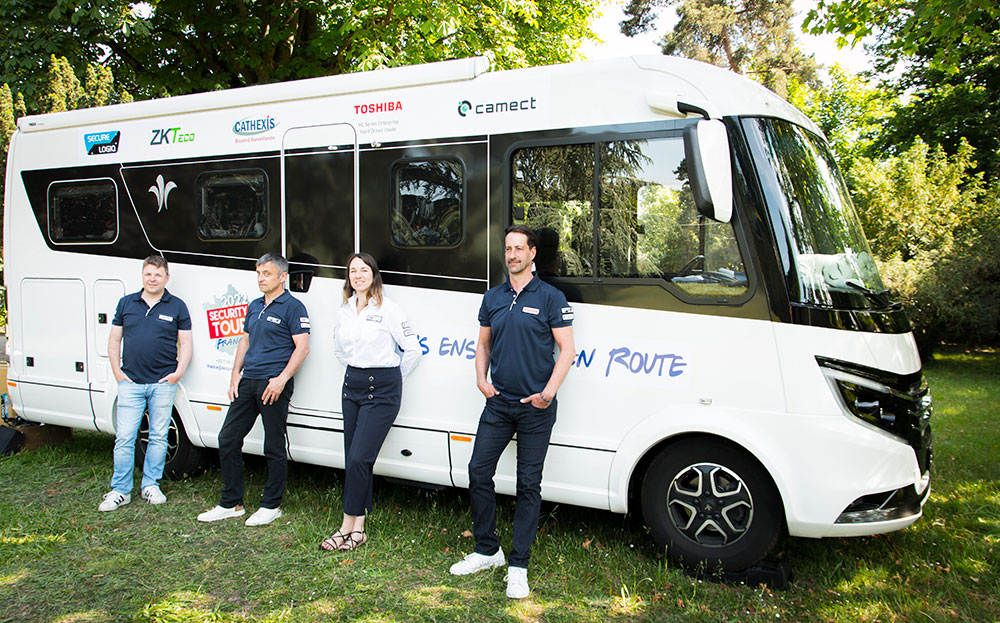
Secure Logiq, Toshiba, Cathexis, ZKTeco, and Camect went on an atypical two-week tour of France. We joined them in the suburbs of Paris to witness the first-hand test of the functionality of a complete integrated solution that these spirited competitors offer in the security market
We caught up with the Niesmann + Bischoff iSmove camper in Chatou, a beautiful town whose looks are sculpted by traditional French architecture and nature. Picturesque houses with high narrow windows, stone and brick facades in the colors of earth minerals, and dark roofs can be found, fittingly, only in this place – the one with much green and quiet. The chirping of birds is the area’s native sound tapestry, and occasional vehicles are just intruders that disturb its peace. While being close to the most visited tourist city in the world, life out there takes place in a completely different timeline: one reserved for yourself and your loved ones, at a bistro surrounded by friends, in intimate gardens surrounded by hedges. Even the hotel where we stayed, although tiny and fused with the panorama of the place, has a small inner stone courtyard, where you can smell the tradition while enjoying your croissant and coffee.
Watch the video reportage:
Integration in practice
We met our hosts in that mini square: Ivan, Jessica, Dominique, and Pierre. Contrary to expectations, thousands of kilometers and a number of visited cities did not leave a noticeable trace on their appearance: we were greeted by a cheerful, open-minded and – as it turned out – a pretty interesting team of people, the memory of who, even now, brings a smile to the face of the author of this text. The four of them work for different companies, which have a variety of products in their portfolio, but which are united by the challenges and willingness to cooperate. Wanting to offer something new to their potential partners and customers, they decided to go on a tour of France together. They branded the camper, equipped it with products, and brought with them their years of experience in business development, sales, and technology with the intention to demonstrate both the individual strength of their companies and the strength that stems from the relationship between various technologies. This is a value that is important to the world of security because the protection of any major facility or location depends on the functionality and reliability of a number of parts that constitute complex security systems. Dedicated servers by Secure Logiq, Toshiba’s hard drives, Cathexis’ VMS, ZKTeco’s access control and Camect’s hub with multiple outputs for multiple cameras, monitors and video walls in fact represent stacked layers of one security croissant of sorts that customers can study on their doorstep as part of a unique tour in this industry.
Dedicated CCTV servers
The entire presented system relies on Secure Logiq’s dedicated servers, the specifics of which we wrote about in one of our earlier issues. A group of experts with many years of experience gathered while working for all well-known manufacturers of video management software came up with the idea to fill in the missing piece on the security puzzle. These are servers specifically designed and built for video surveillance because the use of generic servers did not provide the quality of the recording that could be obtained in the field. The systems were simply not optimized. Secure Logiq has therefore developed a unique Benchmark Pro system to simulate the system that operates in real circumstances. It enters all the specifications that the client submits, from the number and type of cameras to the analytics used. The software then creates virtual streams and simulates what it will look like before the hardware production, i.e. whether the server will withstand the load or not. “Clients often ask us how we can guarantee that our servers will work. The answer is our unique Benchmark Pro software. Since each video system has its own needs, the client provides us with what they need, we make a calculation and deliver a server that is guaranteed to work 100%. If we make a mistake, and so far we haven’t, we’ll fix it at our own expense. And as an added value included in the price of the server, for each client who submits a template and to whom we send a recommendation for the server, we will also provide a complete design. In it, we will describe how many frames per second they get for each camera, what the percentage of the recording is, etc. With that document they can go to the client and ask for a quote”, says Ivan Sval, Secure Logiq’s Regional Sales Manager.
Four-pitched roof
Secure Logiq has several types of servers in its portfolio: from input models 1U with 42 TB, through 2U and 4U, to large workstations of up to 384 TB. The biggest project they completed involved a 1.4 PB server in a single housing. Secure Logiq’s vision is based on four pillars: the largest archive, the fastest data flow, the highest resilience, and the best value for money. “All of our components come with a three to five-year warranty. All servers have two SSDs, with the operating system mapped to both by default, while a redundant power supply is optional. We can run recording servers, workstations used for recording and viewing, or workstation clients used just for viewing recordings,” explains Mr Sval, adding that servers can be upgraded with GPUs and that the last one they worked on had as many as 30 GPU ports.
In addition to Benchmark Pro, Secure Logiq offers two other value-added pieces of software. One of them is Healthcheck, to which the user can connect via the cloud and immediately get information about the status of their server. This does not require an application, but rather online access via any browser. Thresholds can be set in the software, the crossing of which activates the sending of notifications. All communication is protected by SSL encryption and 2-factor authentication. There’s also the Logical Core which allows you to make a copy of one server to another without using licenses for a VMS manufacturer’s redundancy services. The complete Windows is mapped to another server. When the first one fails, the second takes over at no extra cost.
A new challenger in the storage market
Secure Logiq buys all hard drives used in its servers from Toshiba. This is a seemingly unusual move because those who follow this industry know that this renowned Japanese manufacturer, although globally known for its quality, hasn’t operated in the video surveillance market until recently. Toshiba entered the global security industry only five years ago, while its presence in the European security industry was established in 2019. For this purpose, Toshiba had to design completely new products. “We had to develop a special technology because all-day work is demanding for this type of disc. In order to withstand a workload of 180 TB per year, the device must be of great quality. Although we faced strong competition from Seagate and Western Digital, Toshiba is an established Japanese manufacturer which can offer high value in terms of quality, design, price-quality ratio, and investment in research and development. Of course, we had to start from scratch, present our solutions and products and convince customers to trust us,” says Pierre Andrieux, Key Account Manager. It is with this goal that they embarked on this tour in order to establish themselves on the French market together with other brands.
Toshiba has developed a special series of hard drives, firmware, and designs for video surveillance applications so that their products can record videos 24 hours a day, every day of the week. The new series of 3.5-inch discs optimized for storing video with 64 cameras have been named the S300 and is rounded off with the S300 Pro model with a capacity of up to 10 GB. At the same time, they promote an even more resilient and reliable, but more expensive enterprise MG series of hard drives, which can withstand an annual load of 550 TB. It is intended for industrial servers, data centers, and cloud infrastructures. All Toshiba discs come with a five-year warranty, be those the cheapest or the most expensive ones.
Multipurpose open architecture software
The “mind” that manages the entire system backed up by Secure Logiq’s and Toshiba’s hardware is the video management software by the South African company Cathexis. It is software with sophisticated open architecture with multiple possibilities, used for a number of projects around the world. From single installations with over 4000 cameras to customers with over 65,000 cameras spread over 1,500 locations. CathexisVision is not just a VMS in the classic sense: it integrates and manages other 3rd party systems, from intrusion detection and access control to fire alarms, elevators, etc., which makes it very flexible and multifunctional. It comes in several editions: Lite, Core, Professional, and Premium. The difference is in the number of cameras it supports (a maximum of 48 in the first two versions, 150 in Professional, and an unlimited number in Premium), and single servers for Lite and Core and no restriction on servers in the remaining two editions. The cost of the required server platform is considerably lower than the main competitors. In this way, the company can adapt the software to the needs of an individual project. If, for example, you have 10 cameras, one of which is ANPR-enabled, and the two come with on-board analytics, it is not necessary to upgrade to a more expensive version, but rather keep the basic server licence and merely purchase additional camera licenses. There is no limit on the camera functionality supported. Subsequent changes are also easy to make, e.g. moving analytics from one camera to another.
Find objects quickly
The CathexisVision interface is classic, with a video display, timeline, playback and search controls, a feature resource tree,, etc. As we have seen, the software is easy to use and helps you find the clips you need. “Personally, I think that the most important thing in VMS is to quickly find the segment in the video that we need. In our software, this is made simple. We display various activities and other useful information on an intuitive timeline. It includes a graph, often referred to as a Manhattan, which is indicative of the motion throughout the image. The timeline also includes information from other triggers and time based recordings.
If, for example, you want to know when the vehicle entered the parking lot, you can click on the time when it probably did not arrive, e.g. early in the morning, and load that image, and then you go to a time when it’s already there and share the frames between those two time points until you get the one we need,” explains Dominique Debusschere, Cathexis’s Business Development Manager for Europe. Another useful feature is the Activity Trail, which employs different colors, similar to heat maps, to represent movements in the monitored area in relation to the time when they occurred. There is also Adjacent Camera Mapping which offers ease of navigation from one camera to another and by using arrows similar to those in Google Street View.
Easier addition of analytical functions
One of the strengths of CathexisVision is the rapid deployment and fine tuning of multiple types of analytics. The ease of configuration was one aspect of the VMS that helped Cathexis win the Innovation award from the UK security magazine, Benchmark, three out of the last four years. “Once the threat has been identified, one or multiple analytics in the library, including artificial intelligence based object classification, can be used to combat the intrusion,” says Mr Debusschere. The real challenge with intrusion analytics is the large number of false alarms, usually solved by having a technician go to the site and adjust all the parameters, potentially multiple times, requiring both time and money.
To avoid this, Cathexis developed an analytics simulator were recorded footage from the false alarm can be processed remotely allowing an “off-line” inexpensive way of fine-tuning analytics. Integration provides an expansive connection with multiple types of 3rd party devices. For example, a camera detects movement, it would be possible to set the lights to turn on immediately, play an audio warning, check if all the doors are locked, etc. Cathexis now offers a completely revamped, feature rich and highly configurable Android and iOS mobile app. Everything is visible to the mobile security and which can be tailored to their needs. As a novelty for our readers, we learned that just before our arrival, Cathexis launched their new Carbon user interface, an improved and modernised user app with great new functionality. We have also found out that they are currently working on an Enterprise app that will give an estate owner visibility of all his assets, how they are performing, what’s working and what isn’t and be able to control in detail who access to what resources via the corporate Active Directory.
Focus on a new strategy and partner selection
After staying at the European headquarters of ZKTeco in Madrid, which I wrote about in detail in issue No. 178 in May, I was not surprised by the presence of this multinational company on this tour. Back then, I asked them about their development plans in Europe and learned that they opened a number of new offices and were planning for more, that they operated profitably and actively even during the pandemic and that they significantly expanded their product portfolio compared to 10 years ago when they had celebrated their first presentations at local security fairs in a more modest manner. The European market is their focus now and they will maintain that course in the coming years, given the growth in all countries. “Large European market is traditionally a great challenge. Since we have so far been oriented towards project tenders in Europe, we now want to focus on strategy and partner selection, not trying to focus on everything but rather on a few key needs. We want to build a relationship based on trust, so my job is to train our partners to more easily find their partners, bring them in and help them grow,” says Jessica Perret, the company’s Business Development Manager whose goal is to strengthen its presence in French and Belgian markets and draft accompanying strategy.
Client’s trust, among other things, will be built by demonstrating the ability to integrate, and this tour across France is just a great opportunity to do so. “The reason we are participating in this mobile presentation is to show the extent to which we can integrate with all brands. Here, we not only play the role of an independent company but rather show that we are available for integration and communication with other solutions. It’s a new way of marketing. The idea of this presentation is to attract customers, find new partners, and present new ways of getting to know the brand. This type of communication is much more comprehensive. I think that top brands joined together in this way make this presentation stronger and better,” explains Mrs Perret.
A solution for small and medium enterprises
In the park, the “green” company presented us with an affordable and comprehensive Atlas series of access control devices, intended for small and medium enterprises. It is a simple solution, consisting of the main controller to which up to 20 secondary controllers can be connected, together with two types of readers – RFID cards and fingerprints – that can be used simultaneously. The system also supports contactless reading of QR codes from mobile phones, as well as PINs and bar codes. Atlas comes with Linux software installed, which does not require a license. Just enter the IP address of the controller as the URL of the web page. On the main screen of the software, you can monitor the activities of the controller, e.g. how many devices are connected, and how many doors are controlled, with real-time monitoring supported. “You can easily determine if someone is a user and if that person has the right to access a specific door. If you enter a random code, the system reports that someone is trying to enter at a certain time. You can, for example, identify individual doors and readers and connect to the desired door. Also, with the help of the menu, you can get a map of the installation, the location of the controller, as well as information about which door is connected to which type of reader,” ZKTeco’s business development manager told us.
The simplicity of the Atlas series is reflected in its plug & play connectivity, which makes it easier for installers, because they no longer have to spend time connecting, configuring, and explaining the system. The same goes for the users because it is now easy to create new users and give them access. Of course, ZKTeco also offers solutions for much larger installations, such as ZKBioSecurity, which supports more than 200 doors and an unlimited number of users, whereby ANPR, elevator control, time & attendance, etc. can be added to the software. The system can be integrated with any third-party product. They offer communication via SDK to other companies, so they can use the information stored in the controllers and communicate with third-party software.
All analytics in one device
Although their representative could not join us, our interlocutors eventually presented us with a solution from the American company Camect, which is used in more than 30 countries. It is a smart camera hub that offers high-precision object detection in a compact and affordable local system that requires minimal configuration. As obtaining accurate video analytics from a surveilled location remains a challenge, Camect has created a platform that sends detailed and informative notifications about a detected object, which it can send to a monitoring center or other application. This way, it eliminates false alarms caused by smaller moving objects, animals, shadows, or weather conditions. Even simple adjustment makes it possible to detect objects over long distances, which is suitable for construction sites or car parks, for example. The Camect hub is compatible with all IP cameras that support ONVIF profiles or the RTSP protocol, and by combining analytics in one hub, excellent results can be obtained even with cheaper cameras. Integrators can also unlock advanced analytical settings such as increased sensitivity or detecting loitering or unauthorized tampering with the device. The hub itself also has 1 TB of internal memory, where it stores and processes video data, so only alarm notifications are sent to the monitoring center. This significantly reduces bandwidth compared to cloud analytics services for filtering false alarms.
Needless to say, security is of paramount importance in commercial buildings, where we work, get business done or visit clients. People and assets need to be well protected. Accidents and mishaps can cause financial losses and reputational damage to building owners. To provide a safe and secure environment for tenants and visitors, building managers turn to smart technologies, some of which are discussed as follows.
Smart cameras
Smart cameras can play a key role in building security and safety. They are also called AI cameras. Typically deployed on the edge, smart cameras are equipped with AI analytics to detect objects and abnormalities, for example flames and weapons.
“One vital use of smart cameras in building security is the role they can play in fire and safety prevention through the early detection of flames, smoke or spills in buildings. Video analytics combined with AI and computer vision are able to detect incidents in an early state and trigger alarms faster and more reliably than humans. This can lead to the lowering of insurance costs for a facility as well,” said Casey Rawlins, Technical Solutions Consultant at Security & Safety Things. “Smart cameras can also offer early and real-time detection of weapons, such as knives and guns, identify potentially suspicious behaviors such as lurking or loitering in certain areas or detect a suspicious package left behind.”
Smart cameras can also perform people counting functions to make buildings more efficient. “The same set of analytics can also detect a large crowd of people at the base of an escalator or analyze other building foot traffic patterns, produced by people counting or flow detection video analytic apps. This information can be useful to building decision-makers and owners to improve building design through the removal of obstructions that cause bottlenecking, or chokepoints at access points,” Rawlins said.
Finally, smart cameras can help with disease control and prevention, amid and post-pandemic. “The first and most obvious solution (amid COVID) is probably touchless and contactless technologies. For smart cameras, this can be facial recognition for employee entrance into a workplace. In parking garages, it can be license plate recognition for barrier-free entry and automated payments – resulting in a touch-free and contactless experience. These types of entry and exit solutions I anticipate seeing become more and more in demand, as they not only promote safe hygiene practices, but also an optimized experience,” Rawlins said.
Hybrid cloud
A hybrid cloud approach is increasingly seen in building security. Conventionally, building security entails an onsite architecture. Yet more and more, building managers turn to hybrid cloud for more scalability and flexibility.
“The misconception often is that smaller businesses are looking to make the switch to cloud but that’s not always true. We are seeing a number of large enterprise end users deploying cloud for some of their smaller sites or locations for a more hybrid, mixed approach between on-premises and cloud. While on-premises will never fully go away, cloud does offer ease-of-use and less infrastructure that is really attractive to some businesses,” said Chris Sessa, Director of Key Accounts at Salient Systems.
Integration and open platforms
Building security can benefit a lot from integration and open platforms. Managers can view on a single dashboard data generated from various systems. These can be both security- and non-security.
One example is integration between security and a building’s HVAC system. “HVAC systems can be programmed to minimize power demand charges and equipment cycling times by adjusting temperature to live traffic and occupancy. HVAC systems can also be integrated with the building’s security system to adjust room temperature to a specific person’s preferences using facial recognition and historical data on that person,” Rawlins said.
End users from various industries may want to integrate their vertical-specific systems with security to streamline their business. “For example, in healthcare environments, many end users want the ability to integrate cameras and their video management system with software that allows them to track assets, such as patients, staff, medical goods and pharmaceuticals. They also want to integrate medical scope management, which is everything doctors log into a system – from surgeries, COVID tests and more, into the video management system,” Sessa said. “Financial institutions might use a VMS for security purposes, but they can also tie different platforms into it to see what’s happening in their other locations across different states.”
This, then, underscores the need to have open platforms, which have become increasingly important in building security. “In an ideal scenario, all security devices would be integrated into one single VMS, access control system or a larger platform; but having worked with systems integrators for quite some time, we know that many systems are still set up as silos. This is due to a large number of proprietary security systems that all use different protocols and standards,” Rawlins said. “However, end user demand continues to grow for custom solutions and unique integrations to solve their specific pain points. This will no doubt increase the popularity of open platforms and standardized approaches, such as what we offer at Security & Safety Things.”
Integrating all types of systems into one platform, including building management for large enterprise end customers, is becoming more prevalent, as they invest more into other software to streamline processes. VMS manufacturers have to be open to what can be integrated into a platform, from video surveillance and facial recognition, access control badging – it’s all fed into one system,” Sessa said.
Integrator’s role
Amid the latest building security trends, systems integrators should be aware of the latest technologies and solutions to provide tenants and customers with what they need. Cybersecurity, meanwhile, is another issue SIs need to look at. “When working with an end user, integrators should ensure building security is scalable, open and easy-to-use. Complex systems tend to worry customers and present more opportunities for things to go wrong,” Sessa said. “Cybersecurity is a main concern across all sectors right now, as it should be. If you’re an integrator, you should plan for and have certifications to ensure you’re up to date on all best practices. Integrators should make sure they work with manufacturers that take cyber security seriously and offer hardened products.”
Benefits of integrating various technologies into a smart building ecosystem
Reopening commercial office buildings in the midst of COVID-19 requires careful consideration of new health and safety guidelines. Adoption of more smart building technologies is expected to help enforce these rules.
As a driving force behind smart buildings, the IoT has brought with it the ability to optimize all areas of building operations, from HVAC to video surveillance, and offers massive potential for building owners to create added value for customers, according to Adam Wynne, Software Engineering Manager at Security & Safety Things.
“While many facilities are still pursuing goals, such as reducing energy consumption and utilizing space, they have shifted to solutions that help make workspaces and common areas safe, and usable. Building managers must now focus on finding technologies that allow for contactless access control, remote monitoring, management of building occupancy and maintaining of social distancing guidelines, while ensuring proper facial protection is being worn,” Wynne said.
Integrating various systems for maximum efficiency
Entelec Control SystemsWith all the newly drafted safety and health protocols, it is important to see how different building systems can help correctly carry them out. In many cases, insights from an integrated system can be used to understand what visitors were on the premises, who came into contact with who, the airflows from the HVAC, etc.
Koen Schoofs, Marketing and Communications Specialist at Entelec Control Systems, explained the benefits of having visitor management at entrances in combination with video surveillance software integrated in the same platform. He emphasized that doing this centrally is very helpful and eliminates the need to invest in more employees doing checks on the premises.
Schoofs also pointed to centrally managing HVAC units with a PSIM platform, something that has gained more interest recently. “In case of an outbreak for example, you want to minimize the spread of the virus, and must thus be able to quickly stop certain units from spreading the virus with their airflow,” he said.
Optimizing workspaces with building data
Many people are working remotely because of COVID-19, and it’s possible remote working will continue even after the pandemic ends. Add on top of this social distancing and office buildings as we know it will need to be reshaped and reimagined. One way of doing this is with technologies that will enable office and building managers to optimizing their spaces.
The number of enterprise-level buildings expected to connect data from building management system (BMS) platforms to space utilization and optimization software is expected to grow, according to research from Omdia. Investment in standalone solutions is also expected to grow, with the ultimate objective to consolidate space and reduce costs across an entire portfolio of buildings.
“This software primarily uses occupancy sensors to track occupied/unoccupied areas in an office building, and further data is collected related to the numbers of employees present, employees’ habits during working hours, and the times of days these rooms are available. Collecting and analyzing data from multiple sensors and sources within a building to deliver actionable insights enable businesses to better use, optimize and prioritize building spaces while ensuring high levels of comfort for employees in the building,” reported Omdia.
Integrating health and wellness data
Building managers and employers are expected to focus even more on creating safe, healthy and hygienic workplaces for employees and visitors to return to in the post-COVID-19 world. This can be achieved by collecting health and wellness data from different systems.
For example, Omdia addressed the deployment of “smart technologies that can detect fevers or other key symptoms, and help offices create different working ‘zones’ in case of contamination.” This includes devices such as thermal cameras and frictionless security equipment. They also point to investment in workplace hygiene solutions such as smart restroom systems.
Open BMS is not just about protocols
The term “open” has become quite popular in recent years. From open architecture in VMS to open protocols that allow integration of different brands, the concept suggests inclusiveness, which is good both for businesses and customers.
But in the building management systems industry, the word open refers to something much more than protocols, according to Wendy Torell, a Senior Research Analyst at Schneider Electric’s Data Center Science Center.
“The term “open” is often used to describe desired functionality of a Building Management System (BMS),” explains Torell in a blog post on the company website. “It is thought to be essential in achieving the ambition of a smart building. But interestingly, that term itself, while often used by building owners/operators as requirements for their system, as well as by vendors to describe attributes of their systems, generally creates much confusion and ambiguity since the industry lacks a standard definition.”
Developing a framework for open BMS
In a recent white paper published along with her colleagues at Schneider Electric, Torell proposes a logical framework that would help businesses better understand open BMS. This framework consists of three layers that define the concept of open. Each of these layers presents certain expectations that an open BMS needs to meet and build on top of one another.
“This means the capabilities from layer 1 are pre-requisites for achieving the capabilities of layer 2, and layer 2 are pre-requisites for achieving layer 3,” Torell says. “For each of the three layers in the framework, we have defined three criteria for assessing how open the system is: (1) Interoperability, (2) Engineering complexity, and (3) Who performs the work.”
As the name suggests, interoperability evaluates how well one component of a BMS operates seamlessly with another or how well one system works with another. Engineering complexity refers to the level of difficulty to achieve this interoperability. The third criterion checks if the people who operate the BMS need specialized training, making things difficult for customers.
Torell added that there are often tradeoffs with these criteria. For instance, you might be able to achieve a highly open system in terms of interoperability by sacrificing engineering simplicity; or work can be done without engineering complexity, but only by a vendor’s certified technician. Having this construct for discussing a BMS’s degree of “openness” brings these important topics and tradeoffs into the picture.
The three layers
The first layer of the proposed framework is data acquisition and sharing. This is critical to any BMS because sensors that send data and receivers that capture and process them form the foundation of a smart building.
“Controllers require protocols to communicate,” Torell said. “More and more, controllers use open protocols, and to consider a BMS open, it should be interoperable across multiple OT protocols (i.e., BACnet, LonWorks). But just because it uses an open protocol doesn’t mean it is interoperable. The needed data must be exposed by the vendor. The system should also support the extension of native protocols, in order to limit the number of gateways required to serve as “translators” to the sensors, actuators, and controllers.”
The second layer is integration, as BMS solutions extend beyond their conventional role to work alongside security, safety, and other segments. An open BMS solution should allow standard protocols that enable integrators and customers to unite all their solutions and operate them together. Finally, the third layer is building orchestration, which refers to the efficient coordination of all systems under the BMS.
Conclusion
As systems like BMS continue to develop, there is definitely a need to define their role and functions clearly. Knowing what constitutes an open BMS would help customers make better purchase decisions. Other segments like surveillance and access control would also benefit from considering this kind of framework.
In industrial settings, sparks from electrical devices, IP cameras included, have the potential to trigger explosions. Having explosion-protected cameras, then, becomes critical. These disasters incur heavy damage to the manufacturer, not to mention casualties. According to statistics by the National Fire Protection Association, between 2011 and 2015 municipal fire departments in the U.S. responded to an estimated average of 37,910 fires at industrial or manufacturing properties each year, with annual losses from these fires estimated at 16 civilian deaths, 273 civilian injures, and US$1.2 billion in direct property damage.
There are many causes to fires and explosions in industrial settings. A blogpost by Nilfisk cited the following five major causes: combustible dust, hot work, flammable liquids and gases, equipment and machinery, and electrical hazards. According to the post, electrical fires can occur due to one or a combination of the following factors: wiring that is exposed or not up to code, overloaded outlet, extension cords, overloaded circuits and static discharge.
IP cameras need to be well-protected in industrial settings. These cameras are electric devices that can emit sparks. They are also tasked with securing factory premises as well as, in some part, ensuring the factory’s operational and management efficiency. Making them explosion-protected allows them to function normally in an potentially explosive environment, thus giving users peace of mind.
“Explosion-protected cameras should be installed in any area where there is a risk of explosion, which could come from a number of sources. Environments where flammable liquids, gases and chemicals are being used or manufactured, and those where significant amounts of dust or fine particles are being created, all carry a risk of catastrophic explosion. Explosion-protected cameras are designed to mitigate this risk, while still enabling high-quality video surveillance,” said Ulrika Bretz, Product Marketing Manager at Axis Communications.
According to Bretz, explosion-protected cameras are suitable for industrial entities in a variety of sectors. “Environments where there’s a genuine risk of explosion are more common than you might think. From the oil and gas sector to farming and food production; from industrial chemicals to timber processing, hazardous environments where the risk of flammable liquids, gases and dust being ignited are those where explosion-protected cameras should be installed,” she said.
What are explosion-protected cameras
So what are these cameras? What make them explosion-protected? The answer lies in the camera’s enclosure.
“The industry term for explosion-protected cameras such as those from Axis is ‘Ex d’, where the device enclosure provides the protection. Explosion-protected cameras are enclosed in heavy-duty casings, typically made of stainless steel or aluminum, which are certified to protect against any spark being emitted from the camera which could provide an ignition source for an explosion,” Bretz said.
What certifications are there to prove the cameras are protected
What certifications are out there to show proof the housing is protected? Bretz cited Axis’s own examples. “The housing of Axis explosion-protected cameras is certified worldwide according to applicable standards: NEC (USA), CEC (Canada), IECEx (International), ATEX (EU), EAC Ex (Eurasian Customs Union), PESO (India), INMETRO (Brazil), CNEx (China), KCC (Korea) and IA (South Africa), covering Class I/II/III, Divisions 1 and 2, and Zones 1, 2, 21, 22, Groups IIC and IIIC. We believe this represents the highest level of standards that customers should look for,” she said. How should explosion-protected cameras be installed
The installation of explosion-protected cameras also requires special attention. “First of all, they shall be installed by a certified technician in a hazardous area,” Bretz said, adding where to install the cameras depends on the application. “A moving PTZ camera is typically installed higher up to monitor a larger area, while fixed cameras are installed closer to the area of interest. An alternative to install a fixed camera with high zoom factor at greater distance is to install a high resolution camera closer to the monitored area, where one would get both the same level of detail but also a better overview of the area.”
What analytics should be included in these cameras
Explosion-protected cameras can include the same set of analytics found in typical IP cameras. Since these cameras are deployed in industrial settings, analytics that detect smoke and flames can be helpful but should not be the only means of detection.
“While flame and smoke detection analytics are obviously beneficial in environments where there is a risk of explosion, it is also important to state that surveillance camera analytics for these areas should not replace other flame and smoke detection sensors,” Bretz said. “More broadly, analytics to support good health and safety practices – such as the wearing of appropriate PPE and analytics to create alerts should people enter prohibited areas – can support safety and security in hazardous areas.”
Established long before data mining and bitcoin mining, mining the earth continues to be a major economic driver. The International organizing committee for the world mining congress issues a yearly World Mining Data report. The 2021 report states that world mining production in 2019 was 17.9 billion metric tons (roughly the weight of 96,000 Boeing 747 Jumbo jets). Most of the production (58.9%) was in Asia, followed by North America (15.8%), in terms of countries, China, U.S., Russia and Australia are the four biggest mining nations. In the last few years, Australia and China have seen the most growth and surpassed Africa, especially in the production of minerals like Lithium, Gallium and Niobium needed for the battery industry, demand for which doubled since 2015.
Challenges in mining security and safety
The mining industry faces extreme and multi-faceted challenges in both security and safety. The key concern of security managers in the mining sector are keeping employees safe, however, they are also tasked with preventing theft of valuable raw materials and equipment, choosing equipment that can work in extreme environmental conditions, maintaining compliance with health, safety and environmental regulations and more often than not, working in politically unstable countries.
Working in harsh conditions
Mining security faces three main challenges: harsh conditions, large areas and high costs for installing comprehensive solutions. Compared to commercial-use security systems, mine security systems must work in harsh environments. Dust, humidity, fog, low light, heavy water flow, flammable gases and extreme temperature are common. At the depths of mines, the temperatures could reach in excess of 45 degrees Celsius and the environment is constantly moist and humid. The outside climate in countries like Australia, South Africa or Russia can also be challenging with freezing temperatures in winter or searing desert heat in summer.
“When considering these conditions, equipment should be tested and certified with appropriate impact and ingress ratings, and this should be further evidenced and supported by the manufacturer through long product warranties. Reliable equipment ensures the system continues to do its job and the business continues to operate profitably whilst protecting its workforce” emphasized Mike Margrain, National Technical Manager for Gallagher in Australia.
Equipment therefore needs to be ruggedized and customized to mining operations. Operators need sealed, waterproof units with vibration dampers, which can function over a wide temperature range. All cables need to be secured in airtight or waterproof material, preventing dust and other particles from damaging them. Explosion-proof devices must be installed with appropriate cable management systems.
Cabling technique for example is different for mines, since drilling or attaching cables to rock can only be done by engineering personnel. The solution is pre-installed infrastructure cabling that provides power and communications for conveyor systems or vehicle workshops to most underground points.
Ensuring mine employee safety
Employee safety is the primary concern in the harsh working environments in mines, and verifying authorized personnel is the first step in accomplishing this.
Access control at mines should only admit personnel who passed safety inductions, medical checks and training. Added features include license renewal and expiry notifications. Management is increasingly aware of the cost related to worker safety failures, loss of lives and loss of material and equipment. Other than passing government regulations, increasing the level of security and safety could save money, increase productivity, reduce losses in infrastructure and cut production downtime.
“In underground operations, it is paramount that the location of workers is known due to the elevated risk in these environments. Cardholder location tracking is implemented to ensure workers can be accounted for in the event of an emergency, or to safely manage underground blasting” explained Margrain and described how this works in the field: “Providing electronic ‘tagging’ stations and implementing long-range tracking of personnel ensures the control room operators not only know how many people are in locations underground, but in which area each worker resides. Integrating this data into firing procedures ensures explosives cannot be triggered until all personnel are accounted for in safe areas. Tagging portals which provide feedback to the worker with personal information (and photo ID images) provide peace of mind that the system has indeed logged their location as they travel to different areas while on shift. Furthermore, long-range tracking of workers can be employed in underground operations where travel is required in buses, light vehicles, or machinery. This ensures the location data can be captured without requiring personnel to exit vehicles in dangerous locations to present to a physical access point. The method of access credential utilized for this safety data becomes extremely important as the risk of missed movement can have real implications for personnel health and safety”.
In addition to controlling access, monitoring the work zone is essential for protecting employees. The use of video surveillance underground helps to monitor miner safety by viewing rock falls or accidents in real time, speeding up search and rescue time, and help inhibit illegal activity such as theft or pirate miners. For large areas, radar integrated with video detects if a worker is in a hazardous area or is near hazardous materials or gases. It secures transport and storage of ammonia nitrate, explosives and other hazardous materials.
Should an accident occur, the operational health and safety (OH&S) solution must track miners by access control, sensors and RFID systems. The solution should generate “muster reports” quickly, providing the exact number of individuals in an area to the control room personnel at any given time.
Access control solutions in mines
Access control in the mining and resources sector is generally used less for security and more to manage governance, risk, and compliance; “it’s all about protecting the safety of workers and ensuring business continuity,” said Gallagher’s Margrain. “This includes managing personnel competencies to only allow access to those that hold active qualifications and inductions for the site, or within a particular onsite area. Contractors may also perhaps only enter if they hold current insurance and have an active work order. In many countries, there are state or government legislated licenses that a worker must hold before they can work on a mining site. These competency level controls will differ depending on what role a worker has and where they are working — for example, there will be different enforcement rules for someone working underground, than those working only on the mine surface” he added.
“Fatigue is a significant risk to workers at an organization that operates 24/7, particularly to those who work night shifts or are working in dangerous environments. We see these rules being applied in more stringent ways for such personnel to prevent a worker from breaching fatigue policies during their shift. An access control system allows sites to quickly locate workers for risk assessments and a potential change of personnel – not only saving time, but also preventing disruption to the site. This type of management (with appropriate enforcement and proactive dynamic notifications) therefore becomes even more important for personnel that are working underground,” explained Margrain. To prevent theft, most attention is focused on access control and intrusion detection for storage, processing areas and areas where heavy machinery is present.
Whilst biometric access control has rapidly increased in popularity in recent years, the uptake in the mining and resources industry has been slow. The primary reasons for this are because daily work environments can impact the ability to reliably match workers via biometrics, due to workers becoming dirty or wearing PPE (personal protective equipment).
Video surveillance in mine security
Security requirements differ by the mine type. Open-pit mines are based on authority and risk levels and put emphasis on access control, while underground mines — with a higher requirement for safety — put emphasis on people location management.
The large area of mines poses a challenge to security. Fencing and lighting might be very expensive, and even with the most comprehensive security solution installed, surveillance is not considered as a viable option for many underground mines, due to harsh conditions and extended tunnel length. Large mines can have hundreds of kilometers of tunnels, which simply cannot be effectively monitored by cameras.
Intrusion detection in mines
While priority areas depend on the site, a mine’s security profile is generally developed from the outside in, making perimeter security the first concern. However, although perimeter fencing is important, it is often impractical due to the large and difficult landscape of mine sites.
Video surveillance can detect perimeter intrusion. Day and night cameras are suited for open areas with good light over long distances. Infrared cameras can perform close-range monitoring at low light entry and exit points. For dark outdoor areas, thermal imaging cameras can see intruders.
Preventing equipment theft
Some mine vehicles are worth millions of dollars and are costly for downtime and repairs, so monitoring and securing equipment is important. Other than asset tagging, sensor solutions such as onboard vehicle collision alert technology also help protect property. The collision alert system detects hazards in the vehicle’s path and alerts drivers for potential collisions, preventing damage to the vehicle and protecting worker safety. Solutions like these provide invaluable production data feedback in difficult-to-reach areas. When integrated with access control, mine companies can make sure that only authorized personnel can operate the vehicle. The option of combined driver & vehicle identification increases security as you know exactly who was driving which vehicle.
Driver-based automatic vehicle identification (AVI) ensures that a vehicle can never leave, or get access to a secured area unless occupied by an authorized driver. Vehicle and driver access traditionally requires the driver to stop and badge or present their access card. This can often result in traffic congestion around access points/gates. Current solutions allow vehicles (both trucks and cars) to activate gates far enough in advance (up to 10m, at speeds up to 200 km/h) which eliminates the need for vehicles to stop, ensuring an uninterrupted flow of traffic. This is a notable feature for mining sites where it is disruptive to stop and start heavy machinery.
Trends in mine security
The United States Mine Safety and Health Administration (MSHA) maintains a database of all mine-related accidents and fatalities in the U.S. MSHA accident reports show that footage from video surveillance is often used in the forensic investigation of accidents.
On May 2, 2020, Rodger A. Zimmerman, a 56-year-old front-end loader operator died when he was engulfed by material inside a collection container (hopper) at Enon Sand & Gravel mine. Zimmerman entered the hopper to clear a blockage caused by material inside the hopper. Once inside, a large amount of material dislodged, engulfing Zimmerman. Video evidence from the mine’s surveillance system verified entry into the hopper to dislodge blockage from underneath was a common practice and occurred repeatedly on previous days captured on the video. The surveillance video showed miners on the belt structure and/or inside the hopper not wearing safety belts or harnesses and not equipped with lifelines, while the belt was operating and without engaging in lock-out-tag-out (LOTO) procedures.
Today’s video analytics can be used to detect and stop this type of accident before happening. Video analytics can raise an alert when employees are getting too close to dangerous equipment or if they are not wearing the right safety equipment like a hard hat or safety harness. Hikvision for example installed a system in a coal mine in China that increased worker safety by monitoring the areas around winches and other equipment, and by sending alerts if employees get too close. The Hikvision solution was also configured to support specific mining-safety applications, such as constant monitoring of surface water levels in different areas of the mine. Constant seepage from rock formations means that surface water can accumulate in different areas of the mine, which is a problem in terms of potential flooding, damage to infrastructure, and worker safety risks. The Hikvision system monitors surface-water levels constantly and allows the mine staff to take action to deal with any problems that arise before water levels exceed safe limits.
Ai-driven video analytics are gaining traction as a means to minimize false alarms. Avigilon’s H4 Thermal camera for example is embedded with Avigilon self-learning video analytics to provide long-range perimeter protection and leverages thermal technology to operate under challenging conditions while minimizing false alarms. It detects the movement of people, vehicles and partly camouflaged objects in complete darkness or areas with challenging light conditions.
Security systems are also used to drive compliance with OH&S regulations. Access control manufacturer Gallagher allows cardholder information to be recorded in the Gallagher system and shared bi-directionally with existing HR/people management systems for accurate, real-time use. Staff records provide a full audit trail to ensure compulsory training and testing are undertaken. This minimizes corporate liability and enables organizations to meet their Duty of Care.
Mobile smartphone devices are commonly used to spot-check workers on-site (i.e., to validate they are trained and inducted to be where they are, or performing their current task), as well as being able to be used for mobile evacuation procedures and access control movements.
Compliance driving product requirements
Given the risks associated with mining operations, government legislation can be stringent but differ immensely in different parts of the world. “We have seen an increase in concern around fatigue and exposure, and the need for reporting to assist with state levy calculations. Cases of corporate manslaughter against negligent management have certainly created more interest in systems which can demonstrate duty of care and protect workforces,” said Margrain. In many cases, not only do such system implementations meet those goals while ensuring business continuity, but they also demonstrate a reduction of operational cost through improved efficiency. Margrain recommended factoring this into vendor selection: “Having a system with governance, risk, and compliance solutions that can be tailored to meet changing requirements, without significant reinvestment, should be factored into vendor selection. By working with their vendor, sites operating in unique conditions like that of mining, can design a system that is tailored to the specific needs of their site and ensure health and safety requirements are met at the required level”.
Venturing on a unique opportunity to showcase its extensive product portfolio, Secure Logiq is taking part in a two-week ‘Security Tour France’ road trip this month.
From 23 May to 6 June, Secure Logiq, along with along with Cathexis, ZKTeco, Toshiba and Camect will be visiting 130 security companies between Paris and Lille, with a target of two site demos per day, driving the team’s reliable Niesmann+Bischoff iSmove motorhome.
Using the van’s live setup to provide real-time demos no matter what the weather brings, the team be showcasing CCTV system solutions, enhanced video security, integrated VMS solutions and positive ROI, accompanied by croissants and coffee.
“This is a really exciting opportunity to connect with the French security market,” says Ivan Sval, Regional Sales Manager EU of Secure Logiq. “When planning these types of visits, they are arranged well in advance, or it will just be cold visiting. The goal of this trip is to surprise the customer with our presence, and I think having our real-time demos on the road with us will provide a perfect chance not only to present our portfolio, but to network in a unique and memorable way.”
Demonstrating the power of an integrated security solution, the ‘Security Tour France’ team are excited to begin their journey – spearheading an innovative concept within the security sector that brings solutions directly to people’s doorsteps.
“It’s incredible to be involved in a road trip experience like this with a brilliant team of experts in their field,” says Robin Hughes, Sales Director, Secure Logiq. “No manufacturer in our business has ever done a trip like this before and with each site visit and demonstration, we hope to make a lasting impression on our customers.”
Dominique Debusschere (Cathexis EU), Ivan Sval (Secure Logiq), Jessica Perret (ZKTeco) and Pierre Andrieux (Toshiba) will visit distributors and integrators, demonstrating the power of a comprehensive VMS solution. The team will demonstrate this using the CathexisVision VMS, ZKTeco access control system, Secure Logiq server hardware, Toshiba hard drives and Camect cameras.
All of this will be done from the team’s trusty Niesmann+Bischoff iSmove van, which is kitted out to allow a real-time demo of the integrated solution, no matter the weather.