Home Archive by category Najave II (Page 4)

Najave II

Facial Recognition Solution for New Age

VIVOTEK, the leading global IP surveillance provider, strives to provide comprehensive security solutions and launches the first-ever facial recognition camera that integrates edge computing to help enterprises quickly identify the gender and age of people in the video on edge, as well as those who are wearing masks. The camera has a built-in memory card with facial data storage of up to 10,000 profiles and achieves a 99% accuracy rate of detection. The camera can also target specific person/face for real-time alarm and its software and hardware meet the standards of the U.S. National Defense Authorization Act, building an environment people can live in with peace of mind.

By: Djordje Bacic, VIVOTEK; E-mail: djordje.bacic@vivotek.com

VIVOTEK builds into the software of FD9387-FR-v2 Facial Recognition Camera the SAFR Inside AI facial recognition platform developed by SAFR from RealNetworks, LLC., which is combined with the camera’s powerful edge-computing capability to significantly enhance the efficiency of analysis. The camera’s functions include real-time facial detection and tracking; early warning of strange faces; and image privacy mode for sensitive areas, avoiding sharing of the video with a third party. Moreover, the camera is equipped with strong cybersecurity protection capability with fully encrypted data storage and transmission, safeguarding user privacy.

VIVOTEK FD9387-FR-v2 Facial Recognition Camera is suitable for building automation/ access control systems of banks, retailers, and buildings; among which, the build-in system is open to integration with business intelligence (BI) services, especially customer service of luxury retail, which sends a real-time notification when VIP customers walk into the store, enhancing service quality and standards; effectively tracks and detects person of interest (POI), making it a crucial aspect of a smart building—through list management, unauthorized visitors will be reported and recorded in case of future investigations.

What is Facial Recognition?

Facial recognition biometrically identifies facial vectors and features, matching them with pre-enrolled individuals. Recent advancements in AI technologies, based on deep neural networks (DNNs), have dramatically improved precision, unlocking a wealth of new use cases.

The technology leverages proprietary AI algorithms and mathematical equations to create an individual’s template by measuring facial variables – nose depth and width, forehead length, and eye shape. Facial recognition then compares the generated template with existing templates in a database. If there is a match, it can confirm an individual’s identity.

How Does Facial Recognition Work?

Facial recognition is by far the most powerful and relevant AI biometric technology. It has vast abilities and can carry out several tasks beyond face detection and recognition. The key features of a facial recognition engine are:

Face detection

Face detection is the first step the engine takes to confirm the presence of faces as they appear on a live camera feed, a video recording, or as it scans still image captures. The whole field of view is scanned for any area containing full or even partial human faces. Fast and precise face detection is a critical first step to ensure the performance of the entire facial recognition process.

Face feature extraction

After face detection, feature extraction is the next step. The engine first extracts an n-dimensional vector set (a template) from the facial image. Achieving very high precision requires a high “n” value. To fully ensure privacy, no actual images of faces are stored on our camera. Next, the template extracted from an individual’s face is used for matching or searching.

Face match

If the goal is to verify a person’s identity, in other words, to answer the question, “Is this person whom they say they are?” then the facial recognition engine performs a 1:1 face match. If they are already enrolled, the engine extracts a facial template from the camera feed’s live view and checks if it matches the template on file for this person.

Face search

If the goal is to answer the question, “Who is this person?” the engine completes a face search. It compares the individual’s facial template to the pre-enrolled faces in the database and confirms the person’s identity if it finds a match. The most common use of face search is a security and surveillance system using a camera to verify that a person belongs to a particular company – if their face was pre-enrolled in the company’s facial database, face search will confirm it is them and grant them access.

How Facial Recognition Will Transform Biometrics

Facial recognition technology is poised to make our world a better place. But, to do so, individuals need broader levels of education on ethical implementation to feel more comfortable with, and accepting of, businesses that have openly adopted AI biometric technology as a new, safe standard.

Facial recognition, and the potential it holds, is a more positive advancement than detractors would like to admit. It is businesses keeping their employees safe by automating secure access control in the office. It is retailers enhancing customer experiences in their stores. It is manufacturers simplifying access to their tiers of restricted areas. It is banks and fintech companies introducing much stronger authentication and cutting-edge security controls. And that’s just the tip of the iceberg.

Facial recognition is the future of AI biometric technology. The industry needs to better educate consumers and debunk the many falsehoods circulating about this technology while explaining its positive value and potential for good. Facial recognition also needs to be appropriately regulated to not hinder innovation but bring forth its many benefits.

A Safe, Secure and Pleasurable Experience at the University

Managing students, staff and visitors was a key requirement of the university. Therefore, they opted for a secure and flexible solution from SALTO Systems that controls access to stairwells, dormitories, gates and driveways using standard university ID cards.

By: Mihael Pinsone Slanc, Business Development Manager, SALTO Systems; E-mail: m.slanc@saltosystems.com

Clare College is the second-oldest of the Cambridge colleges, with a foundation date of 1326. Located just a short walk from the centre of Cambridge, it is a lively and forward-looking college, with a strong history of academic achievement and a particular reputation for its friendly and unpretentious student community. Student life centres on the elegant seventeenth-century Old Court set in beautiful gardens beside the river in the centre of Cambridge and the twentieth-century Memorial Buildings.

The challenge

The Support Services department at the University of Cambridge needs to allow for simple and secure access to a range of buildings within the campus of the university. When one of the colleges at the university, Clare College, needed to upgrade and modernise its access control arrangements as part of a rolling programme of security improvements throughout the university, the department decided to install a bespoke electronic solution from SALTO Systems to achieve its objectives.

The previous access control system at Clare College was a simple proximity-based installation fitted several years ago to replace the original mechanical lock and key arrangement. However, this was beginning to show its age, both in its limited range of features and by the fact that to add fully online doors with electronic locks as part of the expansion programme would require a hard wired solution that would be prohibitively expensive.

Student, staff and visitor management is crucial for the university and this would be the key application for the new access control system. To achieve it a secure solution was needed to control access via entrances to staircases, student hostels, gateways and driveways using standard issue University ID cards. The college, having already taken the decision to move to the more secure Mifare card technology, needed an access system that was compatible with Mifare, was contactless and which could also provide them with everything that a hard-wired system would deliver but in a mix of online and offline standalone wire free formats and at lower cost too.

Mix of online and offline readers

Local SALTO business partner Cambridge Lock and Safe carried out the installation. One of their prime aims with the new access system was the need to reduce the time needed to manage it, without any loss of functionality, flexibility, control or security.

In order to achieve this it was necessary to consider the college’s requirements from two angles. Since Clare College uses the standard University ID Cards which support the Mifare system, a total of 47 WRM9001 contactless smart card wall readers and CU50ENSVN Control Units was needed. The online readers would then operate via the college’s Local Area Network (LAN) while the offline readers would use the SALTO VIRTUAL NETWORK (SVN).

The SVN system allows the stand-alone locks to read, receive and write information via the University ID cards. Since most access related information is kept encrypted on these cards, the wall readers are able to update and receive information from the cards at any time while from a user’s point of view, the up-dater is just another wall reader. This easy functionality opens up a whole range of possibilities and provides 90% of the benefits of a fully online access control system at the cost of a standalone system.

User movement tracking

The ‘smart’ ID cards build up ‘on-card’ audit trails through normal use enabling the Support Services department to track student, staff and visitor movement through both the offline and online parts of the system if required, and a complete access profile of each individual can be established and updated as necessary at the update wall readers.

Any ID cards that become lost or stolen can be quickly and simply deleted from the system just through visiting the readers with up-dated cards. The system also greatly reduces the number of visits necessary to offline doors, since user data is simply transferred on cards by normal usage. This functionality can revolutionise the traditional problems associated with key control, eliminating the need to replace locks when security is breached due to the loss or theft of an ID card.

Facilitated work of the faculty

Another function of SVN is departmental operation. This allows each faculty at a campus to manage only their own doors and/or users, while certain other doors and users can be simultaneously shared with other faculties, for example main entrance doors etc. This provides maximum security for each faculty with the convenience and flexibility of shared control of main access points.

“It is extremely important to us that students, staff and visitors have a safe, secure and pleasurable experience while at the university. With the installation of the SALTO access control system at Clare College we are confident this will be achieved. Its sophisticated mix of online and offline access control points together with the advantages conferred by the SVN system enable us to manage up to 64,000 users and up to 64,000 doors in a single system if required, making the college both a secure and accessible environment for all its users,” said Peter Johnson from Support Services Department.

More Sustainable and Efficient Energy Storage Systems

With the company’s strategic adjustment and business upgrade, Uniview has gradually transformed into a global AIoT product and solution provider, exploring new growth opportunities. Energy storage is one of the most important directions.

By: Tsing Tang, CEO, East Europe, Zhejiang Uniview Technologies; E-mail: tangsiqing@uniview.com

Battery energy storage systems are a crucial component of the new energy industry and have the potential to revolutionize our daily lives. They can provide power to homes during outages and enable off-grid energy solutions. Uniview constantly integrates power electronics and digital technologies to meet the ever-changing market demands. Uniview hopes to bring cleaner and more sustainable energy to consumers around the world.

The First System for Residential Environments

Among the latest exciting developments is the release of the Uniview ESS SAH5B10 A EU, the company’s first whole home energy storage system designed for residential consumers. This all-new solution serves as an excellent option for those seeking a more sustainable and efficient way to power their homes.

Uniview RESS is an energy storage system that keeps your home powered during an outage and provides energy independence from the grid. It’s just like an energy bank account where you can make deposits and withdrawals as you see fit. By storing sufficient power within the batteries, Uniview RESS can reduce or eliminate your reliance on the utility electrical grid, make electricity more affordable, and get well-prepared for unexpected blackouts, emergencies, and other disasters. Recharging UNV RESS with lower prices of off-peak grid power can also effectively reduce monthly electricity bills.

Features

To meet the market demand, Uniview RESS bears the following highlights:

  • Easy installation: With just 3 step cable connection, you can set up a residential ESS
  • Good components, good quality
  • Smart control and monitor: With the APP, you can control and monitor ESS just by fingertips
  • 7% increase in usable capacity: Uniview B10 provides 97% of the rated battery capacity to be usable, while others only 90%
  • As long as 15 years lifespan: 6000+ cycles over 70% SOH, 3500+ cycles over 80% SOH
  • On-grid & off-grid hybrid ESS system: Minimize the modification of home circuitry

Multiple Uses

Uniview provides accountable, high-quality, easy-to-use, and safe products, ranging from portable power stations (Portable RESS) and portable solar panels to residential energy storage systems (RESS) for homes and businesses worldwide. With the integrated and applied technologies of both lithium-ion battery energy storage and AIoT technologies, Uniview is dedicated to developing the state of art ESS products to meet the various demands of different scenarios, products to meet the various demands of different scenarios, from portable power stations to residential ESS.

More information please visit www.uniview.com. If you have any business queries, please contact

chenkexin@uniview.com

New data center security tech for integrators to utilize

Data centers are like many mission-critical facilities, overwhelmed by an ever-increasing volume of data generated by many siloed safety and security systems. While all these systems provide valuable information, the sheer volume of unfiltered and uncorrelated inputs results in data “noise” that drowns out what’s essential and overloads operators.

By Prasanth Aby Thomas, asmag.com

“Today, more data centers are implementing situational awareness platforms that allow operators to focus on critical insights and execute the necessary actions to help protect what matters most,” explains Alan Stoddard, President of Cognyte Situational Intelligence Solutions. “These types of technologies identify the data needed to protect an organization’s most significant assets — in this case, network infrastructure — and are also part of the power of the intelligent security operations center.”

Additionally, the data visualization framework empowers security leaders to present historical data from systems into a live dashboard. With this type of centralized, real-time view, security teams can transform the way they track, visualize, analyze, and reach their security goals.

Focus beyond the data in data centers

 Data centers should consider deploying the same types of countermeasures that you would in any mission-critical facility, such as multi-factor authentication, anomaly detection, identity management, access control, and video surveillance.

But John Rezzonico, CEO of Edge360, points out that often the focus is still on the data security side. If the same protocols in establishing cybersecurity measures were used across physical security, these facilities would be better prepared to protect physical assets from threats.

“It’s also crucial for data centers to closely evaluate their video management platforms to ensure they can scale as risks and needs evolve,” Rezzonico said. “New VMS solutions today are built on modern IT infrastructure and containerization. A containerized system leads to better security because full-application isolation makes it possible to set each application’s primary process in separate containers. This also provides ease of maintenance and sustainment across an enterprise, which is more important when maintaining critical systems remotely.”

Physical security without compromising cybersecurity

While physical security integrators do need to look beyond data to get their work done, this should come at the cost of cybersecurity. In fact, ensuring both physical and cyber security with equal importance should become a prerogative for integrators because of the interconnected nature of modern devices.

“Security integrators need to ensure the vendors they are working with follow a security-first strategy when developing physical security systems,” Stoddard said. “Manufacturers should be providing physical security products that are cyber secure and tested regularly to ensure optimal compliance. This is non-negotiable in today’s evolving risk environment.”

Cyber security and physical security go together, and integrators need to know how to consider the impact of both physical and cyber breaches as part of their deployments. They must invest in understanding both sides of the security equation to deliver comprehensive service to mission-critical businesses like data centers. If not, they are opening the door to risk.

What integrators should know

Worldwide IT spending is projected to total $4.5 trillion in 2022, an increase of 3 percent from 2021, according to the latest forecast by Gartner. Spending on data center systems is forecast to experience the strongest growth of all segments in 2022 at 11.1 percent. This suggests the potential growth for physical security in this segment.

But while data centers offer a great business opportunity for security systems integrators, they need to make the customer realize its relevance. It’s essential for security integrators to work closely with the customer to make sure they know the considerations that need to be completed and the requirements for physical security within these complex environments.

“If integrators cannot teach the customer why they need to deploy the protections necessary, they shouldn’t be working within the data center market,” Rezzonico said. “To be truly successful in this market, integrators must understand the needs of the market and facilities as it relates to physical security and the customer’s complete business strategy.”

In short, to take advantage of the demand in this sector, integrators must have a clear understanding of the market and should be able to impart this knowledge to the customer. There are a number of solutions at their disposal for data center projects, but working with the unique requirements of each customer would prove to be the key.

Data centers often receive more attention for cybersecurity because of the nature of the assets they hold. While this is important, it leaves the physical side of things vulnerable to theft, robbery, and vandalism. Post the pandemic, this has become an even more critical issue because of the increased amount of data entrusted to these places.

The seriousness of the situation is not lost on most major data center managers. A quick search on Google for data center physical security would throw up specific pages on how AWS and Microsoft Azure protect their sites. That these companies feel the need to explain the measures they take indicates the severity of the matter.

But the biggest challenge in protecting data centers is the rapid pace at which they grow and evolve. Integrating physical and logical systems in such a dynamic environment requires careful consideration of various factors and optimized strategy. Asmag.com spoke to some of the top industry professionals to understand the biggest threats to data centers and how integrators can go about protecting them.

Major threats to data centers

Most data centers focus on software and implement data security tools such as firewalls to identify and mitigate cyber threats. But the need for the physical security of these facilities is paramount. A breach in physical security can lead to data theft and cause breaches that compromise data security.

“With the increasing threat of cyberattacks and natural disasters, we must work to ensure the security of data centers to protect intellectual property, ensure compliance and maintain security and resiliency standards to keep these facilities safe,” said Alan Stoddard President at Cognyte Situational Intelligence Solutions. “Additionally, we must be cognizant that data centers are evolving. The increased deployment of cloud-based and edge data center facilities will increase the demand for physical security solutions in the coming year.”

But perhaps the real problem now is not the lack of technology to protect data centers but the lack of its appropriate use. John Rezzonico, CEO of Edge360, pointed out that the lack of timely upgrades and maintenance is a major cause of concern.

“Data centers typically have many physical security devices in a small space or area, which can be challenging to manage,” Rezzonico said. “On top of that, many data centers establish security systems and then allow physical security software, like video management platforms, to become outdated. But this fact must change: As more businesses shift to remote work and the storage of critical data via the cloud and within these data centers expands, the need for solid security in these facilities is growing, and protecting them becomes more critical.”

It’s also important to note that the focus for these facilities has primarily been on protecting the network, which means physical security programs have taken a back seat. But the protection of the brick-and-mortar facility is just as, if not more, important as ensuring captured data is protected.

Checklist for data center physical security

Data center security should follow a specific formula for protecting assets, with the idea of concentric circles. The outer layer represents perimeter security; the next is the hardening of the facility itself and preventing unauthorized access.

Next, security leaders should focus on securing the racks where the data and servers are stored. Finally, there must be another added layer of security around the controls for those server rooms to prevent any bad actors from accessing them.

“At each level, there needs to be a standard amount of physical and cyber security protection, which should be common practice across data centers, whether public, private, co-located, or on-site,” Rezzonico said. “The same policies and methodologies should be applied no matter the size, type of data center, or location. Still, they are often not, creating a facility that lacks the proper security measures for protecting critical data.”

Stoddard agrees that the best way to secure a data center is to manage it in layers. A multi-layered approach best supports proactive planning and makes identifying and mitigating a failure or breach easy. Here are some best practices that he suggests to consider:

1.Conduct regular audits: Internal audits ensure that systems and processes are working as intended. Audits should check for vulnerabilities in the data center facilities as well as across systems and devices.

“Access control systems, video surveillance cameras, and electronic locks must be checked to ensure proper function,” Stoddard said. “Security leaders should also continually assess whether a change in personnel calls for an update in the procedures and systems.”

2. Strengthen situational awareness: Any facility requiring extra protection, like a data center, should adopt an intelligent security approach. Funneling all data and systems into one centralized platform provides a higher level of oversight over security and operations.

3. Establish redundancy: Avoid the opportunity for downtime or system failure that results in a shutdown by creating redundancy across your data center operations. Data center failures can be prevented with proactive planning, testing, and awareness.

4. Enhance video surveillance: Video systems should be comprehensive and cover indoor and outdoor areas. Additionally, 24/7 video monitoring is critical to helping identify potential anomalies before they become more significant issues. Security guards can also be an essential component in augmenting technology.

5. SOP updates: Standard operating procedures need to be evaluated and tested regularly. This process also includes refresher training on the emerging or new security measures that need to be followed. Because risks are changing and evolving rapidly, regular checks of existing processes and procedures are recommended.

Conclusion

The technology needed for physical security at data centers is not complex. But what is often not up to the mark is the maintenance and operation. Steps like regular audits and SOP updates that Stoddard suggested highlight this concern.

In the coming years, we will likely see the number of data centers increase worldwide as more customers become aware of the importance and convenience of cloud-based solutions. This means more opportunities for physical security systems integrators. While challenges are a concern, it presents new growth areas with the right approach.

VIVOTEK Officially Launches the VAST Security Station Amid Rising AI Surveillance Demand

VIVOTEK, the leading global IP surveillance provider, will officially launch its AI security system, VAST Security Station (VSS), in March, available to users in three flexible tiers: VSS Lite, VSS Standard, and VSS Professional. VSS is a surveillance platform that combines advanced AI and edge computing technologies to achieve accurate facial recognition and vehicle detection in real-time by integrated cameras. VSS is capable of managing up to 20,000 cameras simultaneously and offers a powerful array of intelligent image analysis tools for maximum query accuracy and information security, greatly enhancing operational management and efficiency. In celebration of its upcoming release, VIVOTEK is offering a migration promotion from VAST 2 to VSS Professional, starting on March 8th.

“VSS is an easy-to-use AI security system. The intuitive and highly customizable interface allows users to easily add new cameras to the network, set up substations, and even enable real-time audio broadcasting. It is truly the next step in video management.” explained Louis Liao, Director of Product Planning at VIVOTEK, “There is considerable market demand for integrated surveillance systems. However, the high barrier to entry makes it challenging to satisfy this demand. At VIVOTEK, we streamlined our solutions and processes to develop a scalable AI image analysis system to effectively resolve management issues and achieve seamless system upgrades for any user.”

According to a survey report , the global video surveillance software market is estimated to be worth USD 1.9 billion. Of which, integrated surveillance systems are on the rise, with a compound annual growth rate (CAGR) forecast of 12.7% by 2026. Moreover, the sales of edge AI cameras continue a steady upward trend, accounting for over 40% of all network cameras shipped globally.

VSS is a new-generation network surveillance solution that culminates VIVOTEK’s superior video management software with the latest AI analysis technologies. It is conveniently divided into three editions: Lite, Standard, and Professional, to satisfy the diverse surveillance needs of the market while minimizing cost to the user. VSS Lite is the base tier and free to use, VSS Standard is designed to be cost-effective for SMEs, and VSS Professional is geared for medium to large enterprises with a high demand for 24-hour centralized management. VSS offers a range of advanced network security management tools, including data protection, comprehensive transmission and video encryption, antivirus integration, and real-time warning functionality.

VSS’s powerful AI analytics makes incident prevention and post-event evidencing a breeze. Superior front-end cameras with AI image detection capabilities enable intrusions, line crossing, loitering, and other unwanted behaviors in real time. Images are then processed using VIVOTEK’s proprietary Deep Search technology so that users can perform attribute search, scene search, and re-search across tens of thousands of cameras to accurately filter gender, age, clothing color, accessories, vehicle type or vehicle color at the click of a button.

VIVOTEK’s new AI security solution, VSS, offers tiered plans to accommodate different budgets. To celebrate the launch of VSS, we are currently offering a migration promotion from VAST 2 to VSS Professional, starting on March 8th. Please visit the VIVOTEK website for more information: https://www.vivotek.com/vast-security-station.

Automated Self-Service Hotels in Adelboden

The Swiss REVIER Hospitality Group, headquartered in Lenzerheide, develops and operates innovative accommodation concepts that are geared to changing travel habits and tougher economic conditions. Against this background, the company has automated its entire process management and uses state-of-the-art cloud-based technologies for this purpose.

The hotel locking system should naturally be part of this ecosystem, on the one hand because the REVIER Hospitality Group did not want to operate a stand-alone solution in every hotel and on the other hand in order to realise an integrated online solution, especially for the allocation of access rights and door monitoring.

Solution

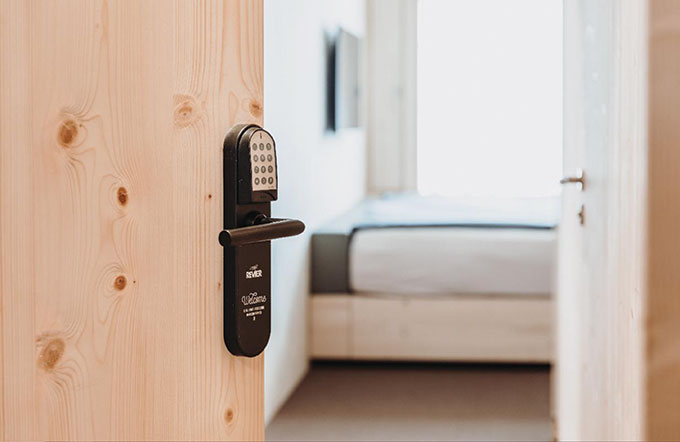
The hotel group has realised this with SALTO KS Keys as a Service. Revier Hotels achieve the overarching goal of simplifying processes for guests by automating everything from booking to check-out. For example, guests can check in from home or on the road and receive their access rights in the form of a PIN code sent to their smartphone on the day of arrival.

The Revier Mountain Lodge in Adelboden was the first property to be equipped with the new access control solution. In the 86-room property, all hotel rooms, service rooms and main entrances are equipped with the solution. At the hotel rooms, guests are granted access via PIN, which achieves the desired media-free door opening. The employees use the app (mobile access) or a smart tag.

Benefits of the Cloud

The cloud infrastructure generally has a number of advantages for the company: It does not need a server infrastructure or document folders and is independent of data volumes. Moreover, those responsible can react quickly, e.g. if guests need an early check-in or a parking space at short notice, or if they want to book breakfast as well. Furthermore, the company benefits from the open architecture of the systems, through which integrations are easy to implement. At REVIER Hospitality Group, SALTO KS is integrated with the cloud-based PMS (property management system) Mews, which is used by the hotel chain for check-in and all processing, and the TABHOTEL check-in terminal. Thanks to the seamless digital interaction of the systems, guests receive their appropriate access rights automatically according to their bookings and check-in.

“What convinces us most about SALTO KS is the centralised access management. We can grant and revoke access rights in real time from the head office for all locations. No one has to be present on site for this. In addition, our employees have access to all hotels and every door for which they are authorised via the app,” said Daniel Renggli, CEO of REVIER Hospitality Group AG.

Customized safety and security solution

21-storey skyscraper is kept safe and secure, combining fire alarm-, voice evacuation-, access control- and video systems.

A skyscraper with a combined and scalable safety and security solution

Located atop a metro station, where two lines of the city’s metro system meet, a huge new 21-storey skyscraper towers over the Warsaw skyline. Primarily designed for premium offices, the 19,100m2 space called Central Point had to be fitted with top of the line fire safety, public address and voice evacuation, access control and video security solutions. The project required that the building management team could centrally manage and monitor the system.

Because the Central Point building is only part occupied, it was important for the owners to factor in scalability and flexibility with the design layout of the individual units within it. Most of the offices at Central Point were created in a ‘white box’ concept, where the tenants would later decide the layout. Since the usage types of the various rooms depends on the needs of the tenants, the safety and security systems had to be deployed in a way that is easily customizable at a later date, to meet the specific requirements of new occupants while being fully in line with all safety regulations.

„Central Point was looking for a reliable fire safety system with maximum flexibility for their tenants in designing their office space. Thanks to the technical capabilities of Bosch point type detectors, building managers can rest easy with a flexible, proven fire alarm system with minimal false positives.“

says Krzysztof Kostecki, Country Cluster Manager at Bosch Security Systems.

A fully integrated system that enables intelligent monitoring everywhere

Fire alarm system and voice alarm

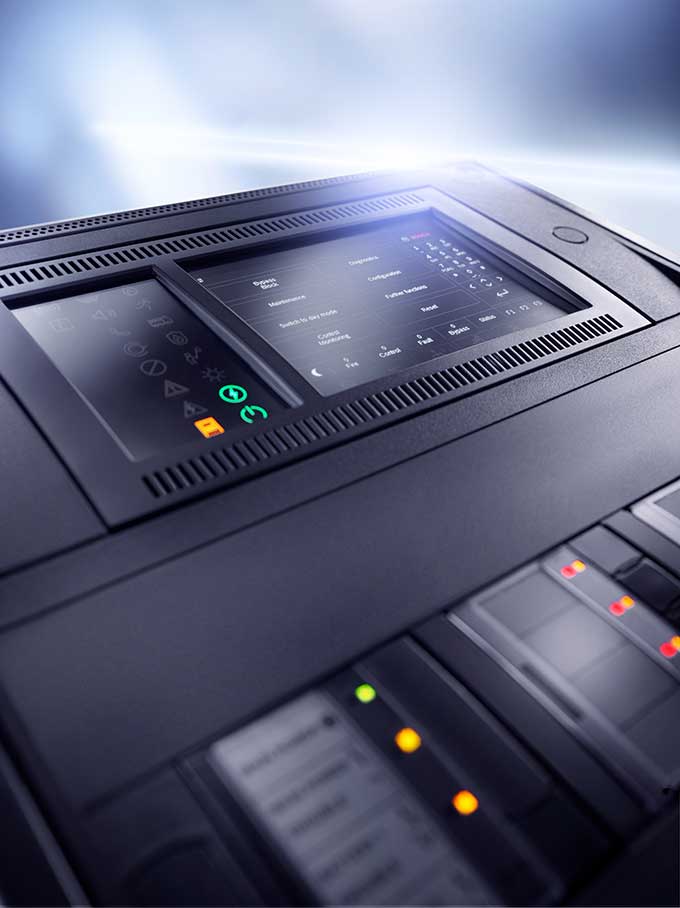
It was important for the Central Point skyscraper to have a single combined system that could manage all aspects of fire safety, public address, evacuation, access control and video security in one. Bosch was able to integrate every part to a custom safety and security solution that gives tenants maximum freedom in using the office space according to their needs with no limitation in creating individual floor plans. For fire safety, the AVENAR Fire Panels manage the detectors and interfaces with other safety systems.

Fully integrated system including AVENAR Fire Panel, PAVIRO Public Address and Voice Evacuation System as well as Access Modular Controller

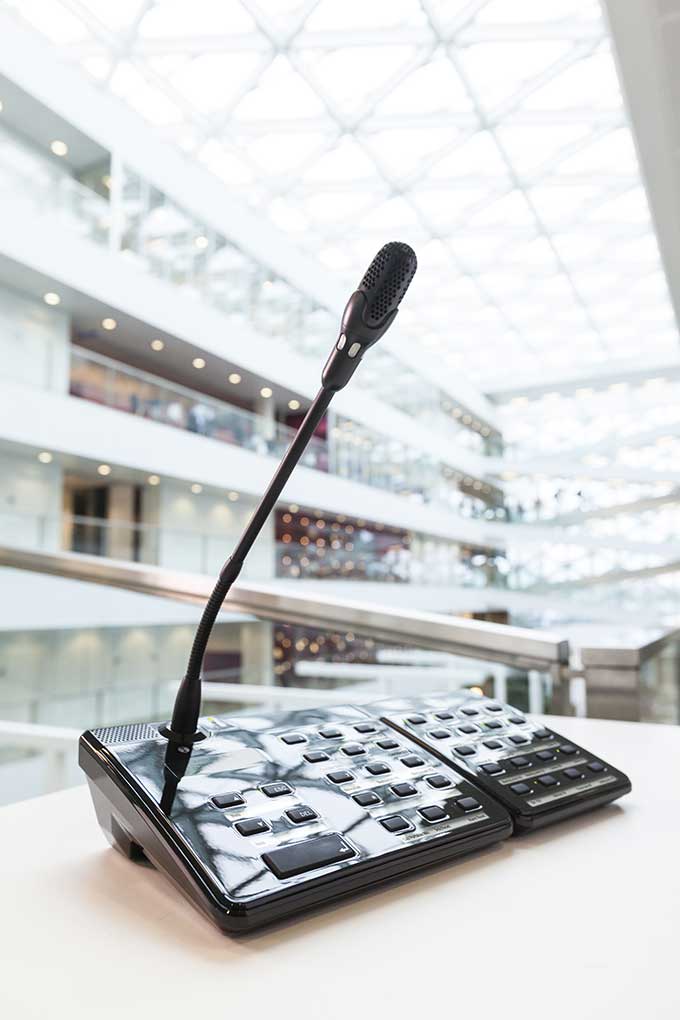
Fire detection and voice alarm are interfaced with the PAVIRO Public Address and Voice Evacuation system via Smart Safety Link. This combination provides complete and permanent control over the evacuation process in case of emergency. Central Point also uses the Access Modular Controller, a flexible technology platform for building and elevator entrance access control.

All in one system

Building Integration System (BIS)

Integration of every part to a custom safety and security solution that gives tenants maximum freedom in using the office space according to their needs with no limitation in creating individual floor plans.

Video security cameras are installed around the building’s perimeter, as well as in each storey of the skyscraper and its central lobby. At the heart of all these technologies is the Building Integration System (BIS) which integrates all solutions into one system. It is capable of automating alerts to building manage-ment staff, for example, if fire detectors require cleaning. At the same time, if a fire alarm is triggered, BIS allows building security staff to view a floor map of its precise location and monitor the alert via the video security cameras, greatly facilitating decisions on which action to take in case of emergency.

New Uniview 4-inch PTZ camera with brackets included

It often happens that customers forget to buy brackets or choose the wrong ones when ordering surveillance cameras. In order to solve this problem, as well as the problem of high brackets tariffs in some regions, Uniview released 4-inch PTZ cameras with included brackets.

Uniview’s new video surveillance devices, in addition to solving the mentioned problems, also have all the advantages of 4-inch PTZ cameras. They are the size of footballs and have a delicate design suitable for installation. With a resolution of 4MP/2MP at 60 fps and 25x zoom, they can clearly track both near and distant targets. Using IR illuminators with a range of 100 meters, they deliver a clear image in various low-light environments, and with IP67 and IK10 protection, they are effectively protected against water immersion and dust ingress.

Benefit

Compared with previous 6-inch models, Uniview 4-inch PTZ camera has a compact drop-shaped design of the hardware, and by the AI chipset and deep learning algorithm, it can support Smart intrusion prevention and face capture features. UNV 4-inch PTZ camera has a strong premium ability and much control punctuation, which not only meets the needs of project-oriented customers but also suits the SMB and distribution market.

Strong intelligent function

It also has the functions of linkage tracking, people counting, fast focusing, and Smart Intrusion Prevention.

  1. Linkage tracking: It can linkage track moving targets, always captures the target and can cooperate with other intelligent functions alarm.
  2. People counting: It can cover the whole picture. The pixel requirements for people counting are realized by optical zoom.
  3. Fast focusing: Compared with the ordinary camera, it can lock and see the target area faster, and focus quickly within 1s. This can improve efficiency and save time.
  4. Smart Intrusion Prevention: Improving alarm accuracy by filtering out those false alarms triggered by animals, bright lights, leaves, and some environmental factors automatically.

Applications

UNV’s LightHunter technology provides great light sensitivity, can capture colorful details in a low-light environment, down to 0.003 Lux. Considering the size and 4MP/2MP@60fps resolution of this PTZ camera, it is oriented mainly to small and medium application scenarios such as residential areas, commercial streets, business parks, etc.

For more information please visit www.uniview.com. If you have any business queries, please contact chenkexin@uniview.com

Fixed Network Foundation Layer for 21st Century Smart Buildings

Digital infrastructure technologies are now available to the building industry as it seeks to reduce energy consumption while hosting billions of connected devices. The use of Ethernet cable infrastructure for combined power and data communications solves smart building connectivity, power delivery, network topology, and thermal management issues. This will streamline processes and improve building performance while creating fully connected and environmentally sustainable 21st-century spaces.

By: Robert Zore, Business Development Manager, EGAL

In a security context, public and private multiple and single-use buildings require ever more security and access control. For example, schools, hospitals, government, and other public buildings must balance the needs for accessibility and security by ensuring a building’s physical security at access points and through the expansion of video monitoring. Another change is that the future direction of buildings in urban environments is upward. That means major changes to modern buildings as multi-use and shared environments become ever more common. It is forecast that future city dwellers will live, work, learn, and find leisure within single complexes. This will fundamentally change the number of data sources and data patterns managed by the infrastructure. Single-use environments will also see more need for robust, secure, low-energy digital infrastructure.

These trends all point towards ever-increasing numbers and variety of connected nodes, and the necessity to maintain energy use with optimized parameters for buildings. BSRIA’s (Building Services Research and Information Association) Convergence and Digitalisation of Commercial Buildings in the US, predicts substantial growth for PoE-powered devices across the business environment, as illustrated below:

Device Use Cases

Infrastructure operations, interactivity, and interoperability have been evolving toward PoE over time. The use of PoE started with VoIP in the 1990s, moved on to CCTV around 2000, and onto HVAC controls and lighting. This expansion of capabilities meant the control of these applications being transferred onto the data infrastructure plane. Now PoE is extending to powering and communicating with an ever-growing variety of physical devices.

Low voltage cameras, embedded sensors, kiosks, wireless access points, physical access points, digital signage, and displays are being deployed in ever greater numbers. Market forecasts show an explosion in the number of devices about to enter buildings. Wireless access point numbers alone are forecast to expand by 30% per year until 2027. Kiosks and digital screens will become ubiquitous in multi-use environments.

According to a report on the Global Kiosk Market, published by KBV research, the global kiosk market will reach $5.4 billion by 2024, at a growth rate of 26.4% CAGR. The demand for self-service machines and automated devices, wireless communication, technology advancements, and remote management are some of the notable factors driving the global kiosk market.

Proven, Viable, and Cost-effective Solution

High-performance cable infrastructure is the base layer for these smart technologies. All these different devices need to run over a single network that provides power and data. With lower installation costs, fewer hazards, and more flexibility, PoE is a proven, viable, cost-effective solution. Since 1995, history tells us that connected devices are moving to PoE for power. For example, the latest standards show PoE delivering up to 99w over twisted pair cables – this is easy enough to power the latest lighting, wireless access points, kiosks, and more.

 In the built environment, too many networks remain siloed and separate. This approach is no longer suitable for the new era of intelligent buildings. The new generation of architects and engineers are those responsible for the delivery of the next generation of smart digital buildings. Understanding the power and benefits of future-proofed PoE cable infrastructure is at the core of physical, economic, and digital innovation.

Unlocking the Potential of Next-Generation Technology: Vision Object Analytics

VIVOTEK provides a full range of AI-based IP surveillance solutions, from cameras to video management systems. Consisting of AI-based IR, Smart Motion Detection, Smart Video Content Analytics, Vision Object Analytics, and Deep Search, VIVOTEK’s line of AI deep learning products enable customers to automate their everyday surveillance with pre-defined detection rules and real-time computing, reduce efforts for post-event footage review, and enhance the accuracy of evidence search by introducing multiple attributes for both people and vehicles.

The new NVR with advanced features such as powerful Deep Search, Scene Search, and a user-friendly interface, allowing security professionals to quickly identify and act on problems before they become major issues. It also features embedded 16x 802.3 at/af PoE ports to provide users with easy and convenient IP camera installation and supports remote and mobile access via VIVOCloud and iViewer apps for both iOS and Android devices. The VIVOCloud app provides instant push notification and direct video playback functions when triggered by an alarm notification and provides users with a flexible and intelligent NVR for seamless use in small to medium-sized video surveillance applications. The new NVR can be used in VIVOTEK server architecture in VSS with full integration where we can manage and monitor multisite NVRs installation from one place. All NVR features are integrated to provide events in VSS, especially features like deep search and scene search, where is possible from one place to search all attributes NVR save from cameras.

Next Generation NVR Firmware: Core+ AI

Core+ AI firmware takes Core+ up to another level. Core+ AI NVRs are empowered with Deep Search, utilizing AI to provide the fastest, smartest, and most efficient evidence search user experience. VIVOTEK cameras enabled with Vision Object Analytics provide the metadata Deep Search’s AI uses. Deep Search is comprised of two main functions: Attribute Search and Scene Search.

NVR with AI Attributes Features

– People gender, age group & clothing colour including backpack & hat

– Vehicle type & color

Where you use it

Why this solution is perfect, with feature deep search and scene search can be used in public space and on the best way to protect the private personal information of any person in public space. With this feature, cameras will be collecting only information about what they wear. For police or other security services, searching for a suspect without the use of facial recognition technology can alleviate concerns, as it will not collect any private personal information. Instead, the system will simply record the suspect’s clothing color.

This solution can be used in traffic solutions where we can collect information about vehicles and will be saved only basic information about vehicles like type and color. That means it will be much easy for police or some security service to find some suspect vehicle in the large numbers of vehicles that pass every day on city streets. And very easy can be follow suspect vehicle. In the end, when is detected suspect vehicle from recorded material and camera high resolution will be very easy to read the license plate and help to get more information about the suspect vehicle. But very important information like license plate numbers will not be saved in the system, which is one more way how to protect private personal information.