Home Archive by category News (Page 18)

News

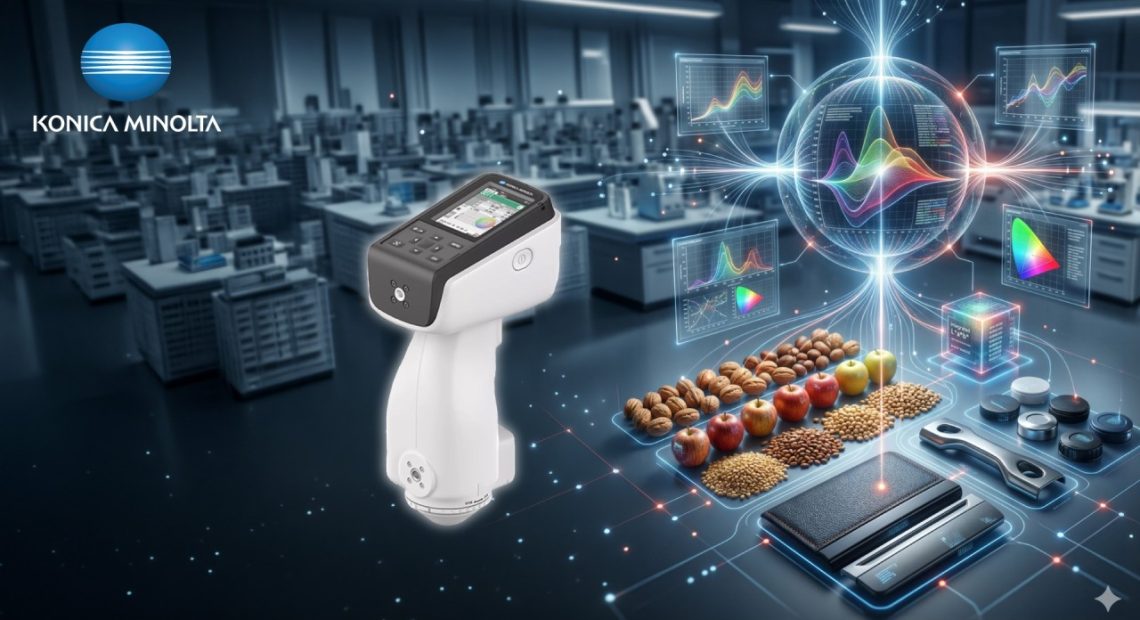
Konica Minolta Croatia: Objective Color Control Reduces Errors and Customer Complaints

In many manufacturing facilities, the rule still applies: if an experienced quality inspector says the color is acceptable, the batch moves forward. However, manufacturing should be driven by data rather than subjective judgment.

The issue is not experience—it is the method

The human eye is not designed for consistent color measurement. It is influenced by lighting conditions, the surrounding environment, fatigue, and even the context in which a color is observed. In other words, it responds to almost everything except objective reality. This is why a familiar scenario occurs: a production batch passes internal quality control without issue, only to be rejected later by the customer. The reason is simple—the product is evaluated under different lighting conditions.

Why Do We Still Rely on Visual Inspection?

Every time you rely on visual assessment, you increase the risk of customer complaints, lose control over consistency, and leave room for subjective decision-making. Subjective decisions simply cannot be standardized or scaled.

Modern spectrophotometers are remarkably easy to use. Simply switch on the device, measure the sample, and compare the result with the reference value. If you know how to use a smartphone, you already have the skills to operate this tool.

Conclusion

If your decisions are based on visual impressions, you are not managing quality—you are managing risk. It is time to replace “it looks good” with “it has been verified to be within tolerance.” After all, you are not losing money because of color itself; you are losing it because of the way you control color.

Motorola Solutions Enhances Safety and Communications at Loughborough University

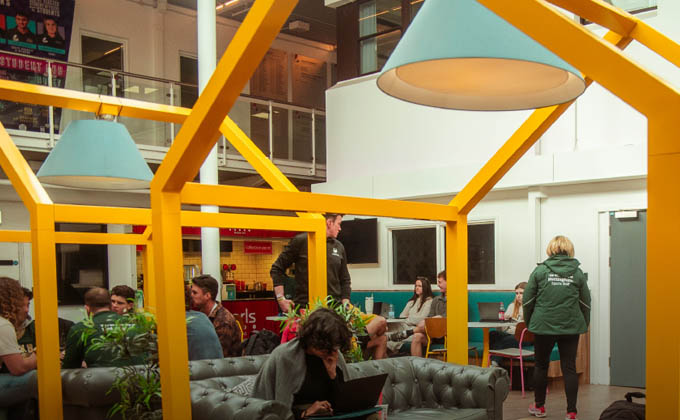
Loughborough Students’ Union (LSU), the students’ union of one of the UK’s leading universities, has modernized its security infrastructure by implementing the connected ecosystem of Motorola Solutions. The outdated VHF radio system has been replaced with a MOTOTRBO network comprising repeaters, 57 digital two-way radios, advanced communications management software, and eight VB400 body cameras integrated with the existing Avigilon Unity video security system.

The new solution enables reliable communication between security, medical, facilities, hospitality, and event management teams across the university campus. The system leverages AI-powered video analytics to automatically send alerts directly to radio devices, while fire alarm notifications are delivered in real time to designated teams, complete with location details and the cause of the alarm. The body cameras provide live streaming, evidence-grade video recordings, and are automatically activated during emergency situations or when a nearby camera is triggered.

The integration of all system components has enabled more efficient data sharing, faster incident response, and simplified security operations management.

According to the Students’ Union’s management, the greatest strength of the system lies in its flexibility and seamless integration. “Having multiple solutions on a single platform allows us to streamline operations, share data more efficiently and collaborate effectively, while also offering opportunities for future functionality development in response to our evolving needs,” said Nathaniel Olson, Venue Operations Manager at Loughborough Students’ Union. Thanks to the new connected ecosystem, LSU has further enhanced the safety of its students and staff while improving the reliability of communications and the efficiency of day-to-day and emergency operations.

ALSO Group and Sophos Extend Strategic Partnership in CEE Region

ALSO Group has broadened its partnership with Sophos to deliver an extended range of cybersecurity solutions across the CEE region. Building on its established Sophos distribution network in Croatia, the company is now expanding into North Macedonia, Serbia, Bosnia and Herzegovina, Montenegro, Slovenia, Kosovo, and Albania.

By extending its collaboration with Sophos, ALSO is providing its partners with access to next-generation security products and managed detection and response (MDR) servicesall seamlessly integrated through the ALSO Cloud Marketplace.This development underscores ALSO’s commitment to providing advanced security technologies to the ICT channel and supports resellers in meeting the growing demand for managed and adaptive protection services.

Cybersecurity has become a critical investment area for organizations of all sizes due to the increasing prevalence of ransomware and advanced threats. The enhanced offering includes Sophos’ complete portfolio of network, endpoint and cloud security solutions, as well as subscriptions for MDR services. This will enable resellers to scale their cybersecurity practices and deliver 24/7 monitoring and threat remediation for their customers. Flexible licensing and integration with existing tools ensure that partners can adopt these services without significant operational changes.

“The expansion of our collaboration with Sophos reflects our strategic focus on strengthening the cybersecurity capabilities of our ecosystem.” said Hanna Osetek-Pasquet, Regional Manager Director East, ALSO. “By combining Sophos’ advanced security technologies with ALSO’s platform approach, we empower resellers to respond effectively to today’s threat landscape and to build profitable, recurring-service models.”

As Europe’s largest technology provider, ALSO supports over 135,000 resellers across 31 countries. Customers in the CEE region will now benefit from increased access to subscription-based cybersecurity services delivered through a single, unified platform. This integration simplifies procurement and ongoing management while creating new opportunities for SMB-focused partners to diversify their offerings.

PPDS Unveils Its Thinnest Philips Signage Display Yet

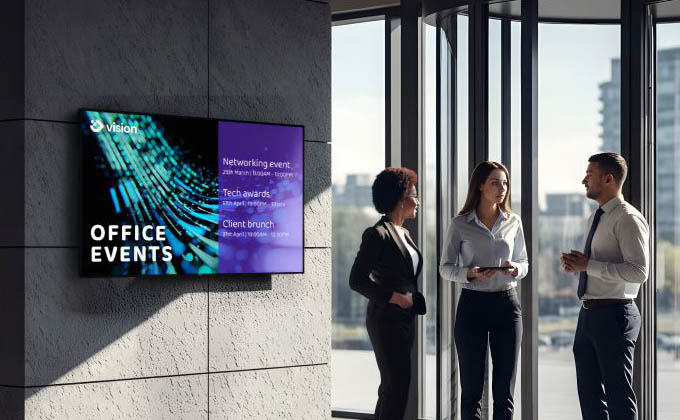
PPDS has unveiled the new Philips Signage 7000 UltraSlim series at InfoComm 2026 in Las Vegas, introducing its thinnest and lightest 4K UHD digital signage displays to date. Available in 43″, 50″, 55″, and 65″ sizes, the new models are up to 60% slimmer than comparable displays in the Philips Signage portfolio, with a depth of just 28.5 to 30 mm.

Designed for retail, corporate environments, hospitality, and public venues, the new series combines 4K UHD image quality with Android 16, an AI-ready processor, and compatibility with the Philips Wave remote display management platform.

“The Philips Signage 7000 Series delivers exceptional visual quality and elegant design for virtually any environment. It brings together all the features customers expect from our premium Philips Professional Displays with an entirely new ultra-slim design,” said Bart Wouters, International Product Manager at PPDS.

In addition to its reduced thickness and weight, the displays offer 500 nits of brightness, PPDS’ FailOver technology for automatic backup content playback in the event of a media player failure, and a comprehensive range of connectivity options, including HDMI, USB-C, LAN, Wi-Fi, and Bluetooth.

Andrea Barbuti, Global Product Management Lead EMEA at PPDS, said the new series creates entirely new installation opportunities. “We didn’t aim to be the first to introduce an ultra-slim digital signage display—we wanted to deliver a better solution. The combination of a slimmer profile, reduced weight, and professional-grade performance offers virtually limitless installation possibilities,” Barbuti said.

The Philips Signage 7000 Series will be available from the fourth quarter of 2026 and represents a new generation of digital signage displays developed based on extensive feedback from partners and customers across multiple industries.

EL.MO. Introduces GSM-ALT Service for More Reliable Intrusion System Connectivity

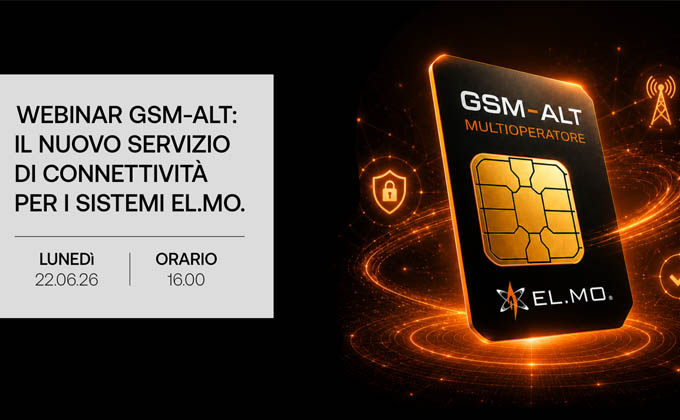
EL.MO. will host a webinar on June 22 dedicated to its new GSM-ALT connectivity service, developed in collaboration with Altatensione to enhance the reliability of intrusion alarm systems.

The new solution is based on a multi-operator SIM card capable of using the networks of multiple mobile operators and automatically connecting to the one offering the best signal quality at any given moment. This ensures uninterrupted operation of security systems and reliable 24/7 communication, even in demanding environments.

During the webinar, participants will learn about the GSM-ALT service’s technical features, key benefits, and application possibilities in modern intrusion detection installations. The session will be presented by Alberto Pastorello, International Sales & Marketing Manager at EL.MO., Nicolò Amaglio, Intrusion Connectivity Specialist at Altatensione, and Federico Bertamino, Founder of Altatensione.

Exclusive: Kamir’s Hikvision–Codeks Integration Receives Official Hikvision Approval

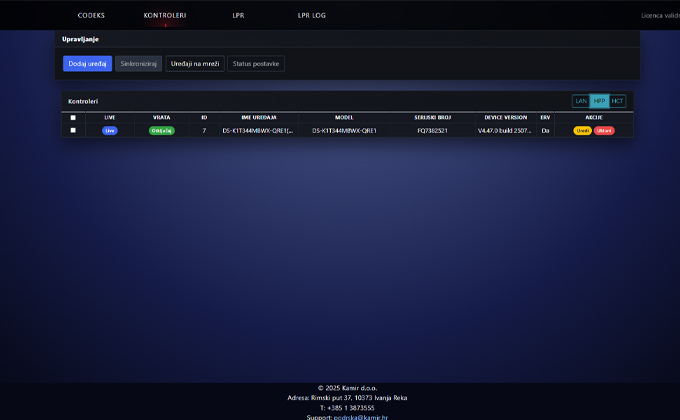
Kamir has announced that its Hikvision–Codeks integration has been officially approved by Hikvision and listed among the company’s officially supported partner solutions on Hikvision’s official channels.

The solution enables seamless integration of Hikvision devices, including ANPR cameras, facial recognition terminals, and access control systems, with third-party Time & Attendance and ERP platforms. The project was developed in several phases, from LAN device integration to full implementation using the HikPartnerPro OpenAPI and Hik-Connect Team OpenAPI interfaces.

The HikvisionCodeks Module operates as a service-based application that bridges Hikvision devices and business software, enabling user management, license plate management, event handling, and other functions through both local and cloud services. One of its key advantages is the ability to remotely manage devices via the HikPartner Pro and Hik-Connect Team platforms without the need for port forwarding or exposing the network to additional security risks.

The official inclusion among Hikvision’s partner solutions confirms the quality of Kamir’s integration and opens new opportunities for its deployment in professional security projects across Europe.

Panduit to Showcase Solar Infrastructure Solutions at Intersolar Europe

Panduit will participate in Intersolar Europe 2026, taking place from June 23 to 25 in Munich, where it will showcase solar infrastructure solutions designed to improve installation consistency and reduce risk across photovoltaic projects.

At booth A5.216, visitors will have the opportunity to explore a portfolio of products engineered for demanding outdoor environments, including tool-free solar clips and UV- and chemical-resistant cable ties. According to the company, these solutions are designed to ensure consistent installation quality, long-term reliability, and dependable performance of solar energy systems under a wide range of operating conditions.

Throughout the exhibition, Panduit’s experts will be available to present the company’s technologies, exchange expertise, and discuss the application of its infrastructure solutions in modern solar projects.

ASSA ABLOY: 7 ways switching to digital access reduces costs as it boosts security

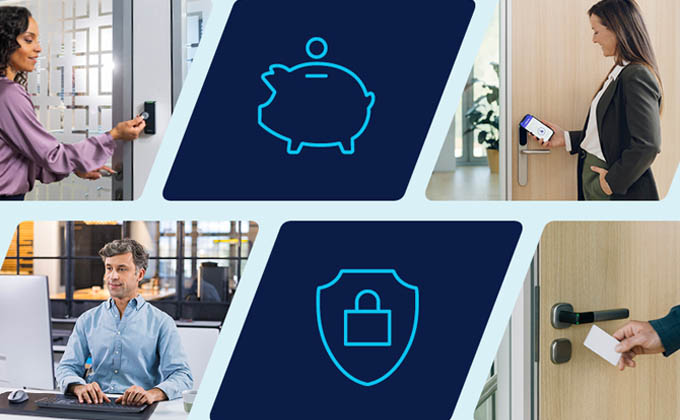
Cost efficiency is higher than ever among the priorities of today’s security and facility managers. At the same time, the ways in which they must support their organization is in a constant state of flux. Access is one area where cost savings can be made: streamlining access management is often key to achieving more without breaking the budget. Getting the right solution in place represents a long-term investment in the health of a business’ cost base

By: Thomas Schulz, Director & Head of Marketing DAS EMEIA

E-mail: thomas.schulz@assaabloy.com

Hybrid work-patterns, increased on-site deployment of contractors, workspace reconfigurations, and increasing compliance demands are no longer exceptions; they are everyday realities in many organizations. To meet these growing demands, even in times of budget limitations, security and access management must remain flexible, secure, and future‑ready. Digitalizing access, with the latest electronic and electromechanical locking solutions and systems, has become one of the most effective ways to tackle these demands. It provides a concrete return on investment (ROI) which benefits the organization over the long haul.In at least the following 7 ways, access digitalization marries increased building security and safety with ongoing, sustainable cost savings.

1. Eliminating hidden costs in a dynamic organization

Mechanical access systems were never designed for a world in which change is ever-present and often unpredictable. With traditional mechanical access, every lost key, access update, or organizational shift triggers manual workload, site visits, and additional costs. Digital access replaces physical interventions with software‑based control, including remotely. By supporting workflows and not just access, this approach reduces recurring costs while boosting operational agility.

2. Relieving budget pressures with lower installation costs

Digital access solutions do not usually need extensive wiring or disruptive construction work. Often devices are battery-powered, and so don’t need cabling, or they generate their own operating energy. A faster, low-footprint installation translates into less need for specialist contractors like electricians and minimal disruption. This directly lowers project costs – an immediate benefit when budgets are tight (which in most businesses, is most of the time).

3. Reducing admin workload to streamline operations

Manual key-handling consumes time and resources. Digital access enables faster issuing, amending, and revoking of access rights, which reduces workload for security or facilities teams and lowers ongoing labour costs without compromising control. Digital access devices and systems can also integrate with complementary digital products such as time-and-attendance or visitor management. By linking access events with workforce and visitor presence, organizations reduce duplicate data entry, minimize errors, and streamline everyday administration. With these and similar system integrations, security managers deliver additional organizational efficiencies beyond access management alone.

4. Retiring physical keys to eliminate rekeying costs (and risks)

With digital access, lost credentials can be blocked instantly. This is impossible with mechanical keys, where a missing credential triggers a cycle of emergency callout, locking cylinder replacement, and unplanned expenditure. This saving represents one of the most tangible cost-efficiency improvements over a digital system’s lifetime. Of course, at the same time, limiting the risk of lost credentials remaining in circulation also boosts site security. It is a win–win for cost and safety.

5. Deterring security threats to prevent costly incidents

Digital access provides traceability and visibility as standard. Audit trails and access insights help reduce internal incidents, support investigations, and limit the financial impact of breaches. Higher security also has cost-reduction implications. For example, according to IBM, the average cost of each data leak – as a result of cyber, physical, or hybrid cyber-physical breach – is now EUR 3.75 million. Still further efficiency gains are achievable when digital access is integrated with other security systems such as CCTV or intruder detection. Correlating access events with video or alarm data helps security teams to respond faster, investigate more efficiently, and avoid prolonged disruption – which also mitigates operational costs.

6. Staying flexible to minimize reinvestment when the organization evolves

With a wireless digital access solution, office moves and refurbishments may be handled through reconfiguration rather than construction. It is often possible to move a wireless access device from door to door, for example, saving time and money. Existing systems can be extended by adding and seamlessly integrating devices at new openings, instead of starting again from scratch. In these and other ways, digital access can adapt without new hardware or infrastructure, helping organizations to avoid the duplication of security investment as their needs evolve.

7. Future-proofing security even when budgets are limited

When budgets are under pressure, long‑term value performance matters more than short‑term saving. Over the medium term, digital access significantly reduces total cost of ownership (TCO) by lowering installation, in-use, and change‑related costs. This can include the harnessing of technologies such as energy harvesting to reduce costs in a sustainable manner.

Access digitalization enables organizations to invest once, remain flexible, and be ready for what comes next. “Switching to digital access is not about adding complexity or cost,” explains David Moser, SVP & Head of Digital & Access Solutions at ASSA ABLOY Opening Solutions EMEIA. “It is about preventing unnecessary repeat expenditure, strengthening security, and ensuring access management can keep pace in an era when organizational change is a constant, across sectors and geographies.”

“This is exactly the approach taken in ASSA ABLOY’s portfolio of Digital Access Solutions. Our solutions are engineered to help security and facility managers reduce costs at the same time as they future‑proof their buildings. Careful management of resources is not a barrier to access digitalization and workflow innovation, when organizations identify the right solution with ASSA ABLOY – whether this is a new access system or the addition of connected devices to increase the reach and power of an existing system.”

To learn more about Digital Access Solutions from ASSA ABLOY

Download a free brochure at www.assaabloy.com/group/emeia/solutions/topics/access-control

Fonestar to Host Online Training Session on Wallmix Solution

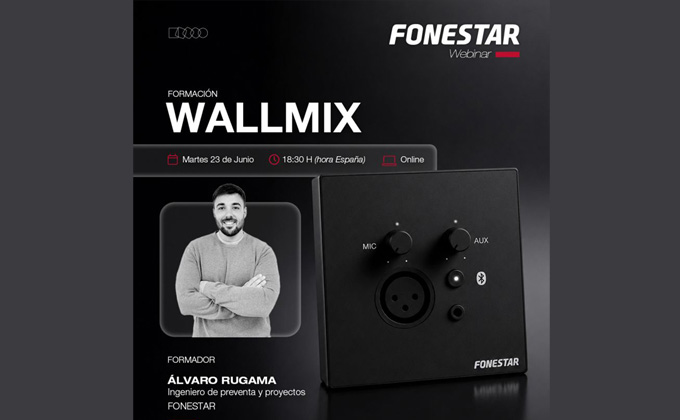
Fonestar has announced a new online training session dedicated to its Wallmix solution, which was introduced earlier this year at ISE Barcelona and is now available to the market.

The webinar will take place on June 23 and is aimed at the company’s partners across Latin America. During the session, participants will gain a detailed overview of the system’s technical features, connectivity options, application scenarios, and installation recommendations for professional audiovisual projects. The training will be led by Álvaro R., Pre-Sales and Project Engineer at Fonestar, who will present practical use cases and answer attendees’ questions.

According to the company, Wallmix has been designed as a versatile and easy-to-integrate solution suitable for a wide range of installation environments. The webinar aims to help partners better understand the system’s capabilities and its potential applications in modern AV projects. Interested partners can reserve their place by contacting Luis Meirelles, Fonestar’s LATAM Manager, via email at lmeirelles@fonestar.es.

Hanwha Vision Unifies Its LinkedIn Community on a Global Level

Hanwha Vision has announced that, by the end of the month, it will consolidate its regional LinkedIn pages into a single global platform for communication with partners, customers, and the broader professional community.

The new page will serve as a central destination for updates on AI-powered video surveillance, technology trends, new products, customer success stories, and corporate news. Through this move, the company is transitioning from multiple regional LinkedIn channels to one unified global community, aiming to streamline content and make information more accessible to followers worldwide.

According to Hanwha Vision, users will be able to access the latest developments in AI-driven video surveillance, industry insights, technological innovations, and real-world implementation examples from a single source. The company has encouraged followers of its existing regional pages to connect with the new global channel and stay informed about future activities, product launches, and the continued growth of the global Hanwha Vision community.