Home Archive by category News (Page 19)

News

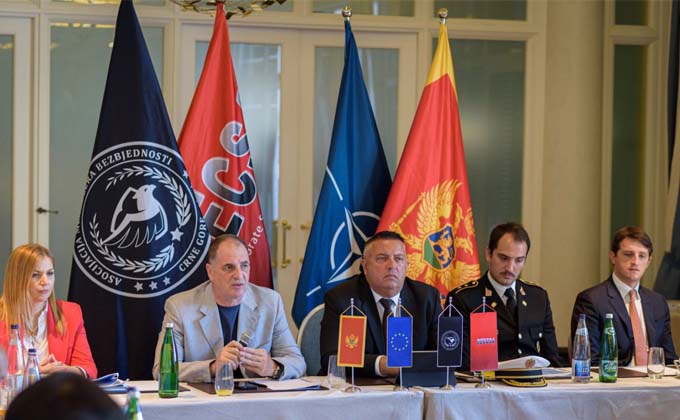
AMBCG Brings Security Experts Together Ahead of the Summer Tourist Season

More than 70 representatives of government institutions, security services, regulatory bodies, and businesses participated in the 4th professional consultations titled “Security Challenges Ahead of the Summer Season”, organized by the Association of Security Managers of Montenegro (AMBCG).

The event was held with the support of the Ministry of the Interior of Montenegro, the Police Directorate, the Ministry of Defence, the General Staff of the Armed Forces of Montenegro, the Civil Aviation Agency, the Agency for Personal Data Protection and Free Access to Information, and the Chamber of Commerce of Montenegro. The event partner was Slovenia-based Spica International.

During the consultations, participants discussed key security challenges associated with the upcoming summer tourist season, including the use of unmanned aerial vehicles (drones), video surveillance and access control systems, personal data protection, and responses to emergency security situations.

Special emphasis was placed on strengthening cooperation between public institutions and the private sector in order to enhance security standards and improve preparedness for the increased number of visitors and activities during the summer months. According to the Association of Security Managers of Montenegro, ensuring a safe tourist season is a shared responsibility of all relevant stakeholders. The organizers also expressed their gratitude to institutions, partners, speakers, and participants for their contribution to knowledge exchange and the improvement of the security environment in Montenegro.

Major Supply Chain Attack Hits the Arch Linux Community

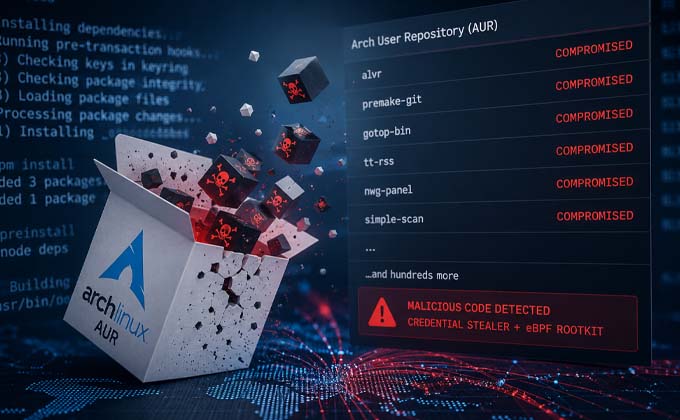
More than 400 packages in the Arch User Repository (AUR) have been compromised in a software supply chain attack, with attackers modifying installation scripts to deploy data-stealing malware on users’ systems. The incident did not affect the official Arch Linux repositories but was limited to AUR, the community-maintained package distribution platform.

According to research by Sonatype, the attackers adopted abandoned projects with no active maintainers and inserted malicious code into their PKGBUILD files, causing the installation of malicious npm packages during the build process. The Rust-based malware was designed to collect sensitive information, including GitHub, npm, and HashiCorp Vault access tokens, SSH keys, browser data, and information from applications such as Slack, Discord, and Microsoft Teams. Security researchers reported that the malware was also capable of deploying an eBPF rootkit to conceal its activities on compromised systems, although only when it obtained administrative privileges.

Additional concern stems from the fact that the attackers preserved the original package names and histories, exploiting user trust without relying on software vulnerabilities or zero-day exploits.

The number of compromised packages continues to grow, and security experts are urging users who installed or updated AUR packages after June 11 to review their systems and verify whether any affected packages were used. According to current findings, the incident represents one of the largest attacks against the AUR ecosystem to date and highlights the serious risks posed by compromised components within the software supply chain.

Alarm automatika BiH Marks 20 Years of Business and Partnerships

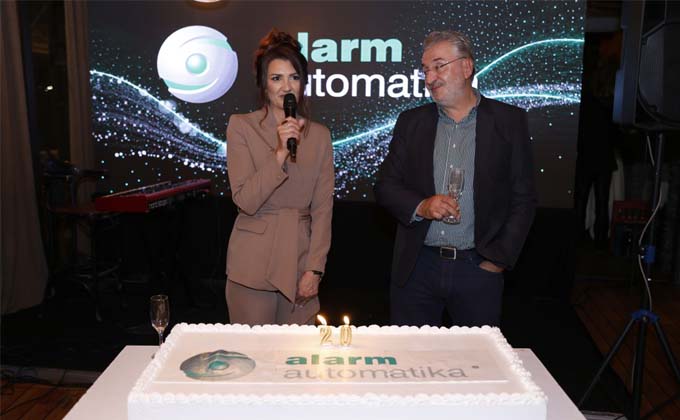
Alarm automatika celebrated 20 years of operations in Bosnia and Herzegovina by bringing together more than 50 partners, customers, and associates at this year’s Partner Day event in Sarajevo. The anniversary provided an opportunity to reflect on two decades of company growth, completed projects, and long-term partnerships built in the local market.

Although Partner Day is traditionally dedicated to presenting new technologies and solutions, this year’s edition primarily focused on the people and companies that have contributed to the development of Alarm automatika BiH. During the event, the company showcased the latest products, solutions, and market trends featured in its new catalogue, while presentations were delivered by Luka Kučić and Žarko Regodić.

Guests also heard from Boris Popović, President of the Management Board of Alarm automatika, and Ines Cero, Director of Alarm automatika BiH, who reflected on the key milestones, challenges, and achievements that have marked the company’s twenty-year journey.

A special part of the programme was dedicated to recognizing long-standing partners and customers who have been working with the company since the early years of its presence in Bosnia and Herzegovina. As a token of appreciation for their trust and support, they were presented with commemorative certificates and symbolic gifts. According to Alarm automatika, the company’s greatest value lies in its long-term relationships with partners, customers, and associates, making the twentieth anniversary above all a celebration of shared growth and successful cooperation.


Tailored life safety solution for five-star multi-purpose complex in Sofia

Smart Tower is a mixed-use development in Sofia, Bulgaria, comprising two connected blocks with 17 residential floors, 7 levels of commercial space, and 4 underground parking levels. Spanning over 60,000sqm and housing approximately 1,152 occupants, the project required a comprehensive, multi-technology fire detection solution capable of operating reliably across a highly varied building environment.

Central District LTD appointed Sectron to take full accountability for the design and installation. Project managers Spas Stankov and Spas Stoyanov led the work, supported by engineer-designers Elena Pencheva and Dobrinka Tsvetkova.

Spas Stoyanov reflected on the partnership: “We have a great relationship with Hochiki, using their products for over 30 years. Their compliance with local fire regulations and advanced sensing technology guaranteed Smart Tower had a fire system that is highly reliable and, most importantly, reduces false alarms for occupants.”

For the main building areas, 2,887 ACC-EN multi-sensors were installed as part of an addressable fire system using Hochiki’s ESP intelligent range. Combining a thermal element with a photoelectric smoke chamber, each device detects both heat rise and smoke presence. The open-protocol ESP platform also supports long-term cost efficiency by consolidating multiple product ranges onto a single panel.

Aesthetic integration was a specific requirement given the modern interior of both blocks. Dobrinka Tsvetkova explained: “Hochiki’s ESP sensors came in multiple variants including ivory, black and white, which gave us the flexibility to meet Smart Tower’s need for consistent aesthetics. We chose white to reflect the clean environment across all spaces.”

For the residential floors, Hochiki’s conventional CDX range provided the solution: 342 SOC-E3N optical smoke detectors and 171 DCD-AE3 heat detectors across the apartments. Hochiki’s CHQ I/O modules ensured continuous monitoring and integration between both systems, with faults in conventional zones reported directly to the addressable control panel.

The 4,600sqm underground car park required a different approach entirely. Higher airflow and exhaust fumes make standard point smoke detection ineffective here. Hochiki’s Linear Heat Detection Cable provided a localised solution suited to the environment. Elena Pencheva noted: “The open-protocol capabilities provided ultimate flexibility when integrating multiple tailored solutions.”

Spas Stankov concluded: “All systems were easy to install, minimising disruption to residents. Compliance was fully met and we are confident that all occupants are protected for the long term.” For specifiers and installers working on large or mixed-use developments, Smart Tower shows what Hochiki’s open-protocol architecture can do.

To discuss your next project, talk to your local team or visit the Hochiki website to learn more about this project in Bulgaria.

Presight and Montenegro sign MOU to Advance AI-enabled National Infrastructure

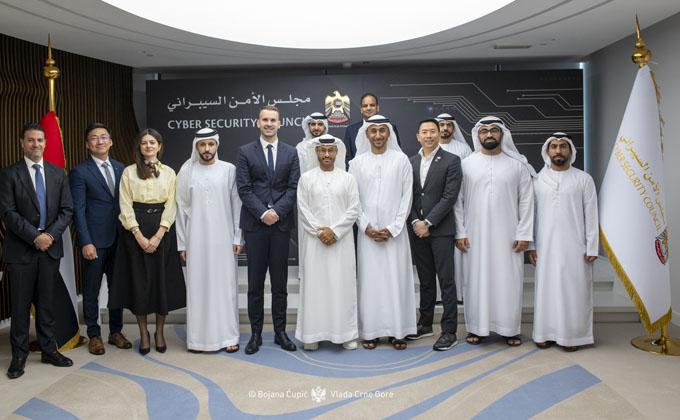
Presight, a global leader in applied AI for intelligent systems, has signed a Memorandum of Understanding (MOU) with the Ministry of the Interior of Montenegro to support the country’s national digital transformation through the development of a next-generation Smart Nation platform.

To mark the occasion, His Excellency Milojko Spajić, Prime Minister of Montenegro, visited Presight’s Abu Dhabi headquarters during an official state visit, where discussions focused on the country’s long-term vision for intelligent infrastructure, smart city development, and AI-enabled national transformation. The visit underscored a shared commitment to deploying applied intelligence at national scale to strengthen public services, operational resilience, and sustainable economic growth.

The MOU establishes a strategic long-term framework between Presight and the Government of Montenegro to design and deploy an integrated, AI-enabled platform spanning cities and intercity infrastructure. The platform will unify real-time data across traffic, public safety, environmental monitoring and emergency response systems into a single operational layer. By integrating these capabilities, the system will enable faster coordination, improve situational awareness, and enable more proactive AI-assisted decision-making across government and municipal institutions.

Under the MOU, Presight will work closely with government stakeholders across three phases, including a national feasibility study, a structured data exchange to map existing systems and data sources, and the development of a detailed implementation roadmap. The initiative includes intelligent traffic management to reduce congestion and improve road safety, advanced intelligence capabilities to strengthen situational awareness, and integrated emergency response systems to accelerate coordination across agencies.

Commenting on the agreement, Danilo Šaranović, Minister of the Interior of Montenegro, said: “Montenegro is committed to advancing a modern, resilient, and secure national infrastructure, and this collaboration with Presight represents an important step in that journey. As a trusted partner with a proven track record in deploying applied intelligence at national scale, Presight brings the expertise and capability required for an initiative of this ambition. We look forward to working together to enhance public safety, strengthen coordination, and deliver meaningful improvements for our citizens.”

Thomas Pramotedham, Chief Executive Officer of Presight, said: “National transformation requires more than technology, it requires intelligent systems that operate at scale. Through this partnership with Montenegro, we are designing a unified operational infrastructure where data, AI, and decision making are fully integrated across critical systems. This is applied intelligence in action, enabling governments to move from fragmented systems to coordinated, proactive operations that strengthen resilience, operational efficiency, and long-term national capability.”

Built on Presight’s sovereign AI infrastructure, the platform will transform fragmented data into coordinated, real-time operational intelligence. This architecture enables continuous insight, autonomous system response, and centralized orchestration across government and municipal entities, supporting faster, more informed decision-making at scale.

The collaboration reflects a shared commitment to building sovereign, scalable digital infrastructure aligned with Montenegro’s long-term development priorities. The initiative will also ensure that data governance, system transparency, and operational resilience are embedded into every layer of deployment.

The collaboration reflects a shared commitment to building sovereign, scalable digital infrastructure aligned with Montenegro’s long-term development priorities. The MOU also reinforces Presight’s role in enabling trusted AI-enabled infrastructure across high-growth markets globally, while supporting Montenegro’s ambition to position itself at the forefront of intelligent nation development.

Tehnozavod CEO Serves on Jury of the Anniversary Zlatko Smrkić Award

Krešimir Marušić, CEO of Tehnozavod Marušić, served as a member of the jury for this year’s Zlatko Smrkić Award, which has been recognizing outstanding students of the Department of Communication and Space Technologies at the Faculty of Electrical Engineering and Computing (FER) in Zagreb for the past ten years.

The award is intended for students who achieve notable results in research and professional work in the fields of communication and space technologies. Over the past decade, it has become one of the most important recognitions for young talents in these disciplines.

According to Tehnozavod, cooperation between industry and academia plays a vital role in fostering innovation and technological progress, while initiatives such as this provide students with opportunities to present their research, develop professional competencies, and connect with leading technology companies.

“We believe that cooperation between industry and academia, along with investment in young talent, is essential for driving innovation and technological advancement,” the company stated.

The occasion also served as an opportunity to congratulate the finalists and award recipients, while expressing appreciation to the organizers for ten years of dedication to promoting knowledge, research, and excellence in the fields of communication and space technologies.

ICS Security Market Expected to Reach $38.48 Billion by 2031

The global industrial control system (ICS) security market is projected to more than double by 2031 as organisations increase investment in cyber protection for operational technology, critical infrastructure and industrial IoT environments.

According to a recent MarketsandMarkets report, the global ICS security market is expected to grow from USD 17.91 billion in 2026 to USD 38.48 billion by 2031, representing a compound annual growth rate (CAGR) of 16.5% over the forecast period.

The growth is largely being driven by the increasing number and complexity of cyber threats targeting industrial environments. Organisations are therefore investing in advanced security technologies capable of providing real-time threat detection, automated response, and improved risk management across operational and cloud-based infrastructures. At the same time, stricter regulatory requirements and data protection standards are encouraging companies to strengthen compliance measures and improve control over sensitive data in hybrid and multi-cloud environments.

Demand Rising for Professional Cyber Security Services

The report highlights strong growth within the professional services segment, as industrial organisations continue seeking specialised expertise to protect operational technology (OT) systems and maintain resilience across critical infrastructure sectors.

Services such as consulting, system integration, compliance management, training, maintenance, risk assessment, and incident response are becoming increasingly important in helping organisations manage evolving cyber threats. The expansion of industrial automation, connected OT systems, remote operations, and Industrial IoT technologies is also increasing demand for external cyber security specialists capable of securing complex industrial environments without interrupting daily operations.

Oil & Gas Sector Among Fastest-Growing Segments

According to the study, the oil & gas industry is expected to record particularly strong growth within the ICS security market. Increasing digitalisation across upstream, midstream, and downstream operations is expanding the cyber attack surface of critical energy infrastructure.

Operators are deploying OT security solutions to protect drilling operations, pipelines, refineries, storage sites, and remote assets against ransomware attacks, operational disruptions, and cyber-physical threats. Wider adoption of connected sensors, industrial IoT devices, wireless communications, and predictive maintenance systems is further increasing demand for industrial threat detection, OT visibility, and secure remote access technologies.

Major Industry Players

The report identifies several key companies active in the ICS security market, including Cisco, Fortinet, Palo Alto Networks, Tenable, Honeywell, Check Point Software, ABB, Belden, Kaspersky, Darktrace, Radiflow, and Dragos.

Seamless Access in AFI Home Locations Across Poland and Romania

Salto Systems delivers advanced smart access control solutions tailored for the residential sector, enabling operators to manage resident access, staff permissions, and building security through a unified and fully integrated platform. Leveraging keyless, electronic locking technology, SALTO replaces traditional mechanical keys with flexible digital access, enhancing security while streamlining property operations and elevating the resident experience

Salto delivers a broad portfolio of smart building solutions, including Access Control, Face Recognition, Door Intercom, ID Management, and Energy Efficiency and Control. These solutions form an integrated ecosystem that enables secure, seamless, and scalable access management across properties. In hospitality and rental living environments, this approach supports frictionless guest journeys—from arrival to departure—while enhancing comfort, security, and operational efficiency.

Challenge

AFI Home projects across Poland and Romania – including  AFI Home Dajwór, AFI Home Europejskie, AFI Home Czyżewskiego in Kraków, AFI Home Metro Park, AFI Home Metro Szwedzka, AFI Home Metro Zachód in Warszawa and AFI Home Długa in Wrocław, as well as AFI Home North in Bucharest—are modern residential rental communities designed to offer fully furnished apartments and a high-quality living experience aligned with contemporary urban lifestyles.

These projects required a reliable and scalable access solution capable of supporting a dynamic residential environment with multiple user profiles, including residents, short-term tenants, staff, and service providers. Managing these varied access needs while maintaining security and operational efficiency posed a key challenge. At the same time, the operator needed to deliver a seamless and convenient user experience aligned with modern hospitality expectations—minimizing friction in access while ensuring full control over the property.

Solution

Salto implemented an integrated smart access solution across the different AFI Home locations, enabling secure and seamless movement throughout all areas of each property, from main entrances to private apartments and shared spaces.

The installation includes a combination of electronic smart locks, Neo cylinders, and wall readers, ensuring consistent and secure access control across all entry points. This enables residents, guests, and staff to move effortlessly throughout each building while maintaining clearly defined access permissions. Bicycle storage areas, fitness rooms, meeting rooms, coworking rooms, and guest parking garages are also equipped with Salto locks.are all equipped with Salto electronic locking solutions.

In Romania, at AFI Home North in Bucharest, the solution includes the deployment of Neo cylinders integrated with the SALTO Space platform, providing a robust and flexible access control infrastructure tailored to the needs of residential living.

The system allows operators to manage and adapt access rights in real time, providing the flexibility to respond instantly to operational needs while maintaining full visibility and control. A robust network of nodes and gateways ensures continuous communication and reliable online functionality. Each location operates with its own dedicated server and Salto Space application, enabling independent system management while ensuring a consistent technology standard. This setup provides both operational autonomy at site level and flexibility to scale as needed.

The implementation and ongoing maintenance of the system were carried out by NETROS, a specialized Salto partner in Poland responsible for system deployment, integration, and long-term support, ensuring stable operation and continuous performance optimization. As a result, these AFI Home locations benefits from a scalable solution that enhances operational efficiency while delivering a seamless, hotel-like living experience for residents and guests.

Conclusion

Residents of AFI Czyżewskiego benefit from seamless, card-based access to a wide range of shared amenities, including a fully equipped gym, a dedicated co-working space, and a community room. Access to these areas is exclusively granted via the Salto smart card, ensuring that only authorized tenants can utilize the common spaces at any time. This approach not only enhances security and convenience but also elevates the overall living experience by giving residents frictionless, around-the-clock access to premium facilities.

By combining advanced digital access solutions, the system provides a secure, flexible, and user-friendly experience across the entire property. At the same time, centralized management and real-time control enable operators to streamline operations and maintain high service standards.

This approach not only enhances security and efficiency but also elevates the overall resident and guest experience, creating a seamless, convenient, and future-ready living environment.


EUDEX 2026 Expands with More Exhibitors, International Participation and New Diplomatic Forum

The Euro Defence Expo (EUDEX) continues to strengthen its position ahead of its inaugural edition, which will take place from 22–25 September 2026 at Messe Essen in Germany. The new international defence industry exhibition is expected to bring together companies, armed forces, procurement organizations, research institutions, and political decision-makers from across Europe and beyond.

According to the organizers, more than 270 exhibitors will showcase their products and solutions across eleven defence and security-related categories. The exhibition will cover the entire defence industry value chain, ranging from personal equipment and communication technologies to AI-powered applications, unmanned systems, robotics, and advanced industrial manufacturing.

Particularly strong representation is expected in the areas of modern industrial manufacturing, logistics, supply and support, and CBRN defence. Additional exhibitors will present solutions in research and development, intelligence and surveillance, command and communication, training and simulation, vehicles and heavy equipment, as well as AI and software technologies.

A significant feature of the event will be the participation of numerous joint industry and institutional pavilions. Organizations and regions from Germany and Portugal, including technology hubs and manufacturing clusters, will use the event to showcase their expertise and capabilities. Young companies and technology-focused startups will also receive dedicated exhibition space to present their innovations.

One of the major additions to the programme is the International Diplomatic Forum, scheduled for 23 September. Designed for embassies and consulates, the forum will include discussions on the importance of diplomacy for future European security, a roundtable on defence cooperation, guided exhibition tours, and networking opportunities.

EUDEX will be held alongside Security Essen, one of the world’s leading trade fairs for civil security, creating a unique environment that combines civil security technologies, military requirements, and industrial expertise under one roof.

The event will also coincide with the EUDEX Conference organized by CPM and the JAPCC Conference of NATO’s Joint Air Power Competence Centre. High-ranking military representatives from all 32 NATO member nations are expected to attend, further strengthening the event’s international profile.

By bringing together defence manufacturers, government representatives, security professionals, researchers, and military stakeholders, EUDEX aims to create a unique European platform for international defence cooperation and civil-military exchange. Further information and ticket registration are available via the official event website: EUDEX 2026.

MarketsandMarkets: AI Video Analytics Market for Smart Cities to Surpass $28 Billion by 2030

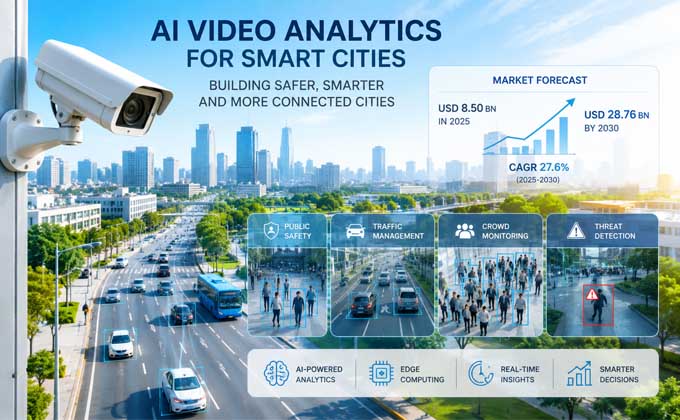
A new report by MarketsandMarkets forecasts that the global AI video analytics market for smart cities will grow from USD 8.5 billion in 2025 to USD 28.76 billion by 2030, representing a compound annual growth rate (CAGR) of 27.6%.

According to the report, market growth is being driven by increasing investments in smart city infrastructure, public safety modernization, and intelligent transportation systems. Cities around the world are increasingly deploying AI-powered video analytics to enable real-time threat detection, traffic optimization, public space monitoring, and critical infrastructure protection.

The public safety and law enforcement segment is expected to maintain the largest market share, while edge-based analytics solutions are projected to experience the fastest growth due to their low-latency processing capabilities and ability to support real-time decision-making.

MarketsandMarkets notes that the industry is rapidly evolving from traditional video surveillance systems toward intelligent platforms that combine artificial intelligence, edge computing, cloud infrastructure, and advanced computer vision technologies. These solutions provide greater operational visibility, process automation, and more efficient urban management.

Among the leading companies in the market are Motorola Solutions, Genetec, NEC Corporation, Hikvision, and Axis Communications, while innovative AI video analytics specialists such as BriefCam, Vaidio, Axon AI, and Graymatics are also highlighted as emerging players in the sector. The report concludes that AI video analytics is set to become one of the foundational technologies of future smart cities, integrating public safety, traffic management, and critical infrastructure protection into unified digital ecosystems.