Home Archive by category News (Page 20)

News

LAMATEL: Building Trust in Security & Telecom

In the new episode, we sit down with Olivier Pelland from LAMATEL, who shares how his early interest in communication and experience in the Canadian military shaped his career in the telecom and security manufacturing sector. He explains why communication and reliable logistics are often more decisive than technology itself, especially in mission-critical environments.

Olivier reflects on lessons from the COVID-19 period, highlighting the importance of supply chains, maintaining stock, and active listening with partners.

He also discusses how LAMATEL supports partners with end-to-end solutions, ensuring quality and reliability, and how the company adapts to digitalization and growing AI-driven data demands.

Finally, he shares insights on building long-term, trust-based partnerships and offers advice for those starting a career in distribution, manufacturing, or security and telecom.

Discover how LAMATEL drives partner success and reliable solutions.

Innovatrics HQ Shows What Identity-First Building Security Looks Like

Biometrics House, Innovatrics’ new headquarters in Bratislava, is designed as a working model of identity-first building security, demonstrating how hands-free access and visitor management can scale without compromising privacy.

Innovatrics is now operating from a new global headquarters in Bratislava, Slovakia, and the building is not just where the company works. Known as Biometrics House and billed as the world’s most biometric building, it is designed to run on a simple principle: trust starts with identity. In practice, routine movement through the site can happen without badges, PINs, or a reception queue, while security teams keep clear oversight of who is where, and why.

For security professionals, the message is practical. Biometrics is no longer limited to controlled checkpoints at airports or high-security sites. When it is deployed with the right safeguards, it can become part of everyday building operations, from visitor management to access control and incident response.

Identity as the Access Layer, From Parking to the Elevator

Biometrics House has been built as a working example of how multimodal identification can replace traditional credentials across an office environment. Set next to Bratislava’s Vinohrady train station, about 15 minutes from the city center, Biometrics House is organized across four floors, with team zones, meeting rooms, and workshop areas designed to support both focused work and collaboration. Shared spaces such as the bistro, social-stair lobby, terraces, and Zen zones are designed to keep the day moving without requiring people to leave the building. From above, its footprint echoes a fingerprint, a deliberate reference to the company’s roots in fingerprint recognition.

The security concept is centered on recognition rather than possession. Employees and approved visitors can be identified via facial or palm recognition, reducing weak links associated with borrowed cards, shared codes, or forgotten credentials. In practice, this extends beyond the front door. Parking access can be handled the same way, and lifts can be tied to identity so that users are routed to permitted floors without extra taps or swipes.

Visitor handling is also built around traceability. Instead of issuing temporary badges and hoping they are returned, enrollment can occur before arrival or at a self-service kiosk. Once inside, pre-registered entry and a structured visitor journey help guests reach meeting rooms efficiently, while access permissions remain defined and traceable.

“We imagine a workplace where even your desk is dynamic, assigned not by habit but by what you’re working on that day. The building itself adapts to your projects, your team, and your agenda,”

Innovatrics Founder and CEO Jan Lunter.

Built for Security, Designed for Privacy

Any identity-first building stands or falls on trust, and Biometrics House puts data protection in the foreground. Innovatrics says the building goes beyond GDPR requirements through biometric data decoupling, minimal data storage, and secure on-device camera processing. Users are also given clear choices during registration. With consent, biometrics can be used for hands-free access across authorized zones. Without consent, data can be anonymized and limited to essential security checks to prevent personal identification.

From an operational perspective, the site is also a live environment for modern building security practices: real-time zone surveillance, intrusion detection, and automated alerts that can escalate events without stopping normal operations. For higher-risk scenarios, anti-spoofing and liveness controls help prevent attempts using photos, videos, or masks. A robotic “guard dog” provides a visible deterrent and can be used for patrol or guided-escort tasks.

A Living Lab for Integration, Not a Showroom

What makes Biometrics House notable is not the novelty of face recognition alone, but the way the building is used. The HQ functions as a permanent test site where identity, video, and access workflows can be evaluated under real office conditions, not just in a demo room. That matters for integrators and end users who need answers to practical questions: how onboarding is managed, how exceptions are handled, how audit trails are kept, and how systems behave during peak hours.

It is also a place to see how building automation and security can work together without turning the workplace into a checkpoint. Meeting spaces and shared facilities can be prepared based on verified presence, while environmental monitoring keeps comfort parameters such as air quality, humidity, and lighting under continuous control.

Design choices are tested the same way the technology is: in motion. Teams observe how layouts shape behavior, adjust based on what actually happens day to day, and treat the office as something that can learn. “We imagine a workplace where even your desk is dynamic, assigned not by habit but by what you’re working on that day. The building itself adapts to your projects, your team, and your agenda,” says Innovatrics Founder and CEO Jan Lunter. It is an approach that turns the HQ into a flexible, connected environment that evolves with the people inside it.

Sustainability as Resilience

Although the headline feature is biometric operation, the building’s energy approach supports day-to-day resilience. Biometrics House operates without a gas connection, uses geothermal energy and solar power, and captures rainwater for reuse. A recycled aluminium facade and other material choices underscore that a high-security building can also have a lower operational footprint.

As identity moves closer to the center of physical security, Biometrics House offers a practical reference point: a fully operational workplace where biometric access, privacy safeguards, and building management have been combined into one repeatable model.

About Innovatrics

Innovatrics is an independent EU-based provider of trusted identity and biometric solutions used by governments, businesses, and law enforcement agencies to keep people safe, onboard new customers, and build institutional trust. Since 2004, the company has delivered flexible biometric identification solutions that have benefited more than a billion people worldwide, with algorithms that consistently rank among the fastest and most accurate in fingerprint, face, and iris recognition.

Mass Notification Market Forecast to Reach USD 80.4 Billion by 2030

The global mass notification market is expected to grow from USD 28.88 billion in 2025 to USD 80.44 billion by 2030, registering a compound annual growth rate of 22.7%, according to a new report by MarketsandMarkets.

The study attributes the growth to rising investments in emergency preparedness, stricter safety regulations, and the modernization of enterprise communication infrastructure. Organizations are increasingly adopting real-time, coordinated alerting systems to manage crises, ensure personnel safety, and maintain operational continuity across distributed facilities.

Public address systems currently account for the largest market share, supported by their widespread use in transportation hubs, campuses, industrial sites, and public infrastructure. Meanwhile, the business continuity and disaster management segment is forecast to record the fastest growth, driven by growing concern over cyber incidents, infrastructure failures, and the financial impact of operational disruptions.

Quanergy Names David Lenot as Director for EMEA Sales & Market Development

According to an official press release issued by Quanergy Solutions, the company has appointed David Lenot as Director of EMEA Sales and Market Development, strengthening its commercial footprint across Europe, the Middle East, and Africa

In his new role, David Lenot will lead regional sales strategy, partner development, and customer engagement, with a particular focus on accelerating adoption of 3D LiDAR-based perception solutions in security, smart infrastructure, and industrial environments. The appointment comes as demand for advanced sensing technologies continues to grow across large-scale infrastructure, smart city, and critical asset protection projects in the Middle East.

Lenot brings more than 20 years of experience in sales leadership and market expansion within the technology and security sectors. His background includes building regional go-to-market strategies, managing complex partner ecosystems, and supporting enterprise and government customers deploying advanced security and situational awareness solutions.

Commenting on the appointment in the press release, Enzo Signore, CEO and co-founder of Quanergy Solutions, said that Lenot’s experience will support the company’s efforts to scale its EMEA operations and help customers enhance safety, operational efficiency, and real-time visibility using LiDAR-based technologies.

Lenot stated that he is joining Quanergy at a pivotal stage of growth, highlighting the company’s focus on real-time 3D perception, motion intelligence, and analytics. He added that he looks forward to working closely with partners and customers across the region to expand deployments in security, transportation, and smart environment projects.

The appointment reflects Quanergy’s broader strategy to reinforce its regional sales structure and address increasing demand for intelligent sensing platforms across Middle East infrastructure, transportation hubs, and enterprise security markets.

Kaspersky Warns of Surge in Phishing Emails Using Malicious QR Codes

Cybersecurity company Kaspeersky has reported a sharp rise in phishing emails containing malicious QR codes, highlighting a growing tactic used by cybercriminals to bypass traditional email security controls and target employees.

According to the company’s latest findings, detections of phishing emails with QR codes increased dramatically from 46,969 in August to 249,723 in November, a more than fivefold rise in just three months. The surge reflects a broader shift toward QR codes as a low-cost, highly effective way to conceal malicious links.

Attachments are increasingly embedding QR codes directly into email bodies or, more commonly, inside PDF attachments. This approach helps obscure phishing URLs from automated detection systems. It encourages recipients to scan codes on mobile phones, which often lack the same level of security as corporate desktops or laptops.

Malicious QR codes are now appearing in both large-scale phishing campaigns and more targeted attacks. Once scanned, the codes may direct victims to fake login pages designed to steal credentials for services such as Microsoft accounts or internal corporate systems. In other cases, the emails pose as HR notifications, urging employees to review documents related to leave schedules or staffing updates, ultimately leading to credential-harvesting websites.

Another common tactic involves fraudulent invoices or purchase confirmations delivered as PDF attachments. These campaigns are sometimes combined with vishing, prompting victims to call phone numbers included in the document to dispute a transaction, opening the door to further social engineering and financial fraud.

“These tactics exploit trust in routine business communications and can result in credential theft, account takeovers, data breaches, and financial losses,” said Roman Dedenok, Anti-Spam Expert at Kaspersky. He noted that the rapid growth observed in November shows how attackers are capitalising on QR codes to target users on mobile devices, where security controls are often weaker.

To mitigate the risk, Kaspersky advises organisations to strengthen email security with solutions that detect QR code-based threats, including advanced image analysis at the email gateway, alongside user awareness and safe scanning practices to reduce exposure to credential compromise and follow-on attacks.

Genetec Named One of Canada’s 2025 Top Employers for Young People

Genetec announced that it has been named one of Canada’s Top Employers for Young People by MediaCorp Canada for the 2nd year in a row.

Part of the Canada’s Top 100 Employers project, the Top Employers for Young People designation recognizes organizations offering exceptional workplace environments and programs that cater to young professionals. Companies are evaluated on their ability to attract and retain young talent, mentorship and training opportunities, and the percentage of young professionals in the organization.

“With a significant portion of our workforce under 30, this award reflects our ongoing commitment to cultivating a workplace where young professionals can grow, innovate, and thrive,” said Richard Pailliere, Vice President of Human Resources at Genetec Inc. “By providing meaningful opportunities, robust training, and a strong sense of community, we aim to empower the next generation of talent to reach their full potential.”

Genetec was recognized for its exceptional approach to talent development, including initiatives such as:

  • Innovative Training Programs: The company’s Office of Innovation and Strategic Technologies (OIST) provides employees with unique, in-house learning experiences, such as TechTalks sessions featuring industry leaders. Additionally, Genetec partners with institutions like HEC Montréal to provide leadership training.
  • Apprenticeship Program: Launched in 2022, this program helps candidates without traditional qualifications gain technical skills through immersive, hands-on training.
  • A place where interns thrive: In 2024, Genetec welcomed nearly 400 paid interns, offering full-time hours, impactful projects, and the same benefits as permanent employees. This immersive experience mirrors the life of a full-time employee, preparing interns for future success. In 2023, 46 interns transitioned into permanent roles, representing 12% of new hires at Genetec that year.
  • Women in Engineering program: Genetec is dedicated to fostering diversity and inclusion in the workplace. In partnership with Concordia University, the Women and Engineering program pairs female interns with experienced female mentors from Genetec for weekly one-on-one meetings to discuss objectives, address concerns, and navigate the workplace. By offering support and showcasing female leaders, the initiative empowers young women pursuing engineering careers to feel confident and prepared for their future.

With over 54 open positions and numerous internships across North America and the world, Genetec invites aspiring young professionals to join its growing workforce. Interested candidates can learn more about available opportunities by visiting www.genetec.com/about-us/careers.

MarketsandMarkets: RFID Market Set to Exceed USD 30 Billion by 2034 as Automation and Digital Tracking Accelerate

The global RFID market is projected to grow from USD 14.58 billion in 2025 to USD 30.47 billion by 2034, registering a compound annual growth rate (CAGR) of 8.5%, according to the latest market report published by MarketsandMarkets

The steady expansion is being driven by the rising adoption of automated identification technologies, real-time asset tracking, and RFID-enabled digital transformation across multiple industries.

Retail, transportation, logistics and warehousing, industrial manufacturing, and healthcare and pharmaceutical sectors are identified as the primary growth engines, as organizations increasingly rely on RFID to enhance operational visibility, accuracy, and efficiency. The report highlights that wider deployment of RFID tags, readers, and software platforms—combined with deeper integration with IoT and enterprise systems—is reshaping how businesses manage inventory, assets, and secure identification processes.

From a regional perspective, Asia Pacific is expected to record the fastest growth in the RFID market, expanding at a CAGR of 10.5%. This growth is supported by rapid retail expansion, increasing manufacturing capacity, and accelerated logistics digitalization across major economies including China, India, Japan, and South Korea.

Segment-wise, RFID tags accounted for the largest share of the market in 2024, representing approximately 51%, driven by large-scale item-level tagging and asset tracking deployments across retail and supply chain operations. High-frequency (HF) RFID also dominated by frequency segment, holding a 57% market share in 2024, supported by strong adoption in contactless payments, access control, ticketing, and secure identification applications. Meanwhile, the labels segment is forecast to register the highest CAGR of 12.4% between 2025 and 2034, fueled by high-volume use in retail inventory management and warehouse automation.

Contactless payments emerge as another high-growth area, with the segment projected to grow at a CAGR of 11.8%, reflecting rising adoption of digital payments, NFC-enabled systems, and transit fare collection platforms. Retail remains the largest vertical in the RFID market, driven by widespread item-level tagging initiatives, inventory accuracy programs, and omnichannel fulfillment strategies among global retailers.

The report identifies Zebra Technologies, Avery Dennison, Honeywell, HID Global, and Datalogic as leading players in the RFID ecosystem, supported by broad product portfolios and strong enterprise deployments. At the same time, companies such as ORBCOMM, Mojix, eAgile, Omni-ID, and Omnitas are strengthening their market positions through innovation in RFID hardware, software platforms, and industry-specific solutions.

According to MarketsandMarkets, ongoing trends in retail digitalization, e-commerce growth, smart logistics, and contactless services will continue to reshape RFID adoption. These developments are pushing enterprises to deploy RFID-based solutions for real-time visibility, automation, and secure identification, reinforcing RFID’s role as a foundational technology in data-driven and high-velocity operational environments.

ISE 2026 Opens in Barcelona: The World’s Largest Pro AV Show Continues to Push Industry Boundaries

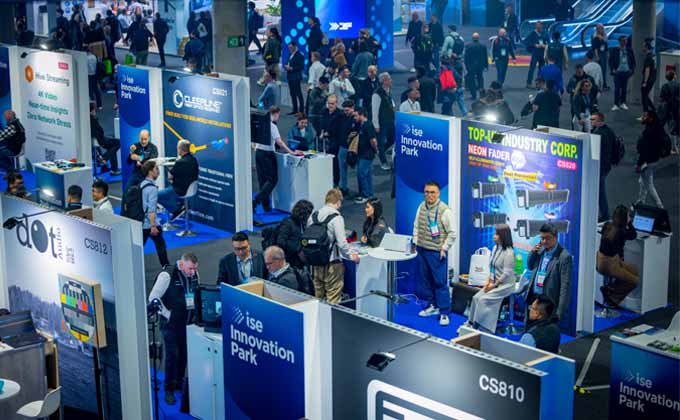
The first day of Integrated Systems Europe (ISE) 2026 in Barcelona was marked by strong momentum and high attendance, with several tens of thousands of professionals from around the world moving through exhibition halls filled with exhibitors and the latest AV, IT, and systems integration solutions. As noted by ISE Managing Director Mike Blackman, size alone is not a guarantee of long-term relevance; what truly matters is continuous adaptation to the real needs of the market and the industry. “We might be the biggest right now, but we have to work hard to stay there – we don’t decide what’s best, our customers do,” Blackman said ahead of the show’s opening.

This year’s edition of ISE is held under the Push Beyond theme, which, according to the organisers, symbolises breaking down boundaries between AV, IT, broadcast, and creative technologies, as well as moving beyond traditional industry silos. From day one, a strong emphasis has been placed on AV and broadcast convergence, particularly in Hall 4, where a significant portion of the space is dedicated to virtual production technologies and advanced LED applications.

Blackman also highlighted ISE’s deliberate evolution from a traditional systems integrator-focused trade show into a global platform for the exchange of ideas and innovation, warning that failure to adapt to change can seriously undermine the relevance of major technology events. This approach is reflected in new initiatives introduced at ISE 2026, including the Spark creative industries hub and the Cybersecurity Summit, both underscoring the growing importance of cyber security in increasingly connected AV and IT systems.

Once again, the show’s early position in the industry calendar allows manufacturers to present professional versions of technologies previously unveiled at CES, with a strong focus on live, immersive experiences. At the same time, the organisers continue to strengthen ties with the host city of Barcelona through public AV installations and events open to local citizens.

For first-time visitors facing the impressive scale of the show from day one, ISE has introduced AI-powered planning tools and guided “New to ISE” tours designed to improve navigation and help attendees use their time more efficiently. As Blackman emphasises, ISE today is no longer just a trade show, but a global meeting point where the future of technology is actively shaped – and the opening day of ISE 2026 clearly demonstrates why that enthusiasm continues to grow year after year.

Among the media present on site are the editorial teams of a&s Adria and a&s Middle East, reporting directly from Barcelona on the key trends, technologies, and messages emerging from the world’s leading pro AV event.

Euralarm: New guidance document on Precautionary measures for protecting vital installations and facilities

Euralarm has released a new guidance document on Precautionary measures for protecting vital installations and facilities, providing practical direction to strengthen the physical protection and resilience of critical infrastructures across Europe. The purpose of this document is to illustrate in practice the importance and the basic requirements for physical security and safety in the field of critical infrastructure

In view of the constantly growing threat situation and the interdependencies between the individual sectors, the security of critical infrastructures must not only be understood as a task for individual infrastructure operators. Rather, it is an all-society issue that requires the cooperation of all parties involved – from government agencies to security authorities to private companies and specialized security service providers. Only through this shared responsibility and the continuous adaptation to new threat scenarios can the security and stability of Europe be guaranteed in the long term.

In an increasingly complex and interconnected environment, European societies rely on highly interdependent systems such as energy and water supply, healthcare, transport, and communications. Recent incidents and evolving threat scenarios have underlined how vulnerable these vital installations can be to targeted attacks, natural disasters, and technical failures. Ensuring their continued functionality is therefore essential for social stability, public safety, and economic security.

The guidance builds on the objectives of the European Directive on the Resilience of Critical Entities (CER/RCE), which establishes minimum standards for the protection of critical infrastructures. It emphasizes the importance of cross-sectoral physical security arrangements that complement existing cyber and IT security measures, creating a holistic and integrated security approach.

While national implementation timelines may vary, the document highlights that proactive protective measures are both necessary and prudent to mitigate all conceivable risks.

A central focus of the guidance is the role of regular risk analyses and resilience planning. These processes enable operators of critical infrastructures to identify vulnerabilities early, prevent potential threats, and sustainably enhance their ability to withstand and recover from disruptive events.

The document outlines the need for an integrative security strategy that combines structural, technical, and organizational measures. Effective protection can only be achieved through the coordinated application of physical security solutions – such as perimeter protection, access control, intrusion and fire detection, and video surveillance – together with robust cyber security measures. This layered approach creates a comprehensive protective shield tailored to the specific risk profile of critical infrastructures.

Finally, the guidance stresses that protecting vital installations is not solely the responsibility of individual operators. It is a shared, all-society task requiring close cooperation between public authorities, security agencies, private operators, and specialized security service providers. Continuous collaboration and adaptation to emerging threats are essential to safeguarding Europe’s critical infrastructures and ensuring long-term resilience.

The guidance document is intended as a practical reference for policymakers, infrastructure operators, and security professionals involved in the protection of vital facilities.

The guideline can be downloaded here

Wesco Highlights the Importance of Open Standards Through Long-Standing ONVIF Membership

Wesco International has been highlighted as an example of long-term commitment to open standards in the security industry through its active membership in ONVIF. As a FORTUNE 500 company with approximately $22 billion in annual revenue, more than 700 locations across 50 countries, and a portfolio comprising millions of products, Wesco has been actively involved in ONVIF technical committees for over 15 years. Through this engagement, the company supports the development of common network architecture and interoperable solutions for modern security systems.

In the latest ONVIF member profile, David Needham, Senior Engineer for Connected Systems Technology and Support Services, emphasizes that Wesco brings a system integrator’s perspective to standards development. According to Needham, this approach helps shape solutions that have a direct impact on real-world security deployments worldwide. Wesco has been present in the physical security market since the 1980s, while a dedicated sales team for this segment was established in 2000.

The company notes that ONVIF membership delivers tangible value to customers, particularly through its advisory role and advocacy for open interfaces that enable deeper integration between different systems. This approach, Wesco adds, helps end users more easily achieve their operational and security objectives in increasingly complex environments.

The full interview and detailed ONVIF member profile of Wesco are available on the official ONVIF blog: https://www.onvif.org/blog/2026/01/26/member-profile-wesco/