Home Archive by category News (Page 60)

News

Hytera Pleads Guilty on Conspiracy to Steal Trade Secrets From Motorola

Motorola Solutions has released a statement saying that Hytera Communications Corporation Limited, a Chinese telecommunications company, has entered a felony guilty plea and executed a Plea Agreement to address the U.S. Department of Justice’s criminal prosecution of Hytera for misappropriation and theft of confidential trade secrets and proprietary information belonging to Motorola Solutions.

According to the release, in pleading guilty to felony conspiracy charges, Hytera admitted that it knowingly agreed to take, without authorisation, Motorola Solutions documents and source code related to DMR technology, and that it used that information to develop Hytera DMR products.

“Hytera‘s admission of guilt in federal court validates the extensive evidence that it is a bad actor and felon, and we remain firmly resolute to holding Hytera accountable for its egregious illegal conduct,” said Greg Brown, chairman and CEO, Motorola Solutions. “I appreciate the Department of Justice for its diligence in pursuing this matter. This case is critical validation that our government is fully committed to prosecuting criminals who steal from American companies. We will continue to vigorously defend our valuable intellectual property and trade secrets for the benefit of our company, our customers and our shareholders.”

In 2021, the U.S. Department of Justice filed felony charges against Hytera and seven of its employees, including former executive Gee Siong (G.S.) Kok. The federal grand jury indictment included 21 counts of federal criminal trade secret violations, including engaging in a decade-long criminal conspiracy to steal and use Motorola Solutions’ trade secrets and proprietary information. Mr. Kok pled guilty in 2023 and is awaiting sentencing; the other six Hytera employees are currently at large.

Under the terms of the Plea Agreement, Hytera is expected to be sentenced in November 2025, at which time the U.S. District Court is expected to order Hytera to pay restitution to Motorola Solutions and a criminal fine to the U.S. Government.

Hytera’s guilty plea does not resolve Motorola Solutions’ ongoing civil litigation against Hytera. Motorola Solutions is continuing to pursue collection of the more than $471 million judgment already awarded to it in its trade secret and copyright infringement litigation against Hytera in the United States, as well as injunctive and other relief to address Hytera’s misconduct.

Ajax Shares Successes of 2024

Ajax has shared its annual report for the year 2024, and fuelled by the achievements and also by lessons learned from occasional setbacks, Ajax Systems now steps into the new year as strong and ambitious as ever.

2024 was a busy year for the company, with a widening portfolio that reached 180 products, growing by 45 unique devices across all categories in just one year, while software saw 56 updates. Ajax also introduced the expansion of Ajax Services, marking an exciting new chapter for the company.

The team worked toward strengthening partnerships to drive business and user satisfaction. Recording a significant rise in the number of both end and Pro users demonstrated that investing in knowledge sharing, efficiency, and improved online and offline communication was a winning strategy.

Ajax Systems received 20 awards that the company maintains aptly reflects its core priorities. Professional communities worldwide acknowledged the innovativeness of Ajax hardware and software, the sleek design of the products, and the impact of the firm’s communication effort. In addition, Ajax Systems was recognised as the best manufacturer in the industry three times over the year.

Brand-new portfolio segmentation

Ajax Systems undertook a strategic change to the segmentation of its fast-growing portfolio to make it clear and intuitive. The company introduced four categories — Intrusion protection, Fire and life safety, Comfort and automation, and Video surveillance — that marked key directions in its business development.

Baseline and Superior product lines were reimagined. Baseline now encompasses wireless Jeweller devices for intrusion only, while Superior includes wireless Jeweller and wired Fibra devices for high-profile projects. The Superior products will also undergo renaming to ensure they are easily recognisable. The changes are planned to be implemented by the end of 2025.

Ajax Special Event

In November, Ajax hosted its sixth Ajax Special Event, an annual showcase of the company’s latest technologies and devices. This year’s presentations focused on four so-called “universes”, representing the four new Ajax product categories — Intrusion protection, Fire and life safety, Comfort and automation, and Video surveillance. The Ajax team highlighted how all the categories seamlessly integrated within the Ajax ecosystem or so-called Multiverse. This integration aims at delivering not only a better experience for end users but also unlocking infinite business opportunities for Ajax partners.

The Ajax Special Event attracted large global audiences, both online and offline. A total of 139 offline events were held in 39 countries, with the main event hosted in Manchester, UK, at the legendary Old Trafford Stadium. The online broadcast, which was available in 26 languages, saw a substantial rise in first-day views compared to last year’s event. And, according to the company, the Ajax Special Event: Multiverse received unprecedented participation and viewership, achieving new heights for the company.

During the event, the Ajax team introduced 29 products, including three services, and shared exciting news about the obtained certifications. The intrusion protection category expanded with a range of wireless devices. However, the category that excited the audiences the most was Video surveillance, as the Ajax partners were anticipating the portfolio to grow, and they were not disappointed. Ajax Systems announced two new video products:

  • Doorbell, a video doorbell with built-in AI, PIR sensor, and control via apps. The device promises excellent video and audio quality and includes innovative communication capabilities.
  • Indoorcam, a Wifi security camera with a PIR sensor, built-in AI, and a fallback communication channel. Designed for use in homes, restaurants, and shops.

Zenitel further strengthens its unified critical communication offerings with the addition of new IP speakers

15th of January 2025, Oslo, Norway Zenitel, a global leader in Unified Critical Communication solutions, proudly announces the launch of new range of IP Speakers, further strengthening its market leadership position within the safety and security communications.

The addition of new IP Speakers, together with Zenitel Connect Pro — the industry’s first Unified Critical Communication Platform — paves the way for unifying communication technologies to address life safety, security, and operational communication needs under a single platform.

Built to deliver unparalleled sound quality, Zenitel’s new and innovative IP Speakers feature a high-efficiency power amplifier that delivers a high sound pressure level, making it an ideal choice for high noise environments, in addition to the ability to cover larger areas with fewer speakers.

Bringing voices together with Zenitel IP speakers

Thanks to ONVIF and SIP compatibility, Zenitel’s new IP speakers simplify the integration into security systems, opening new possibilities for communication. Together with Zenitel Connect Pro, the new IP speaker range offers truly unified communication possibilities, enabling seamless communication among security personnel, control room operators, staff, and visitors.  With a wide range of use cases, including public address, emergency notifications, security announcements, and background music, the new Zenitel IP speakers transform reactive security systems into proactive and interactive solutions.

At the Forefront of Technology  

With up to 123dB SPL output, Zenitel’s new IP speaker range delivers excellent sound clarity for public address broadcasts, even in extremely noisy environments. With the ability to individually addressed, they provide cost-effective PA solutions for medium and small projects without losing zone granularity.

The innovative power supply design, featuring dynamic power management, delivers a full 30W output for voice applications even with standard PoE, eliminating the need for a PoE+ switch. In line with eco-design principles, Zenitel’s IP speakers are optimized to significantly reduce idle power consumption, helping lower energy costs.

Equipped with integrated speaker-as-a-microphone technology, the IP speakers become an essential part of a unified critical communication solution, enabling seamless one-way and bi-directional communication without requiring additional equipment.

Trusted Communication, Protected by Design

Zenitel is committed to ensuring the highest level of cybersecurity across all its technology offerings. Cybersecurity requirements are fundamental to any security specification today. Zenitel provides guidance, advanced technologies, and tools that support the industry’s best practices.

Zenitel’s latest IP speakers are no exception. Hardware Root of Trust on IP speakers provides a trusted foundation for verifying the integrity of hardware components, software, and data.

  • Secure boot assures that the boot software is approved by Zenitel.
  • Verified image upload assures that the software that is uploaded on the device comes with Zenitel approval.

“Last year, with the introduction of Zenitel Connect Pro, we laid a robust foundation for the future of unified critical communication (UCC) offerings. At the beginning of this new year, we are happy to share the launch of a new IP speaker range, further strengthening our UCC offerings,” says Lars Paulsson, EVP for Safety and Security at Zenitel. “The launch of our new IP speaker range marks a significant step in expanding our UCC offerings. As the demand for audio communication solutions grows, we believe these IP speakers will redefine Security, Safety and Operational communication,” Paulsson adds.

With our new IP speaker range, Zenitel reaffirms its commitment to setting industry benchmarks in critical communication, ensuring safety and seamless communication across every environment.

For more information about the new IP Speakers, please visit https://www.zenitel.com/next-generation-ip-speakers

 For more information about this product launch, please refer to our release bulletin

https://www.zenitel.com/sites/default/files/2025-01/A100K12303%20IP%20speaker%20range%20changes%20release.pdf

VuWall, G&D, and Tritec Join Forces Bringing Best-of-Breed Control Room Solutions Globally

VuWall, a global leader in video wall control and visualization solutions, proudly announces its acquisition by Naxicap, a prominent private equity firm driving innovation in mission-critical technology. Naxicap previously acquired Guntermann & Drunck (G&D) in 2020 and Tritec Electronic in 2022. Now, with VuWall part of its portfolio, the companies are set to transform the control room industry with complementary technologies that elevate command and control environments worldwide.

This strategic alignment under Naxicap creates exceptional synergy, enabling the companies to leverage each other’s technology, workforce, and market presence. Combining VuWall’s cutting-edge software development expertise with G&D’s and Tritec’s renowned hardware development, this partnership fosters unparalleled collaboration and interoperability in control room environments. Customers will experience faster response times, streamlined operational workflows, and increased system reliability through seamlessly integrated video wall and KVM solutions.

As part of this new collaboration, Thorsten Lipp, CEO of G&D, will now also serve as the CEO of VuWall, steering both companies toward shared success. Markus Müller-Heidelberg will remain Managing Director of Tritec Electronic. Meanwhile, Paul Vander Plaetse, Founder of VuWall, will assume the role of Chief Marketing Officer (CMO) for VuWall, G&D, and Tritec, bringing his vision and expertise to lead global marketing strategies.

“This acquisition represents a significant milestone in our mission to bring together best-of-breed solutions in the control room industry,” said Joseph Pacher-Theinburg at Naxicap. “By leveraging the strengths of VuWall’s software development team and G&D and Tritec’s hardware expertise, we are unlocking new possibilities for innovation and market growth. ”

Paul Vander Plaetse added: “The integration of G&D’s world-class KVM technology with VuWall’s innovative IP video wall solutions is a game changer for command and control environments. This partnership will allow us to deliver a truly seamless experience, enhancing operational efficiency and situational awareness for our customers.”

VuWall and G&D will showcase their latest innovations at Integrated Systems Europe (ISE) 2025 in Barcelona February 4-7, 2025. Discover VuWall’s innovative solutions at stand 5C700 and G&D’s latest technologies at stand 5J350. Schedule a meeting today at vuwall.com/ise to explore how we are transforming control room operations.

Together, VuWall, G&D, and Tritec are redefining the standards for control room technology, empowering organizations to achieve new levels of collaboration, efficiency, and interoperability in mission-critical environments. This collaboration is set to redefine control room operations across key industries, including public safety, transportation, security, utilities, state and local, government and defense, and enterprise sectors, driving new benchmarks in performance and reliability.

For any further questions regarding this transaction, please contact info@vuwall.com.

Motorola to Acquire AI Communications Software Business

Motorola Solutions has entered into a definitive agreement to acquire Theatro Labs, Inc., a maker of AI and voice-powered communication and digital workflow software for frontline workers, based in Richardson, Texas.

Theatro’s software-as-a-service platform, purposefully designed for frontline workers, provides a suite of collaboration applications that deliver information in real time to help improve their productivity and physical safety. Using conversational language through a wearable device, users can ask Theatro’s AI voice assistant for guidance to assist customers, check inventory and pricing, and communicate with other team members. The technology can help accelerate employees’ work processes and product knowledge.

Additionally, with frontline employee safety threats and theft incidents continuing to rise, Theatro enables employees to discreetly alert management and security teams when they feel unsafe directly through the wearable device, while the AI voice assistant can issue step-by-step safety and incident protocol guidance to help manage a response. Theatro’s software also integrates with video security cameras to identify potential theft or safety threats, and proactively alert employees on the store floor.

“Theatro is designed to prioritise both safety and operational efficiency, which are essential for all frontline workers,” said Mahesh Saptharishi, executive vice president and chief technology officer, Motorola Solutions. “With Theatro, we are continuing to invest in innovative technologies that purposefully apply AI to protect employees while automating how they work and improving their service to customers.”

New value added services

Theatro serves well-known U.S. retailers across a broad range of merchant categories. Motorola Solutions and Theatro expect to integrate complementary workflows across Motorola Solutions’ portfolio of technologies, including body cameras, fixed video, panic buttons and radios, to provide new value-added services to existing customers while expanding growth opportunities in industries such as hospitality, healthcare, manufacturing and education.

“For more than a decade, we have been passionate about innovating for frontline workers,” said Chris Todd, President & CEO, Theatro. “We’re thrilled to be joining Motorola Solutions to enable even more capabilities that help team members remain safe while delivering their best work every day.”

Both Motorola Solutions and Theatro are exhibiting at NRF ’25 – Retail’s Big Show currently taking place in New York City.

The transaction is expected to close in the first half of 2025, following receipt of regulatory approvals and satisfaction of customary closing conditions. Terms of the transaction were not disclosed.

Quanergy Lidar Technology Helps Solve Data Centre Security Challenges

Quanergy Solutions, a leading provider of 3D Lidar solutions, is driving an awareness of its advanced 3D Lidar system, created to address critical vulnerabilities in data center security. With the rise of hyperscale, colocation, and edge facilities, data centres face unprecedented challenges in safeguarding sensitive information and ensuring uninterrupted operations.

“The future of data centre security lies in proactive, intelligent solutions,” says Adam Andres, Global VP of Sales at Quanergy. “Our 3D Lidar technology offers the advanced capabilities to detect and deter threats, ensuring the safety and reliability of critical infrastructure.”

Quanergy’s 3D Lidar is designed to eliminate blind spots, reduces false alarms by over 90%, and promises to deliver 360° real-time tracking, all while seamlessly integrating with existing infrastructure. Designed to monitor up to 1,000 moving objects simultaneously, the system provides unparalleled accuracy and adaptability even in challenging environments.

According to the company, blind spots, tailgating, and false alarms are among the top vulnerabilities in traditional security systems. Quanergy’s technology offers to tackle these issues head-on with features such as real-time tracking, comprehensive 360° coverage, and centimetre-level accuracy even in rain, fog, or total darkness. The solution also respects privacy by tracking objects without capturing personally identifiable information (PII).

Quanergy’s 3D Lidar technology has been deployed at over 100 critical infrastructure sites worldwide, delivering proven accuracy and reliability in complex environments.  According to Quanergy,the system demonstrated a 100% detection rate for simulated security breaches at a major global cloud provider, significantly reducing false alarms by 90%. This proven solution enhances data centre security while streamlining operations and reducing costs.

Suprema Recognised in Global Top 50 for 14th Consecutive Year

Suprema, a global leader of AI-based security solutions has once again been named a ‘2024 Global Top 50 Security Company’ as compiled by A&S, marking its 14th consecutive year. The top 50 list of security companies worldwide are announced annually, with companies being ranked based on revenue and profitability. Suprema has maintained its position on the list consistently since 2011.

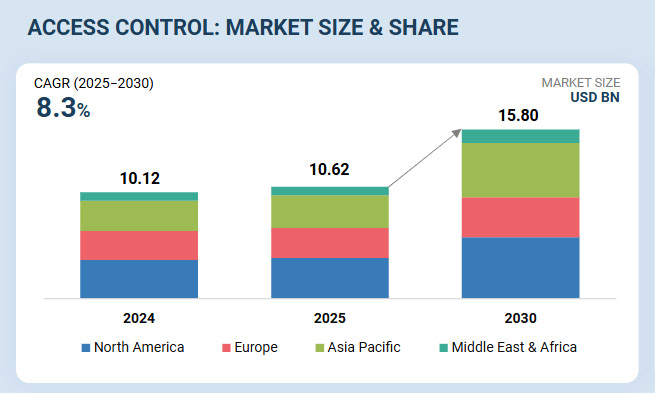
A recent market research report, jointly published by the Security Industry Association (SIA), ASIS International, and Omdia, projects the global physical security market to grow from $51 billion in 2022 to $70 billion by 2026, with a compound annual growth rate (CAGR) of 8.2%. The report segments the physical security market into five categories: video surveillance, access control, intrusion alarms, fire detection, and other equipment. Among these, video surveillance leads the market, followed by access control as the second-largest segment. Notably, North America dominates the access control market, while regions such as Latin America, the Middle East, and Africa are expected to experience the fastest growth in the coming years.

Suprema provides access control security solutions to over 140 countries and has achieved the No. 1 market share in the biometric access control market within the EMEA (Europe, Middle East, and Africa) region.

This year, the company further accelerated its growth in emerging markets, including Africa, India, and Southeast Asia, achieving remarkable milestones. Suprema’s global leadership is underpinned by over 20 years of technological expertise, delivering reliable and high-performing products and services. The company remains at the forefront of innovation, consistently developing solutions that align with the latest security trends, including AI and cloud technologies.

Recently, Suprema launched the Bioentry W3, an AI-powered facial authentication device offering enhanced data security features. Additionally, Suprema has expanded the global reach of its Cluee, an open cloud integration service, further solidifying its market presence and achieving significant results.

“Being recognised as a Global Top 50 Security Company for 14 consecutive years is a testament to our ability to adapt swiftly to changing market trends and our relentless commitment to research and development,” said Hanchul Kim, CEO of Suprema Inc. “We will continue to strengthen our competitiveness as a global leader in AI-powered integrated security solutions and drive innovation in the industry.”

RFID Market Value to Double to $25.24 Billion by 2033

According to the latest research from Marketsandmarkets, the RFID market is expected to reach USD 25.24 billion by 2033, up from USD 12.61 billion in 2025, at a CAGR of 9.1% from 2025 to 2033.

The growth in the RFID market can be attributed to the increasing demand for automation and real-time tracking across retail, logistics & warehousing, healthcare, and manufacturing industries. The analysts found that the major drivers of growth of the market are an upsurge in demand for e-commerce and optimisation of the supply chain, enrichment of asset tracking and solutions in inventory management, increasing precision and security through RFID technological advancements, and the growing adoption of contactless transactions. The increasing demand for passive RFID tags and readers, RFID-IoT-cloud integration solutions, RFID initiatives by the government for various sectors, and smart city and Industry 4.0 initiatives are the major growth drivers for this market. The technology is becoming less expensive with time and has become more widely applicable in a broad range of industries.

Key players

This market includes key players on the world stage including Zebra Technologies Corp., Avery Dennison Corporation, Honeywell International Inc., HID Global Corporation, Datalogic S.p.A., Impinj, Inc., Gao RFID Inc., Alien Technology LLC, Caen RFID S.r.l., and Xemelgo, Inc. These businesses have adopted various organic and inorganic growth strategies such as product launches, expansions, partnerships, collaborations, and acquisitions.

Entertainment vertical is strong

In the vertical segment of the RFID market, the entertainment sector is characterized by a phenomenal growth and will attain the highest CAGR during the forecast period. The growth in the entertainment sector is chiefly driven due to the rising adoption of RFID technology and enhancing customer experience, operational processes, and security at entertainment venues such as theme parks, stadiums, and theatres. RFID-enabled wristbands and tickets are widely utilised for access control, cashless payments, and personalised services, significantly improving visitor convenience and operational efficiency. In addition, RFID technology aids in inventory management and asset tracking for equipment, costumes, and props in production houses and live events. Immersive experiences, like interactive exhibits and escape rooms, further increase the pace of the adoption of RFID solutions for real-time engagement and data collection. Thus, as demand for seamless, secure, and data-driven entertainment grows, it is likely that the inclusion of RFID solutions will become essential and therefore will grow at a tremendous rate in this segment of the market.

Larger size reduces costs and allows for greater volume

During the forecast period, the 12-inch segment in the RFID wafer size market is expected to grow at the highest CAGR. This growth will, however, be driven mainly by the demand for greater efficiency and performance in RFID applications. Larger wafers, such as the 12-inch, enable a far larger number of chips per wafer, reducing the per-unit cost of the individual chip and allowing greater volume. This requires additional wafer technology development as businesses such as logistics & warehousing, retail, and healthcare take up RFID-based technologies for asset tracking and authentication and inventory management purposes. The 12-inch wafers can support a higher density of chips and better performance and integration, which are critical to support the growth in RFID applications in various sectors. Moreover, the automation and digitisation trend across industries is also fuelling the demand for more effective and cost-controlled RFID solutions. Companies are continuing to invest in advanced RFID systems, putting the 12-inch wafer segment in a good position for witnessing a reasonable share of growth, which is another factor driving the RFID market.

Asia Pacific to remain the strongest market

Asia Pacific is anticipated to remain the largest market for RFID, because of solid industrial growth, fast uptake of technology, and substantial investments in logistics, retail, and manufacturing. This, combined with heavy investment into infrastructure, with growing pressure on supply chain efficiency, has quickly led to adoption across diverse industries. In addition, growing demands of retail, healthcare, and automotive sectors for automation, real-time tracking, and inventory management further boosts adoption of RFID technology. The research found that some key players in Asia Pacific like China, Japan, and South Korea have been leading the development of RFID technology; with the support of respective nation governments through considerable initiatives on smart cities and their economic digitalisation. Rising use of RFID solutions within the IoT ecosystems and an expanding pattern of e-commerce and smart retail are also the market contributors. In addition, benign environments that are regulatory in nature as well as the presence of big brands of RFID manufacturers within this region add to competitive edges and continued expansion within this Asia Pacific RFID market.

6 key technology trends affecting the security sector in 2025

We’ve once again reached the time of year when we look ahead to some of the technology trends that will affect the security sector over the coming 12 months. The pace of change is as fast as ever.

Written by:
Johan Paulsson, CTO, Axis Communications
Mats Thulin, Director Core Technologies, Axis Communications
Thomas Ekdahl, Engineering Manager, Axis Communications

Some of the trends are evolutions of those we’ve seen in previous years. An obvious one is the continued interest in how AI will be applied in our sector, and we’ve highlighted some of the new considerations that will need to be addressed moving forwards. Others are new, or even a resurgence of topics we may not have focused on for a while.

National and regional legislators will once again try to keep pace with technological innovation. AI, cybersecurity, privacy, the need for resilience in critical entities… All these (and more) will be the focus of proposed and new regulation. We haven’t highlighted this as a specific trend, but it’s no less a priority and something every organization will need to respond to.

We believe that within all of these trends lies significant opportunity for the sector. For our customers that means enhanced capabilities, more flexibility, greater efficiency and increased value.

Hybrid solutions: the foundation for freedom of choice

In previous years we’ve highlighted how hybrid architectures – those making best use of edge, cloud, and on-premise technologies – have become the de facto choice for security solutions.

The drivers for the choice of architecture will be unique to every organization, taking into account technological, legal, ethical and governance concerns and requirements. The environment is evolving quickly, and therefore freedom of choice is imperative.

Hybrid solutions give freedom of choice in how to store, view, and analyze video, or manage devices. A combination of edge, cloud, and on-premise technologies can deliver an optimal total system solution, or its flexibility used to choose the specific instance preferred.

Whether demanded by emerging local and regional regulations or concerns over control of data, cost, or energy efficiency, hybrid solutions will continue to offer the greatest flexibility in creating architectures to best suit specific organizational needs and allow a system to be scaled.

AI evolution alongside AI efficiency

Development within the field of AI continues to race ahead. Deep learning technologies are the bread and butter of most analytics solutions within the security sector, while newer generative AI technologies are rapidly maturing. There is still a lot of hype in certain areas but real applications of generative AI in the security sector are becoming available. Each step of evolution brings with it a new set of opportunities, but also ethical, legal, and corporate considerations.

Generative AI models are large and require much compute capacity to execute, which creates a debate in how to balance the cost of AI (both in terms of financial investment, but also in terms of energy use and environmental impact) with its value. A lot of effort is being put into reducing the size of the models while maintaining the quality of results. The increased use of AI technologies only reinforces hybrid architectures as the standard.

The various ‘flavors’ of AI – from deep learning-based object recognition to generative AI – either demand or benefit from being applied at different places in the value chain, and in specific environments. Generative AI can assist operators in interacting with security solutions in natural language but, for the foreseeable future at least, require significant processing power. Conversely, deep learning-based analytics such as enhanced object recognition can be performed within surveillance cameras themselves.

Eventually this will enable generative models to be, at least partly, run on cameras with high-quality results. At the same time the models are improving in quality with regards to ethical aspects, bias, hallucinations, and the risk of making the wrong decisions.

Over time there is a big opportunity to dramatically change the efficiency and effectiveness of security operations. Algorithms will be able to understand what is happening in a scene and react to anomalies, based on the analysis on different types of input data, including but not limited to visual information. Input data will come from radar, audio, and numerous other sensors. This will create solutions that enable increasingly proactive capabilities and generate valuable insights in security scenarios for long term planning.

Beyond safety and security becomes real

The application of increasingly advanced computer vision, audio, access control and other connected technologies continues to serve security and safety use cases. Greater accuracy of analytics through the application of AI – particularly in object recognition – means that incidents can be responded to more quickly and effectively than ever before.

What is also clear is that the data generated by sensors of all types – video, audio, environmental, and more – can benefit numerous use case beyond the traditional. While still a relatively small part of the market, we expect to see an acceleration of applications aligned to operational efficiency and business intelligence.

This trend highlights the opportunities for increased collaboration across customer organizations. Technology being sourced or specified for one use case could well be used in another area of a business’s operations. For instance, data being created by video cameras employed principally for security purposes can be analyzed over time to improve customer or employee experience, sustainability, or process efficiency.

Through the high-quality hardware platforms available, the pace of development and innovation is astounding. Hardware vendors that foster an open and collaborative ecosystem of application developers and system integrators will bring greatest value to customers most quickly.

The “rebirth” of image quality

It may be counterintuitive to suggest that a focus on image quality is a trend in the sector, where many would assume it’s always been a priority (which, of course, it has). The trend is in how the images from visual sensors are being used, and with that the increased opportunities that better image quality brings.

The paradigm shifts when we consider that images are now often being initially viewed and analyzed by computers rather than humans, and that images are being viewed continuously, rather than when an incident of interest has taken place.

Advances in analytics and AI mean that a higher resolution image will inevitably lead to a better result, whatever the use case. Object recognition will be more accurate and more detailed data (and metadata) created. The drive towards even better image quality has been reignited.

With this has come opportunities for efficiency as well as effectiveness. A single camera producing much higher image quality can cover as large an area as multiple cameras would have been needed for previously. Higher resolution images also support analytics, for instance in large crowds, busy traffic intersections, or fast-moving production lines.

The human is still very much “in the loop”, as the saying goes. Operators will be automatically alerted to scenes they need to pay attention to, increasing efficiency and effectiveness of a response. Image quality as a focus will also place keen attention on the maintenance of surveillance cameras – still often a manual task – as small obstructions can have a significant impact on analysis.

The long-term value in products comes through software support

At the higher end of the security sector, the quality of hardware has been improving year-on-year. Today, hardware devices can be of such high-quality – particularly in terms of performance and capabilities – that expectations about their lifetime are greater than ever.

But while quality hardware can last for many years – as illustrated by the length of warranties – the defining factor in a camera’s functionality, including cybersecurity, and therefore its lifetime value, comes through ongoing software support.

Vendor commitments to support software throughout the expected lifetime of the hardware are essential; software that continues to enhance and build on the capabilities of the camera and keep it as secure as possible.

This also underpins the total cost of ownership of hardware. An investment in better quality camera, with comprehensive software support throughout its lifecycle, will ultimately be a more effective and efficient solution.

Technology autonomy to the customer’s benefit

Our role, and that of our partner ecosystem, is ultimately to focus on meeting the needs of customers. Technology for technology’s sake serves nobody’s purpose – innovations must be aligned to the priorities of the end user.

This clearly means supporting customers’ goals in safety and security, operational efficiency, and business intelligence. But it also means supporting their cybersecurity posture, commitment to sustainability through energy efficient solutions, and flexibility and freedom of choice via open standards-based technologies and platforms.

Technology vendors with more autonomy over their core technologies are clearly best placed to support these customer requirements. Greater control over foundational technology, from the silicon “upwards”, will allow a vendor to design specific capabilities and functionality aligned to customer needs into its products. Such an approach to core technology ownership will also allow a vendor to stand by commitments of being “secure by design”.

Furthermore, greater control of technology – at a component or even material level – is an important prerequisite to more effectively mitigate the risks of broader disruption to global supply chains. This enhances the ability to meet the requirements of customers, when they are needed.

We’re already seeing companies that would have traditionally been seen as software vendors designing their own semiconductors to gain more control over their service delivery – particularly in the area of AI – and we foresee this trend continuing in all sectors. Core technology independence is a trend we’re proud to say we’re some way ahead of, having developed our own system-on-chip, ARTPEC, for the last 25 years.

So, there you have it, our take on some of the trends that will shape the security sector in 2025. We’re sure you’ll have views on these and maybe some other trends of your own. We’d be delighted to continue the discussion on this with you.

Maringá Brazil’s Leading Smart City with VIVOTEK’s AI Security Technologies

Since 2024, Maringá, a city of approximately 500,000 residents consistently recognized as the best city to live in Brazil for over 6 consecutive years, has further strengthened its reputation by addressing the growing need for public safety.

In this pioneering project, ALCA NETWORK and ALLNET were responsible for the project design and partnered with VIVOTEK, the leading global provider of security solutions, to implement one of the most advanced smart surveillance solutions in Brazil. This system integrates cutting-edge cameras, facial and license plate recognition, and Big Data technologies. By consolidating data from the municipal, state, and federal sectors, this collaboration increases the safety of residents, solidifying Maringá’s position at the forefront of innovation in public safety.

Challenge

 Despite Maringá’s reputation as a peaceful and hard-working city with one of the highest Human Development Indexes (HDI) in Brazil, it faced evolving public safety needs. The city government and security agencies recognized the need for smarter security measures. “The Public Safety Department initially aimed to capture and analyze video data to support decision-making in cases such as drug trafficking, vehicle theft, tax fraud, and the protection of women and minors at risk,” explains Security Secretary Ivan Quartaroli.

To meet these objectives, VIVOTEK was chosen by ALCA NETWORK and ALLNET for its advanced technology and quality, perfectly aligning with the city government’s requirements. The implementation of Maringá’s Integrated Control Center (CCI) began in July 2022, with strategically positioned cameras installed in accordance with the city’s public safety guidelines.

Solutions

 VIVOTEK played a key role in upgrading Maringá’s security infrastructure by providing a comprehensive suite of solutions. This includes cameras with built-in video analytics processing technology and advanced software with facial and license plate recognition capabilities. This integration leverages Big Data to cross-reference captured information, facilitating streamlined processing and providing reliable analytics for informed decision-making.

To ensure full coverage, 70 VIVOTEK cameras supplied by ALLNET were strategically installed in key locations throughout Maringá, including urban mobility terminals, major avenues, squares, high-traffic intersections and public corridors.

Results and customer feedback 

The implementation of CCI Maringá with VIVOTEK solutions has improved public safety, leading to a notable reduction in crime rates and an increased sense of security among residents. Continuous monitoring of CCI allows officers to identify suspicious activity and promptly alert nearby law enforcement with accurate information. VIVOTEK’s advanced imaging technology supports crime prevention and investigation and serves as crucial evidence in legal proceedings. Key benefits include:

  • Reduced investigation costs and time.
  • Greater efficiency and safety for public agents working in the sector.
  • Reduction in car thefts.
  • Reduction in criminal activities.
  • Increased quality of life for the population.

As Acting Mayor Ulisses Maia emphasized, “This investment is capable of protecting the law-abiding citizens of Maringá, preventing all types of accidents that can happen in our city.” The integration of video analytics, particularly License Plate Recognition (LPR), greatly increases safety by managing the flow of vehicles in and out of the city, reinforcing Maringá’s status as a smart city in Brazil.