Over 48 million people, more than the population of Spain, visit the recently upgraded London Bridge Station every year. Already the fourth busiest train station in the UK, this figure is set to increase – especially as a result of the Thameslink infrastructure improvement programme, which according to Network Rail increased station capacity by more than 50 percent.
Finished in 2018, the project was the biggest railway upgrade since Victorian times, and included a comprehensive rebuild of platforms, new track infrastructure, an improved concourse, better signalling and more. And, through the multi-billion pound scheme, the location is now home to around 900 of Bosch latest connected cameras, all fully integrated into the highly-sophisticated station management system.
Beneath the glitz of the new public areas, the intelligent network of the cameras discretely monitor the flow of people twenty-four hours a day, seven days a week. The cameras allow security operatives to quickly identify potential incidents and areas of congestion. All of the video and data feeds are securely transmitted to a control room located at the heart of the station – giving Network Rail and British Transport Police (BTP) the ability to monitor and control any camera throughout the building.
“For us, the London Bridge project was an immense challenge. The existing analogue system had to be kept running whilst the new digital solution was installed. We also had to ensure that our system was fully integrated into the numerous other third-party platforms located both on- and off-site,” adds Lindsay Brennwald, London Bridge project lead at Bosch UK. “Our daily discussions and weekly meetings with Network Rail’s project partners continued for more than four years.”
Planners from Bosch needed to accommodate for the complex architecture on site – a mix of new construction and historic remodels. The result is a scalable security network that covers the most safety critical parts of the station, including ticket barriers and platforms. For the duration of the construction work, London Bridge, one of the oldest stations in the world – never closed its doors to the numerous commuters and tourists crowding its platforms on a daily basis.
Alongside the London Bridge project, Bosch is currently working with other British transport partners such as Transport for London. Major investments and upgrades have been completed at other stations, including London Waterloo, and are underway on the Channel Tunnel Rail Link network – which will all see Bosch IP camera systems introduced across their facilities.
An ordinary thermal scanner in a guard’s hands in a mall, school or government agency is not the best way to avoid the spread of viruses. He works slowly and imprecisely. Another thing is an access control system with face recognition and temperature screening. Partizan STD-2MP, for example, takes into account a lot of related factors. Weather conditions are one of the most important.
There is no such thing as bad weather…
… but it strongly affects the measurement results. In cold weather, the temperature of exposed parts of the body can drop one degree below real. In the heat, on the contrary, to rise to 37.4 °, in reality being the canonical 36.6 °. But STD-2MP can’t be fooled! Analyzing a person’s condition, the device takes into account everything – even the temperature difference between hair and a cap.
An algorithm based on the principles of artificial intelligence comes into play. The device compares the temperature of a person and the objects around him. It captures the warmth of previous visitors and calculates their normal temperature at the current moment. For example, in the morning the average temperature of visitors was 36.2 degrees. But the day was hot and sunny. Therefore, by lunchtime, people “warmed up” to 37.2. The device takes the weather into account and makes the measurement as clearly as possible. “Come on in, guys, everything is ok.”
Failure is not an option
It is also important to note that scanners are usually installed indoors, and people come from the street, where the temperature is completely different. The intelligent algorithm of Partizan STD-2MP calculates the nominal normal temperature from the total human flow. It is enough for the device to check just 3 visitors and the algorithms for detecting persons with abnormal temperatures are activated.
Does it sound complicated? Let’s look at the example. The device measured the forehead temperature of three visitors. It turned out to be at the level of 35.4-35.8. Partizan STD-2MP compares the obtained data with real body temperature and gets the real result – 36.4-36.8. But when a visitor with a forehead temperature of 36.9 is going in, everything seems to be within the normal range. But no. The device “understands” that real body temperature is much higher. “You shall not pass!”
Put on your mask!
In addition to temperature screening of visitors, Partizan STD-2MP can also recognize their faces. The system does this even with a mask on. So no one needs to take it off. We’re still talking about fighting viruses, aren’t we?
And, of course, Partizan STD-2MP can do everything what a proper control system should be able to do:
1. Keep records of visits (including registering arrival and departure time)
2. Restrict or grant access
3. Give an alarm signal in case of violation
How does it look like
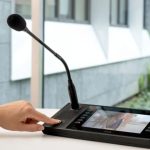
The Main Partizan STD-2MP module is no larger than a regular tablet with a 7” IPS display. There is also a temperature screening module, a white backlight, a 2MP IP CCTV camera, and a built-in access controller. Partizan STD-2MP can be installed near the turnstile, on the walk-through frame or just at the entrance doors. To do this, the accessories catalog has all sorts of different brackets – both for floor and wall.
By the way, about accessories. You can put a cover on the device, for example, in the form of funny ears. The cutest life hack that will come in handy if you take Partizan STD-2MP to use in preschool institutions. Kids will love it.
Body temperature screening at the entrance to public places has become a routine act since the coronavirus 2020. Partizan STD-2MP will make this process invisible, fast and maximum efficient. Far better than make “beeps” using manual scanner aiming against visitor’s forehead each time.
In case of any questions please contact:
sales@partizanstore.eu
tel (English and Hungarian languages): +420 608 496 889
tel (Czech and Slovak languages): +420 608 880 986
tel (Russian language): +420 608886587
A new report on the Smart Building Startup landscape from Memoori has identified 665 private companies founded between 2011 and 2020 in the smart buildings sector. This number has increased 38% in two years. The findings showed that there was no slowdown in the number of startups receiving investment last year despite the Covid-19 global pandemic and ensuing recession.
Indeed, investment in startups has accelerated in a number of key areas which address building technologies mitigating the spread of coronavirus throughout commercial real estate. The research demonstrates the critical contribution that startups are making to the introduction of innovation in the Smart Buildings & PropTech space.
Memoori’s analysis of venture capital and private equity funding has recorded the highest level of investment in startups over the last 4 years. Total capital invested in the global smart building space since 2012 amounts to $18.8 billion.
136 startups have been acquired in the last three years, which, according to the research, is the highest level of consolidation activity in the last nine years accounting for 72% of the total number of acquisitions over this period. Strategic buyers across the smart buildings landscape have continued their acquisitions strategy undeterred.
In the crowded marketplace of smart building startups, new entrants will need to differentiate themselves, either through their business model, partnerships or innovative technologies, in order to succeed. The report analyses the future for startups, recent and forthcoming IPOs and SPACs, disappearing and inactive startups as well as a summary of closed startups.
For the purposes of the research, startups are defined by Memoori as “private companies formed no earlier than 2011 that are focused on the commercial and industrial buildings market, that are not a subsidiary or an acquisition of a larger company and that are often financed by venture capital or private equity funding.”
The new All-Rounder ITS camera is engineered with an all-in-one structure, embedding video, radar, and supplemental light in one module, helping traffic authorities to easily ramp up the detection of violations
February 4, 2021 Hikvision, an IoT solution provider with video as its core competency, today announced its latest traffic product offering – the All-Rounder ITS camera – designed to improve road safety and optimize traffic flow. As the name implies, the camera encompasses different skills and abilities, boasting speed detection, traffic violation detection, automated plate recognition, and vehicle attribute analysis in one housing.
“Hikvision is always pushing the boundaries of video technologies. Beyond the visual range that is perceived by video cameras, the abilities to understand other kinds of “senses” would allow even more precise monitoring and reporting of events or accidents,” says Frank Zhang, President of International Product and Solution Center at Hikvision. “This is multi-dimensional perception, a trend that we think will affect the security industry in the future.”
The new ITS camera is designed and developed with this multi-dimensional concept in mind. It is Hikvision’s first camera to integrate three otherwise separate modules in one unit with no compromise on performance, making the camera neat and flexible to be deployed for demanding environments, all in an easy and cost-effective manner.
Improving road safety and optimizing traffic flow
The product provides an HD camera, speed radar, and light array inside one housing. Specifically, it works with a multi-tracking radar that continuously monitors up to two or three traffic lanes – depending on the camera model, and identifies the speed and position of objects in the monitored area at a speed of up to 300 km/h. If a vehicle violates the speed limit, the embedded radar triggers the connected camera and a picture is taken of the vehicle and its license plate.
In the event of infringements of traffic rules such as wrong-way driving, improper lane usage, or even failure to use a seat belt, the camera will capture images of the corresponding vehicle, recognize its license plate and relevant information including vehicle type, color, brand, and direction of movement, which can be addressed to the authorities in real-time or stored on board.
Incident detection helps to improve overall driving standards, which ultimately reduces the number of accidents, improves road safety and further evens traffic flow.
Inside the camera
Employed with Deep Learning algorithms, the camera is able to recognize a much higher number of license plates and with higher efficiency than conventional ANPR systems. Its GMOS sensor further ensures brighter and smoother images to be reproduced in challenging lighting conditions, especially in low-light environments.
The camera’s embedded supplemental light features a 16-bead light array, offering an IR range of up to 40 meters at night.
As all of these functionalities are integrated, the single product itself outperforms conventional ITS products with space-saving and less cabling for easier installation. It supports flexible pole- or side-mounting, which makes onsite configuration effortless.
The Hikvision All-Rounder ITS camera is ideal for various scenes such as urban roads, highways, tunnels and toll stations. For more information, please visit product page at iDS-TCV907-BIR.
As part of the Security Summit Webinar Series project Frogblue, the German manufacturer of intelligent solutions for houses and buildings, presented its products to interested security professionals from the Adriatic region.
In addition to the company’s lecturers Peter McKee and Jörg Kerber, the program was led by Aleš Polajnko and Boštjan Vodnik, representatives of the Slovenian company Tend, Frogblue’s partner for the Adriatic region.
Participants had the opportunity to get acquainted with the technology used in building management using modulators so-called “frogs” connected by Bluetooth connection as a nervous system. The software that manages the entire system is responsible for its functioning.
Advanced’s Regional Sales Manager for Southern Europe, Vladimir Zrnic, discusses some of the key considerations to take into account when specifying an effective gas suppression system.
Data centres, control rooms, power generation facilities and archives may serve very different purposes, but they all pose the same critical challenge for those charged with their fire protection. Guarding against catastrophic loss – whether of data, irreplaceable cultural assets or essential services – creates unique impetus to design solutions that offer the highest levels of control, reliability and protection. Ensuring you’ve covered all eventualities on these sites takes meticulous planning from the earliest stages and demands the use of specialist, proven technology.
Gas suppression systems are a valuable asset in protecting critical sites, where the use of water could be almost as damaging to building contents as the fire it would be used to quell. Some suppression systems release gases to reduce the oxygen content, and others use chemical reactions to extinguish fire.
Compliance
EN 12094 details the compliance requirements for gas suppression systems and their associated components, and EN15004 details the requirements and recommendations for the design of these systems. In order to meet EN12094-1, you need both the EN12094-1 approved extinguishing control panel, and also EN54 approved peripheral products. The panel, the detectors, the manual call points, as well as the sounders, all require EN54 approval for full compliance and peace of mind that your system will perform as expected in a fire situation.
EN54 part 13 specifies the minimum functions required to be performed by the control and indicating equipment (CIE) and its associated components, and it specifies the requirements for networked systems. This can prove particularly useful in indicating trouble or a fault during normal conditions if the voltage/current at the end of a circuit is not sufficient to operate the device connected to it. Essentially the fire system continuously tests its integrity – continually checking the condition of its components, and wiring, ensuring that they will work as required in an emergency.
Advanced’s ExGo gas extinguishing panel was among the first solutions to achieve EN12094-1, alongside approvals to EN54 parts 2, 4 and 13. ExGo also led the way in being one of the first to combine these with EN12094-3 in a single solution, providing end users with the additional functionality of annual activation on the facia of the panel – incorporating an electrical triggering device in compliance with the requirements. (EN12094-3 relates to the integrated manual release on the front of the panel).
Case Study – National Library of Romania
47 networked ExGo gas suppression panels with LCD displays, LED indicators and manual release buttons have been installed to protect the priceless, irreplaceable collections housed at the National Library of Romania. The gas suppression system integrates with the Library’s fire system and monitors and controls the valves that release up to 20 tonnes of NOVEC 1230 fire protection fluid. The system is EN 12094-1 and EN54 parts 2, 4 and 13 approved and offers the flexibility and expandability to meet current and future requirements.
Functionality
Gas suppression systems offer two different modes of use – automatic or manual control. In automatic mode, the system can operate without human intervention to deal with a fire before anyone is even aware of an issue. This mode of operation is particularly beneficial for isolated or unmanned sites.
However, some solutions also offer a degree of manual control. Manual mode enables full control of the system, proving useful in scenarios where an end user wants to reduce the risk of costly false alarms. When repair or maintenance work of a protected area is being undertaken, or if detection with high sensitivity – such as aspirating smoke detectors – are in effect, manual mode functionality can be useful in reducing the likelihood of a gas suppression system being triggered and releasing costly suppressant into the protected environment unnecessarily.
A solution with manual mode functionality can also be highly advantageous to users who want to specify how a system will work or react when certain events occur. This is particularly apparent with integrated solutions, capable of transmitting command signals from one system to another.
For example, in a data centre environment, all doors and windows will need to be sealed, in order for any release of gas to be effective at preventing the spread of a fire. If the server room doors are left open, the building’s access control will register a fault. This can be reported to the BMS, which in turn communicates with the gas suppression system to enter manual mode until the doors are once again closed and the room sealed.
To cover these eventualities, ExGo from Advanced, was developed with enhanced functionality in mind. The main panel is complemented by a range of repeaters so that system status can be seen inside and outside a protected area. In addition, ‘hold’ and ‘abort’ buttons allow the gas release to be paused or cancelled on visual confirmation of the area.
This flexibility in control options and devices, including automatic/manual switching, is an important additional safeguard for minimising the possibility of accidental/unwanted suppressant release and ensuring the effectiveness of the protection measures.
Case Study – the Hong Kong-Zhuhai-Macau Bridge
A network of 31 ExGo gas extinguishant panels was selected to protect critical server rooms in more than ten different buildings on the artificial island gateway to the $18.8 billion bridge, including police and fire stations as well as customs and various administrative buildings. With its proven track record in complex installations, cutting edge capabilities and high reliability, each ExGo gas extinguishant control panel is connected to at least one remote status indicator unit located at the entrance to the protected area, providing enhanced monitoring and control for the end user.
Integration
A superior gas suppression system will allow interfacing with various third-party systems, such as the fire system, offering tangible benefits such as enhanced protection, cost efficiencies, greater ease of use and faster response times during an emergency. Gas suppression control modules can be added to the fire system and can then control extinguishing operations as part of the wider cause and effect programming.
However, integrating gas suppression systems can be both delicate and challenging. Coordination and a good understanding of the integration approach are essential to attaining a system that operates smoothly.
ExGo has been designed to integrate easily into Advanced’s MxPro or Axis EN fire systems, as well as a site’s BMS, via a simple fire protection interface, or any third-party fire alarm system via an I/O loop device. Once integrated, the end user can take advantage of improved capabilities.
By consolidating data from HVAC, energy, security, CCTV and life safety applications onto one system, the end user gains facility-wide insight from a single workstation – benefitting from improved reporting, information management and decision-making.
Operational efficiencies can also be gained through the integration of the gas suppression system with the fire system and BMS, thanks to the reduced requirement for additional staffing and resource, simplifying training, and reducing false alarms.
These factors reduce risk, offering more strategic mobile or desktop control, exceptional alarm management and integrated security solutions. Overall, this provides a more comprehensive view of the status of a site, helping to speed up response time and mitigate risks to people, property and business.
Case Study – Historical Archives of Belgrade, Serbia
A custom-engineered ExGo gas extinguishant system, alongside Advanced’s Axis EN and TouchControl touchscreen remote control terminal, has been installed to meet the specific needs of the Historical Archives of Belgrade. The end user required complete system visibility over one of the Archives’ 2,400 sq metre storage facilities, which houses some of Belgrade’s most important cultural and social assets spanning the 16th to 20th centuries. The installation involved the extensive interfacing of TouchControl with the ExGo panel, enabling the end user to see the status of the suppression system remotely via 3D interactive maps. The ExGo panel has been programmed with substantial logic in order to achieve cause and effect that activates relays and sounder circuits. These circuits are then used as mass-notification devices and integrate with a bespoke engineered system using TouchControl.
Software
Carefully designed software has the ability to drastically enhance the performance of your gas suppression system, making it easy to perform remote monitoring tasks, fault find and plan and configure even the largest and most complex of systems. A high-quality solution will also provide users with unrestricted access to regular updates to ensure the system consistently meets changing standards.
The ExGo extraction tool, designed to work with Advanced’s gas extinguishant panel, makes the management of configuration, control data and event logs simple and efficient for integrators, maintenance technicians and end users. The complete suite of applications for Advanced’s solutions are continually updated with new features and performance enhancements, with legislation changes implemented across the software quickly, keeping customers’ systems up to date.
In summary, there is no ‘standard’ fire solution for critical and high-risk sites. Their distinctive characteristics and complexities demand that fire protection solutions be designed into them from the earliest stage. Specifiers and users need to understand the pros and cons of the solutions available and, importantly, how the gas suppression systems themselves can help deal with the unique challenges presented by critical and high-risk sites.
Langmeil, March 2021 – MOBOTIX AG is strengthening the cooperation with Milestone, a leading global provider of video management systems. With increased collaboration, both companies anticipate more synergy which will soon be reflected in a new software solution called MOBOTIX HUB.
Reliable Coordination Center, Even in Large Enterprise Solutions
The new MOBOTIX Video Management System MOBOTIX HUB will be available in different versions. From an entry level solution for smaller applications to enterprise solutions with an unlimited number of cameras, failover and an even larger portfolio of analytics and integrations.
Expansion of the Software Portfolio Opens Up More Opportunities
MOBOTIX HUB is the next step in the evolving MOBOTIX strategy focusing on cyber-secure, high-end video solutions and will extend the current MOBOTIX solution portfolio including MOBOTIX Management Center and MOBOTIX CLOUD.
“With this solution, we can increase and develop even more opportunities for our partners and customers thanks to the even more extensive integration options and the high scalability,” says MOBOTIX CEO Thomas Lausten.
“Regardless of the requirements, using the appropriate Video Management System will increase not only the performance but also the possibilities of the solution,” emphasizes MOBOTIX CTO Hartmut Sprave. “We can serve any key vertical market with our solutions and they each have very different demands with regards to video security software features and performance. The broad positioning is important for us since we are a solution provider. Only flexibility and versatility allow us to tailor solutions precisely to the individual requirements of our customers.”
Keeping Pace With the Growing Demands of the Market
Video technology has evolved beyond purely security-focused requirements. Providing data for optimization, analysis, marketing and integrating into other systems is now a day to day necessity. “As a technology company, we need to keep the pace of the growing and continually changing demands in the marketplace. MOBOTIX HUB is an important part of this strategy but we will also continue to support the integration with other VMS partners in order to ensure the best solutions for our customers based on their preferences,” says Thomas Lausten.
About MOBOTIX AG MOBOTIX is a leading manufacturer of premium-quality intelligent IP video systems, setting standards for innovative camera technologies and decentralized security solutions with the highest level of cybersecurity and GDPR compliance. MOBOTIX was founded in 1999 and is based in Langmeil, Germany. The company conducts its own research and development, and manufactures its own products with the guarantee of excellence attached to “Made in Germany.” Other sales offices are located in New York, Dubai, Sydney, Paris and Madrid. Customers worldwide trust in the durability and reliability of MOBOTIX hardware and software. The flexibility, built-in intelligence and unparalleled data security of the company’s solutions are valued in many industries. MOBOTIX products and solutions help customers in industries such as industrial manufacturing, retail, logistics, and healthcare. With strong international technology partnerships, the company is expanding its universal platform and new applications in a wide variety of areas through the use of artificial intelligence and deep learning modules.
Recent analysis shows that the perimeter security market is projected to grow from USD 61.3 billion in 2020 to USD 96.5 billion by 2026, at a compound annual growth rate of 7.9% during the forecast period. The rise in perimeter intrusions, theft incidences, burglary, cross-border terrorism, illegal immigration, and other intrusions are thought to be driving the market growth.
These latest findings from Marketsandmarkets broadly categorises the systems segment of this sector into perimeter intrusion and detection systems, video surveillance system, access control, alarm and notification systems, and other systems. The sector involves the use of a wide variety of systems to enhance security measures. These systems investigate and prevent crime in public places, such as airports, shopping malls, and banks.
In the commercial segment, various commercial areas, such as IT and telecom, warehouses, retail, BFSI, media and entertainment, lodging, hospitality, and healthcare, are considered.
The rising demand for perimeter security systems in the retail and banking sectors is driving the growth of this market. Furthermore, the implementation of intelligent perimeter security solutions enhances the security in office buildings and healthcare industries.
The perimeter security market in North America, covering the US and Canada, accounts for a high regional defence budget and expenditure and increasing needs for security against attacks are among the main factors responsible for its larger market size. In the US, the government has taken initiatives to implement advanced surveillance systems at government buildings and high-security areas. North America is considered the pioneer in adopting perimeter security systems for public safety. Also, there is constant progress in adopting new technologies, mainly the transition to IP-based video surveillance.
This research study outlines the market potential, market dynamics, and major vendors operating in the perimeter security market. Key and innovative vendors named in the perimeter security market report include Honeywell, Dahua, Axis, Hikvision, Bosch, Thales, Johnson Controls, Panasonic, UTC, Gallagher, Avigilon, Senstar, Ingersoll Rand, Infinova, Southwest Microwave APS, Cias, Sightlogix and Nortek.
In light of the incredible success of previous learning webinars covering both video and radar technologies, 360 Vision Technology, the UK manufacturer of rugged PTZ and thermal imaging cameras, is demystifying the application and deployment of thermal imaging in its latest Technology Learning Webinar.
Scheduled for Thursday 18th March, 10am-11am, the free-of-charge Understanding Thermal Camera Technology Webinar offers an overview of basic thermal camera principles, available technologies, system integration, product selection and is also supported with a range of installation and video footage examples.
Aimed at security consultants and system designers, the 360 Vision Technology webinar explores the use of thermal imaging technology to provide advanced security surveillance in the most demanding environments. Integrated with 360 Vision Technology’s fully ruggedised ‘Predator’ PTZ assembly or full Stainless Steel ‘Eclipse’, the combination of thermal imaging and physical durability provides unbeatable performance.
“We are extremely delighted to be announcing the next date for our highly popular technology webinar series,” says Sara Fisher, Sales Director at 360 Vision Technology. “In this session, we’ll be looking at how thermal imaging can be successfully used in a variety of applications, including security, traffic monitoring and leveraged with powerful analytical engines. Providing an understanding and overview of the different types of thermal technology available, this webinar will be highly beneficial for anyone interested in deploying surveillance technology to dramatically improve on detection and alert capabilities.”
For further information on technology webinars, and full range of rugged PTZ surveillance, thermal and radar imaging cameras, customers can contact 360 Vision Technology on +44 (0)1928 570000, email: info@360visiontechnology.com, or visit their website at https://www.360visiontechnology.com
The world has been rapidly changing for traditional security installation companies and there’s a danger of them being left behind if they don’t adapt. There’s pressure to offer much more diverse solutions; the fact that products and technology are always developing; and a desire to monitor and work remotely – all things they need to consider in their strategic planning. In order to stay competitive, it’s important for companies to keep up with trends and adjust to these market and customer needs. In this business environment, working with a manufacturer that follows trends and develops products and technology accordingly can add a lot of value.
Embracing remote service
One of the emerging trends in the world of installers is the concept of VSaaS (Video Surveillance as a Service). The use of video security, and as a tool for business analytics, is being managed remotely, via a Cloud network, to allow end users to realize the value of the service, without having to focus on it. This also, of course, means that they do not have to maintain it either, but allow installer to use technology to remotely keep an eye on their system.
VSaaS is growing very fast, and the Security Industry Association naming ‘move to service models’ as one of its ten ‘megatrends’ for the industry in 2021.
Like all businesses, installer companies are looking to the future to adapt to these trends, and some are even already embracing a new kind of business model. The ability to effectively provide service/maintenance contracts after a solution has been installed opens up a new revenue stream that can provide regular income.
The other side of this service coin is the fact that the use of remote monitoring and configuration allows installers to correct a wide range of issues without having to make the journey to the customer’s premises – saving costs on both time and travel. This has also added a safety element to the relationships, allowing people to keep their distance – a key element in recent operational thinking.
“To greet the trend of moving to the Cloud, security system integrators and installers are embracing it as a good chance to strengthen their business models”, says Peter Guan, Sales and Marketing Director of Hikvision Europe. “They are using the Cloud to provide services for their clients – such as system checks and remote maintenance – and consistently scale their business with efficiency.”
Flexibility through remote tech
Of course, where there are developing trends, there are innovative manufacturers working to cater for them. Hik-ProConnect, for example, is a convergent, cloud-based security solution that helps security providers to manage services for customers. Installers can monitor the system health status of customers’ sites remotely, and even resolve problems, using a simple and reliable platform.
This enables them to customize security solutions for customers with fully-converged Hikvision devices, covering video, intrusion, access, and intercom. From bug fixing to updating and configuration, a range of activities can be carried out simply from the comfort of the office. Customers can get a proactive, efficient service while an installer saves time, money and potential stress out on the road.
The solution provides different levels of interaction. Customers can reap the benefits of giving their installer the ability to keep an eye on their systems, so they can provide real-time support. They can also rest assured that they are getting the best quality of service, since installer management teams can have an oversight of how the projects are doing. Every operation carried out can be recorded and a log can be exported as a tool for reporting to customers and improving professionalism.
The system is designed with privacy in mind – installers will only be able to ‘see’ an end-user’s system if the end-user themselves agree to that. With GDPR regulations in force throughout Europe, its important installer companies understand this and weave it into their processes.
Hik-ProConnect also has various levels of service to cater for different types of management, cloud storage and account numbers connected. These can, in turn, be used by installer companies to inspire their own levels of support.
The Hik-ProConnect solution can also link into the existing Hik-Connect app, giving end-users a way to monitor their systems too.
All of these elements can help installers to proactively support end users, making fixes and upgrades simpler and more cost-effectively. Hik-ProConnect provides efficiencies and cost savings across the board and is scalable to adjust to future needs. And perhaps, most importantly, it supports customers as their needs change promoting that most valuable asset – customer loyalty.
When new technologies are considered and their potential realized, they can really help an installer company to keep up with trends and compete. In partnership with innovative manufacturers they can stay ahead of changing markets, rather than being dragged along behind them, or even being left behind.