The Sydney Opera House, one of the world’s most recognizable cultural landmarks and a UNESCO World Heritage site, welcomes more than 10 million visitors each year. Behind its iconic sails, the venue hosts a diverse range of performances and events, making safe and reliable access essential for artists, staff, and the public alike.
ASSA ABLOY solutions help ensure that access to this historic venue remains smooth, secure, and perfectly integrated with its unique design. The company’s teams in Sydney have supported the Opera House across multiple projects, supplying and maintaining door closers, mortice locks, swing door operators, and more. This long-term collaboration has created an accessible environment that not only meets the highest safety standards but also preserves the building’s architectural integrity.
A standout feature is the installation of Lockwood brass core handles, specially chosen to complement the Opera House’s distinctive bronze aesthetic. These handles are installed throughout the venue, merging durability and function with an elegant design that reflects the building’s artistic character.
In addition, ASSA ABLOY’s Entrance Systems division supports the site with advanced entry solutions, strengthening a long-standing partnership with the Opera House. From backstage areas to public foyers, the company’s products play a quiet but essential role in ensuring a seamless experience for millions of visitors each year.
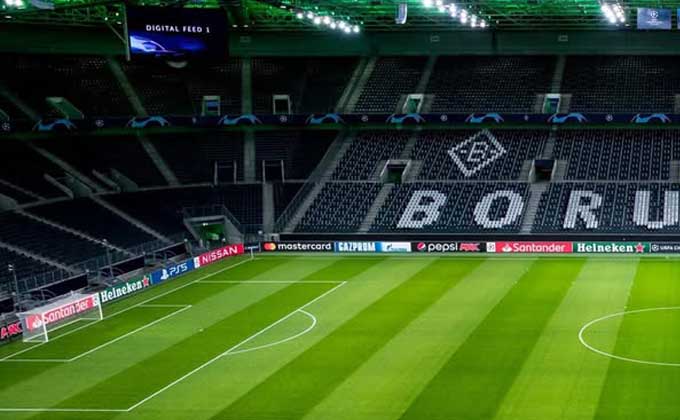
iLOQ has announced a landmark partnership with German Bundesliga club Borussia Mönchengladbach to introduce cutting-edge smart security at the team’s iconic Borussia-Park stadium. The agreement includes the installation of more than 2,000 battery-free smart locks across the 54,057-seater venue. Every door in the stadium will be equipped with a lock that can be opened using a digital key or a smartphone, eliminating the need for bulky keychains.
The locks generate their own power either from inserting a digital key or from the NFC induction of a smartphone, making them completely battery-free. VIP areas will benefit from a full smartphone-based access system, enabling guests to manage entry for family and friends directly through iLOQ’s mobile app. Access rights will be controlled centrally, ensuring secure, flexible authorization for players, staff, facility managers, and visitors.
“This partnership is a dream come true for me as a lifelong Borussia fan,” said Sascha Hilgers, Managing Director for iLOQ Germany. “The new system makes life easier for everyone in the stadium, allowing players and staff to focus on results on the pitch.”
As part of the partnership, iLOQ’s brand will be showcased prominently throughout Borussia-Park, in media areas, and across the club’s digital channels. Patrick Herrmann, Sales Manager and former Borussia Mönchengladbach player, highlighted that the collaboration will raise security standards and improve daily operations for both staff and fans.
iLOQ’s technology is already in use worldwide, with more than 10 million locks deployed across over 55 countries, from residential housing to critical infrastructure. “We’re thrilled to partner with a club that shares our values of innovation, performance, and community,” added Heikki Hiltunen, President and CEO of iLOQ.
Ruijie Networks has introduced the new RG-RAP62-Wall series of wall-mounted access points, available in two versions – RG-RAP62-Wall and RG-RAP62-Wall-Lite. These solutions combine high performance, elegant design, and cloud-based remote management, specifically tailored to meet the needs of commercial environments.
The new generation delivers true Gigabit Wi-Fi 6 technology with speeds of up to 2.97 Gbps and stable connectivity for up to 256 users, powered by OFDMA and MU-MIMO technologies. Security is reinforced with WPA3 encryption and VLAN-based service isolation, ensuring reliable protection of the network environment.
The devices feature a slim silhouette and a clean white finish, blending seamlessly into indoor spaces.
With full support for the Ruijie Cloud platform and the Reyee app, they enable rapid large-scale network deployment as well as advanced AI-driven functions such as AI Roaming, network optimization, heatmaps, and diagnostics.
The RG-RAP62-Wall-Lite model is particularly suitable for hotels and small offices, focusing exclusively on wireless coverage. It is compatible with EU standard junction boxes and can cover an area of up to 45 square meters with a single device. This series is designed to provide stable, secure, and aesthetically adaptable network infrastructure for spaces where high-quality wireless connectivity is essential.
Milestone Systems, a global leader in data-driven video technology, has introduced XProtect Evidence Manager, a new extension to its XProtect video management software (VMS). Designed to transform how organizations handle digital evidence, the solution delivers efficient workflows, secure sharing, and flexible storage options.
For years, public safety agencies and security teams have faced rising costs and limited flexibility due to proprietary evidence management platforms. These systems often restrict integrations, complicate workflows, and lock customers into narrow storage options.
XProtect Evidence Manager addresses these challenges with an open, scalable, and fully integrated extension that lowers total cost of ownership while providing more freedom of choice. “XProtect Evidence Manager advances our commitment to the open-platform philosophy that defines Milestone,” said Tim Palmquist, Vice President, Americas, Milestone Systems. “By extending this approach to evidence management, we’re giving organizations the freedom to choose how they implement, share, and store digital evidence, on their terms.”
The extension introduces three key innovations: workflow efficiency, secure license-free sharing, and storage flexibility across on-premises, cloud, or hybrid environments. This combination not only simplifies operations but can also generate significant cost savings compared to proprietary alternatives.
Although developed with public safety in mind, the platform is equally suited to sectors such as airports, casinos, universities, and large corporations where evidence handling is essential. Its integration with XProtect VMS and analytics platforms like BriefCam further enhances investigation speed, enabling users to analyze hours of video in minutes.
“By challenging entrenched market dynamics and introducing genuine freedom of choice, we’re disrupting how the industry approaches digital evidence,” Palmquist added. “This transformation represents a shift toward greater openness and user control.”
XProtect Evidence Manager will first be available in the United States, with international rollout expected in 2026.
According to French media reports, Bouygues Telecom, one of the country’s largest telecommunications providers, has fallen victim to a major cyberattack that compromised the personal information of millions of users. The company, which serves more than 26 million mobile subscribers, confirmed that the incident exposed sensitive data linked to customer accounts.
The breach, detected in early August, allowed attackers to gain access to contact information, contract details, and even International Bank Account Numbers (IBAN) belonging to both private individuals and businesses. While Bouygues stressed that no passwords or payment card information had been exposed, the scope of the incident remains significant.
Company officials disclosed that approximately 6.4 million customers were affected. Those impacted are being contacted via email and text message, with urgent warnings to remain vigilant against fraudulent calls or phishing attempts seeking to exploit the stolen data.
So far, no ransomware group has claimed responsibility for the breach, and the motives behind the attack remain unclear. The incident comes just days after another French telecom giant, Orange, experienced a separate cyberattack in late July. Industry experts highlight that telecom operators remain high-value targets for both state-sponsored hackers and financially motivated cybercriminals, with recent attacks underscoring the urgent need for stronger defenses.
Hikvision has announced the release of Hikcentral Lite (HCL) version 1.1.1, now enhanced with Acuseek, an AI-driven video search and management solution designed to streamline security operations across facilities of any size.
The updated platform combines real-time natural-language search, on-device artificial intelligence, and centralized control for multi-site environments, eliminating the need for metadata tagging, filters, or cloud-based delays. Alongside Acuseek, the release introduces PC NVR, a new storage feature that simplifies local recording and increases flexibility for system deployment.
Company officials describe the launch as a milestone in Hikvision’s evolution toward software-led, cyber-physical security solutions. The platform is positioned to help both integrators and end users build intelligent, scalable systems that reduce complexity while improving return on investment.
“Hikcentral Lite with Acuseek reflects our vision for the future of security technology—software-first, AI-powered, and scalable from small deployments to complex enterprise systems,” said John Xiao, Vice President of Marketing, Hikvision USA. “This is a new model for system design with no tagging, no filters, no cloud delays or fees. It’s simply smarter software delivering faster results.”
The solution offers a unified interface for video, access, and alert management, with the ability to automate credentialing and compliance workflows.
It also supports remote edge devices and multi-site networks, ensuring consistent performance across Hikvision’s Smart Pro, Acusense, and Colorvu product lines. With the optional PC NVR, customers gain additional storage options that integrate seamlessly with both Hikvision and third-party cameras.
By blending AI search capabilities with unified management tools, Hikvision aims to deliver software that adapts to real-world security needs and scales effectively across diverse environments.
Genetec has once again been recognized as the top global provider of enterprise video surveillance software, according to newly released market reports from industry analysts Omdia and Novaira Insights. Omdia’s 2025 Video Surveillance & Analytics Database Report shows the company holding the #1 position worldwide for video surveillance software, as well as leading the combined category of video surveillance software and Video Surveillance as a Service (VSaaS).
The report highlights the growing influence of Genetec’s cloud strategy, with its Security Center SaaS platform—introduced in mid-2024—driving strong adoption and securing a place among the world’s top ten VSaaS vendors. In the Americas, the largest and fastest-growing VSaaS market, Genetec ranks #4. The company is also seeing increased uptake of its unified cloud-based video surveillance and Access Control as a Service (ACaaS) solutions, as customers seek integrated deployment options.
Regionally, Genetec continues to hold the top spot in the Americas for both video surveillance and combined video surveillance/VSaaS categories—marking its 14th consecutive year in this position. It is ranked #2 in EMEA, where it posted the highest market share growth among the top ten vendors, and #3 in Asia Pacific (excluding China).
“The video surveillance market continues to see steady global growth, driven by rising security demands and faster adoption of new technologies,” said Scott Foley, Senior Analyst, Physical Security at Omdia. “According to our research, Genetec remains a consistent global leader in the industry for video surveillance software, maintaining top market share and addressing customer needs with innovative products that meet the evolving needs of organizations worldwide.”
Novaira Insights’ findings echo this leadership status, naming Genetec the global market leader in total video surveillance software and service agreements, and noting its high growth in both hardware and software segments.
“The Genetec philosophy has always been to offer customers more choice, not less,” said Christian Morin, Vice President of Product Engineering and Chief Security Officer at Genetec. “Organizations deserve the flexibility to deploy solutions exactly the way they want, whether it’s on-premises, in the cloud, or a combination of both approaches… without ever being locked into proprietary systems.”
With over 25 years of innovation in open, scalable, and cybersecure systems, Genetec continues to focus on customer-driven development, delivering technologies that enhance daily security operations while protecting privacy and ensuring long-term adaptability.
Facing record-breaking summer heat, a leading iGaming company in Central and Eastern Europe partnered with UltraVision Consult to implement a smart HVAC monitoring and control solution using the AppVision PSIM platform. The system aggregates/correlates real-time data from temperature sensors installed in each room—ranging from live dealer spaces to large department offices—and adjusts heating or cooling automatically based on ambient conditions and predefined comfort settings.
The result: increased employee satisfaction, optimized energy use, and the elimination of manual HVAC adjustments by staff.
In the world of iGaming, real-time performance and operator focus are critical. But as generally each summer’s record-breaking heatwave sweeps across the globe, one of the CEE’s leading iGaming companies faced a growing operational challenge: achieving faster and automated consistent thermal comfort.
The company’s HQ includes nonstop live dealer rooms with heat-intensive lighting and streaming setups, plus larger departments with varying occupancy. Manually adjusting each AC unit became inefficient, time-consuming, and left many employees uncomfortable.
UltraVision Consult stepped in with a solution rooted in precision, automation, and real-time control.
Using the AppVision platform, we designed a centralized monitoring and control system tailored to the unique dynamics of the building. First, we installed smart temperature sensors in every room, creating a live heat map of the entire building.
The result? A noticeable increase in employee satisfaction, significantly improved climate consistency, and reduced complaints—especially in high-pressure environments where discomfort can affect performance.
Additionally, by eliminating manual HVAC management, the company now benefits from faster response times, better energy efficiency, and actionable data for long-term facility optimization.
This project is a clear example of how UltraVision Consult acts as a true ecosystem solutions provider—not just integrating security, time management, and smart building systems, but aligning technology with the actual rhythm of operations. From consulting to system design, sensor deployment, implementation, and audit, we ensured the iGaming giant’s needs were met from end to end.
TP-Link has released a major firmware update enabling Matter 1.3 energy monitoring for its compatible smart devices, reinforcing its commitment to open standards and user-focused smart home innovation. The update provides standardized real-time and historical energy consumption data, giving users greater transparency and control over home energy usage while ensuring seamless interoperability with major smart home ecosystems.
The rollout begins with the Tapo P110M, which now supports Matter energy monitoring when both the device and hub are updated to the latest version. Currently, the feature works with Samsung SmartThings and Home Assistant apps, with broader platform support expected as the technology matures.
TP-Link’s decision to enable the feature now follows significant industry developments. While Matter 1.3 introduced energy monitoring in May 2024, many major platforms lacked full implementation, risking inconsistent performance. Only recently has Samsung SmartThings offered functional, though evolving, support for the feature.
To guarantee reliable cross-platform performance, TP-Link requires verified platform compatibility through extensive testing before enabling such capabilities.
The company continues to work closely with leading smart home platforms to expand Matter energy monitoring support across the industry.
With devices fully compliant with Matter’s latest specifications, TP-Link aims to ensure that its energy monitoring-enabled products deliver consistent, complete functionality in all major ecosystems.
Intersec Saudi Arabia 2025 will take place from 29 September to 1 October 2025 at the Riyadh International Convention and Exhibition Centre (RICEC).
Held under the patronage of His Royal Highness Prince Abdulaziz bin Saud bin Naif bin Abdulaziz Al Saud, Minister of Interior, and in association with the General Directorate of Civil Defense, this year’s edition marks an important milestone in the event’s journey and continued contribution to the Kingdom’s safety and security ecosystem.
As we move forward in an era of exciting advancements and rapid innovation, it is essential that organisations of every size and scope have the tools and knowledge to enhance their security and safety capabilities to stay ahead of any challenge, current or future. As the premier platform in the Kingdom for Security, Safety, and Fire Protection, Intersec Saudi Arabia aims to provide every visitor and exhibitor with these vital resources, all in one place.
After a record-breaking edition in 2024, this year’s show reflects even greater momentum. Over 370 exhibitors from more than 35 countries will showcase over 1,000 brands across 7 halls and a dedicated outdoor area. With exhibition space now totalling 30,000 sqm, and more than 27,000 visitors expected, Intersec Saudi Arabia 2025 continues to grow in both scale and impact.
The show presents a comprehensive showcase across 5 product sectors: Commercial & Perimeter Security, Homeland Security & Policing, Fire & Rescue, Safety & Health, and Cybersecurity, and features rich learning and engagement opportunities. Our CPD-certified content theatres include the Future Security Summit (Powered by ASIS International Middle East) and the Fire Protection & Technology Summit, each offering deep insights into the critical topics shaping our industries.
The Future Security (Powered by ASIS International Middle East) will explore emerging global threats, crisis response strategies, and responsible AI innovation. Key speakers from FIFA, Red Sea Global, Diriyah Company, Kearney, and Saudi Aramco will lead high-level discussions and share practical insights to advance industry dialogue.
Meanwhile, the Fire Protection and Technology Summit will bring together leading experts from organisations such as Saudi Civil Defense, International Maritime Industries, and AESG to address standards, policy development, and innovation in fire safety and emergency response.
“We are especially pleased to highlight the Majlis at Intersec Saudi Arabia, which plays a central role in hosting official delegations and key government entities, providing a dedicated space for high-level dialogue and meaningful engagement, as well as the return of the Intersec Saudi Arabia Premium Club, which offers enhanced networking and hospitality experiences for key buyers and decision-makers.
On behalf of the team at Messe Frankfurt Middle East and our organising partners at 1st Arabia, I would like to extend our sincere thanks to all our exhibitors, speakers, and visitors for their invaluable support. We look forward to welcoming you in Riyadh as we shape a safer, smarter, and more secure future together.”