With the company’s strategic adjustment and business upgrade, Uniview has gradually transformed into a global AIoT product and solution provider, exploring new growth opportunities. Energy storage is one of the most important directions.
Battery energy storage systems are a crucial component of the new energy industry and have the potential to revolutionize our daily lives. They can provide power to homes during outages and enable off-grid energy solutions. Uniview constantly integrates power electronics and digital technologies to meet the ever-changing market demands. Uniview hopes to bring cleaner and more sustainable energy to consumers around the world.
The First System for Residential Environments
Among the latest exciting developments is the release of the Uniview ESS SAH5B10 A EU, the company’s first whole home energy storage system designed for residential consumers. This all-new solution serves as an excellent option for those seeking a more sustainable and efficient way to power their homes.
Uniview RESS is an energy storage system that keeps your home powered during an outage and provides energy independence from the grid. It’s just like an energy bank account where you can make deposits and withdrawals as you see fit. By storing sufficient power within the batteries, Uniview RESS can reduce or eliminate your reliance on the utility electrical grid, make electricity more affordable, and get well-prepared for unexpected blackouts, emergencies, and other disasters. Recharging UNV RESS with lower prices of off-peak grid power can also effectively reduce monthly electricity bills.
Features
To meet the market demand, Uniview RESS bears the following highlights:
Easy installation: With just 3 step cable connection, you can set up a residential ESS
Good components, good quality
Smart control and monitor: With the APP, you can control and monitor ESS just by fingertips
7% increase in usable capacity: Uniview B10 provides 97% of the rated battery capacity to be usable, while others only 90%
As long as 15 years lifespan: 6000+ cycles over 70% SOH, 3500+ cycles over 80% SOH
On-grid & off-grid hybrid ESS system: Minimize the modification of home circuitry
Multiple Uses
Uniview provides accountable, high-quality, easy-to-use, and safe products, ranging from portable power stations (Portable RESS) and portable solar panels to residential energy storage systems (RESS) for homes and businesses worldwide. With the integrated and applied technologies of both lithium-ion battery energy storage and AIoT technologies, Uniview is dedicated to developing the state of art ESS products to meet the various demands of different scenarios, products to meet the various demands of different scenarios, from portable power stations to residential ESS.
More information please visit www.uniview.com. If you have any business queries, please contact
Artificial Intelligence Solves the Common Problems of Security which is Inconvenient and Inefficient
By: Seongbin Choi, the head of Suprema R&D Center, Suprema Inc.
In ‘Knight Rider’, ‘KITT’ listens to people and finds a fast route, and ‘Airwolf’ detects and identifies all types of aircraft. These are the imaginary machines familiar to those who grew up in the late 80s. At the time, people used to think of KITT and Airwolf as products of the imagination that only exist in fiction. However, around 30 years later, voice recognition-based navigation systems and image-based object recognition products are being easily found all around us. Whether we realize it or not, over the past 30 years, the world has been transforming the imagination into reality.
Artificial Intelligence — The Driver of Change
Artificial intelligence is driving these changes. AI-based voice recognition and image recognition enable machines to understand and recognize things better than humans.
Artificial intelligence, which first appeared in the 1950s, was briefly revived in the 1980s, then again fell off the radar. In the late 2000s, AI re-emerged and became a driver of the IT industry. Artificial intelligence requires large-scale data for training, but the relevant data was not available until the 2000s. By the late 2000s, things began to change with the spread of the Internet, smartphones, and then cloud-based services.
The Internet and smartphones enabled data collection from myriad sources to the cloud, and the advent of the Internet of Things accelerated data collection. With this massive data collection, artificial intelligence has done what we could only dream about in the past. And the term “the 4th Industrial Revolution” describes the emergence of, and the transformation led by, an industrial platform consisting of IoT (smartphones), cloud computing, data, and AI.
The Dilemma of Access Control
Now, let’s see today’s access control industry. Security is supposed to be inconvenient and inefficient. This is something everybody agrees on. Greater security comes with a more significant number of procedures, which increases inconvenience and inefficiency to the individuals who are handling the tasks. The situation is the same in the access control system industry. Conventionally security enhancement approaches require a thousand people to follow a procedure to prevent a one-in-a-thousand problem. Balancing security with efficiency is an irreconcilable dilemma for all security managers.
And so, what kind of system do these security managers envision? Perhaps a system that offers enhanced security with easy operation and usability. We have discovered that AI can make such dreams of security managers into reality.
Increased Convenience, Efficiency, and Safety
We could effectively save time and money by monitoring the specific area with a higher probability of errors occurring instead of monitoring the whole procedure where the problem occurs one-in-a-thousand. Also, if we could predict possible problems by detecting signs of symptoms, then we can enhance security without sacrificing convenience and efficiency.
Such intelligence-driven operations are possible through AI training in large-scale data sets. Suppose we can collect user activity data and train AI with individual-specific behaviors and patterns; in that case, we can detect unusual undesired behaviors and patterns that are highly likely to cause problem. In addition, if a problem occurs, AI can learn behaviors and patterns to detect the action beforehand and prevent the problem from occurring next time. This is possible only when AI is deployed, and trained with highly accurate access, behavior, and location data in the cloud, collected continuously through the access control systems.
One thing that needs to be clarified here is whether accurate access and behavior data can be obtained and how. Currently, most access control systems determine physical access through authentication/tagging as evidence of presence or attendance. However, some people may decide not to enter after authentication, or others may circumvent authentication by following in someone who has tagged. This means it is impossible to obtain accurate access and movement data from existing access control systems.
However, real-time location systems (RTLS) can be a game-changer by enabling accurate access and movement information. It allows you to identify cases where authentication/tagging is abused (leaving after the first tag or following others without authentication). RTLS-enabled access control allows us to collect data with accuracy and quality sufficient for training AI.
Recently, smartphone manufacturers such as Samsung and Apple have been competing to make the best use of UWB, one of the typical RTLS technologies. If UWB is integrated with mobile credentials in smart devices, it can be easily deployed to access control systems. In the coming years, various RTLS-enabled access control systems with precise location intelligence will be available on the market.
In the future, we will realize what many security managers have dreamed about: access control systems that predict possible problems based on accurate entering in and out data preventing problem occurrence.
In the middle of the 4th Industrial Revolution
In 2018, I visited the Salesforce.com head office in San Francisco as part of the Korea Information and Communication Agency’s overseas training program. What caught my eye was a banner for Einstein from Salesforce.com service, covering the entire building starting from the entrance. Einstein is an AI-powered service that leverages the big data of Salesforce.com to recommend customers with a high possibility of conversion and forecast future sales volume to take preemptive measures. I was kind of skeptical about the feasibility of the technology. But it was simply enormous; AI trained massive amounts of data called big data outperforms humans, and cloud services powered by these AI engines deliver new value that on-premise solutions cannot provide.
Simply put, the industrial revolution represents a change in creating exchangeable value. That is a change in the way we make money. I think I saw how the way to make exchangeable value was changing in San Francisco in 2018, which helped me understand why such changes are collectively called “the 4th.” This also explains why developers in Suprema, including myself, are dedicated to AI to improve the convenience and efficiency of cloud-based access control offerings.
As buildings become increasingly complex and we see the rise in smart buildings, the use of building management systems (BMS) will only continue to grow to control the many systems installed in a building. Vladimir Zrnic, Sales Manager for Southern Europe at Advanced explains more.
BMS is a relatively new addition to modern buildings. Thirty years ago, each individual system in a building was controlled separately and manually. This evolved into each system being controlled and monitored by a computer. The next step was to unify the equipment into one master control system that networked all the mechanical, electrical, IT, and security systems of a facility. And so BMS was created.
Integrating all the components into a single cohesive unit allows the various systems to share information so they can work more effectively. The resulting interoperability is greater efficiency, lowered operating costs, and a more secure, safer, and responsive building environment. It also improves reporting, information management, and decision-making with facility-wide insight and control for better performance.
Early BMS was limited to connecting to building systems from one manufacturer but there has been a rise in open communication protocols such as BACnet and Modbus which allow third-party devices, such as fire panels, to be easily integrated with the BMS. So how do third-party devices communicate with the BMS?
Fire Safety
A field controller for integration, such as the Advanced Commander, is a powerful IP-based solution for customers that need protocol translation between an Advanced addressable fire panel and a BMS. The Advanced Commander is a simple bridge between manufacturers’ components. It’s also bi-directional so it can monitor and communicate with other systems the BMS is connected to. For example, the BMS can send messages to an Advanced fire panel and the panel can send messages back – so, in a fire, it could close dampers in the ventilation system to stop smoke spreading, shut down fans, start the smoke extraction system, and send all the elevators to the ground floor and park them to prevent people from using them. This two-way communication is particularly useful in complex buildings, such as data centers which rely on power and cooling systems. Here through integration with the fire panel and the BMS, there may be a connection with HVAC, allowing control of dampers and fans, as well as the access control system and power supply system monitoring and control.
It’s also beneficial if a field controller offers flexibility by being able to work with both the BACnet and Modbus open networks, such as the Advanced Commander, which also goes one step further. If a field controller is incorrectly specified to one of the protocols by the customer, they can simply call Advanced and have the protocol changed remotely.
Easy configuration is also vital. With the Commander, users can configure exactly what they require to meet the fire safety needs of each building e.g. the number of connected devices and loops etc. The Commander supports up to 640 Objects/Tags of information, which can be configured and passed between network components and delivered to the BMS using TCP/IP technology. TCP/IP connectivity allows the Commander to be located locally to the distributed network of fire control panels, but at the same time caters for remote programming and BMS access. The Advanced Commander has a built-in Webserver to provide advanced control, display and management.
BMS integration is set to go further still. With new smart buildings, a BMS will be able to control a building without anyone actually managing it on site allowing users to monitor and change things in a building from a distance. BMS is already offering building managers efficiency, reduced costs, and reliability and with the advent of open communication protocols and field controllers, like the Advanced Commander, users are able to seamlessly integrate their fire system and monitor and control their buildings. With the rise of smart buildings, BMS is set to be an essential part of any commercial building.
For further information on Advanced’s AxisGo email: vzrnic@advancedco.com or visit: https://uk.advancedco.com/
Established long before data mining and bitcoin mining, mining the earth continues to be a major economic driver. The International organizing committee for the world mining congress issues a yearly World Mining Data report. The 2021 report states that world mining production in 2019 was 17.9 billion metric tons (roughly the weight of 96,000 Boeing 747 Jumbo jets). Most of the production (58.9%) was in Asia, followed by North America (15.8%), in terms of countries, China, U.S., Russia and Australia are the four biggest mining nations. In the last few years, Australia and China have seen the most growth and surpassed Africa, especially in the production of minerals like Lithium, Gallium and Niobium needed for the battery industry, demand for which doubled since 2015.
Challenges in mining security and safety
The mining industry faces extreme and multi-faceted challenges in both security and safety. The key concern of security managers in the mining sector are keeping employees safe, however, they are also tasked with preventing theft of valuable raw materials and equipment, choosing equipment that can work in extreme environmental conditions, maintaining compliance with health, safety and environmental regulations and more often than not, working in politically unstable countries.
Working in harsh conditions
Mining security faces three main challenges: harsh conditions, large areas and high costs for installing comprehensive solutions. Compared to commercial-use security systems, mine security systems must work in harsh environments. Dust, humidity, fog, low light, heavy water flow, flammable gases and extreme temperature are common. At the depths of mines, the temperatures could reach in excess of 45 degrees Celsius and the environment is constantly moist and humid. The outside climate in countries like Australia, South Africa or Russia can also be challenging with freezing temperatures in winter or searing desert heat in summer.
“When considering these conditions, equipment should be tested and certified with appropriate impact and ingress ratings, and this should be further evidenced and supported by the manufacturer through long product warranties. Reliable equipment ensures the system continues to do its job and the business continues to operate profitably whilst protecting its workforce” emphasized Mike Margrain, National Technical Manager for Gallagher in Australia.
Equipment therefore needs to be ruggedized and customized to mining operations. Operators need sealed, waterproof units with vibration dampers, which can function over a wide temperature range. All cables need to be secured in airtight or waterproof material, preventing dust and other particles from damaging them. Explosion-proof devices must be installed with appropriate cable management systems.
Cabling technique for example is different for mines, since drilling or attaching cables to rock can only be done by engineering personnel. The solution is pre-installed infrastructure cabling that provides power and communications for conveyor systems or vehicle workshops to most underground points.
Ensuring mine employee safety
Employee safety is the primary concern in the harsh working environments in mines, and verifying authorized personnel is the first step in accomplishing this.
Access control at mines should only admit personnel who passed safety inductions, medical checks and training. Added features include license renewal and expiry notifications. Management is increasingly aware of the cost related to worker safety failures, loss of lives and loss of material and equipment. Other than passing government regulations, increasing the level of security and safety could save money, increase productivity, reduce losses in infrastructure and cut production downtime.
“In underground operations, it is paramount that the location of workers is known due to the elevated risk in these environments. Cardholder location tracking is implemented to ensure workers can be accounted for in the event of an emergency, or to safely manage underground blasting” explained Margrain and described how this works in the field: “Providing electronic ‘tagging’ stations and implementing long-range tracking of personnel ensures the control room operators not only know how many people are in locations underground, but in which area each worker resides. Integrating this data into firing procedures ensures explosives cannot be triggered until all personnel are accounted for in safe areas. Tagging portals which provide feedback to the worker with personal information (and photo ID images) provide peace of mind that the system has indeed logged their location as they travel to different areas while on shift. Furthermore, long-range tracking of workers can be employed in underground operations where travel is required in buses, light vehicles, or machinery. This ensures the location data can be captured without requiring personnel to exit vehicles in dangerous locations to present to a physical access point. The method of access credential utilized for this safety data becomes extremely important as the risk of missed movement can have real implications for personnel health and safety”.
In addition to controlling access, monitoring the work zone is essential for protecting employees. The use of video surveillance underground helps to monitor miner safety by viewing rock falls or accidents in real time, speeding up search and rescue time, and help inhibit illegal activity such as theft or pirate miners. For large areas, radar integrated with video detects if a worker is in a hazardous area or is near hazardous materials or gases. It secures transport and storage of ammonia nitrate, explosives and other hazardous materials.
Should an accident occur, the operational health and safety (OH&S) solution must track miners by access control, sensors and RFID systems. The solution should generate “muster reports” quickly, providing the exact number of individuals in an area to the control room personnel at any given time.
Access control solutions in mines
Access control in the mining and resources sector is generally used less for security and more to manage governance, risk, and compliance; “it’s all about protecting the safety of workers and ensuring business continuity,” said Gallagher’s Margrain. “This includes managing personnel competencies to only allow access to those that hold active qualifications and inductions for the site, or within a particular onsite area. Contractors may also perhaps only enter if they hold current insurance and have an active work order. In many countries, there are state or government legislated licenses that a worker must hold before they can work on a mining site. These competency level controls will differ depending on what role a worker has and where they are working — for example, there will be different enforcement rules for someone working underground, than those working only on the mine surface” he added.
“Fatigue is a significant risk to workers at an organization that operates 24/7, particularly to those who work night shifts or are working in dangerous environments. We see these rules being applied in more stringent ways for such personnel to prevent a worker from breaching fatigue policies during their shift. An access control system allows sites to quickly locate workers for risk assessments and a potential change of personnel – not only saving time, but also preventing disruption to the site. This type of management (with appropriate enforcement and proactive dynamic notifications) therefore becomes even more important for personnel that are working underground,” explained Margrain. To prevent theft, most attention is focused on access control and intrusion detection for storage, processing areas and areas where heavy machinery is present.
Whilst biometric access control has rapidly increased in popularity in recent years, the uptake in the mining and resources industry has been slow. The primary reasons for this are because daily work environments can impact the ability to reliably match workers via biometrics, due to workers becoming dirty or wearing PPE (personal protective equipment).
Video surveillance in mine security
Security requirements differ by the mine type. Open-pit mines are based on authority and risk levels and put emphasis on access control, while underground mines — with a higher requirement for safety — put emphasis on people location management.
The large area of mines poses a challenge to security. Fencing and lighting might be very expensive, and even with the most comprehensive security solution installed, surveillance is not considered as a viable option for many underground mines, due to harsh conditions and extended tunnel length. Large mines can have hundreds of kilometers of tunnels, which simply cannot be effectively monitored by cameras.
Intrusion detection in mines
While priority areas depend on the site, a mine’s security profile is generally developed from the outside in, making perimeter security the first concern. However, although perimeter fencing is important, it is often impractical due to the large and difficult landscape of mine sites.
Video surveillance can detect perimeter intrusion. Day and night cameras are suited for open areas with good light over long distances. Infrared cameras can perform close-range monitoring at low light entry and exit points. For dark outdoor areas, thermal imaging cameras can see intruders.
Preventing equipment theft
Some mine vehicles are worth millions of dollars and are costly for downtime and repairs, so monitoring and securing equipment is important. Other than asset tagging, sensor solutions such as onboard vehicle collision alert technology also help protect property. The collision alert system detects hazards in the vehicle’s path and alerts drivers for potential collisions, preventing damage to the vehicle and protecting worker safety. Solutions like these provide invaluable production data feedback in difficult-to-reach areas. When integrated with access control, mine companies can make sure that only authorized personnel can operate the vehicle. The option of combined driver & vehicle identification increases security as you know exactly who was driving which vehicle.
Driver-based automatic vehicle identification (AVI) ensures that a vehicle can never leave, or get access to a secured area unless occupied by an authorized driver. Vehicle and driver access traditionally requires the driver to stop and badge or present their access card. This can often result in traffic congestion around access points/gates. Current solutions allow vehicles (both trucks and cars) to activate gates far enough in advance (up to 10m, at speeds up to 200 km/h) which eliminates the need for vehicles to stop, ensuring an uninterrupted flow of traffic. This is a notable feature for mining sites where it is disruptive to stop and start heavy machinery.
Trends in mine security
The United States Mine Safety and Health Administration (MSHA) maintains a database of all mine-related accidents and fatalities in the U.S. MSHA accident reports show that footage from video surveillance is often used in the forensic investigation of accidents.
On May 2, 2020, Rodger A. Zimmerman, a 56-year-old front-end loader operator died when he was engulfed by material inside a collection container (hopper) at Enon Sand & Gravel mine. Zimmerman entered the hopper to clear a blockage caused by material inside the hopper. Once inside, a large amount of material dislodged, engulfing Zimmerman. Video evidence from the mine’s surveillance system verified entry into the hopper to dislodge blockage from underneath was a common practice and occurred repeatedly on previous days captured on the video. The surveillance video showed miners on the belt structure and/or inside the hopper not wearing safety belts or harnesses and not equipped with lifelines, while the belt was operating and without engaging in lock-out-tag-out (LOTO) procedures.
Today’s video analytics can be used to detect and stop this type of accident before happening. Video analytics can raise an alert when employees are getting too close to dangerous equipment or if they are not wearing the right safety equipment like a hard hat or safety harness. Hikvision for example installed a system in a coal mine in China that increased worker safety by monitoring the areas around winches and other equipment, and by sending alerts if employees get too close. The Hikvision solution was also configured to support specific mining-safety applications, such as constant monitoring of surface water levels in different areas of the mine. Constant seepage from rock formations means that surface water can accumulate in different areas of the mine, which is a problem in terms of potential flooding, damage to infrastructure, and worker safety risks. The Hikvision system monitors surface-water levels constantly and allows the mine staff to take action to deal with any problems that arise before water levels exceed safe limits.
Ai-driven video analytics are gaining traction as a means to minimize false alarms. Avigilon’s H4 Thermal camera for example is embedded with Avigilon self-learning video analytics to provide long-range perimeter protection and leverages thermal technology to operate under challenging conditions while minimizing false alarms. It detects the movement of people, vehicles and partly camouflaged objects in complete darkness or areas with challenging light conditions.
Security systems are also used to drive compliance with OH&S regulations. Access control manufacturer Gallagher allows cardholder information to be recorded in the Gallagher system and shared bi-directionally with existing HR/people management systems for accurate, real-time use. Staff records provide a full audit trail to ensure compulsory training and testing are undertaken. This minimizes corporate liability and enables organizations to meet their Duty of Care.
Mobile smartphone devices are commonly used to spot-check workers on-site (i.e., to validate they are trained and inducted to be where they are, or performing their current task), as well as being able to be used for mobile evacuation procedures and access control movements.
Compliance driving product requirements
Given the risks associated with mining operations, government legislation can be stringent but differ immensely in different parts of the world. “We have seen an increase in concern around fatigue and exposure, and the need for reporting to assist with state levy calculations. Cases of corporate manslaughter against negligent management have certainly created more interest in systems which can demonstrate duty of care and protect workforces,” said Margrain. In many cases, not only do such system implementations meet those goals while ensuring business continuity, but they also demonstrate a reduction of operational cost through improved efficiency. Margrain recommended factoring this into vendor selection: “Having a system with governance, risk, and compliance solutions that can be tailored to meet changing requirements, without significant reinvestment, should be factored into vendor selection. By working with their vendor, sites operating in unique conditions like that of mining, can design a system that is tailored to the specific needs of their site and ensure health and safety requirements are met at the required level”.
Initially conceived as an international company, ZKTeco started out modestly, with only its products being sold abroad, without services and customization for customers. But then, at the global level, something happened that, contrary to expectations, opened new opportunities for many companies – the global economic crisis. In 2008, many security companies decided to try their hand at making it big in international markets. ZKTeco was among the pioneers.
Our editorial team has covered many events in the past sixteen years. Having published no less than 178 issues of a&s Adria magazine so far, we witnessed the emergence and maturation of technologies, innovations that caused controversies only to become commonplace, the disappearance of former industry greats who were thought indestructible, the rise of new companies, we talked and hung out with the professionals who, in fact, can be said to have sown everything that has grown in the past decades. But, after all those years, one thing manages to impress us every time – a story about a name and reputation that grow together out of the vision that everything is possible, regardless of the challenges. In search of one such story, this time we went to the suburbs of Madrid, a city and a corporate “forest” in which countless businesses flourish. Madrid is also the seat of the European headquarters of a company whose access and entrance control is an evergreen tree in this corporate forest. We want to tell you a story about ZKTeco.
Watch the video report:
Creativity from all over the world
The European headquarters and warehouse were founded in 2010 and have been located in Madrid for twelve years. A pioneer in biometrics and RFID technologies, ZKTeco is now a multinational company with close to 3600 employees. From the beginning, its founders and engineers sought to independently develop algorithms to verify the biometric characteristics of the body, which over the years has become an ecosystem for identity verification and smart security. Both hardware and firmware as well as software are produced internally, at research and development centers scattered from from the India to Xiamen, Dalian and Dongguan. Today, the company’s offer is rounded up not only with biometric and RFID modules but also with access control systems, turnstiles and barriers, video surveillance, metal detectors, and integrated security solutions. At its European headquarters, where the service, sales, development, and financial departments are located together with a warehouse whose capacities will soon double by moving it to a new location, ZKTeco’s partners and distributors can receive all the necessary services. From there, they provide support to other European subsidiaries: British, German, and Italian offices, whose numbers they also intend to increase.
The economic crisis is an opportunity to change strategy
We were greeted by an extremely pleasant team of people, led by Even Wang, General Manager of the European Business Group at ZKTeco, in whose company we felt as if we were members of the personnel. Socializing took place until the afternoon and was spent in pleasant and useful conversations. Their friendly synergy, we noted later, is certainly one of the wheels that powers the company’s business on European soil, about which we will learn more later.
“ZKTeco started as a small company, with two or three people”, says Mr. Wang from the outset of our conversation and continues: “The founder is Mr. John Che. The business started as a technology firm that was researching biometrics. At that time, biometrics were not so common in the world, so they tried to design one biometric module to offer to the market. Step by step, they decided that they could develop a time and attendance terminal. So, some money was raised to move to Shenzhen, a zone known for its electronics industry.” The company started to grow but that was not enough for a major breakthrough in the market. The business was mainly done in China, and only its products were sold abroad, without service and customization offered to the clients. But then, at the global level, something happened that, contrary to expectations, opened new opportunities for many Chinese companies – the global economic crisis. In 2008, Chinese companies decided to try their hand at making it big in international markets in order to prevent financial problems. “ZKTeco was among those who adopted this strategy at the earliest stage. In the beginning, we had a small team of people, but we were also lucky that the demand for biometric systems increased sharply”, adds our interlocutor. ZKTeco made a difference in the market by offering an attractive price, a broad range of products, and quality service. Clients knew that they could count on people who are always at their disposal, which is very important in business.
This resulted in rapid business growth. They are proud, they say, of the decision taken at the time. But it was not easy. “You go to another country where no one knows you, you have to learn to live there, find customers, talk to them in your poor English. I joined the company in 2010. I initially worked in India and I know how hard it is for a Chinese company to start from scratch outside their home country. Language, laws, taxes – these are all great challenges. But we were trying to gradually adapt, find local people and partners, understand each other and bridge the cultural gap. I can say that after 14 years of development we have a great team. We now have 3600 employees, of which 450 are internationals. I think that’s the largest number of foreign employees in a Chinese company,” says Wang.
Going public
Another important turning point for ZKTeco happened in 2020, and it was marked by yet another trend among Chinese security companies – going public. The higher inflow of capital enabled them to further strengthen and expand. ZKTeco started the process of the initial public offering (IPO) a little earlier in order to become a public company and increase capital investments in expanding production and opening new offices. “The money will mainly be invested in research and development, especially in the software segment. The second part will be related to the service network; we will open five new offices, new warehouses and continue to employ local people. I think we need to have local people in every country because the value is to offer services to our clients locally”, explains Wang. ZKTeco currently has 38 subsidiaries in Hong Kong, Macau, Taiwan and overseas, but they want to open many new ones. In Europe, they plan to open offices in France, Romania, and Poland, as well as in other countries.
People are the greatest resource
Just in time when the company went public, the coronavirus pandemic broke out. Yet again, as it happened in the past with the economic crisis, ZKTeco has found an opportunity to offer new solutions to its customers, this time in the form of a cost-effective and adaptable solution for measuring body temperature and detecting the wearing of protective masks. “We got a lot of great clients, such as Telecom Italia and Spanish Telefonica, as well as the opportunity to gain access to many banks and government institutions. That helped us a lot to get through the difficult period in 2020. We have kept and even increased the number of employees. We kept working in all countries and continued with our development and research. We even opened our office in the UK during the pandemic. Even in the most difficult period in May 2020, our team continued to help our clients in Italy”, recalls Wang.
The greatest strength in the focus on entrance control
Although it initially presented itself as a biometric company, ZKTeco is always trying to adapt to different applications. “We are currently fully focused on developing entrance control technologies and solutions, including those handling the passage of vehicles, people, and luggage. I think that we can offer a high value in that. As much as AI and IoT change the world, people have to start from the entrance. The entrance is a key point for home automation and office security. For the past twenty years, ZKTeco has been working on one thing only – entrance control. We try to offer the best hardware and software solutions. That is why we have no less than 10 product ranges today. Our greatest strength lies in this type of focus”, says Even Wang, General Manager of the European Business Group at ZKTeco.
Breaking stereotypes
How ZKTeco managed to expand its business in Europe year after year was the topic we discussed in detail with Kinga Zarzyck, International Business Development Manager with ZKTeco, who was both our host and the person behind the organization of our visit. For years, ZKTeco kept facing one obstacle that prevented them from stepping out of the widespread stereotypical mold. In the eyes of its users, the company was mostly seen as a supplier of access control and time & attendance hardware. In recent years, however, they have focused on delivering solutions, ranging from offering consultancy and adapting solutions to project requirements to assisting with their implementation. “Our goal in the coming years is to change this perception because ZKTeco is changing and growing constantly, not only in terms of its revenue but also in terms of its solutions and their quality. To achieve this, we have opened local branches in Germany, Italy, and the UK in the last five years. We also have salespeople in Romania and Poland. We intend to open local offices in these countries as well as in France in the near future. It is very important for us to be close to our partners and to react faster and adapt our solutions to the needs of the local markets “, explains Zarzycka.
In order to provide the best possible customer support, the European branch expanded the most in the segment of its pre-sales and project departments. It is, in fact, a new segment of ZKTeco that was created not so long ago to support partners chiefly through products. While distribution is important, integration is another channel that needs support. They currently work with more than 100 partners across Europe. Upon asking whether they work directly with installers and integrators or with distributors only, we were told that everything depends on the country. “We also work with integrators, and not only with the larger ones that have the capacity to develop their own solutions. Yet, it all depends on the strategy in a particular country and how that country is organized. Not every distribution channel in a country can function at the same level or be as good as, for example, the Adriatic region”, says Zarzycka, citing the Czech Republic, the Netherlands, and the UK as examples of countries focused mainly on integration with security system management software.
More solutions for the customers
Our host is also in charge of organizing business in our Adriatic region. She has been cooperating with partners from Southeast Europe for four years, and for that purpose, she was a guest at our Adria Security Summit on no less than three occasions. “We have tried to get even closer to our partners throughout these years through the support received at the Adria Security Summit. We plan to attend the coming Summit in October in Croatia. It’s one way to meet potential partners and companies we could work with. It is not just about offering them our access control technology, which is our best-selling product in the region, but rather about introducing them to other solutions we can offer, such as parking ramps and turnstiles. In addition to small and medium-sized enterprises, we are also getting involved in other larger and more complex projects with varied and non-standard requirements”, says Zarzycka. To achieve this goal, they are constantly investing resources in educating partners and customers about new series of products and solutions. This is done while simultaneously working on integration with different security platforms, which means that they will be able to access the projects not only with ZKTeco’s hardware but also with a full range of specialized products aimed at other complementary security segments. Regarding the manufacturing segment, ZKTeco will soon move its warehouse to a new facility in Madrid. So, it’s all about a comprehensive approach whose proper implementation will make success inevitable.No delays in production and delivery
When it comes to storing products with the aim of timely delivery in difficult times marked by the chip shortages in the global market, ZKTeco claims that they have prepared for the lack of materials and stored a lot of raw materials. “We have no production delays, and in addition, we have doubled the stock of all the products we sell here in Europe, so we have no problems with delivery. It’s all just a matter of proper planning. I am sure that with a larger warehouse, the situation will be even better, that is, it will be an even smaller problem than it is now “, says our interlocutor. However, due to rising raw material prices and multiplied transport costs, they were forced to revise the prices of their products. But, on the other hand, they compensated for this by extending their warranty to three years.
Showroom Tour
To get acquainted with the entire range of ZKTeco’s solutions, we visited a beautifully decorated showroom, which is divided into product segments, from access control and time and attendance to smart locks for hotels and smaller housing units. We were greeted by Mr. Robertodino Sebastiano Leita, an amiable International Presales Engineer with ZKTeco Europe. As an excellent connoisseur of ZKTeco’s products and solutions, he introduced us to each product group and answered all our questions in detail.
ZKBioSecurity – the Core of ZKTeco’s Solutions
At the heart of ZKTeco’s solutions is the ZKBioSecurity web platform, which integrates multiple functionalities. It is all about the so-called modules for access control, time and attendance, online and offline elevator control, hotel and visitor management, parking lots, mobile patrols, and video surveillance. There are also new modules that allow data management from all access control devices, including body temperature measurement. VMS modules that support thermal cameras and network recorders are also included. When ProFace X [TD] or SpeedFace V5L [TD] face recognition devices are used, the person’s image is sent to the software, with the security guard being able to identify the person with the higher body temperature than usual. The people flow management feature has been added to the time and attendance module. The latest version of the platform also provides advanced security features such as FP online registration, HTTPS encrypted communication, registration using a QR code, an LCD screen to display a log of live access events, etc.
“The platform is one of our main services. I do not define it as a product, but rather as a service because it includes all the necessary solutions within the security framework. Access control is at the core of what we do, and to that, we can add more functionalities that are translated into modules. The control we provide is primarily focused on user protection. By this, I mean any type of information, such as normal entries, normal events, alarm events, and some types of anomalies – all of which are perfectly controlled. It is possible to integrate not only with our other devices but also with the products made by our partners via APIs and SDKs directly. Each module communicates with other modules, which is fundamental. This means that if you want to verify the alarm caused by an access control system or activate the alarm, open or close the door due to an event in the CCTV or sensor module, you are actually able to do it”, says Leita. The platform can be used in projects of all sizes. Its optimized architecture, which enables advanced biometric identification, and a modern interface provide users with a completely new experience and easy management of various systems.
Time and attendance from anywhere
When it comes to time and attendance data and associated hardware, the key difference is that ZKTeco generally does not use controllers but rather terminals. Still, “the market has changed a lot over the years and we are aware that mobile and cloud solutions are taking precedence. That is why one of our latest innovations is GoTime Cloud, in which a user can now use a mobile phone in addition to traditional card and biometric verification methods, while the supervisors have total control over employees: where they are, what kind of work they do, etc. You can see on the screen that each working code is marked with an image and all of them can be exported as reports”, explains Leita. Localization is available in the form of a map, which is increasingly in demand in the market, and you can also create advanced calendars, custom shift schedules, or configure all changes in your company.
Integration of mechanical entrance control and access control
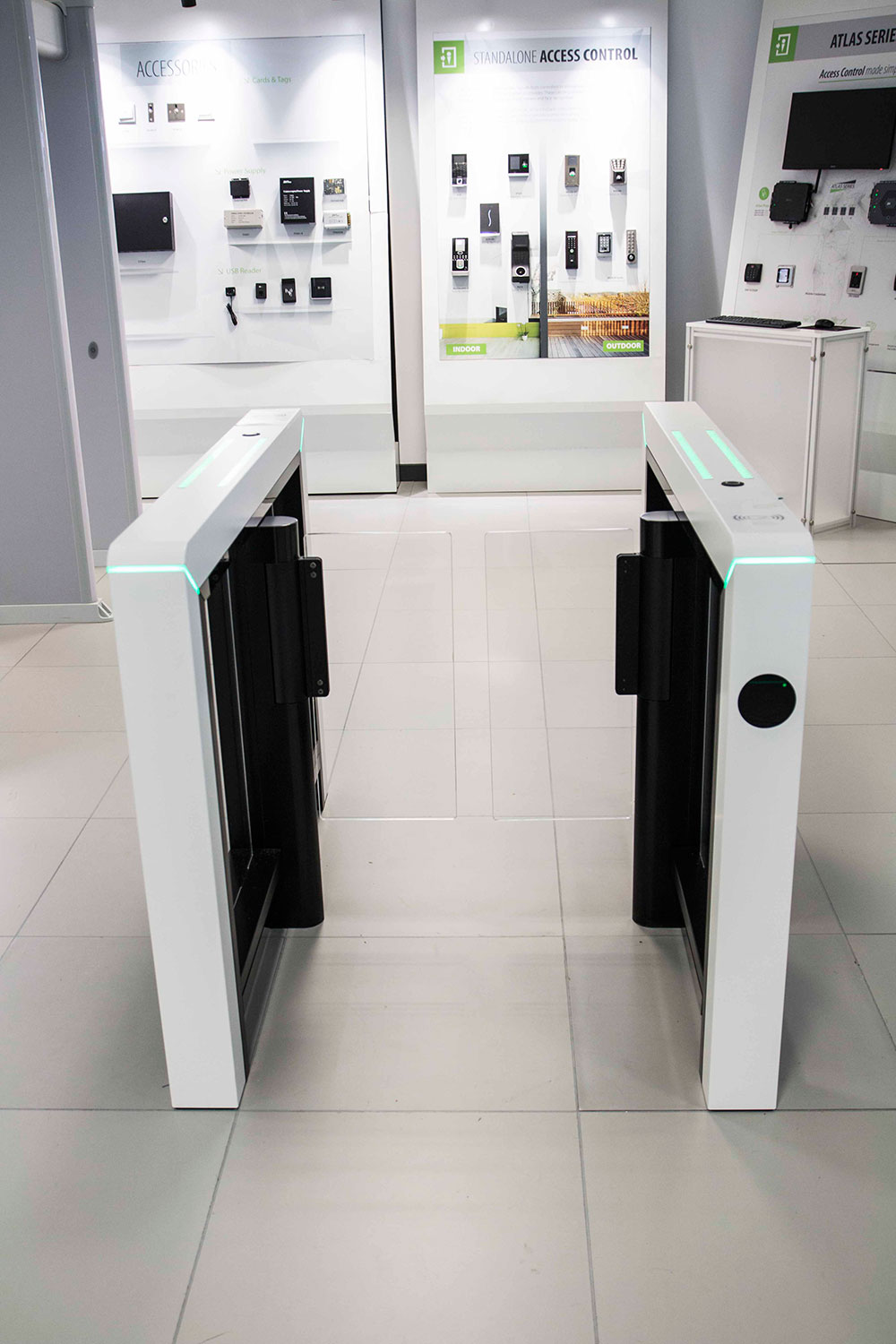
The entrance control product series features several categories. There are several types of turnstiles and barriers available, which are divided based on the level of mechanics and electromechanical control one needs. The showroom featured various three-arm turnstiles and turnstiles with curved and flat flaps and barriers for parking lots, together with vertical tripod barriers used in football stadiums. But the real benefit is found not only in the products themselves but in the fact that they can integrate with their own access control. “It is important to mention that we can perform any mechanical and software integration ourselves because we are the proprietors of our technology. This means that no matter what kind of reader or controller is demanded for turnstiles, we can offer it to our customers. This greatly simplifies the work of the installers who install them in the field”, says our host.
Innovation at work
To get an idea of the designing prowess of their engineers, we were introduced to the ZPad Plus, one of ZKTeco’s best-selling products. Originally, it was a device used for time & attendance, but during the pandemic, there came a need to check the green certificate. So, they used the original public applications certified by the Italian government and integrated them with their hardware, which can now make decisions and open doors or activate an alarm relay based on the validity or invalidity of the certificate. “It is one of our best designs so far and it has been a great success, especially because we have improved the algorithm that has the ability to check personal documents, so we can be sure that the certificate belongs to the person who shows it”, says Leita.
We also had the opportunity to check the Mars Pro series of turnstiles with flat or curved flaps, designed for spaces with a large flow of people. It has a modular structure and comes with new features, such as frame modularity, which can be easily assembled and disassembled. No matter what level of damage is done to your turnstile, only its impacted part will need to be replaced. However, the most important functionality is the number of ten million cycles, which is a rarity on the market.
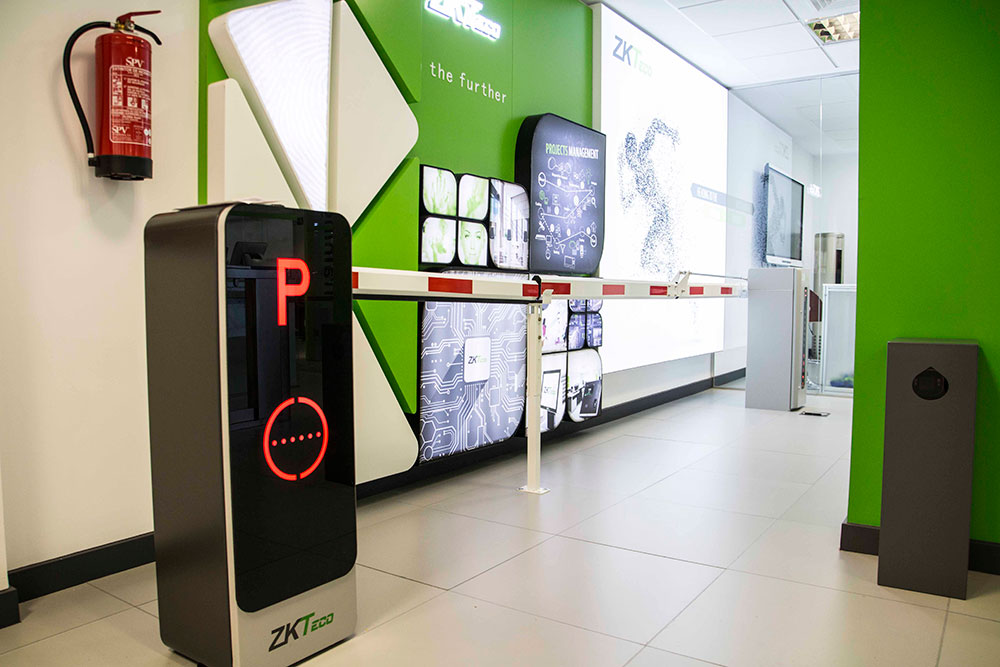
Radar-equipped barriers
There are two types of barriers on the market: those with strong mechanical components, which can raise arms up to six meters long, and cost-effective barriers for residential and commercial areas. ZKTeco offers both types. The parking solution is based on LPR bullet and dome cameras integrated with barriers equipped with VR10 radar, which completely eliminates the need for any induction loop. When the vehicle leaves an area, it is not necessary to re-read the plates so a copper spiral is usually installed in the ground and it detects the weight of the vehicle and sends a signal to the barrier to open. With radar, there is no need for that, because it is simply pointed to the right side and calibrated. The license plates are controlled locally by a camera, while the VR10 controls the arms without the need to install a magnetic loop, which also makes the job easier for installers. Another good thing is the anti-shock mechanism, which detects an obstacle (e.g. a child passing by) and prevents the arm from falling. “An additional important functionality of this solution is that it can work independently or you can connect it to our ZKBioSecurity platform. So, in addition to all the information about vehicles that pass through the barrier, you can also link each car with a user in the system”, concludes Leita.
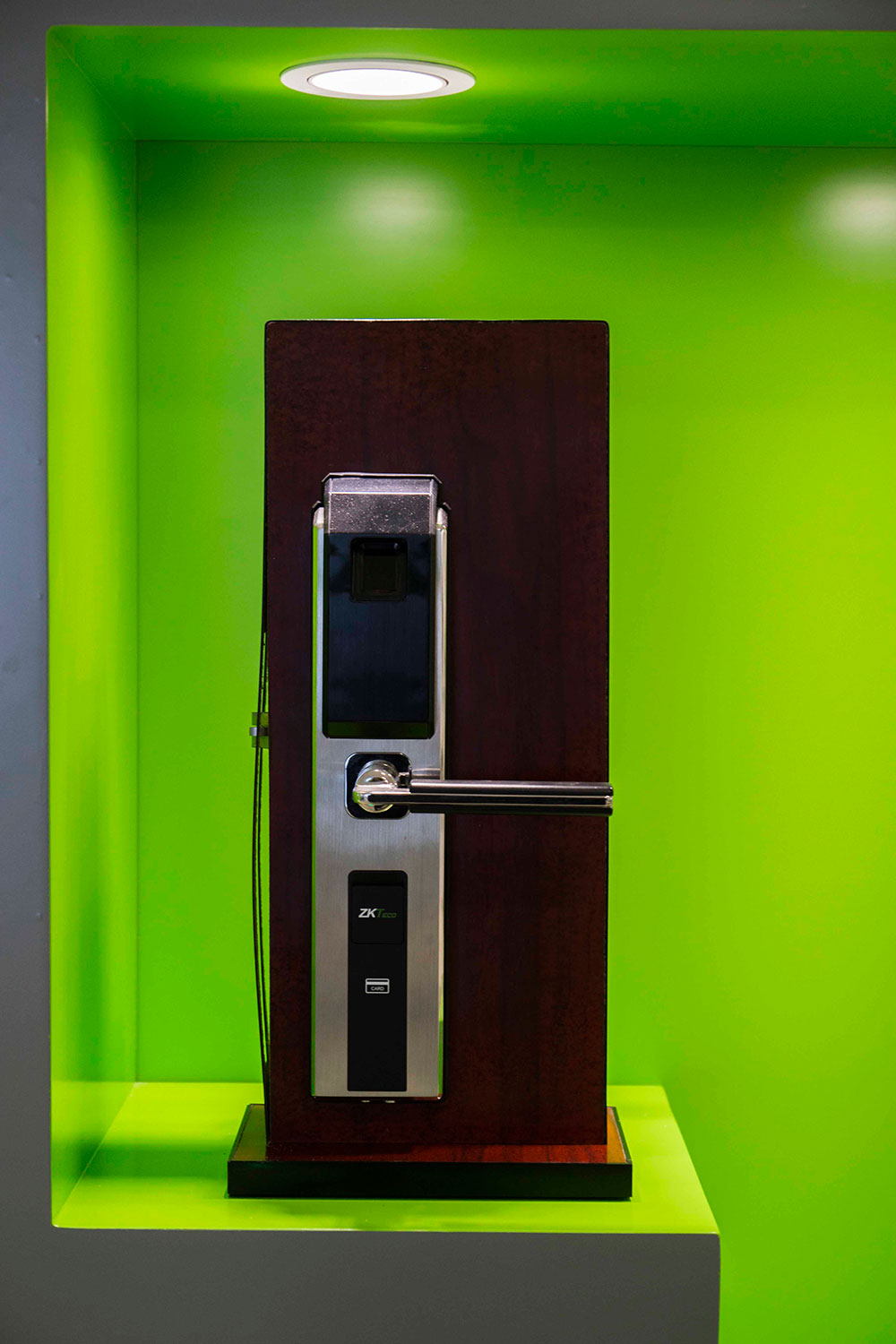
We ended our showroom tour by checking the solutions with smart locks for hotels and smaller housing units, with ZKTeco offering four series: online hotel management, offline hotel management, smart locks with local Bluetooth connection, or smart locks with cloud connection via an e-mail account. This enables remote management of credentials, without the need to go to the site.
Thirteenth security company in the world
After a full-day tour of ZKTeco’s European headquarters and the meetings with the leading people from its management, business development, and technical departments, we were left with the feeling that the company has made a lot of progress during all these years. When we reflect on its first appearances at major security fairs only ten years ago and its modest biometric solutions which focused on cost-effectiveness back then, we simply have to compare it with what we had the opportunity to see and hear during our visit. It is no wonder, then, that ZKTeco ranked 13th among the top fifty security companies in the world according to Security 50 list. They have come a long way from one product group to multi-series solutions but managed to keep the focus on one thing – entrance control. And that is the biggest advantage of ZKTeco.
The world has been rapidly changing for traditional security installation companies and there’s a danger of them being left behind if they don’t adapt. There’s pressure to offer much more diverse solutions; the fact that products and technology are always developing; and a desire to monitor and work remotely – all things they need to consider in their strategic planning. In order to stay competitive, it’s important for companies to keep up with trends and adjust to these market and customer needs. In this business environment, working with a manufacturer that follows trends and develops products and technology accordingly can add a lot of value.
Embracing remote service
One of the emerging trends in the world of installers is the concept of VSaaS (Video Surveillance as a Service). The use of video security, and as a tool for business analytics, is being managed remotely, via a Cloud network, to allow end users to realize the value of the service, without having to focus on it. This also, of course, means that they do not have to maintain it either, but allow installer to use technology to remotely keep an eye on their system.
VSaaS is growing very fast, and the Security Industry Association naming ‘move to service models’ as one of its ten ‘megatrends’ for the industry in 2021.
Like all businesses, installer companies are looking to the future to adapt to these trends, and some are even already embracing a new kind of business model. The ability to effectively provide service/maintenance contracts after a solution has been installed opens up a new revenue stream that can provide regular income.
The other side of this service coin is the fact that the use of remote monitoring and configuration allows installers to correct a wide range of issues without having to make the journey to the customer’s premises – saving costs on both time and travel. This has also added a safety element to the relationships, allowing people to keep their distance – a key element in recent operational thinking.
“To greet the trend of moving to the Cloud, security system integrators and installers are embracing it as a good chance to strengthen their business models”, says Peter Guan, Sales and Marketing Director of Hikvision Europe. “They are using the Cloud to provide services for their clients – such as system checks and remote maintenance – and consistently scale their business with efficiency.”
Flexibility through remote tech
Of course, where there are developing trends, there are innovative manufacturers working to cater for them. Hik-ProConnect, for example, is a convergent, cloud-based security solution that helps security providers to manage services for customers. Installers can monitor the system health status of customers’ sites remotely, and even resolve problems, using a simple and reliable platform.
This enables them to customize security solutions for customers with fully-converged Hikvision devices, covering video, intrusion, access, and intercom. From bug fixing to updating and configuration, a range of activities can be carried out simply from the comfort of the office. Customers can get a proactive, efficient service while an installer saves time, money and potential stress out on the road.
The solution provides different levels of interaction. Customers can reap the benefits of giving their installer the ability to keep an eye on their systems, so they can provide real-time support. They can also rest assured that they are getting the best quality of service, since installer management teams can have an oversight of how the projects are doing. Every operation carried out can be recorded and a log can be exported as a tool for reporting to customers and improving professionalism.
The system is designed with privacy in mind – installers will only be able to ‘see’ an end-user’s system if the end-user themselves agree to that. With GDPR regulations in force throughout Europe, its important installer companies understand this and weave it into their processes.
Hik-ProConnect also has various levels of service to cater for different types of management, cloud storage and account numbers connected. These can, in turn, be used by installer companies to inspire their own levels of support.
The Hik-ProConnect solution can also link into the existing Hik-Connect app, giving end-users a way to monitor their systems too.
All of these elements can help installers to proactively support end users, making fixes and upgrades simpler and more cost-effectively. Hik-ProConnect provides efficiencies and cost savings across the board and is scalable to adjust to future needs. And perhaps, most importantly, it supports customers as their needs change promoting that most valuable asset – customer loyalty.
When new technologies are considered and their potential realized, they can really help an installer company to keep up with trends and compete. In partnership with innovative manufacturers they can stay ahead of changing markets, rather than being dragged along behind them, or even being left behind.
Security at airports has become indispensable and entails continuously increasing requirements. The only way to keep satisfy the most demanding standards day after day, is to constantly further develop the technology in use. Video surveillance is a crucial contribution to airport security; this technology has a great deal of potential, as long as the current configuration is not taken as the final goal in terms of development. “Since the technological developments and the need to increase the security level were clearly evident, we could no longer put off considering a flexible video surveillance system, one that would be ready to meet the security and analysis requirements and guarantee a high level of performance,” says Ettore Pizzaballa, Manager of Information Systems at SACBO S.p.A. The important expansion phase at the Il Caravaggio International Airport terminal, which involved building a long gallery of shops and expanding the passenger boarding area, made the situation even more complex and challenging. This added another piece to the puzzle, alongside the usual airport security scenarios.
Safety And Security: The Winning Combination For A Project With More Than 300 Video Surveillance Cameras
Il Caravaggio International Airport is the third-largest airport in Italy in terms of traffic, with a volume of over 11 million passengers. Security is crucial when it comes to an airport infrastructure of this size, and a great deal of attention is required to maintain the necessary level of surveillance. Introducing MOBOTIX technology enhanced the quality and resolution of the surveillance images. In turn, this further improved the activities carried out together with the constantly present police forces operating at the Il Caravaggio International Airport terminal, thereby providing suitable support for investigations. “Inside the airport, not all the halls are homogeneous in terms of height and lighting; thanks to MOBOTIX, we were able to achieve excellent image quality under all conditions.” Video surveillance has also turned out to be a valuable additional tool for improving operating procedures related to safety: “We can analyze aircraft and vehicle movements in the maneuvering areas to help train operating personnel. Even the luggage is constantly under surveillance: If a piece of luggage stops or is stuck where employees can’t see it, the system immediately sends a notification to employees”. Over 300 MOBOTIX video cameras have been installed, both indoors and outdoors. Several different models were used in keeping with respective needs, including the c25, i25, M24/25, Q24/25, S15, S15 SurroundMount, M15/16 and T25. Each one of these cameras is active 24/7. The new VoIP infrastructure and NAS recording allow the different control rooms to share the images.
Perfect Synergy Between Hardware And Software
When it comes to ensuring state-of-the-art security, though, even the most advanced hardware technology does not suffice to cover all of the related tasks. A less visible component plays an important role in ensuring the efficiency of MOBOTIX solutions. “In addition to the image quality, we were also impressed by the option to receive thoroughly customizable software based on our specific requirements – not to mention the video analysis functionality.”
Video Analysis Takes Top Priority
At this point, it is actually easy to spontaneously develop ideas for the future, expanding the field of application of a system that boasts continuously developing potential, and utilizing the video surveillance infrastructure and its video analysis applications in order to obtain immediate and concrete results. The benefits are numerous: “The video analysis software allows us to immediately detect abandoned objects, locate the optimum route for vehicles in the maneuvering area and better understand how the flow of passengers moves inside the terminal (which we need to plan optimal routes), studying which type of traveler goes directly to the gate and which one stops instead to make purchases at the shops. The software also allows us to constantly monitor the lines at security checks and check-in and boarding areas in real time,” summarizes Pizzaballa.