Home Vertical Solutions Archive by category Banking / Finance

Banking / Finance

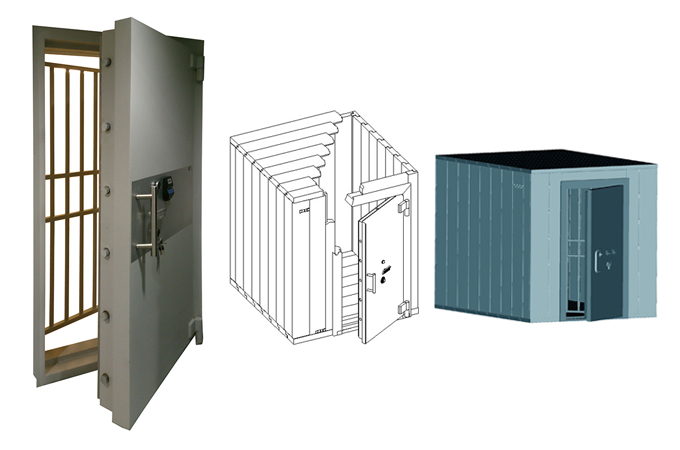
BIROSAFE Strong room doors tested according EN 1143- 1 – ECB•S Certified

Today we understand that high-resistance burglary protection for the valuables is especially important in maintaining the organization process. This is especially true for risk sites such as banking, retail, logistic, pharmaceutical or industry sectors, as large amounts of cash, valuable or sensitive items are often kept on premise.
To effectively manage this risk, the clients are choosing strong room doors or if the walls are not strong enough than they choose strong room modular, which is made from strong room door and strong room panels in same security class.
The strong room modular BIROMOD, unlike the vaults made on site have the following advantages:
• they are lighter and give less burden to the object’s construction
• can be built into older, adapted objects
• there is a possibility for transfer from one object to another.
The BIROMOD strong room modular can be made in different dimensions according to available space and purpose in several classes according to EN1143-1.

Birosafe high-security strong room doors BIRODOOR are certified by the European Certification Board Security Systems (ECB-S), in accordance with the EN 1143-1 standard. To obtain this certification, a variety of tools are used to put the vault’s ability to withstand break-in to the test.
They can be built into vaults built on site, or on modular vaults.
The strong room doors can be equipped with an additional security grid, for daily closing.
Except the minimum assigned locks for each class, extra locks can be built on the BIRODOOR strong room doors, in order to meet the requirements and needs of the client.

All Birosafe strong room doors are with European certificates for security, issued by ECB-S Germany. These doors are manufactured by the European standard for security EN 1143-1 and are classified in different resistance grades.
The certification according to the European Standard EN 1143-1 suggest security.

Birosafe team is trained to assess the wishes of each client and to give the best solutions for each project, from difficult access and old buildings to rooms with unusual dimensions. They define the specifications of each vault room and devise a solution that meets all specific requirements.

“BIROSAFE” – Strumica is an engineering company founded in 2001. The company is present in the business of manufacturing, sales and mounting of security, fireproof and bank equipment (security and fireproof safes, cabinets, security doors and vaults, etc.)

BIROSAFE produces and offers different types of security equipment: safes, cabinets, deposit safes, weapon safes, cash transfer safes, vault and vault doors, security doors etc.; as well as fireproof equipment: safes, cabinets, doors etc.
Usually the products are made by standard dimensions, but there is also a possibility for tailoring the products according to client demand.

The company follows the trends and creates series of security products which are at the same time, aesthetic and adequate for the most modern and well-equipped banks and other institutions from different sectors.

BIROSAFE has successfully passed the tests for several types of products and has gained the following EUROPEAN CERTIFICATES, issued by “ECB•S – Germany”:
– EN 1143- 1 – for security safes and strong room doors.
– EN 1522 – for bulletproof walls, doors and windows.
– EN 1627 – for burglary resistant doors.

BIROSAFE Bulletproof Doors in Security Entrance Systems

BIROSAFE Strumica is an engineering company which manufactures, sells and installs security, fireproof and bank equipment (security and fireproof safes, cabinets, doors, and vaults) according to the European standards.

It is a company that offers security and makes the clients feel safe by using the high-quality materials in the manufacturing process and adhering to the ISO quality standards in creating new security products.

Over the past few years, they have been active in the market of products which ensure bulletproof protection.

The BIROSAFE bulletproof doors and walls can be made according to various measurements and include options with or without glass.

These products come with bulletproof protection in line with the established standards:

EN 1522 FB 4 NS
EN 1522 FB 4+ NS
EN 1522 FB 6 NS,

This is confirmed by the European certificates issued by the ECB-S Germany.

These BIROSAFE bulletproof doors and walls can also be installed as part of the Security Entrance Systems (SAS) which are designed for controlling entrances and exits in secure areas.

The Security Entrance Systems (SAS) SAS Birocabin model is intended for the access control involving two or more doors that are opened simultaneously.

With it, the entry to and from the areas that need to be secured can be restricted or controlled.

Opening of the doors is handled with the help of the Interlocking system (one door is opened – the second one is closed).

Interlocking doors allow only a single person to make entry or exit, thus preventing unauthorized persons or intruders to enter premises. The users enter through the first door which gets locked behind them before the second door opens, thus allowing access to the secure zone.

The system has an Emergency Exit option which can be automatically turned on with the help of the Fire Proof Control Panel in the case of fire or panic (it can also be controlled by a guard or by using the Control Center). In this situation, everyone can make an exit from inside to outside, but unauthorized persons can’t enter indoor spaces from the outside.

The booth is also equipped with Total STOP button for door blocking.

All booths are equipped with their own installations, internal and external light signalization, buttons or readers for entrance and exit (opening of the booth doors can be also controlled by a guard or from the control room).

The doors are equipped with electromagnetic locks (that can stand the force of 1000 – 3000 kg) as well as with locks used for additional mechanical locking.

There are options to install additional equipment such as intercom system, biometric readers (fingerprint, face recognition opening) etc.

In case of the interruption of the electrical power supply, the system has own power supply.

There is a presence sensor inside the booth.

All booths can be made with different measurements and colors, so they can perfectly align with the design of the surroundings that client chooses.

These products are recommended for the security companies that are involved in the cash-in-transit business, banks, government institutions, exchange offices etc.

Apart from these new bulletproof products, the company also offers the following security equipment: safes, cabinets, deposit safes, weapon safes, cash transfer safes, vault and vault doors, security doors, bulletproof doors and walls as well as fire proof equipment such as safes, cabinets, doors etc.

All of their products are usually made according to the standard measurements, but there is also an option to customize them based on the client’s demands.

In case of a problem with the equipment, BIROSAFE has its own service team, which is trained for taking care of defects and resolving any kind of problem related to the operation of products, regardless of whether the warranty has expired or not.

BIROSAFE has offices and dealerships in all the Balkan countries and is present in the markets of Serbia, Montenegro, Bosnia and Herzegovina, Croatia, Albania, and Bulgaria.

Integrating cyber-physical: Security in Banks without Breaking it

Cyberattacks on financial institutions are becoming more prevalent. Some media reports suggest that more malware was targeted at banks in 2019 than any other industry. Cyberattacks are also becoming diverse, ranging from simple phishing attacks to complex attempts to access credit cards and bank accounts. This is hardly news anymore though, banks, by the very nature of what they handle, make an attractive threat. But what is concerning is the increasing number of ways in which cyber and physical security threats converge. Integrated digitalized solutions for operational, as well as security purposes, are increasingly becoming a normacross industries. The downside of it all is this emerging security threat. In this article, we take a look at the new kinds of security threats that customers in the banking vertical should be aware of in 2020, how these can be mitigated with a proper framework, the role of systems integrators and how the right solutions can be used in the right ways.

What Kind of Cyber and Physical Security Threat to Expect in 2020?

In Britain, some of the largest retail banks have been forced to halt processing foreign currency orders after a cyberattack on exchange provider Travelex. In Africa, operations at several banks were affected after attack by Russian hackers.

There is no doubt that there will be more incidents taking place in the future, given the nature of the technology and how hackers continue to successfully exploit vulnerabilities. But even more, concerning is how physical security is now connected to cybersecurity. With physical security solutions becoming more and more digitalized and integrated, an attack on either of the domains could have wide-ranging repercussions.

“Financial organizations are battling a growing number of physical and digital security threats,” said James Somerville-Smith, Global Customer Marketing Leader – End-User Programs at Honeywell Commercial Security. “According to new research from Honeywell Commercial Security, which surveyed 1,000 large financial institutions across the UK and North America, physical security incidents in large financial institutions have increased across all access points, with half of respondents reporting that incidents affecting employee access systems, physical safety of staff and data centers have gone up over the last year.”

Sophisticated Attacks and Higher Loss
According to Joon Jun, President of the Global Business Division at IDIS, we are likely to see organized cybercriminals continuing to find and target any weakness they can exploit.

“With increased global political instability, we can also expect more state-sponsored cyberattacks on banks and other critical infrastructure where an attack can damage productivity and result in major disruption and financial losses,” Jun said.

On the cybersecurity front, major attacks and threats to the banking sector are focused in three areas, sensitive data exfiltration, ransomware attacks, and denial of service attacks targeting IoT devices, along with risks induced by third party vendors with weak internal cyber hygiene, according to Kevin Sheridan, Director of Financial Institution Services for Convergint.

Convergence of Attacks
Alarmingly, several attackers have taken advantage of physical security solutions that are in place. For instance, hackers gaining access to surveillance cameras at ATMs are able to access the pin codes that customers enter. Jun pointed out that theft of biometric data as hackers look to bypass multi-factor authentication (MFA). This danger was
highlighted last year when Kaspersky Lab researchers identified the selling of digital fingerprints together with
associated personal data on the dark market.

Finding Method in The Madness
To tackle these growing problems of attacks on integrated security systems and avoid security breaches of any kind, banks must plug the gaps between standalone platforms by integrating their physical and digital security systems across the entire enterprise.

“As many financial institutions are both multisite and multiregional, such as retail banks with HQs and then branches, this means striking a careful balance between global central integration control and different regions using different systems and equipment – or locally monitored systems with global remote management as a possibility,” Somerville-Smith said.

However, an even major issue is that while cyber and insider threats make for more fascinating stories, physical security can often be overlooked. Jun explains that these risks have not gone away though and include bank and ATM robbery, cash-in-transit attacks, social engineering to gain access to restricted areas, and corporate espionage.

Plus, banks should also be considering the safety of their airspace, with drones posing not only a terrorist threat to corporate enterprises but cyber threats too as they have the capability to Wi-Fi spoof and trick employees and visitors into thinking they are connecting to a trusted network in order for hackers to gain access into a bank’s corporate network as well as harness personal data including banking details.

Creating a Framework for Cyber-Physical Integration in Banks

In the UK and North America, financial institutions are shifting towards a global management system of physical security. Asurvey from Honeywell Commercial Security shows that half of the respondents (47 percent) said their company’s security is managed at a global level, with all branches under the same enterprise or integrated system, and a further third (32 percent) said they were planning to shift to a global model.

With integration playing an important role across both security measures and markets, enterprise solutions featuring remote oversight and management are going to grow in popularity.

A Holistic Approach

“The keyword is ‘integrated’,” explains Martin Koffijberg, Director, Business Development, Banking and Finance at Axis Communications. “A failure to look holistically at both physical and cybersecurity – to connect the physical with the logical – will inevitably create vulnerabilities. It is important to adopt some form of Enterprise Security Risk Management or Converged Security approach.”

Both physical and IT security should follow the same cybersecurity principles and be evaluated in the same way, Koffijberg added. The first step has to be an acknowledgment from physical security practitioners that these security devices are connected to the network and, while performing security operations, create new risks to a business that hasn’t been seen with older technologies.

Framework Components

First, thorough and continued risk assessments need to be part of every physical security manager’s playbook. Today, many banks in the West have implemented sophisticated physical identity and access management (PIAM) policies, which control not only access into buildings but into the corporate network too.

“These feature useful functions like shutting down access to networks when an employee leaves their laptop, desk or building,” Jun said. “Other functions include enforcing two-factor authentication before login and the use of analytics to flag suspicious network access or unusual activity.”

Speaking about his company’s experience in dealing with the situation, Kevin Sheridan, Director of Financial Institution Services for Convergint, said that their larger financial clients are focused on four key elements of securing their operational security systems to mitigate the risk of any potential vulnerabilities. These are:

1. Device Identification
With the volume of connected devices integrated into physical security systems at financial institutions, awareness of what devices are deployed, where they are deployed, and what their operational status has become more important than ever.

2. Device Hardening Protocols
Password management is a focal point of our most sophisticated clients. Changing default passwords, while seemingly a rather basic activity, is something that many institutions have struggled to achieve given the volume
of IoT devices deployed.

3. End-to-End Encryption
Physical security system architectures are increasingly having this level of network architecture as a requirement of physical security system design.

4. Patch Management
Keeping your systems up to date with the latest firmware patches and software updates, when combined with the aforementioned elements, reduces the attack surface significantly.

The Human Factor And AI
When designing a comprehensive security solution with a holistic approach, technology is only part of the problem to be dealt with. The other part is the people who use the technology. To mitigate physical breaches, human error, and surveillance monitoring, it’s also important to address the problem of fatigue.

“That’s where deep learning and AI solutions can transform control rooms operations for major financial institutes, including those that operate 100s or even 1000s of cameras across large and multiple sites,” Jun said “Because deep learning learns over time, it distinguishes between environmental factors versus actual threats, such as an intruder or suspicious loitering. This translates into fewer false alarms and reduces the chance of control room operators shut down alarms, resulting in a quicker, more appropriate response to incidents.”

Solutions Critical to Fighting Cyber-Physical Threats in 2020

Physical security systems and devices that are connected to the network are endpoints that can potentially introduce significant cyber risk into an organization. Physical security devices are frequently overlooked by IT departments and oftentimes, are not properly patched, updated, or managed.

“These devices are typically configured with default passwords, open ports, and protocols, and they run legacy firmware versions with known vulnerabilities,” explained Kevin Sheridan, Director of Financial Institution Services for
Convergint. “Hostile actors can exploit these vulnerabilities, allowing them to gain an initial foothold into an organization’s network. These compromised devices can then be used as a foothold within the network to pivot to other devices or systems.”

Properly hardening camera, card reader, video management, and other connected systems prior to their initial deployment, and properly managing them throughout their lifecycle, will significantly reduce the attack surface that can be exploited, thereby reducing risk.

Major Factors to Consider
According to James Somerville-Smith, Global Customer Marketing Leader – End-User Programs at Honeywell
Commercial Security, there are four key considerations to bear in mind when integrating cyber and physical security systems:

1. You must ensure that all physical hardware components are cyber secure in their own right
2. All intelligence and data must be protected behind a strong and comprehensive firewall
3. Access to sensitive areas such as data rooms needs to be protected by multilayered accreditation
4. Systems in sensitive areas are protected via local security so that personnel is not able to access systems unless they have properly badged into the restricted area. This will avoid giving system access to personnel in areas that they have got into illegally (e.g., by tailgating), with any breaches being flagged immediately to a central control room so that a response team can be sent to check the breach

Sheridan added that besides properly managing the cybersecurity of the actual physical security devices deployed at a client’s site, it is also imperative that the integrator itself has a strong internal cybersecurity program to ensure the integrator is not the vector for sensitive client data to be compromised.

From Technology to a Process
Martin Koffijberg, Director, Business Development, Banking and Finance at Axis Communications is of the opinion that the concept of cybersecurity should be looked at as a process rather than a technology. You can have the best security-related features built into technology, but if they haven’t been enabled or set up correctly your investment in this is lost and the associated risk increased.

This is no different for physical security technologies than any other IT device connected to a network. This has recently been highlighted by the UK Surveillance Camera Commission’s Secure by Design, Secure by Default certifications for manufacturers.

Balancing Costs and Efficiency
It’s not unusual for global banks to now hand over their technical physical security deployments to ICT departments. Cybersecurity risks are making convergence happen in some sectors, including banking, far more rapidly than the advent of IP surveillance did. It’s not unusual now to see surveillance decisions made by heads of IT and cybersecurity (or those people at least being major influencers on purchasing decisions) but this trend is occurring more in the west than elsewhere.

“However, these set-ups are out of the reach of many banks and are seen as too expensive to implement and maintain,” Jun said. “This is compounded by the fact cybersecurity experts in some parts of the world are hard to come by.”

Jun stressed on the importance of cost-efficiency, concluding that banks need the most cost-effective local NVR and centralized serverbased solutions available, and ones that use proprietary protocols and custom file structures which make them unfamiliar to cybercriminals and therefore very difficult to hack. Plug-and-play solutions could also play a key role, as they are easier to install compared to traditional systems.

Bank Security Challenges and the Role of Systems Integrators

There is no question on the need to come up with a comprehensive security framework that would integrate cyber and physical systems in the banking sector. Unfortunately, to implement such an effective framework, banks must overcome certain challenges.

For instance, legacy operating systems can be difficult for financial clients to justify replacing. If an access control platform, for example, isn’t investing in the cybersecurity feature set of their system, it can put clients in a tough position. A well-connected integrator with scale can help a client make sense of both the capabilities of their existing systems, as well as alternative platforms.

“In addition, there are many operating silos within financial institutions, with their own operating mandates and business objectives,” said Kevin Sheridan, Director of Financial Institution Services for Convergint. “Coordinating the cyber posture of those operating entities is absolutely essential. ATM/ITM groups, facilities, physical security
departments, and IT might have different priorities, but they all utilize physical security systems to deliver services to their internal and external stakeholders.”

In the past, many of these operating silos used a variety of integrators, both regionally and within lines of business, but in today’s environment, the most risk-aware clients are single sourcing integration services such that the security protocols are uniform across the entire enterprise.

The Human Factor
Some of the other challenges include the lack of understanding, at a high-level, concerning the risks posed by insecure IoT devices, including IP cameras. Confusion is fueled by mixed messages from vendors about “strong cybersecurity credentials” when in truth some have cameras that are far from secure- with even some devices listed on websites revealing vulnerabilities or backdoors that can be exploited.

“Security is still too often seen as a cost, and therein lies the danger – it is a mistake to just provide a budget for a surveillance upgrade without fully considering cybersecurity threats,” said Joon Jun, President of the Global Business Division at IDIS. “Equally dangerous may be avoiding decisions about upgrades or even maintenance, because strong security is not seen as a business asset. After disaster strikes, it’s too late for boards to discover that a successful cyber-attack via an IoT device, just like a physical attack, can be both disastrous and costly.”

What The Systems Integrator Can Do
Having seen the challenges, it is obvious that constant education, training, and skilling are essential. Every individual can essentially create a potential vulnerability, and a chain is only as strong as its weakest link. According to Martin Koffijberg, Director, Business Development, Banking and Finance at Axis Communications, this means that systems integrators (SI) need to work closely with the manufacturers of physical security equipment to stay abreast of both cybersecurity enhancements and potential vulnerabilities (and, critical, the action required to mitigate these).

“The way that security systems have been designed and manufactured has fundamentally changed over recent years,” Koffijberg said. “The importance of installation and commissioning security systems, combined with an understanding of how corporate networks need to be configured to protect the integrity of the device and network has changed, and human error poses the biggest risk.”

In other words, SI should prepare themselves by investing in technologies and top cyber talent on both the offensive and defensive sides, to better understand the risks that physical security devices can introduce into an organization’s network.

Kevin Sheridan, Director of Financial Institution Services for Convergint, explained that technology investments in credential management, scalable enterprise patch management, and firmware deployment platforms, as well as detection and response capabilities, are some of the tools needed to help reduce the risks often associated with
physical security devices.

“Follow a tried and true published standard; the National Institute of Standards and Technology’s (NIST)
Cybersecurity Framework,” Sheridan added. “It provides a common language that allows staff at all levels within an organization – and at all points in a supply chain – to develop a shared understanding of their cybersecurity risks. The Framework not only helps financial organizations understand their cybersecurity risks (threats, vulnerabilities, and impacts) but how to reduce these risks with customized measures.”

BIROSAFE Bulletproof Doors, Walls and Windows – EN 1522 – ECB•S Certified

DPTU “BIROSAFE” DOOEL Strumica is an engineering company founded in 2001. The company operates in the business of manufacturing, sales and installation of security, fireproof and bank equipment (security and fireproof safes, cabinets, doors, vaults, etc.).

BIROSAFE has offices and dealerships in all the Balkan countries and is present in the markets of Serbia, Montenegro, Bosnia and Herzegovina, Croatia, Albania, and Bulgaria.

BIROSAFE manufactures and offers different types of security equipment: safes, cabinets, deposit safes, weapon safes, cash transfer safes, vaults, vault doors, security doors, as well as fireproof equipment which includes safes, cabinets, doors, etc.

The products are usually made according to the standard measurements, but there is also an option to customize them based on the client’s demands.

In 2009, BIROSAFE became a member of the ESSA – European Security Systems Association, Frankfurt/Main (www.ecb-s .com).

European Certification Body (ECB) GmbH is an independent certification body for the EN 45011 standard. It issues the ECB•S certification mark which guarantees maximum security features in line with the European standards.
The ECB•S certified products guarantee quality and offer higher levels of resistance.

Since becoming a member of the ESSA, BIROSAFE has successfully passed the tests for several types of products and received the following EUROPEAN CERTIFICATES issued by ECB•S – Germany:
– EN 1143- 1 – for security safes and strong-room doors
– EN 1627 – for burglary resistant doors
– EN 1522 – for bulletproof walls, doors, and windows.
EN 1522 – bulletproof walls, doors and windows

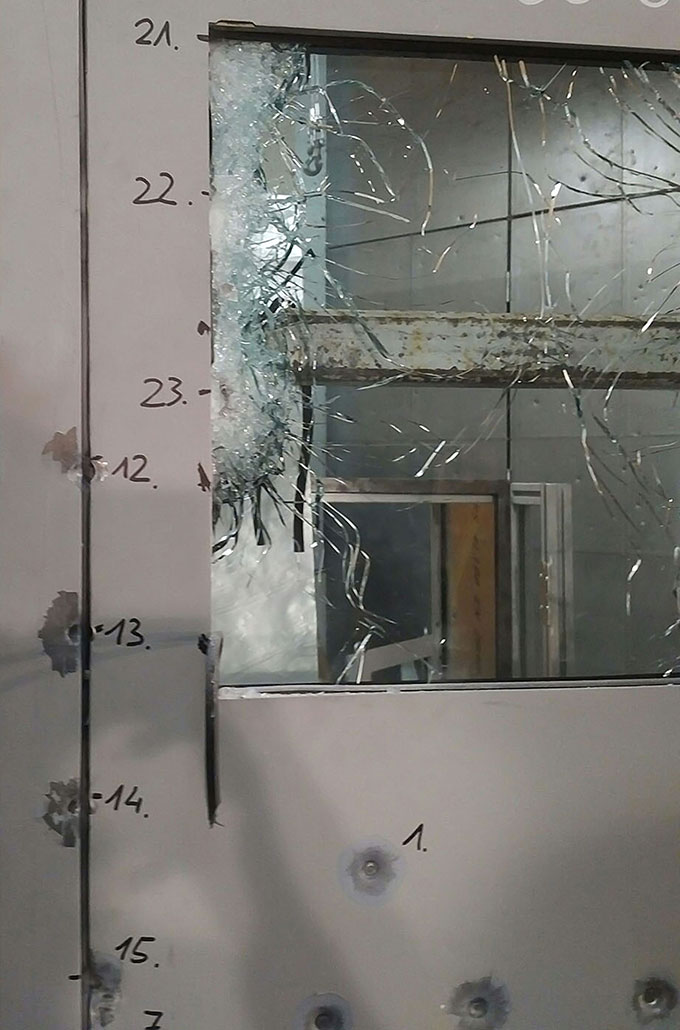
Our bulletproof products offer bulletproof protection in line with the following standards:

– EN 1522 FB 4
– EN 1522 FB 4+
– EN 1522 FB 6

The bulletproof testing was performed at the renowned German laboratory of Beschussamt Ulm, under the guidance of the ECB-S team.

Each type of tested products was issued the ECB-S Certificate, which guarantees the level protection it is supposed to provide.

Consumers can recognize the recommended products by the blue ECB•S certification mark.

The BIROSAFE bulletproof doors and walls can be made with various measurements based on the client’s needs, and are available with or without bulletproof glass.

Customized manufacturing also applies to the aesthetic finish, which is available with several options, including metal, PVC and wooden covering (doors with PVC artificial leather – wood – plain color – aluminum – stainless).

Our bulletproof products can be built as Security Entrance Systems (SAS) which are designed for controlling entrances and exits in secure areas.

These Security Entrance Systems (SAS) offer security according to the EN 1627 security standard and are made bulletproof according to the EN 1522 standard.

Opening of the doors with Security Entrance Systems (SAS) is done with the interlocking system (one door opens – the second door closes). Interlocking doors grant entry or exit to a single person only, preventing unauthorized persons or intruders from gaining access. The users can enter through the first door, which locks itself just before the second door opens, allowing access to a secure zone.

There is also an option to build our bulletproof products as Security Desk Windows.

We strongly recommended these products to all the companies who are in the cash-in-transit business, banks, embassies, government institutions, exchange offices, etc.

The EN 1522 ECB•S Certified Bullet Resistant products offer quality and security in a single product. Purchasing those means investing in your safety, so you better invest wisely.

What’s new in access control for 2019

The adoption of new technologies in the access control market looks set to grow in 2019, as users demand greater convenience and security.
Izvor: a&s International
E-mail: redakcija@asadria.com

The global market for access control products grew by 8 percent in 2018, reaching sales of nearly US$7.5 billion, according to market research firm Memoori. This was driven in part by IP networking products, access control as a service (ACaaS), biometric readers and identity management tools. The firm predicts further growth through the integration of other physical security systems and building automation systems (BAS).

More Wireless Locks, Identity-Based Systems in 2019

From increased adoption of wireless locks to integration of authentication and access management, access control industry players discuss some of the trends they see for 2019.

Overall, the access control market has been slow to adopt the latest technological trends. One reason for slower adoption is that organizations do not update access control systems as regularly as they update other technologies such as cell phones.

According to Gaoping Xiao, Director of Sales for APAC at AMAG Technology, traditional access control is still 10 years behind other sectors. Despite this, Xiao thinks increasing awareness of the security benefits will see the market warm to newer technologies in 2019. “These newer technologies have more rigid regulations (and) in the next 12 to 18 months I think there will be a major uptick in people understanding that there is risk associated with legacy platforms, like using proximity cards or Mifare CSN cards in critical locations and updates in technology are needed to provide a safe environment.”

Jason Spielfogel, Director of Product Management at Identiv, expects to see an expansion in the use of of wireless locks in 2019. “Not only do wireless locks represent the marriage of reader and lock in the same hardware, but the ease in which a wireless lock deployment can be installed and made operational dwarfs the older, cabled methods of installing an access control system,” he said.

He added that the hospitality industry “moved in this direction several years ago, and now the main commercial/ industrial segments are rapidly following. Wireless locks also represent a way to establish fast, temporary access control environments that can just as quickly be uninstalled or moved to another location.”

Francois Lasnier, SVP of Identity and Access Management at Gemalto, highlights the use of identity-based access control across a user journey in both the physical and digital spheres as an interesting development for 2019.

“Instead of looking at each access transaction individually, with each access control system relying on disparate identity systems, global access control platforms feeding from various identity systems (e.g., AD for enterprise apps, physical access database, biometrics, etc.) and taking smart decisions based on global access policies using both physical and digital context information is something we could envision down the road,” Lasnier said.

Lasnier also expects the integration of authentication and access management to gain momentum over the next few years. “Authentication will need to be integrated into access management more tightly in order to afford the risk mitigation organizations need, and in order to reduce the burden of logging into multiple apps for end users,” he said. “This is driven by an ever present need to provide access security at the application level, as a result of a continuously expanding threat surface and of an intensifying threat level. The expanding threat surface is the result of a hyper expansion of cloud- and web-based delivery, while the intensi- fying threat level is evident in the scope of the breaches in the past few years and its repercussions.”

According to Vince Wenos, VP of Global Technology and Engineering at Allegion, other trends of interest this year include: the continued rise of IP-based network solutions as a challenge to traditional RS-485 architectures; continued demand for and adoption of cloud-hosted solutions over traditional on-premises solutions; increasing intelligence in “edge” devices due to improvements in power management and lower cost computing; mobile access and its ability to drive further convergence of physical and logical security; the inclusion of advanced machine learning and AI; and biometrics.

Moving From Card-Based Credentials to Mobile Access

Although card-based credentials have long been a mainstay in the access control industry, end users have begun demanding more secure and convenient methods of access. One technology tipped to address these concerns is mobile access.

The consensus among industry players is that mobile access will take center stage in 2019. Technologies like Bluetooth and PIR are increasingly being incorporated into readers, enabling users to leave their phone in their pockets and achieve entry simply by waving their hand near the reader. IHS Markit expects strong growth in the mobile access market over the next five years. According to its report, global mobile-credential downloads are estimated to increase at a compound annual growth rate (CAGR) exceeding 100 percent between 2017 and 2022. Furthermore, it predicts that roughly 20 percent of currently installed access control readers will be mobile capable by 2022.

“While the most secure environ- ments will continue to use cards as part of their multifactor credentialing schema, in the commercial/industrial/ residential markets, the shift is to move away from cards and use smartphones as the primary credential,” said Jason Spielfogel, Director of Product Management at Identiv. Richard Huison, Regional Manager for the U.K. and Europe at Gallagher Security, said mobile access was no longer seen as a gimmick and had gained traction due to its convenience and added security. He added that mobile provided undeniable benefits, such as the fact that it could be used across multiple sites and that creden- tials could be sent remotely over the internet. “This is a huge benefit for the customer in administration. It gets away from all of the card printing and keeping those cards catalogued and in the correct hands.”

Francois Lasnier, SVP of Identity and Access Management at Gemalto, said that as phones became the central point of interaction not only in identi- fying and authenticating users, but also in initiating access requests (physical or digital), it would be easier to build global access policies and make access decisions based on the overall user journey. Additionally, Rick Caruthers, President of Galaxy Control Systems, said more customers were requesting mobile applications where push notifi- cations were sent from the access control system to mobile phones with video for review.

Gallagher Security’s Huison believes the ubiquity of smartphones gives them a distinct advantage over access cards. “I think of it this way: how many people return home if they realize they’ve left their access card behind on the way to work? No one, realistically. But most people would do so if they realize they’ve left their mobile phone at home. They’re using their phone for paying for goods and to carry their cinema ticket or restaurant booking, so why not equip it to let them through doors they’re allowed through?” This view is echoed by Andrew Fulton, Head of Product Management for Access Control at Vanderbilt. “Mobile access control is in higher demand right now from end users looking for a way to incorporate their mobile phones with certain access levels within their organization. In today’s world, a mobile phone is a constant, and it’s natural for businesses to see this as an opportunity to integrate mobile access into offices and varying levels of access,” he said.

John Davies, MD of TDSi, said that while mobile access was already prevalent in residential spaces, research suggested some larger end-user organizations were already buying new readers in readiness for mobile-identification technologies. Estimates suggest mobile identity readers are likely to make up around 10 percent of reader sales by 2020. Mobile was also being used for access control in ways beyond opening doors, with security departments using mobile solutions for remote monitoring, setting alarms and enrolling employees into systems, said Gaoping Xiao, Director of Sales for APAC at AMAG Technology. “Mobile solutions provide more functional control (in your hands) of a system that is developed and deployed. A functional purpose is accepted and adapted. Mobile has not been widely accepted for opening doors, but it’s coming,” Xiao said, adding: “We will see it adopted in universities and in vertical markets where there are remote buildings such as the energy/utility market.”

Despite the benefits, there are sectors where Huison thinks it will not be adopted, such as the U.K.’s National Health Service and local authorities, due to concerns over a “lack of control of cards.”

Balancing the Pros and Cons of Mobile Access

With adoption of mobile access solutions tipped to increase this year, here are some of the benefits as well as challenges to consider when implementing a mobile access solution.

Convenience is one of the biggest factors leading to mobile access conversion. “ F o r m a n y o f u s , remembering our mobile phone is significantly easier than remembering a badge or keycard. There’s also the issue of waste, as the plastic used in these credentials can be wasteful – especially when used in large quantities, such as in a hotel environment,” said Andrew Fulton, Head of Product Management for Access Control at Vanderbilt.

Other benefits include near-instant credentialing, faster, more convenient access and lower total cost of ownership (TCO) for multifactor authentication.
“The means of credential delivery has improved and the cost of the readers themselves has come down. This has prompted more companies to consider mobile access for upcoming projects,” said Rick Caruthers, President of Galaxy Control Systems. “We feel mobile access technology will continue to gain in acceptance and capture more market share from traditional proximity technology,” he added. While mobile access is convenient, considerations over whether log data will be stored on a mobile device or on a cloud server also need to be factored in.

Gaoping Xiao, Director of Sales for APAC at AMAG Technology, added that “the cost of virtual credentials versus traditional physical cards must (also) be considered as the investment can be high for some vendors’ solutions.”

Nancy Islas, President of Maxxess Systems, said that in order to be a suitable replacement for existing card and proximity access readers, the speed and capacity of mobile credential access readers needed to be at least equivalent to existing devices. AMAG’s Xiao noted that one of the challenges for office environments was that they still required employees to have a physical badge with a photo in order to distinguish between employees, visitors and contractors. Still, mobile access in this scenario has a clear advantage — it is convenient as most people carry a smartphone with them most of the time, and it is more secure as smartphones are typically protected by a password.

Vanderbilt’s Fulton said another challenge was the large number of different platforms on which these programs were built. “Not everyone carries the same type of phone – or even a smartphone for that matter. Another consideration is how to handle visitors and contractors that might require short-or long-term access to a facility, as well as how privacy issues are handled – that is, if an employee is using a personal mobile phone for access, how much can the employer access if that phone is being used as a credential. All of these challenges must be addressed and discussed before a company can implement these kinds of solutions.”

Cybersecurity concerns must also be addressed, as the line between how we use our mobile phones for work and personal matters becomes increasingly blurred. Because of this, mobile devices were likely to become a more attractive threat vector, according to Francois Lasnier, SVP of Identity and Access Management at Gemalto.

“Users therefore should be aware and more vigilant regarding the apps they install; enterprises will dedicate more resources to end-point and access security on mobile devices. Inherently, mobile devices have some limitations in terms of security and will become the center of cyberattacks as their role to help us run our lives keeps on increasing. Therefore, security mechanisms to maintain a high level of trust while assuming that the mobile as a device could be compromised (‘zero-trust’) will become increasingly important,” Lasnier said. Other issues include diminished phone battery life, since most mobile access solutions using Bluetooth will need this function to be turned on at all times.

Video Integration With Access Expected to Continue

Integration of video surveillance into access control systems is expected to continue in 2019, as end users look for seamless solutions to group different functionalities onto a single platform.

Video integration with access control has been happening for years and access control industry players believe this will continue as part of a wider integration trend.

“Integration in general will be critically important for manufacturers of both access control and video components, such as cameras and management systems. The shift toward video integrated with access control is a natural extension of this trend and manufacturers that make this a critical component of their offering will be more successful than those that don’t,” said Andrew Fulton, Head of Product Management for Access Control at Vanderbilt.

Nancy Islas, President of Maxxess Systems, said: “Any entity with a NoC or SoC will experience immediate benefits by merging all critical surveil- lance, access control, security systems and two-way communications onto a unified platform. Such higher levels of integration provide security and operations management with total situational awareness, allowing them to coordinate the activities of first responders and the people they are protecting with the information they need to know in the event of an emergency.”

Rick Caruthers, President of Galaxy Control System, said industry profes- sionals were “increasingly looking for higher levels of systems integration to consolidate operations and tie in previously disparate system capabilities on a unified platform.”

“Galaxy Systems has supported VMS integration for the last several years and we will continue to expand with new integration partners as they arise,” he added. Jason Spielfogel, Director of Product Management at Identiv, said video “represents a simple way to visually verify an access control event, and access control represents additional data that can be used in a surveil- lance investigation. The prerequisite for such integration really depends on how the end user uses their system, but whenever cameras are co-located near access control checkpoints, it is a waste of investment to not have them integrated together and, once integrated, provide an amazingly fast way to verify events and validate correct/incorrect practices.”

While both live and recorded video will continue to be of value, solutions that can leverage images to enhance security — for example, facial recognition on the video stream — will likely be most popular, according to Vince Wenos, VP of Global Technology and Engineering at Allegion. “

It is important to note that expanded use of video technology in the consumer electronics space for logical access control and payments is positively changing end-user percep- tions and acceptance, which will allow for greater deployment and adoption in the traditional physical access control world,” Wenos said. Vanderbilt’s Fulton said solutions offering both access control and video management in a more cloud-based format were being chosen by small to medium-sized enterprises, due to the price point and services offered. Other verticals that could benefit from video integration included those in which video was a critical component to access control, such as health care, education, financial services, higher education, casinos and hospitality, he added.

Richard Huison, Regional Manager for the U.K. and Europe at Gallagher Security, sees video surveillance integration with access control as driven more by manufacturers and suppliers trying to differentiate themselves, rather than by market need or desire.

Instead of being a necessity for every application, Huison believes video integration with access control should be based on individual need. “Video integration simply isn’t practical or worthwhile as there isn’t the manpower to monitor video where there is a huge access control throughput. I’m thinking here of hospitals and education, for example. For instance, at Kings College London, the Gallagher access control system controls a million door movements every month!”

Contactless Biometric Access Control Spreads Across Verticals

Biometrics in access control is already a trend, and now the focus is on contactless technology.

Contactless biometrics are expected to see continued growth in the access control market over the coming year, thanks in part to more accurate and advanced technology.

The global biometrics- system market is expected to reach US$41.8 billion by 2023, growing at a compound annual growth rate (CAGR) of 20 percent, according to a report by Markets and Markets.

Similar to how analytics was expected to be the “it” trend for over a decade, predicted explosive growth in biometrics has also remained “just around the corner.” Today, however, significant advances in technology have lowered the cost and improved the performance of virtually all biometric modalities, making adoption easier.

“Combined with a general shift in user acceptance due to the application of biometrics on smartphones for logical access control and electronic payments, these advances will fuel continued deployment of biometric solutions,” said Vince Wenos, Vice President of Global Technology and Engineering at Allegion.

Jason Spielfogel, Director of Product Management at Identiv, said creating an access control system that didn’t require the specific cooperation of the user had always been the Achilles heel of contactless biometric systems. This is because such systems generally require the subject to be in an exact spot and/ or looking at a specific place for the system to recognize and authenticate the user. However, as technologies that can recognize an iris or a face at non-direct angles mature these barriers can be overcome. “When combined with systems designed to prevent tailgating, this technology has the potential to revolutionize security checkpoints,” Spielfogel said.

Gemalto recently announced a joint pilot program with a leading airline to implement biometric boarding. According to Francois Lasnier, SVP of Identity and Access Management at Gemalto: “The test will confirm that passenger needs and expectations are met through use of facial recognition versus a traditional boarding pass as well as satisfying CBP (Customs and Border Protection) U.S. Exit requirements.”

Allegion’s Wenos noted that government and public safety would no longer be the only primary verticals utilizing biometric technologies, adding that education and health care would also see expanded use for general access control. “In health care, applications are likely to include streamlined workflows that improve staff utilization and patient outcomes; more cleanliness with contactless implementations; and verified identity for access to patient information and other data. “Businesses, too, may dramatically increase the use of biometrics for logical access control, with potentially 90 percent using the technology by 2020 according to Spiceworks,” Wenos said.

John Davies, MD of TDSi, said construction sites were a good example of where biometric access control could be beneficial. In such an environment, it was far more practical for workers to use a palm-vein or facial-recognition system, as carrying a token would be impractical and a fingerprint could be difficult to read due to the harsh conditions workers’ hands are exposed to. Such a system would also be well suited to sports grounds or stadiums, where the professional players need to gain access to non-public access areas without having the availability of pockets or a bag to carry credentials. According to Wenos, another contactless biometric gaining ground was voice technology, as evidenced by double-digit growth in the adoption of voice assistants. “Voice authentication can be a bridge between physical and digital security and an extra layer of protection when needed,” he said. Still, there are barriers to adoption.

Richard Huison, Regional Manager for U.K. and Europe at Gallagher Security, pointed to the increased consciousness of data privacy in the post-GDPR era. He said people were worried the “authorities … are taking a picture of me” without knowing “what they might do with it.” “The fact that the system is just taking measurements of certain facial characteristics and plugging them in to an algorithmic image doesn’t matter. It’s the same reason why scanners in cashpoints didn’t take off 20 years ago — because of people’s fear. But, ultimately, because of the consumer convenience it will be a growing trend and the technology will improve to facilitate this, along with public education to conquer the fear factor.”

Facial Recognition to Drive Contactless Biometric Growth

Advancements in facial recognition and growing acceptance of the technology are driving growth for its use as a contactless biometric for access control.

Despire initial skepticism from consumers the increased ubiquity of facial-recognition technology has smoothed the path for its use as a contactless biometric for access control. Nancy Islas, President of Maxxess Systems, pointed out that the implementation of facial recognition in leading smartphones had dramatically reduced the learning curve. It is now widely accepted by the public, which will further accelerate deployment of facial recognition for more applications, like access control. The global facial-recognition market is expected to reach nearly US$7.8 billion by 2022, at a compound annual growth rate (CAGR) of 13.9 percent, according to a report by Markets and Markets. Growth is attributed to the increased need for enhanced surveillance and monitoring in public places and the increase in the use of the technology in sectors such as government departments.

Andrew Fulton, Head of Product Management for Access Control at Vanderbilt, noted that similar to mobile credentials, users looked for flexibility when it came to access control. Biometric readers could help achieve this, while also offering an additional layer of security to protect an organization, he added.

Although new technologies are constantly being touted, the most popular biometric systems are generally the most established and practical, such as facial recognition and iris. “We see facial readers have been developed rapidly in the past few years, and many customers are beginning to use facial readers instead of fingerprint or hand-geometry readers because they are convenient and highly secure. Also, the facial template capacity can be as high as 10,000 to meet the large number of people required in some applications,” said Gaoping Xiao, Director of Sales in APAC at AMAG Technology.

Facial recognition technology had improved significantly over the years and it was now more accurate than iris recognition, said Richard Huison, Regional Manager of U.K. and Europe at Gallagher Security.

“We’ve seen facial recognition, originally developed by Aurora Computer Services, adopted effectively in controlled situations such as passport control at airports,” Huison said. However, he noted that even in highly controlled environments like passport control, the hit rate was not always ideal.

“We have the additional problem of the constraints of the camera being too tight to accommodate some people. I’m over 6-feet, 6-inches and can’t find a camera high enough to take me, while people in wheelchairs may be below 4 feet,” he added.

Vanderbilt’s Fulton said that regionally, facial-recognition software was “making its way into the Asia Pacific market as a means for contactless biometric access control, as well as analytics capabilities. We’ll start to see this work its way toward Europe and the U.S. as the technology continues to develop and companies move toward the adoption of these types of technological advancements.”

Vince Wenos, VP of Global Technology and Engineering at Allegion, pointed out that facial recognition investment had been growing significantly, particularly in China, as players see the combination of facial recognition and artificial intelligence (AI) as a major disruptor. “Reports show that venture capital investment in biometrics over the past two years exceeded US$4 billion, with approximately half of that amount going to Chinese facial recognition companies,” he said.

More Cloud and Awareness of Cybersecurity

With storage becoming increasingly affordable, the migration of access control onto the cloud looks set to increase in 2019.

Acceptance of cloud-based access control and video management solutions is expected to continue in 2019, with industry players pointing to an increased willingness among end users to adopt cloud products. While most consumers still want to invest in more traditional access control solutions, the benefits of the cloud, such as quicker installation time, automatic software updates, flexibility and mobility, managed services and increased cybersecurity, are enticing users. “We anticipate the major growth in the upcoming year will be in the cloud-hosted access control space as it opens up new revenues for resellers as well as the opportunity for many small-to medium-sized operations to economically deploy advanced access control capabilities,” said Rick Caruthers, President of Galaxy Control Systems. “As a result, we will also see cloud/hosted access control solutions continue to evolve with more features and integrations in 2019,” he added. Jason Spielfogel, Director of Product Management at Identiv, said moving control and management of an access control system to the cloud made sense for many reasons, including improved management and controlÍÍ and better security.

“It also gives access control systems nearly infinite scalability unburdened by the requirement of additional panels in an on-premises environment. The current state is a hybrid approach, with the cloud being the primary brain of a system and an on-premises backup. As access control manufacturers continue to move more system functionality to the edge (bridges and readers), it will make the cloud an even more attractive option for access control,” Spielfogel said.

IHS Markit expects market revenues for access control as a service (ACaaS) to increase to US$950 million by 2022. Small- and medium-sized enterprises will lead the adoption of ACaaS, according to IHS Markit. SMEs accounted for 21 percent of market revenues in 2017.

“Pushing access control into the cloud ensures end users can enjoy enhanced security but without necessarily having to invest in expensive IT infrastructure to do so. Access control as a service promises to be a robust and rapidly growing segment of the market for small- to medium-sized projects (up to 50 doors). However, it is not something that looks like it will take off for larger projects just yet,” said John Davies, MD of TDSi.

“Interestingly, with access control as a service presenting a new paradigm for providers, we may well see new players entering to market as a result. New entrants mean more competition, so it will be interesting to see how the market reacts and how providers meet these fresh challenges,” Davies added. With access control expected to shift to the cloud as well as become more IP-based, the question of cybersecurity becomes an important consideration.

Awareness of cybersecurity was the main force driving technological development in access control, said Richard Huison, Regional Manager of the U.K. and Europe at Gallagher Security. This was tied closely to GDPR and partially to mobile credentials, he added.

But Huison stressed that “cyber is the big issue and it’s resonating at a higher and higher level.” “At multinationals, in specific industries such as banking and in enterprise level companies, they want compliance with various government standards and to be confident that ‘whatever is being plugged onto my network’ will not facilitate hackers gaining access via the access control or video surveillance system.

“In the internet of things, systems that meet a range of global standards such as the U.K.’s Cyber Assurance Products (CAPs), the U.S.’s FIPS and Australia’s Type 1A are where genuine cyber resilience will be found. In the U.K., for instance, only a handful of the 40 or so manufacturers will offer this level of standards compliance and cyber resilience,” he said.

For SMEs — where typically there is a lower level of knowledge, expertise and resources — Huison believes users need to be convinced of the resilience of their network, as well as whether their security investment is future proofed and “cyber safe” in the long run.

Can a single, integrated locking system protect banking halls, ATMs and cash in transit?

London, November 2018 – It is hard to think of somewhere with more critical security needs than a bank. While cyber-security grabs the headlines, in the day-to-day business of banking, physical security of people and assets is paramount.

We’ve all seen the heist movies. Of course, in the real world, bank security is more complex than fitting the biggest titanium door you can find. Buildings, ATM housings and cash-in-transit delivery services all have totally different workflows, but each demands high-security locking they can trust, just like a vault.

Could a single locking technology accommodate such a diverse range of needs?

Trusted security & a safety net

For complexity and security, critical infrastructure like power grids and clean water plants set the bar for banks’ locking needs. Coincidentally, this utility sector is among the most enthusiastic adopters of CLIQ® access control.

CLIQ® is a multi-layered locking system which combines key-operated mechanical and electronic protection. A range of high-security cylinders and padlocks for applications beyond doors maximise physical security and attack resistance. CLIQ® technology then layers encrypted, user-friendly electronic security on top — adding control and convenience without the need for wires: all CLIQ® locks for doors, padlocks, cabinets, lifts, gates and any relevant machines are wireless. Power to the lock’s microelectronics comes from a standard battery inside every programmable CLIQ® key.

These layers of physical and electronic security work together to give banks a safety net should a key go missing. Any lost CLIQ® key’s access rights are simply removed, instantly, using the system software and it no longer opens any door, vault or ATM.

Easy installation, easy management for doors, gates and ATMs

Because it’s a key based solution, CLIQ® offers a simple step up from mechanical security to powerful access control, with no change to existing hardware like doors. Retrofitting is hassle-free.

The secure CLIQ® Web Manager software interface works from inside any standard browser, or on an intranet with multi-factor log-in authentication for administrators. Facility managers can control workflows by tailoring every user’s access permissions, without bulging key-chains or having to design a complicated, expensive key management system. One programmable (and reprogrammable) key covers all their needs.

Areas requiring special clearance are easily defined and access to them restricted to specific staff. If multiple system administrators are required, CLIQ® handles it — even across different sites or time-zones.

Facility managers can place programming devices at strategic points — near the staff entrance, say — for employees or contractors to revalidate their permissions regularly. Shorter access rights validity instantly upgrades security in a banking hall or back-office.

Equally, the CLIQ® system can generate an audit trail for any lock or user on demand, thereby streamlining incident investigation. Programming devices collect audit trails at the time of reprogramming. CLIQ® functionality saves you time and money.

CLIQ® can secure more than just doors. CLIQ® cylinders are ideal for ATM housings, and bank staff or third-party vendors don’t even need to carry another key to unlock the ATM. Their single CLIQ® key is programmed to open just the right ATM at the right time — a secure and controlled workflow.

Every opening is tracked and audited within the same Web Manager software, available on a local server or with ASSA ABLOY’s secure Software as a Service (SaaS) option.

Protecting cash on the move

Running a cash transit department or business adds another variable to the security mix: staff and cash are always on the move and the entire workflow must be secured. If you are back at HQ to collect a key, you are wasting time and fuel. An award-winning* extension of the same CLIQ® system — CLIQ® Connect technology — has it covered.

With CLIQ® Connect, a key-holder no longer needs to update access rights physically in person by returning to base or even by moving to the nearest location with a programming device. All they need is a smartphone, the CLIQ® Connect app and a secure Bluetooth connection.

It’s simple and agile — and quick to respond to any “live” situation.

If you need to redirect a cash collection team while they are on the road, you just set new access permissions for a building or ATM within the CLIQ® Web Manager. The key-holder makes a secure Bluetooth connection between their programmable CLIQ® Connect key and the app to instantly update their permissions. They can now open the necessary locks at their new destination.

The online opening function of CLIQ® Connect can even contribute to secure sequence unlocking for cash collections. For example, locks can require key-operated unlocking within 60 seconds of access also being authorised by a system administrator.

Can a single, integrated CLIQ® locking system protect assets in banking halls, ATMs and cash in transit? We think it can.

To learn how businesses across Europe already benefit from CLIQ®, download a free case study library at https://campaigns.assaabloyopeningsolutions.eu/cliq-banking

A CLIQ® electronic locking system puts an Italian bank in complete control of every entrance

London, November 2018 – Retail banking combines a demand for high security with complex workflows. Staff need efficient access. Facility managers need the flexibility to design access permissions around individual needs, so not everyone can access every area whenever they choose. Nobody wants to carry or track large numbers of keys.

These were requirements managers Creval — a regional bank in Italy — faced when seeking an alternative to a mechanical master-key system.

Creval needed new access control devices to become an integral part of a security system for assets and people with the highest level of protection. They sought locks to offer a durable, secure and flexible alternative to standard mechanical security.

They found an easy, electronic way to administer a powerful, user-friendly system based on battery-powered physical keys and secure, advanced microelectronics.

Flexible high-security locking

Creval chose eCLIQ key-based wireless access control for its banking premises. Bank doors across the Lombardy region are guarded by more than 30 durable eCLIQ cylinders, putting Creval managers in complete control of entrance security.

eCLIQ is a scalable electronic extension of the CLIQ® access control system deployed in critical infrastructure sites across Europe. Cylinders are fully electronic, protected against manipulation and with 128-bit AES encryption built into both lock and key microelectronics. Staff carry a single, battery-powered eCLIQ key, programmed with only the right preauthorised access permissions.

Creval’s security manager is now able to grant access based on scheduled times and specific doors, and right down to the level of the individual site user. It is also straightforward to set time-limited access rights for a user key, increasing security if a key is lost. Audit trails and event logs are collected to the same, fine-grained degree.

Key management is easy with software operated from a local PC or securely on the web via a standard browser. In the unlikely event a key is misplaced, Creval administrators simply delete its validity from the system.

“We are satisfied with the results of the new access control system,” says Claudio Brisia, Logical Security Manager at Creval headquarters in Sondrio.

For further information please visit: https://campaigns.assaabloyopeningsolutions.eu/cliq-banking