Home Archive by category Vertical Solutions

Vertical Solutions

Mercury.AI: Safety equipment detection system for enhanced workplace health and safety

Workplace injuries, fatalities resulting from accidents, and on-site deaths represent a complex and challenging process for employers. Liability risk increases exponentially with the number of workers and the complexity of the work process. The primary objective of Occupational Health and Safety (OHS) is to ensure a safe and secure work process through preventive measures. Following a critical incident, the first questions asked are whether workers were using the prescribed protective equipment and adhering to safety procedures. These questions are not only a matter of legal liability but also a significant reputational risk for employers. In complex environments with a high risk of human error—such as construction, heavy industry, and manufacturing plants—it is impossible to visually monitor every workstation throughout the entire work process. Annually, approximately 200 workers perish in the Western Balkans, while injuries are measured in the thousands.

At Mercury.AI, we have recognized this vulnerability stemming from the human factor. Companies invest heavily in protective gear and masks, but workers often fail to comply with prescribed safety measures. Our goal at Mercury.AI is not to merely document breaches of labor discipline; rather, our detection system is designed to warn of such behavior and act preventively. Our ultimate mission is to elevate the standards of occupational health and safety.

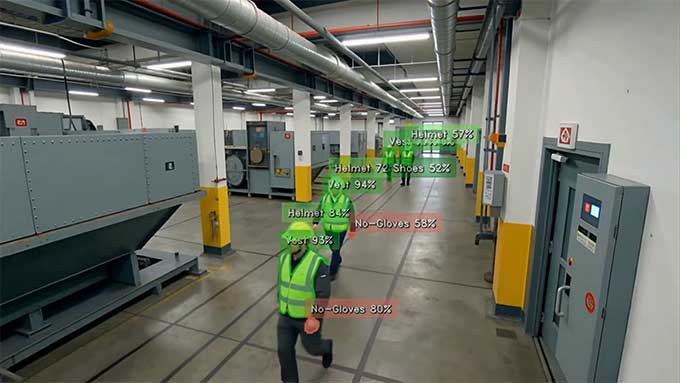
Workers in the construction industry remain the most vulnerable. On a construction site, safety must be the top priority. Our platform allows you to preempt accidents using advanced, real-time safety equipment detection. The solution can verify whether every worker is wearing the prescribed Personal Protective Equipment (PPE) upon entering the work environment, as well as during the work process itself. Furthermore, the Mercury.AI system detects movement within restricted zones.

This advanced system, integrated with our Video Management System (VMS) and powered by artificial intelligence, detects the absence of PPE in real-time. It triggers an alarm if workers are not wearing helmets, gloves, vests, goggles, or any other specific protective gear configured in the system. We can detect the absence of various types of equipment even in low-visibility conditions or from difficult camera angles. This is particularly beneficial for construction sites and outdoor operations during night shifts or at dusk. The specific configuration of a construction site or the complexity of its zones poses no obstacle to our solution.

The detection platform does not require additional costs but can be integrated with existing infrastructure for video surveillance. The focus is on raising the operational efficiency of clients, whether they come from the commercial, security, or government sector, therefore our solution is based on a modern environment. Mercury.AI solutions will never burden regular functioning and work processes. During the creation of our solution, we identified specific vulnerabilities for different work processes. Outdoor construction sites are characterized by a high fluctuation of workers, subcontractors, and external associates over a vast space. Additionally, we can identify everyone who enters the work zone without protective equipment; these can also be curious citizens. Manual oversight by construction site managers is physically impossible at every moment at every point. Workers at heights or in remote zones often remove helmets due to heat or discomfort, which drastically increases the risk of fatal injuries. The lack of continuous insight creates “blind spots” in the safety protocol. In our short analysis, let’s observe a production hall. The high tempo in factory halls and on production lines often leads to the routinization of movements and a drop in concentration. In halls where machines work at high speed, even the smallest failure in wearing equipment (e.g., protective gloves or vests) can lead to permanent disability. The challenge is to maintain discipline without slowing down the production process. Traditional cameras only record incidents, but they do not prevent them in real time. Mercury.AI automatically detects threats in a dynamic environment, it can detect multiple incidents and locate them at the same time. Most production plants, storehouses, and warehouses have marked zones for the safe movement of people and machines. A worker leaving the safe zone by crossing the line can be automatically detected with an acoustic warning, which prevents the possibility of a machine-human collision. Our system can establish safe and dangerous zones, which automatically raises an alarm in case of movement in a dangerous zone. Let’s consider one more situation of working in a dangerous environment like a mine where the absence of wearing a protective mask is not just a disciplinary violation but often a path to certain death. Long-term absence of wearing chemical protective equipment can create different types of diseases. To us at Mercury.AI, the goal is not to identify disciplinary violations but to create a safe environment that will protect the worker, the employer, prevent injuries and fatal outcomes, and prevent additional business costs. Our approach is always human-oriented. Therefore, our video surveillance solutions are highly ethical, efficient, and always adapted to real situations.

Hytera: The 450MHz Pivot: High-Impact Connectivity for the Adria Region’s Toughest Terrains

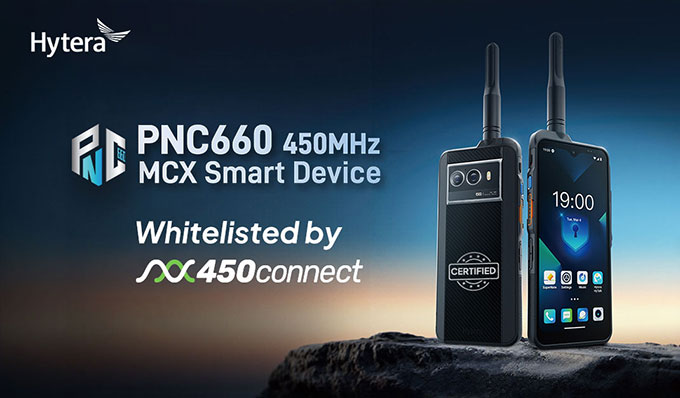
At the recent MWC26 in Barcelona, an announcement from Hytera regarding the “whitelist” certification of the PNC660 450MHz by 450Connect signaled a major shift in the future of public safety and utility communications across the Adriatic and Balkan regions.

As the region migrates from legacy narrowband technologies to LTE/5G, demand for devices that combine ruggedness with high-speed intelligence has reached a critical turning point.

The Strategic Shift in the Adria Region

The 450MHz frequency is increasingly recognized as the strategic backbone for national resilience. Across the Adria region, a clear trend is emerging:

  • Smart Grid Evolution: critical infrastructures are increasingly leveraging 450MHz for smart grid management, ensuring resilient energy distribution that remains independent of commercial networks.
  • Regulatory Alignment: Regulatory bodies across the region are phasing in updates to reallocate spectrum, prioritizing civil public safety and mission-critical broadband for state and utility applications.
  • Infrastructure Hardening: Governments are shifting from legacy CDMA to LTE to support the massive data requirements of modern smart metering and IoT deployments.

Addressing Regional Challenges, from Mountains to the Coast

The Adria region’s geography – spanning high mountain ranges to dense coastal archipelagos—demands a signal with maximum geographic reach. The PNC660 450MHz capitalizes on the 450MHz band’s superior propagation capabilities to maintain connectivity in challenging terrains where standard commercial LTE signals often falter.

Furthermore, for field teams working in deep basements or reinforced concrete substations, the 450MHz band’s penetrative power ensures stable communication links—making it an indispensable tool for modernizing aging infrastructure.

A Strategic Milestone

During MWC26, Sophia Yin, General Manager of Hytera Europe, highlighted the significance of this development:

“It is really exciting to receive these two pieces of good news at MWC26. Obtaining 450Connect whitelist certification and signing the distribution agreement with B.Schmitt simultaneously perfectly illustrates the proverb ‘good things come in pairs’, giving us a great start to 2026. We will expedite the promotion of the PNC660 450MHz in Europe and continue investing in R&D for 450MHz-related products, reinforcing our commitment to supporting critical infrastructure operators with reliable, secure, and robust communication solutions.”

More than Just a Device

For public safety and utilities sectors, the PNC660 450MHz’s value extends far beyond basic communication, it is a masterclass in Economic Efficiency and Operational Resilience. By leveraging the 450MHz band’s ability to cover vast territories with significantly fewer base stations, it offers a drastically lower Total Cost of Ownership for national safety networks compared to traditional high-frequency deployments.

This efficiency is most visible during the Adriatic’s peak tourist seasons. While public commercial networks become overwhelmed by extreme congestion, the PNC660 450MHz operates on dedicated private channels, ensuring first priority for emergency responders and utilities crews. It effectively bypasses the public network providing a clear dedicated line of command.

Ultimately, with its CC EAL5+ security chip and full MCPTT/MCVideo capabilities, the Hytera PNC660 450MHz is more than just a radio. It is the rugged, secure gateway to the next generation of Adriatic infrastructure, a critical tool for those who cannot afford to wait for a signal when every second counts.

Panduit Fault Managed Power System: Higher Power. Longer Distance. Superior Safety.

The Panduit Fault Managed Power System is a safe, efficient, reliable and practical power delivery system that will go the distance.

The Fault Managed Power System (FMPS) is a novel power delivery system that allows System Integrators to safely provide significant power, over long distances, to remote equipment. The Panduit FMPS is a Class 4 power system that is the first in the market to comply with the new UL  1400-1 Standard for a safer, more reliable, and easy-to-install power delivery system that provides substantial time and cost savings.

How Does Fault Managed Power System Work?

The FMPS uses Pulse Current as its power delivery method. The Transmitter converts standard AC power into high voltage DC power, which is further converted into a Pulse Current waveform delivered over a Class 4 multi-conductor copper cable to the Receiver. The Receiver converts the pulse current waveform into +/- 48 VDC power, which can power multiple end devices. With the ability to monitor faults, the system can safely use higher voltage to deliver power compared to low-voltage systems (Class 2). This allows the FMPS system to have all the safety benefits of low-voltage installations while delivering significantly more power over longer distances than Class 2 systems.

How Much Power and Distance?

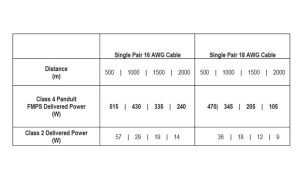
Deliver up to 600W per copper pair and up to 2 kilometers away. The Power and distance any system can deliver depend upon the wire size. Toggle between the charts below to see how much power the Panduit FMPS can deliver across a single pair of copper conductors and at what distance compared to Class 2 systems.

Benefits of Fault Managed Power System

Compared to traditional power

Save up to 40% on material costs

Safe power distribution allows technicians to install the Panduit Fault Managed Power System with less material, for a less costly and faster deployment than traditional power.

Lower your Opex with Centralized Power architecture

The architecture allows centralized power backup for more accessible and less expensive management. Centrally monitor and control your infrastructure to avoid costly site visits.

Compared to Class 2 power…

Save up to 60% on cable costs

The Fault Managed Power System delivers up to 6 times the power and 30 times the distance of a Class 2 system, reducing the number of copper pairs needed while using a thinner wire gauge.

Reduce headend space and cooling requirements

The FMPS safely delivers more power at higher voltage than a Class 2 system and increases the power capacity per RU while reducing the power lost to heat with higher efficiency.

Where is Fault Managed Power System Used?

The Fault Managed Power System provides safe, sustainable, and reliable power distribution anywhere you need it.  The Panduit FMPS serves as a backbone for power distribution deployment for any venue or technology. Centralized for ease of back-up, monitoring and control for added resiliency, and scalable to grow with your technological demands.

FMPS with In-Building Wireless

Wireless connectivity continues to make meaningful penetration into enterprise networks unlocking performance and transforming the way people work. Reliable connections, secure access to data, and on-demand communication capacity are mainstays of modern business. These resources are the fourth-utility that people rely on to get through their day. Partner with Panduit for best-in-class solutions throughout your enterprise environments that scale around the globe and optimize connectivity with a single source provider of all network and physical infrastructure solutions.

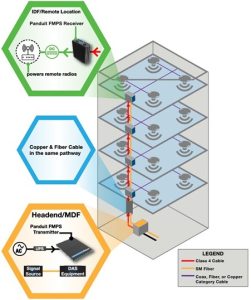
In any Distributed Antenna System (DAS), Distributed-Ran (D-RAN), or small cell architecture, the Panduit FMPS provides safe power anywhere it is needed to power remote radios. Run fiber and copper in the same pathways for a faster installation, and centralize power distribution with the Panduit FMPS for easy power back-up, monitoring, and control in a more reliable wireless network.

FMPS in Smart Building

In smart buildings, connected devices such as lights, security, HVAC, and AV converge on the IP network where these systems communicate with each other, collect actionable data, and fuel efficiencies. High-performing, highly reliable networks rely on Panduit infrastructure solutions to connect devices and deliver voice and data wherever they are needed.

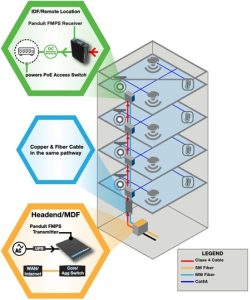
Leverage the Panduit Fault Managed Power System (FMPS) to substantially augment in-building network reliability by facilitating secure and centralized power distribution. The Panduit FMPS is certified for Class 4 power which allows users to run fiber and copper within the same pathways for safe and accelerated installation. With the Panduit FMPS deliver significant power, over long distances safely, to more edge devices using less cable.


The Panduit Fault Managed Power System delivers optimal safety, efficiency, and reliability for optimal control. System Integrators may deploy cutting-edge technology with centralized power to unique locations, over longer distances, with a scalable, flexible design to future-proof initial deployments.

Welcome to the new world of power distribution with the Panduit Fault Managed Power System.

Aikom: MOTOTRBO R5: New model with bluetooth and Wi-Fi, now certified for maritime use

Motorola Solutions presents two important updates for its professional MOTOTRBO R5 radio, designed to expand usage possibilities and improve the user experience for those working in critical environments, on the move, or in maritime contexts.

The first concerns the release of the new model with integrated Bluetooth and Wi-Fi, ideal for users seeking maximum connectivity and wireless accessories. The second, even more relevant from a market perspective, is that the R5 UHF radio is now certified for use on vessels, in accordance with current European regulations.

MOTOTRBO R5 now also onboard

The MOTOTRBO R5 UHF radio has obtained the EN 300 720 V2.1.1 and IEC / EN 60945:2002 certifications, making it suitable for use on cruise ships, yachts, merchant fleets, shipyards, and port services.
This is a significant milestone, allowing the R5 radio to be included in maritime projects, where continuous, reliable, and regulation-compliant communication is required. Thanks to its ruggedness (IP67, MIL-STD 810H), battery life of up to 32 hours, and AI-based advanced noise suppression audio, the R5 proves to be a versatile tool ready to face the extreme conditions of the marine environment.
The certification is valid for all UHF R5 versions starting from firmware release M2025.03, without the need for dedicated hardware.

New R5 model now available with integrated Bluetooth and Wi-Fi
The second major update is the launch of the new version with Bluetooth 5.2 and dual-band Wi-Fi connectivity (2.4/5.0 GHz), now available for order. This version expands the usage possibilities, allowing direct connection to wireless accessories such as earpieces, RSM microphones, remote PTTs, and vehicle mounting solutions. Furthermore, thanks to the Wi-Fi connectivity, the radio can receive remote firmware updates, simplifying maintenance and reducing downtime.

Designed for professional and continuous use, it retains all the key features of the R5 line: AI-powered intelligent audio, up to 32 hours of autonomy, MIL-STD 810H certified durability, and the UL TIA4950 intrinsic safety option for critical environments.

Aikom International and Motorola Solutions
With the new MOTOTRBO R5, Motorola Solutions continues to lead innovation in the field of professional communications. Contact the Aikom International team, official distributor of Motorola Solutions, for more information or to schedule a demo.

adriatics@aikominternational.com

Hytera: Elevating Luxury Hospitality with Hytera DMR Solutions

In partnership with Cobra Center, Hytera implemented a state-of-the-art Digital Mobile Radio (DMR) system, enhancing operational performance and the guest experience at the exclusive One&Only resorts in Greece.

By: Bella Liu, Communications Specialist, Hytera Communications Europe; Email: bella.liu@hytera-europe.com

One&Only Resorts

One&Only Resorts, a globally recognized leader in ultra-luxury hospitality, operates some of the most prestigious properties worldwide and maintains uncompromising standards across all aspects of its operations, particularly in security and guest services. Seamless, reliable, and discreet communication across large and aesthetically sensitive environments is an essential part of the brand promise. In partnership with Cobra Center, Hytera implemented a state-of-the-art Digital Mobile Radio (DMR) system, enhancing operational performance and further strengthening the exceptional guest experience at the One&Only resorts in Athens and on Kea Island.

Challenges

The project focused on two key Greek locations: One&Only Aesthesis in Vouliagmeni near Athens, and the One&Only resort on Kea Island. Implementing a reliable communication system while ensuring full coverage across a luxury resort presented unique challenges, particularly for a brand with exacting standards like One&Only. Key aspects considered by Cobra Center engineers when designing the solution included:

  • Seamless Coverage: Ensuring stable and clear signal reception across large properties, including multiple buildings, outdoor areas, and complex architectural layouts, without compromising communication quality.
  • Discreet Integration: Installing communication infrastructure without disrupting the resort’s elegant aesthetic. This required innovative antenna concealment and unobtrusive equipment placement in line with One&Only’s design philosophy.
  • Operational Efficiency and Security: Meeting the needs of various departments, from Security and Emergency Response to Food & Beverage, Housekeeping, and Event Management, while adhering to strict security protocols and providing encrypted, interference-free communication.
  • Eco-friendly Alignment: Ensuring the technical solution aligned with the group’s commitment to environmental sustainability.

Solution

In collaboration with Cobra Center, Hytera designed and deployed a robust, reliable, and discreet DMR communication network tailored to One&Only’s specific requirements, offering a range of advanced features:

  • Multi-site DMR Tier II Network: A resilient core system featuring four Hytera HR1065 UHF repeaters, interconnected for extended coverage and redundancy. Supported by an Uninterruptible Power Supply (UPS), the system ensures continuous operation even during power interruptions.
  • Encrypted Communication: The network uses encryption to provide secure and private transmissions, essential for management and security purposes.
  • Bluetooth for Security Personnel: Select radios with Bluetooth capabilities were issued to security staff, enabling discreet and hands-free operation.
  • Tailored Programming: Radios were configured to enable smooth communication among key operational departments, including Security, Emergency Response, Food & Beverage, Housekeeping, and Event Management.

Results

The implementation of the Hytera DMR system has significantly improved operational efficiency, security, and service quality at the One&Only resorts, providing superior audio quality and full coverage across all areas—including previously challenging locations. Additionally, Cobra Center engineers optimized group settings in the system backend, enabling clear and concise information on radio interfaces while preserving the resorts’ luxurious ambiance and visual integrity.

Testimonial

“Establishing reliable communication across our resorts initially appeared to be a major challenge. However, the project was executed with great success. The equipment provided laid the foundation for uninterrupted and user-friendly communication. We are fully satisfied and plan to continue our partnership with both companies,” said Nikos Ornstein, Purchasing Manager, together with Loannis Dimitropoulos, Security & Loss Prevention Manager of One&Only Resorts.

Igniting Safety: Bosch’s New Zagreb Experience Hub Redefines Fire Protection in the Adria Region

The opening of the Experience Hub in Zagreb is also a clear recognition of the local Bosch team and its long-standing contribution to the market. Built on nearly two decades of commitment, expertise, and close customer engagement, the Croatian team has played a key role in positioning Bosch Building Technologies as a trusted partner across the Adria region.

Equally important is the role of Bosch partners. Installers, designers, distributors, and integrators are at the heart of Bosch’s business model, transforming technology into reliable, compliant, and effective fire safety solutions. By investing in local training, flexible education formats, and direct partner support, Bosch reinforces the region’s strategic importance and confirms that sustainable growth in fire safety is only possible through strong local teams and strong partnerships.

Since entering the Croatian market in 2008, Bosch has steadily built its presence through projects, technological innovation, and close collaboration with partners across the Adria region and Southeast Europe. Over the years, the evolution from Bosch Security Systems to today’s Bosch Building Technologies division has reflected a broader transformation of the market itself—towards integrated, intelligent, and future-ready safety solutions. Within this journey, fire protection has emerged as a strategic growth pillar, driven by increasing regulatory demands, complex building environments, and the need for higher professional standards.

A significant milestone in this development is the opening of the Bosch Experience Hub for fire detection systems in Zagreb. Launched in 2025, the center represents more than an investment in infrastructure; it is a regional platform for education, innovation, and collaboration. As Danijel Jerković, Business Development Manager for Fire Safety Systems in the SEA region, explains, the Hub is designed to strengthen Bosch’s position by ensuring partners have direct access to the latest technologies, hands-on training, and practical expertise. At the same time, it creates a space where end users can better understand how advanced fire detection solutions protect people, assets, and business continuity.

Covering the entire Adria cluster—15 countries and nearly 80 million people—the Zagreb Experience Hub reflects the diversity of the region. Training programs and presentations are tailored to local regulations, market maturity, and technical requirements, ensuring relevance and real-world applicability. Installers, designers, integrators, and distributors benefit from certified, practice-oriented training that translates directly into higher-quality system design, installation, and commissioning.

From a technical perspective, the center is focused on Bosch’s AVENAR fire detection system. As consultant Nino Belicki highlights, the modular training environment allows participants to configure, program, and troubleshoot systems in realistic scenarios. This hands-on approach, combined with design training using Bosch’s Safety Systems Designer software, ensures that both installers and planners can deliver solutions precisely aligned with project needs. Certified training, valid for two years and complemented by further qualification paths, underlines Bosch’s long-term commitment to competence development.

Ultimately, the Zagreb Experience Hub strengthens the regional fire safety ecosystem—raising standards, accelerating technological adoption, and reinforcing trust across the value chain.

Inside the Transformation of Airport X-Ray Screening

AI, CT, and connected screening ecosystems are redefining the security lane. With automated detection, modular architectures, predictive maintenance, and biometric-linked passenger journeys, airport X-ray scanners are evolving into intelligent platforms that reshape how airports manage risk, efficiency, and compliance.

By: Mirza Bahic; E-mail: mirza.bahic@asmideast.com

For years, the X-ray scanners at the checkpoint symbolized a compromise. It was a compromise between security and convenience, and between safety and speed. Passengers unpacked their belongings into plastic trays, queues moved through terminals, and operators stared at flat, two-dimensional silhouettes for hours on end. The process felt fixed and was shaped by limitations that appeared non-negotiable. That age-old compromise is now being rewritten thanks to a new generation of airport X-ray screening technologies.

Rewriting the Architecture of Airport Screening

Across the globe, airports are deploying a new generation of scanners built around 3D computed tomography (CT), deep-learning-based automatic threat recognition, and tightly connected smart-airport ecosystems. The combined result is not merely gradual improvement but a shift in the very architecture of screening. What once required disassembly, slow belt movement, and focused operator attention can now be achieved with higher accuracy, less friction, and dramatically improved passenger flow.

Regulators, too, are reshaping this part of the security landscape, pushing standards toward higher detection performance while allowing new operational freedoms, such as leaving liquids and electronics inside the bag at airports equipped with certified CT technology. In parallel, regulatory evolution is accelerating the technological one.

To understand where airport screening is heading, we examine the perspectives of three industry manufacturers, Smiths Detection, Gilardoni, and Nuctech, through a unified thematic lens. Their experience, placed against the wider global context, reveals not only how far the sector has advanced, but the direction of the coming decade. At the heart of that evolution is a shift in who, or more precisely what, performs the first layer of screening.

AI Becomes the Primary Screener

First things first, the most significant change in airport screening is not visible to passengers. It lives inside the software stack of modern scanners, where threat detection is increasingly performed by algorithms rather than by the operator’s eye alone.

Juergen Kappler, Portfolio Director of Aviation & Critical Infrastructure at Smiths Detection, describes this approach as two-fold. On one side, deep-learning models trained on very large volumes of X-ray imagery learn the shapes, textures, and visual patterns associated with prohibited items.  On the other hand, more classical image-processing algorithms analyze material properties such as density and effective atomic number in order to identify explosives and similar substances.

These two families of algorithms work together in systems like iCMORE, the company’s automated prohibited-item detection suite for aviation. When deployed with Smith’s CT scanners, iCMORE supports an alarm-only viewing concept. “Only bags flagged as containing potential threats are presented to security operators, while non-alarmed bags move swiftly through checkpoints without manual inspection,” says Kappler. The system is updated continually with new data from regulators and airport stakeholders in order to keep pace with changing threats and test regimes.

In hold baggage, Smiths Detection continues to rely on its long-established explosives detection algorithms, which are still the backbone of ECAC and other certifications. Those algorithms are not static – they are being tuned for current standards such as ECAC EDS 3.2 and are already being developed toward emerging concepts such as EDS-CB C4-limited for cabin baggage.

Gilardoni approaches AI from a slightly different angle. It comes from a background of building X-ray systems where image quality has always been central. Riccardo Bianchi, Product Manager of the Security Business Unit at Gilardoni, notes that the company has been “at the forefront of innovation in X-ray imaging technology for many decades now,” including in-house development of X-ray generators. That investment underpins certified detection performance on conventional and dual-view systems at ECAC EDS-CB C1 and LEDS levels. On top of this, Gilardoni adds pattern recognition of typical threat shapes such as knives, guns, and similar objects, and stresses that these algorithms are continuously updated to keep up with changing forms and concealment methods.

Yet, the company is not tackling AI only in the context of new CT platforms. It is explicitly developing AI solutions compatible with existing conventional scanners, so that airports can upgrade detection capability without wholesale hardware replacement. To support operator training and maintain detection proficiency, Gilardoni integrates Threat Image Projection (TIP) software into its systems, allowing simulated threats to be inserted into live screening sessions for continuous competency assessment without disrupting operations.

Another company, Nuctech, describes a deep-learning-based AI layer running on what it calls its Intelligent Inspection Platform. Rather than using generic models, the company trains on a proprietary baggage image database that includes 3D CT data generated through simulation and through curated real-world samples. This dual approach, which combines simulated threat scenarios with ethically sourced real-world data, allows Nuctech to expand its training datasets rapidly. At the same time, it preserves strict data protection standards.

This allows the algorithms to consider not only shape but also material properties derived from CT, such as density and effective atomic number, when identifying explosives, narcotics, and other contraband. Nuctech stresses that these models are validated through independent tests under ECAC and national civil aviation standards. It also operates a formal “Threat Response Cycle” which takes in new threat information and then pushes updated models into the installed base through secure software updates. This flexible R&D framework enables the company to respond to emerging threats within weeks rather than months, ensuring airport security keeps pace with evolving risks.

Across these three perspectives, AI is clearly no longer an afterthought. It is becoming the first filter in the lane, clearing the majority of baggage automatically and handing only a fraction of images to human operators for further scrutiny. The operator’s role is changing from continuous first-line screening to exception handling. But even the most advanced detection algorithms depend on the quality of the underlying X-ray data, which brings the focus back to CT architecture.

Integration into Smart-Airport Ecosystems

It is evident now that modern scanners are conceived not as standalone boxes, but as nodes in a connected system of baggage handling, operations control, IoT monitoring, and analytics.

Juergen Kappler, Portfolio Director of Aviation & Critical Infrastructure at Smiths Detection, emphasizes that his company’s scanners are designed to integrate “seamlessly into smart airport ecosystems,” supporting open architecture and multiple integration options. Its forthcoming ELECTORA platform is described as an open-standards engine for extracting operational and maintenance insight from scanner data. It is intended to scale across fleets and feed advanced analytics, including predictive maintenance and long-term performance trends. Built on open technical standards and designed for scalability, ELECTORA should provide comprehensive reporting and monitoring capabilities with flexible data export options, enabling airports to contribute scanner telemetry to advanced analytics and real-time operational dashboards.

Riccardo Bianchi, Product Manager of the Security Business Unit at Gilardoni, says that this company presents its scanners as operational-technology components in IoT environments. Machines support real-time diagnostics and health monitoring. This means that data can be exported for analysis, and dynamic dashboards are used to supervise machines, track key performance indicators, and integrate with external monitoring tools.

The company also offers web-based remote control and monitoring dashboards for centralized oversight, and its systems can also be retrofitted with sensors for advanced analytics and predictive maintenance frameworks. The company’s Breva 2.0 automated tray return system adds its own data stream, exposing self-diagnostics that can be used for performance tuning and predictive maintenance across dozens of lanes. Currently operating on approximately 80 lanes deployed worldwide, Breva 2.0 is fully customizable and can integrate with both Gilardoni and third-party scanners, providing advanced self-diagnostics that interface with airport IoT systems to enable comprehensive health and performance monitoring.

Finally, Nuctech describes its systems as “intelligent data nodes” that interface with baggage-handling systems, airport operations centers, and other infrastructure. The company’s systems support standard protocols such as DICOS (Digital Imaging and Communications in Security), facilitating seamless integration with airport Baggage Handling Systems (BHS) and Airport Operations Centers (AOC). Scan results can be used to instruct baggage-routing systems in real time, diverting bags that require further screening, while embedded IoT sensors feed predictive-maintenance platforms that seek to detect wear and anomalies before they result in failure. This shift from reactive repair to proactive prevention allows maintenance teams to schedule interventions during off-peak hours. As a result, it minimizes operational disruption while maximizing system availability.

The net effect is that scanners are no longer just detection devices – they are part of a live data fabric that airports can use to manage flow, maintenance, and risk.

A Three-Track CT Future

So, if AI is the brain, CT is the vision system. The way scanners acquire and reconstruct X-ray data has a direct impact on detection performance, false-alarm rates, and throughput, and here the industry is exploring more than one path.

Smiths Detection continues to build on conventional rotating-gantry CT. Kappler points out that “rotating gantry CT systems have reached a high level of maturity, offering hundreds of views per rotation to achieve exceptional image resolution.” The rotating geometry, combined with anti-scatter grids, produces high-quality volumetric images that feed both explosives-detection algorithms and deep-learning models. At the checkpoint, this design underpins the HI-SCAN 6040 CTiX, which combines full 3D imaging with a belt speed of 0.2 meters per second. The graphical interface deliberately uses the same color scheme as the company’s 2D X-ray systems, easing the learning curve for operators.

At the same time, the company is not limiting itself to conventional CT. It has introduced the SDX 10060 XDi, a system that uses X-ray diffraction instead of tomographic reconstruction. This system has no rotating components. Instead, it analyzes diffraction signatures to identify materials based on their crystalline structure. In early deployments, XDi is positioned as a way to further reduce false alarms in fully automated configurations, especially when combined with CT in a system-of-systems approach. Early trial results show promising outcomes. “False alarms can be reduced by a factor of four to five in fully automated configurations,” Kappler states. In the end, this should lower the need for manual bag checks and improve the overall lane throughput.

Gilardoni is also closely watching this architectural evolution. It recognizes that airports are pushing for higher throughput, lower maintenance, and more cost-effective alternatives to rotating-gantry CT. Bianchi notes that non-rotating CT designs can simplify the mechanical structure and potentially reduce lifecycle costs, but is frank about the fact that static architectures still face challenges in representing objects with the realism and fidelity that rotating CT supports today. According to him, the company is “exploring innovative ways to overcome such technological limitations in order to fully exploit the potential of non-rotating CT machines.”

For Nuctech, static CT is already a strategic choice rather than a future option. The company says it has “pioneered a non-rotating static-gantry CT architecture” that eliminates the heavy rotating assembly, reducing weight and footprint while improving reliability. The simplified mechanical structure significantly improves Mean Time Between Failures (MTBF), translating to higher system availability and lower maintenance costs over the equipment lifecycle.

Nuctech also claims that this architecture provides high-resolution 3D images with full 360-degree coverage and no blind spots, while enabling very high conveyor speeds. With XT2100HS, the company states that this design supports throughputs up to 1,800 bags per hour under standard assumptions for bag length and spacing. Static CT thus becomes not only an imaging choice but a maintenance and throughput strategy.

The industry is therefore not converging on a single architecture. Instead, it is using more powerful software to get the most out of both rotating and static hardware, and, in some cases, adding diffraction-based techniques on top. For airports, the choice will increasingly depend on their mix of performance targets, lifecycle costs, and space constraints.

Throughput: Turning Design into Lane Capacity

Yet, all the imaging and AI sophistication in the world is irrelevant if a system cannot keep up with the passenger flow of a modern terminal. Throughput remains the metric that makes or breaks a deployment.

In hold baggage, Smiths Detection gives the classic benchmark: assume an average bag length of eighty centimeters, a gap between bags of twenty centimeters, and a belt speed of half a meter per second. Under those conditions, the theoretical maximum is about 1,800 bags per hour.

Kappler notes that its SDX 10080 SCT platform is designed to allow even smaller gaps between bags than the standard twenty centimeters and that it performs calibration in the background, so there is no need to stop the belt for routine system checks. In practice, this means that the system comes close to the theoretical throughput ceiling in real-world baggage-handling environments. The SCT’s dynamic calibration capability runs seamlessly during operation, eliminating the traditional need for periodic conveyor stoppages and ensuring sustained performance at optimal throughput levels throughout operational hours.

For cabin baggage, the CTiX runs at 0.2 meters per second and, depending on tray length and spacing, can process on the order of 850 to 900 trays per hour. In the typical configuration, CTiX is integrated with an automated tray return system so that when its detection algorithms trigger an alarm, the tray in question is automatically diverted to a recheck position without interrupting the main flow.

On the other hand, Gilardoni relies on its dual-view systems, which often operate in smaller or mixed-technology airports. They are configured for belt speeds up to 0.3 meters per second in checkpoint roles and up to 0.5 meters per second in hold-baggage systems, where the limiting factor is usually baggage handling rather than operator capacity. Bianchi stresses that its workflow logic allows flagged baggage to move to secondary screening without stopping the lane, and that its algorithms are tuned to minimize false alarms, even at high throughput. Operational feedback from Gilardoni deployments highlights reduced false alarm rates and improved system uptime through scheduled and predictive maintenance as key performance improvements valued by security managers.

Nuctech’s XT2100HS, built on its static CT architecture, is also rated up to 1,800 bags per hour in hold-baggage scenarios. The company emphasizes that throughput is as much about process design as it is about belt physics. It describes a three-level, risk-based screening model where AI performs the first pass and automatically clears most bags, a smaller proportion of images is routed to local or remote operators for detailed review, and only a very small fraction is sent to manual inspection. By structuring operations this way, Nuctech argues that the lane can sustain its mechanical throughput even under peak passenger loads. After 6 to 12 months of operational deployment, airport partners usually report significant reductions in false alarm rates and substantial increases in throughput during peak periods. They also highlight a notably improved operator experience, supported by clearer and manipulable 3D images that enable faster and more confident decision-making.

Throughput is no longer determined solely by belt speed or gantry type. It is the outcome of how imaging, algorithms, automation, and staffing are orchestrated together. While airports now focus heavily on throughput and automation, another foundational aspect of screening systems has reached a level of maturity and regulatory stability.

Radiation Safety Reaches Steady State

Although CT and AI are advancing rapidly, radiation safety is a domain where the fundamentals are stable and heavily regulated.

Kappler underlines that all aviation X-ray systems must comply with strict limits on external dose rate, and that independent radiation-safety officers measure equipment before it goes into operation. To keep leakage as low as possible, the company uses high-end solid-state detectors that require less internal X-ray dose to achieve image quality, along with multi-layer curtain systems and shielding. The inevitable leakage that remains “has been reduced to an absolute minimum,” Kappler notes.

Gilardoni leans on its experience in medical imaging, where dose management has long been critical. Bianchi highlights that the company relies on quality components and X-ray generation and detection to keep X-ray intensity at the minimum level compatible with image quality and certified detection performance. Crucially, Gilardoni’s scanners activate the X-ray beam only while luggage is physically present in the detection area. This beam-gating approach reduces overall radiation emission and optimizes energy consumption throughout operational hours. Bianchi also notes ongoing research into shielding materials and architectures and states that residual leakage is already “orders of magnitude below regulatory limits.”

Their competitor, Nuctech, refers to the ALARA principle, i.e., “As Low As Reasonably Achievable,” as the foundation of its approach. It describes how high-sensitivity detectors allow good images to be formed at lower doses, and how multi-layer physical shielding combined with safety interlocks keeps radiation levels outside the device close to the natural background. All of its systems, it says, are tested by national radiation-protection authorities as part of the certification process.

For airport operators, the conclusion is that radiation is not the differentiator it once might have been. All credible systems operate within a narrow band of regulatory limits and are designed to do so over long lifecycles. The competition now is in how effectively that allowed dose is converted into image quality and detection performance. Yet, screening performance is no longer about standalone machines. Airports increasingly evaluate whether a system can evolve over time and not simply comply today.

Platforms, Not Appliances

With CT, AI, and regulatory standards all evolving, airports are increasingly wary of investing in equipment that cannot be upgraded. In line with this, all three manufacturers therefore stress modularity and long-term upgrade paths.

Smiths Detection’s Kappler gives concrete examples. The company’s first-generation hold-baggage CT systems were installed in 2013 and certified to ECAC EDS 3.0. As standards have progressed to 3.1 and now 3.2, those systems have been upgraded via software. The company notes that EDS 3.2 compliance for the SDX 10080 SCT platform can be achieved through software-only changes, thanks to a CT design with sufficient energy resolution and number of views from the outset.

For cabin baggage, the HI-SCAN 6040 CTiX is built so that new EDS-CB algorithms and iCMORE detection modules can be loaded directly onto existing hardware. In effect, the scanner is a platform whose detection capabilities can be extended and sharpened over time. Kappler also points out that the SCT detector array is designed to allow the addition of more detectors in the future, opening the door to higher belt speeds, and that the platform is engineered to host X-ray diffraction modules if future ECAC or TSA standards require CT-XRD combinations. The SCT system also offers the flexibility to configure with or without an integrated Line-Scanner, which is a complementary imaging technology that enhances specific detection capabilities. This should allow airports to optimize for their operational requirements and budget constraints while maintaining a clear path to future capability upgrades.

On the other hand, Gilardoni focuses strongly on compatibility with existing equipment in the field. Its AI solutions are being developed to run on installed conventional X-ray scanners, preserving the airport’s investment in the mechanical platform. The company also designs integration architectures that can combine data from Gilardoni and third-party equipment, recognizing that many airports operate mixed fleets and will continue to do so while transitioning between generations of technology.

Yet, Nuctech’s approach to the modularity aspect has two strands. On the software side, it positions its systems as “software-defined,” meaning that new AI-based detection functions for emerging threats can be deployed via software updates rather than by swapping out machines. On the hardware side, it highlights field-replaceable modules for critical subsystems such as detector arrays and image processors, allowing targeted hardware upgrades where necessary while keeping the overall platform. The stated aim is to keep pace with evolving standards and capabilities without forcing airports into “rip and replace” cycles.

Modularity has thus moved from marketing slogan to procurement requirement. The question is no longer only whether a scanner can meet today’s standards, but whether its design and vendor roadmap make it likely to meet tomorrow’s.

Cybersecurity in Connected Screening Systems

As scanners become networked devices exposing images and system logs to external systems, they also become part of the airport’s cyber-attack surface. All three manufacturers address this head-on.

Kappler describes a multi-layered security architecture in which data is transferred using encrypted protocols, stored behind strict access rights and authorization controls, and protected by regular vulnerability scanning and security testing. Smiths Detection applies operating-system hardening based on industry-standard CIS benchmarks, leverages Security-Enhanced Linux (SELinux) for additional kernel-level protection, and deploys Host Intrusion Detection Systems (HIDS) to continuously monitor for suspicious activity.

At the device level, kiosk modes, disabled auto-start from external media, and strong password policies reduce the risk of local compromise. Automated vulnerability scans and patch management processes ensure that potential security risks are quickly identified and remediated. Customizable security policies then enforce rigorous access controls across the operational environment.

Other approaches are equally valid. According to Bianchi, Gilardoni’s systems follow data-protection-by-design principles. Scanners can send images to external storage over secure channels with cryptographic protection, and access to those images and related metadata is controlled by role-based access, segregation of duties, and password policies. For systems utilizing removable media, Gilardoni implements OEM-managed secure data-erasure processes to ensure that no sensitive information remains post-disposal, addressing the full data lifecycle from creation to destruction.

Next, Nuctech explicitly references alignment with international data-protection regulations, including GDPR. It uses AES-256 encryption at rest and in transit, enforces strict role-based access control with extensive audit logging, and supports configurations with network segmentation and image anonymization. The company emphasizes that clients retain full control over their data, positioning itself strictly as a technology provider and ensuring that airports maintain complete data sovereignty over all screening information collected by the systems. Nuctech also highlights remote-screening architectures in which operators review images in physically separate facilities, reducing the amount of personal data handled at the checkpoint itself.

This focus reflects a broader shift in the industry: security equipment is now treated as critical IT infrastructure as much as electromechanical machinery, and is assessed accordingly by airport IT and cyber teams.

The Hybrid Future of Screening

Looking forward, the three manufacturers outline trend trajectories that, while distinct, strongly overlap in their direction.

Kappler sees his company’s CTiX as the checkpoint hardware platform on which increasingly capable software will move toward fully automated first-level screening. By combining ECAC EDS-CB algorithms for explosives with APIDS algorithms for prohibited items, and by pushing both toward higher standards such as C4-limited and APIDS 2 or 3, the company expects to reduce the share of images requiring human review to a very small minority.

It has already demonstrated proof-of-concept checkpoints where trays are linked to passengers via biometric capture, such as facial recognition or biometric boarding passes. This foreshadows a future in which passenger identity and baggage are associated throughout the screening process for enhanced security and seamless tracking. For future regulatory requirements, such as potential ECAC EDS 4 or TSA 9.0 standards that may demand CT-XRD fusion, Smiths Detection’s platform strategy enables integration of X-ray diffraction modules into existing CT scanners rather than requiring complete system replacement.

For Gilardoni, Bianchi articulates a strategy defined by modular innovation. Current scanners are deliberately designed so that they can host future automated-detection modules and biometric components, rather than requiring replacement. At the same time, cybersecurity remains a cornerstone of this evolution, with ongoing investments in secure software development, cryptographic protocols, and compliance with evolving global cyber standards as systems become increasingly connected and data-rich.

Finally, Nuctech describes a long-term goal of creating a seamless, intelligent, and integrated security process. The company is actively exploring multi-technology fusion approaches, such as combining CT imaging with trace-detection techniques to improve chemical specificity and precisely identify suspicious substances that CT alone may not characterize properly. It is also exploring biometric-baggage linkage that associates passengers with their luggage throughout the security journey.

Pilot programs are testing facial recognition and other biometric identifiers to create a continuous chain of custody. In this model, each bag is digitally linked to its owner from check-in through final loading, which enables enhanced security tracking and differentiated screening based on passenger risk profiles. In this vision, future checkpoints could become fully automated lanes in which bags are screened and routed with minimal human involvement, and security officers shift into remote supervisory roles, intervening mainly on complex or exceptional cases. This transformation would leverage automation and increasingly powerful AI to achieve operator-free screening lanes, redefining security officers as high-level remote supervisors and managers rather than frontline operators.

All three vendors therefore converge on a picture of the checkpoint as a data-driven, largely automated decision engine that is deeply integrated with passenger identity and airport operations, rather than as an isolated X-ray tunnel with a human operator at the center.

The Age of Smart, Upgradable Screening Is Upon Us

The combined perspectives of Smiths Detection, Gilardoni, and Nuctech show an industry that is changing at multiple levels at once. CT imaging is being refined and diversified through both rotating and static architectures. AI-driven detection is moving into the core of the screening workflow, and throughput is increasingly becoming the result of coordinated system design rather than raw belt speed.

For security professionals, airport X-ray scanners can no longer be evaluated as standalone machines bought for a fixed period and then replaced. They are now platforms, embedded in a wider system of systems, whose value is determined as much by their upgrade path, their integration interfaces, and the vendor’s regulatory posture as by the performance of the hardware at the moment of purchase.

The old compromise between security and convenience is not solved overnight, and legacy fleets will remain in operation for years. But the direction is clear: baggage screening is becoming smarter, more connected, and more automated. The strategic question for airports is no longer whether to adopt this new generation of technology, but how quickly, in what configuration, and with which partners they will move into that future.

Compliance as a Moving Target

No matter how sophisticated the technology is, it only reaches the airport floor if it passes regulatory certification. All three companies pay close attention to this.

Juergen Kappler, Portfolio Director of Aviation & Critical Infrastructure at Smiths Detection, notes that his company’s products are certified by ECAC, TSA, ACSTL, and CAAC, among others. He stresses that the HI-SCAN 6040 CTiX was the first scanner certified for an algorithm that allows screening of liquids up to two liters in cabin baggage, and that its iCMORE automated prohibited-item detection solution was the first to receive APIDS Standard 1 approval at the national level.

Riccardo Bianchi, Product Manager of the Security Business Unit at Gilardoni, mentions a range of certifications across Gilardoni’s conventional portfolio, including ECAC EDS-CB C1, ECAC LEDS, TSA, ENAC, and STAC. He frames certification as an ongoing effort rather than a one-off step, with continuous work to align products to current and emerging standards.

Another competitor, Nuctech, states that its systems have achieved approvals from ECAC, STAC in France, the UK Department for Transport, and CAAC in China, and that it participates in the development of international and national standards. In fact, the company sees itself as “a contributor to the definition of tomorrow’s test regimes rather than merely a respondent.” Beyond pursuing certifications, Nuctech has led or contributed to the development of numerous international and national standards, positioning itself not merely as a compliant vendor but as an active participant in shaping the future regulatory landscape of aviation security.

Given the evolving nature of standards, particularly in cabin-baggage CT levels and potential future CT-XRD combinations, this certification posture matters as much as the current approval list. As a result, Airports increasingly ask not only “is this certified now?” but “is this vendor clearly committed and technically able to keep the system certified as requirements change?”

VORTEX by VIVOTEK – PPE Detection on Cloud

VORTEX, an AI-powered cloud surveillance platform by VIVOTEK, introduces its latest safety feature: PPE detection. PPE refers to Personal Protective Equipment, and the detection system is powered by Cloud AI and deep-learning algorithms running on VIVOTEK AI cameras. This feature automatically monitors whether workers are wearing the required safety gear in hazardous environments, helping organizations maintain real-time safety compliance.

How It Works

VORTEX uses cloud-based AI to accurately detect missing PPE, such as helmets and safety vests, and instantly triggers real-time alerts through the cloud. This enables quicker responses to prevent accidents before workers are exposed to danger. The AI model is trained to identify people and key PPE items, while the system checks whether the required equipment is worn in designated work zones. When a violation occurs – such as a worker entering a mandatory PPE zone without a helmet – the system immediately sends alerts via mobile push notifications, email, or integrated on-site speakers, allowing rapid intervention.

With the Case Vault in the VORTEX AI Hub, users can add selected clips and automatically generate a structured visual timeline with snapshots and video evidence. Reports can be exported as PDF files with a single click. All incidents are logged and stored with video evidence, creating audit-ready records for investigations and compliance reporting.

Key Benefits

Using the VORTEX cloud solution, safety managers can monitor multiple sites from a single platform and receive instant alerts whenever PPE violations occur, eliminating the need for manual supervision. The system provides continuous, automated oversight without labor-intensive spot checks, supports risk mitigation through immediate alerts, and improves operational efficiency by allowing safety personnel to focus on strategic tasks rather than constant monitoring. It also generates verified documentation needed for regulatory compliance, including OSHA requirements and insurance audits.

Where It’s Used

Typical deployment scenarios include construction sites, warehouses and logistics centers, mines and quarries, factories and manufacturing facilities, utilities and energy operations, as well as rail and transport projects. With VORTEX PPE Detection, safety enforcement becomes proactive, efficient, and verifiable – protecting workers while simplifying compliance in high-risk environments.

Aurel d.o.o. Proposes Smart Solutions for More Efficient Parking Management

Aurel d.o.o. highlights smart parking systems as one of the key solutions for improving the functionality of public garages, commercial buildings, residential complexes, and shopping centres. In environments where parking availability is a limited resource, the lack of timely information often leads to wasted time, increased user frustration, and an overall poorer user experience.

Within its portfolio, Aurel deploys smart parking systems from the German manufacturer MSR Traffic, which use real-time data to display the number of available and occupied parking spaces and enable vehicle guidance to free levels, individual parking spaces, and exits.

These systems allow real-time identification of free and occupied spaces, active driver guidance through on-site signage, and detailed analytics for more effective management and capacity planning. The solutions are based on precise sensors installed at each parking space, LED indicators for navigation within the facility, and centralized monitoring of the entire parking area.

According to practical assessments, smart parking systems can significantly reduce the time spent searching for a parking space, increase garage capacity utilization by up to 30 percent, and contribute to lower CO₂ emissions by reducing unnecessary vehicle circulation. Their modular architecture allows deployment in facilities of various sizes—from small garages to complex systems with more than a thousand parking spaces.

Aurel emphasizes that smart parking systems represent a long-term, cost-effective investment for investors and facility managers seeking to improve operational efficiency, enhance user experience, and optimize the use of available space.

Salto Launches XS4 Sense

Salto announces the launch of XS4 Sense, a smart, wireless energy efficiency and control management system designed to optimize energy consumption, reduce CO₂ emissions, and support sustainability goals – that’s fully integrated with the Salto smart access ecosystem

Piše: Agnieszka Filipowicz, Business Development Manager for Central and Eastern Europe, Salto; E-mail: a.filipowicz@saltosystems.com

Salto, announced the launch of XS4 Sense, an innovative Smart Energy Management System (SMES) designed to revolutionize energy efficiency in buildings. Combining cutting-edge wireless technology with real-time energy monitoring platform, XS4 Sense empowers building operators to reduce energy consumption, lower carbon footprints, and achieve sustainability goals – all without complex installations or invasive infrastructure upgrades.

Building on Salto’s reputation for secure smart access solutions, XS4 Sense expands the smart access ecosystem technology portfolio by integrating real-time energy monitoring, advanced presence detection, and HVAC control into a compact, retrofit-friendly device. The wireless solution integrates seamlessly with Salto’s existing smart access ecosystem, including Salto Space and BLUEnet infrastructure, enabling rapid installation in operational hotels, workspaces, student dorms, cruise ships, and other properties.

Simple Management 

Built to work together, designed for retrofit, and certified for sustainability, the XS4 Sense enables building operators to reduce energy consumption, lower their CO₂ footprint, and meet sustainability goals – without the need for complex wiring or new infrastructure. The XS4 Sense offers significant energy savings by optimizing consumption at the individual room or space level, ensuring improved overall energy efficiency. Designed for seamless retrofit, its advanced wireless architecture eliminates the need for complicated setups or extra tools, making installation quick and disruption-free.

As an all-in-one smart controller, this compact wireless device integrates multiple functionalities, including motion detection, door and window sensors, and HVAC control, making it suitable for any room or space. Its flexible placement options allow installation on ceilings, under eaves, or on door and window frames, with a non-invasive design ideal for live environments such as hotels, student housing, workspaces, healthcare labs, cruise ship cabins, and more.

Ideal for Retrofitting Projects

XS4 Sense works harmoniously with Salto’s smart access platform and is fully integrated with Salto Space, combining security, comfort, and energy efficiency into a single smart access solution. The XS4 Sense offers a unique opportunity to complement existing access control solutions and deliver a measurable sustainability impact. The system is ideal for retrofitting projects in operational environments such as hotels, student dormitories, offices, cruise ship cabins, and vacation rental properties.

A powerful addition to Salto’s smart access ecosystem, the XS4 Sense delivers value for both existing customers and new developments seeking to align with sustainable building standards, ESG targets, and energy regulations. The system supports real-time monitoring and actionable insights, enabling operators to demonstrate measurable environmental impact and reduce long-term operational costs.