Senestar: Getting Ready for the EU Critical Entities Resilience Directive

The European Union’s Critical Entities Resilience Directive (CER) is a framework for strengthening the resilience of critical infrastructure against physical threats, be they natural or man-made, accidental or intentional. It covers a wide range of industries and sectors, including but not limited to energy, transportation, water treatment, and datacenters.
The CER requires that public and private organizations designed as critical infrastructure perform a security risk assessment and implement corrective actions. The directive also requires active cooperation and reporting within each sector’s applicable governing bodies. Adopted in 2023, regulatory enforcement is expected to begin by the end of 2026.
CER was introduced alongside NIS2, an updated cybersecurity framework. Like CER, NIS2 is concerned with the resiliency of designed critical entities, with both directives automatically applying. As both directives should be handled in parallel, a comprehensive risk assessment, one that takes both physical and cybersecurity considerations into account, is recommended.
Is Your Organization Ready?
There is a strong business case for meeting CER requirements – physical security is a substantial part of organization-level risk assessments and a key part of business continuity plans.
The CER process can be divided into four steps:
- Perform a physical security risk assessment.
- Create a resilience plan that describes the planned mitigation measures.
- Implement the plan.
- Monitor effectiveness and periodically reassess.
A security fence along the perimeter of a facility is the first line of defense. But, by itself, it is only a minor deterrent to determined intruders – they can cut-through or climb it in seconds. Even without accessing any on-site buildings, intruders can threaten service, cause extensive damage, steal supplies, and/or injure themselves or others.
In addition to effective assessment and response tools, critical entities require scalable solutions that are suitable for deployment across large numbers of sites, are ultra-reliable, maintain a low nuisance alarm rate, and incorporate robust architectures that avoid downtime and unscheduled maintenance visits.
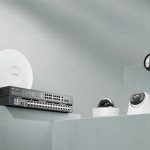
Senstar offers a range of products that bring intelligence out to the perimeter. Intelligent lighting functions as an active deterrent while sensors and surveillance cameras detect and locate intrusion attempts. Perimeter detection enables a range of security responses, including triggering the site’s alarm system, queuing up camera systems, and engaging deterrence devices like audio messages or additional lighting. Interior areas can also be protected. As Senstar sensors share common communication protocols, a mix of sensors may be deployed at a site without adding additional infrastructure.
Securing Critical Infrastructure
With over 40 years of experience securing critical infrastructure worldwide, Senstar has the knowledge, European presence, and comprehensive portfolio needed to assist organizations in mitigating security vulnerabilities. Our perimeter intrusion detection, video management software, video analytics, and access control solutions are cost-effective, field-proven, and highly regarded throughout the critical infrastructure sectors.