AI and Cameras in Service of F1: FIA Introduces Automated Track Monitoring in Formula 1
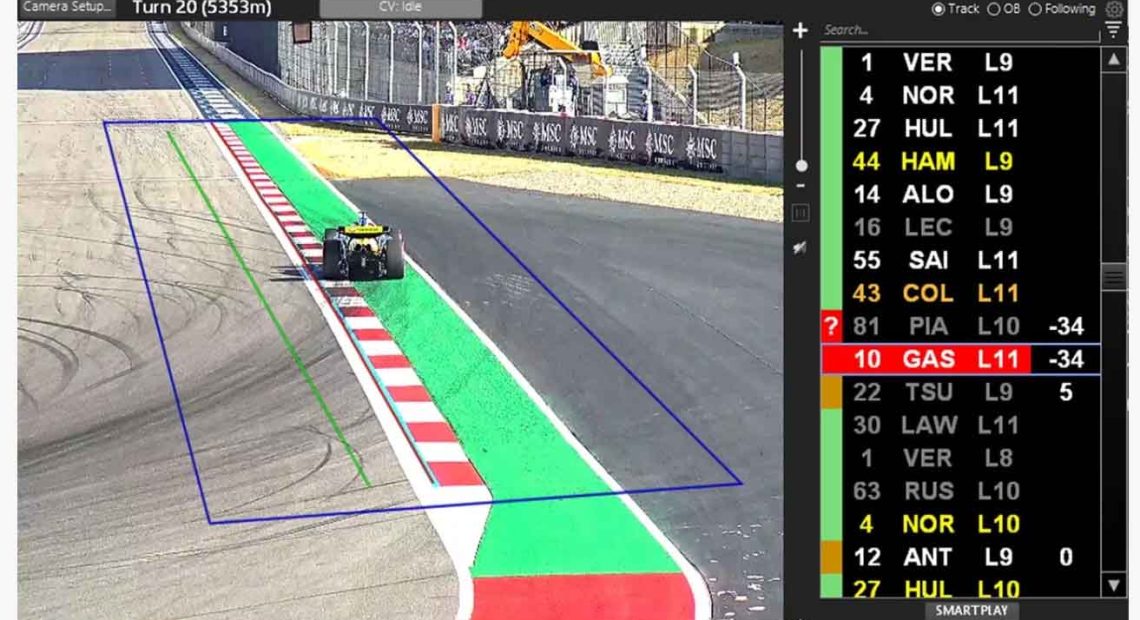
Starting from the 2026 season, the Fédération Internationale de l’Automobile (FIA) will introduce an advanced track monitoring system that uses artificial intelligence and a network of cameras to automatically detect track-limit violations—one of the most controversial issues in Formula 1. The new system, called ECAT (Every Car All Turns), is integrated into the RaceWatch platform, the central operational system that monitors all on-track activity and race control operations. The previous procedure was extremely demanding, as stewards at some races had to review hundreds or even thousands of potential infringements; at the 2023 Austrian Grand Prix alone, more than 1,000 cases were analyzed. For this reason, the FIA and the company Catapult developed an automated computer-vision-based tool that analyzes video footage and car behavior against reference points captured by cameras.
The system recognizes the silhouette of a vehicle and determines in real time whether a car has crossed the white line, while high-performance GPU processing enables analysis during the race itself. According to the FIA, the technology has already reduced the number of cases requiring human assessment by about 95 percent, and teams can receive footage of an infringement almost immediately after the incident. The new architecture includes a centralized camera controller that manages all trackside cameras and distributes video processing across multiple computers within the network, allowing large volumes of video data to be handled and improving the accuracy of stewards’ decisions.
In addition to cameras, the system uses an advanced positioning platform that combines multiple data sources: vehicle coordinates, micro-sector times, and the ideal racing line. This effectively creates a “digital twin” of the race, a real-time model showing the movement of each car on track.
If a car deviates from the optimal trajectory, enters a virtual zone, or changes its racing line, RaceWatch automatically generates an alert. The technology also uses geofencing—virtual boundaries that trigger an alarm as soon as a vehicle crosses them, even in areas where cameras do not have an ideal viewing angle. “We can automatically identify the moment a car leaves the track with all four wheels because the positioning data changes or it enters a virtually defined zone,” explained Chris Bentley, FIA Head of Information Systems Strategy for Single Seaters. The goal, he added, is to move from manual video review to a semi-automated process in which technology first detects the incident and stewards confirm the decision.
The new technology not only speeds up decision-making but also increases transparency, as teams immediately receive evidence of a potential infringement. The FIA believes that the combination of cameras, positioning sensors, and artificial intelligence will significantly reduce disputes and delays in race results. With the introduction of ECAT, Formula 1 becomes one of the most advanced examples of video analytics and AI monitoring in sport, where decisions must be based on precise data.
Photo: FIA